- Best for
- textiles + warm lighting texture
- Time
- 1–2 weekends
- Difficulty
- easy (no drilling)
- Cost
- under $400
Why wicker-and-terracotta accents are the kitchen island of 2026
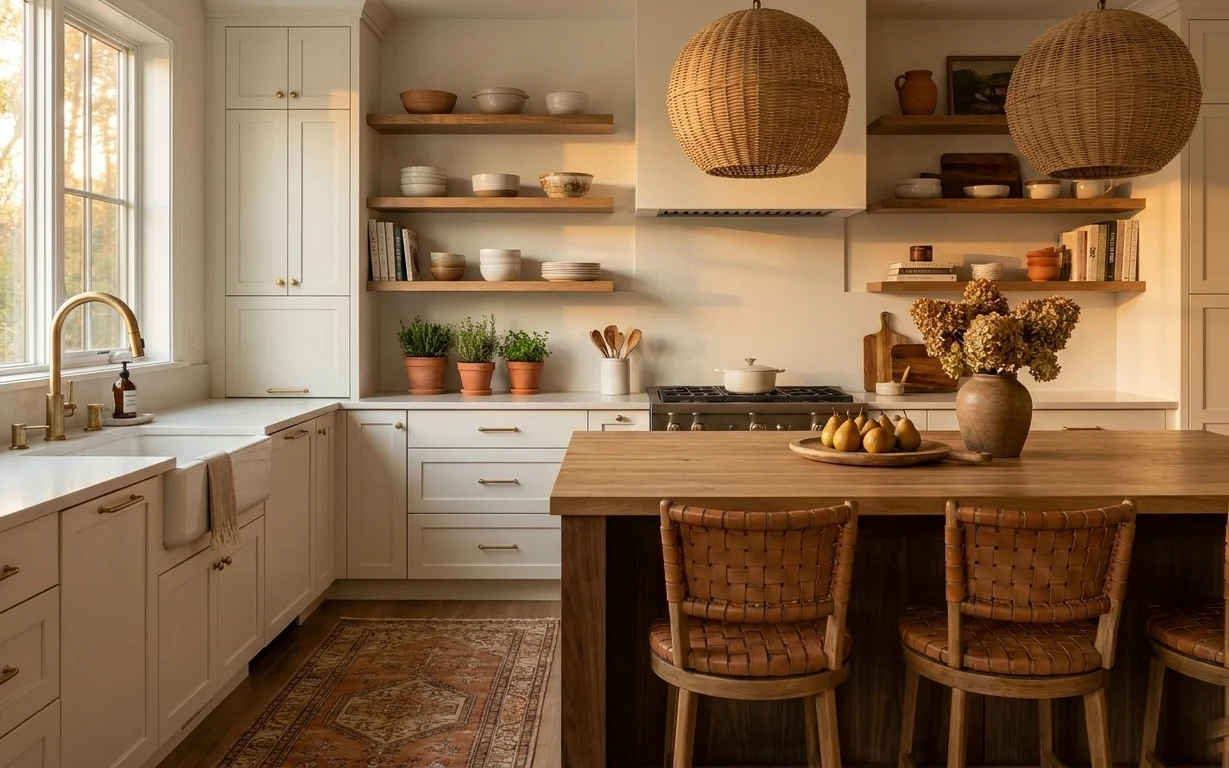
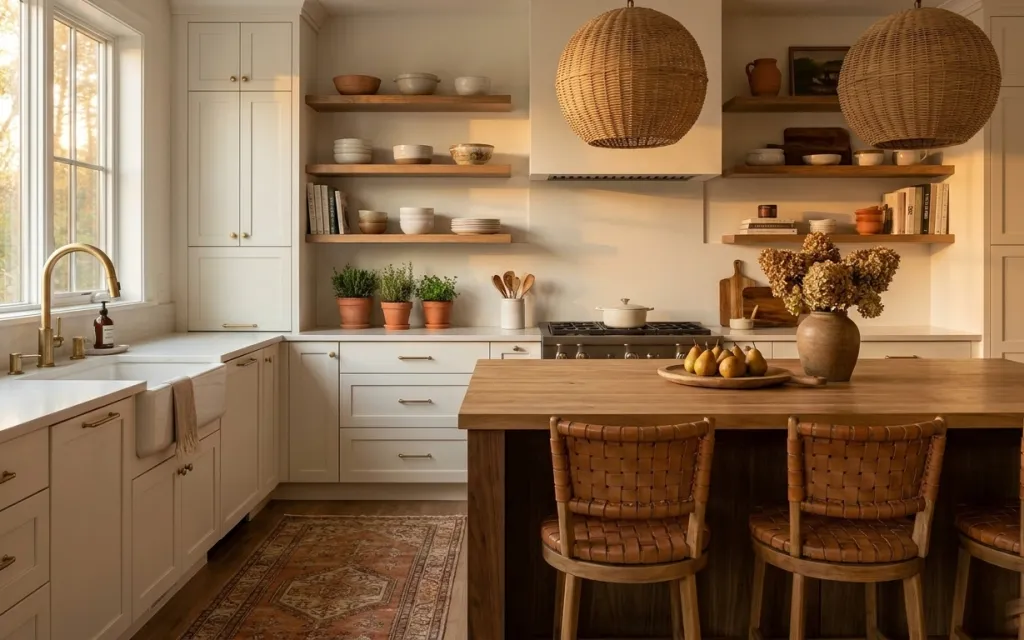
Start with the thing you can’t fake once you see it in person: warm underfoot texture. In this photo, the area rug’s geometric border and the creamy counters set a calm base, while the woven chairs and rattan pendant lamps bring movement without adding bulk. The terracotta planter pots and the ceramic vase add color that reads “intentional,” not matchy. Because everything here is soft goods or freestanding décor, it’s a shared-house friendly refresh—more like styling than renovation.
I used to think kitchens only “count” when there’s new lighting or new hardware. In my last share house, I spent way too much effort trying to match finishes, and the space still looked flat. What finally worked was stealing the idea behind this setup: repeat one warm texture (wicker/rattan) and one warm color (terracotta) in three spots, then let the rest stay neutral. It’s the easiest way to make a common kitchen feel like yours without changing anything fixed.
Layer 1 — area rug with geometric border pattern ($120) Grounds the floor with repeatable pattern
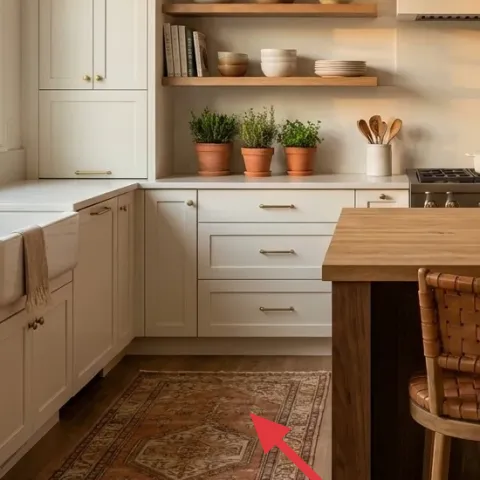
A patterned area rug is what makes the whole kitchen island zone feel designed instead of “just cabinets.” This one has a geometric border that echoes the straight edges of the countertops, so it doesn’t fight the architecture. Choosing a rug instead of doing anything to the floor is also the move-friendly part—no installs, and it folds/rolls for the next lease. The trade-off is that pattern rugs show a little dust, but the payoff is higher contrast under the island and chairs.
Anchor it under the front chair legs
Place the rug so the dining chair legs land on it, not beside it—instant cohesion without needing extra décor.
Layer 2 — fruit bowl with pears and lemons ($18) Adds everyday color in one step
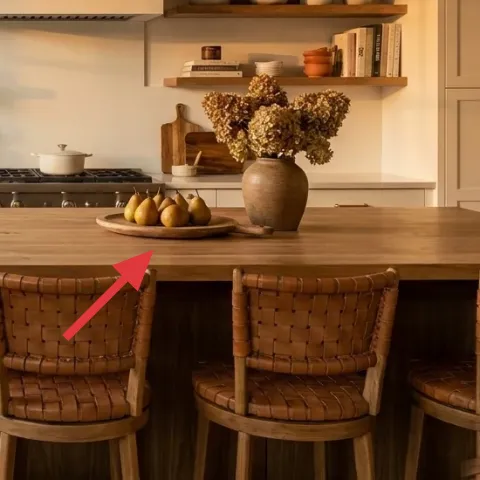
The fruit bowl looks small, but it does a lot of visual work on the island: it introduces bright color against the warm wood and cream counters. Even when the fruit isn’t perfectly “styled,” the shape reads intentional because the bowl and the produce share the same warm palette. Picking a décor object over changing built-ins is the renter-safe version of “finishing touches.” The trade-off is you’ll refresh it more often than you would with faux pieces, but that keeps the island feeling lived-in rather than staged.
Use what you already eat first
If your household actually uses citrus and pears, the bowl stays styled with zero extra effort.
Layer 3 — ceramic vase with dried flower stems ($30) Brings height without clutter
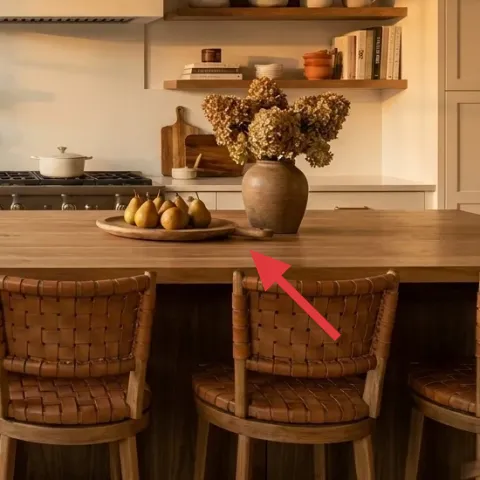
This ceramic vase with dried flower stems adds vertical interest at the exact spot your eye travels—near the center of the island. The warm clay tone plays nicely with terracotta planters on the shelves, so you get a color “echo” that looks deliberate. A vase is also easier to pack than large art or furniture changes, and it won’t require wall work. The trade-off: dried stems can shed a little, so handle gently and keep the arrangement simple enough to re-set quickly.
Match the vase warmth, not the exact shade
You’re aiming for “same temperature” (warm/earthy), not a perfect color match.
Layer 4 — woven rattan pendant lamps (two) ($120) Adds a warm glow with movable impact
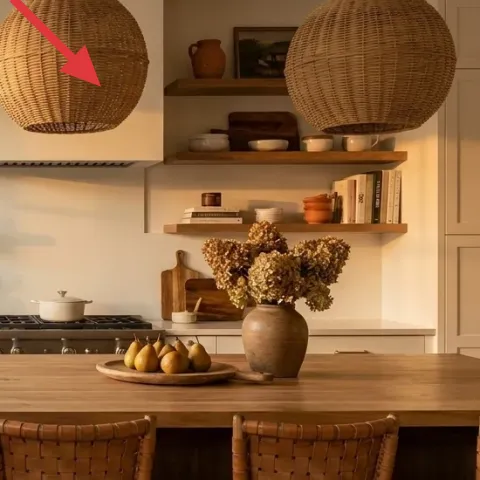
Woven pendant lamps bring texture that reads instantly in photos and in real life—especially when the light is coming through windows. They also change the kitchen’s mood without touching the cabinetry or overhead fixtures. Because this look relies on soft, airy materials (rattan over hard metal), it keeps the space from feeling too sharp next to the clean white counters. The trade-off is you’ll want to keep bulbs soft-warm; harsh light makes the woven texture look flat.
Don’t pick a shade that’s too dark
A very tight weave can eat light and make the island feel dim, especially on cloudy days.
Layer 5 — terracotta planter pots on wall shelves ($40) Adds the “earthy repeat” factor
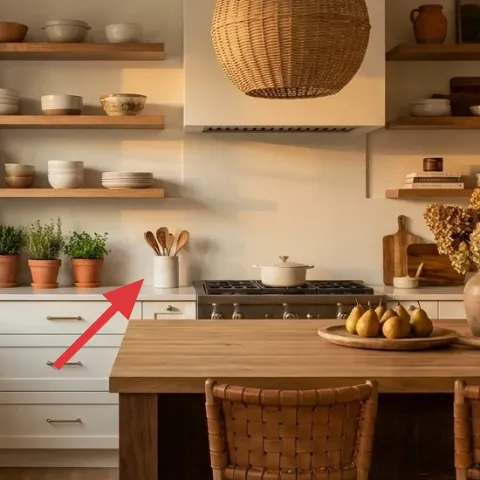
Terracotta planter pots are the bridge between the warm wood island and the natural texture of the chairs and pendant lamps. On this wall-shelf zone, the small pots create a gentle rhythm: three or four pieces at different heights feel styled but still easy to adjust. For shared housing, the best part is that pots are inherently moveable—swap location next lease without redoing anything. The trade-off is that small plants need occasional watering or care, so choose something low-maintenance that you’ll actually keep up with.
Keep the pot sizes close
When the pots are in a similar size family, the shelf arrangement reads intentional instead of accidental.
Layer 6 — woven dining chairs (rattan seats) ($30) Makes the island feel softer
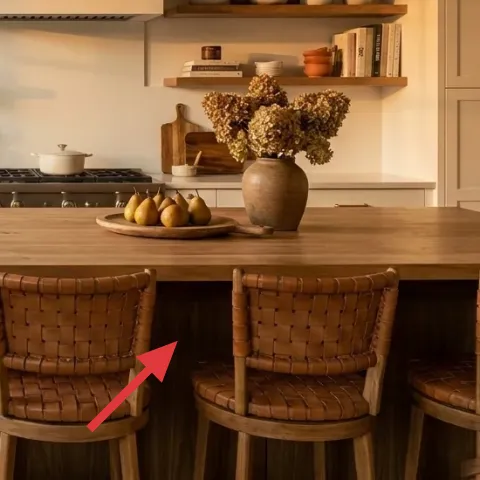
Woven chairs add a warm, tactile counterpoint to smooth countertops and painted cabinetry. Even though chairs are big-ticket-looking items, you only need to refresh the “one visible chair” idea in a shared space: swap one chair first, then decide if you want matching for the full set. The rattan seat texture visually connects to the pendant lamp weave, which is why the pairing feels cohesive here. The trade-off is woven seats can be harder to clean than vinyl, but they’re also lightweight enough to move (and replace) down the road.
Use a washable seat cover if you have spills
It keeps the woven texture while protecting against daily chaos.
Layer 7 — stack of books on wall shelf ($15) Gives the shelf a grounded baseline
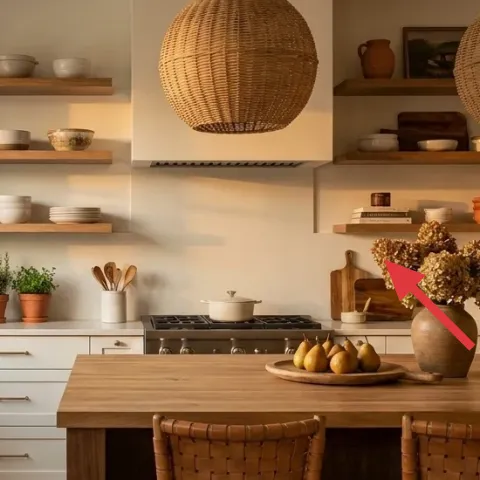
A stack of books on the shelf is the quiet background layer that makes everything else look curated. Without it, small décor objects can feel like they’re floating; with it, you get that subtle “collection” effect that styling magazines love. It’s also one of the cheapest ways to add visual weight near the island—especially when your budget is going toward bigger texture elements like the rug and pendant lamps. The trade-off is that books can look too busy if you don’t limit them, so keep the stack tight and the colors mostly within your warm neutral range.
Choose one cover color family
Limiting the palette keeps the shelf from competing with the planters and vase.
The cost, layer by layer
| Layer | Item | Cost |
|---|---|---|
| 1 | Area rug with geometric border pattern | $120 |
| 2 | Fruit bowl with pears and lemons | $18 |
| 3 | Ceramic vase with dried flower stems | $30 |
| 4 | Woven rattan pendant lamps (two) | $120 |
| 5 | Terracotta planter pots on wall shelves | $40 |
| 6 | Woven dining chair (rattan seat) | $30 |
| 7 | Stack of books on wall shelf | $15 |
| Total | $373 | |
Want a cheaper version? Swap the pendant lamps for one plug-in woven lamp style at a time and choose a lower-cost flatweave rug (still with a border) so the rug and rattan textures stay the focus.
What worked, what didn't (across the whole room)
This kitchen island look succeeds because it repeats texture (wicker/rattan) and warmth (terracotta and wood) at three different heights: floor with the rug, mid-level with chair and décor, and overhead with the woven pendant lamps.
What worked
- The geometric rug border makes the island zone feel intentional even when you’re not adding art.
- Terracotta planter pots create a color link between shelves and the warm wood island countertop.
- The ceramic vase adds height without taking up island counter space with extra containers.
- Woven pendant lamps soften the kitchen’s hard lines while staying move-friendly for rentals.
- Woven dining chair seats visually echo the pendant lamps and keep the palette cohesive.
- A tight stack of books gives the shelf a baseline so smaller ceramics feel “placed,” not scattered.
What didn't
- If the rug is too small, the chair area floats and the island looks disconnected from the floor.
- Choosing a very dark weave for the pendant lamps can make the island feel dim in daylight.
- If you over-style the shelf with too many small objects, the terracotta pots stop reading as a set.
- Fruit décor can become a “chore” if it’s rarely restocked, so pick produce you’ll actually use.
- Woven chairs show debris more than smooth seats, so quick spot-cleaning matters.
What we'd skip if we did it again
Skip trying to match every finish in the kitchen. Cabinets and countertops are fixed in most rentals, so chasing perfect metal or wood matching tends to waste money. Instead, repeat one warm texture (wicker/rattan) and one warm color (terracotta) in a few key spots.
Skip investing in large wall changes. Even when the shelf wall is tempting, the fastest impact comes from freestanding décor—rug placement, portable objects on the island, and a woven lighting texture overhead.
Skip buying a too-small rug “to save space.” In a shared kitchen, the rug’s job is to visually connect chairs to the island area. A correctly sized rug is the difference between “styled” and “random accessories on the floor.”
Frequently asked
How long does this kitchen island refresh take?
Plan for about 3–6 hours total for shopping, unboxing, and placing items the first day. If you’re swapping one rug and arranging shelves, allow another 1–2 hours. The big time variable is finding the right rug size and woven-light look.
If I’m in a rental, can I do this without drilling or painting?
Yes. This refresh is built around move-friendly items: an area rug, freestanding décor objects, and layered textures like woven lighting and rattan-style chairs. No wall painting or fixture swaps are required—everything can be boxed up when your lease ends.
What if my kitchen island is smaller or my chairs don’t fit on the rug?
Go smaller on the rug only if you can still fit the front chair legs on it. If you can’t, choose a runner-style rug option for the walkway, then keep your island décor limited to the fruit bowl and vase so the island still feels styled rather than crowded.
Where should I shop for the rug and woven lighting look?
For the rug, start with major home stores and online marketplaces that show dimensions clearly. For the woven pendant look, check lighting retailers and marketplaces that label corded/plug-in options. Pair that with a local discount store or thrift for vases and books.
What’s the biggest mistake people make in shared kitchen styling?
Over-styling every surface at once. In shared spaces, it’s better to repeat a single theme in three places—floor (rug), mid-level (chairs and décor), and vertical/overhead (pendant texture). That keeps the look intentional even when you’re not customizing the fixed cabinetry.