- Best for
- Textiles and small-planter styling
- Cost
- Under $400
- Difficulty
- Easy
- Time
- 1 weekend afternoon
Why the blue-and-cream textile palette is the patio dining setup of 2026
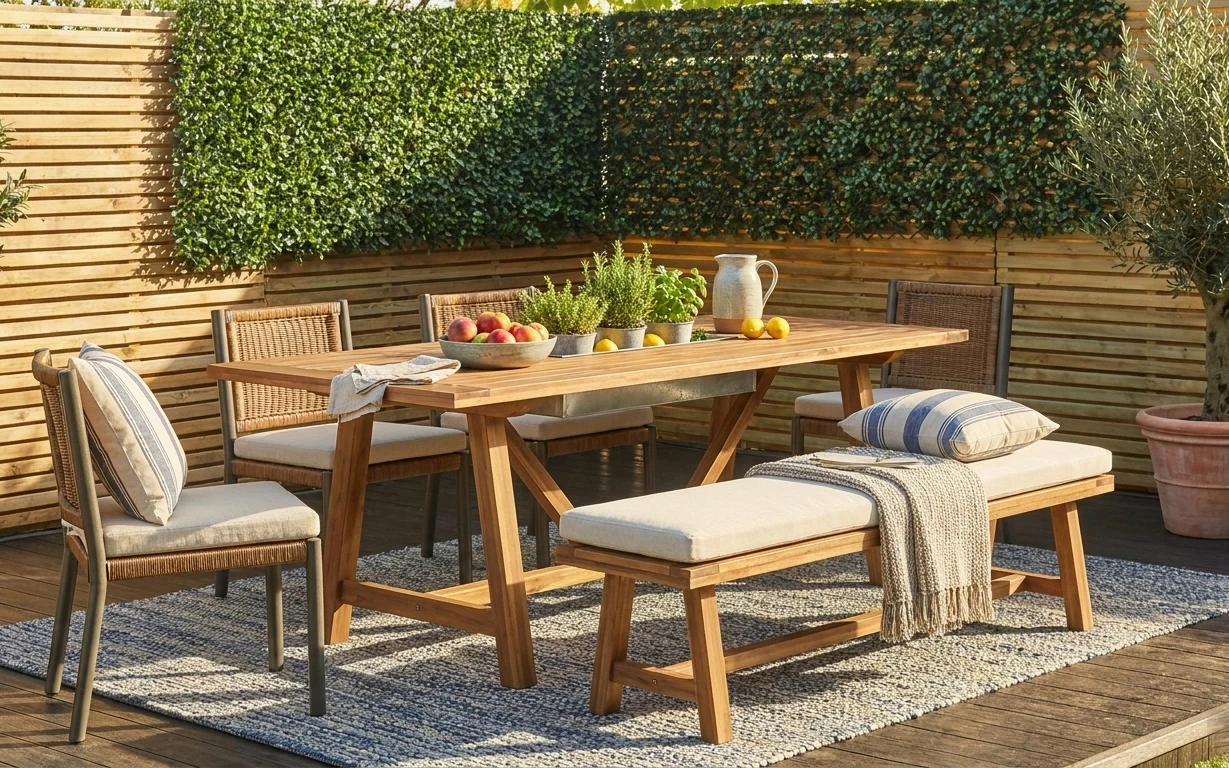
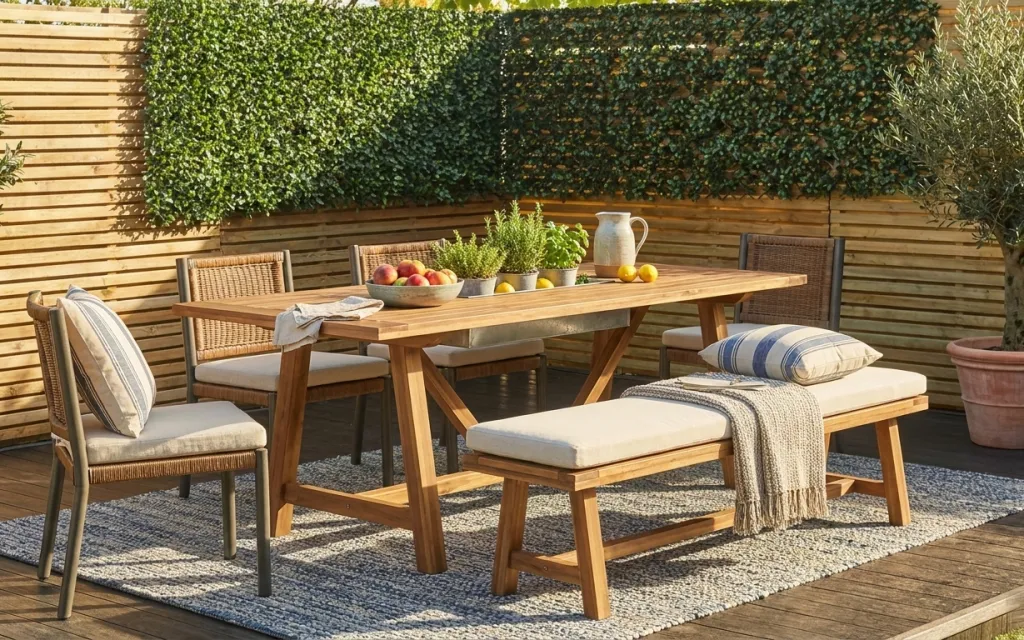
The fastest way to make an outdoor table feel “done” is to start with what you can swap: textiles and small objects. In this photo, the blue-and-cream area rug grounds everything on the wood deck, while the gray throw blanket on the bench adds that lived-in, slightly rumpled texture. Two striped throw pillows bring pattern without needing any permanent changes to the furniture or wall. This is totally achievable for shared housing because these pieces roll, fold, or pack flat—no drilling, no “must keep” installs.
I once overestimated how much I’d love matching sets outdoors and ended up stuck with items that looked dated after two seasons. What changed my mind was paying attention to texture first: a soft gray throw against hard wood, plus patterned pillows that echo the rug. When you mirror color through textiles and small styling, the whole patio reads cohesive even if your furniture stays the same.
Layer 1 — blue-and-cream area rug ($200) Patterned ground for the whole table
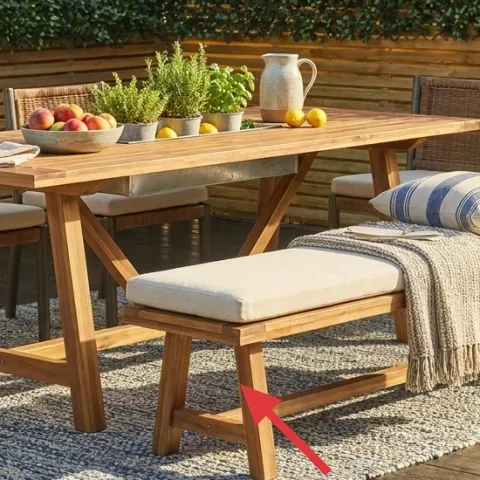
This blue-and-cream area rug is the anchor because it sits under the dining table and the bench, so it visually connects chairs, seating, and the deck. I’d choose a 5×7-style outdoor rug because it’s wide enough to catch chair legs and still looks intentional instead of “stuck under one piece.” The trade-off is that patterned rugs show foot-traffic wear a bit sooner than solid neutrals, but the payoff is depth right away. Compared with swapping furniture, rug-first styling is faster, cheaper, and easy to pack when you move.
Let chair legs sit on the rug edge
If at least the front legs land on the rug, the layout looks larger and less “tacked-on.”
Layer 2 — gray throw blanket on bench ($35) Softens the bench without replacing it
The gray throw blanket on the bench adds a lived-in layer that reads immediately from the seating angle. It’s light enough to drape over the bench and still look styled, especially because the texture breaks up the straight lines of the wooden bench. The choice here is practical: a throw is foldable, so it packs for moves in a way outdoor cushions and furniture rarely do. The main trade-off is it won’t look crisp like a brand-new textile, but that “slightly rumpled” look is exactly what makes it feel comfortable.
Match the undertone, not the exact color
Gray blends best when it leans either cool or warm consistently with the rest of your palette.
Layer 3 — striped throw pillow on chair ($18) Pattern that repeats the rug
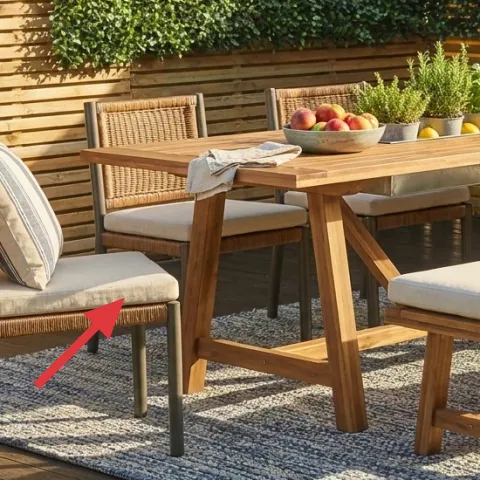
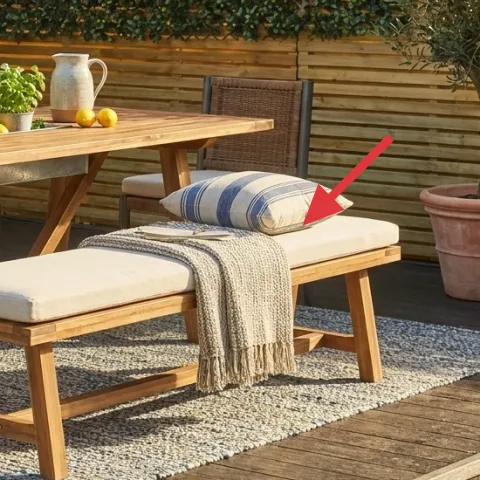
This striped throw pillow on the chair brings pattern where it counts—near eye level—without requiring any wall decor. Stripes also help the rug feel intentional instead of random, especially when the stripe colors echo the rug’s blue-and-cream rhythm. Swapping in a new pillow cover is usually easier than changing bigger pieces, and it’s budget-friendly when you’re sharing space and moving again soon. The trade-off is you’ll want to keep an eye on outdoor washing and drying, since textiles take more care than decor objects.
Use one pattern and one texture
One patterned pillow plus one chunky or woven texture keeps the patio from feeling busy.
Layer 4 — cream cushion on bench ($18) Keeps the seating looking bright
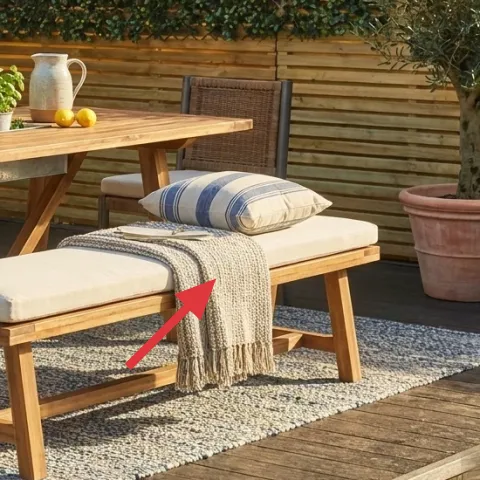
The cream cushion on the bench does the balancing work: it lightens the whole setup so the wood and greenery don’t feel too heavy. In a patio dining layout, the seat color matters because you see it every time you sit down, not just when you’re walking by. Choosing cream over a darker cushion is a calculated move—it highlights the rug pattern and makes the gray throw feel softer. The only trade-off is that lighter cushions can show scuffs, but covers are easy to swap and the color impact is worth it.
Don’t over-swatch—buy by color family
Outdoor light changes how beige looks; stick to “cream” in both name and tone, not “off-white” that may pull yellow.
Layer 5 — ceramic pitcher on dining table ($20) Small serving object, big polish
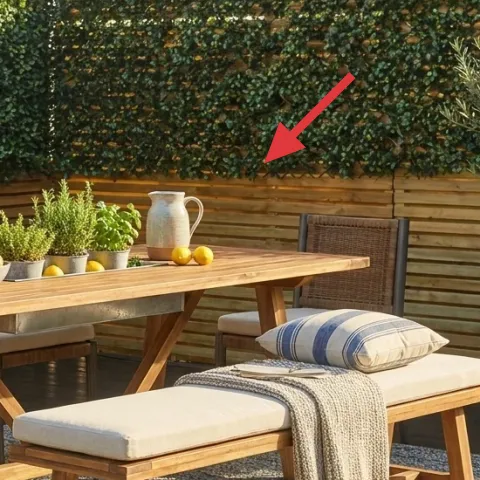
A ceramic pitcher on the dining table adds a simple “hosted” moment that reads like styling rather than clutter. Because it’s on the tabletop, it creates a focal point that makes the rug-and-textile layers look more intentional. This is a smarter route than adding more decor around the hedge or the wood privacy wall—objects placed on the table pack better and don’t fight with the outdoor background. The trade-off is you’ll want to keep it clean and dry between uses, since outdoor surfaces can leave dust or residue.
Think “touchable” styling
Serving pieces that also hold flowers or fruit feel realistic for daily life.
Layer 6 — terracotta pot on right ($30) DIY color for the plants you already have
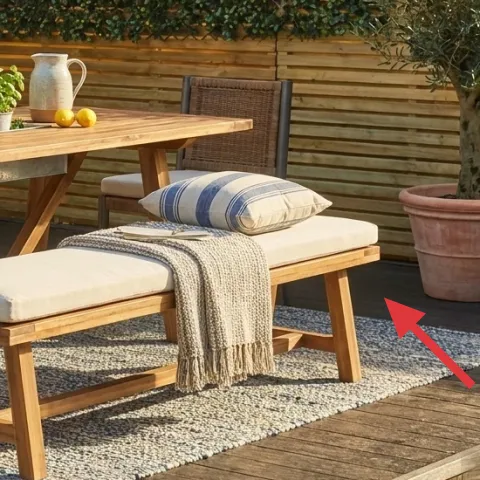
This terracotta pot on the right is the move-friendly warmth that ties the greenery to the wood deck. Terracotta also keeps the palette grounded—blue-and-cream textiles look more coastal when there’s a clay color somewhere in the mix. Since planters are small and pack into boxes easily, this is one of the best swaps for shared housing: you can freshen color without committing to hardware or permanent installs. The trade-off is that painted finishes need gentle care outdoors, especially if the pot gets constant rain.
Make it instead of buying it
Paint a terracotta pot with a weather-friendly acrylic finish so the greenery looks styled even after you move.
Materials
- Terracotta pot (1) — 8–10 in — thrift or garden center — $14
- Outdoor acrylic paint (1–2 colors) — 2–3 small bottles — craft store — $8
- Small foam brush set — 2–3 pack — craft store — $5
- Disposable gloves — 1 pair — big-box store — $2
- Clear sealant (optional for heavy rain) — spray — hardware store — $0
Steps
- Wash and fully dry the terracotta pot, then wipe off dust so paint sticks evenly.
- Lightly sketch your simple pattern (or skip to solid color) with a pencil on the dry surface.
- Base-coat the pot with a thin layer of acrylic paint, letting it dry completely.
- Add your pattern or second color with a foam brush for soft edges and minimal streaks.
- Let it cure fully before using it outdoors, then touch-test for tackiness.
- If using sealant for frequent rain exposure, spray in thin passes and allow it to dry.
Total DIY cost: $29 — saves about $1 over buying.
Layer 7 — bowl of fruit on dining table ($15) Color that looks like life
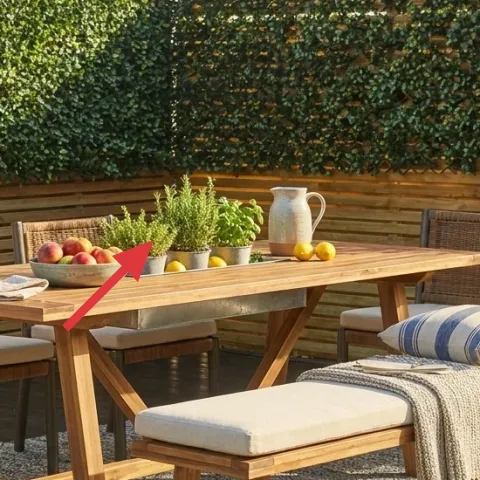
That bowl of fruit on the dining table makes the whole patio feel lived-in because it adds color you can actually use. Instead of adding a new vase or wall art that’s easy to forget, fruit-style styling gives you immediate contrast against wood and greenery. It also works with the ceramic pitcher so the table reads intentional, not sparse. The trade-off is that fruit isn’t permanent decor—when it’s gone, the styling can be refreshed with whatever seasonal color is on hand.
Swap seasonal color, keep the bowl
Different fruit colors update the look without changing your core decor pieces.
The cost, layer by layer
| Layer | Item | Cost |
|---|---|---|
| 1 | Outdoor area rug 5×7 (blue-and-cream) | $200 |
| 2 | Outdoor throw blanket (gray) | $35 |
| 3 | Throw pillow cover (striped blue-and-cream) | $18 |
| 4 | Throw pillow cover (cream) | $18 |
| 5 | Decorative ceramic pitcher | $20 |
| 6 | Terracotta planter set (DIY equivalent) | $30 |
| 7 | Decorative ceramic bowl/tray (fruit) | $15 |
| Total | $336 | |
If you want a cheaper version, keep the rug and cushions, then scale down the tabletop styling: use the same bowl for whatever colorful produce is available and switch the pitcher for a smaller ceramic vessel. That usually cuts the total by $40–$70 without changing the overall blue-and-cream look.
What worked, what didn't (across the whole room)
Most of the impact came from repeating color through textiles (rug, throw, pillows) instead of adding more furniture. The table styling helped, but it’s the first thing to swap when you want a new seasonal look.
What worked
- The blue-and-cream rug visually locks the dining chairs and bench into one zone.
- The gray throw blanket adds texture contrast against the wood bench slats.
- Striped and cream pillow colors echo the rug so nothing feels randomly placed.
- The ceramic pitcher gives the tabletop a “hosted” focal point without extra clutter.
- Terracotta in the planter keeps the palette warm next to green plants and natural wood.
- The fruit bowl adds real color that changes with the season and stays practical.
What didn't
- Terracotta paint can take longer to look even outdoors if the pot is dusty.
- Light cream cushions show scuffs faster than darker seating during heavy-use days.
- Textiles pick up outdoor debris, so you’ll want a quick wipe-down routine.
- Too many patterns at once makes the rug feel louder instead of grounded.
- Tabletop styling looks best when it’s refreshed often, not left untouched for weeks.
What we'd skip if we did it again
Skip buying extra wall decor for this kind of patio background—the wood slat privacy wall and hedge already do the heavy visual work. When you add more wall elements, they can compete with the greenery and make the setup feel busy rather than styled.
Skip “matching sets” that force every chair or pillow to look identical. Instead, keep the same color family across textiles, then vary texture (throw + cushions) so the patio still feels intentional when it’s not perfectly coordinated.
Skip overdoing tabletop objects. One pitcher plus one bowl of fruit is enough to create a focal point, and it packs up easily when the season changes or your shared house swaps leases.
Frequently asked
How long does this patio dining refresh take?
Plan for a weekend afternoon. The rug and pillow swaps are quick, and tabletop styling is mostly just arranging the pitcher and fruit bowl where the light hits. Painting a terracotta planter (if you DIY) is the only part with “waiting,” since you’ll want the paint to dry and cure fully before outdoor use.
Is this renter-friendly if I’m moving soon?
Yes—everything here is soft goods or small objects. Rugs roll, throws fold, and pillows pack into boxes without needing any hardware. The terracotta pot and pitcher are also easy to pack, so you can bring the look to the next shared house without worrying about landlord approvals.
What if my patio is smaller than this one?
Use the same color strategy, but consider a smaller rug so chair legs still land on it. Stick to one pattern (the striped pillow) and one light seating tone (cream cushion) so the area doesn’t feel visually cluttered. Keep tabletop styling to one focal object plus one color moment, like a fruit bowl.
What if my patio is bigger and feels blank?
Add one extra texture layer—either a thicker throw blanket draped over the bench or an additional cream pillow—before buying new furniture. You can also size up to an 8×10 rug if your chair layout needs more coverage under the table. Keep planters and tabletop objects spaced so the greenery stays the background.
Where should I shop for these exact items without overpaying?
Start with a rug and pillow covers at big-box or online home goods retailers, then look for the ceramic pitcher and fruit bowl at thrift stores or discount home sections. Terracotta pots are easy to find at garden centers, and you can paint them for a custom look instead of buying pre-decorated planters.
Biggest mistake to avoid on a patio dining setup?
Don’t rely on only furniture to carry the style. If the rug and seat textiles don’t echo each other, the patio reads “decorated” in a patchy way. Also avoid stacking multiple patterns at once—rug + stripes + extra prints can quickly become too loud outdoors.