- Best for
- Textile layering + renter-safe botanical styling
- Cost
- Under $500 retail total
- Difficulty
- Easy (most items are swaps)
- Time
- 1 weekend
Why white-and-blue linen details are the move-friendly bedroom vanity corner of 2026
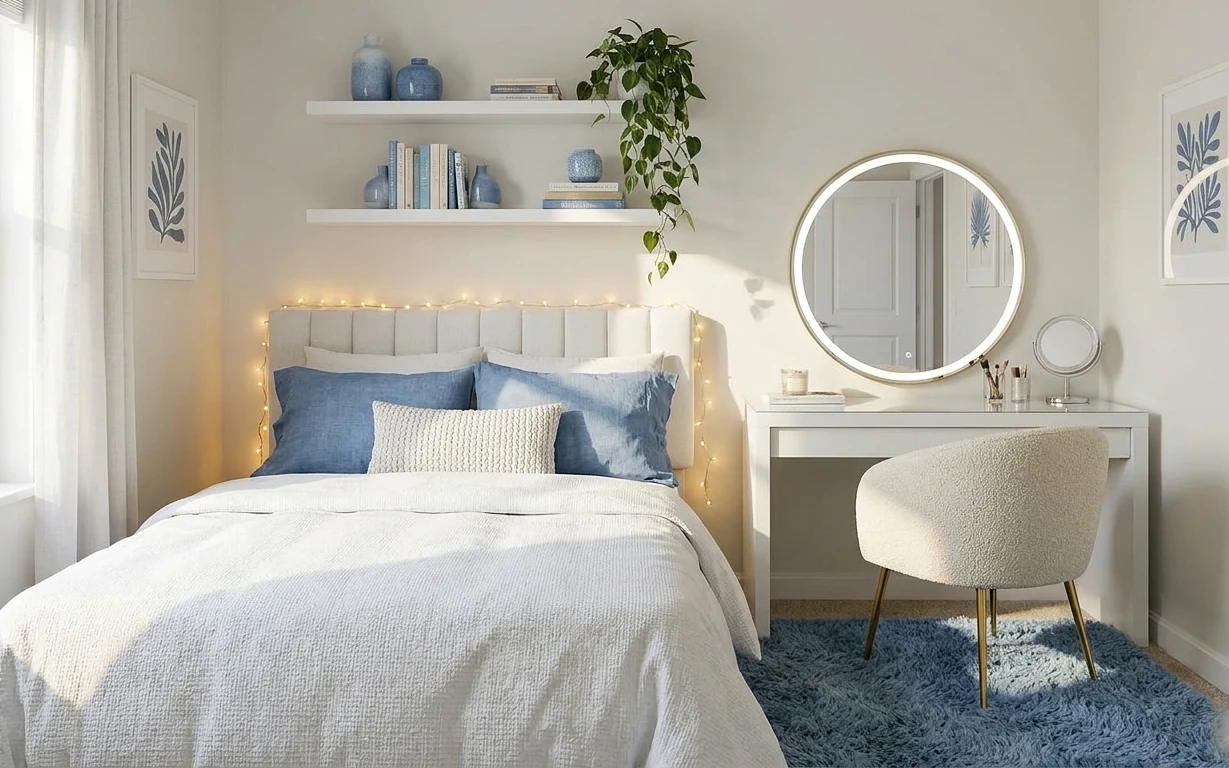
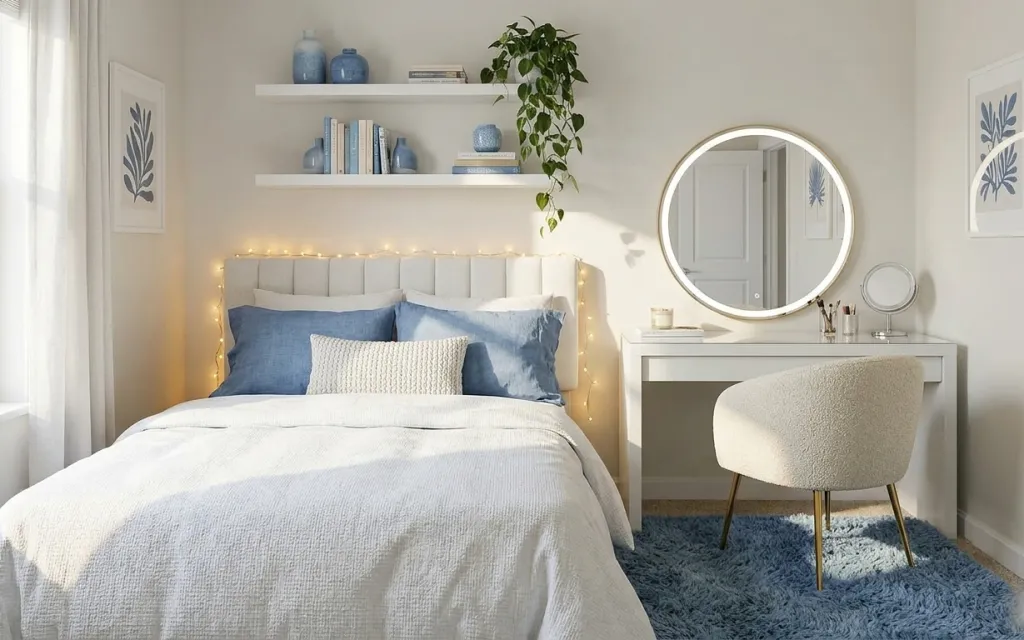
The look in the photo plays with texture: a white duvet and a textured white pillow sit against blue velvet accents, while a blue-gray shag rug anchors the carpeted floor. Sheer curtain panels keep daylight airy, and a warm set of string lights adds that late-afternoon glow without needing any wiring. The round mirror and blue leaf artwork pull the whole corner into one calm palette—white, blue, and light gray—so it doesn’t feel like “random pieces.” For students and shared roommates, that’s the big win: most of it packs in flat boxes and goes with you.
When I first tried this style, I kept adding “matching” items—same frame color, same shade of blue—and it started to look too coordinated. The shift was noticing the hero textures instead: linen-like bedding, plush rug pile, and the crisp lines of the leaf prints. Once I stopped chasing perfect matching and went texture-first, the bedroom vanity corner looked intentional even with a basic setup.
Layer 1 — area rug 8×10 (blue-gray shag) ($200) Plush underfoot, not fussy
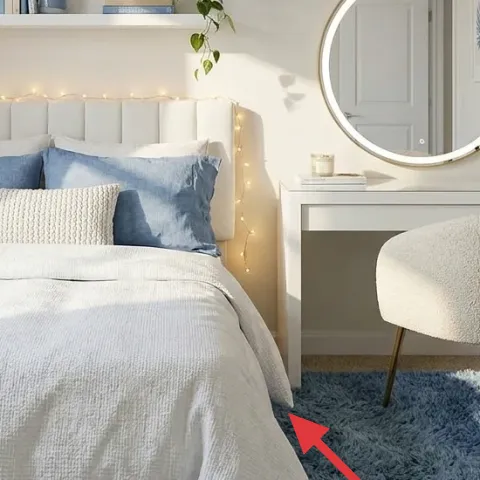
This blue-gray shag area rug covers the busiest walking and sitting zones under the bed and toward the vanity stool. It’s the texture that makes the whole corner feel finished even when you’re working with a rental’s existing carpet. The obvious alternative is a thin flatweave, but that usually won’t hide the “rental line” where foot traffic shows up. The trade-off here is pile maintenance: a thicker rug catches lint, so a quick vacuum pass matters. If the room is shared, keep it shake-and-go friendly—this one rolls up for moves instead of staying stuck to the floor.
Shake out and vacuum before you place anything else
Getting the rug surface clean first prevents lint from getting trapped under pillows, trays, or vase corners.
Layer 2 — white duvet cover ($50) A crisp base layer for blue accents
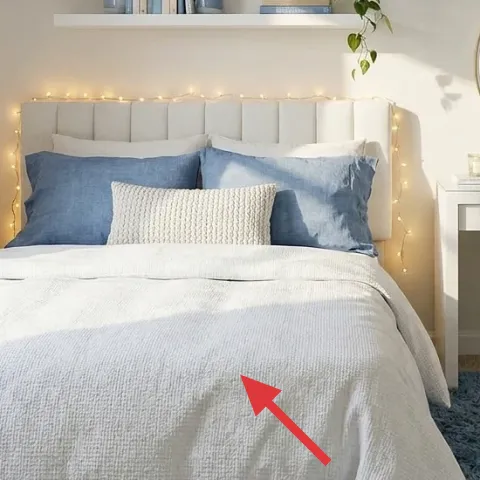
The white duvet cover is the visual reset button: it brightens the bed area and gives the blue pillows something to “sit on” instead of fighting with the wall color. A duvet cover also makes the look more impermanent—in a shared house, stains and spills happen, and swapping covers is simpler than replacing bedding. The more tempting alternative is a patterned comforter, but patterns can compete with the blue leaf artwork and the plant greenery. By keeping the base mostly white, the vanity corner stays cohesive. The trade-off is that you’ll likely do more spot-cleaning than with a busy print.
Choose a cover with a textured weave
That subtle surface texture is what keeps white from looking flat in photos and in real daylight.
Layer 3 — textured white throw pillow ($18) Adds softness without more blue
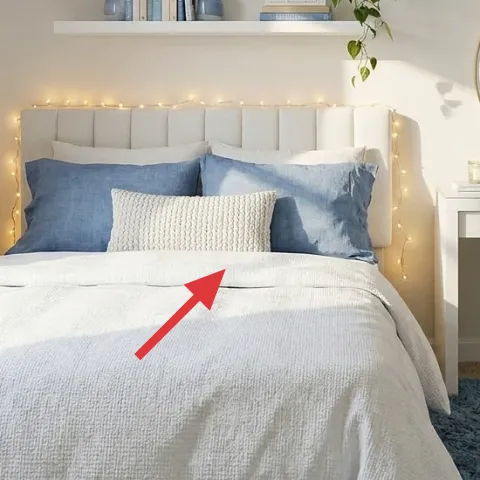
This textured white throw pillow is the “middle tone” between the white duvet and the blue velvet pillows. The nubby or woven surface catches light differently than smooth fabric, which is why the corner looks layered instead of one-note. The obvious alternative is adding another solid blue pillow, but that can tip the palette too cold and heavy. Textured white keeps the look bright while still giving tactile interest. The trade-off is that texture can show lint—especially with shag nearby—so keep a lint roller on hand. For move-out day, pillow covers flatten fast in a single box.
Mix textures, not just colors
When the rug is plush, a textured pillow adds cohesion at the same “comfort level.”
Layer 4 — sheer curtain panel pair (white) ($80) Daylight control that packs flat
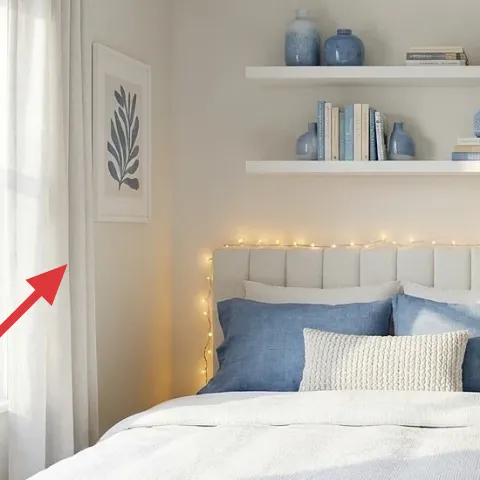
Sheer curtain panels soften the left window area and make the bedroom feel brighter without turning the room stark. They also help visually separate the bed zone from the vanity corner, because the fabric creates a gentle vertical line. The obvious alternative is thicker blackout panels, but those can make the space feel darker and harder to live with on gloomy days. The trade-off with sheers is privacy at night—you may need to plan for blinds or an added light cover depending on your building layout. For shared housing, the best part is mobility: panels fold and roll with almost zero hard-to-pack bulk.
Don’t clip sheers so tightly they tear at the edge
Hardware pressure can create rips during repeated moves, especially if you’re taking curtains on and off quickly.
Layer 5 — framed leaf artwork (blue) ($50) One botanical focal point, lease-friendly
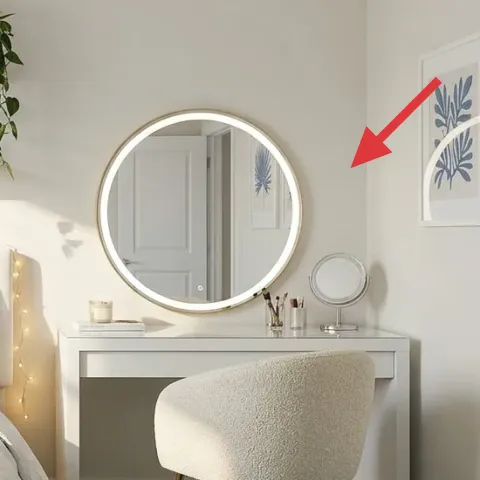
This framed leaf artwork brings in the blue botanical motif without adding another bulky decor category. The leaf shapes echo the green plant, while the blue keeps the palette consistent with the pillows. The obvious alternative is adding more shelves or extra small objects, but that can make the vanity corner feel cluttered in a shared room where everyone needs storage space. Keeping it to one framed print makes styling decisions easier and keeps packing straightforward. The trade-off is that you’re committing to one focal image—so the print’s color matters. DIY below keeps that choice affordable and move-proof.
Make it instead of buying it
Hand-paint a blue-and-green abstract on cardstock to swap into the same size frame style as the leaf artwork, so the “botanical focal point” stays consistent while you save money.
Materials
- Cardstock sheet — 1 piece (8.5×11 or larger) — $6
- Acrylic craft paint (blue tones) — small set — $12
- Set of craft brushes — 1 small pack — $8
- Painter’s tape — 1 roll — $4
- Clear acrylic finishing spray (for paper protection) — 1 can — $10
Steps
- Lightly tape off a few abstract leaf-like shapes on the cardstock so the pattern stays loose, not perfect.
- Paint broad blue washes first, letting edges bleed for that organic look.
- When dry to the touch, remove tape and add darker blue accents for definition.
- Paint thin green lines or curved strokes to mimic stems and leaf veins.
- Let everything fully dry, then spray a light, even coat of finishing spray.
- Insert the finished cardstock into the existing frame backing system once dry.
Total DIY cost: $40 — saves about $10 over buying.
Layer 6 — potted trailing plant ($80) Vertical movement that softens the corner
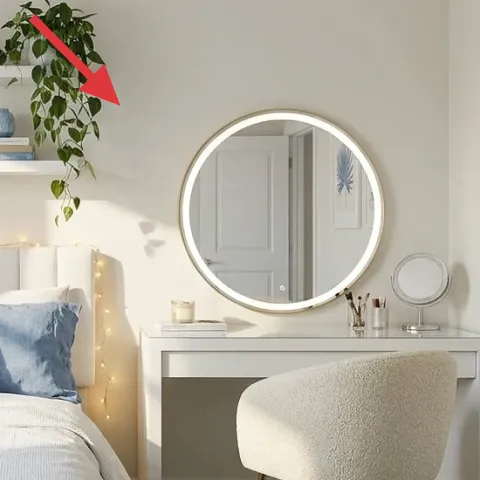
This potted trailing plant adds the only true “movement” in the corner, with vines spilling downward and echoing the curves of the round mirror. It also brings a warmer green contrast against the white vanity and light wall color, making the blue-and-white palette feel alive instead of flat. The obvious alternative is a small tabletop plant, but the corner already has multiple horizontal elements (shelves and vanity), so a trailing silhouette fills visual space better. The trade-off is plant care: trailing plants can shed a bit, and they’ll need consistent watering. For moving, keep it in a lightweight pot so it packs without damage.
Pick a plant that tolerates bright light changes
Shared houses often get uneven sunlight, so choose something resilient before a long move.
Layer 7 — string lights (warm set) ($15) Instant warmth without permanent installs
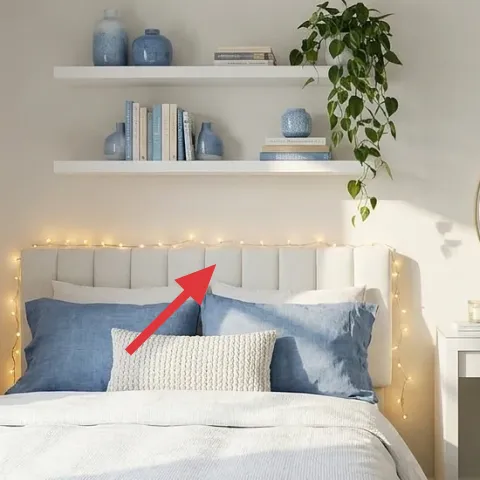
Warm string lights are the easiest way to make the bedroom feel lived-in at night, and they don’t require any permanent work. In the photo, the warm bulbs trace the bed area, visually tying the white duvet, blue pillows, and the vanity mirror into one cozy zone. The obvious alternative is a new table lamp, but lamps can feel bulky, take time to source, and may not match the room’s scale. String lights are also easier to detach for moves and stored like holiday decor. The trade-off is cable management—keep the cord paths neat so it doesn’t tangle when you pack up.
Use a timer plug if you’re sharing the space
Timers keep the lights consistent without needing someone to remember turning them off.
The cost, layer by layer
| Layer | Item | Cost |
|---|---|---|
| 1 | Area rug 8×10 (blue-gray shag) | $200 |
| 2 | White duvet cover | $50 |
| 3 | Textured white throw pillow cover | $18 |
| 4 | Sheer curtain panel pair (white) | $80 |
| 5 | Framed leaf artwork (blue) | $50 |
| 6 | Potted trailing plant | $80 |
| 7 | Warm string lights (set) | $15 |
| Total | $493 | |
If you want to shave cost without losing the look, start with the rug and duvet cover—those two do the most visual heavy lifting. The cheaper variant is a smaller rug size (or a lower-pile option) and a duvet cover in a cotton blend rather than a heavier textured weave.
What worked, what didn't (across the whole room)
The combination of soft textiles (white duvet, textured pillow, sheer curtains) plus one botanical moment (leaf artwork and a trailing plant) creates a calm, coordinated bedroom vanity corner without any permanent changes. Warm string lights add comfort after dark while still packing up quickly for shared-housing moves.
What worked
- The blue-gray shag rug made the carpeted floor feel more intentional and reduced visual foot-traffic contrast.
- White duvet + textured white pillow kept the palette bright against the light wall and vanity hardware.
- Sheer curtain panels improved daytime softness without blocking the room’s natural light.
- The round mirror shape balanced the straight lines of the shelves and vanity.
- The trailing plant brought vertical movement that prevented the corner from looking flat.
- Warm string lights created a night-time focal point without adding bulky lighting fixtures.
What didn't
- Too many blue accents at once made the corner feel heavier instead of airy.
- Choosing smooth white pillows instead of textured ones made the bed look less layered.
- Thicker curtains reduced brightness and made the room feel smaller on cloudy days.
- Placing the plant too close to the vanity stool flattened the silhouette instead of creating height.
- Hiding the string light cord poorly turned into a tangled mess during a move.
What we'd skip if we did it again
Skip adding more framed prints in the same blue range. In a shared bedroom vanity corner, extra frames usually create clutter instead of clarity, especially once everyone’s personal items start joining the shelves and surfaces.
Skip switching to a blackout set unless the room truly needs it. Sheer panels keep the corner bright and make the white duvet and mirror look cleaner without adding bulk that’s annoying to pack.
Skip choosing a flat rug to “save hassle.” In this layout, the pile matters because it softens the visual contrast between the carpeted floor and the upholstered vanity stool, and it makes the bed zone feel more like a real hangout spot.
Frequently asked
How long does this bedroom vanity corner refresh take?
Most of the time is dry-fit and styling: laying out the area rug, deciding pillow order, and centering the framed leaf artwork. If the curtains already have the right hardware, expect about 2–4 hours total. The string lights and plant placement add another hour. Plan a little extra if you’re swapping DIY artwork into an existing frame.
Is this doable in a rented space where nothing can be permanent?
Yes—this refresh is built around moveable pieces: textiles, lightweight wall art, a potted trailing plant, and string lights. It avoids changes to fixed fixtures and keeps the “structure” coming from soft goods and freestanding items. When moving, box the rug and folded curtains separately, wrap pillows in bags, and carry the plant in its pot.
What if my bedroom is smaller than the photo?
Go smaller on footprint first: choose a rug size that fits fully under the front legs of the bed (or at least the area in front of the vanity stool). Keep the curtain panels airy and avoid heavy layering that blocks light. For wall art, use one framed print instead of adding multiple pieces—one botanical focal point reads bigger than several small ones.
What if my room gets less daylight?
Lean into brightness: keep the duvet cover white and consider a slightly lighter curtain fabric so daylight spreads across the bed zone. The round mirror also helps bounce light—place it where it can reflect the brightest window view. Warm string lights become more important in low-light rooms, so use a warm set and keep the cord path neat.
Where should I shop if I want this look on a budget?
For the biggest savings, price-shop the area rug and duvet cover first, since those set the color foundation. String lights are usually the cheapest upgrade, so don’t overthink them. For the plant and framed leaf artwork, try local garden centers and budget art retailers—then DIY the artwork swap if you want a custom blue palette.
What’s the most common mistake people make with bedroom vanity corners?
The most common mistake is adding too many competing blues or too many small objects at once. When shelves and surfaces are already busy, a single framed botanical print and one trailing plant are enough. Texture fixes the rest: a textured pillow and plush rug pile create depth even when everything else stays simple.