- Best for
- warm-weather entertaining
- Cost
- Under $600
- Difficulty
- Easy to moderate
- Time
- One weekend
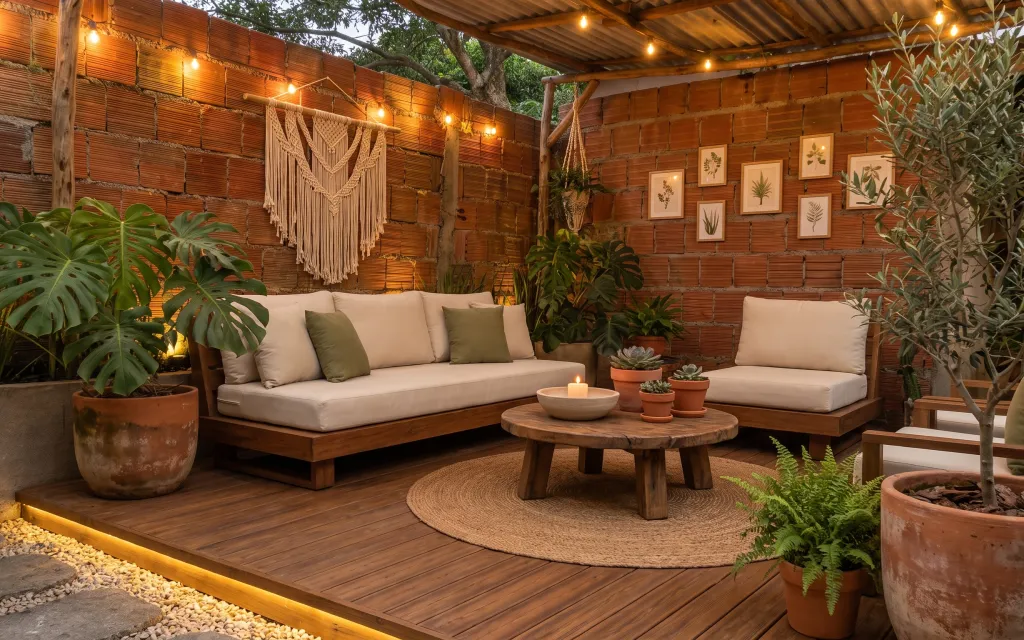
Why this terracotta-and-cream corner is the outdoor patio seating of 2026
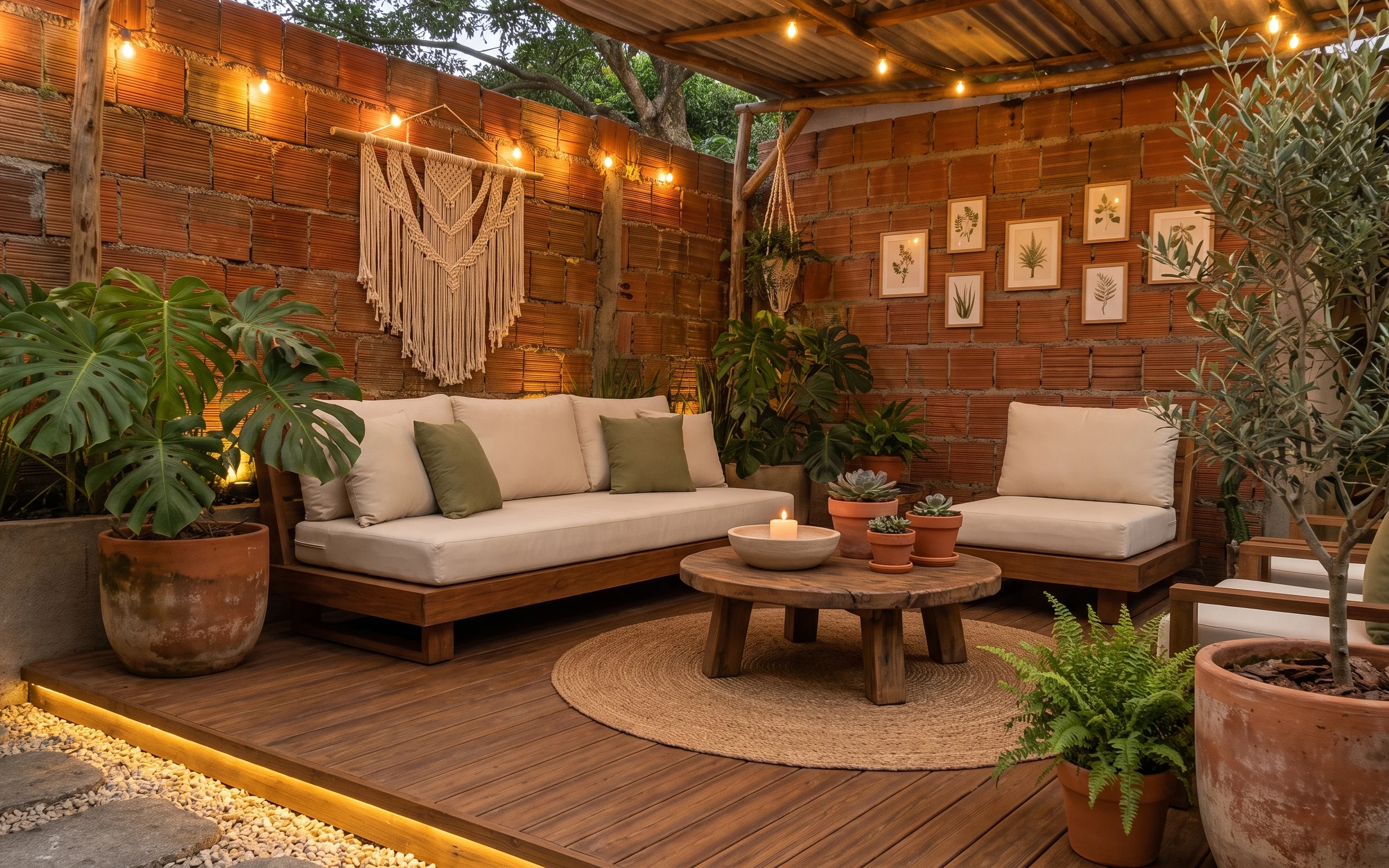
There’s a reason boho outdoor spaces always look expensive: they repeat a few materials in different scales. In this photo, the jute area rug anchors the whole deck, cream cushions soften the wooden sofa frame, and green plants add that lived-in “someone actually lounges here” feeling. The macrame wall hanging brings movement against the brick-and-stucco wall, while warm string lights echo the amber tones in the terracotta planters. Best part for homeowners: you can pick the highest-impact changes first and stop when the room already feels done.
I almost grabbed a matching set of outdoor pillows the first time I tried this vibe, and it looked flat—like I’d dressed the sofa, not styled it. What changed my mind was switching to one saturated accent color (sage) against creamy neutrals, then letting texture do the heavy lifting. Macrame and framed prints add the pattern without turning everything into one loud print.
Layer 1 — jute area rug 5×7 ($200) Texture underfoot that hides patio chaos
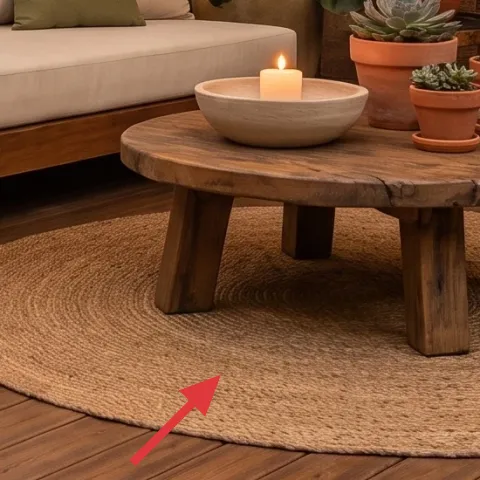
The jute area rug sits under the sofa and coffee table, visually pulling the seating off the bare wood deck. It’s the easiest way to make outdoor seating feel like a “room,” not just furniture placed outside. Jute also forgives small messes—boots, sandy paws, and the occasional dropped snack—because the fibers visually break up staining. The trade-off is that jute wants a bit of care in wet weather, so this works best when you can let it dry fully or use a washable outdoor rug pad. Compared with a slicker flatweave, jute’s texture reads warmer through string-light glow.
Choose a rug pad that won’t slip
A non-slip outdoor rug pad keeps the rug from inching when people stretch across the bench.
Layer 2 — sage throw pillows (2-pack) ($40) one green note against cream cushions
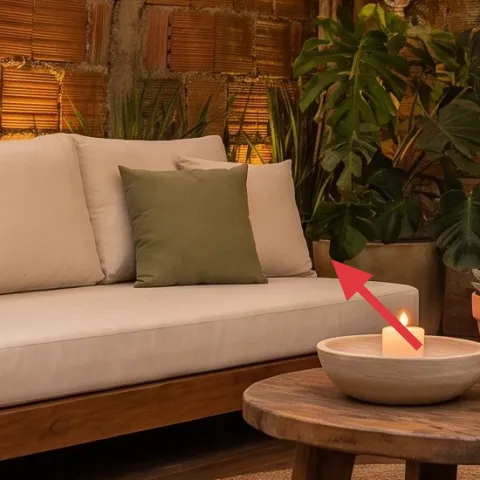
Those sage pillows are doing double duty: they add color to the cream cushion field, and they soften the straight lines of the wooden sofa frame. When you’re styling an outdoor lounge, bright colors can skew neon once the sun fades, but sage stays earthy next to terracotta walls and green plants. I like a two-pack here because you’re not committing to a whole cushion makeover—just a targeted color echo. The trade-off is you may need a quick fluff after rain or wind, since outdoor fabrics can settle. This choice beats going all-cream, because it gives the eye a focal point where the string lights hit.
Match the pillow color to the plants, not the cushions
Sage reads natural because it sits in the same color family as the leafy greens.
Layer 3 — macrame wall hanging ($60) vertical texture that fills the brick wall
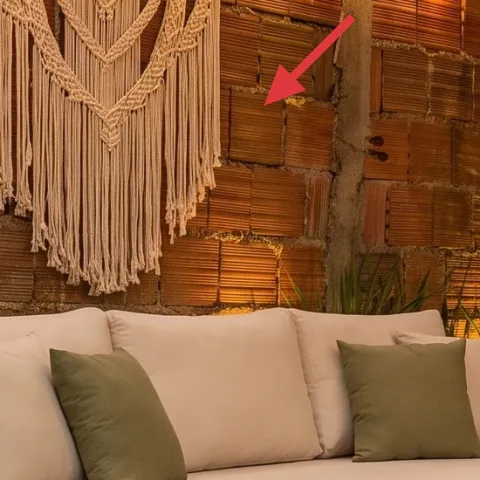
The macrame wall hanging adds airy texture right where an outdoor wall usually feels heavy. Against the brick-and-stucco texture, the knots create depth without needing paint or demolition, and the fringe movement looks great when there’s even a little breeze. I’d rather invest in one larger wall texture than in multiple small decor pieces, because it gives the wall a “center” instantly. The trade-off is storage: macrame can snag on coats or umbrellas, so it’s best kept stable year-round if you can cover it during bad weather. Compared with framed prints alone, macrame softens the geometry of the wall and ceiling beams.
Hang it with wind in mind
If your patio gets gusts, choose hardware that won’t loosen and keep the fringe from tangling nearby lights.
Layer 4 — outdoor string lights set ($45) warm bulbs that make everything look styled
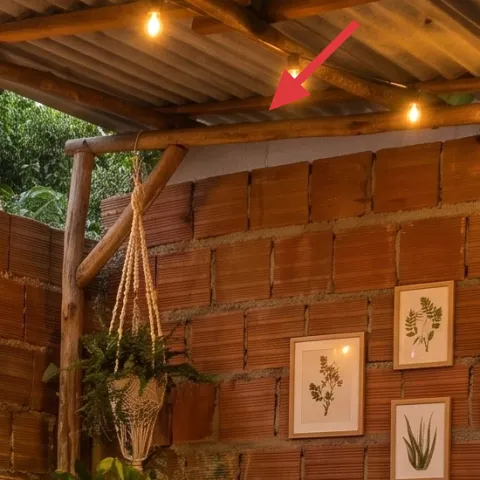
Those warm string lights are the “after sunset” layer—instant mood without changing any furniture. They also visually connect the wall texture, the ceiling beams, and the plants, so the space feels intentional from multiple angles. I’m choosing a string-light set because it’s one of the few outdoor lighting upgrades that’s fast, budget-friendly, and renter-homeowner friendly. The trade-off is that you’ll need an outlet plan and outdoor-safe extension cords (or a covered connection) so cords don’t become trip hazards. Compared with swapping ceiling fixtures, this gives you a softer glow that flatters skin tone and makes cream cushions read cozy, not washed out.
Keep the wire line high
Run the string close to the beams so the bulbs sit above eye level.
Layer 5 — framed botanical prints set ($120) repeatable pattern that stays calm
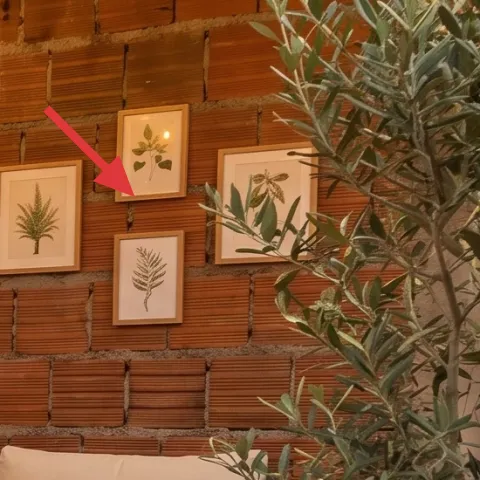
The framed botanical prints are small, spaced out, and consistent in style, which is why the wall doesn’t feel cluttered even though there are several pieces. This is the moment that turns a “pretty outdoor corner” into a designed one: a coordinated print set gives your plants a visual partner while keeping the palette grounded in green and cream. If you tried to replace the look with larger art, it would overpower the wall texture, especially near the string lights. The trade-off is that frames need to be weather-considered—keep them sheltered or choose outdoor-rated frames if you’re leaving them out. As a budget alternative, a thrifted print set works, but the spacing matters more than the exact botanical drawing.
Use consistent frame finishes
Same-width frames (even if the prints vary) keeps the wall looking curated.
Layer 6 — medium terracotta planter pot ($40) a painted pot makes the plant moment match
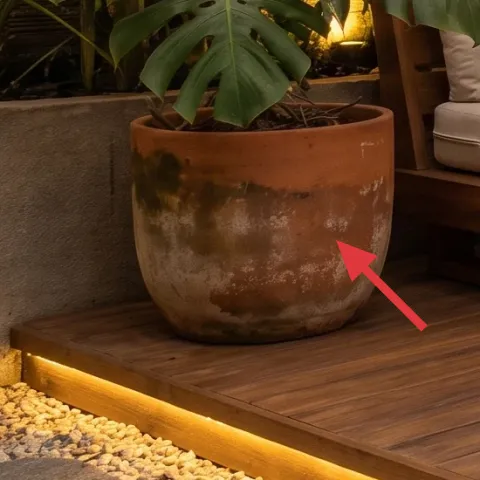
Terracotta planters repeat the wall’s warm tone and make the greenery feel collected instead of scattered. In the photo, the large pot on the left balances the smaller terracotta pots on the coffee table, and that repetition is what makes the whole setup look cohesive. I’d rather upgrade the planters than chase rare plants, because the color story is where boho feels “intentional.” The trade-off is that clay can look plain when it’s new—painting gives it that lived-in variation. This layer also lets you control the palette: a muted glaze or matte paint will tie in the room’s terracotta without turning the plants into a separate theme.
Make it instead of buying it
Paint a medium terracotta pot matte to match the wall’s warm tones, so every plant corner looks coordinated without buying a full new set.
Materials
- Outdoor spray primer — 1 can — store-brand — $10
- Matte outdoor acrylic paint (terracotta or clay) — 1 can — $12
- Outdoor clear sealer (scuff-resistant) — 1 small can — $8
- Disposable gloves — 1 pair — $0
- Paint stir stick / scrap cardboard for protection — 1 pack — $0
Steps
- Wash the pot with warm water and let it dry fully.
- Lightly scuff the surface so primer grips.
- Spray primer in thin, even coats and allow to dry.
- Apply the first paint coat and let it dry.
- Apply a second paint coat for full coverage and let it dry.
- Seal with a clear outdoor coat and let it cure completely before placing outdoors.
Total DIY cost: $30 — saves about $10 over buying.
Layer 7 — tea light candle in ceramic bowl ($30) tiny light that makes the whole deck glow
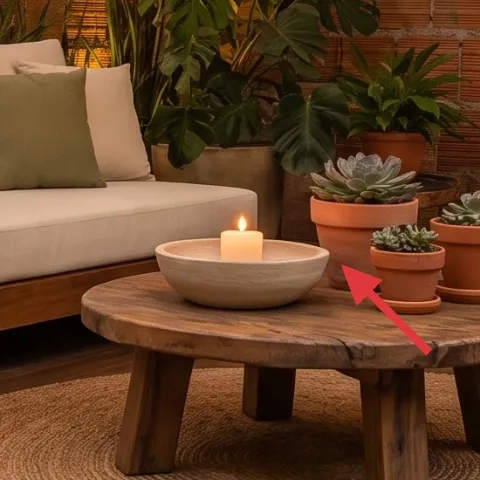
A tea light in a ceramic bowl gives you that low, intimate glow near the coffee table—exactly where people’s hands and conversation happen. It reads as a “styling detail” rather than a big lighting fixture, so it won’t fight the string lights overhead. I love this choice because it’s easy to move around: if the patio mood changes, the candle follows the seating. The trade-off is safety and timing—use it only when you can supervise it, and swap to a covered option if breezes are strong. Compared with buying a larger lantern, this keeps the look delicate and lets the warm bulbs do the heavy atmosphere work.
Use the same bowl color story
Pick a ceramic tone that sits between cream and terracotta for smoother color blending.
The cost, layer by layer
| Layer | Item | Cost |
|---|---|---|
| 1 | Jute area rug 5×7 (outdoor-ready) | $200 |
| 2 | Sage throw pillows (2-pack) | $40 |
| 3 | Macrame wall hanging | $60 |
| 4 | Outdoor string lights set | $45 |
| 5 | Framed botanical prints set (5–7) | $120 |
| 6 | Medium terracotta planter pot (DIY equivalent) | $40 |
| 7 | Tea light candle in ceramic bowl | $30 |
| Total | $535 | |
If you want a cheaper variant, swap the framed botanicals for fewer prints and thifted frames, use a smaller jute rug with a non-slip pad, and choose fewer string-light bulbs. You’ll still keep the same color story and texture mix—just with less “quantity.”
What worked, what didn't (across the whole room)
The biggest wins here are the layering choices: jute underfoot, sage accents on cream cushions, and warm string lights that make the wall texture look intentional. The boho look holds together because terracotta and green repeat in multiple places, not because everything matches.
What worked
- The jute rug made the seating feel like a defined zone on the wood deck.
- Sage pillows added a grounded green note without overpowering the cream cushion base.
- Macrame softened the brick-and-stucco wall with vertical texture and movement.
- Warm string lights linked the ceiling beams to the sofa and plants at night.
- Framed botanical prints gave the plants a visual “echo” for a calm, curated look.
- Terracotta planters repeated the wall’s warmth and made the greenery look collected.
What didn't
- Too many pillow colors at once would fight the string-light glow and look busy.
- Small, mismatched frames without spacing can make the wall feel like clutter.
- Skipping a rug pad risks shifting, especially with foot traffic on the deck.
- Placing candles too close to greenery can make them harder to supervise in wind.
- Using glossy paint on planter DIYs can reflect light and look less natural outdoors.
What we'd skip if we did it again
Skip the “everything matches” approach—especially a full set of identical outdoor pillows. In this palette, cream is the base, and sage is the accent. Adding more colors than that pulls attention away from the plants and the wall texture, which are already doing a lot.
Skip buying a second big statement light. String lights already create the warm, flattering atmosphere, and adding another overhead fixture would compete with the ceiling beams and the wall’s texture.
Skip random individual decor placements on the wall. The framed botanical prints work because the sizes feel related and the spacing looks intentional—start with fewer pieces and build the arrangement only after the layout feels balanced.
Frequently asked
How long does this outdoor refresh take?
Most of the changes are quick: rug placement, pillow swaps, hanging macrame, and mounting/arranging framed prints can fit into a single weekend. String lights typically take the longest because of outlet planning and making sure cords are secure. The planter DIY is straightforward, but you’ll want to give paint and sealer time to dry and cure before setting pots back in place.
Can this work if I rent or can’t change the wall?
Yes—most of the visible upgrades are freestanding: rug, pillows, planter pots, and candle styling. For wall decor, use renter-friendly mounting methods like picture-hanging hooks appropriate for outdoor conditions. If mounting macrame isn’t possible, lean it on a shelf or hang it from a beam hook where you can keep it stable without drilling.
What if my outdoor space is smaller than the photo?
Go smaller, not fewer textures. Use a rug size that still sits under the sofa at least partially, then keep the pillow palette to cream plus one sage note. Choose fewer framed botanical prints—aim for a balanced cluster rather than a grid of many frames. For plants, pick one larger planter plus one smaller grouping, and keep the candle and string lights concentrated near the seating.
What if my patio is larger and feels empty?
Repeat the elements with scale. Add more framed botanical prints in the same frame finish family, and consider a slightly longer string-light run so the glow reaches the far end of the seating area. If the deck is wider, consider a larger rug size so the sofa and coffee table sit comfortably within the “zone.”
Where should I shop for these items on a budget?
Rugs and rug pads often have the best deals at big-box home stores or during seasonal sales. String lights and candle bowls are frequently cheaper online with bundle options. For framed botanical prints, look for sets that already match in frame color or buy frames secondhand and print replacements separately. For terracotta planters, garden centers and thrift stores usually have the best variety.
Biggest mistake to avoid in a boho outdoor setup?
Over-adding random patterns. Boho works when a few colors and textures repeat: terracotta + cream + green, plus jute and macrame. If every item is a different style—modern frames, a loud rug, mismatched cushion colors—the wall won’t feel cohesive. Start with the rug and one accent color, then add texture pieces one at a time.
More in Outdoor & Patio
Under $600: boho outdoor patio seating refresh with 7 updates
A warm, terracotta-and-cream boho outdoor seating setup that feels styled, not spendy. This weekend refresh uses 7 visible swaps—rug, pillo…
Under $600: warm brass-and-stone outdoor entry niche refresh
Refresh an outdoor entry niche with an arched mirror, warm metal candles, and a painted bench—plus two wall sconces and big planters. This …
Under $800: boho outdoor kitchen patio refresh with 7 layers
A warm boho outdoor kitchen patio makeover built on 7 high-impact swaps, designed to feel finished without a remodel. This plan comes in un…