- Best for
- Weekend tub nook refresh
- Cost
- Under $700
- Difficulty
- Confident DIY
- Time
- 2–3 days (mostly dry time)
Why this earthy-neutral bathroom tub nook is the bathroom tub nook of 2026
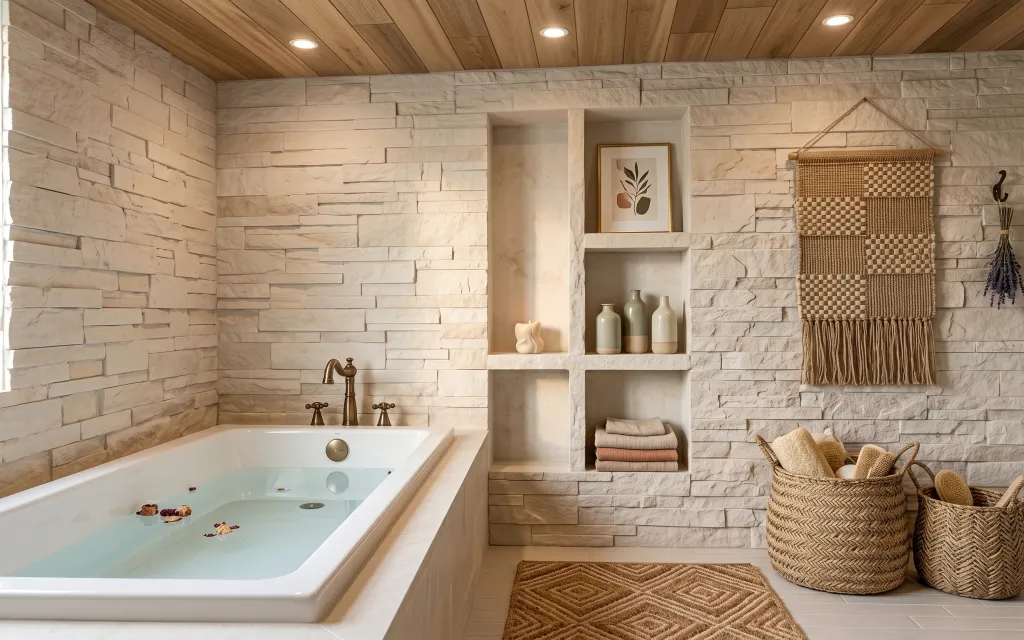
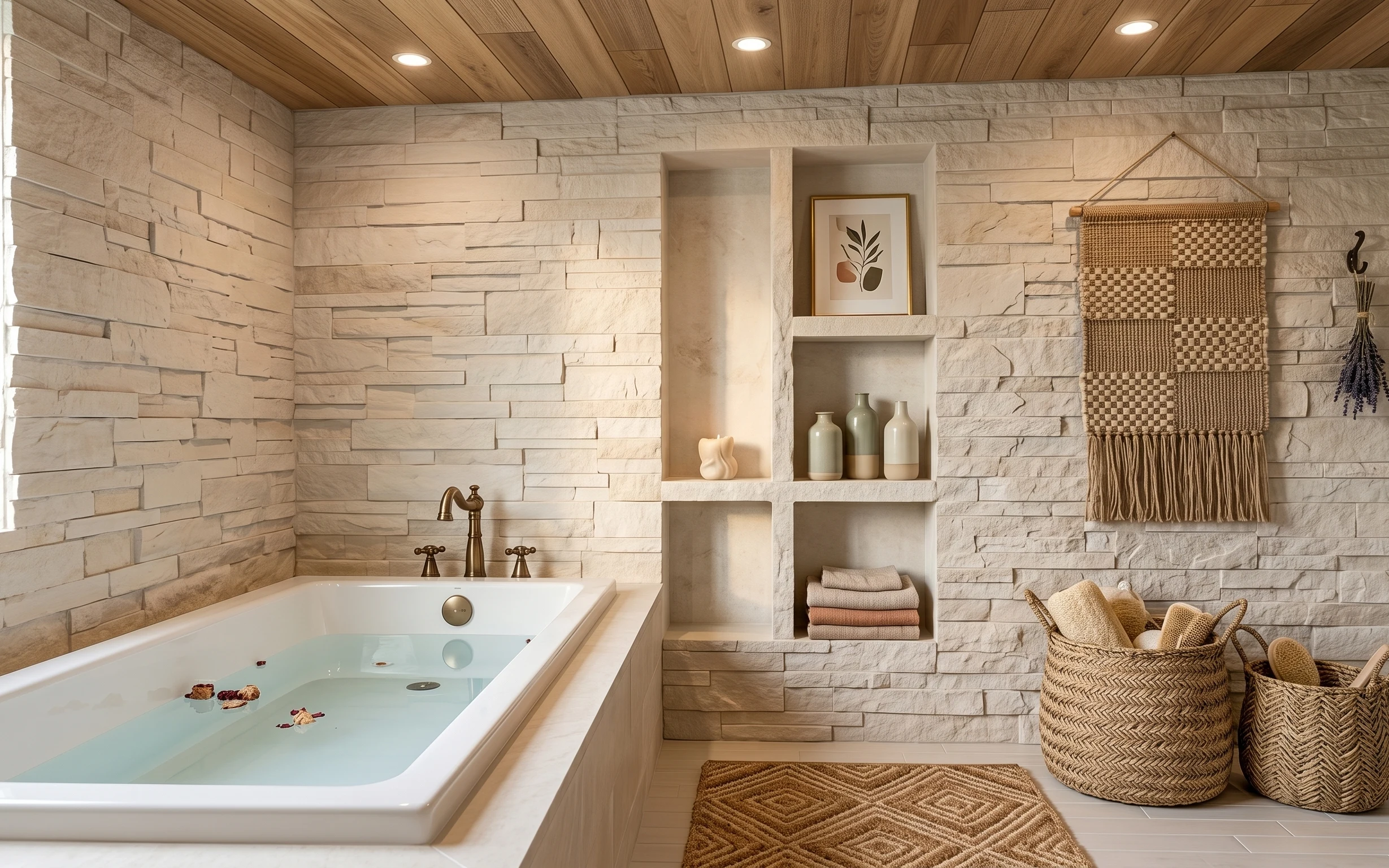
The warm stone tile wall and wood plank ceiling set a cozy baseline, so the “decor” job is really about softening edges. In the photo, the woven wall hanging adds pattern, while the framed botanical print brings a light, botanical note against all that tile texture. Underfoot, the woven bath rug makes the space feel less clinical than smooth flooring. Even the brass faucet reads intentional here—small shine matters when the rest of the room is mostly stone, cream, and beige.
I used to overdo bathrooms with shiny metal everywhere, thinking it would look “clean.” Then I caught myself—this brass-and-stone combo actually needs warmth and texture more than it needs more gloss. What changed my mind was how the woven rug and baskets create a softer rhythm around the faucet and the niche. The result feels calm instead of busy.
Layer 1 — woven bath rug ($90) adds grip and texture underfoot
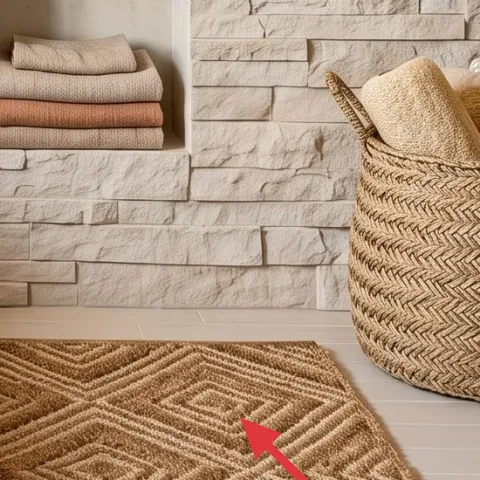
This woven bath rug sits on the lighter floor in the right foreground, and it’s doing two jobs at once: adding softness where everything else is stone and tile, and giving your eye an earthy pattern break. A rug like this is the obvious move versus adding another small decor object, because it changes the “feel” immediately when you step in. The trade-off is keeping it simple—choose a weave and neutral tone that won’t fight the wall texture. If you’ve got grout lines and stone seams already, a grounded rug is the easiest way to make the whole space read intentional.
Pick a rug with texture, not just color
In tile-heavy bathrooms, the weave pattern hides water spots and keeps the floor from looking flat.
Layer 2 — woven wall hanging on rope rod ($120) gives the stone wall a focal pattern
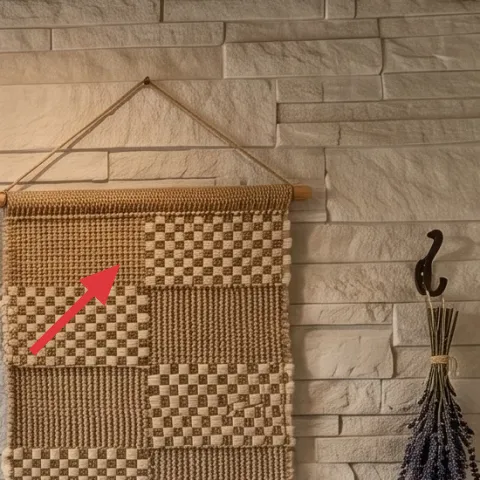
The woven wall hanging is the vertical anchor on the right side, and it’s what prevents the stone tile wall from feeling like a backdrop. The mix of check-like patterning and fringe edges brings in artisan texture without needing extra wall art. Swapping in another framed piece would keep the look more two-dimensional, while this hanging adds dimension and movement as your perspective shifts. The trade-off is that woven pieces can collect dust faster than prints, so plan for quick vacuuming with an upholstery attachment. Hang it high enough to read at a glance, but low enough that it feels attached to the niche and rug area.
Keep the color family warm
Sticking to beige, cream, and natural brown avoids clashing with the stone’s undertones.
Layer 3 — framed botanical print ($110) lightens the niche with a soft organic image
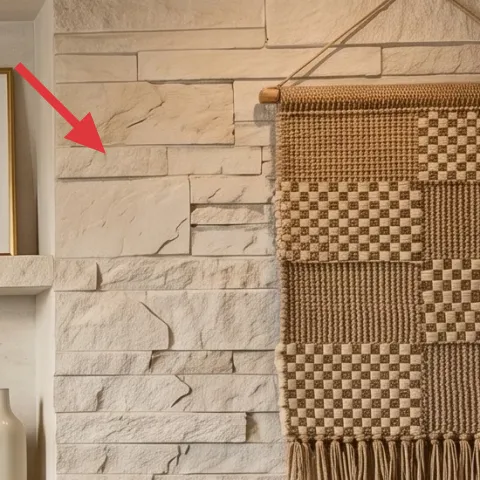
The framed botanical print in the center niche area adds a clean graphic focal point, which matters because the wall behind it is busy with stone seams. This kind of framed print is a better alternative than adding another shelf item, because it gives the eye a “pause” zone with a clear boundary and consistent shape. I’d match the frame warmth to the room’s brass tones so it doesn’t look too cool next to the gold hardware. The trade-off is scale: if the print is too small, it disappears into the tile. Choose a medium size that reads from standing height.
Angle the frame to your main viewing spot
Center it so it lines up with the niche shelves; small misalignment reads instantly in tile rooms.
Layer 4 — three ceramic bottles ($85) adds curated height in the shelves
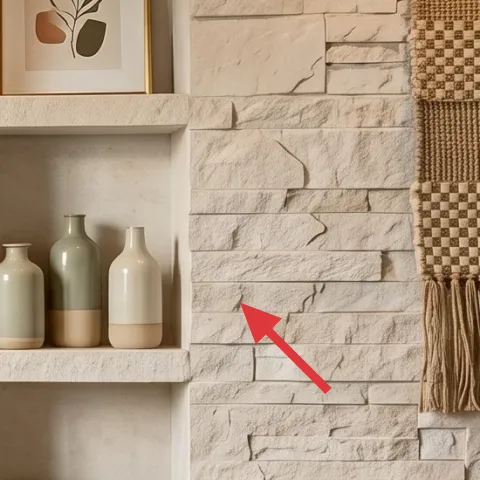
Those three ceramic bottles on the inner shelf create height and repetition—two tall silhouettes plus one shorter piece—so the niche doesn’t look like a shelf full of random singles. Using a set like this is more cohesive than scattering small jars around, because the repeated shapes create rhythm even with a plain background. The bottles also echo the room’s cream-and-warm-beige palette, which keeps the stone from feeling too dominant. The trade-off is spacing: leave enough breathing room between them so shadows don’t merge into one blob. A quick layout with different heights makes the difference between “decor” and “styled.”
Match finishes to your metal hardware
Matte ceramics and warm stone-toned glazes keep the brass from overpowering them.
Layer 5 — brass widespread faucet set ($120) for a cleaner, warmer shine
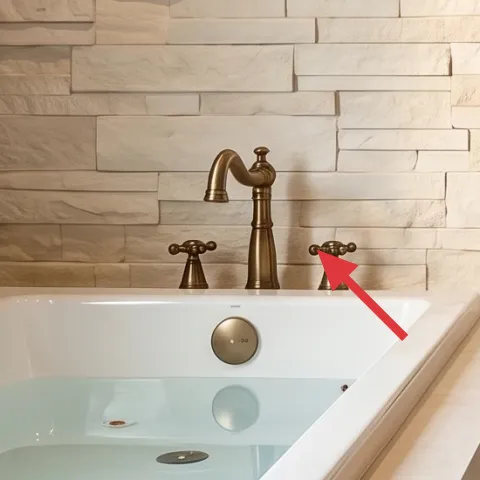
This brass widespread faucet set is visible right at the tub deck, so any dullness or uneven wear shows up fast—especially against the cream stone surround. Re-finishing it (instead of replacing it) is the most impactful option because it updates the room’s “highlight” without blowing the budget or adding demolition time. The trade-off you accept is patience: you have to prep and apply a finish carefully for durability. Done right, the faucet becomes crisp and even again, which makes the woven wall hanging and rug feel more intentional rather than random.
Make it instead of buying it
Spray-paint and topcoat the brass faucet so it matches the warm, polished look in the photo without paying for a full replacement.
Materials
- Degreasing cleaner (spray bottle) — 1 — hardware store — $12
- Sandpaper (assorted grits) — 1 pack — hardware store — $10
- Brass-to-metal spray primer — 1 can — hardware store — $18
- Metal spray paint (brass tone) — 1 can — hardware store — $6
- Clear topcoat (high-heat/water-resistant) — 1 can — hardware store — $5
Steps
- Degrease the faucet thoroughly, then rinse and let it fully dry.
- Lightly sand to scuff the surface so primer bonds.
- Wipe off dust with a clean tack cloth or damp paper towel and dry.
- Mask surrounding areas and vents so paint doesn’t drift.
- Spray on primer in thin coats, letting each coat dry.
- Wait for the primer to dry fully, then sand very lightly for smoothness.
- Spray on metal paint in thin coats, keeping a steady distance.
- Let the finish cure, then apply clear topcoat and let it cure again before use.
Total DIY cost: $51 — saves about $69 over buying.
Layer 6 — pair of wicker baskets on floor ($95) for warm, closed-off storage
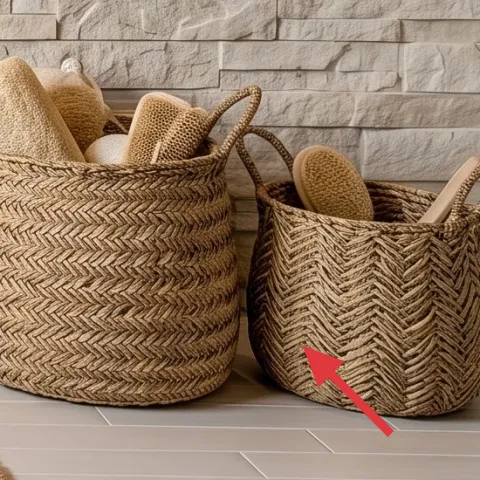
Those two wicker baskets anchor the lower right of the scene and keep the bathroom looking collected instead of cluttered. They’re a better move than adding a new cabinet because they offer instant function—towel storage, cleaning-caddy vibes, or extra linens—without taking up wall space. The trade-off is that baskets invite a “put things back” routine; open storage only works when it stays styled and contained. Style them by varying basket types—one fuller, one emptier—or by placing one basket closer to the rug so they visually group. If you’re updating a tub nook, this is the kind of detail that makes it feel finished.
Don’t choose baskets that snag towels
Look for smooth edges and tight weaving so folded textiles don’t catch on the rim.
Layer 7 — small ceramic vase ($70) to soften the niche corner
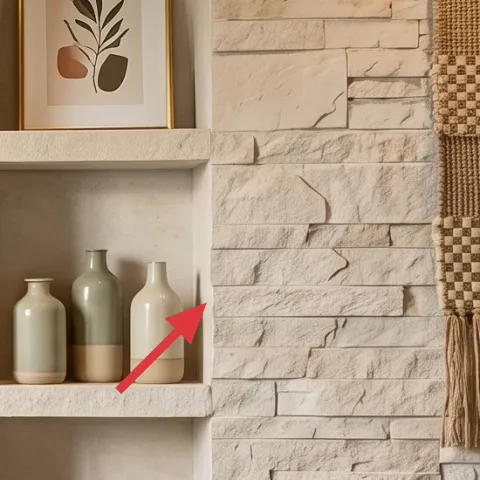
The small ceramic vase on the niche shelf adds a gentle sculptural curve that balances the room’s straight stone lines. Keeping it as a single focal object is the simplest alternative to adding more bottles or more small decor pieces—too many items in tile niches starts to look crowded. This vase also works because it sits near the bottles, creating a layered “still life” effect without repeating the same height. The trade-off is minimalism: pick one vase you truly like and resist adding a second to “fill space.” When the niches are busy with stone texture, one well-placed curve reads like design.
Use one sculptural piece per shelf
A single curved form keeps the niche feeling calm against the textured wall.
The cost, layer by layer
| Layer | Item | Cost |
|---|---|---|
| 1 | Woven bath rug | $90 |
| 2 | Woven wall hanging | $120 |
| 3 | Framed botanical print | $110 |
| 4 | Three ceramic bottles set | $85 |
| 5 | Brass widespread faucet set | $120 |
| 6 | Pair of wicker baskets | $95 |
| 7 | Small ceramic vase | $70 |
| Total | $690 | |
If you want a cheaper variant, focus on swapping only the highest-impact textile and wall pieces: choose a lower-cost rug with similar beige tones and a smaller woven wall hanging, then keep the framed print and ceramics simple. That approach keeps the look cohesive while cutting the overall spend.
What worked, what didn't (across the whole room)
Overall, this tub nook works because the hard surfaces are warm and consistent, and the upgrades add texture at different heights. The woven wall hanging and woven rug create a natural, calming rhythm against the stone tile, while the brass faucet provides a bright highlight when it looks clean and even.
What worked
- The woven bath rug softens the floor and makes the bathroom feel less stark underfoot.
- The woven wall hanging adds dimension so the stone tile wall doesn’t feel like a flat backdrop.
- The framed botanical print gives the eye a clear focal boundary near the niche.
- The three ceramic bottles create height and repetition, which reads styled instead of accidental.
- The brass faucet becomes a warm highlight that ties into the neutral palette when it’s evenly finished.
- The wicker baskets keep lower-shelf clutter contained while adding natural texture at eye level.
What didn't
- Adding too many small shelf items at once makes the niche look busy against stone seams.
- Using a flat, low-texture mat undercuts the cozy feel and shows footprints and water marks.
- Letting the faucet finish look dull or uneven makes the whole nook feel unfinished.
- Choosing a woven wall piece with cool grays can clash with warm beige stone undertones.
What we'd skip if we did it again
Skip buying a matching set of bathroom hardware and decor pieces all in the same metal. In this tub nook, brass already gives enough shine, and the stone plus wood ceiling do the heavy lifting visually. Mixing finishes only works when it’s intentional—so it’s better to repeat the same warm family through the faucet and frame instead.
Skip adding extra wall shelves or more objects into the niches. The stone tile wall is textured enough that shelves can quickly become visual noise. One framed botanical print, a small vase, and a compact set of bottles is plenty—especially when there’s a woven hanging pulling the eye vertically.
Skip choosing a rug that’s too bright or too patterned compared to the wall hanging. When the room already has check-like texture in the woven wall piece, the floor needs a grounding weave in beige tones. Keeping the palette warm and neutral makes the rug feel like part of the architecture instead of a separate purchase.
Frequently asked
How long does this kind of bathroom tub nook refresh usually take?
If you’re sourcing everything up front, the decor swaps (rug, baskets, wall hanging, and art) usually take one focused day. The faucet re-finish is the time manager: prep and spray can be done in a single day, but curing and re-coating takes extra waiting. Plan about 2–3 days total so the finish isn’t rushed.
Is this renter-friendly or is it mainly for homeowners?
This specific tub nook includes items you can buy and place without changing the structure—rug, woven wall hanging, baskets, and framed print are renter-safe. The faucet re-finish is homeowner-level work because it involves coating a fixture. If renting, skip the faucet layer and put the budget into the woven wall hanging and rug for the same texture payoff.
What if my bathroom is smaller or the niches are less deep?
For smaller niches, keep the same arrangement style: one framed botanical print plus either a small vase or a compact bottle set. Use fewer objects and lean toward taller shapes so the niche still reads intentional from across the room. For very tight bathrooms, choose a smaller rug size and focus on texture rather than scale.
Where should I shop for the woven wall hanging and baskets?
Look for woven pieces in home decor retailers, artisan-style marketplaces, and big-box stores with a “natural fibers” section. For baskets, compare weave tightness and rim smoothness—these details matter for keeping towels from snagging. If you want the same vibe as the photo, search for warm beige, natural brown, and check-like or woven patterns.
What’s the biggest mistake people make in tub nook styling?
Overcrowding niches with lots of small items. Tile and stone already bring visual texture, so tiny decor pieces compete with each other. Instead, repeat shapes (bottles) or repeat finishes (brass + warm neutrals), then add only one sculptural curve like the vase. Let the rug and wall hanging do the pattern work.
More in Bathroom
Under $700: earthy-neutral bathroom tub nook refresh
A bright, earthy-neutral bathroom tub nook gets a refresh using 7 budget-friendly upgrades—from a woven bath rug and wall hanging to a quic…
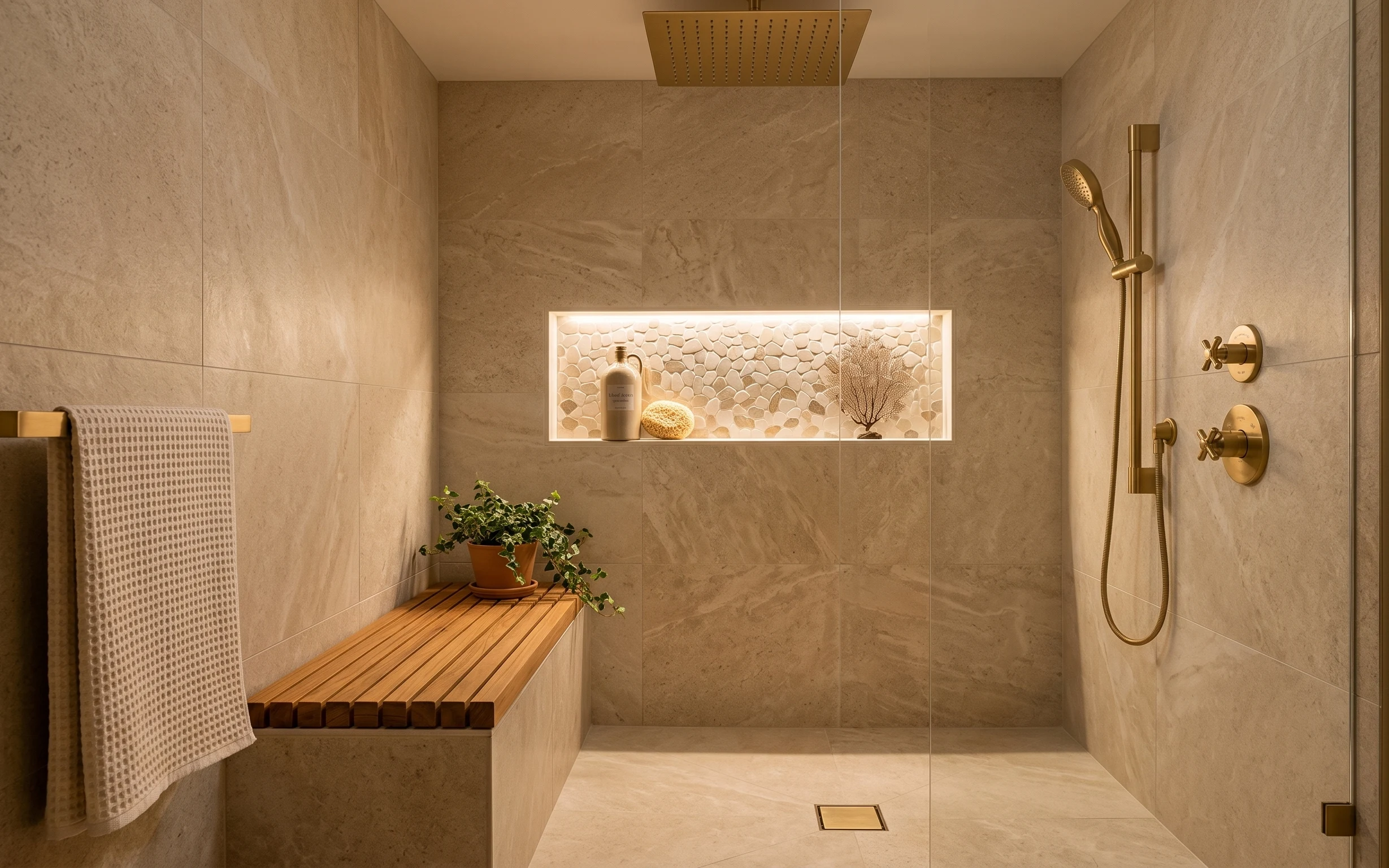
Under $400: move-friendly bathroom shower-niche refresh
A warm stone-and-brass bathroom shower niche gets a renter-friendly refresh with seven move-ready swaps. Total budget: under $400, focused …
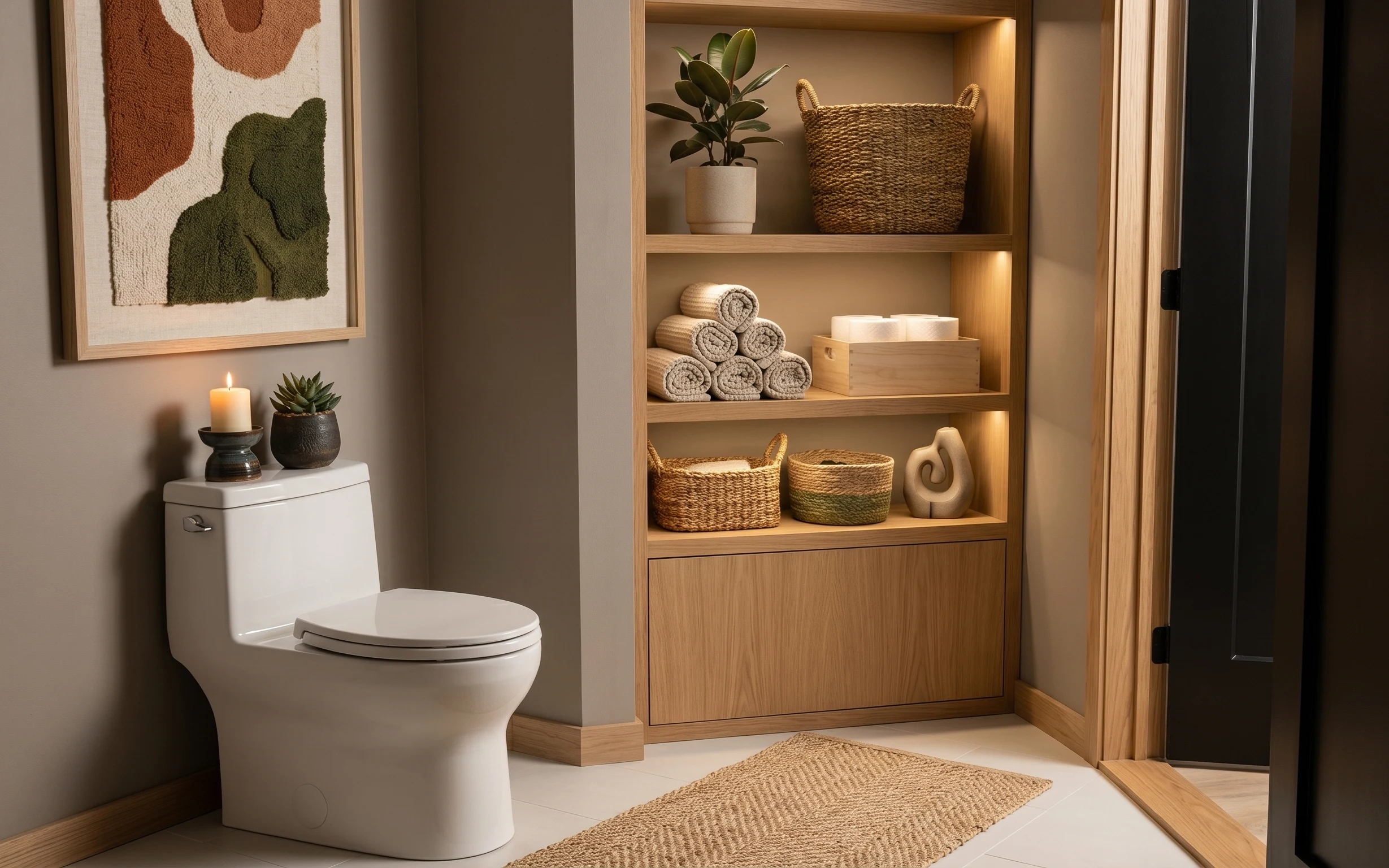
Under $300: renter-friendly bathroom cabinet nook refresh
A renter-friendly bathroom cabinet nook refresh that leans earthy-neutrals: rug, framed wall art, a warm candle moment, and shelf styling y…