- Square footage
- Small nook
- Cost
- Under $250
- Difficulty
- Easy
- Renter-safe
- Yes (no drilling)
Why warm taupe-and-white styling is the vanity dressing nook of 2026
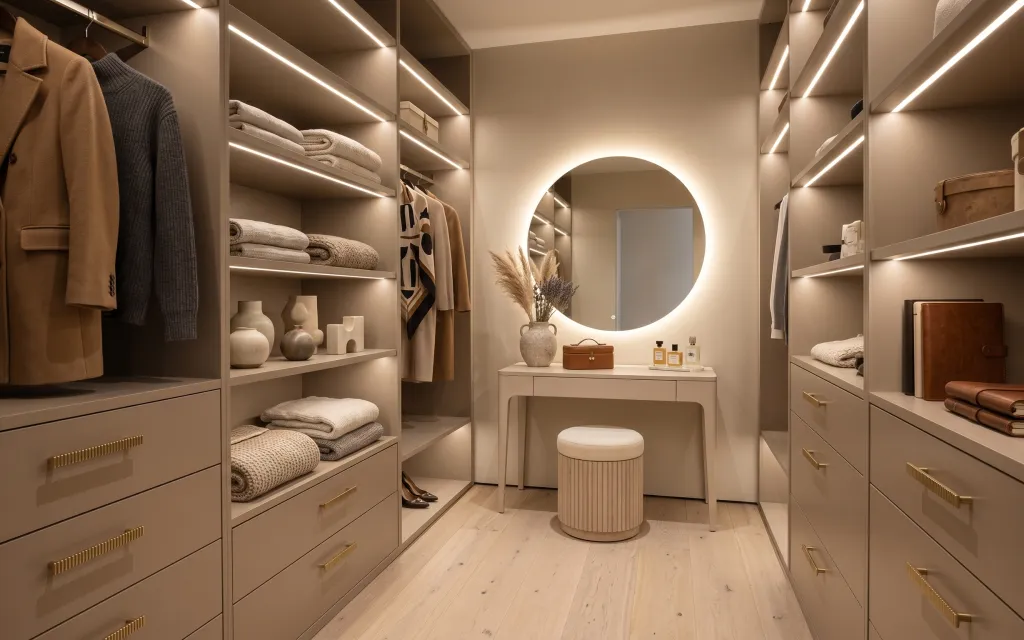
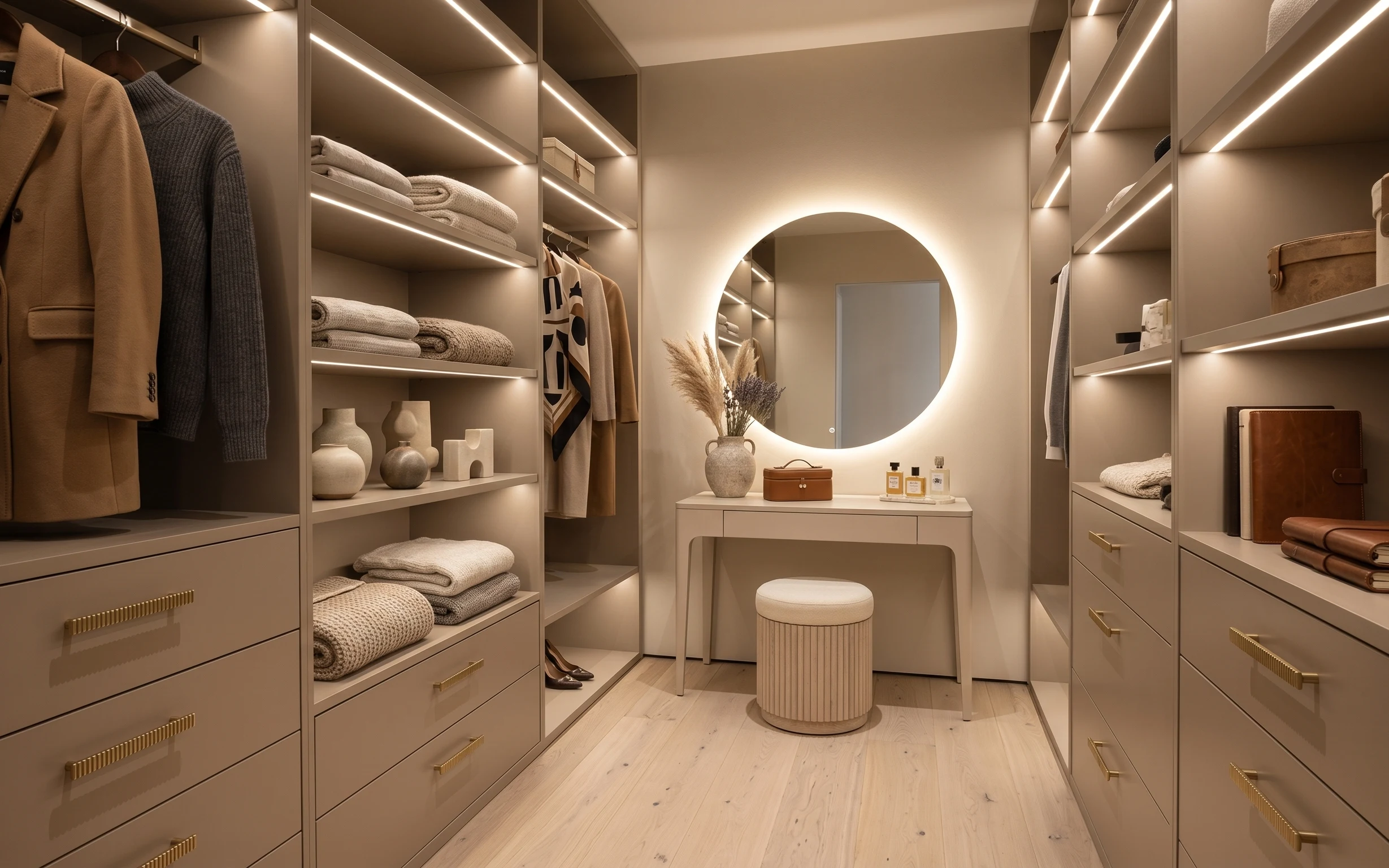
That soft, warm glow in this nook is doing more than it looks: it makes the white shelving feel bright and the taupe accents feel intentional. The visual rhythm here comes from repeat textures—folded towels on shelves, the smooth shine of a round mirror, and the matte ceramic-and-dried-grass look on the vanity. This is achievable for shared housing because every swap can pack flat: textiles fold, table styling lifts off, and a mirror can be wrapped for moving. The goal isn’t a whole-room redesign; it’s a tight cluster that always looks “done.”
I used to overthink styling and buy “permanent-feeling” pieces, then hate boxing them for the next lease. What changed my mind was noticing how often I reach for the same objects: the mirror for a quick check, the tray for everyday items, and neatly stacked towels so the shelves don’t look chaotic. When those basics look consistent, the whole nook reads calm even with real life happening around it.
Layer 1 — round wall mirror ($40) Clean reflection for quick checks
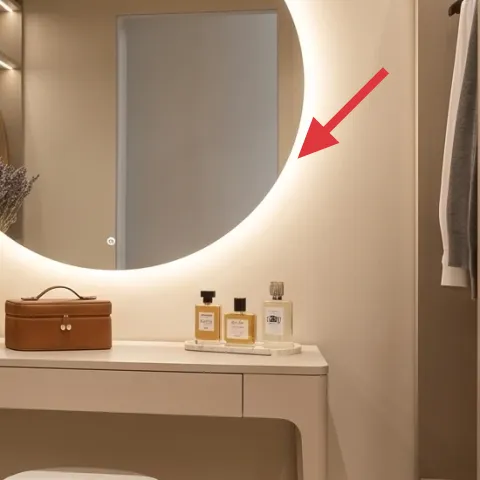
A round wall mirror is the easiest anchor for a vanity dressing nook because it centers the light and makes the shelf-and-drawer layout feel less boxed-in. In this photo, the mirror’s warm halo matches the LED strip glow, so the vibe stays cohesive instead of “bolted on.” The trade-off is that mirrors are a little fragile, but this is a rental-friendly win because it can be wrapped and carried without needing any wall work. Compared with adding more décor first, a mirror does the most for the least clutter.
Match the mirror shape to the nook’s lines
When the cabinetry is built-in and straight-edged, a round mirror softens the geometry without fighting it.
Layer 2 — wood tray on vanity ($35) One landing spot for daily items
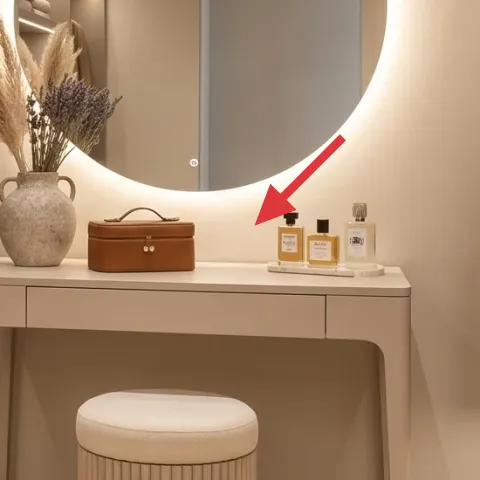
A wood tray gives the vanity tabletop a clear “home base” for bottles and small essentials, which matters in shared housing where items migrate fast. The tray shown here reads warm against the white cabinetry, and it visually groups the styling so the nook doesn’t look scattered. The trade-off is giving up some open countertop space, but that’s exactly what keeps the area move-in-ready day after day. It’s also one of the most packable upgrades—lift, wrap, and tuck into a box. A simple tray beats buying multiple small organizers that all look mismatched.
Keep the items the same height
Stacking the tallest bottle at the center makes the tray look composed instead of random.
Layer 3 — ceramic vase ($20) Matte texture on the shelf-side
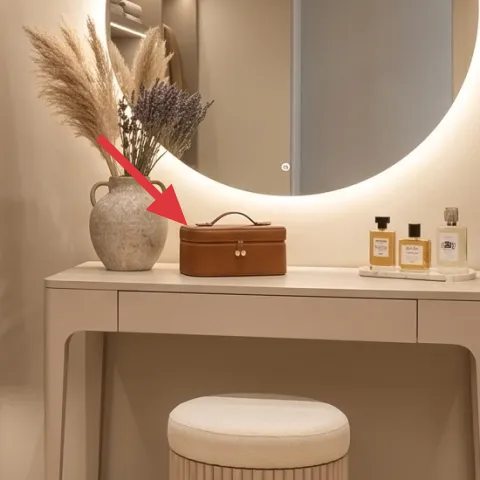
A ceramic vase adds that calm, tactile midtone that’s already in the nook’s palette—warm white, taupe beige, and soft gray. The vase sits on the vanity close to the mirror, so it shows up every time the space is used, not just when you’re hunting for décor. The trade-off is choosing function-first: a vase without anything inside can look bare, but a simple ceramic vessel gives you a place to add dried stems or small branches as seasons change. If the alternative is buying a larger statement piece, ceramic wins because it’s lighter, cheaper, and easier to pack.
Use matte ceramics to calm busy shelves
In a built-in storage nook, matte surfaces prevent the area from feeling like it has too many glossy reflections.
Layer 4 — dried pampas grass ($30) Height that reads luxe without maintenance
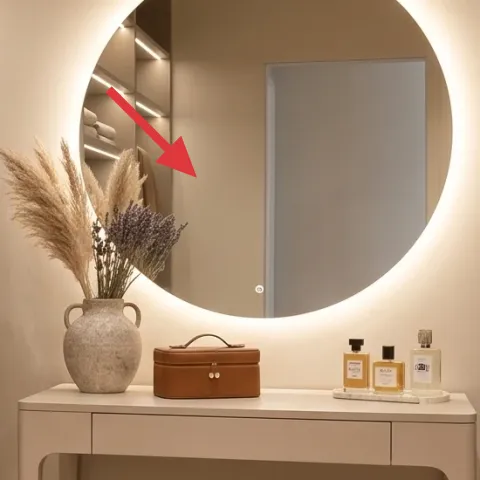
Dried pampas grass gives vertical movement in a nook that otherwise has lots of horizontals—shelves, towels, and drawer fronts. In the photo, the neutral feathery look echoes the warm LED glow, so it doesn’t feel like an obvious “decor trend” placed on top. The trade-off is that dried stems should stay dusted lightly, but that’s still easier than living plants when moving happens on a timeline. A vase plus stems also creates a focal point that makes the mirror-and-tray styling look intentional as a set.
Watch where the stems point
Feathery stems can snag on coat sleeves or get bumped during shared-house rushes—angle them slightly inward for daily life.
Layer 5 — folded beige towels ($25) Texture stacking for instant order
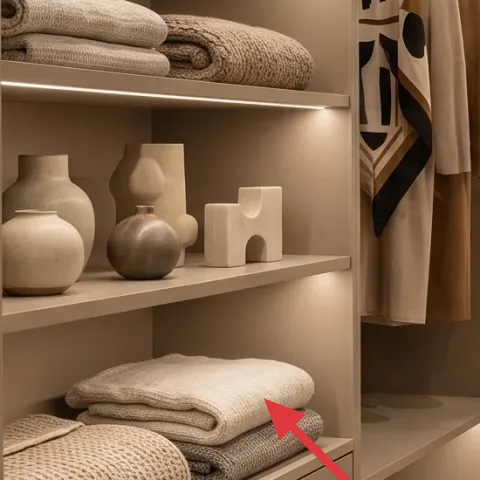
Neatly folded beige towels are the “no-drama” way to make storage shelving feel curated instead of lived-in mess. The photo uses beige towels as a warm layer inside the shelving grid, and that same repeat makes the nook feel styled even when the rest of the house isn’t. The trade-off is that towels have to be maintained—if they sit unfolded, the look collapses quickly. Compared with adding more décor objects to the shelves, towels are cheaper, always relevant, and they pack flat for moves.
Fold to the same thickness
Even a simple consistent fold makes the shelf look planned from a distance.
Layer 6 — hanging tan coat ($40) One curated textile on the open side
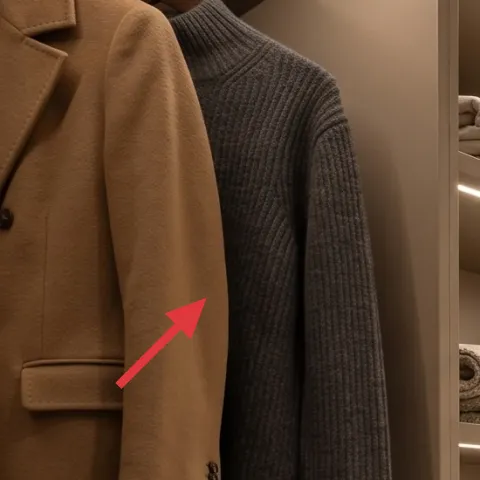
A hanging tan coat brings an extra clothing layer into the visual mix, and in this nook it works because the color matches the taupe warmth already happening. The coat is large enough to be seen in peripheral vision, which matters in shared housing where the space is used daily and looked at from the doorway. The trade-off is that hanging items can look cluttered if there are too many colors, so this layer works best when it’s one hero item, not a random assortment. If the alternative is adding more small décor, a single coat reads more “real life” while still looking deliberate.
Choose one warm neutral and repeat it
Keeping your clothing tone aligned with the towels and ceramics is what makes the whole nook feel cohesive.
Layer 7 — round white ribbed stool ($35) A soft landing for bags and daily use
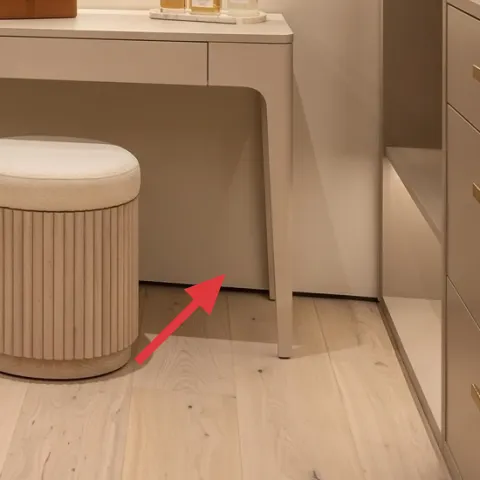
A round ribbed stool gives the nook a dedicated spot for bags, folded items, or a quick sit while getting ready, which reduces countertop clutter. In the photo, its warm white tone works with the mirror glow, and the ribbing adds subtle texture without extra patterns. The trade-off is that stools take up some floor space, but in a small nook they also prevent piles from forming on the vanity. Compared with stacking more baskets, a stool is still move-friendly because it’s one piece to wrap, box, and transport.
Keep the top clear
If the stool is always covered, it stops being a “landing spot” and becomes another pile.
The cost, layer by layer
| Layer | Item | Cost |
|---|---|---|
| 1 | Round wall mirror (24–36") | $40 |
| 2 | Wood tray on vanity | $35 |
| 3 | Ceramic vase | $20 |
| 4 | Dried pampas grass stems | $30 |
| 5 | Folded beige towels (set) | $25 |
| 6 | Hanging tan coat | $40 |
| 7 | Round white ribbed stool | $35 |
| Total | $225 | |
Cheaper variant: shop used for the round mirror and ceramic vase, and replace the stool with a simple fabric seat cover or thrifted side seat—keep the towel folds consistent so the nook still reads intentional on day one.
What worked, what didn't (across the whole room)
The biggest wins here come from grouping: the mirror gives a focal point, and the tray + ceramic + dried stems create one “ready” cluster instead of scattered décor. Textiles on shelves are also doing real work by repeating taupe and soft gray tones. The only spot that can go wrong is when multiple items compete at different heights on the vanity—then the nook looks busy even with warm lighting.
What worked
- The round mirror keeps the vanity area visually centered in a narrow layout.
- A wood tray prevents daily bottle clutter from drifting across the tabletop.
- Matte ceramics and dried stems add texture without glossy glare.
- Towel stacking makes shelves look orderly from the doorway.
- A single warm coat as a textile layer adds “life” without extra décor objects.
- The round stool reduces the urge to set bags directly on shelves.
What didn't
- Too many small items on the vanity breaks the tray’s grouping effect.
- If the towels aren’t folded to a consistent thickness, shelves look unfinished.
- Brightly colored clothing hanging in the nook clashes with the warm neutral palette.
- Dried stems placed outward can snag on sleeves during quick shared-house routines.
What we'd skip if we did it again
Skip buying multiple small countertop organizers at once. In a tight dressing nook, too many containers create their own visual clutter, and the tabletop stops feeling like a calm landing spot.
Skip adding extra decorative objects to the shelves beyond towels plus one or two ceramics. The built-in shelving already gives structure; the goal is repeat textures, not more items fighting for attention.
Skip oversized statement décor that doesn’t pack well. When moving within a year is part of shared housing, a fragile or heavy piece becomes more headache than benefit compared with mirror-and-textile swaps.
Frequently asked
How long does this type of vanity dressing nook refresh take?
Plan on about 60–120 minutes for the first pass: wrap the mirror, set up the tray cluster, fold towels, and style the vase and dried stems. After that, it’s mostly maintenance—keeping towels stacked and doing a quick reset when shared-house chaos hits.
Can these swaps work in a real student budget?
Yes—this list is built around items that can be thrifted or bought during sales, then reused in later apartments. Mirror and ceramics are the easiest to find secondhand, and textiles are the most forgiving to re-style without replacing a fixed setup.
What if the nook is smaller or the mirror feels too big?
If the mirror dominates, choose a slightly smaller round size and keep the tray styling minimal—one vase and a few small items on a single layer. For a narrower nook, the folding consistency of towels matters more than adding extra décor height.
Where should the mirror and tray go if the layout is different?
The mirror should sit where it can catch your eye during a quick check—usually across from the doorway path or directly facing the vanity. The tray should be the one repeat landing spot for daily items so everything else can stay off the tabletop.
What’s the biggest mistake in small dressing nooks?
Over-styling. In compact spaces, every extra object competes with the shelving grid, so the nook looks busy fast. Focusing on one grouped cluster (mirror + tray + ceramic + stems) and consistent folded towels keeps it looking intentional.
More in Small Spaces
Under $250: 7 move-ready swaps for a vanity dressing nook
A warm, japandi-leaning vanity dressing nook can look intentional without permanent changes. This $250 refresh focuses on move-ready swaps—…
Under $400: a home bar corner refresh with 7 renter swaps
A modern home bar corner makeover with a bold framed print, a grounding patterned rug, and easy renter-friendly styling swaps. Total budget…
Under $600: sunroom daybed nook refresh
A sunroom daybed nook gets cozier with seven specific swaps and one DIY curtain upgrade, all aimed at under $600. You’ll end up with a laye…