- Best for
- After-dark hangouts
- Cost
- $330 total (under $400 ceiling)
- Difficulty
- Easy (mostly soft goods)
- Time
- 1 afternoon + packing day
Why warm terracotta-and-gold is the outdoor kitchen patio of 2026
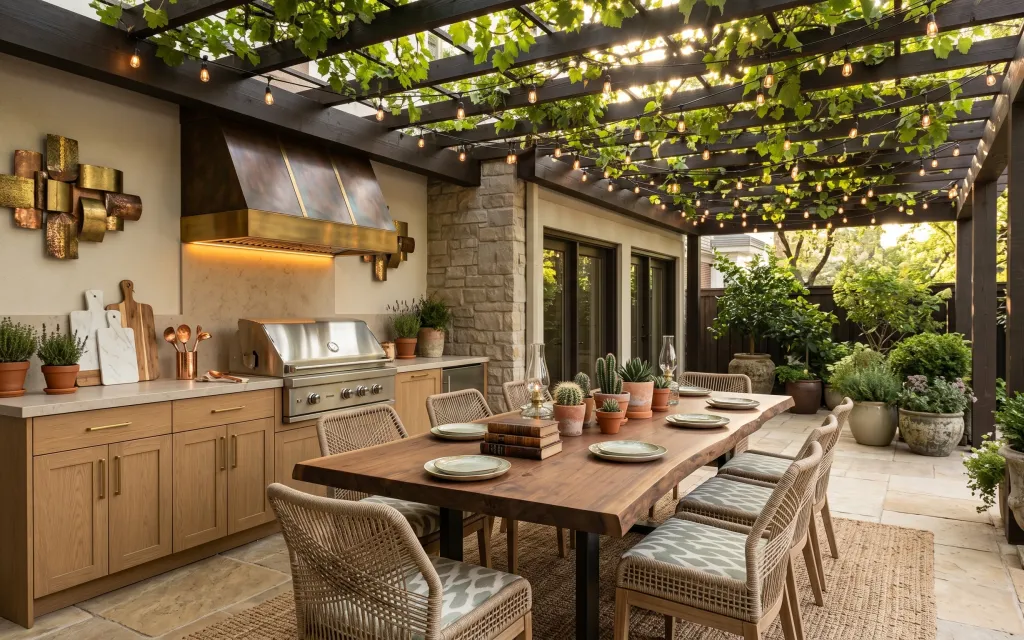
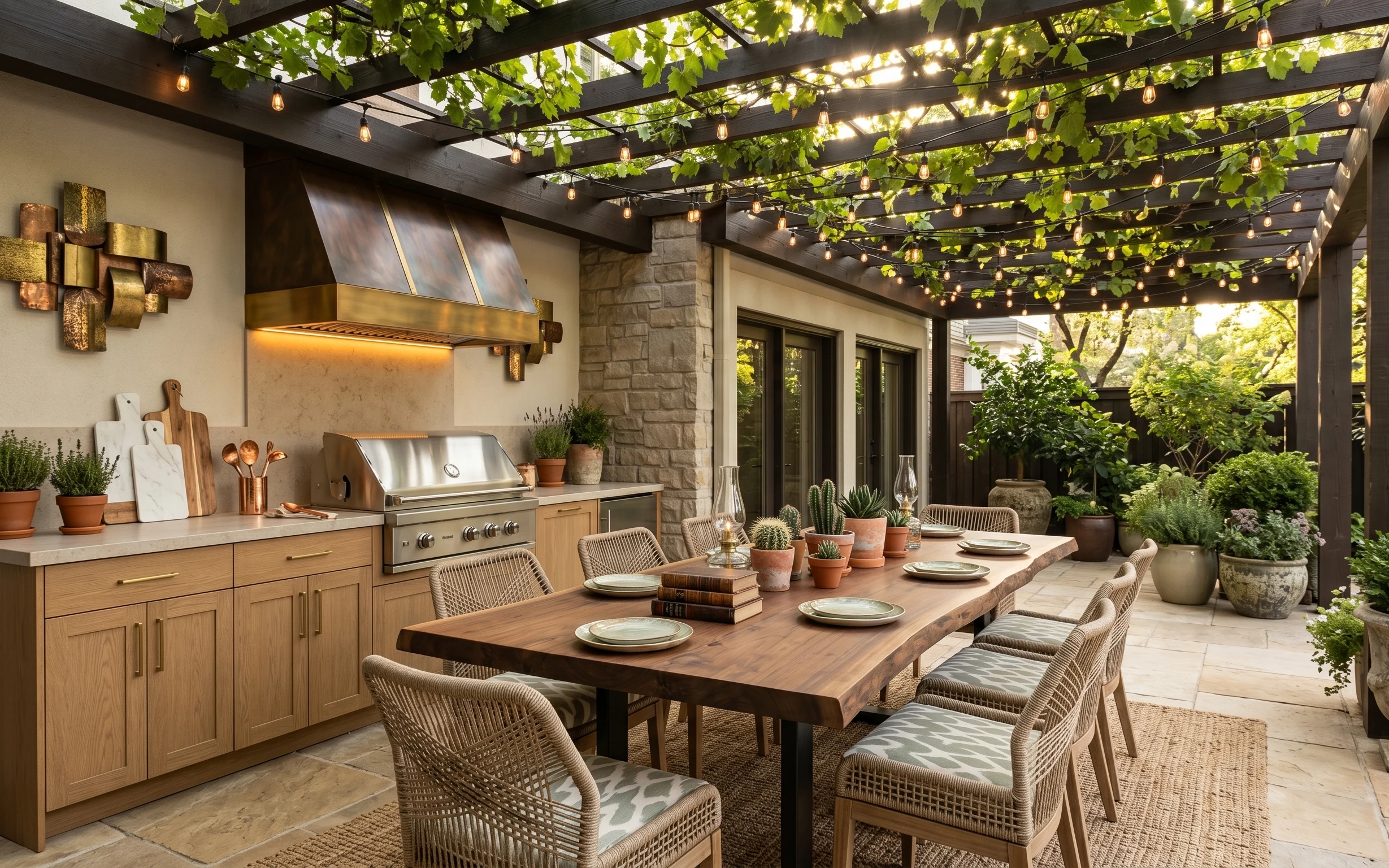
The hero shows a golden, plant-forward outdoor setup with stone patio tiles, a light wood dining table top, and that warm amber glow from string lights overhead. The terracotta planters and the copper utensil holder bring real material texture, while the woven outdoor rug and the patterned seat cushion keep the dining area from feeling too “hard” against the stone. Because everything here is mostly soft goods and freestanding styling, it’s very doable for students and roommates who move within a year or two.
I once tried to “style” an outdoor shared space using only bright decor photos—and it looked great for one weekend, then fell apart fast. The change was shifting to a system: one anchor rug, one lighting layer, then smaller repeating elements (planters, candle glow, and warm metals) that can travel. This look stays cohesive because the textures do the heavy lifting, not permanent installs.
Layer 1 — woven outdoor rug ($150) Texture underfoot for stone patios
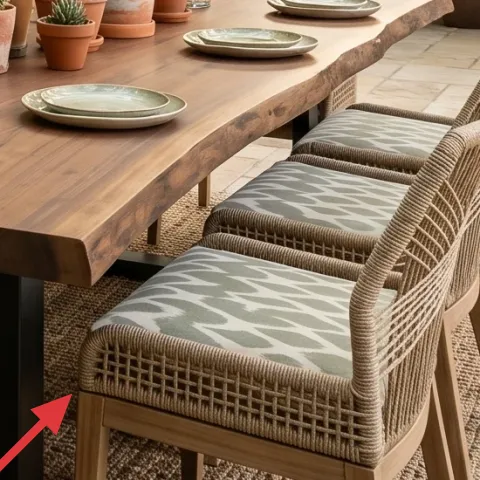
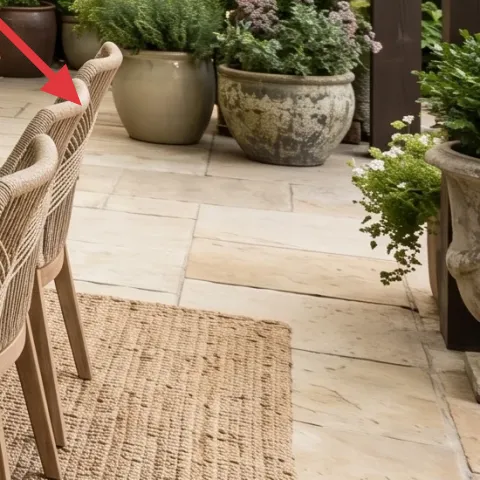
A woven outdoor rug under the dining set is what makes the stone floor feel less cold and more “kept up” in daily life. In the photo, the rug sits right at the chair area, so it visually anchors everyone around the table without needing to attach anything to the patio. A larger 8×10-style rug also helps hide minor scuffs from shared moving-in chaos, like stray dirt and chair legs. The trade-off is that you’ll want a rug made for weather, not a fragile indoor weave—still moveable, just tougher.
Pick a rug with a flat weave
Flat, woven textures tolerate foot traffic better than shaggy outdoor rugs and look intentional next to stone tile.
Layer 2 — string lights with warm bulbs ($15) Warm overhead glow without installs
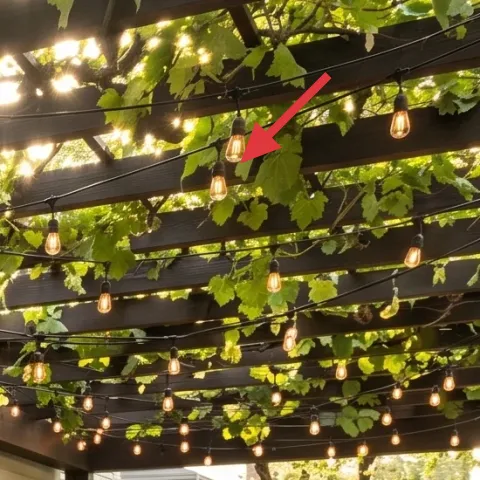
Those warm string lights do two jobs at once: they add a soft halo overhead and they make the outdoor kitchen feel like a destination after sunset. Because the bulbs are freestanding (no hardwired fixture replacement), they’re also realistic for shared housing moves—you can wrap them back into a box. The obvious alternative is a single battery lantern, but that can’t match the “layered ceiling light” feeling of overhead strands. The trade-off here is that you’ll need a safe placement plan (hook points or existing structure), rather than expecting one central plug will solve everything.
Let the warm bulbs lead
Warm white (not cool white) keeps terracotta and copper looking richer instead of yellow-green.
Layer 3 — decorative book stack on table ($15) Adds height near the centerpiece
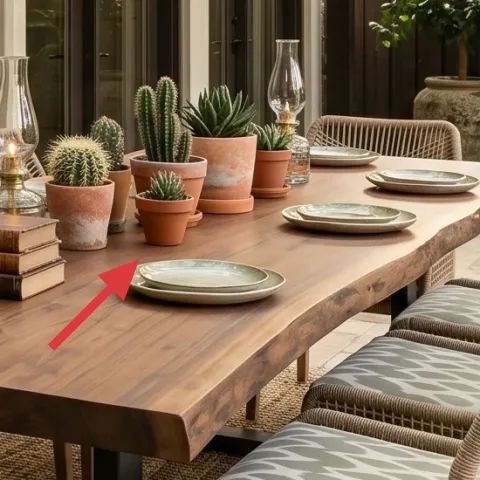
A small decorative book stack works like a visual riser for tabletop styling. In the hero, the books sit near the candle glow, creating a tidy “column” of height that prevents the table from feeling flat even with lots of plant pots nearby. The alternative is adding another tray or more small objects, but stacking paper textures is cheaper and easier to pack when the lease ends. The trade-off is that the books need a consistent color or cover tone—otherwise they’ll look like random clutter instead of part of the centerpiece.
Choose 2–3 matching cover colors
Keeping the spines in the same palette makes the stack look curated instead of accidental.
Layer 4 — glass tabletop lantern/candle holder ($35) Replace with a DIY candle pour
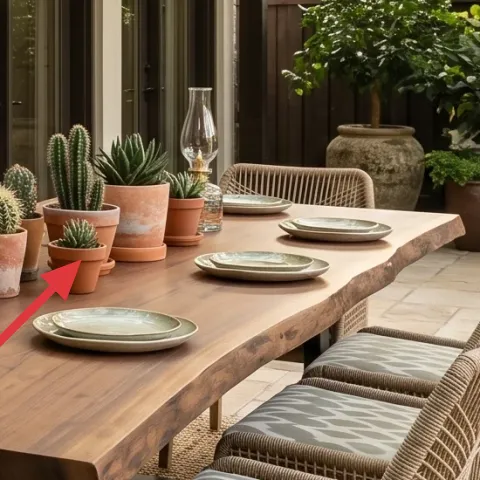
The glass lantern/candle holder is doing the “late-night atmosphere” work in the photo. It adds warm light close to table height, which makes plant styling feel intentional rather than purely decorative. Buying a ready-made lantern is simple, but for shared housing the better move is DIY: a candle pour that can be packed carefully in its own box and remade for the next place. The trade-off is that a poured candle requires a little hands-on time and careful setting, but it’s still fast enough for an afternoon project and doesn’t involve any wall changes.
Make it instead of buying it
This DIY candle pour recreates the same warm-glow candle look in a portable glass container setting—without leaving anything behind at move-out.
Materials
- Soy wax — 1 lb — craft store — $14
- Wicks (with tabs) — 2 — craft store — $4
- Essential oil (scent) — small bottle — craft store — $6
- Candle dye (amber/earth tone) — small packet — craft store — $3
- Cotton wick centering tabs — pack — craft store — $2
Steps
- Set up a heat-safe workspace and weigh the wax in a pouring container.
- Attach the wick to the wick tab and center it in the lantern container.
- Heat wax gently until fully melted, stirring occasionally.
- Turn off heat, stir in dye and scent until evenly mixed.
- Pour slowly into the container, keeping the wick centered.
- Let the candle cool and fully set before moving it.
Total DIY cost: $29 — saves about $6 over buying.
Layer 5 — copper utensil holder ($35) Warm metal to echo the lamp-glow
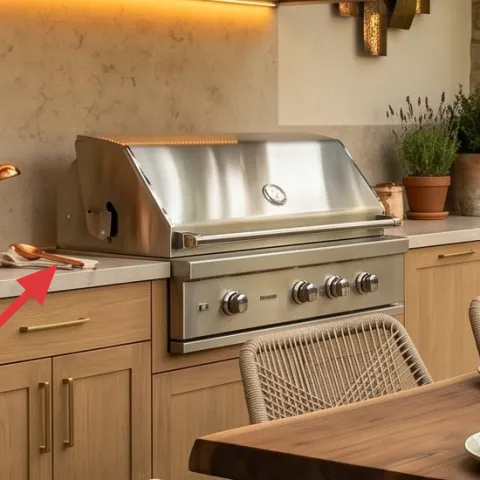
A copper utensil holder adds that same warm-metal note you see in the photo’s kitchen-side styling. It’s useful as a container, but it also functions as decor because it catches light from the string lights and makes the whole surface feel richer. The alternative is a plastic organizer, but copper reads “intentional” next to terracotta pots and wood tones. For shared housing, it’s also easy to pack: it’s freestanding, light enough for one person, and doesn’t require any hardware changes. The trade-off is that metal surfaces can show fingerprints and water spots, so a quick wipe matters.
Skip lacquered-looking copper if it chips easily
Budget copper finishes can flake at the edges after a few moves, so look for sturdy, thicker-feel holders.
Layer 6 — terracotta planter pots ($40) Repeat one material for instant cohesion
Terracotta planter pots are the easiest way to build that earthy, lived-in vibe without touching the “fixed” parts of a rental. In the hero, the repeated terracotta tones connect the table styling to the greenery, so everything feels like one palette instead of random decor items. The alternative is using mixed container materials (metal, white ceramic, and black pots all together), but that can look busy fast in small shared spaces. The trade-off is that terracotta is heavier than plastic, so pack it securely—still very move-friendly because each pot can ride in a small box.
Use repetition, not variety
Three terracotta tones (light, mid, slightly darker) read better than five unrelated pot styles.
Layer 7 — large ceramic planter pot ($40) One bigger base pot for visual weight
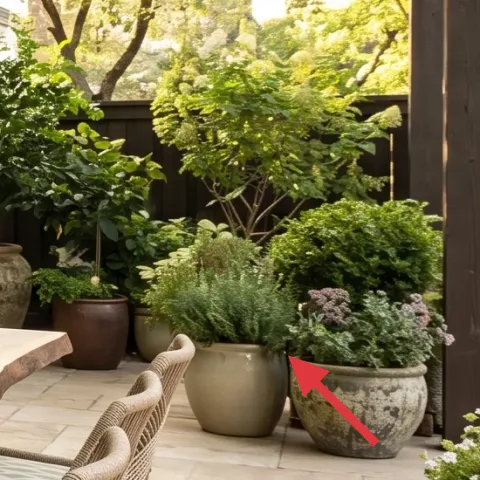
A larger ceramic planter pot gives the arrangement visual weight so the small pots don’t float like clutter. In the image, the biggest container near the right side balances the dining area—especially when overhead string lights are pulling the eye upward. If you only add small pots, the styling can look “busy but shallow,” like it’s missing a foundation. The trade-off is bulk: a large pot takes more space in transit, so pack it with cushioning and choose a pot that’s sturdy enough to survive an extra move.
Protect corners during packing
Wrap the pot lip and base with bubble wrap so chips don’t happen in transit.
The cost, layer by layer
| Layer | Item | Cost |
|---|---|---|
| 1 | Woven outdoor rug (8×10) | $150 |
| 2 | String lights (set) | $15 |
| 3 | Decorative book stack | $15 |
| 4 | Glass tabletop lantern/candle holder | $35 |
| 5 | Copper utensil holder | $35 |
| 6 | Terracotta planter pots (medium) | $40 |
| 7 | Large ceramic planter pot | $40 |
| Total | $330 | |
A cheaper variant keeps the same palette but swaps to smaller scale: choose a smaller 5×7 woven outdoor rug ($80) and cut the candle/lantern budget in half by using a basic glass candle ($15). Keep just one larger planter and two small terracotta pots to hold the “repeat” effect.
What worked, what didn't (across the whole room)
The best results came from layering warm light and grounded textures: the string lights plus rug make the outdoor kitchen feel cohesive even with lots of greenery. Freestanding decor wins for renters because it doesn’t fight the move-out timeline. The only misses were items that would be harder to pack without damage.
What worked
- The woven outdoor rug softened the stone patio look right where the chairs gather.
- Overhead warm string lights made the plants and metal accents look richer after dark.
- The candle-height glow kept the centerpiece feeling intentional, not random.
- Terracotta repetition tied the dining table styling to the potted greenery.
- The copper utensil holder added a warm metal note that matched the lighting temperature.
- A book stack gave height without adding bulky decor pieces.
What didn't
- A larger-than-needed pot arrangement became harder to move between shared schedules.
- Too many mixed container materials started to look busy against the neutral stone.
- Fragile candle containers need extra packing time to avoid chips and cracks.
- If the rug is too small, chair legs visually “float” away from the table.
- Cold-white light strands would fight the terracotta palette instead of complementing it.
What we'd skip if we did it again
Skip replacing any fixed outdoor kitchen parts or adding permanent hardware. Even when the styling payoff feels tempting, moving with a shared lease quickly makes permanent changes the wrong kind of “progress.” Stick to items that lift out, wrap up, and disappear into labeled boxes without leaving holes.
Skip a rug that’s decorative-only. An outdoor patio needs a flat weave or weather-ready construction, because the stone floor and chair traffic will test everything. If the rug can’t handle damp days or repeated chair movement, it becomes a maintenance headache.
Skip mixing too many planter materials. The hero look works because the palette repeats—terracotta tones and warm metals—so greenery reads as part of the same story. Keeping containers mostly in one family makes the whole space look intentional with fewer pieces.
Frequently asked
How long does this outdoor patio refresh take?
Most of the work is straightforward placement: rug positioning, string lights setup, and tabletop styling. Plan for about 1 afternoon if most items are already in hand, with another 15–30 minutes for testing the light placement and trimming ties/wraps. If you DIY the candle pour, add the pour and full set time, then it can be moved and reused.
Will this still work if my patio is smaller?
Yes—scale down without changing the system. Use a smaller rug footprint so the front chair legs still sit on the rug, and keep only one or two clusters of terracotta pots rather than many. String lights can be shorter as long as they still form an overhead arc across the seating area.
What if my outdoor space has fewer existing hooks or safe anchor points for string lights?
Choose a lighting plan that uses existing structure carefully, or swap to battery-style tabletop lighting paired with a larger candle glow. The key is still warm color temperature and layered height, not the specific brand of lights. The rug and candle layer will carry most of the visual cohesion even without overhead strands.
Where’s the best place to shop for move-ready patio decor?
Start with marketplaces that have both weather-friendly textiles and portable decor: big-box stores for outdoor rugs, and home stores or craft stores for string lights and candle supplies. For terracotta pots, local garden centers often have the best price-to-quality. Buying a few matching colors matters more than hunting for one perfect item.
What’s the biggest mistake people make with outdoor decor for shared housing?
Overbuilding with bulky, hard-to-pack items. In shared housing, decor needs to survive multiple moves—so prioritize freestanding, lightweight pieces and soft goods. If something requires special attachment or takes two people to carry, it’s probably not the right choice for an “in a year, we’re gone” timeline.
Can I keep the look consistent across different rentals?
Yes, because the palette is repeatable. Keep the same warm-light strategy, repeat terracotta across planters, and anchor the seating with a woven outdoor rug. Even when furniture shapes differ, these elements recreate the same golden farmhouse vibe through texture and color rather than exact furniture matching.
More in Outdoor & Patio
Under $400: 7 move-ready outdoor patio swaps for renters
A golden, farmhouse-leaning outdoor kitchen patio look—rebuilt with 7 portable swaps for shared housing. Keep it move-friendly with a woven…
Under $700: green-and-rattan balcony lounge refresh
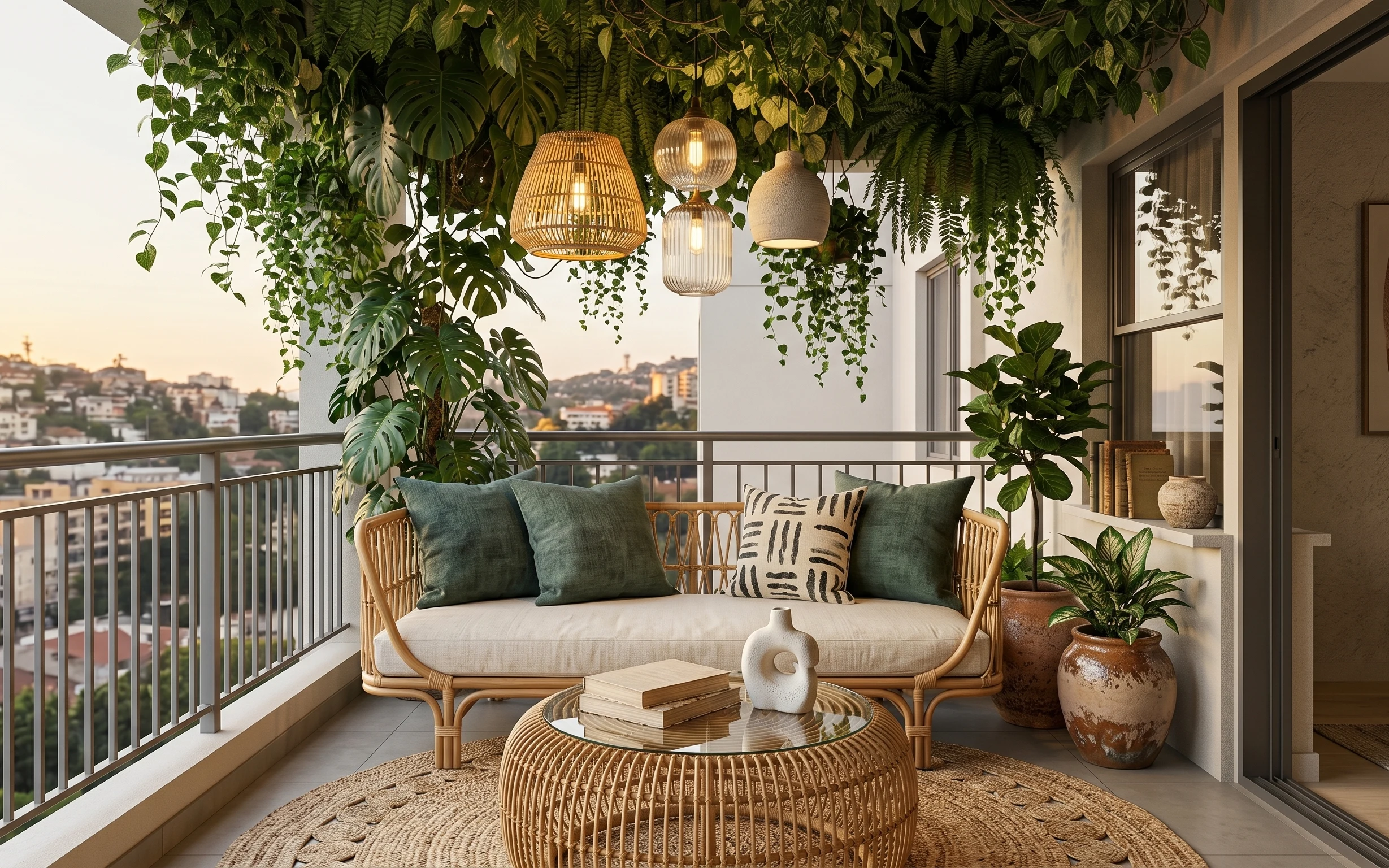
A warm, plant-filled balcony lounge can feel finished on a weekend. This refresh focuses on a jute rug, rattan daybed, bold green pillows, …
Under $500: string-light patio lounge refresh with renter swaps
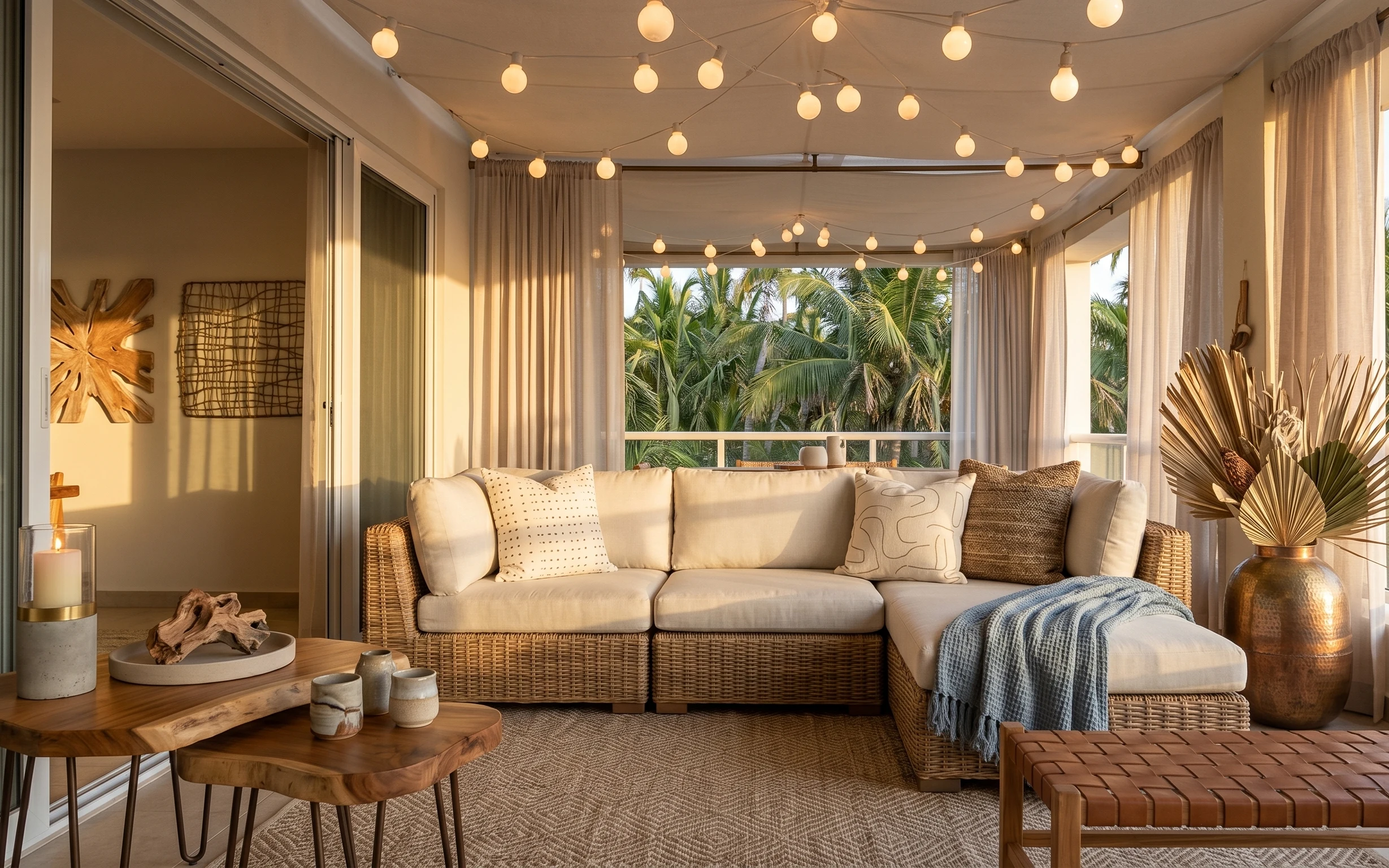
A covered patio lounge can look coastal boho for under $500 using renter-friendly swaps: a patterned area rug, sheer curtains, a knit throw…