- Best for
- Weekend balcony styling
- Cost
- $700 max
- Difficulty
- Easy to Moderate
- Time
- 4–7 hours total
Why this green-and-rattan balcony lounge refresh is the balcony lounge of 2026
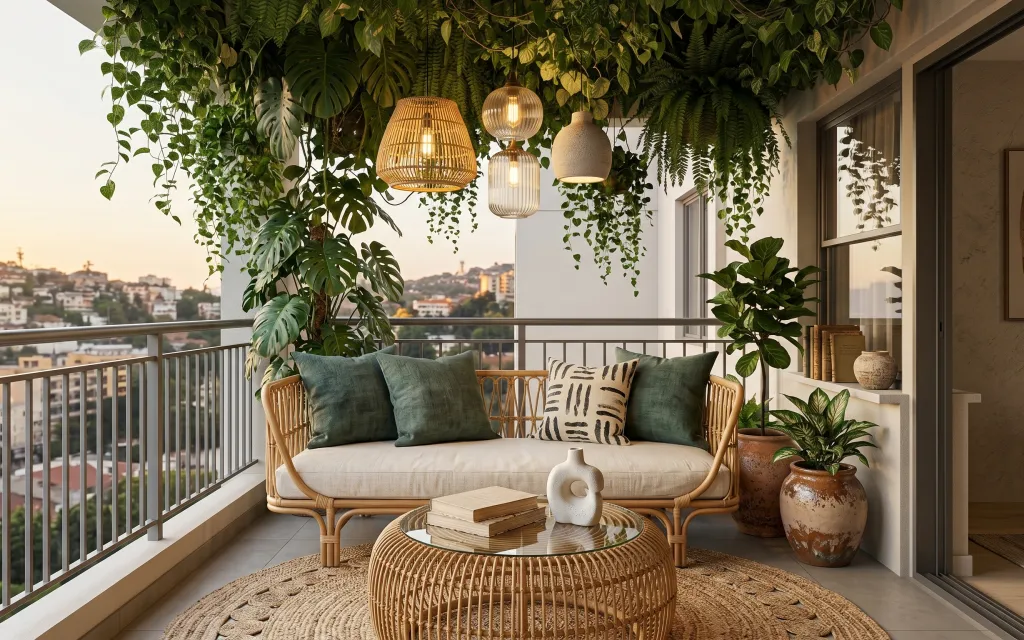
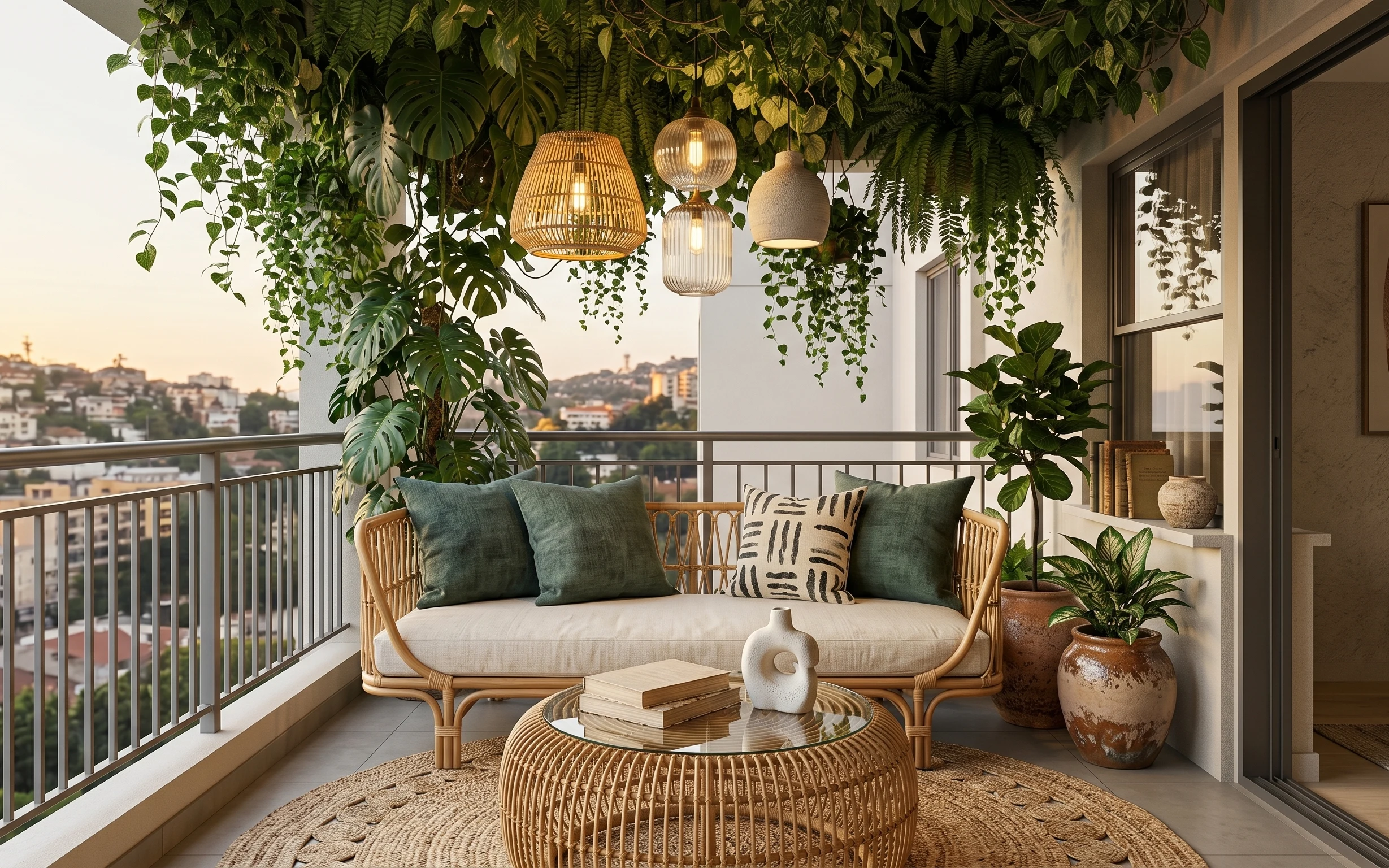
Start with the things you already have: the hanging greenery and the warm pendant lighting give the balcony lounge a living-room feel at sunset. From there, the look gets its structure from three textures: the coarse jute rug, the pale rattan weave, and the soft cotton-like cushion surface on the daybed. I leaned into that mix instead of trying to go “matchy” with one flat neutral. This is a doable weekend plan because each piece either sits on the floor, mounts to a wall with basic hardware, or gets swapped without any demolition.
The first time I copied this kind of plant-heavy style, I overbought small decor—so everything looked busy instead of layered. What changed my mind was noticing how the rug and seating block set a clear base, then the pillows add color without adding clutter. After that, I stopped chasing more items and focused on adjusting scale: fewer bigger anchors, then a couple of intentional tabletop objects.
Layer 1 — jute area rug 5×7 ($200) Anchor the floor with texture
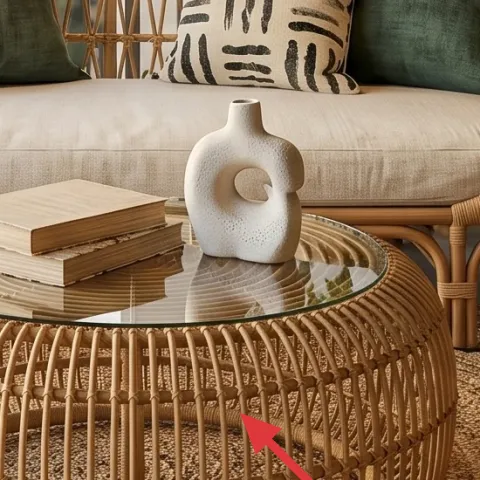
That 5×7 jute rug is doing the heavy lifting under the rattan daybed, because it creates one grounded rectangle on top of the tile. Jute also brings a slightly weathered fiber look that plays well with greenery—no glossy plastic sheen here. If you skip the rug, the seating can float and the whole balcony starts to feel like “one chair by a window,” not a lounge. The trade-off is that natural fiber needs a quick shake or light vacuuming instead of a wipe-down. Still, it’s a small price for the way it visually tames the floor and makes the rest of the styling look curated.
Let the rug edges lead the eye
Center the rug so the daybed sits fully on top or just slightly off—then keep the coffee table inside the rug’s perimeter.
Layer 2 — rattan daybed/bench with cushions ($250) Keep seating airy
The rattan daybed/bench is the reason this balcony reads as relaxed instead of cramped. The open weave mirrors the airy railing, so you don’t get that blocky “furniture dump” look on a smaller patio. I’d pick this shape over a solid wood bench because rattan brings movement and lets the greenery stay the star. The cushions are the comfort component—without them, rattan can look pretty but not livable. Your trade-off is that you’ll want to keep cushions protected when rain rolls in, since outdoor fabrics don’t like soaking. Even so, the payoff is a lounge spot that looks styled every time you step outside.
Match the cushion color to the room light
A white or cream cushion keeps the balcony bright against the green leaves and pendant glow.
Layer 3 — green throw pillows ($40) Add color without adding clutter
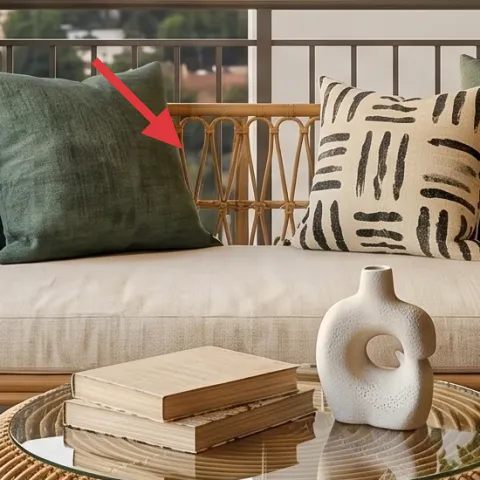
Those green throw pillows give the room its color rhythm, while still tying into the hanging vines. I would choose a pillow set like this over adding another decorative object, because textiles are the fastest way to change the feel of seating. The woven-pattern pillow also brings texture variety—so the rattan and rug don’t become the only two textures in play. The trade-off is that pillow covers need a little TLC, especially outdoors, but they’re also the easiest thing to swap seasonally. Keep the greens in the same family (leafy, not neon) so the color reads intentional instead of random.
Repeat one green tone twice
Pull the same green from one pillow color into a plant or planter nearby for a calmer palette.
Layer 4 — framed wall art print ($80) Give the lounge a focal point
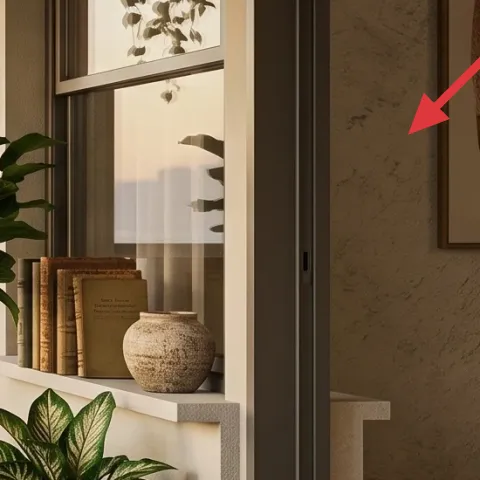
The framed wall art print on the right wall prevents the balcony from looking like “just plants and furniture.” It adds a vertical anchor so the space feels finished, even when vines trail down at different heights. I like framed art here more than another hanging decor piece because it balances the ceiling-level lights and keeps the eye from getting pulled only sideways. This choice also works with the outdoor setting: a simple frame reads clean next to the organic leaf texture. The trade-off is spacing—hang it at roughly eye level and don’t let it fight with the shelf styling beside it.
Don’t crowd the wall
If greenery and shelving both compete near the art, the frame can get lost—leave breathing room around it.
Layer 5 — large terracotta plant pot ($40) Make the base planter look custom
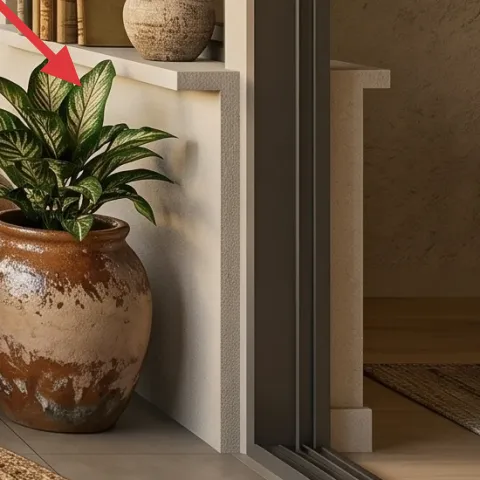
The large terracotta pot on the floor right is visible enough to count as decor, not just a plant holder. In this palette, terracotta warms up all that green so the lounge doesn’t lean “all leafy, no contrast.” I’d rather refresh one big pot than scatter multiple small ones, because a single grounded shape reads intentional from across the room. The trade-off is that terracotta naturally changes tone over time, especially outside, so repainting or sealing helps it stay consistent. If the pot is the only thing you change, it still changes the whole corner’s look.
Make it instead of buying it
Paint the existing terracotta pot to match the lounge’s warm neutrals, so it looks coordinated without buying a new planter.
Materials
- Spray primer (outdoor-rated) — 1 can — Home Depot/Ace — $8
- Outdoor spray paint (warm terracotta tone) — 1 can — Home Depot/Ace — $18
- Clear outdoor sealer — 1 can — Home Depot/Lowe’s — $8
Steps
- Wash and fully dry the pot so the paint bonds to the surface.
- Lightly sand any rough spots, then wipe away dust.
- Apply primer in thin, even coats and let it dry completely.
- Spray the paint in multiple light coats to prevent drips.
- Let the painted finish cure fully per the label instructions.
- Spray a clear outdoor sealer over the paint and allow it to cure.
- Set the pot in a spot with airflow to finish curing if needed.
- Re-pot or reposition once the finish is dry to the touch and cured.
Total DIY cost: $34 — saves about $6 over buying.
Layer 6 — decorative vase/urn on coffee table ($30) Add one sculptural moment
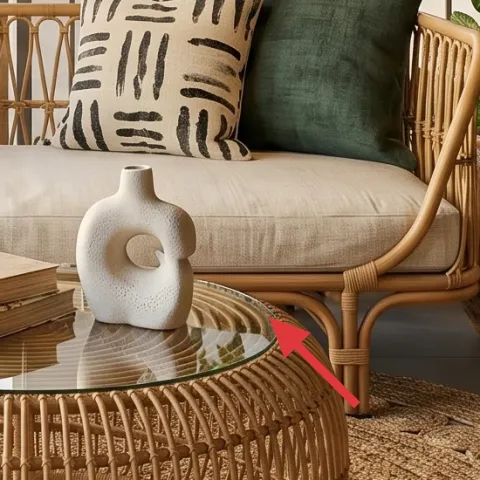
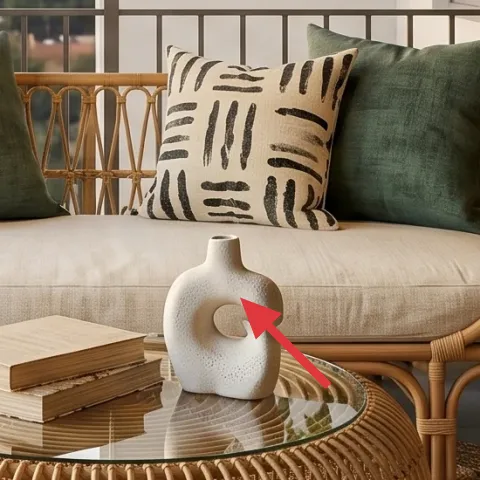
The decorative vase/urn on the coffee table is small but it matters because it gives the eye something to “read” in the center of the seating area. I’d choose a sculptural ceramic piece over an extra plant because the vase adds shape contrast against the rattan curves and the flat pillow textiles. The white finish also brightens the composition so the green doesn’t dominate every surface. The trade-off is keeping it tidy—ceramic shows dust and water marks faster outdoors. Still, when you’re only making a few weekend changes, tabletop styling is one of the quickest ways to look more intentional.
Keep it one-and-done
If the coffee table already has books, use the vase as the single main object, not a cluster.
Layer 7 — stack of books on coffee table ($15) Style with height, not clutter
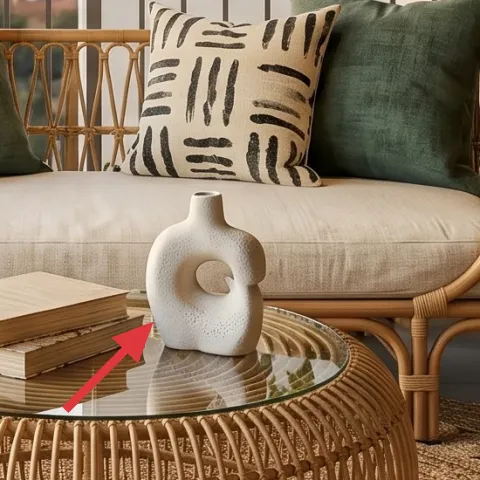
The stack of books on the coffee table adds height and a casual, lived-in feel—like someone actually uses this balcony lounge. It also helps the vase sit intentionally, instead of looking like it floated onto the tabletop. I’d pick books over random small trinkets because they’re functional, budget-friendly, and easy to swap when the seasons change. The trade-off is making sure the stack looks deliberate—straighten the edges and align the top book so it doesn’t look lopsided. With greenery and woven textures already in the room, books feel natural and not overly styled.
Use one neutral cover
Choose a book color that echoes the rug or cushion tone so the stack doesn’t fight the green.
The cost, layer by layer
| Layer | Item | Cost |
|---|---|---|
| 1 | Jute area rug 5×7 | $200 |
| 2 | Rattan daybed/bench with cushions | $250 |
| 3 | Green throw pillows (2-pack) | $40 |
| 4 | Framed wall art print | $80 |
| 5 | Large terracotta plant pot (DIY retail equivalent) | $40 |
| 6 | Decorative vase/urn on coffee table | $30 |
| 7 | Stack of books | $15 |
| Total | $655 | |
If you want a cheaper version, swap the jute rug for a flat-weave indoor-outdoor rug and use one larger throw pillow instead of two—then spend the savings on a higher-quality frame.
What worked, what didn't (across the whole room)
This balcony lounge looks intentional because it combines one big floor anchor, one comfortable rattan seating block, and a few repeatable accents in green and warm neutrals. The hanging greenery and warm pendant lights feel cohesive instead of chaotic because the styling choices repeat textures (weave, fiber, ceramic) at different heights. The only time the look felt off was when tabletop styling turned into a pile of small items.
What worked
- The jute rug made the seating feel like a defined lounge zone instead of scattered pieces.
- Green throw pillows tied the cushion area to the hanging vines without adding extra decor clutter.
- The rattan daybed kept the balcony airy, so the railing and plants stayed visually light.
- The framed wall art created a stable focal point when greenery filled the upper space.
- The painted terracotta pot (or refreshed pot) added warmth that prevented the palette from going too green.
- A vase and book stack on the coffee table added “used it today” styling with minimal effort.
What didn't
- Adding multiple small knickknacks near the art made the wall feel crowded next to the vines.
- Using a glossy throw pillow fabric would’ve clashed with the matte jute and rattan textures.
- Skipping a rug made the floor feel too blank, and the seating looked less intentional.
- Leaving the planter unrefreshed let the pot’s tone drift, which made the palette look uneven.
- Overstuffing the coffee table with both decor and extra plants turned the center area visually busy.
What we'd skip if we did it again
Skip adding a second “statement” decor piece on the wall when the framed print is already there. The hanging greenery pulls enough attention upward, and two wall focal points can fight each other.
Skip a patterned rug in this palette. Jute’s neutral fiber look is what lets the green pillows and plants stay cohesive, and it also hides small outdoor messes better than a high-contrast weave.
Skip buying lots of small planter accessories to “finish” the corner. One refreshed terracotta pot plus a single shelf plant gives warmth and height without turning the lounge into a shelf-and-basket maze.
Frequently asked
How long does a balcony refresh like this usually take?
Plan for about half a day to set up the big items and an extra 1–2 hours for styling. If you’re painting the terracotta pot, add curing time based on the sealer label. The rug and seating are the anchors, so once those are placed, the rest is mostly pillow and tabletop arranging.
If I rent, can I still do most of this?
Yes—this plan is mostly non-permanent. Rug, pillows, and a painted planter (or a fresh planter) are renter-safe. For framed wall art, use removable hanging hardware instead of permanent mounting. The biggest “keep in mind” for rentals is making sure any greenery is supported so it can’t damage railings or walls.
What if my balcony is smaller than the photo?
Choose one larger anchor instead of multiple smaller accents. In a smaller space, you can scale down the rug size but keep the same placement under the seating so it still defines the lounge area. Use fewer pillows (still green, just less volume) and keep tabletop styling to a vase plus a book stack.
What if my balcony is bigger or more open?
Bigger balconies can handle a larger rug or a wider seating placement, so the lounge feels like it belongs to the space. Consider adding a second plant cluster only if you maintain repeat textures—jute, rattan, and ceramic. Keep the framed wall art as the single vertical anchor so the eye knows where to rest.
Where should I shop for these exact materials?
Look for jute rugs and rattan-style outdoor seating at home stores and furniture retailers with outdoor assortments. For framed prints, stick with simple neutrals that echo your cushion color. Planters and ceramic decor are easiest to find online, but terracotta pots are often cheaper at garden centers.
What’s the biggest mistake people make on balcony lounge styling?
It’s treating every object like a “main character.” When the balcony already has hanging greenery, the styling needs fewer, bigger anchors and a clear palette. If the rug, seating, and one warm planter aren’t doing the grounding, everything else looks like separate purchases instead of a coordinated lounge.
More in Outdoor & Patio
Under $700: green-and-rattan balcony lounge refresh
A warm, plant-filled balcony lounge can feel finished on a weekend. This refresh focuses on a jute rug, rattan daybed, bold green pillows, …
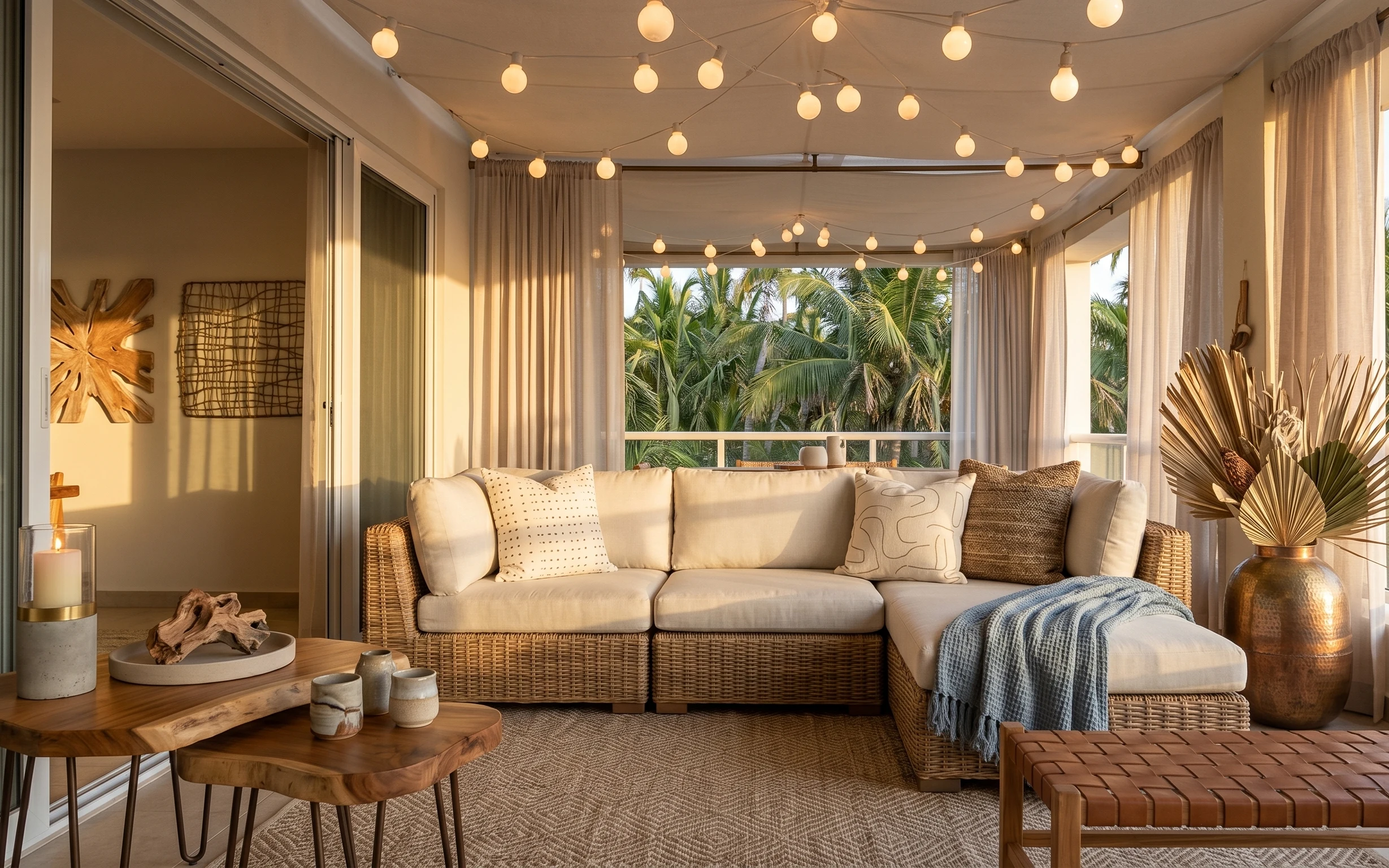
Under $500: string-light patio lounge refresh with renter swaps
A covered patio lounge can look coastal boho for under $500 using renter-friendly swaps: a patterned area rug, sheer curtains, a knit throw…
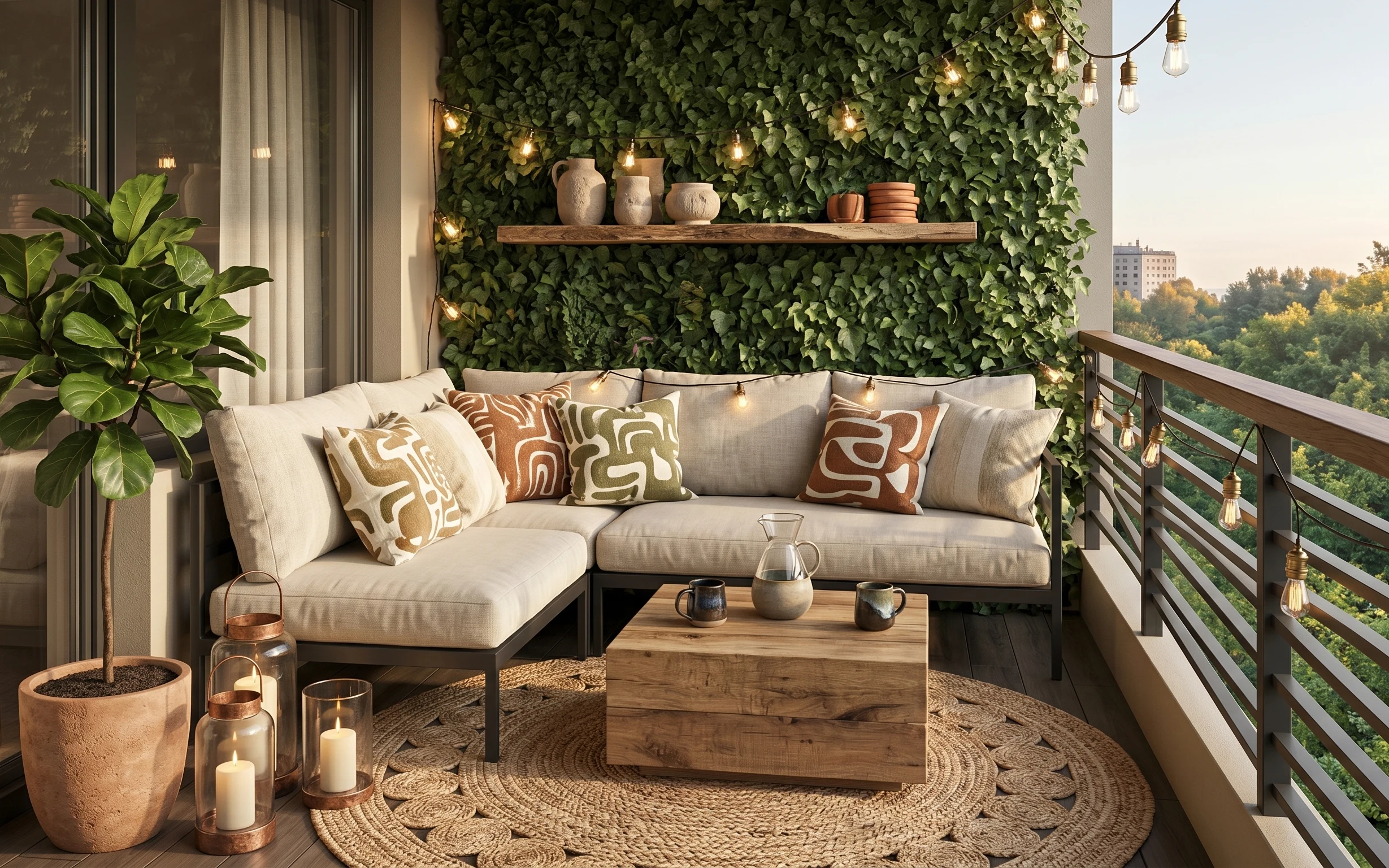
Under $700: olive-green balcony daybed swaps for renters
A balcony daybed corner can look custom without landlord permission. This renter-friendly refresh uses a leafy peel-and-stick backdrop, pat…