- Square footage
- Small landing nook (best in tight hallways)
- Cost
- Under $400 (all-in swaps)
- Difficulty
- Easy (plug-in + swap decor)
- Renter-safe
- Yes (no drilling/permanent changes)
Why jute-and-terracotta palette is the stair landing nook of 2026
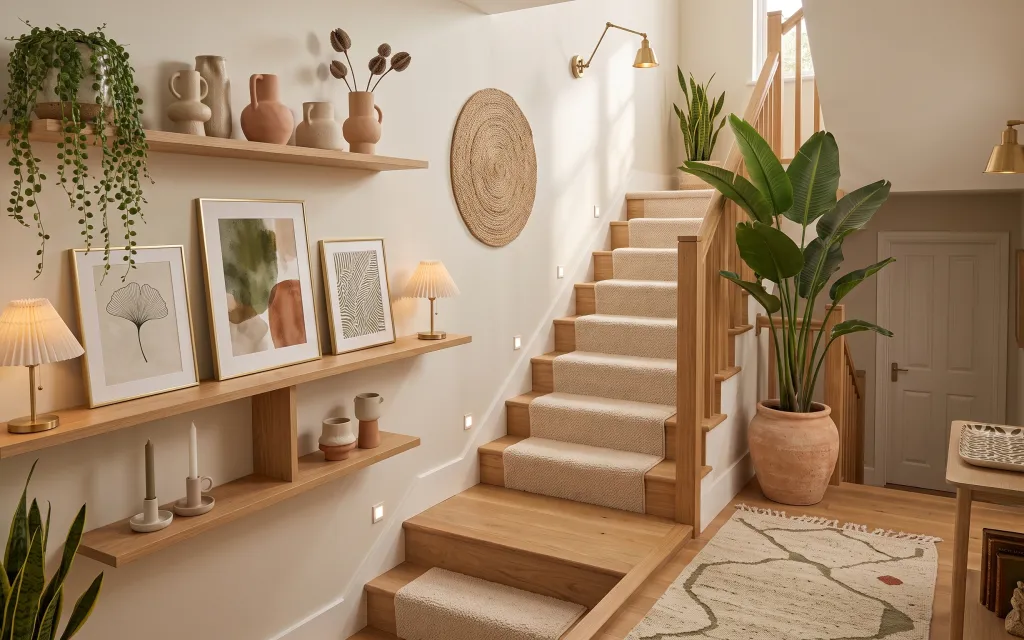
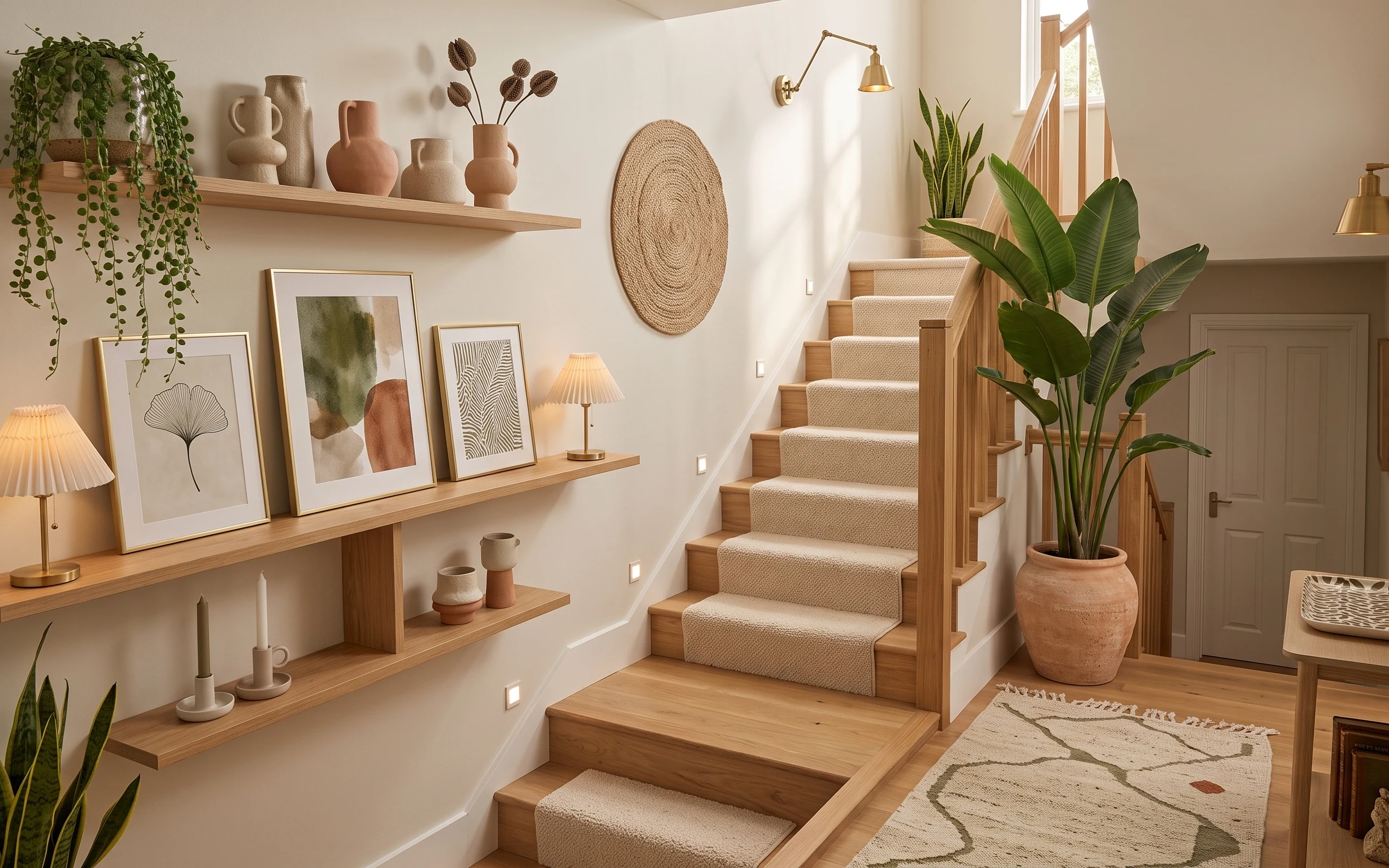
Start with the bones you already have: light wood steps, warm beige walls, and those built-in shelves make the space feel intentional even before you add anything. Where the look really comes together is in the details—soft beige stair treads, a patterned area rug grounding the landing, and warm light from the plug-in table lamp. Then add texture with a woven round wall decor piece, plus two different “leaf heights” (a hanging trailing plant and a tall leafy plant in terracotta). For renters, this is achievable because every layer is swap-and-pack, not a change to the lease.
The first time I tried making a hallway feel “decorated,” I overdid matching—same plant, same pot, same shade of neutral. This time I kept it mixed: one hanging plant for movement, one large plant for height, and a woven piece to bring in that fiber texture you can’t fake with paint. The shift that clicked for me was noticing how your eyes travel up the stairs—so the decor needed to climb, not just sit.
Layer 1 — patterned area rug ($120) ties the landing to the steps
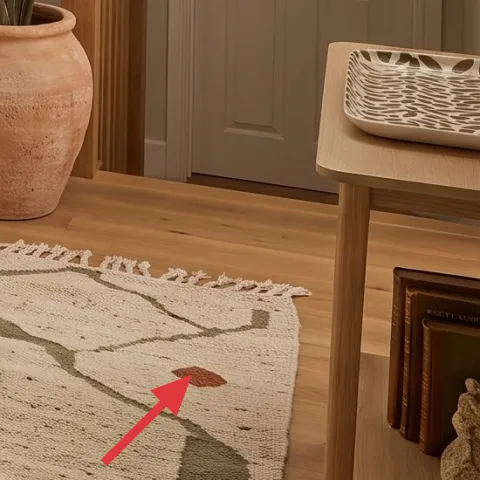
This patterned area rug sits in the lower-right foreground of the stair landing, where it visually “pins” all the wood steps and makes the narrow space feel softer. I’d pick a rug pattern with earthy contrast (greens and clay tones) because it doesn’t fight the warm beige walls. The trade-off with going for a bolder pattern is that it can look busy if your other layers are loud—so keep the lamp and wall art tones neutral and botanical. A rug is also one of the safest renter moves: no measuring for complicated hardware, and you can roll it up at move-out.
Pick the rug first for stair-landings
Once you know the rug’s scale, everything else (lamp height, wall décor placement, plant pot size) stops feeling random.
Layer 2 — plug-in table lamp ($45) adds warm glow where the stairs read flat
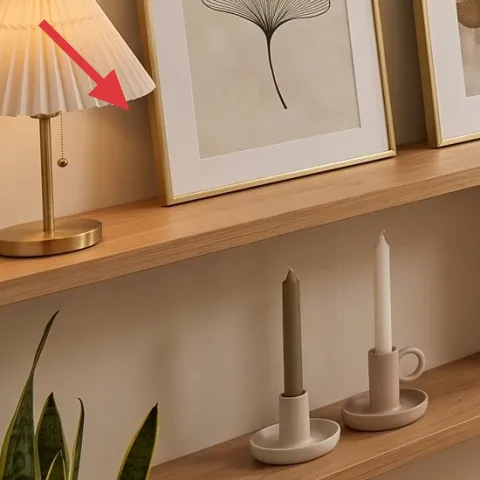
The plug-in table lamp on the left shelf is doing quiet work: it brings warm light to the beige wall and gives the whole stair landing a golden tone after dark. I like the pleated shade texture here because it repeats the soft, woven feel you see in the rug and the woven round wall decor. The lamp is a better choice than a brighter overhead bulb because it flatters the wood steps and keeps the hallway from feeling harsh. If you’ve ever had a rental that looked “fine” by day but sleepy at night, this is the fix—no electrician needed, just a lamp that’s already built for plug-in placement.
Use lamps to create depth
Put warm light closer to eye level so the stairs don’t feel like a tunnel.
Layer 3 — framed botanical wall print ($50) brings organic color without changing walls
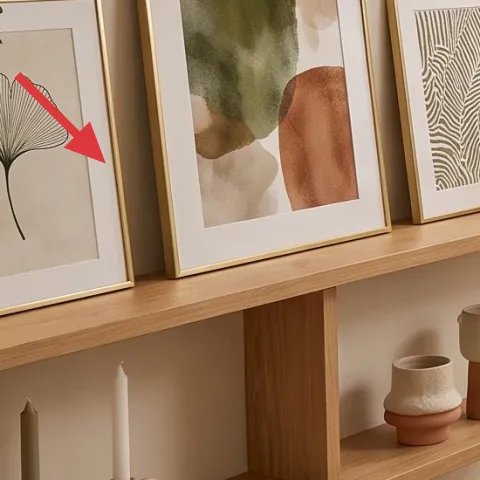
That framed botanical wall print anchors the left floating-shelf zone and gives the room a focal point that isn’t just “plants everywhere.” The reason it works is color: the print’s muted greens and sandy neutrals echo what’s already on the landing (beige upholstery and light wood). The trade-off versus going with a bigger artwork piece is that it’s easier to swap later—perfect for renters. If you’re tempted to match every frame exactly, don’t; a slightly varied lineup keeps the look collected instead of staged.
Don’t center everything at the same height
If all frames and décor line up perfectly, the stair landing can feel rigid. Stagger visual weight instead.
Layer 4 — woven round wall decor ($35) adds fiber texture to warm beige walls
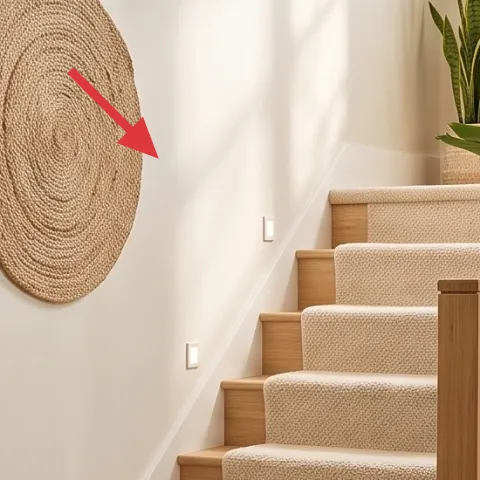
The woven round wall decor in the upper center zone adds a tactile “third surface” to the room: wood, fabric, and now fiber. It’s the kind of piece that makes beige walls feel intentional without needing wallpaper or paint. I’d choose something with concentric texture (like this woven style) because it catches soft light from the lamp and brass sconce, making the wall feel dimensional. The trade-off is spacing—this works best when it has breathing room around it, so avoid crowding it with too many small prints nearby.
Let the woven piece float
Keep a little empty wall around it so the pattern stays readable from the bottom of the stairs.
Layer 5 — large leafy indoor plant in terracotta pot ($45) gives height without a bulky cabinet
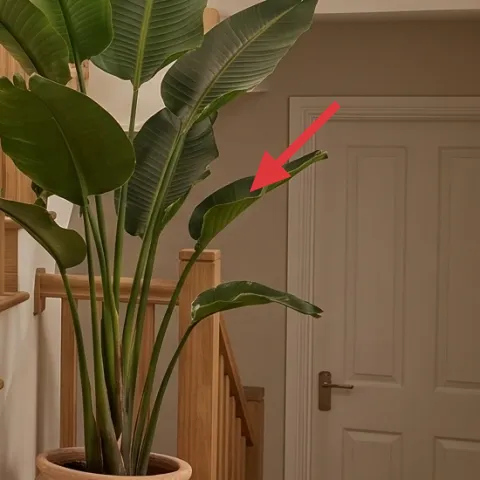
The large leafy plant in the terracotta pot on the right side adds instant height and movement, which is crucial on a stair landing where there’s limited floor space. Terracotta also bridges the warm wood with the olive-green leaves, so it reads cohesive even if your other décor isn’t an exact color match. I’d rather choose a statement plant here than a freestanding shelving unit because plants are easy to reposition and don’t demand extra mounting or assembly. The trade-off is maintenance—large leaves mean you’ll wipe dust and check watering—but it’s still renter-friendly and packable.
Match pot tone, not pot shape
Keeping terracotta in the mix helps the room feel styled even with different container styles.
Layer 6 — hanging trailing green plant ($35) introduces a second “leaf height” for movement
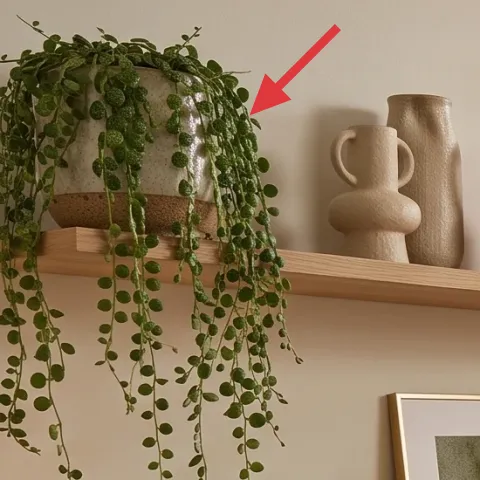
The hanging trailing green plant on the left side brings a vertical, airy element that would be missing if you only used standing plants. This is a great renter-friendly move because you can style it with a hanging setup that uses removable hooks and doesn’t touch the wall permanently. The trade-off with going vertical is that trailing plants can look messy if the strands aren’t arranged—so give the vines a quick “fan” once and then let them relax. When you look from the landing, the hanging plant also softens the clean lines of the staircase, which is what makes the space feel calmer.
Train the vines once, then stop fussing
After the initial placement, don’t keep re-arranging daily—your eyes will read it as intentional.
Layer 7 — decorative tray ($25) keeps small shelf items from looking scattered
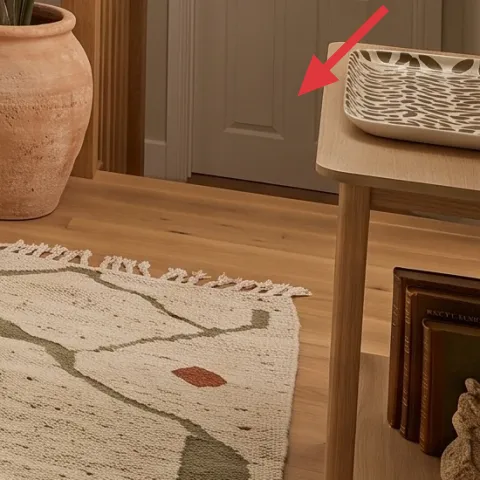
A decorative tray on the small wooden side table is the easiest way to corral little items—mugs, ceramics, or a candle—so the landing stays styled instead of cluttered. This matters in stair landings because you usually see the shelves and side surfaces in quick passes; a tray gives you a visual “boundary” for the smaller objects. I like trays made for styling because they also work off-move: remove the tray and move your decor pieces into your new home without rebuilding the whole vignette. The trade-off is that trays can look busy if patterned too heavily—so choose one that supports your rug and keep the rest of the items neutral.
Group by function
Keep everyday items together on the tray so it doesn’t drift into decorative junk.
The cost, layer by layer
| Layer | Item | Cost |
|---|---|---|
| 1 | patterned area rug | $120 |
| 2 | plug-in table lamp | $45 |
| 3 | framed botanical wall print | $50 |
| 4 | woven round wall decor | $35 |
| 5 | large leafy indoor plant in terracotta pot | $45 |
| 6 | hanging trailing green plant | $35 |
| 7 | decorative tray | $25 |
| Total | $355 | |
If you want a cheaper variant, swap the rug for a simpler neutral jute-style rug and choose smaller framed prints. Keep the same plant strategy (one tall terracotta pot plus one trailing plant) and you’ll still get that layered, boho-natural read.
What worked, what didn't (across the whole room)
The overall win here is layering at different heights: the rug anchors the landing, the lamp warms the shelves, and the plants add vertical movement up the stairs. The look stays cohesive because the palette is consistent—light wood, warm beige, and olive-green leaves. The only part that can go sideways is how much you crowd the wall and shelves.
What worked
- The patterned area rug kept the stair landing from feeling like bare wood and empty space.
- The plug-in table lamp added soft warmth without needing any landlord approvals or wiring changes.
- The framed botanical wall print gave the left shelf zone a real focal point.
- The woven round wall decor introduced fiber texture that matched the rug’s natural vibe.
- The tall leafy plant balanced the shelves and added scale where the landing feels narrow.
- The hanging trailing plant softened edges and made the space feel airier as you move up the stairs.
What didn't
- Adding too many small objects around the framed print made the shelf area feel busy.
- If the hanging plant is over-trimmed or tangled, it reads messy instead of airy.
- A rug with a cooler color cast would fight the warm beige walls and make everything look washed out.
- If the lamp shade is too glossy, it reflects light and loses that soft fabric texture.
What we'd skip if we did it again
Skip matching everything to one “perfect set.” On a stair landing nook, small uniform pieces read stiff, and you lose the lived-in texture that makes this style work.
Skip buying a second lamp just because you can. One warm plug-in lamp plus the existing brass wall sconce gives enough layering—extra lighting often flattens the staircase instead of shaping it.
Skip crowded shelves. Keep shelf styling to a tray-and-two-or-three objects moment, then let the framed botanical print and woven wall decor do the heavy visual lifting.
Frequently asked
How long does this stair landing refresh take?
Plan on 2–3 hours total. The rug placement and lamp positioning are quick, and the rest is styling: arranging the framed botanical wall print, spacing the woven round wall decor, and positioning both plants. If you’re adding hanging support for the trailing plant with removable hooks, give yourself extra time for trial-and-error so the vines fall the way you want.
Will this work in a smaller or narrower landing?
Yes—lean into scale. Use one statement rug pattern and avoid oversized décor that overwhelms the stairs. For plants, choose one tall plant and one smaller trailing plant (or let one plant be “suggested” by fewer stems). Keep frames spaced with breathing room so the wall still reads calm as you move up and down.
What if my room doesn’t have shelves like these?
You can still recreate the same layered effect without shelves. Put the plug-in table lamp on a small console or side table, hang the woven round wall decor at eye height, and cluster the framed botanical print near it. For the plants, keep the two-height strategy—hanging trailing plant plus one taller leafy plant—so the landing feels styled from every angle.
Where should I shop for the key items on this list?
Look for the rug and lamp in big-box home stores or marketplaces for move-friendly pricing. For the woven round wall decor and framed botanical wall print, focus on home décor shops and online retailers that carry fiber and botanical art. For plants, buy from a local nursery if possible so you can check leaf fullness and plant health before committing.
What’s the biggest mistake renters make with stair landing décor?
Crowding. Stair landings are already “busy” because you’re seeing steps, wall zones, and multiple entry angles in quick succession. If every surface is packed with small objects, your eye has nowhere to rest. Choose one focal point (framed botanical print or woven wall decor), anchor with the rug, then keep the rest in small, intentional groupings on a tray.
Can I take these pieces with me when I move?
That’s the point of this refresh. Rugs roll up, plug-in lamps travel easily, framed wall prints are designed to be hung and rehung on Command-style hardware, and both plants can be potted and moved. Woven wall decor packs flat-ish, and a decorative tray is one of the easiest items to reuse in a new home.
More in Small Spaces
Under $400: boho-natural stair landing swaps
This stair landing nook refresh brings boho-natural warmth with a patterned area rug, a plug-in table lamp, and move-ready plant styling. E…
Under $800: warm wood-and-brass entryway console refresh
Refresh an entryway console table with seven weekend-friendly swaps for under $800: paint the framed print, add warm lighting, and style st…
Under $400: 7 move-friendly swaps for a console nook
A console nook needs to look styled, not precious—especially in shared housing. Here are 7 affordable, packable swaps (under $400) using ru…