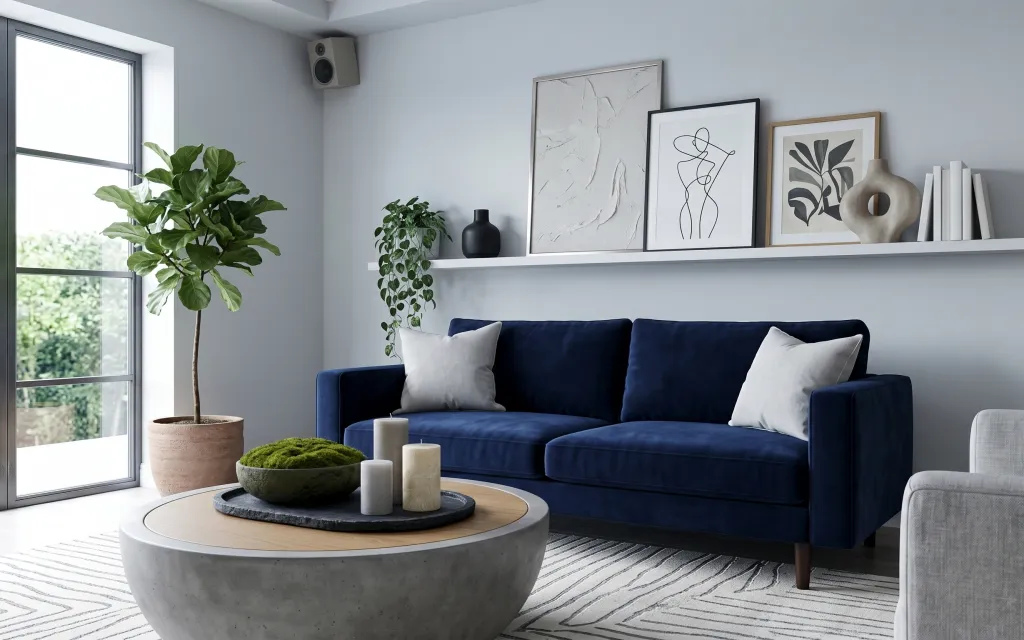
- Best for
- making a navy sofa feel balanced
- Cost
- $390 total
- Difficulty
- Easy
- Time
- 1 afternoon
Why navy-and-olive is the sofa corner of 2026
The hero photo is basically a color story: deep navy fabric, crisp white accents, and the soft earthy hit of green plants. The texture mix is doing the heavy lifting—striped rug underfoot, plush throw pillows on the sofa, and the matte ceramic surfaces on the coffee table. That combination feels styled without asking for anything permanent, which matters in shared housing. The move-friendly part is that every add-on here either packs flat or dismantles quickly into boxes.
I used to overdo wall art by printing too many pieces and stacking frames like a gallery, and it looked busy the minute the lighting shifted. For this layout, I’d rather keep the “line + abstract” balance like the shelf art already shows, then repeat the greens with one tray moment. Swap in one new insert, refresh the textiles, and the whole corner reads intentional again.
Layer 1 — 8×10 striped area rug ($150) Grounding stripes that hide everyday wear
Start with the striped area rug, because it changes the floor’s “design math” faster than any single accessory. In the photo, the rug is light on the eye and ties into the clean lines of the modern sofa, so choosing an 8×10 striped style keeps the same crisp energy even after a move. The trade-off is that stripes show foot traffic and heavier furniture marks sooner than a solid dark rug, so this works best when you’re willing to rotate cushions and manage the center path. For shared spaces, that’s a fair trade: rugs are the easiest big-ticket swap to pack and replace.
Match scale to the sofa footprint
A rug should sit mostly under the sofa front edge, not just under the coffee table, so the navy cushions don’t look “floating” on bare flooring.
Layer 2 — white throw pillow covers (set of 2) ($30) Softer contrast on navy fabric
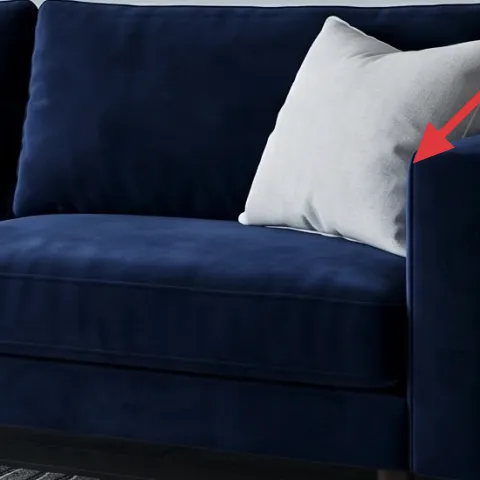
The white throw pillow covers are the fastest way to brighten a navy sofa without changing anything fixed. The photo already uses white pillows as a visual pause between the bold blue and the light gray walls, so swapping to crisp, structured covers keeps that same balance. A key decision here is choosing covers that have a little texture (like linen or a linen-look weave) instead of smooth, shiny fabric—smooth reads formal, but textured reads lived-in. The trade-off: they won’t hide crumbs the way darker covers do, so they work best with quick spot-clean habits or washable fabrics.
Keep the shape, not just the color
Stick with square or near-square proportions so the pillows stack the same way and don’t reshape the sofa’s silhouette.
Layer 3 — candle trio on coffee table tray ($35) Short-stay ambiance without warm lamps
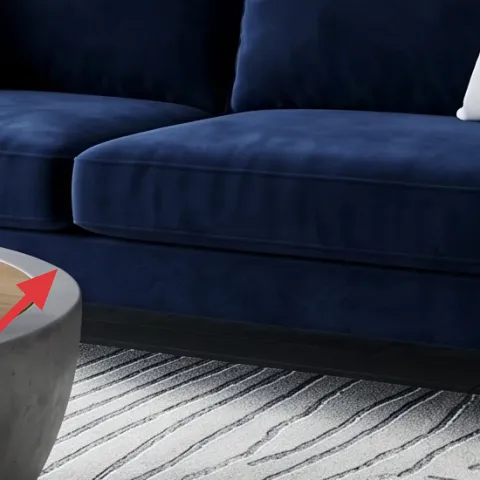
On the coffee table, the candle trio adds “evening styling” that still looks good in daylight. The hero shows several cylindrical pieces grouped on a tray, which is exactly the formula to copy—same-height objects read intentional and help a small surface feel curated. Choosing neutral candles (cream and off-white) keeps the navy sofa from competing with the glow, while the matte ceramic on the table and the concrete-like tray surfaces keep everything from looking flashy. The trade-off is scent candles take up storage space, so unscented tapers or short pillar candles tend to be more move-friendly for roommates.
Don’t place candles near plants
Keep greenery clear of flames and hot wax—especially in shared rooms where a plant can be bumped during cleaning.
Layer 4 — textured ceramic planter pot (medium) ($25) A pot that looks finished even when you travel
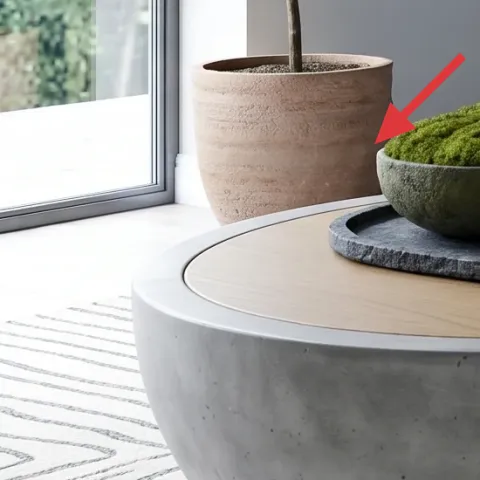
The medium textured ceramic planter pot is a small swap with outsized impact because it’s visible even when the leaves aren’t perfectly centered. The photo’s pot has a speckled, tactile finish that works with the modern shelf art and the calm gray walls, so the goal is texture over color. A pot like this also makes the plant feel “styled,” even if the plant is taller than expected at move-in time. The trade-off is weight—ceramic is heavier than plastic—so pick a size you can actually carry in one trip. If you can lift it comfortably, it’s worth it for how elevated the texture looks.
Pick a drainage-friendly pot
Even for rentals, use a nursery pot inside or a liner so the plant doesn’t leak onto wood or stone-look surfaces.
Layer 5 — indoor leafy plant (4–6 ft) ($30) Green volume that softens the corner
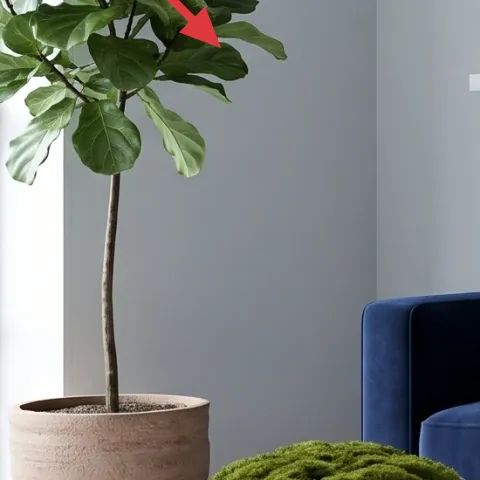
The tall leafy plant is what keeps the sofa corner from feeling too crisp or too “showroom.” In the hero, the plant’s rounded leaves echo the gentle curves of the coffee table and balance the sharp edges of the framed prints. Choosing a 4–6 ft leafy indoor plant gives you enough volume to read from the couch without needing a second decor item competing for attention. The trade-off is that large plants look best when their leaves are fluffed and rotated weekly, so plan for a simple upkeep routine during the semester or lease cycle. It’s an easy win because it packs as a pot and base, and leaves can be tucked for transport.
Rotate after window days
If light comes from one side (like the big window in the photo), rotating the pot helps keep the canopy full.
Layer 6 — framed tall line-art print ($60) Slim vertical energy next to the abstract
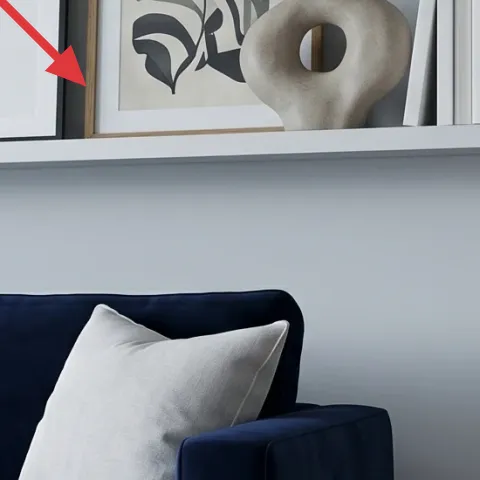
The tall line-art print works because it adds vertical rhythm without adding more color noise. In the photo, the line drawing sits among other framed pieces, and its thin shapes complement the modern shelf ledge and the clean edges of the frames. For this refresh, choose a tall print with a neutral palette (black lines on off-white) so it doesn’t compete with navy upholstery. The trade-off is that line art can look a little “bare” alone, which is why it should stay paired with another framed print above the sofa. In shared housing, frames are also easy to protect and move—wrap, box, done.
Keep mat color close to the room’s white
Off-white matting tends to look warmer than bright white and better matches the candle tones.
Layer 7 — framed abstract print (swap insert) ($60) One DIY-ready insert for the shelf
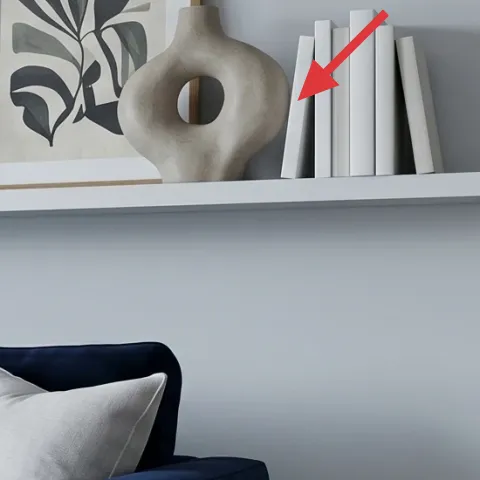
The abstract print on the shelf is the final “palette glue” piece, because it brings visual texture without adding clutter. Instead of buying a whole new frame, swap the insert (the artwork underneath the glass) so the move-ready part stays real. The hero’s abstract style has soft shapes and a light ground, which works perfectly with navy fabric and gray walls. The trade-off here is that print density matters: too much contrast can look harsh beside dark upholstery, so aim for a more muted background and clean line weight. This approach keeps everything boxable and makes the shelf look updated even if the frame hardware stays the same.
Make it instead of buying it
This DIY replaces the framed abstract insert with a hand-painted cardstock version, keeping the same shelf footprint while staying budget-friendly.
Materials
- Cardstock (11×17 or similar) — 2 sheets — craft store — $6
- Acrylic paint set (small tubes) — 1 set — craft store — $12
- Black fine-tip paint marker — 1 — craft store — $8
- Small foam brush set — 1 pack — craft store — $4
- Clear-drying fixative spray (optional) — 1 — craft store — $5
Steps
- Sketch 2–3 abstract shapes lightly in pencil to map space on the cardstock.
- Tap in the base colors with a foam brush, leaving thin negative-space gaps.
- Let the paint dry completely, then add darker lines with the black paint marker.
- Allow full dry time again before placing behind the frame glass.
- Seal with fixative only if the marker smudges, then let it cure fully.
Total DIY cost: $35 — saves about $25 over buying.
The cost, layer by layer
| Layer | Item | Cost |
|---|---|---|
| 1 | 8×10 striped area rug | $150 |
| 2 | white throw pillow covers (set of 2) | $30 |
| 3 | candle trio on coffee table tray | $35 |
| 4 | textured ceramic planter pot (medium) | $25 |
| 5 | indoor leafy plant (4–6 ft) | $30 |
| 6 | framed tall line-art print | $60 |
| 7 | framed abstract print (swap insert) | $60 |
| Total | $390 | |
If the full rug budget is too much, choose a smaller 5×7 striped rug and let it anchor just the front legs of the sofa; the corner still reads cohesive because the navy and white textiles do the heavy lifting.
What worked, what didn't (across the whole room)
This corner works because the palette is simple—navy, white, and green—and the textures repeat across surfaces and textiles. The framed shelf art adds structure, while the candle moment adds softness without needing new lighting fixtures.
What worked
- The striped rug keeps the modern lines sharp while giving the navy sofa a lighter base.
- Two white pillow covers create a clear visual break without changing the sofa itself.
- Cylindrical candles clustered on a tray read styled from across the room.
- Textured ceramic planters make the plant look intentional, even if the leaves aren’t perfectly symmetrical.
- A tall line-art print adds vertical balance beside the abstract without adding more color.
- Swapping an abstract insert keeps the shelf looking current without buying another frame set.
What didn't
- Too many framed pieces in different styles can make the navy sofa feel visually louder.
- Using glossy pillow covers can reflect window light and look less lived-in.
- If candles sit too close together, the tray looks cluttered instead of curated.
- Choosing a very dark green plant can overpower the gray walls and mute the shelf art.
- High-contrast abstract inserts can fight the softness of the rest of the corner.
What we'd skip if we did it again
Skip buying a whole new framed set. Changing just one insert keeps the shelf structure and saves money, and it’s far easier to pack when shared housing schedules change.
Skip adding a bunch of small decor objects to the coffee table. The navy sofa already brings strong color, so one tray moment (candle trio + one green bowl) keeps the center surface calm.
Skip a plant that’s too small for the sofa scale. When the greenery doesn’t reach the visual height of the shelf art, the corner can look flat even if everything else matches.
Frequently asked
How long does this kind of sofa-corner refresh take?
Most of the work is styling and swapping textiles, so the timing is forgiving. Plan about 30–45 minutes for the rug and pillow switch, another 20–30 minutes for the coffee table tray layout, and 30–45 minutes for framed-art changes and packing the old pieces. If the DIY insert is already dry, it can be slotted in quickly; if not, give it cure time before sealing behind glass.
Will this work in a rental where wall changes aren’t allowed?
Yes, because the plan avoids permanent wall changes and doesn’t rely on drilling or painting. The framed prints are designed to be lifted off and packed like standard decor. The rug and pillows are soft goods, and the plant stays freestanding in a pot. The goal is to make the corner look intentional using moveable objects only.
What if my room is smaller than the photo?
Use the same palette but reduce the rug size slightly, and keep the tray styling minimal. For smaller rooms, choose pillows with a slightly smaller scale so they don’t crowd the sofa. Keep only one tall framed piece plus the abstract insert—leave out extra frames if your wall shelf is narrower. Plants can stay in the corner, but consider a slightly shorter variety so the visual height doesn’t swallow the space.
What if my room is bigger or has different lighting?
Bigger rooms can handle more visual weight, so you can keep the 8×10 rug and consider larger pillow covers for extra spread. If the lighting is warmer, leaning into cream and off-white candles will keep the tone cohesive with the plants. If the lighting is cooler, slightly more beige cardstock in the DIY insert can warm the abstract print so it blends rather than clashes.
Where should shopping start for the rug and pillow covers?
Start with the rug because it sets the floor palette, then match the pillow covers to the rug stripe thickness. For pillows, linen-look covers and neutral off-white tones tend to match both candles and the plant ceramic textures. For framed prints, choose neutral mats so the black linework doesn’t overpower the gray walls.
Biggest mistake people make in a navy sofa corner?
The most common miss is adding too many competing patterns—three different prints in three different color directions can make navy feel harsher. Another frequent issue is skipping texture: a flat, shiny pillow cover with a high-gloss candle look can feel more staged than lived-in. Stick to one strong pattern (like stripes), one color anchor (navy), and repeat white/green textures in at least two places.
More in Living Room
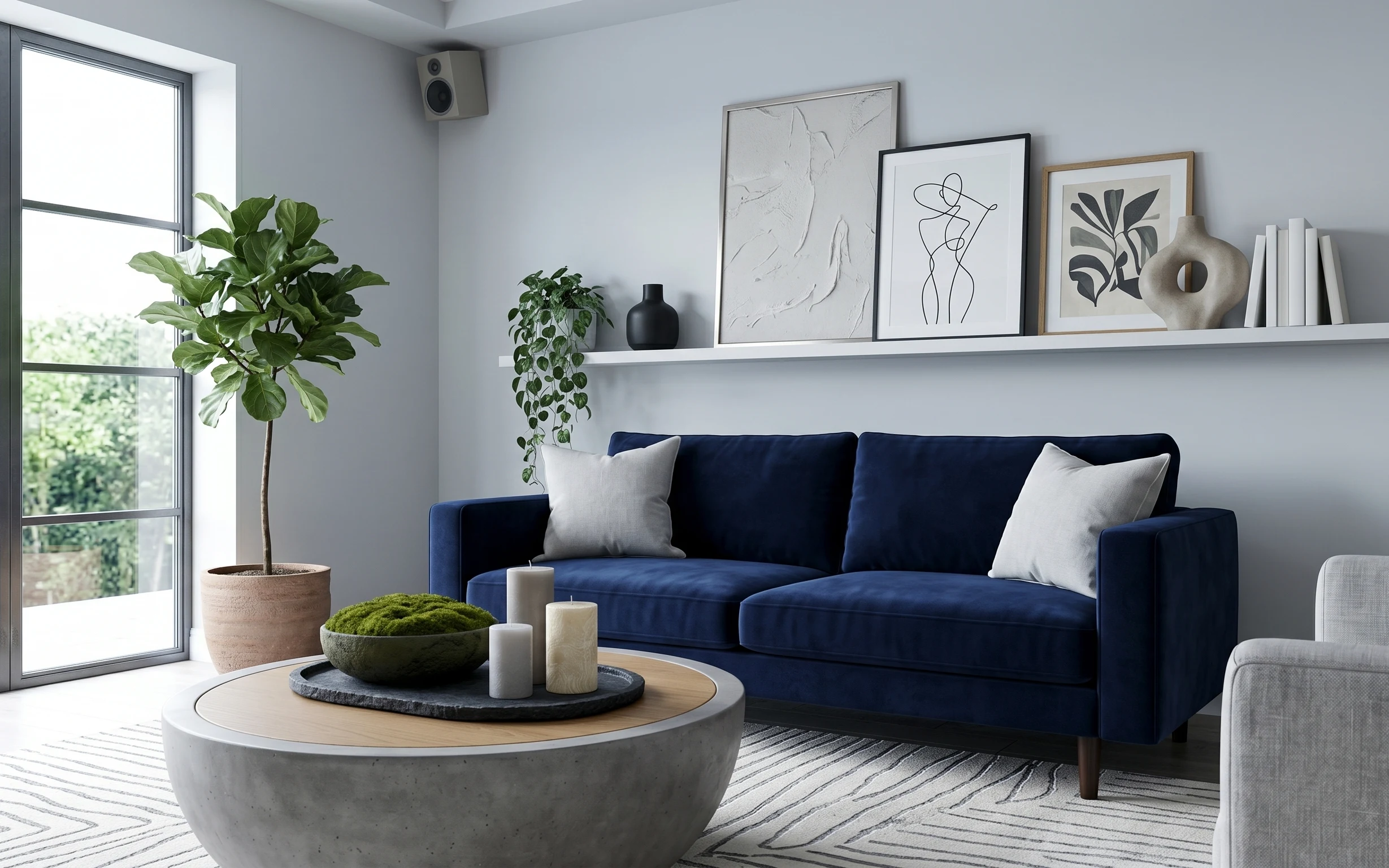
Under $400: navy-and-olive sofa corner refresh with 7 move-ready swaps
A move-ready sofa corner refresh built around navy, white, and leafy greens—plus a framed-art swap that packs fast. This plan uses 7 budget…
Under $600: boho earthy living room swaps in a renter-friendly lounge corner
Warm beige, olive green, and a cream shag rug do most of the work in this sofa lounge corner look. With seven renter-friendly swaps (no-dri…
Under $400: earthy-neutrals living room refresh with 7 move-ready swaps
A living room refresh that leans into warm browns, cream textures, and terracotta accents—using only move-ready swaps. This plan totals und…