- Best for
- Softening dark tile with move-ready decor
- Cost
- $355 total plan
- Difficulty
- Easy, mostly styling and one DIY frame
- Renter-safe
- Yes—no drilling or permanent installs
Why warm wood-and-olive tile refresh is the bathroom vanity corner of 2026
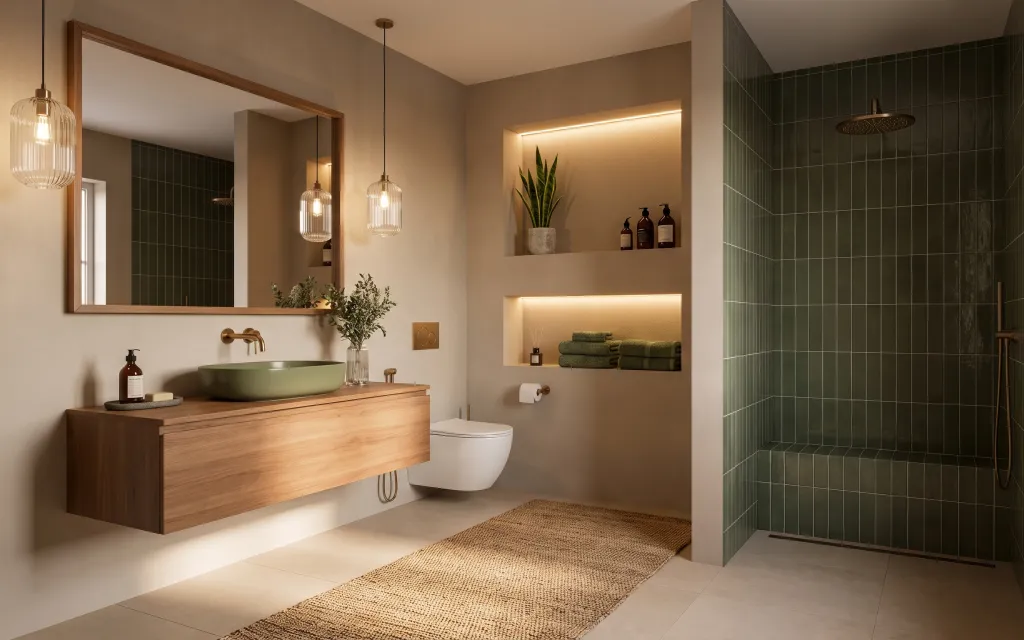
The scene here reads like a boutique spa: warm wood surfaces, dark green tile, and soft light that makes everything feel calmer. The quickest way to lean into that vibe is with textiles and small decor you can actually take with you—like the woven runner rug at the floor and the folded green towels on the shelf. The mirror’s warm framing matters too, because it amplifies the beige walls and keeps the whole corner cohesive.
I used to “fix” bathrooms by buying a bunch of matching sets, and I’d end up with a countertop that looked staged—not lived-in. This time I started with texture first: a woven rug underfoot and natural materials (vase and plant) around the vanity. Once those pieces matched the warm wood, the rest felt intentional instead of overly coordinated.
Layer 1 — Woven runner rug ($80) Adds warmth where feet land
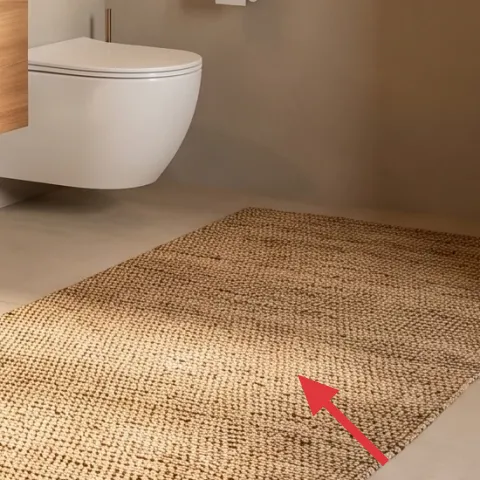
That woven runner rug in the foreground is doing double duty: it softens the hard tile and instantly makes the bathroom feel less “all echo.” Choose a medium- to low-pile weave in a neutral tone that plays well with warm wood, then keep the runner centered so it visually anchors the whole vanity corner. The trade-off is that a runner needs occasional shaking and quick spot cleaning, but it’s still far easier than trying to change tile or grout later. For shared housing, this is also an easy pack: roll it, box it, and go.
Choose a flat-weave look
Flat or low-pile weaves hide minor water splashes better than high-pile rugs near sinks.
Layer 2 — Wood vanity tray on counter ($25) Corrals bottles and keeps the surface readable
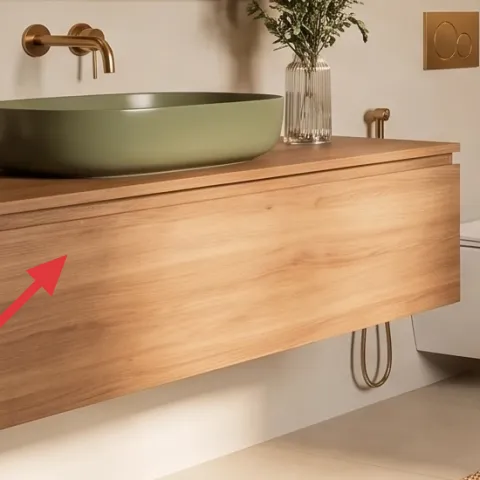
On the vanity, the wood tray is the difference between “stuff on a shelf” and “organized bathroom routine.” Use the tray to group the items you always reach for together—soap bottles, hand lotion, and a small accent—so the counter never feels visually cluttered. This works especially well with warm wood cabinetry because the tray repeats the same material tone. The trade-off: you’ll have to maintain the grouping (re-tray after use), but it’s more realistic than trying to keep every item perfectly minimal in a shared space. The best part is you can lift the whole setup and move it when leases change.
Keep the tray width modest
A tray that’s too large crowds the sink area; leave a little open counter around the bowl for breathing room.
Layer 3 — Vase with white flowers ($20) Adds softness against dark tile
The vase with white flowers brightens the vanity corner without fighting the dark green tile. I like white blooms here because they echo the beige walls and make the warm lighting feel intentional, not dim. Pick a simple, narrow vase so it doesn’t block sightlines in the mirror—this keeps the corner open while still giving that “just refreshed” look. The trade-off is floral styling needs upkeep, but you can swap in greenery or a smaller bouquet to stretch it longer. In a move-friendly bathroom, vase and flowers are also easy to pack compared to larger wall decor.
Go for one focal vase
One vase beats multiple tiny accents; it looks cleaner and is easier to keep consistent.
Layer 4 — Potted plant on counter ($35) Brings the outdoors in, safely
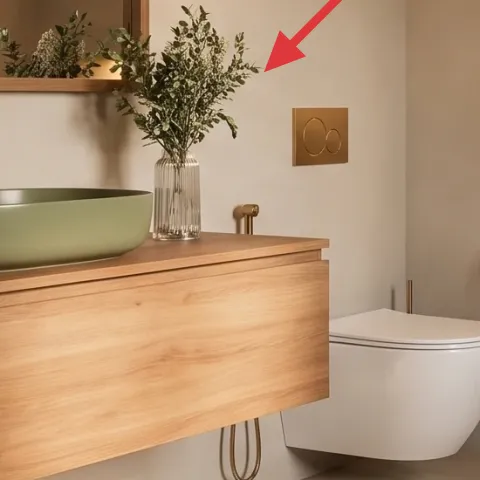
That potted plant on the counter adds an earthy note that ties the whole corner back to the green tile. Keep the pot compact and textured, and aim for leaves that trail or arch slightly so it doesn’t look like a flat decoration. The warm lighting makes greens look richer, which is exactly what you want with dark tile. The trade-off is managing moisture—bathroom humidity can be great for plants, but only if you choose something that tolerates it and doesn’t get waterlogged. If the plant ever changes, the pot and plant arrangement are still easy to box and transport.
Don’t skip a catch tray
If the pot doesn’t have drainage control, water can seep into vanity surfaces and cause sticky residue.
Layer 5 — Large framed mirror ($80) Makes the vanity feel bigger and warmer
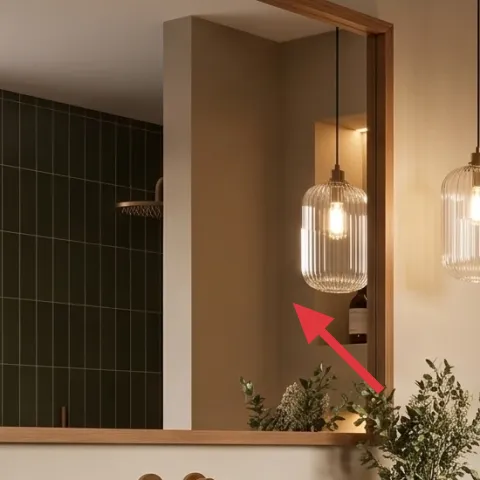
The large framed mirror is the visual centerpiece here, and it’s doing work beyond reflection—it stretches the space and makes warm lighting look more even. If your mirror frame is already there (like in this photo), swap only what you can control: a new frame-friendly accessory like a mirror-safe styling tray on the counter, or polish the frame finish rather than changing the fixture itself. If you need to change the mirror, choose a similar size and warm wood tone so it doesn’t clash with the vanity and shelf glow. The trade-off is sizing—too small and you lose that airy effect, too big and it overwhelms the corner.
Match frame warmth to the wood
Warm wood frame tones keep the mirror from looking gray next to dark green tile.
Layer 6 — Pressed flower frame ($60) One personal touch in the same square format
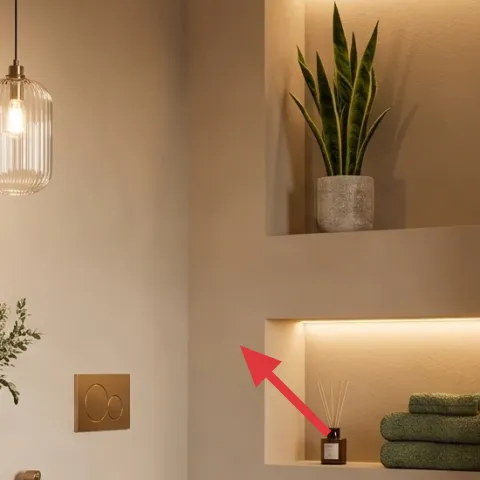
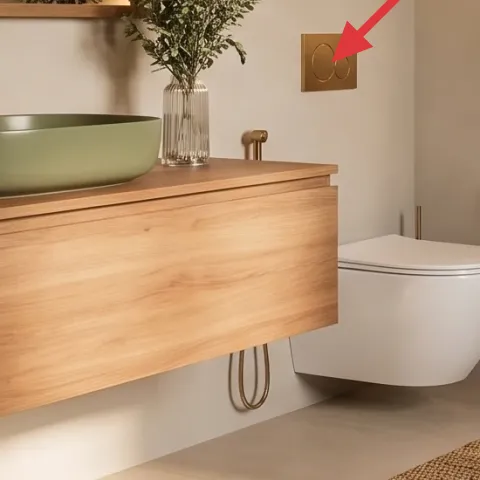
The framed gold circular wall art adds a graphic, spa-like calm—clean lines that balance all the organic shapes in the corner. A pressed flower frame keeps that same “small artwork” scale, but adds a more personal, lived-in feel. Choose a similar square size and a warm backing so it still looks cohesive with the mirror and wood vanity. The trade-off is that pressed flowers are delicate, so they’re best displayed away from heavy splashes and wiped gently. For shared housing, the frame is also easy to pack flat and reuse in the next bathroom.
Make it instead of buying it
DIY a pressed flower frame that matches the gold-art square scale, so the wall gets personality without any drill holes.
Materials
- Cardstock backing — 1 sheet — craft store — $6
- Small foam board — 1 sheet — craft store — $10
- Pressed flowers (assorted) — 1 bundle — craft store — $8
- Clear protective sheet (press-and-seal style) — 1 — craft store — $5
- Command Strips multi-pack — 1 — hardware store — $8
Steps
- Pick a layout: dry-fit flowers on the cardstock until spacing feels balanced.
- Press the flowers if needed (use a book for a few extra days until fully flat).
- Trim flowers as needed for edges so they don’t overhang the frame.
- Layer the cardstock onto foam board for stiffness, then keep flowers centered.
- Seal with a clear protective sheet to reduce fragility in humid bathrooms.
- Mount with Command Strips following the weight limit for the frame.
Total DIY cost: $37 — saves about $23 over buying.
Layer 7 — Folded green towels on shelf ($55) Adds a color echo that looks styled, not accidental
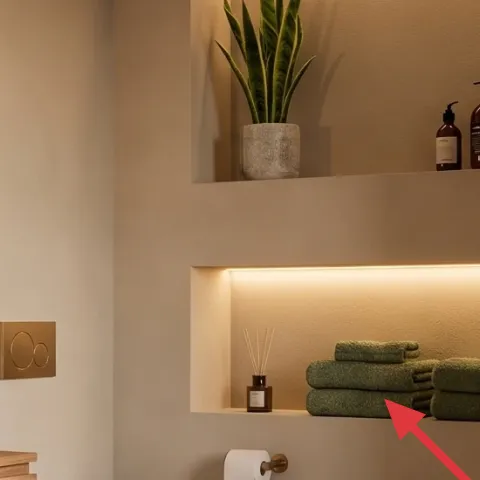
The folded green towels on the shelf are what makes the corner feel pulled together, because they repeat the dark green tile color in a softer, textile way. Use towels with a similar green depth and fold them with consistent edges so you get clean horizontal lines—this is especially important on recessed shelves where everything stacks in one view. The trade-off is you can’t just toss towels in; they need a quick reset after someone uses the bathroom. Still, compared to replacing any fixed fixtures, this is one of the most move-friendly upgrades you can do in shared housing. Pack them like normal linens when you move.
Fold for two visible edges
Keep one fold line crisp so the shelf reads organized from the doorway.
The cost, layer by layer
| Layer | Item | Cost |
|---|---|---|
| 1 | Area rug runner 5×7 | $80 |
| 2 | Decorative tray | $25 |
| 3 | Vase | $20 |
| 4 | Indoor plant | $35 |
| 5 | Mirror (24–36") | $80 |
| 6 | Framed art print 16×20 | $60 |
| 7 | Throw blanket (green towels equivalent) | $55 |
| Total | $355 | |
If you want a cheaper version, cut the framed art print and swap it for a simpler unframed pressable botanical print you can frame later. Keep the runner rug and mirror styling, but use fewer items on the tray so the countertop stays intentional.
What worked, what didn't (across the whole room)
Overall, the room’s materials already pull toward a spa mood; the upgrades mainly made the corner feel softer and more “daily lived-in.” The best changes were the ones you can reset quickly: rug, grouped countertop decor, and towel color repetition.
What worked
- The runner rug adds warmth underfoot and visually softens the light tile floor.
- Grouping items on a vanity tray makes daily clutter look intentional instead of random.
- A white vase balances the dark green tile and keeps the mirror reflection from feeling heavy.
- Green accents in folded towels repeat the tile color without needing any permanent changes.
- A properly scaled mirror keeps the vanity corner feeling open, not boxed in.
- A small square wall art piece adds personality while staying easy to pack for moves.
What didn't
- Mixing too many countertop textures at once made the vanity look busy from the doorway.
- Loose, inconsistent towel folds read “messy” even when the colors were right.
- Skipping greenery made the corner feel colder next to the dark shower tile.
- Using a mirror-adjacent decor layout without a tray reduced the clean-lined effect.
- A wall art scale that’s slightly too small would get lost against the mirror’s frame.
What we'd skip if we did it again
Skip buying a second “matching” wall piece set. When the mirror is already large and warm-framed, adding multiple coordinating prints usually competes with the shelf glow and makes the corner feel over-designed.
Skip towel styling that depends on perfect storage. In shared housing, towels get used, so the better move is a fold that can be redone in under a minute—crisp edges and consistent stack height.
Skip tall decor near the mirror line. In this vanity corner, height can block the reflection read and visually tighten the space, which defeats the main reason this mirror feels like a layout cheat.
Frequently asked
How long does this bathroom vanity corner refresh take?
Most of the work is swap-and-style: placing a runner rug, adding a tray setup, and resetting towel folds. Plan about 1–2 hours for the full look if the decor items are already on hand. The pressed flower frame is the only slower part; since the drying happens beforehand, assembly still fits into a single sitting once materials are ready.
Will this work in a small bathroom where everything feels cramped?
Yes—this plan is built around scale. The mirror stays the main “width” tool, and the rest of the items stay low and clustered: rug on the floor, tray on the counter, and a small square frame on the wall. Avoid tall decor and large rugs; keeping the palette warm wood, cream, and dark green is what makes the corner feel cohesive instead of crowded.
What if my lease doesn’t allow anything on the wall at all?
You can keep the framed-art idea by choosing a version that’s mounted using renter-safe methods like Command Strips on the correct surface and weight rating. If wall mounting is totally off-limits, skip the frame layer and put the pressed flowers into a tabletop or shelf placement instead—then keep the rug, mirror styling, and tray grouping for the biggest visual payoff.
Where should I shop for these items on a budget?
For the runner rug and mirror-friendly basics, start with warehouse home stores, discount rug retailers, and online marketplaces that list dimensions clearly. For the tray, vase, and plant pot, look at home section clearance or thrift for shapes that match warm wood tones. The framed art print and pressed flower materials are usually easiest at craft stores.
What’s the biggest mistake to avoid in bathroom refreshes like this?
The biggest miss is mixing too many small items without a system. If the countertop doesn’t have a tray and a repeat color (green towels or greenery), it looks cluttered fast—especially in shared housing where products multiply. A second common mistake is choosing a rug that’s too tall-piled; low-pile textures handle damp feet and quick cleanups better.
More in Bathroom
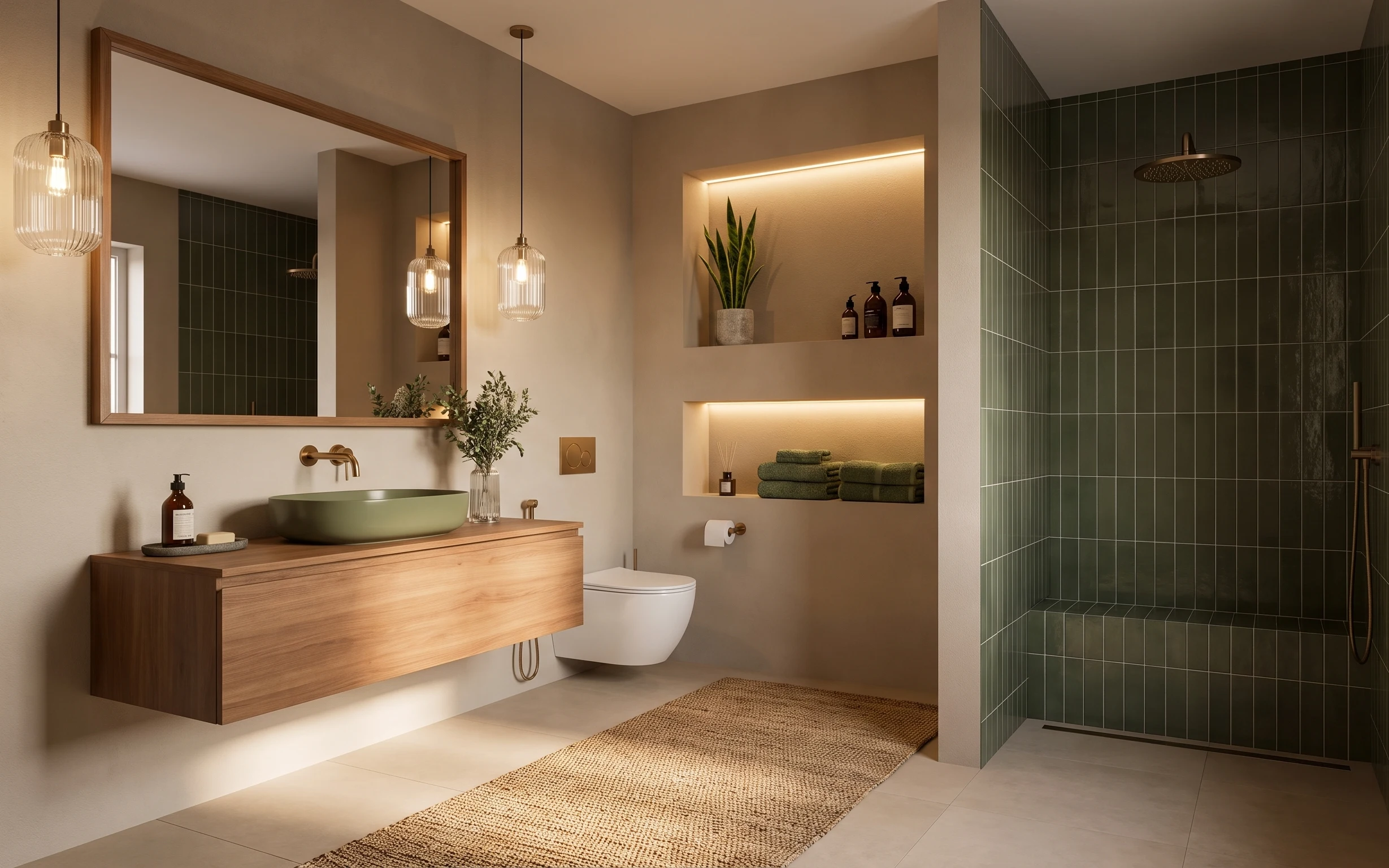
Under $400: warm wood-and-olive bathroom vanity corner refresh
A renter-friendly bathroom vanity corner refresh with warm wood tones, dark green tile, and softer textures. This $400 plan uses 7 move-rea…
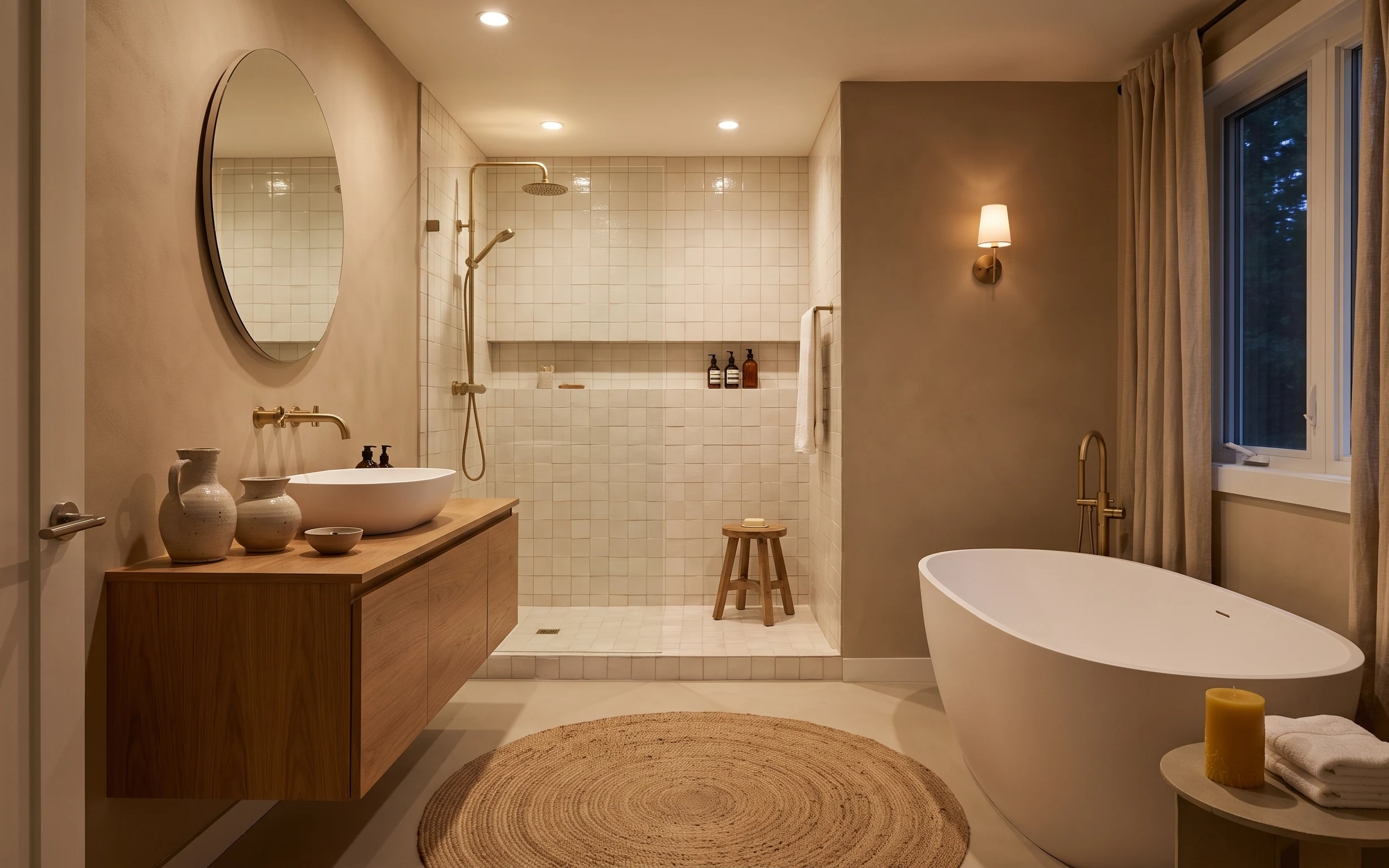
Under $700: warm modern bathroom tub corner refresh with 7 swaps
A warm brass-and-cream bathroom tub corner makeover using 7 budget-friendly swaps (mirror, curtains, rug, vanity, faucet, candle, and ceram…
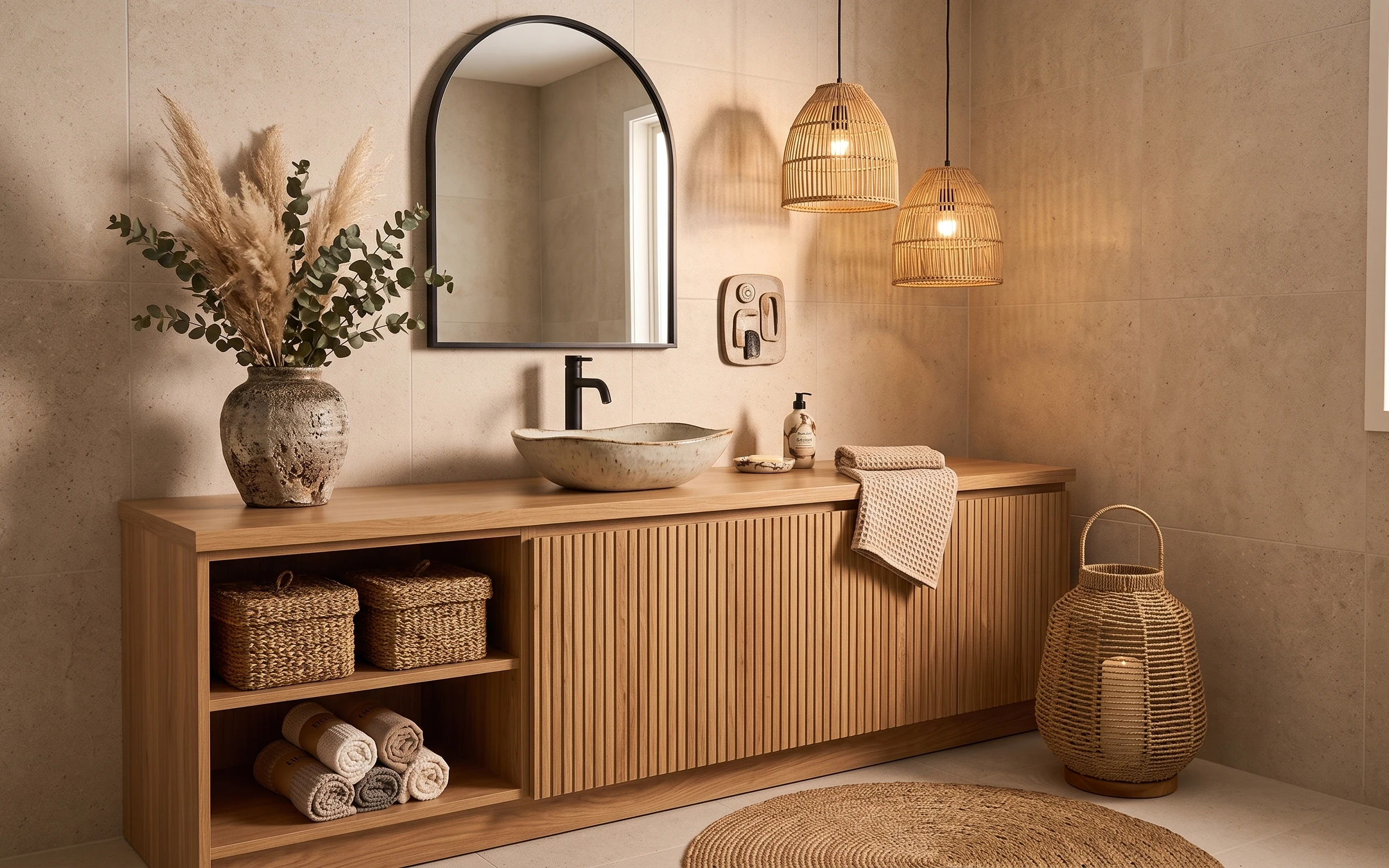
Under $350: renter-friendly vanity corner refresh with earthy neutrals
A warm, spa-like vanity corner is achievable on a $350 renter budget using rugs, framed art, towels, and move-friendly décor. This plan foc…