- Best for
- Weekend bathroom refresh
- Cost
- $645 total for 7 swaps
- Time
- 3–6 hours for most changes
- Renter-safe
- Not fully (faucet swaps may be limited)
Why this brass-and-cream tub setup is the bathroom tub corner of 2026
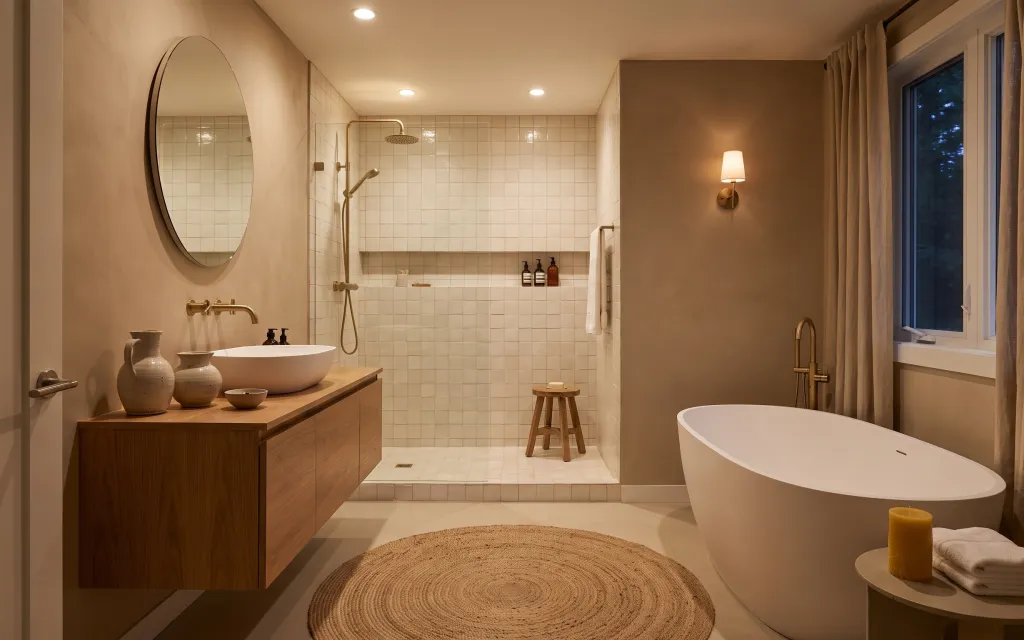
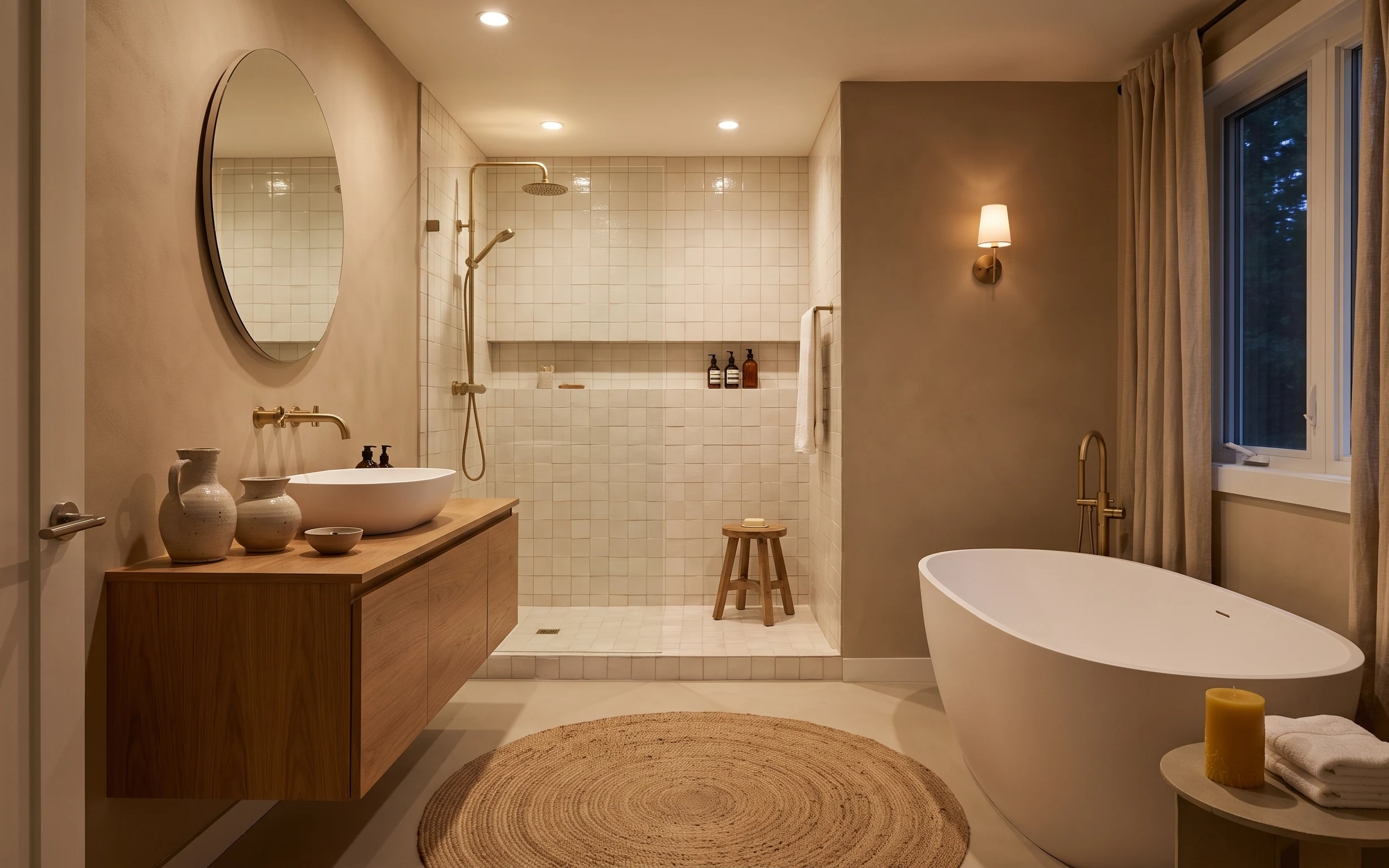
The first thing this bathroom does right is reflect the light—literally—with that oval mirror in a black frame. Then the brass hardware shows up everywhere: on the faucet, on the shower fittings, and in the warm wall sconce glow. On the soft side, the beige round rug and the white towel add texture against the crisp white subway tile. This mix is achievable for homeowners because you can buy the “high-visibility” pieces (mirror, curtains, faucet) and spend the rest of the weekend styling the vanity.
I almost skipped curtains in my own bathroom refresh because they felt like a “nice-to-have.” What finally changed my mind was realizing curtains don’t just block light—they frame the window so the whole corner looks finished. In this photo, the brown drape brings warmth to the tile and balances the bright tub shape. It’s also the difference between a bathroom that looks staged and one that looks lived-in.
Layer 1 — oval mirror with black frame ($120) Reflects daylight without fighting the tile
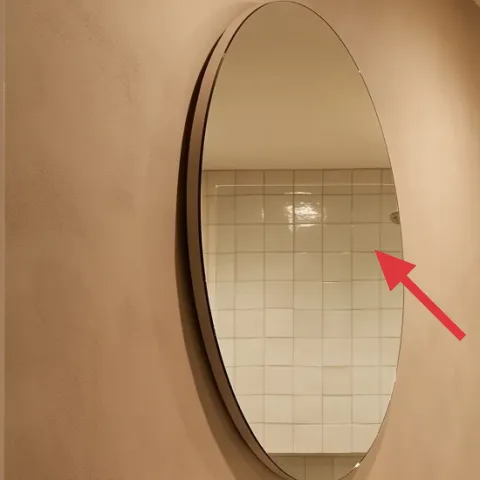
This oval mirror with a black frame is doing two jobs: it brightens the whole tub corner and it adds a crisp line of contrast against the warm tan walls. The rounded shape is also more forgiving than a rectangle in a space full of straight tile lines. A common alternative is a round mirror, but the oval reads more intentional here because it echoes the tub’s gentler curve. The trade-off is that black frames can look heavy if the room is very small, so the key is balancing it with warm lighting and plenty of white surfaces, which this room already has.
Mirror placement: keep it centered over the sink zone
In a small bathroom, the mirror should “own” the vanity area so it widens the whole wall instead of feeling like decoration.
Layer 2 — brown floor-length curtains ($80) Adds warmth and softness beside the tub
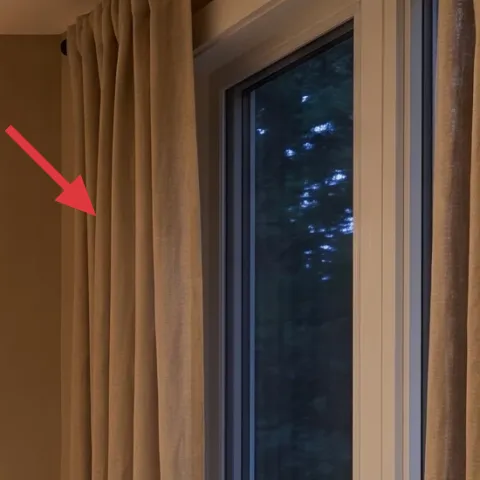
The brown floor-length curtains give the window a finished, hotel-spa feel without changing any plumbing or tile. Their warm tone keeps the brass from going too yellow and prevents the white tub and subway tile from reading sterile. The alternative—sheers only—would let in light, but it wouldn’t add that cozy vertical frame that makes the tub corner feel anchored. The trade-off with heavier curtains is that they need proper hanging height, so the top should sit close to the ceiling line to avoid visually “shrinking” the window.
Choose a fabric that drapes, not one that stands stiff
Soft movement makes the curtains look custom; stiff material can look temporary in a bathroom.
Layer 3 — beige round rug ($80) Grounds the tub area with texture
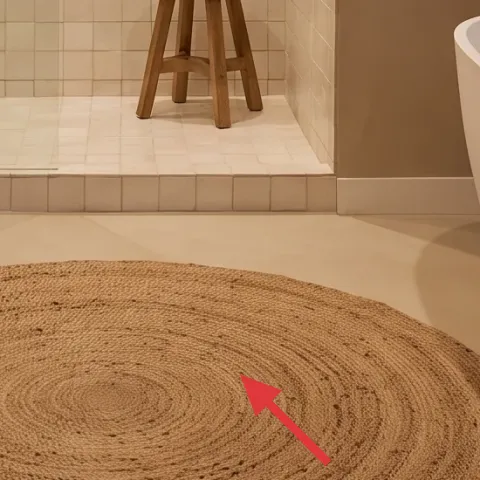
That beige round rug is small enough to feel specific to the tub corner, but big enough to stop bare tile from stealing the visual spotlight. The looped texture and neutral color soften the hard lines of the white floor and the tub’s smooth finish. If the rug were rectangular, it would compete with the shower’s straight grid pattern; the round shape instead harmonizes with the oval mirror and the rounded tub edges. The trade-off is that round rugs show spills sooner than larger rectangle rugs, so a low-pile material and quick blotting help a lot.
Pick warmth first, then pattern
In tile-heavy rooms, a plain neutral with texture usually looks better than a busy print.
Layer 4 — wood vanity with built-in drawers ($200) Brings the “real-life” layer of warmth
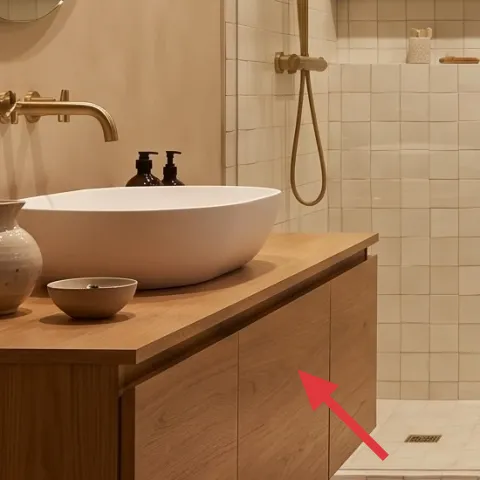
The wood vanity is the foundation piece that keeps this bathroom from reading like a showroom. The warm tone of the wood contrasts the cool white subway tile and gives your eye a place to rest. A logical alternative is a solid white or slab-front vanity, but that can make the shower wall look even louder because both surfaces are bright. Here, drawers also add function—everything can disappear during the week. The trade-off is that wood finishes can need occasional cleaning, so using the right cleaner for the finish matters to keep it looking fresh.
Don’t size the vanity too wide for the walking path
In tight bathrooms, an overly long vanity forces awkward steps and makes the corner feel cramped fast.
Layer 5 — brass bathroom faucet ($120) Pulls the hardware color story together
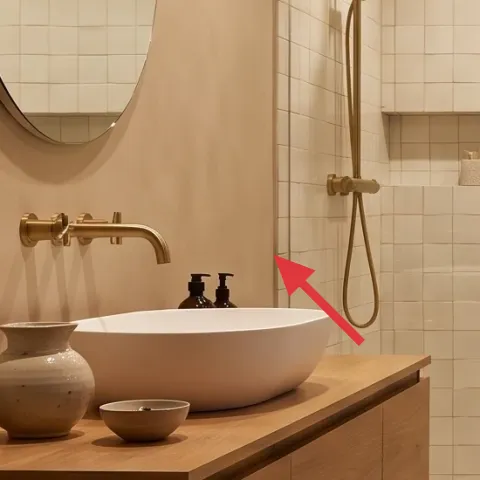
The brass bathroom faucet ties the brass accents into one cohesive finish, so the room looks styled instead of mismatched. You can see the same warm metal language near the shower hardware, which is why this swap feels high-impact—your eye doesn’t have to “search” for the metal. An easy alternative is chrome or brushed nickel, but that would cool down the entire palette and fight the warm wall color. The trade-off is that brass can show water spots, so wiping it dry after heavier use keeps it looking crisp.
Match undertones, not just the color
Warm brass looks best when your walls and wood lean warm too, like this tan-and-oat palette.
Layer 6 — candle on side table ($15) Adds a quick spa cue for the evenings
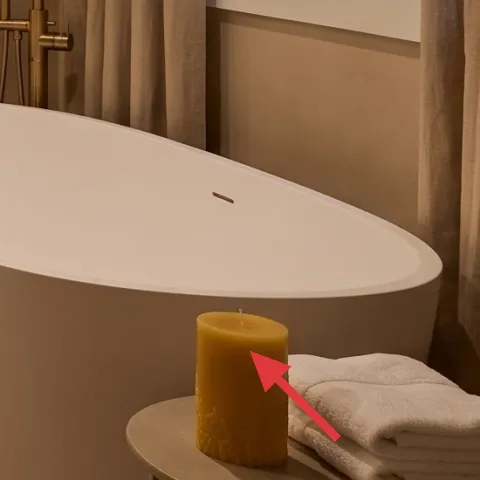
This candle on the small round side table is a tiny detail, but it changes the mood because it adds a real flame point in a room lit by warm fixtures. The fact that it sits off to the right also makes the tub corner feel layered rather than flat. If you skip candles and go straight to “decor only,” the bathroom can look styled during the day but empty at night. The trade-off is maintenance—candles need safe placement and regular trimming—so choose a stable holder and use it sparingly for that best glow.
Keep the candle holder low and stable
A low silhouette won’t visually crowd the tub edge and is easier to dust around.
Layer 7 — set of ceramic vessels on vanity ($30) Makes the counter feel personal, not cluttered
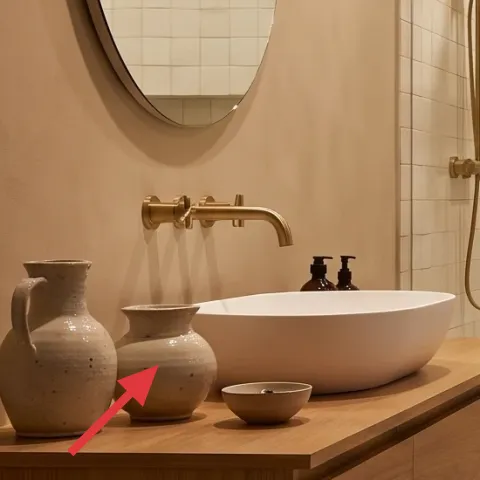
The set of ceramic vessels on the vanity is how this bathroom reads lived-in. The matte, speckled surfaces add tactile variation right where your hands naturally reach—after brushing teeth, washing up, and grabbing a towel. A simple soap pump alone can look utilitarian; multiple vessels create height and shape while staying within a single color family. The trade-off is that too many pieces can make the counter look busy, so this works because it’s a tight grouping of similar neutrals with enough negative space around them to feel intentional.
Stick to one neutral family
When everything is in the same warm spectrum, the grouping looks curated instead of random.
The cost, layer by layer
| Layer | Item | Cost |
|---|---|---|
| 1 | Oval mirror with black frame | $120 |
| 2 | Brown floor-length curtains (panel pair) | $80 |
| 3 | Beige round rug | $80 |
| 4 | Wood vanity with built-in drawers | $200 |
| 5 | Brass bathroom faucet | $120 |
| 6 | Candle on side table | $15 |
| 7 | Set of ceramic vessels on vanity | $30 |
| Total | $645 | |
If the vanity budget is tight, a cheaper laminate vanity with a warm wood-look finish can still give you the same “heat” against the tile. You can also hunt for the mirror and curtain pair at home sales to keep the same overall layout without changing the look.
What worked, what didn't (across the whole room)
This bathroom feels cohesive because warm brass shows up in multiple places, and the soft textiles keep the tile and tub from feeling hard. The grouping on the vanity also reads intentional instead of decorative clutter. The only part to be cautious with is choosing finishes that are either too cool (and fight the walls) or too busy (and fight the tile pattern).
What worked
- The black-framed oval mirror adds contrast while still keeping the overall shape gentle.
- The brown curtains soften the window wall and balance the straight lines of subway tile.
- The beige round rug anchors the tub area and reduces the look of bare tile.
- The wood vanity brings warmth and functional storage to the corner.
- The brass faucet finish ties hardware details together instead of feeling random.
- The ceramic vessels make the vanity feel lived-in without adding visual clutter.
What didn't
- All-white metal finishes would likely cool the palette and make the bathroom feel less warm.
- A busy rug pattern would compete with the shower’s tile grid and flatten the design.
- Too many countertop objects would erase the negative space that currently keeps it calm.
- Skipping curtains can make the window wall look unfinished next to an already bold tub shape.
What we'd skip if we did it again
Skip replacing multiple fixtures at once. Prioritize the faucet and a single “hero” reflective element (the mirror) so the room still looks coordinated without blowing the budget on every brass detail.
Skip a rug with a high-contrast pattern. In a tile-and-subway-wall bathroom, a neutral textured rug keeps the visual harmony and makes the corner feel more spa-like than trendy.
Skip cluttering the vanity to “fill space.” A small set of ceramic vessels works because it’s grouped and warm-toned, but too many items push the space toward counter mess instead of intentional styling.
Frequently asked
How long would this bathroom refresh take on a weekend?
If the layout is staying the same, most swaps fall into a same-day rhythm: pick up the mirror, curtains, rug, and accessories first, then style the vanity. The slow part is usually the faucet plan (if you’re swapping that fixture) and any curtain hardware install. Budget half a day for decision-making and dry fits, then plan 1–3 hours of actual hands-on work depending on what you buy new.
What if I’m renting and can’t change the faucet or mount fixtures?
Keep the faucet as-is and focus on the parts that read the fastest in photos: the mirror shape (or an over-the-counter option), curtains, and rug. You can also swap countertop decor to add warmth—ceramic vessels and a candle do a lot. If the wall sconce is staying, you can still warm the lighting feel with a lamp shade bulb (if allowed) or by adding softer textiles around the tub corner.
My bathroom is smaller—should I still use a round or oval mirror?
Yes, but scale matters. In a smaller bathroom, the mirror should visually widen the vanity wall without swallowing it—look for a proportion that leaves breathing room between the mirror edges and the surrounding trim. A round rug can also work, but make sure it reaches at least the front edge of the tub standing zone so your feet land on something cushy rather than tile.
Where can I shop for these items without overpaying?
For basics like curtains and rugs, department stores and home sites often have consistent sales, especially in warm neutrals. Mirrors can be found cheaper at home improvement stores or during seasonal discounts. For faucets and vanities, check reputable plumbing retailers and then compare the same finish across brands to avoid paying for a premium look you won’t see once everything is installed.
What’s the biggest mistake people make in this type of bathroom corner?
Overcooling the palette. If the faucet finish and mirror frame are too gray or silver while the walls and wood are warm, the bathroom starts to feel mismatched even when it’s clean. The second common mistake is choosing patterns that clash with the tile grid—neutral texture beats bold graphics every time in subway-tile showers.
More in Bathroom
Under $700: warm modern bathroom tub corner refresh with 7 swaps
A warm brass-and-cream bathroom tub corner makeover using 7 budget-friendly swaps (mirror, curtains, rug, vanity, faucet, candle, and ceram…
Under $350: renter-friendly vanity corner refresh with earthy neutrals
A warm, spa-like vanity corner is achievable on a $350 renter budget using rugs, framed art, towels, and move-friendly décor. This plan foc…
Under $400: move-ready spa bathroom refresh with 7 swaps
A spa-bathroom refresh for shared housing: swap 7 movable items (rug, towels, textiles, decor, and wall art) for a calmer, more polished lo…