- Best for
- textiles + move-ready wall styling
- Cost
- $490 total for the look
- Difficulty
- Easy (mostly soft goods + styling)
- Time
- 1 afternoon
Why warm rattan-and-sage styling is the bedroom of 2026
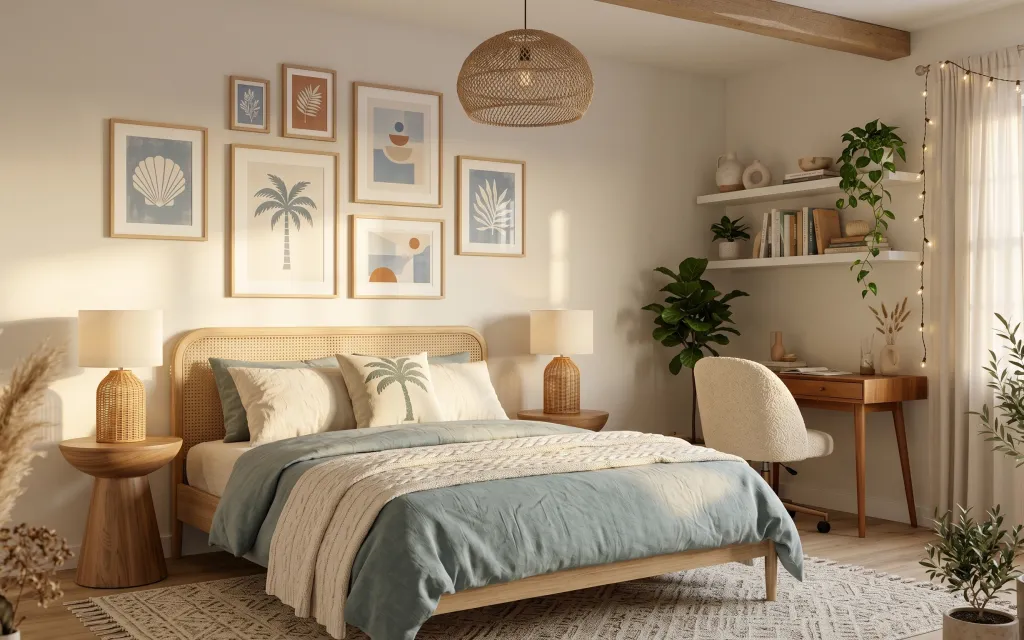
This bedroom leans into warm tan texture (rattan, woven lamp base, and natural wood) paired with a cool sage-blue blanket and crisp white accents. The beige knit rug anchors everything at floor level, while the framed botanical prints keep the wall feeling curated instead of bare. It’s a great model for shared housing because the “big” look comes from soft goods and swappable decor, not hard changes. No landlord-level upgrades needed—just layers that fold, roll, and store well between moves.
I used to overthink wall decor in rentals and buy things that were too precious to pack. This time, the trick was choosing framed-style artwork I could either carry or re-swap quickly, and then letting textiles do the heavy lifting. I also caught myself almost skipping the curtain panels because they felt “extra,” but the photo proves they soften the whole sightline next to the string lights. The result reads intentional even when you’re working within temporary constraints.
Layer 1 — beige knit rug ($200) anchors the soft base
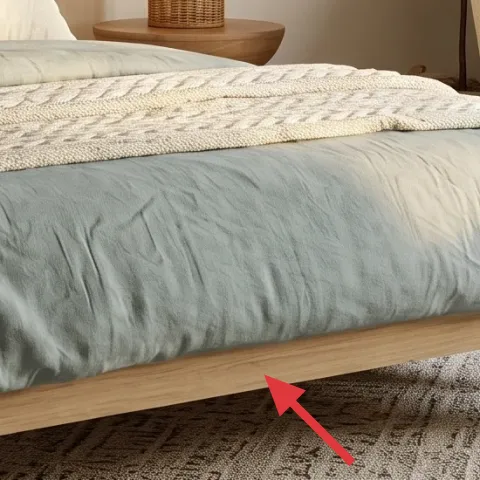
A beige knit rug gives you that lived-in, neutral foundation you can build on with plants, framed art, and blue-gray bedding. In the photo, the rug’s texture sits under the bed and helps the whole room feel warmer—especially with the cool-toned blanket. The trade-off is that a knit look is more about visual texture than deep stain hiding, so you’ll want to keep it paired with washable throws nearby. Compared with swapping the bed frame or headboard, this is the one change you can roll, box, and move with zero installation drama.
Spot-clean quickly
Blot spills fast with a clean cloth, then let it fully air-dry so knit fibers don’t stay flattened.
Layer 2 — string lights ($15) add warm punctuation
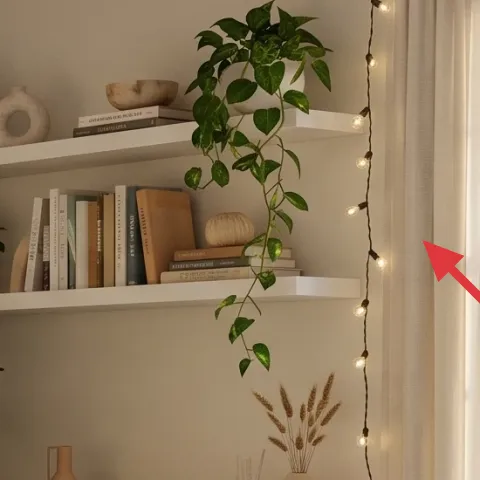
String lights create that cozy evening glow without changing any fixed fixtures. Here they drape along the window area, which means they’re visually connected to daylight but still feel magical after dark. The best part for shared housing is that you can take them down at move-out and coil them into a small bag. The obvious alternative is adding another lamp, but this gives you height and atmosphere in one go. If your window area already has curtains, plan to hang the lights so they don’t compete with the art above the bed.
Keep cords tidy
Use the curtain rod area as your “route,” then secure slack with a couple of small clips so it doesn’t snag shoes or laundry baskets.
Layer 3 — beige curtains ($80) soften the window line
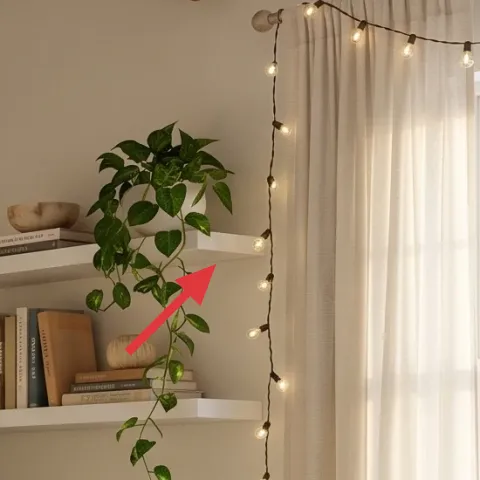
Beige curtains bring softness right where the room is brightest, and in this photo they echo the tan rattan and wood tones. Because curtains are all fabric, they’re one of the easiest rental swaps: you can fold them, pack them, and rehang with the next lease setup. The main trade-off is coverage—sheer or light curtains won’t block the sun the way blackout options do. That’s okay here because the room’s style is airy and warm. If you’ve only ever bought “cheap and short,” this is where spending a little more on length helps the whole bedroom look taller.
Go for longer-than-you-think
Choose panels that puddle slightly or hit near the floor so the window feels finished.
Layer 4 — framed botanical art print ($80) brings your wall palette to life
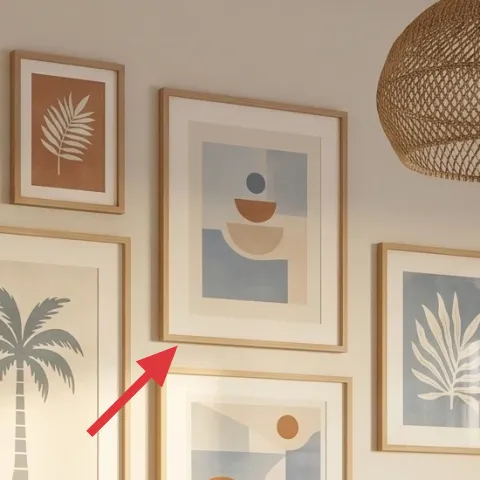
Botanical-style prints work especially well in rentals because they can replace “generic blank wall” energy without requiring any permanent changes. In the photo, the gallery of framed prints keeps the room from feeling staged-only around the bed. The downside of buying a full set is cost, which is why you can start with one standout print that matches the existing palette: tan, cream, and cool blue-gray. Even better, you can DIY a single print to keep it personalized to your taste while staying move-friendly and boxable. The frame handles the structure; your print brings the look.
Make it instead of buying it
DIY a hand-painted abstract on cardstock sized to fit a standard framed art opening, so it matches the room’s botanical palette without changing any fixed wall elements.
Materials
- Cardstock (thick, art-ready) — 1 sheet — craft store — $10
- Acrylic paint set (cream/tan + sage/blue-gray) — small set — craft store — $18
- Fine paintbrushes — 2–3 sizes — craft store — $12
- Painter’s tape — 1 roll — craft store — $6
- Matte sealant spray (for paper, optional) — 1 can — craft store — $9
Steps
- Cut cardstock to your print size (measure the frame opening first).
- Lightly tape off simple shapes so the abstract stays crisp, not muddy.
- Paint 2–3 bands or blocks in cream and tan, then add one sage/blue-gray element.
- Let the first layer dry, then add details with a fine brush.
- Remove tape while paint is still slightly tacky for cleaner edges.
- Let the artwork dry fully, then apply matte sealant only if you want extra scuff resistance.
Total DIY cost: $55 — saves about $25 over buying.
Layer 5 — plug-in table lamp with tan wicker base and white shade ($60) adds bedside warmth
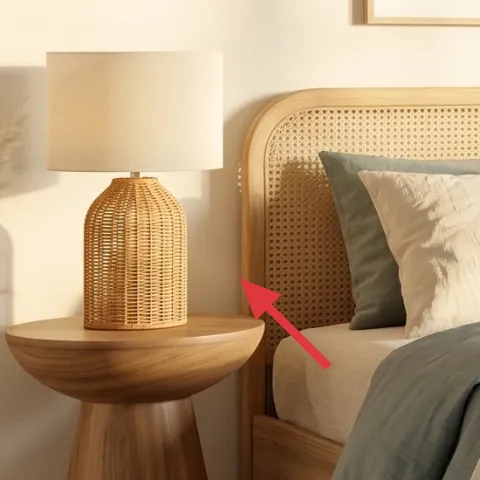
The plug-in table lamp with a woven tan base and a soft white shade gives you that warm, even light that reads “evening ready” without any ceiling changes. In the photo, it sits near the bed and balances the rattan pendant overhead, so you’re not relying on one bright source. The trade-off is choosing a lamp with a shade shape that looks good from the side, since bedroom lighting often shows up in screenshots and mirrors. Buying a lamp beats trying to upgrade fixed lighting (not allowed in rentals anyway). Packability matters too: lamps can be wrapped and boxed with the shade protected.
Don’t overdo wattage
Stick to bulbs that look warm (not harsh white), or the sage bedding can start reading dull.
Layer 6 — small potted plant on wall shelf ($25) softens the vertical line
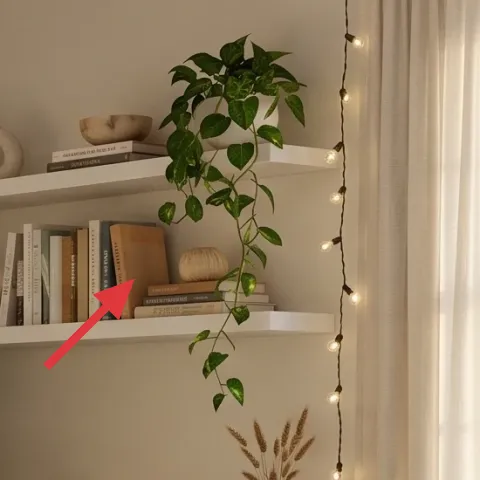
A small potted plant on the shelf adds living texture and fills visual space between books and ceramics. It’s a smart move for shared housing because plants are removable and the “pot + greenery” combo travels better than bulky decor. The trade-off is maintenance—plants won’t survive neglect—so choose a hardy variety that tolerates your schedule. Compared to a decorative object that can’t change shape, greenery brings subtle movement and depth that framed prints can’t. If you’re building this look in stages, a plant is the fastest way to stop the shelf from feeling like storage.
Match the pot tone
Keeping the pot in cream, tan, or terracotta keeps it cohesive with the rug and woven lamp base.
Layer 7 — vases and ceramics on wall shelf ($30) adds the “collected” finish
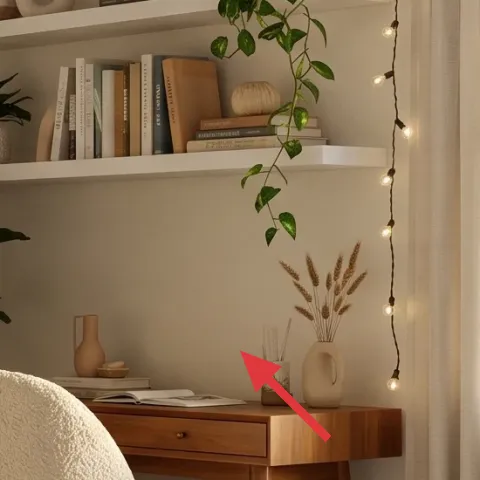
That shelf styling in the photo reads collected, not cluttered—because the ceramics are varied in height and silhouette while staying in a limited palette. Using vases and small ceramic pieces gives you micro-visual interest next to the window light, and it also balances the weight of the framed art above the bed. The trade-off is that too many small items turns into shelf chaos, so pick 2–3 pieces max and leave breathing room. This is much easier than buying a larger shelf system or installing anything permanent, and it’s simple to re-style for the next shared bedroom layout.
Use one “hero” height
Anchor the cluster with the tallest vase, then add one medium and one small piece around it.
The cost, layer by layer
| Layer | Item | Cost |
|---|---|---|
| 1 | Beige knit rug 5×7 | $200 |
| 2 | String lights (set) | $15 |
| 3 | Curtain panel pair (84") | $80 |
| 4 | Framed botanical art print 16×20 | $80 |
| 5 | Plug-in table lamp (wicker base + shade) | $60 |
| 6 | Tabletop plant | $25 |
| 7 | Decorative ceramic assortment | $30 |
| Total | $490 | |
If you want the same vibe for less, swap the rug for a smaller 5×7 in a simpler weave ($150) and choose one larger framed print instead of adding multiple. Keep the string lights and curtain panels, since fabric + lighting do most of the visual work.
What worked, what didn't (across the whole room)
This setup works because it builds warmth from texture: rug + curtains + woven lighting, then it layers interest with a botanical print and a few shelf moments. The lighting pattern also helps—one pendant plus bedside light keeps the bedroom feeling soft after dark.
What worked
- The beige rug anchors the bed area and makes the whole palette feel intentional from every angle.
- String lights add height near the window without relying on any fixed electrical work.
- Curtain panels soften the bright side of the room and help the bed look “finished,” not temporary.
- Botanical print styling keeps the wall from feeling random while staying easy to pack.
- One woven lamp base repeats the natural textures and makes the room feel cohesive.
- Small plant + ceramic cluster bring life to the shelf without adding bulk.
What didn't
- When curtain panels were too short in past rentals, the room looked top-heavy and unfinished.
- If string lights are hung too low, they can look cluttered and snag on daily paths.
- Too many small ceramics on the shelf reads like storage instead of styling.
- Cold bulbs inside a neutral lamp shade can make sage-blue tones look washed out.
What we'd skip if we did it again
Skip over-buying matchy-matchy sets. In shared housing, it’s tempting to buy “the lamp + the nightstand + the decor bundle,” but those pieces often don’t pack well and the look dates faster than you expect.
Skip replacing fixed lighting or adding permanent installations. This photo’s warmth comes from removable lamps, pendants, and string lights—anything requiring drilling turns a quick refresh into a landlord conversation.
Skip large, heavy decor if you know you’ll move within a year. A good rule: if it can’t fold, roll, or wrap into a few boxes, it’s not worth it when you’re rebuilding the vibe at each new lease.
Frequently asked
How long does this bedroom refresh take in real life?
Most of the work is fabric and styling: rug + curtain panels + adding a frame print and shelf accessories. Plan about 2–4 hours for day-of setup if everything already fits where you want it. If you’re DIY-ing the art print, add an extra couple of hours for painting and drying, ideally done the day before so you’re not rushing.
Is this renter-safe for shared housing—can everything pack up easily?
Yes—this is built around removable textiles, freestanding decor, and plug-in lighting. The rug rolls, curtains fold, framed art packs flat with corner protection, and string lights coil down into a small storage bag. You can keep the same palette while re-styling for a different bedroom layout at move-out.
What if my room is smaller than the photo?
Keep the same texture palette, but scale down the “visual footprint.” Choose a slightly smaller rug size if needed, and use fewer shelf pieces—2–3 ceramics max—so the wall doesn’t feel busy. Curtains can still work: choose panels that reach as close to the floor as possible to maintain height even in a tight room.
What if my room has bright white walls and feels too sterile?
Bring warmth through woven and knit textures first (rug + lamp base) before adding color. Then use the botanical print and sage-blue throw to add a calm contrast that still feels natural. If you’re tempted to repaint, swap in textiles and framed art instead—those changes move with you.
Where can I shop for these pieces without buying a full set?
Start with big-ticket basics: a beige rug and curtain panels from home-goods stores, then add lighting and decor from lamp retailers or thrifted marketplaces. For the botanical-style print, you can shop for a single framed option or make a DIY cardstock version to match your palette. Plants and ceramics are the easiest to thrift locally.
What’s the biggest mistake people make with this bedroom style?
Overloading the shelf or choosing a rug that’s too small. If the rug doesn’t extend under the bed front area, the room can feel like furniture is floating. On the shelf, too many small items makes the styling look like clutter instead of intentional height variation. Keep it limited and let texture do the work.
More in Bedroom
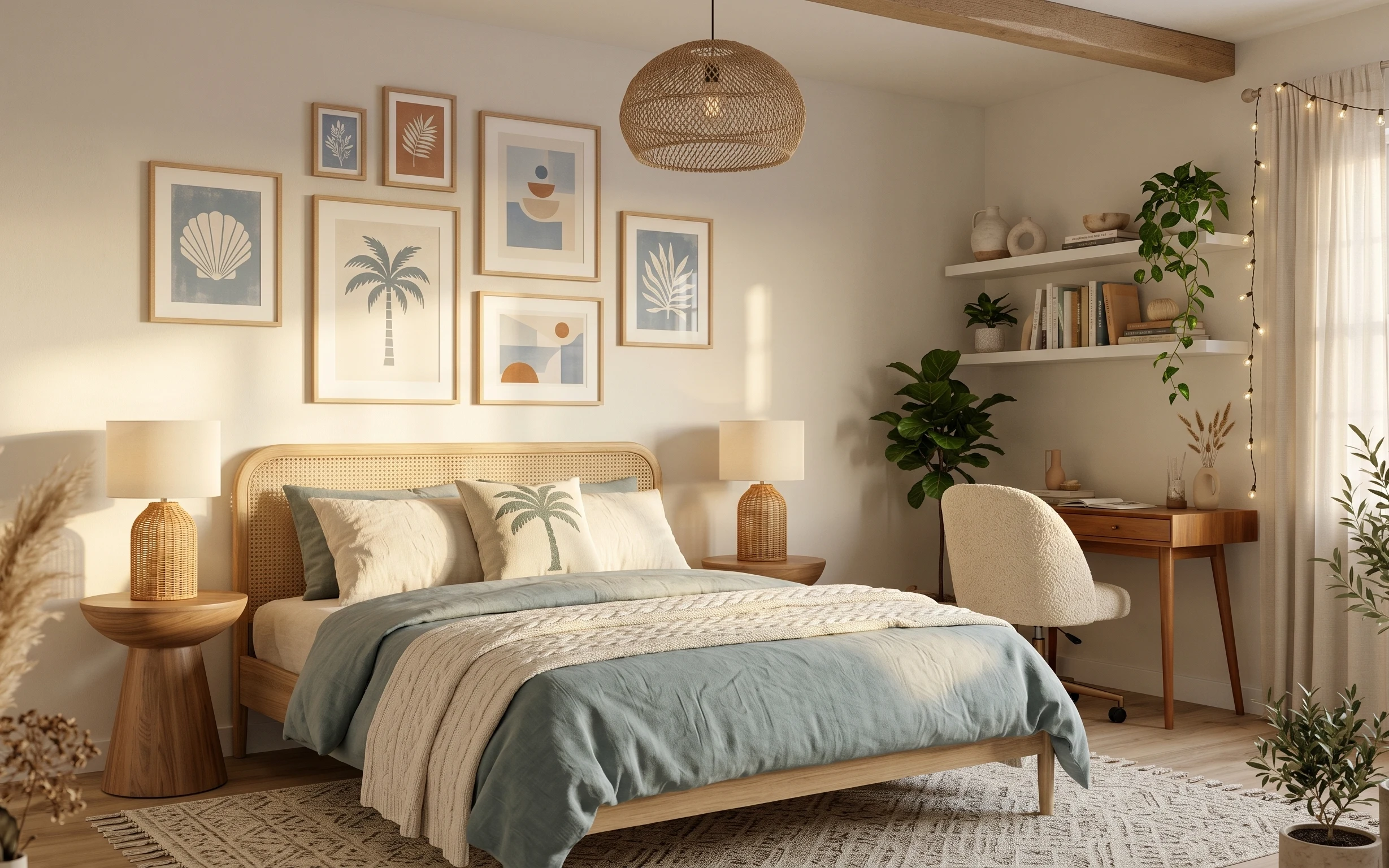
Under $500: boho bedroom refresh with move-ready swaps
A boho bedroom update built for shared housing: soft warm light, layered textiles, and renter-safe wall styling. This look comes together f…
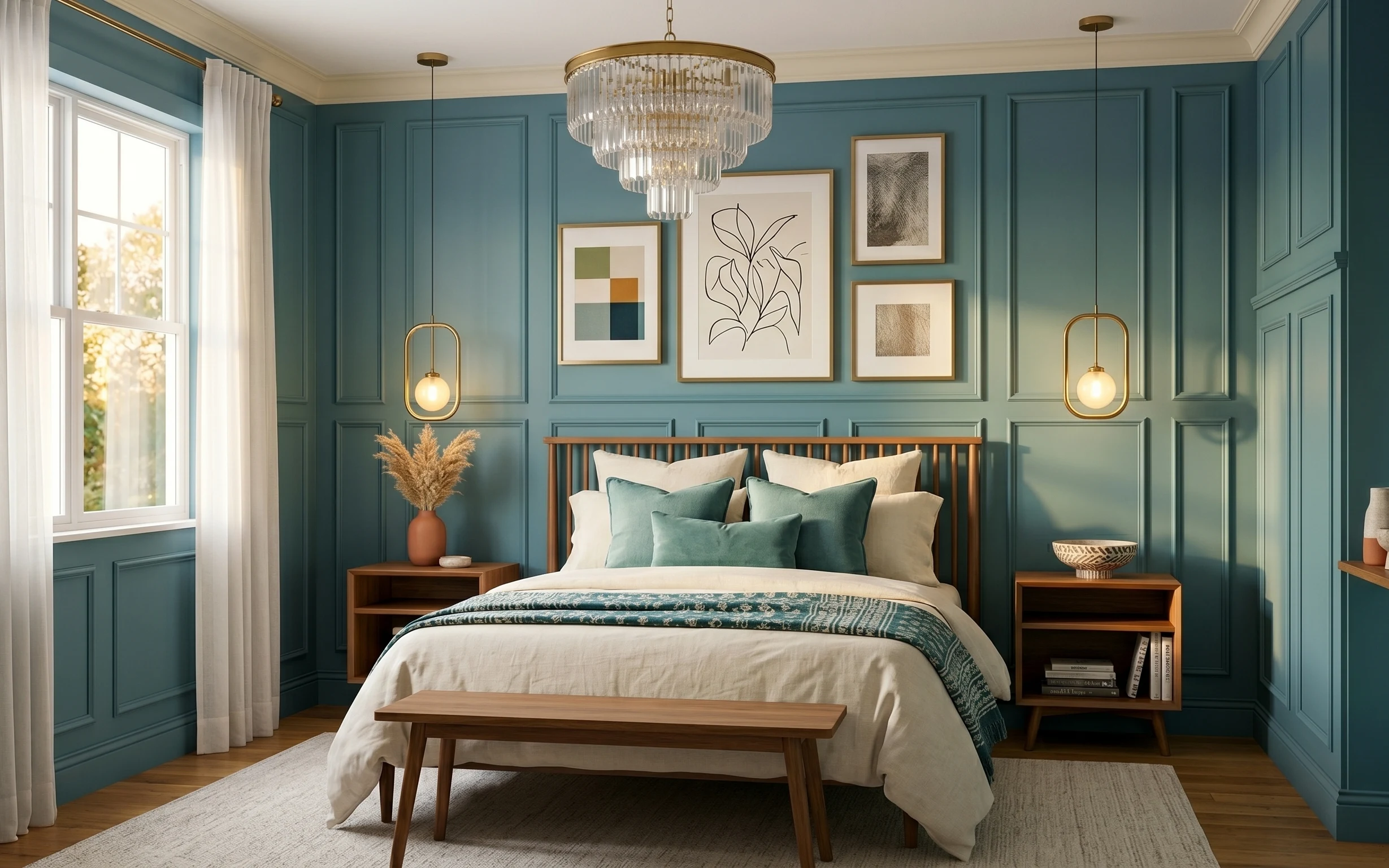
Under $1500: 7 upgrades for a teal bed nook bedroom
A teal bed nook bedroom refresh that leans warm walnut + cream textures. This weekend-friendly plan uses seven upgrades totaling $1005, wit…
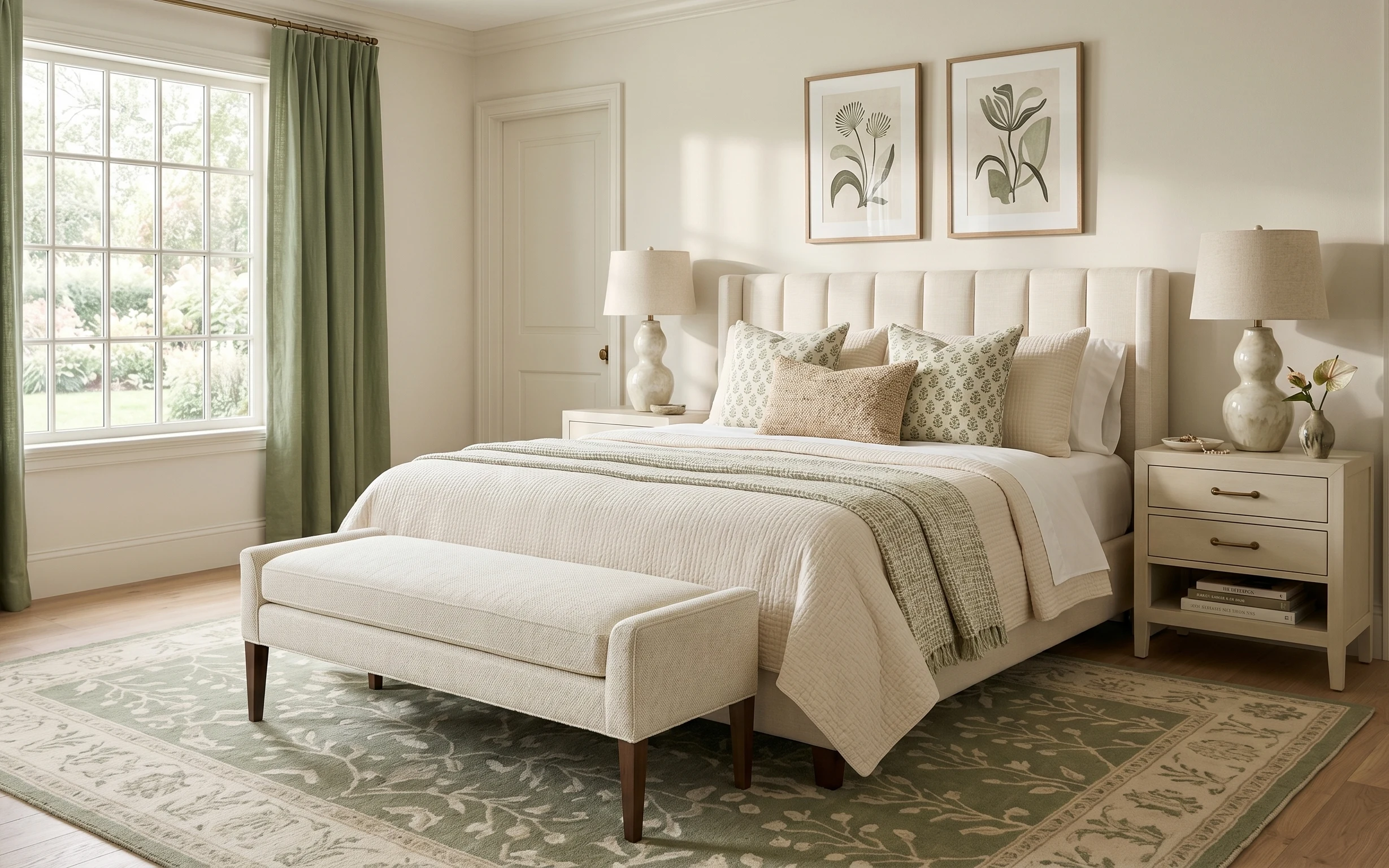
Under $600: olive-and-cream bed nook refresh with renter-safe swaps
A renter-friendly bed nook refresh that copies the olive-and-cream look in the photo using curtains, layered textiles, plug-in lighting, an…