- Best for
- Budget bedroom refresh
- Time
- 2–4 hours for setup
- Total cost
- $530
- Renter-safe
- Yes (no-drill swaps)
Why olive curtain-and-rug palette is the bed nook of 2026
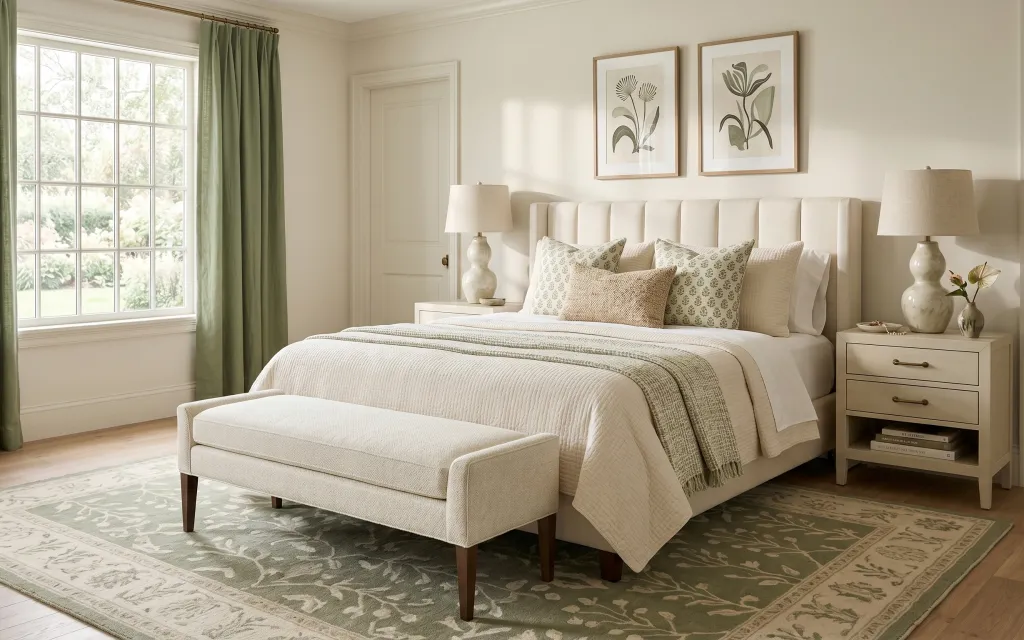
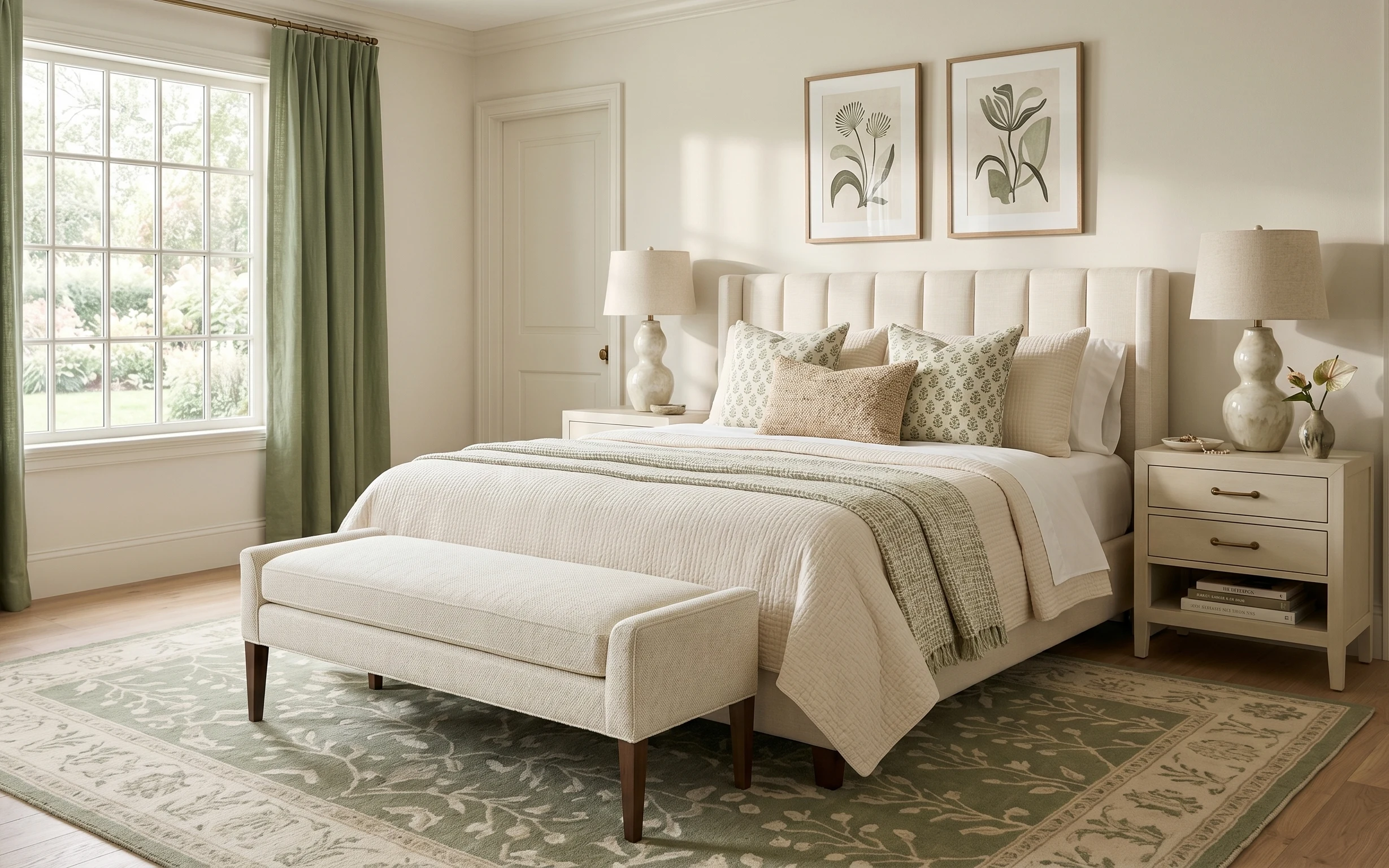
The photo leans on a repeating olive-and-cream rhythm: green curtains anchor the left window, a leafy patterned rug grounds the bed, and cream textiles keep everything bright. That combination feels polished because the textures vary—tufted upholstery at the headboard, soft woven throw fabric draped on the bedding, and the slightly raised rug pattern underfoot. For renters, this is achievable without painting because the biggest “design moves” here are swappable textiles and freestanding lighting, not landlord fixtures.
My own mistake in rentals was treating curtains like decoration instead of framing. I once hung shorter panels that barely touched the floor, and the whole bed area looked cut off. What fixed it was going longer and wider than I thought I needed, then matching the curtain tone to the rug. In this layout, the green is muted (not neon), so it reads calm even with multiple patterns.
Layer 1 — area rug 8×10 (olive pattern) ($200) Hides the bed’s footprint with a grounded pattern
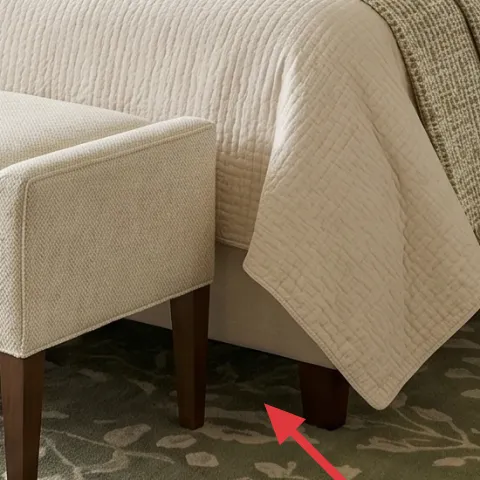
The rug is the visual “base layer” in this bed nook: an olive-pattern design that sits under the bench and extends toward the bed so the whole zone feels intentional. Choose an 8×10 size so the front legs of the bed and the bench look connected to the same surface area. If you go too small, the bed can look like it’s floating over wood flooring. The trade-off with a patterned rug is that it asks for simpler solids nearby, which is why cream bedding and a quieter wall color work so well here.
Match the rug to one textile
Pull the olive tone from the rug into either the curtains or the throw blanket so the palette doesn’t feel random.
Layer 2 — green curtain pair (floor-length) ($80) Frames the bed with vertical softness
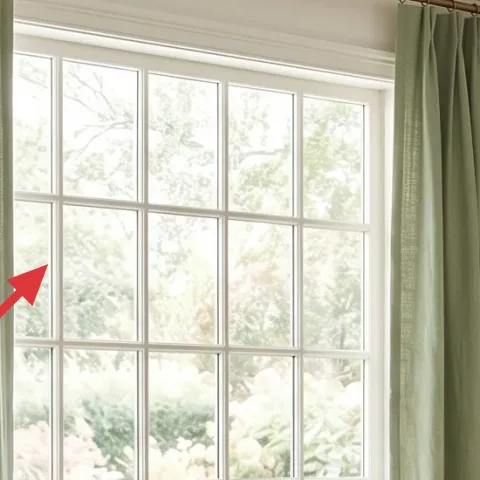
The green curtains on the left add height and a gentle curtain “wave” that makes the bed nook feel taller. Go floor-length (or as close as your ceiling allows) and choose panels with a medium-weight drape—light enough to move, heavy enough not to cling. This is a smarter renter choice than trying to change wall color, because fabric is removable and you can swap it when the seasons (or leases) change. The trade-off is measurements: you’ll want to buy based on drop length and window width, not just the color you like.
Goes best with warm white walls
In a white-painted room, muted green reads airy instead of harsh.
Layer 3 — green-and-cream throw blanket ($45) Adds a top-of-bed layer without replacing bedding
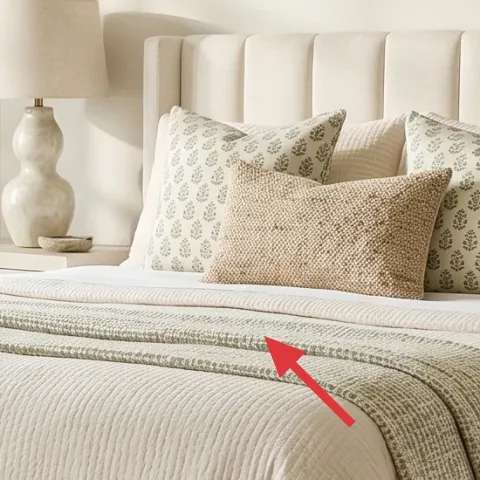
The throw blanket is folded and layered over the cream quilt/duvet cover, which instantly creates that layered-bed look without changing the whole bedding system. Pick a throw in the same olive family as the curtains, then add one lighter cream edge so it doesn’t feel heavy. You’re basically styling the “third texture,” which helps the tufted headboard and patterned pillows look curated instead of random. The trade-off: a thicker throw can feel bulky in warmer months, so consider one you can tuck or rotate seasonally.
Fold it the same way every time
Keeping a consistent fold creates the photo’s clean line across the bed.
Layer 4 — cream throw pillows with green pattern ($30) Makes the tufted headboard look intentional
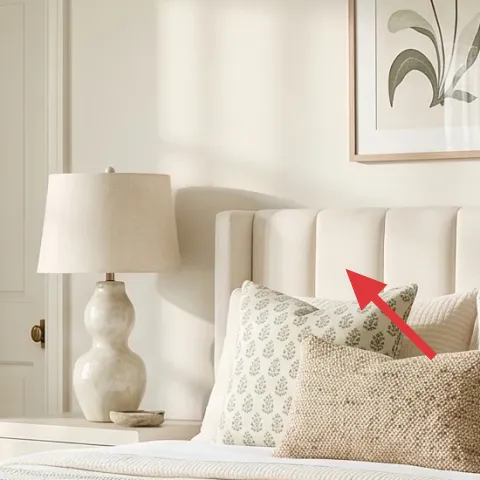
Those cream throw pillows with green pattern are doing more work than they look like—they echo the rug and curtains while keeping the bed soft and readable. For a renter version, start with two patterned covers in similar scale, then add one solid cream pillow to prevent pattern overload. This choice beats buying a whole new bed set because pillows and covers are easy to pack and replace. The main trade-off is sourcing: try to match the olive undertone (sage vs. deeper green) so the patterns agree instead of competing.
Scale matters more than exact matching
As long as the olive tone sits in the same family, different pattern shapes still blend.
Layer 5 — framed botanical print (one print) ($80) Pulls the outdoors inside with move-friendly wall art
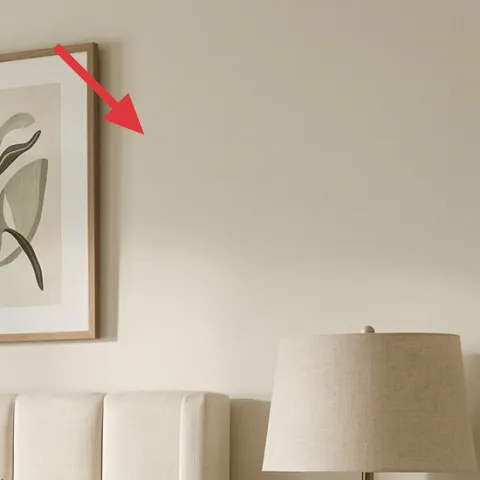
The framed botanical print on the right wall adds that “garden drawing” energy that keeps the room from feeling sterile. Choose one print first, using frames that are light-toned so they don’t fight the cream bedding. If your landlord has restrictions, Command Strips make this an easy swap because the frame is removable at move-out. The trade-off is that art placement takes a couple tries: center it above the headboard height so the bed and wall feel related, not offset.
Avoid hanging art too low
If the framed botanical print sits below headboard height, the bed nook looks top-heavy.
Layer 6 — plug-in table lamp with cream fabric shade ($60) Makes the bed nook feel finished after dark
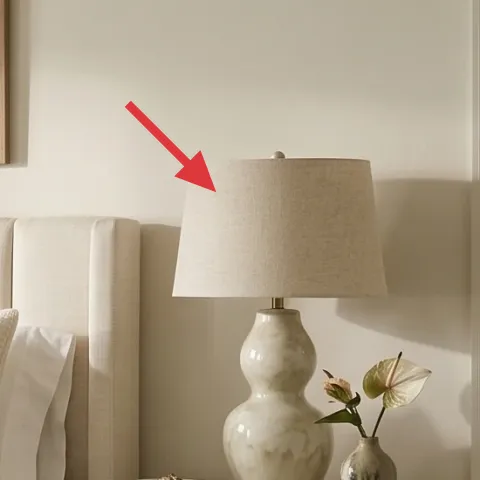
The table lamps with cream fabric shades add warm, diffused light that suits the traditional styling in the photo. Look for a plug-in option (so you’re not touching hardwired fixtures) and keep the shade color close to the cream bedding to maintain cohesion. The lamp matters because it changes how the textures read: woven fabrics look softer and tufted upholstery looks deeper with warm light. The trade-off is bulb temperature—cool white makes olive tones look dingy, while warm bulbs keep the palette inviting.
Use warm bulbs for a steadier tone
A warmer bulb temperature makes the cream fabric shade look the way it does in the photo.
Layer 7 — hand-painted abstract on cardstock (framed botanical look) ($35) Replaces one print with a personal, renter-safe version
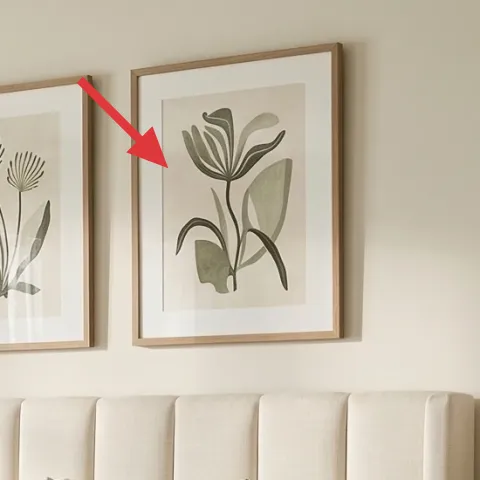
One framed art print can be swapped for something hand-made that keeps the same botanical mood without matching every detail. Using cardstock and acrylics, you can create a simplified leaf-and-stem abstraction—think bold shapes and a muted olive-green plus cream background—so it still reads cohesive with the curtains and rug. This layer is a renter-friendly alternative to “designer wall” solutions because it’s light, frame-based, and easy to remove. The trade-off is planning the palette first; if the greens are too bright, they’ll fight the softer olive tones in the bedding.
Keep the palette to two greens max
Limiting greens helps the abstraction sit calmly with patterned pillows.
The cost, layer by layer
| Layer | Item | Cost |
|---|---|---|
| 1 | Area rug 8×10 | $200 |
| 2 | Curtain panel pair (84") | $80 |
| 3 | Throw blanket | $45 |
| 4 | Throw pillow cover pair (2 covers) | $30 |
| 5 | Framed art print 16×20 | $80 |
| 6 | Plug-in table lamp | $60 |
| 7 | Small framed print (DIY-style) | $35 |
| Total | $530 | |
If you want a cheaper variant, keep the rug and curtains, then swap one of the framed prints for a smaller single print and choose one lamp instead of two. That keeps the olive-and-cream cohesion while lowering the biggest “big-ticket” pieces.
What worked, what didn't (across the whole room)
The strongest wins are the coordinated olive tones (curtains + rug) and the layered bed textiles, because they create a finished look even when you keep the room layout unchanged. The lighting also makes a noticeable difference after dark. The only things that can go off are art height and curtain length, which can quickly make the bed nook feel unbalanced.
What worked
- The patterned rug grounds the bed and visually connects the bench to the main sleeping zone.
- Floor-length green curtains add vertical rhythm that makes the headboard area feel taller.
- A folded green-and-cream throw creates a “third layer” that reads styled, not cluttered.
- Cream pillows with green pattern echo the curtains without making the bed feel too busy.
- Warm-shaded plug-in lamps keep olive tones flattering at night.
- Botanical framed art adds softness and ties the nature-inspired palette together.
What didn't
- Choosing curtains that are too short makes the bed nook look cut off from the room.
- Hanging art too low crowds the headboard line and makes proportions feel off.
- Picking a throw in a completely different green undertone turns the palette muddy.
- Using too many pillow patterns with no solid cream pillow makes the bed look busy.
What we'd skip if we did it again
Skip replacing bedding or the main bed frame. In this look, the “design engine” is the layered textiles on top—throw, pillows, and curtains—so swapping those gets the same impact with less money and less hassle.
Skip oversized wall decor. One framed botanical print (plus a second only if space allows) keeps the bed wall calm; too many pieces compete with the rug and pillow patterns.
Skip cool white bulbs in the lamps. The olive-and-cream palette relies on warm light to keep the fabric shades looking soft instead of gray.
Frequently asked
How long does this bed nook refresh take for a renter?
Most of the time is spent on textiles and styling: laying the rug, hanging curtains, and folding the throw and pillows. If you already have framed art picked out, plan for about 2–4 hours total. Command Strips for a framed botanical print usually add another 15–30 minutes plus dry time for the adhesive to set.
Is this renter-safe if I can’t drill or use wall anchors?
Yes—the look is built from removable items: curtains, rugs, pillow covers, and plug-in table lamps. For the framed botanical print, use Command Strips designed for frames, and keep the placement centered over the headboard height. Everything packs up at move-out without leaving holes.
What if my bedroom is smaller than in the photo?
Go for an area rug that still reaches under the front edge of the bed and under the bench if you keep one. If you can’t fit an 8×10, size down and prioritize the same “connection” between bed and seating. For curtains, choose panels that cover the window fully and aim for maximum drop length to preserve the vertical look.
What if my room has a lot of sunlight or glare?
If the room is very bright, stick to muted olive and cream instead of deeper greens that can feel harsh in direct sun. Fabrics help diffuse glare, so the curtains and lamp shades are a win here. You can also adjust your art by adding a little extra spacing above the headboard line so reflections don’t land directly on the glass.
Where should I shop for these items on a budget?
Start with the highest visual impact pieces: curtains and the rug. Budget curtains are often easier to find during seasonal sales, and rug patterns are plentiful online. Plug-in table lamps and framed art prints are usually easier to source at big-box retailers, marketplaces, and home stores—then you can match the olive tone by eye.
What’s the biggest mistake people make in a bedroom like this?
The most common miss is mixing greens: a bright olive throw with sage curtains and a different rug tone makes everything look like separate purchases. The second mistake is curtain length—if panels stop above the floor, the bed nook loses that anchored, tailored feeling.
More in Bedroom
Under $600: olive-and-cream bed nook refresh with renter-safe swaps
A renter-friendly bed nook refresh that copies the olive-and-cream look in the photo using curtains, layered textiles, plug-in lighting, an…
Under $400: a cream-and-brass bedroom refresh with 7 move-friendly swaps
A soft cream-and-brass bedroom look is all about removable textiles, plug-in lighting, and shelf styling. This $400 plan uses 7 renter- and…
Under $500: sage-and-brass bedroom refresh for shared living
A sage-and-brass bedroom refresh that’s fully move-ready: rug, curtains, throw, framed art, bedside tables, and florals. Built for shared h…