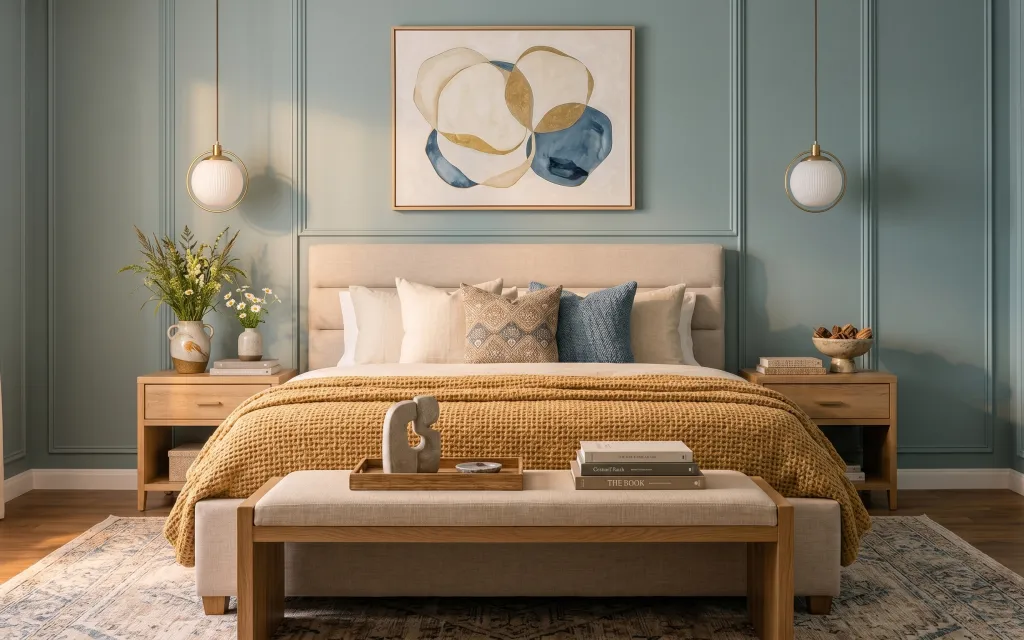
- Best for
- layered textiles that move with you
- Cost
- under $500 total
- Difficulty
- Easy (mostly soft goods)
- Time
- 2–4 hours
Why sage-and-brass bedding styling is the bedroom of 2026
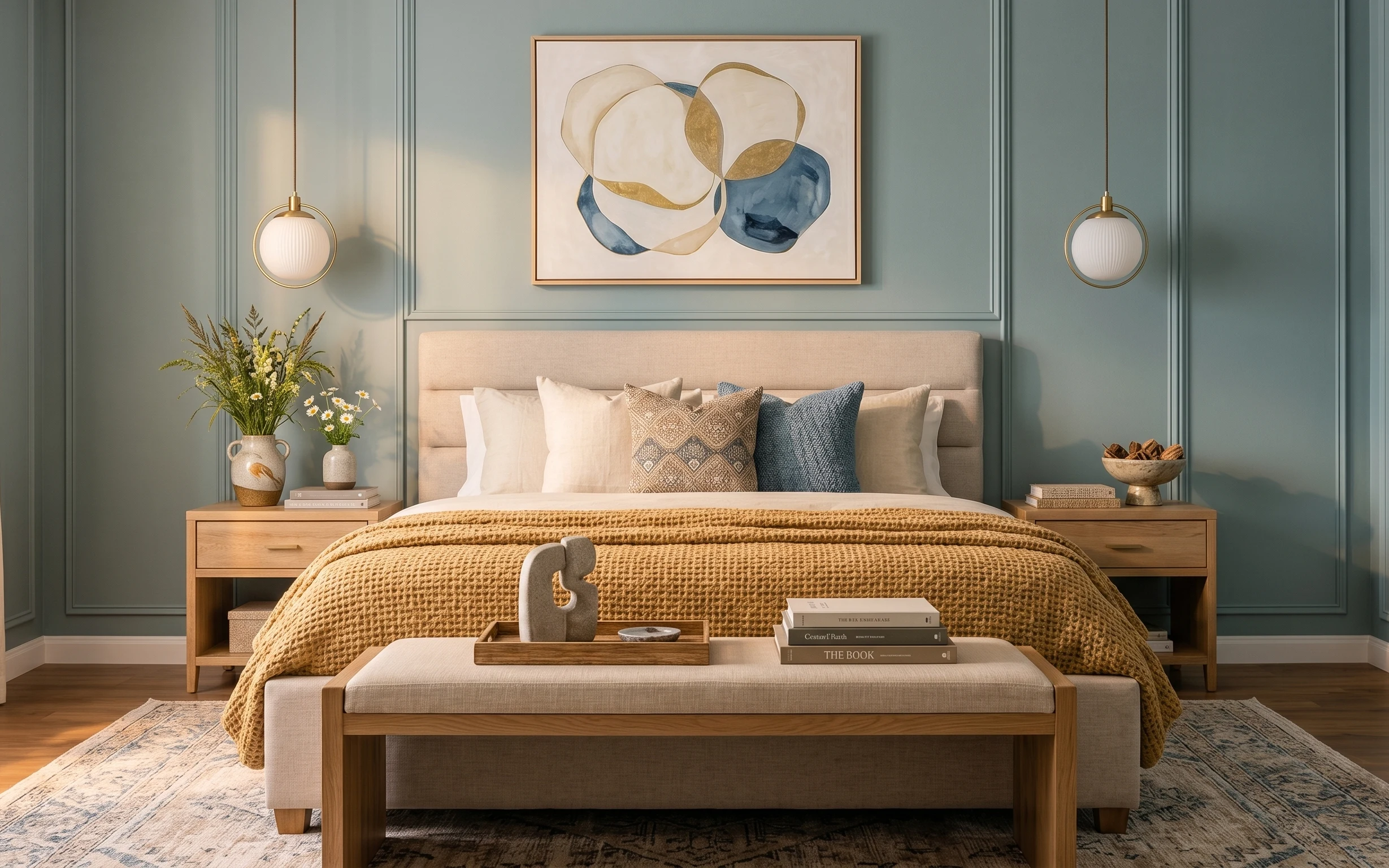
The starting point here is the sage paneled wall, plus the warm brass globe pendants that make the room feel calmer instead of cold. The look leans on tactile neutrals: a beige throw blanket, cream curtains, and a mix of pillow textures that read layered, not matchy. Even the wall art repeats the same palette—cream, sandy beige, and muted blues—so it all feels intentional without demanding permanent changes. For shared housing, this is doable because the “work” is in textiles and freestanding styling, not in landlord-only updates.
I used to grab one “statement” item and call it done, and it always looked unfinished from across the room. What changed my mind was switching to a small system: one grounding texture for the floor, one soft layer for the bed, and one framed focal point above it. Once those three were in place, the rest was just color repetition—brass, beige, and soft blue—so the room could move with me house to house.
Layer 1 — beige area rug ($150) Soft base for the wood floor
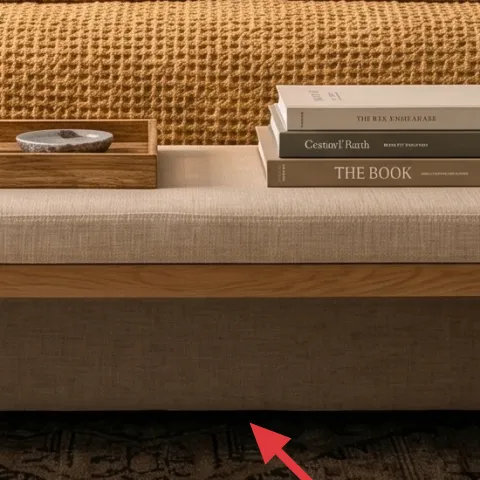
This beige area rug grounds the whole bedroom because it sits under the bed and extends into the open walking zone, so it visually “holds” the furniture. The texture looks slightly nubby, which helps hide everyday dust, and the light color keeps the sage wall from feeling heavy. The trade-off is that a pale rug needs more shake-out or vacuuming than a dark one, but that’s still faster than trying to repaint or fix a layout you don’t own. A rug also packs flat-ish in sections and can live in a smaller rental van than big furniture swaps.
Choose a rug that covers the bed’s front edge
When the rug reaches under the bed front, your pillows and bedside tables look intentional instead of floating.
Layer 2 — beige throw blanket ($25) Adds knit texture on the bed
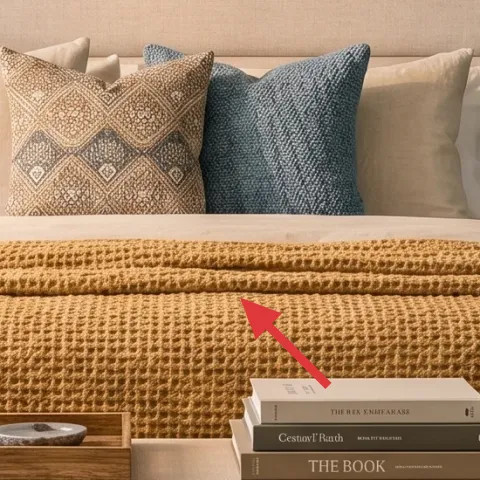
This beige throw blanket draped over the bed is the easiest way to add depth without changing any fixed elements. The knit-like texture shows up in the highlights from the brass pendants, which is why the whole bed area feels dimensional instead of flat. A thinner blanket would read decorative only; this one reads cozy because it has enough body to hold shape when folded. The trade-off is that you’ll want to keep it draped in a consistent spot so it doesn’t look messy in photos or from the doorway. For moving, fold it and tuck it into a single box—no bulky hardware involved.
Pick a throw color that matches the rug undertone
Beige tones vary, and matching undertones keeps the room calm rather than beige-on-beige-looking.
Layer 3 — cream curtains ($30) Frames the window with soft movement
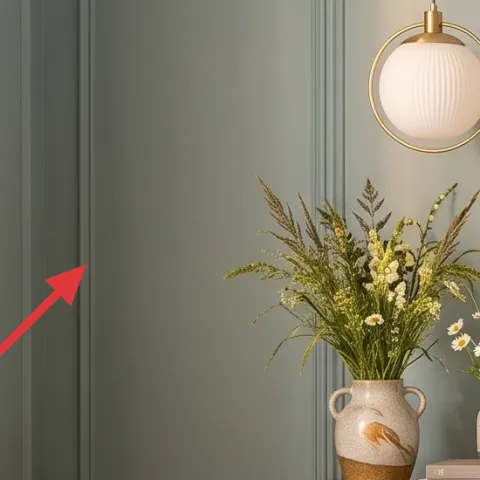
Cream curtains soften the sharp paneled wall lines and give the room “breathing space” between the sage and the bed. In the hero, the curtain hangs straight and light, which keeps the room bright even with a warm, brass light overhead. If you go with a heavier blackout curtain, the room can feel closed-in; if you go too sheer, you’ll lose the shape that makes the whole wall feel styled. The trade-off is laundering and pressing (or steaming) before move-in, but it’s still much easier than permanent wall changes. Curtains roll and pack efficiently compared to large wall decor.
Hang for height, not just width
More vertical drop makes the room feel taller, especially with paneled walls.
Layer 4 — framed abstract wall art print ($80) One DIY piece to repeat the palette
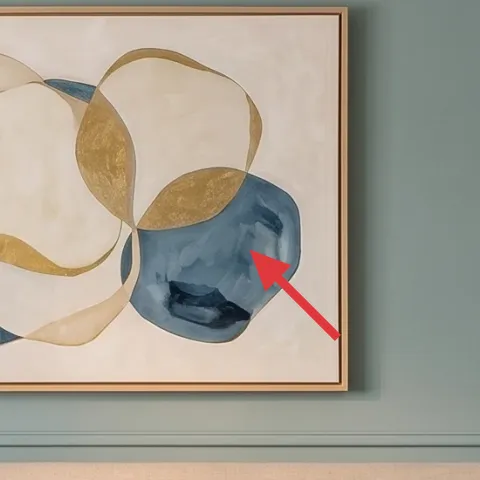
In this room, the framed abstract wall art print is doing two jobs: it mirrors the creamy beige from the bed textiles and it brings the muted blue tones from the sage wall into one focused center. The gold accents in the print also echo the brass globe pendants, which is why it all feels coordinated even though everything is different textures. The trade-off with art is scale—you need the frame to be bold enough to hold the visual center above the bed. For shared housing, this is ideal because you can swap the whole framed piece when you move.
Make it instead of buying it
DIY a hand-painted abstract on cardstock and place it into a simple frame to match the cream, sandy beige, and muted blue palette.
Materials
- Cardstock sheet (8.5×11 or larger) — 1 — craft store — $5
- Acrylic paint set (cream/beige + muted blue + gold-tone) — 1 small set — craft store — $15
- Small paintbrush set — 1 — craft store — $4
- Paint palette paper or disposable plate — 1 — craft store — $3
Steps
- Sketch loose, rounded shapes lightly on the cardstock with a pencil.
- Block in the largest cream/beige shapes first, then let those areas dry.
- Add muted blue shapes with a slightly drier brush for texture, then let dry.
- Dot or swoosh the gold-tone accents last, keeping them smaller than the main shapes.
- Let the paint dry fully before placing it under glass or into the frame.
- Insert into the frame so the edges sit evenly and the art is centered.
Total DIY cost: $27 — saves about $53 over buying.
Layer 5 — two wood bedside tables ($80) Give the bed area storage and surface
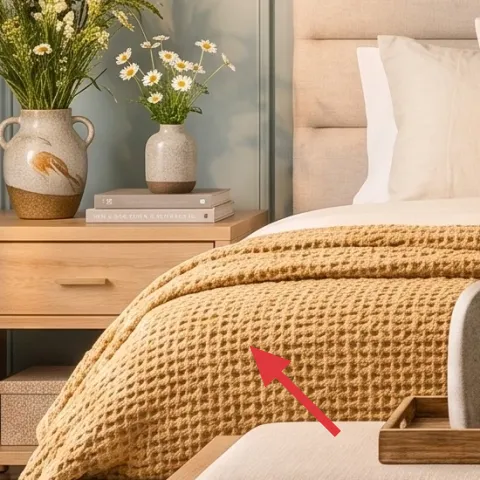
The two wood bedside tables make the room feel “designed” because they repeat the same warm wood tone across both sides of the bed. They also provide surfaces for small decor—like the vase on the left and the stacked books on top—so the styling doesn’t look like it’s floating in midair. Instead of adding a lamp solution that requires wiring changes, stick with simple table-top styling and keep your lighting choices moveable. The trade-off is choosing tables that are light enough to carry; if you buy very heavy solid-wood pieces, you’ll hate them during moves. For shared housing, look for flat-pack or easy-assembly options.
Avoid tall, narrow tables that wobble
Wobble makes it harder to keep small objects stable, especially when roommates bump into the bed area.
Layer 6 — small white vase with flowers ($25) Brings in muted yellow and cream
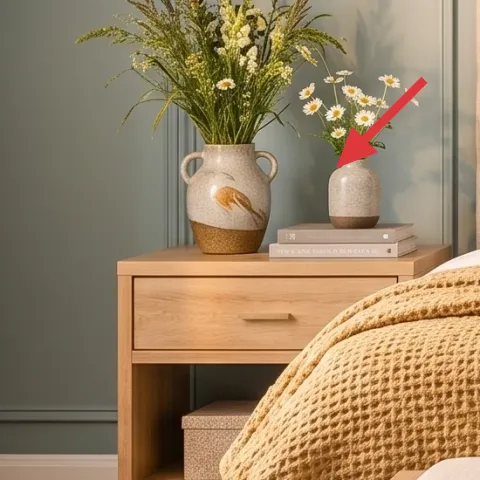
This small white vase with flowers adds life and a soft pop of yellow while staying inside the same neutral family. The stems and clustered blooms create a natural texture contrast against the smooth wall paneling and the linen-toned bedding. The vase works visually because its white sits close to the curtain color, so it doesn’t fight the sage wall. The trade-off is upkeep—change water and trim stems so the bouquet looks fresh. For moving, flowers are temporary, but keeping the vase means you can refresh the arrangement with whatever you can grab quickly each month.
Use one warm accent per side
One vase with a little yellow keeps the room from feeling flat without adding extra colors.
Layer 7 — beige patterned throw pillow ($12) Pattern that echoes the wall art
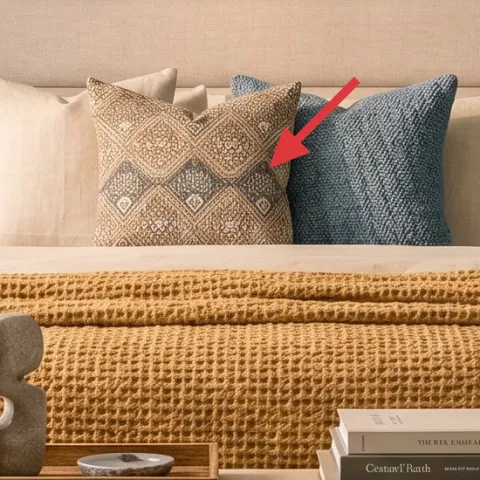
The beige patterned throw pillow is a small change with outsized impact because it adds a second “visual language” besides solids. In the hero, the pillow’s pattern echoes the abstract shapes in the framed print—soft curves and repeated motifs—so the bed looks styled from multiple angles. The trade-off is that patterned pillows can start to look dated if the pattern is too bold; this one stays subtle enough that it reads timeless. Pillow covers are also the easiest to pack and the fastest to swap when you’re in a new rental. If space is tight, focus on covers first and skip buying more inserts than you need.
Keep the pillow palette to two neutrals and one muted blue
That rule makes mixing textiles feel intentional instead of random.
The cost, layer by layer
| Layer | Item | Cost |
|---|---|---|
| 1 | Beige area rug 8×10 | $150 |
| 2 | Throw blanket | $25 |
| 3 | Curtain panel pair (84") | $30 |
| 4 | Framed abstract wall art print 16×20 (DIY option) | $80 |
| 5 | Two wood bedside tables | $80 |
| 6 | Small white vase with flowers | $25 |
| 7 | Throw pillow cover | $12 |
| Total | $402 | |
If this feels like too much upfront, start with the rug, one curtain panel pair, and the framed abstract first. Those three anchor the palette and make the bed area look finished even before adding extra pillows or vases.
What worked, what didn't (across the whole room)
The biggest win is how much visual calm comes from repeating beige and muted blue across the floor, bed textiles, and wall art. Brass + sage also reads warm instead of sterile, especially under soft pendant lighting. The parts that need the most attention are the ones that shift daily—textile placement and fresh floral styling.
What worked
- The beige rug makes the bed area feel anchored instead of floating on wood flooring.
- The throw blanket’s texture shows in light and creates depth without extra bulk.
- Cream curtains soften paneled wall edges and keep the room bright.
- The framed abstract print repeats the palette, so everything looks coordinated.
- Bedside tables give a practical staging zone for vase and book stacks.
- The small vase adds warm-yellow life while staying within the neutral color plan.
What didn't
- Buying too many pillow covers at once can make the bed look cluttered, not layered.
- Choosing an overly dark rug would fight the sage tones and make the room feel smaller.
- Rushing floral styling often shows—stems need trimming to look intentional.
- If the framed print is too small, the wall center looks empty above the bed.
What we'd skip if we did it again
Skip matching sets that come as a bundle from one retailer. In shared housing, a single over-coordinated “set” reads temporary and tends to look dated faster than mixing textures (rug, throw, curtains) across different sources.
Skip buying a second pillow insert to chase fullness. It’s better to buy one patterned throw pillow cover and one solid cover, then adjust the placement so it still looks full without adding bulk you’ll hate packing.
Skip framed art that’s the wrong scale for the bed. If the frame doesn’t land as the clear center above the mattress area, you’ll end up compensating with extra decor, and the whole bedroom becomes visually busy instead of cohesive.
Frequently asked
How long does this bedroom refresh take?
Most of the time is spent styling and spacing the textiles: rug placement, throwing the blanket, and getting curtains to hang evenly. If you’re DIY-ing the framed abstract, budget an extra afternoon for paint drying and careful insertion into the frame. In a realistic shared-housing schedule, plan for 2–4 hours total.
Is this renter-friendly if I can’t change the wall?
Yes. The changes here focus on items you can bring to your next place: the rug, curtains, framed artwork, bedside tables, and decorative objects. Nothing requires drilling or permanent installs. The framed art can also be swapped out later while keeping the overall palette.
What if my bedroom is smaller than the photo?
Use the same color logic, but scale back the number of textiles. Choose a rug that still reaches under the bed front edge, but consider a simpler pillow mix (one patterned cover plus one solid). Keep the framed art large enough to be a center, and let the rest stay calm—sage stays the dominant wall element.
What if my bedroom is bigger and feels empty?
Lean into the same palette but add one more “textural repeat.” That could be a second vase or an extra throw blanket folded at the foot. The key is that beige textures and muted blues should repeat across floor, bed, and wall art so the larger space doesn’t turn into an empty backdrop.
Where should I shop if I need affordable versions fast?
For budget moves, start with soft goods—rug, throw blanket, and curtain panels—because they’re easier to compare in-store and online. For the framed abstract, look for simple frames that match standard sizes so your DIY artwork fits. Bedside tables are often quickest from ready-to-assemble furniture sellers or resale marketplaces.
Biggest mistake to avoid in this room type?
Buying a frame or rug that’s too small. When the center above the bed is under-scaled, the wall looks unfinished and you’ll feel tempted to add more decor, which usually makes the room feel busy. Size matters more than matching brands.
More in Bedroom
Under $500: sage-and-brass bedroom refresh for shared living
A sage-and-brass bedroom refresh that’s fully move-ready: rug, curtains, throw, framed art, bedside tables, and florals. Built for shared h…
Under $400: earthy headboard glow bedroom refresh
A rental-friendly bedroom refresh that leans into warm cream, rust, and plant life—without drilling or swapping fixtures. This look uses 7 …
Under $600: Japandi-style bedroom refresh with 7 renter swaps
A wood-paneled bedroom refresh that leans japandi—olive, burnt orange, and warm wood—using renter-safe swaps only. This plan breaks down 7 …