- Best for
- Cozy evenings and plant-focused patios
- Cost
- $443 total
- Difficulty
- Easy
- Time
- 2–4 hours
Why warm terracotta-and-charcoal styling is the string-lit patio of 2026
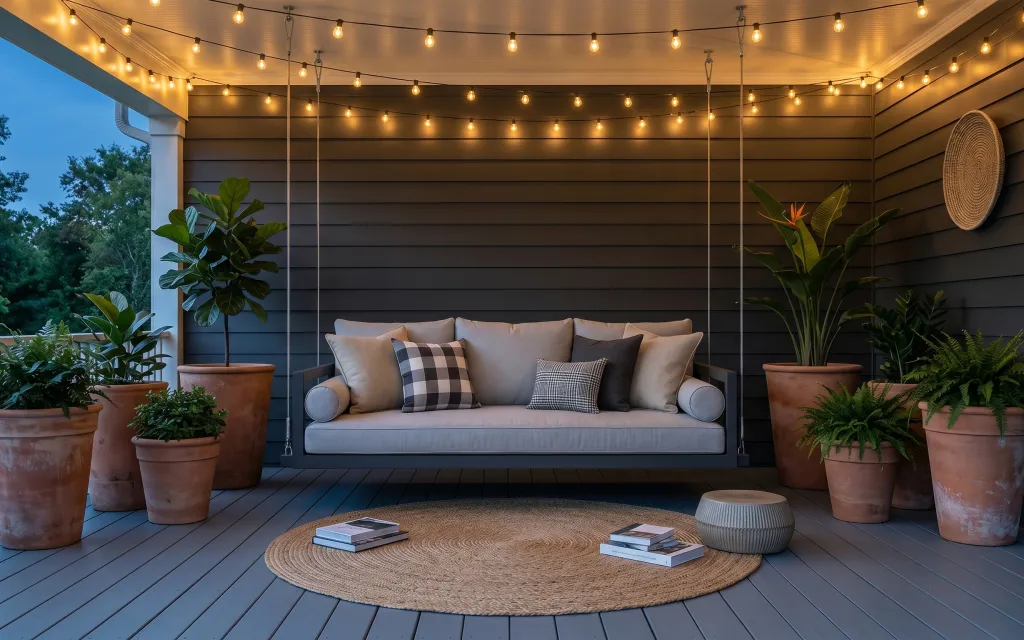
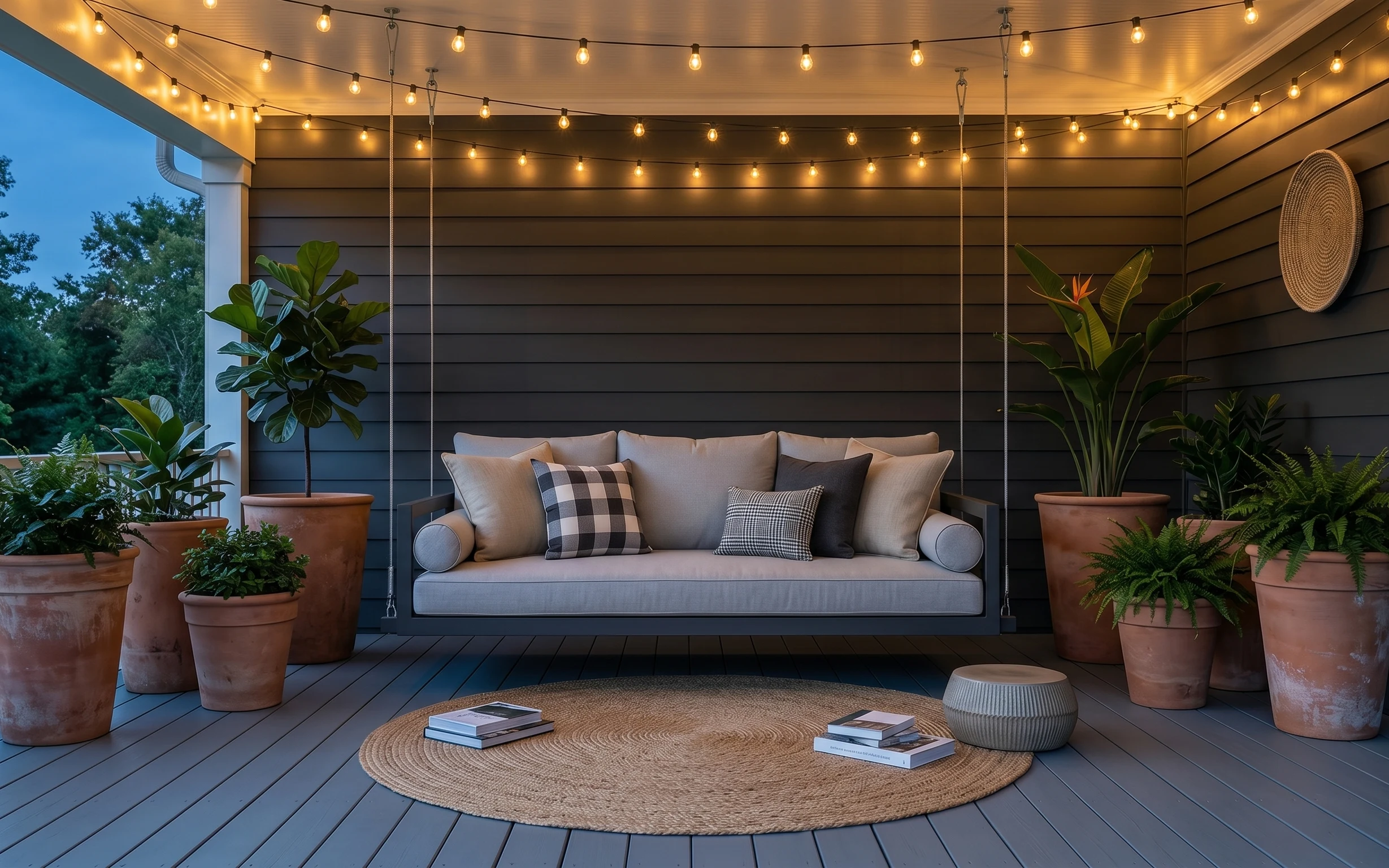
The look starts with warm string lights stretched across the porch ceiling line, then softens everything with a round jute rug and stacked throw pillows on the cushioned bench. You can see the material mix right away: woven jute underfoot, soft pillow covers in black-and-white check and beige, and the glossy terracotta pots against the shiplap-style wall. The trade-off is scale—this styling works best when the core furniture stays where it is and only the textiles and décor change for the season. For shared housing, everything here can pack into a few boxes.
I used to buy “one big thing” for every place I rented—then I’d show up at move-out with a heavy box that didn’t fit the van. On this patio style, the fix is different: change the textiles and lighting first, then keep the plants grouped in removable planters. I also made a mistake once by buying too-small rug sizes; the patio felt unfinished until the rug actually met the seating zone. This time, the rug and pillow colors do the work, not bulky décor.
Layer 1 — string lights (warm bulbs) ($15) Warm glow overhead without wiring
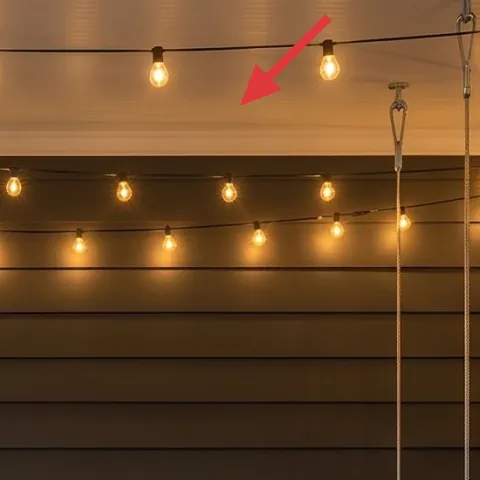
String lights are the fastest way to make an outdoor spot feel intentional, and they’re already visually dominant across the top of the photo. Warm bulbs read cozy against the darker shiplap-style wall, and the thin line doesn’t block the view like a bulkier fixture would. Keeping the lights as a removable set is the renter-friendly trade-off: instead of installing anything, the décor stays seasonal and packable. The key decision is warm temperature over bright white, because the terracotta planters and jute rug already pull earthy. In the next lease, the same set can be draped across a porch rail or wrapped around a balcony line.
Use slack, not tension
Leave a little sag between hanging points so bulbs form gentle arcs instead of a rigid straight line.
Layer 2 — jute rug (round) ($80) Defines the seating zone in woven texture
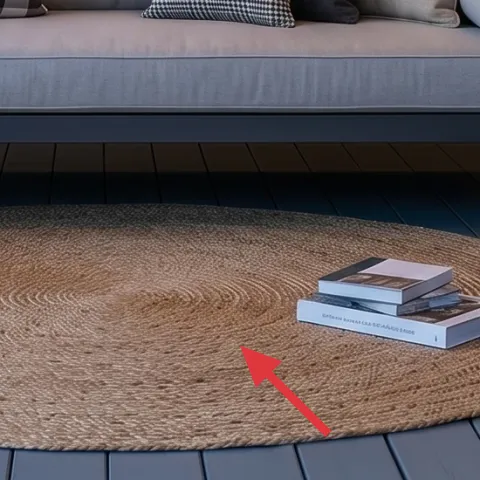
The round jute rug anchors the patio the way an area rug does indoors: it frames the sitting space and brings in that airy, woven texture that feels natural beside the terracotta planters. Because jute has visible fibers, it hides everyday outdoor dust better than glossy outdoor rugs, which helps in a shared-house reality. The trade-off is shedding—jute can shed at first—so it works best when it’s kept flat and vacuumed lightly after unpacking. Choosing round over rectangular also matches the softness of the bench cushions and the pot clusters. This is also one of the easiest upgrades to move and re-shape in a new layout.
Match the rug’s “radius,” not the math
Let the rug extend under the front seating cushions so the bench doesn’t look like it’s floating.
Layer 3 — outdoor sofa/daybed (cushioned bench) ($250) Cushions turn an outdoor spot into a lounge
The cushioned bench is the backbone of this patio—without it, the string lights and plants would just be décor. In the photo, the bench’s light upholstery keeps the overall palette bright, while the deeper shiplap background gives contrast. The reason this works is practical: cushions are replaceable by fabric alone, so a future move doesn’t require rebuilding anything around fixed walls. The trade-off is that this “big piece” is harder to truck, so it’s smart to prioritize textiles first if the bench isn’t staying with the lease. For shared housing, keep the cushions and covers as the flexible pieces and treat the frame as a stable base.
Don’t rely on throw pillows to do everything
If the seating cushions look sun-faded or flat, the whole lounge reads worn even with pretty décor.
Layer 4 — black-and-white check throw pillow ($18) Adds pattern without changing the furniture
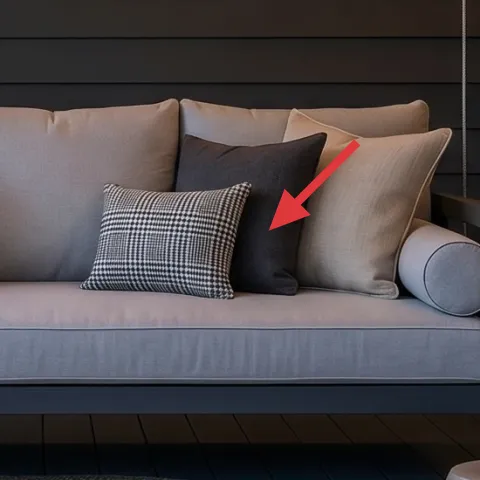
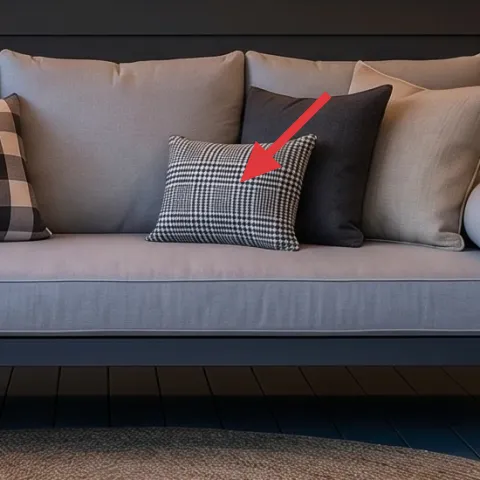
This check throw pillow is doing double duty: it brings a crisp pattern over the softer beige cushions, and it makes the bench look styled instead of purely functional. The scale is small enough to swap quickly, which matters for shared housing where layouts change and items get packed fast. Choosing a high-contrast print also helps if the new patio has different lighting—daylight or evening glow still keeps the pillow readable. The trade-off is that bold patterns can look busy if there are too many other prints, so keeping the other pillow tones neutral (like the beige cushion) maintains balance. This is one of the easiest ways to refresh a patio for a new season.
Repeat the color in small places
Pull charcoal or white from the pillow into planters, trays, or even book covers for a calmer look.
Layer 5 — round upholstered stool ($35) A low perch that packs flat-ish
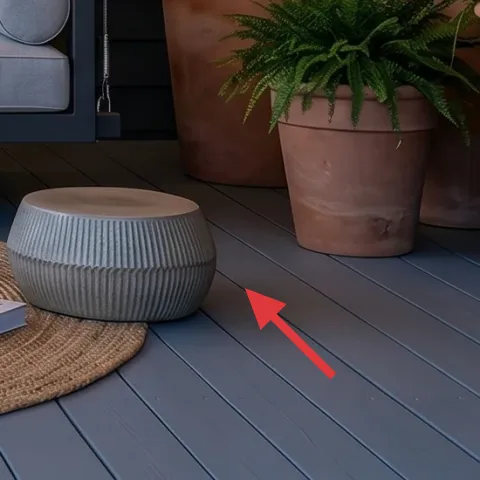
The small round upholstered stool works like a bonus seat and like a styling surface at the same time. In this photo it sits near the jute rug edge, so it feels “part of the seating zone” instead of an afterthought. Its light gray tone complements the beige cushions and keeps the patio from tipping too orange with all the terracotta pots. The trade-off is that round seats can be easier to nudge out of position during a move, so labeling the pieces helps. It also pairs well with outdoor living because it can be used for drinks, a folded throw, or a quick landing spot when friends visit.
Keep the top wipeable
If the stool fabric is delicate, use a removable cover for rain-heavy weeks.
Layer 6 — terracotta planter pot ($15) Brings clay warmth next to the shiplap wall
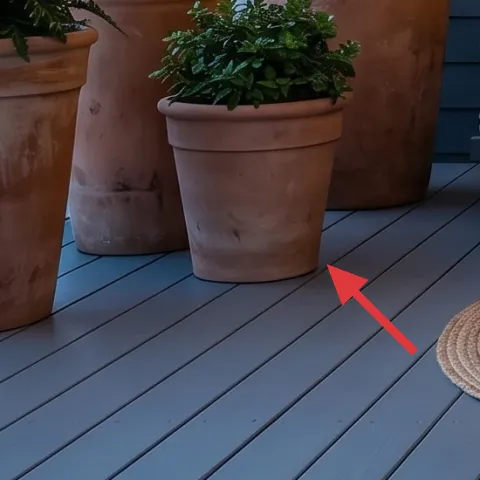
Terracotta planters are the color thread throughout the photo, and they’re why the whole palette feels cohesive: warm clay meets warm string light and the natural fibers of the rug. A single pot might look random, but when pots repeat in a grouping (left and right sides), the patio reads intentional. This is a trade-off that’s worth it—clay tones can get visually heavy, so balance the pot color with lighter textiles like the beige pillows and the pale rug. The portable advantage is huge for shared housing: pots dismantle into boxes, and plants can be swapped without repainting anything. Pick planters with drainage holes so you’re not stuck nursing plants in a rush.
Choose one pot shape, vary the heights
Even small height differences make the grouping look arranged instead of scattered.
Layer 7 — tall leafy plant in terracotta pot ($30) Adds height and fills the vertical space
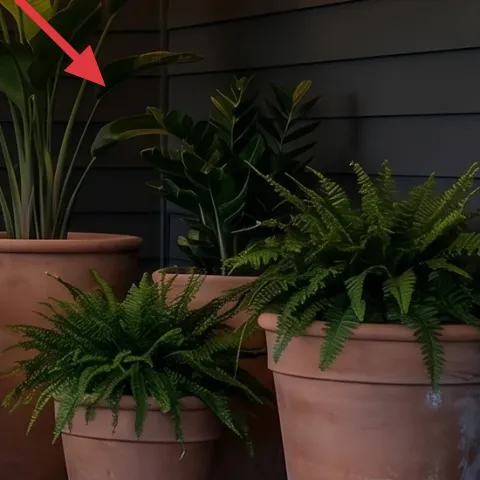
The tall leafy plant is what gives this patio its vertical rhythm, balancing the bench sitting low to the deck boards and the overhead string lights. You can see the leaves reaching upward and filling the open space in front of the shiplap-style wall, which prevents the area from feeling flat. The trade-off is that taller plants need a realistic watering routine, especially in summer heat, but they’re still easier to move than heavy décor. This is also why grouping matters: the tall pot works best alongside smaller plants so the composition doesn’t lean on one element. For renters, the win is that plants can be reused across moves as long as the planters travel with them.
Spot sunlight angles before buying
A plant that looks great in one corner might struggle if a new balcony gets afternoon shade.
The cost, layer by layer
| Layer | Item | Cost |
|---|---|---|
| 1 | String lights (set, warm bulbs) | $15 |
| 2 | Area rug 5×7 (jute look) | $80 |
| 3 | Outdoor sofa/daybed (cushioned bench) | $250 |
| 4 | Black-and-white check throw pillow cover | $18 |
| 5 | Round upholstered stool | $35 |
| 6 | Terracotta planter / pot (medium) | $15 |
| 7 | Tall leafy plant (in terracotta pot) | $30 |
| Total | $443 | |
If a round jute look rug feels like too much, use a flatwoven rectangular rug in the same neutral tone and size it to extend under the front edge of the bench cushions. The patio still reads cohesive if rug color matches the pillow neutrals and terracotta planters.
What worked, what didn't (across the whole room)
The best wins here are the repeatable pattern and texture elements: warm string lights, woven rug fiber, and terracotta planters make the patio feel styled without needing any permanent changes. The tall leafy plant also does real compositional work by adding height behind the bench. The main drawback is that outdoor textiles (especially jute) can need a little extra shake-out or light cleaning after moves and weather.
What worked
- Warm string lights create instant evening ambiance without any fixed installation.
- The round jute rug clearly defines the sitting zone under the bench.
- Black-and-white check on the pillow makes the bench look layered, not bare.
- Terracotta planters repeat the same color family on both sides.
- Tall leafy height balances low seating and keeps the shiplap wall from feeling empty.
- The round stool adds a second surface for drinks and styling.
What didn't
- Jute fiber can shed at first, so it needs time after unpacking to settle.
- Pattern pillows can look busy if other cushions introduce competing prints.
- Outdoor plants can outgrow the layout quickly if they’re not trimmed or repotted.
- Terracotta can look visually heavy if the rug is too small or too dark.
What we'd skip if we did it again
Skip matching décor sets that try to look “complete” out of the box. They often lock you into one arrangement, and shared housing layouts rarely stay the same. Instead, repeat just one color story (like terracotta) and let everything else be mix-and-match textiles and plants. That makes it easier to rebuild the mood when the next patio orientation changes.
Skip the biggest decorative risk: oversized outdoor rugs that can’t travel easily. Heavy rugs are exactly the kind of thing that turns a move into extra trips. A mid-size woven rug that fits in a van is a better choice, even if it’s not the prettiest option at the store. The same seating zone definition still happens—just with less hassle.
Skip adding extra wall décor unless it’s truly packable. With shiplap-style walls and string lights already taking the “top” visual spot, small changes on the floor level do more for less work. Keeping most updates in cushions, pillows, and portable planters keeps the patio feeling lived-in now and easy to dismantle later.
Frequently asked
How long does this patio refresh take?
For most shared housing setups, plan about 2–4 hours. If the string lights are already tested, hanging and draping them is quick. The rest is mostly layering: placing the round jute rug, setting the bench cushions, adding the check pillow, and balancing the terracotta planters on the left and right sides. Watering plants and letting fabric settle can add another 20–30 minutes.
Is this renters-friendly if the next place is smaller?
Yes—most of the visual “weight” comes from lighting, textiles, and movable plants. A smaller patio just needs less scale: use the same string light line, keep the rug size that still reaches the front cushion edge, and reduce the number of planters to a matching height trio. The bench stays the anchor, so you’re not dependent on wall changes.
Can I do this without buying an outdoor sofa/daybed frame?
If the bigger frame isn’t moving with the lease, focus on the packable substitutes: warm string lights, a rug, and a tighter cushion-and-pillow arrangement (even if it’s a floor seating setup). The point is to recreate the seating zone geometry, not to buy the same furniture. The tall leafy plant can still bring vertical balance without the bench.
Where should I shop for these items on a budget?
For string lights and pillow covers, big-box seasonal sections and discount home stores are usually the quickest. Jute-look rugs often have the best variety at home goods outlets or online marketplaces where you can filter by size. Terracotta planters and plants are often easiest at local nurseries, because you can see the plant fullness in person before paying shipping.
What’s the biggest mistake people make with patios like this?
The most common miss is rug sizing. If the rug doesn’t reach under the front edge of the seating cushions, everything looks disconnected. The second mistake is mixing too many patterns: the check pillow is strong, so keep other pillows and plant group tones mostly in beige, terracotta, and a charcoal-like neutral. Finally, don’t ignore plant height—empty vertical space makes the patio feel unfinished.
More in Outdoor & Patio
Under $500: string-lit patio refresh with 7 move-ready swaps
A warm string-lit patio makeover that leans into terracotta planters, a round jute rug, and cozy throw pillows—without drilling or permanen…
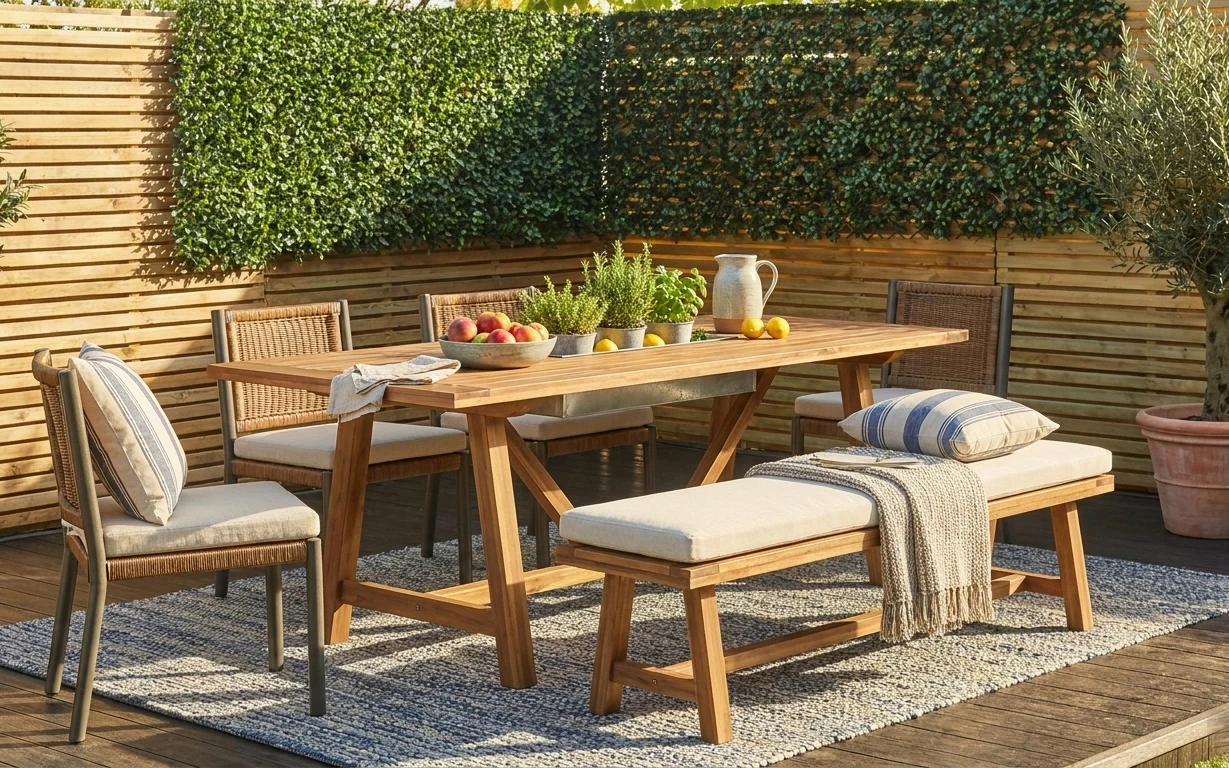
Under $400: patio dining refresh with 7 move-ready swaps
A patio dining setup can feel styled without major changes—this $400 refresh leans on a blue-and-cream rug, soft bench textiles, and small …