- Best for
- Weekend banquette refresh
- Cost
- $700 total budget
- Difficulty
- Moderate
- Time
- 1–2 weekends
Why sage-and-cream details are the banquette nook of 2026
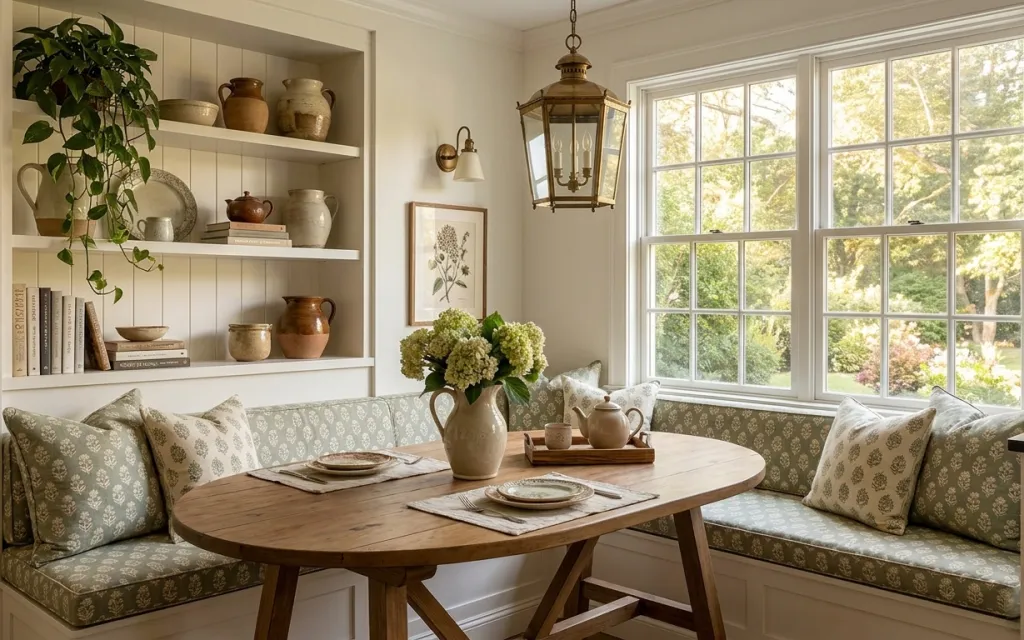
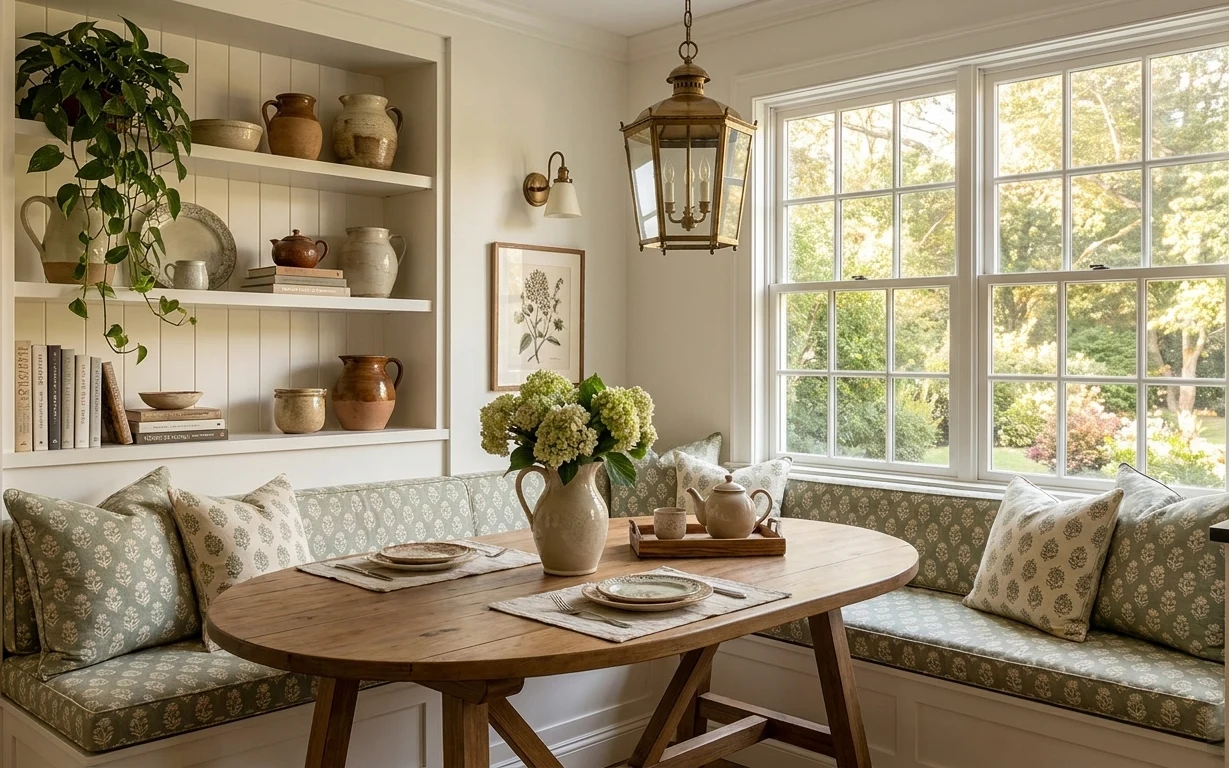
The hero here is all about repeatable textures: sage patterned bench cushions, crisp cream walls, and warm wood from the round dining table. The brass lantern pendant and brass wall sconce add that “daylight but still cozy” contrast against the bright windows. What makes this feel intentional is the styling discipline—matching patterns on the cushions and pillows, then keeping the tabletop styling in a tight circle around the ceramic vase.
I used to think a corner nook needed one big dramatic change—new curtains, new paint, a whole furniture swap. Then I did what always works: I changed the pattern first, and suddenly the rest looked like it belonged. Here, the payoff is fast because bench upholstery and repeat pillows do most of the heavy lifting without touching anything structural.
Layer 1 — sage patterned bench cushion upholstery ($250) Patterned seating that keeps the nook from looking flat
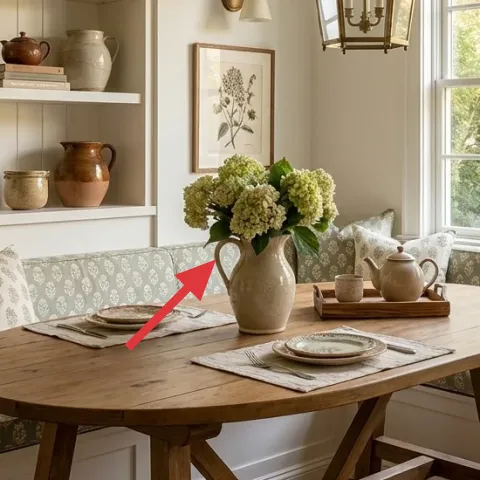
Start with the bench cushion upholstery because it covers the largest surface area in the whole nook. In the photo, the sage pattern sits right between the cream walls and the warm wood table, so it reads balanced rather than loud. The obvious alternative is adding a rug or swapping a single pillow, but those sit visually lower and don’t “set the tone” the way upholstery does. The trade-off: updating bench cushions is a bigger purchase than textiles for individual spots, so it’s worth choosing a pattern scale that feels similar to what you already like.
Choose pattern scale like you’re matching a fabric, not a wallpaper
Keep the motif size in the same neighborhood as the existing cushions so the nook looks coordinated, not mixed at random.
Layer 2 — patterned throw pillows ($30) Match the cushion pattern so the corner reads intentional
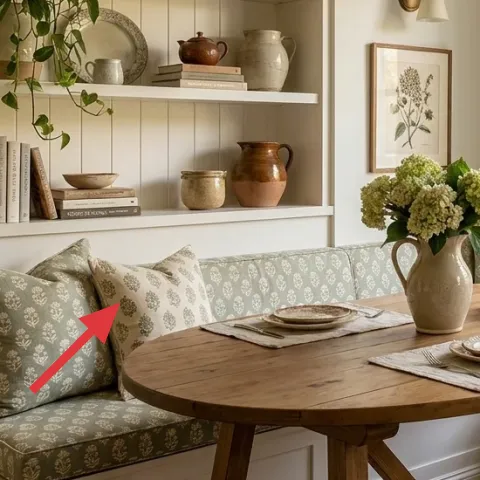
Throw pillows are where you can repeat the cushion look without committing to a full upholstery change. The pillows in the photo carry the same sage-and-cream pattern language, which is why the banquette doesn’t look like it’s “missing something” after you update one piece. Buying new covers is quick, but making them is often the cheaper route—especially when you’re only aiming for one pattern family. The key trade-off is time: sewing takes longer than ordering, but the result looks more custom because you control the fabric stretch and placement.
Make it instead of buying it
DIY fabric pillow covers in the same sage-and-cream style so the pillows visually repeat the bench upholstery.
Materials
- Fabric for outer cover (enough for 2 covers) — 1 yd — fabric store — $15
- Iron-on hem tape — 1 roll — craft store — $6
- Sewing thread — 1 spool — craft store — $2
- Measuring chalk — 1 pack — craft store — $1
- Sewing pins — 1 small pack — craft store — $1
Steps
- Press and measure the pillow size; cut fabric panels with a small seam allowance.
- Pin the panels right-sides together, then stitch the long edges with a straight seam.
- Use iron-on hem tape for a clean folded edge on the closing flap side.
- Thread the needle, secure the hem tape along the fold for a crisp finish.
- Slide in the existing throw pillow insert or stuffing, then tuck the flap to close.
- Fluff and align the seam so the pattern lines up across the front.
Total DIY cost: $25 — saves about $5 over buying.
Keep seams off the “front view” edge
When the pillows sit on the bench, small seam placement differences show—aim for the cleanest edge facing the table.
Layer 3 — round wooden dining table ($120) Warm wood that grounds the pattern
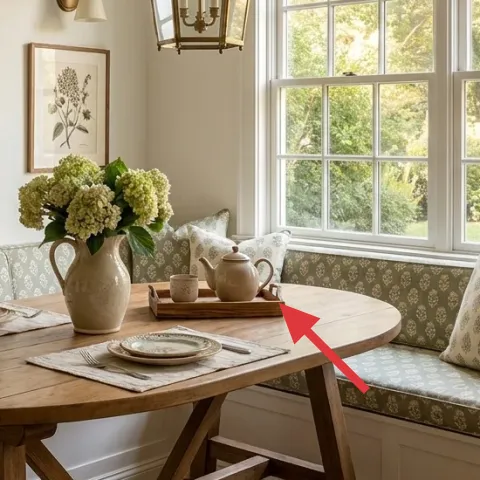
The round wooden dining table is the anchor that makes the banquette feel like a real place to eat, not just a pretty corner. In the photo, the warm wood tone repeats the shelving’s ceramics and keeps the sage pattern from feeling too cool. You could add more decor on the shelves, but without table warmth the nook still feels “staged.” The trade-off with choosing or refreshing a table: you’re committing to a shape, height, and finish that has to work with the cushion level, so measure the cushion height and table clearance before buying.
Match table height to cushion height for easy elbows
Even a small mismatch makes seating feel awkward, so use a tape measure before committing.
Layer 4 — framed botanical wall art print ($25) Bring the outdoors in—without crowding the windows
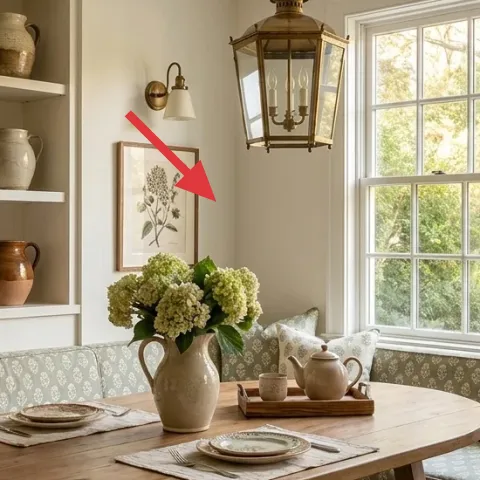
A framed botanical wall art print gives the nook a focal point in the negative space between the bench and the windows. The photo’s print echoes the greenery theme already happening through the vase and the tall leafy plant, so it doesn’t feel random. The tempting alternative is adding more shelves or bigger decor near the table, but that competes with the window light. The trade-off is scale: choose a frame size that fits the wall without covering too much of the cream wall area, or the nook can feel visually boxed in.
Don’t hang it so high the bench looks unconnected
Center the print in a way that visually “pairs” with the cushion back height so the wall reads intentional.
Layer 5 — ceramic vase with fresh flowers ($18) One statement centerpiece, styled in a tight cluster
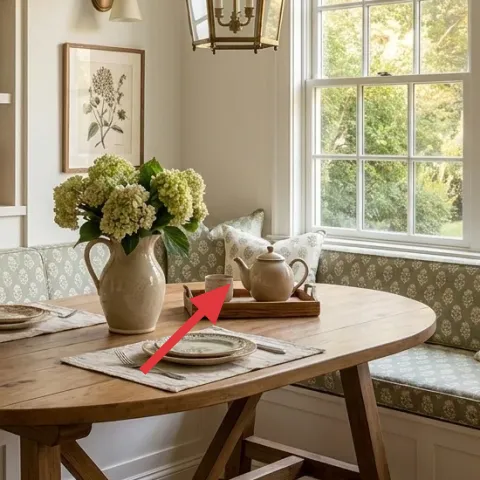
The ceramic vase with fresh flowers is small but it’s a lighting-and-color mediator: it sits between the sage upholstery and the warm wood table top. In the photo, the bouquet is rounded and full, which makes the centerpiece look stable from every angle around the table. You could spread decor across the tabletop, but that often makes the nook feel busy and visually messy in daylight. This approach accepts a trade-off—less variety on the table—so the centerpiece reads cohesive and the ceramic shapes feel curated rather than accidental.
Use the table runner to control the centerpiece area
A runner gives the vase a “landing zone,” which helps the styling look tidy even when the room is busy.
Layer 6 — brass lantern pendant light ($120) Warm metal contrast against bright windows
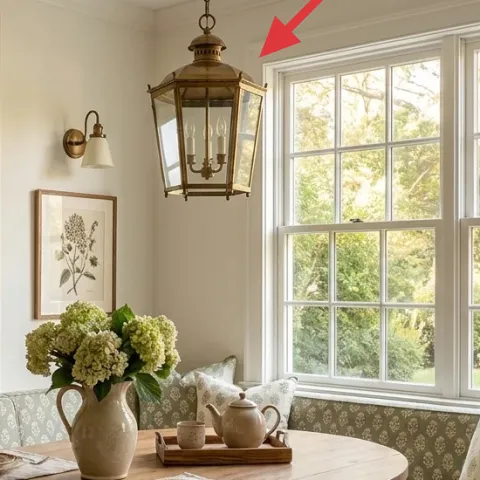
The brass lantern pendant light pulls warmth into the nook the moment evening comes. During the day, the windows do the bright lifting, but the brass lantern adds that antique-feeling glow that matches the ceramics on the shelves and the wood table. A quick alternative is adding a plug-in lamp, but the pendant’s height creates layers—eye level and tabletop—without cluttering the bench. The trade-off: pendant placement matters, so make sure it sits centered over the table area and doesn’t visually collide with the wall art or window trim.
Look for warm brass tones that flatter sage
If the brass reads too yellow or too cool, it will fight the cushion pattern instead of supporting it.
Layer 7 — brass wall sconce ($80) A second light source to soften the corner
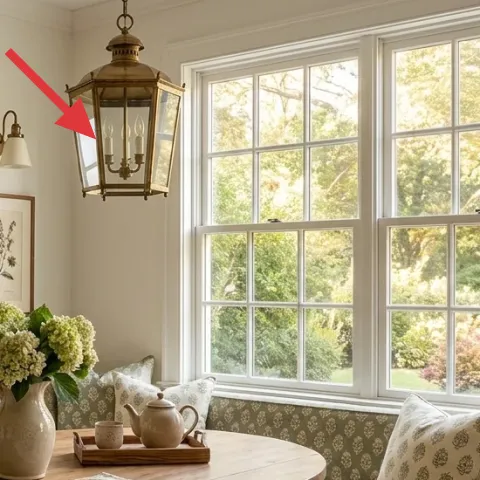
The brass wall sconce adds a gentle second light source, which is what keeps a small dining corner from feeling flat after dark. In the photo, it’s positioned to support the lantern’s warmth, so the nook looks evenly lit rather than spotlighted. Swapping the sconce for something minimal can work, but the brass finish ties the lighting directly to the other warm elements—ceramics, wood, and the framed print. The trade-off is bulb choice: use a warm bulb so the brass reads cozy and the sage stays true rather than turning gray.
Keep brightness consistent between bulbs
Two different brightness levels can make the nook feel uneven even when everything matches on paper.
The cost, layer by layer
| Layer | Item | Cost |
|---|---|---|
| 1 | Sage patterned bench cushion upholstery (buy new) | $250 |
| 2 | Patterned throw pillows (buy new covers) | $30 |
| 3 | Round wooden dining table (buy new) | $120 |
| 4 | Framed botanical wall art print (16×20) | $25 |
| 5 | Ceramic vase with flowers (buy vase) | $18 |
| 6 | Brass lantern pendant light (buy new) | $120 |
| 7 | Brass wall sconce (buy new) | $80 |
| Total | $643 | |
If you want a cheaper variant, prioritize the bench cushion update and the repeat pillows, then shop the framed botanical print and vase at thrift or estate sales. Keep the brass lantern and sconce if they already work, since lighting warmth is hard to fake without buying twice.
What worked, what didn't (across the whole room)
The best results come from repeating the same sage-and-cream pattern across seating and pillows, then anchoring it with warm wood and brass lighting. The nook reads cohesive because every “loud” element stays limited to one area at a time.
What worked
- Updating the patterned bench cushion created the biggest mood shift without changing the layout.
- Pattern-matched throw pillows prevented the banquette from looking like a single flat fabric panel.
- The round wooden table visually softens the corner and gives a natural focal point for styling.
- Brass lighting adds warm contrast against the bright windows, especially after sunset.
- The framed botanical wall art echoes the vase flowers and tall leafy plant instead of competing.
- Keeping tabletop decor clustered around the ceramic vase kept the nook feeling tidy in daylight.
What didn't
- Over-styling the tabletop makes the nook feel crowded because the windows already hold visual detail.
- Mixing totally different pattern scales on pillows and cushions reads “accidental” instead of curated.
- Choosing a cool-toned bulb can make sage upholstery look gray rather than fresh.
- Hanging wall art too high breaks the connection between the bench back and the wall focal point.
What we'd skip if we did it again
Skip repainting walls first. In a nook like this, cream already works with the windows; bench upholstery and pillows do more visual work per hour than a color change.
Skip adding more decor onto the shelves at the expense of breathing room. The built-in shelving already frames ceramics and books, so extra objects can compete with the floral styling.
Skip “one light only.” If the pendant is the only source, the corner can go flat after dark—keeping the brass wall sconce avoids that.
Frequently asked
How long does a banquette nook refresh like this take?
Most of the timeline comes from choosing fabric and getting cushions/pillows to the right look. A realistic plan is 1 weekend for buying and swapping cushions (plus any wall hanging), and another weekend for styling: table centerpiece, pillow alignment, and dialing in the lighting bulbs.
If I rent, can I do the same changes?
Some steps are renter-friendly: pillow covers and table styling are instant. For lighting or sconce changes, rentability depends on your building rules, so focus on textiles first and keep fixtures as-is unless you already have permission. Wallpaper options also vary by lease terms.
What if my nook is smaller or the table is tighter?
Keep the pattern repeat idea, but reduce the number of pillow styles so they don’t overpower the seat. Use one centerpiece vessel and one tray to keep the table surface from feeling cramped. For wall art, choose a slightly narrower print or center it higher so it doesn’t swallow the wall space.
Where should I shop for these kinds of pieces without overpaying?
For the fastest wins, look for upholstery fabric or patterned pillow covers at fabric retailers, then pair them with thrift or discount frames for the botanical print. Lighting is where I’d pay a bit more—brass tones matter—so prioritize quality for the pendant and sconce.
What’s the biggest mistake people make in a banquette nook?
The most common slip is treating the nook like a blank living room wall—adding too many decorative elements across every surface. The cure is simple: pick one hero pattern on the cushions, repeat it in pillows, and keep tabletop styling to a small cluster around the centerpiece.
More in Small Spaces
Under $700: banquette nook refresh with 7 budget wins
A banquette nook can feel pulled-together even on a $700 weekend budget. This refresh uses 7 specific swaps—bench cushions, patterned throw…
Under $700: earthy staircase landing refresh with plants + shelves
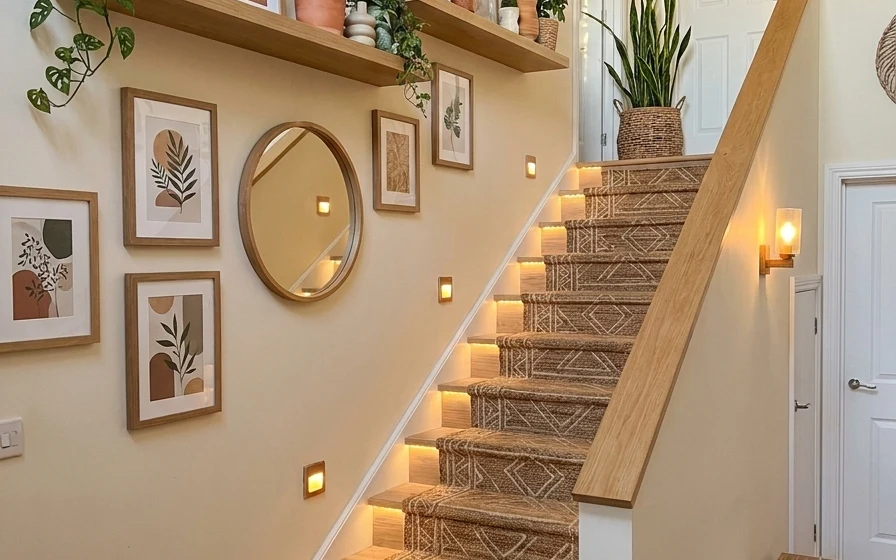
A staircase landing refresh on a real budget: patterned stair runner, warm brass wall sconces, an oval mirror, floating wood shelves, and p…