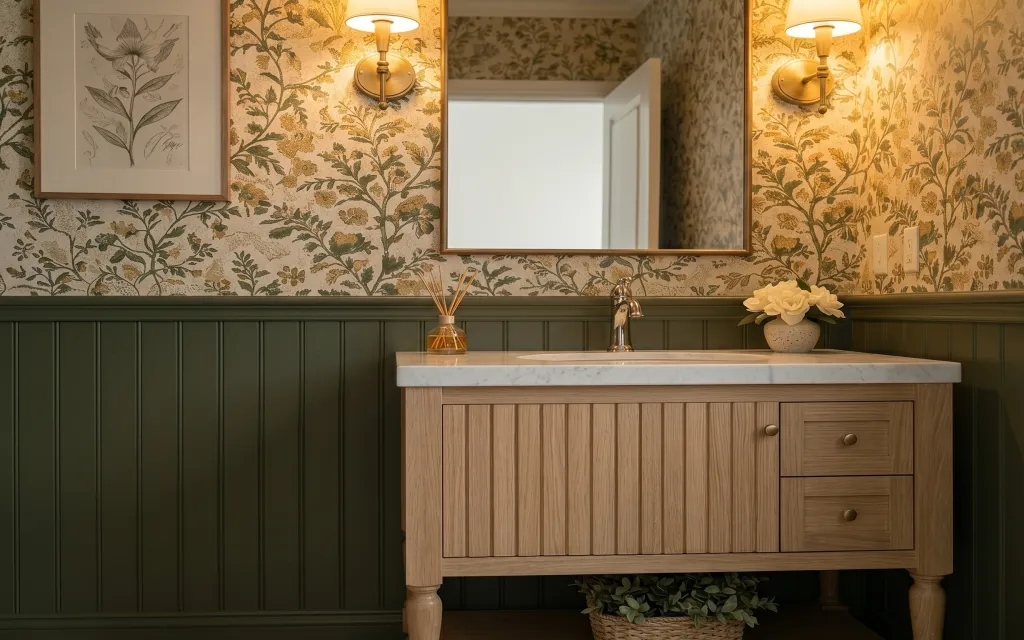
- Best for
- Adding drama with one wallpaper wall
- Cost
- About $620 total
- Difficulty
- Confident DIY
- Time
- One weekend
Why botanical wallpaper refresh is the bathroom vanity nook of 2026
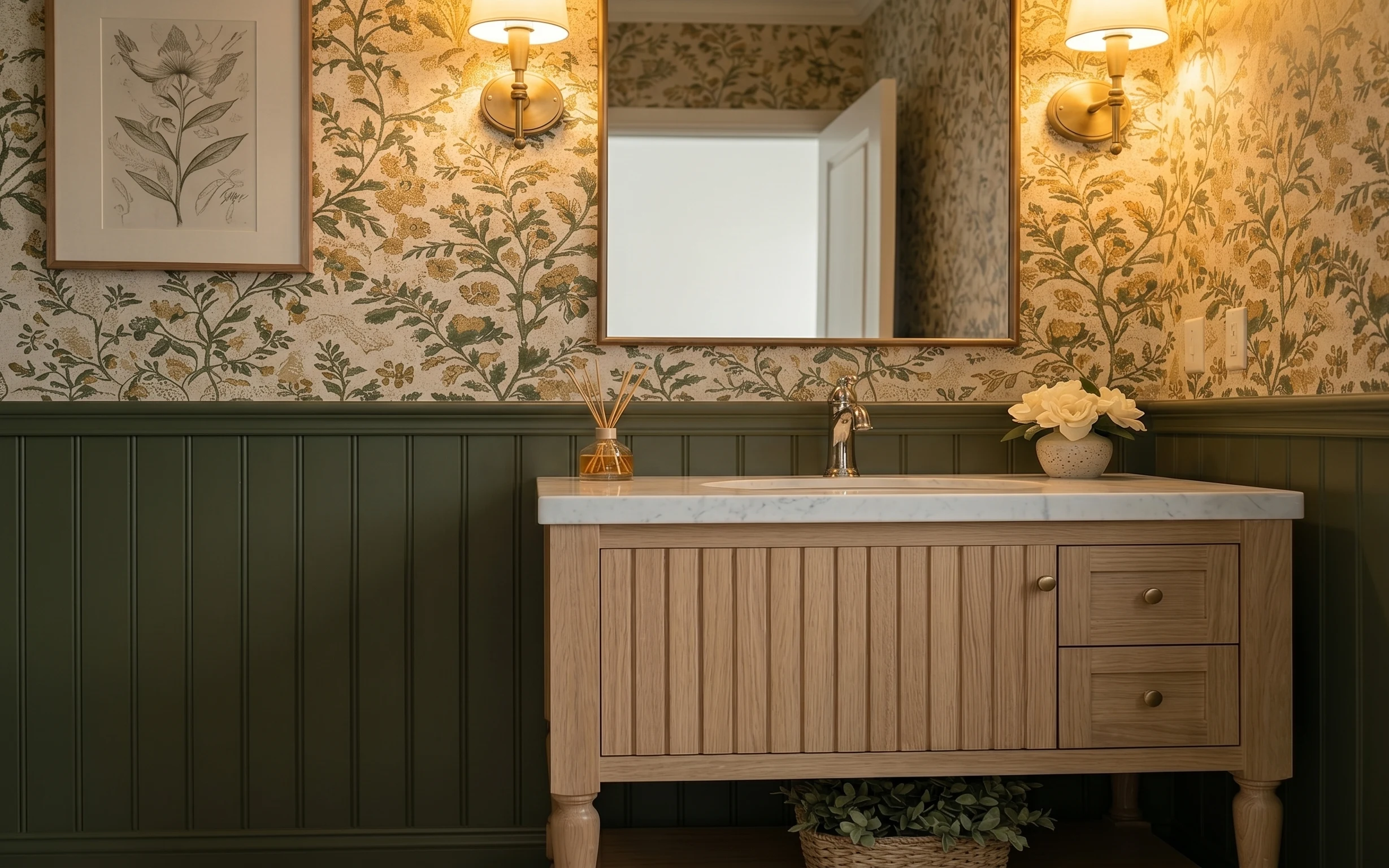
The fastest way to make a small bathroom feel “done” is to start with pattern and light, then let the rest read as calm. In this photo, the dark green paneling, the marble counter, and the warm gold sconces all create contrast against the busy botanical wallpaper. That mix is achievable because you’re only changing surfaces and styling—no structural moves. You can keep the practical stuff (like the vanity shape) and still make the whole corner feel brighter and more intentional.
The first time I tried to refresh a bathroom, I focused on accessories and ended up with a room that still felt flat. Seeing this wallpaper-and-gold combo is what finally clicked for me: pattern needs a framing system (mirror scale + wall lighting) so it doesn’t fight the countertop. Once that’s in place, the vase and little countertop details become the finishing touches instead of the whole design.
Layer 1 — framed botanical wall art ($80) One print gives the wallpaper a “partner”
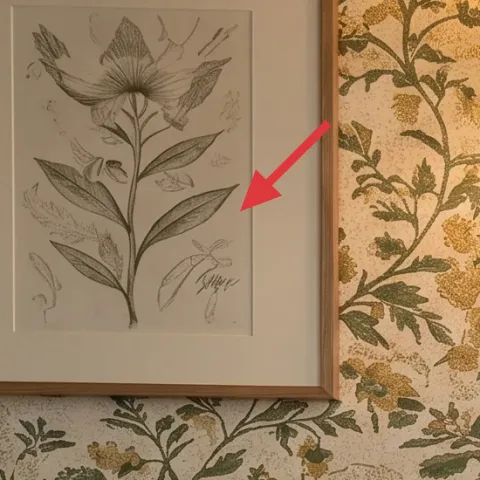
This framed botanical wall art anchors the left side so the pattern doesn’t feel random. The glass-and-paper look of the print works with the wallpaper’s organic shapes, while the cream background echoes the lighter areas around the mirror. I like this over swapping the whole wall to different artwork because it’s a contained decision: you’re just adding one framed layer where your eye already goes. The trade-off is that placement matters—hang it level and centered to your wall area so it reads intentional next to the mirror.
Match the frame tone to the hardware
If your fixtures are warm gold or brass, choose a frame with similar undertones so the art doesn’t look “cool” against the lighting.
Layer 2 — ceramic vase with white flowers ($25) Adds softness without adding clutter
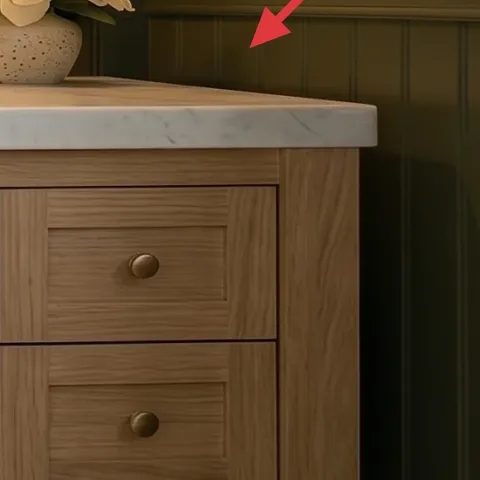
That speckled ceramic vase is small, but it does a lot: it breaks up the hard surfaces (marble + paneling) with a matte, handmade texture. The white blooms keep the busy wallpaper from feeling too heavy, and the rounded shape echoes the organic leaves in the print. This is the kind of layer that’s easy to buy, easy to move, and easy to replace when the season changes—without redesigning anything else. I’d skip a larger statement arrangement here because the vanity is already a focal point; smaller + textured reads more tailored.
Keep the bouquet light-toned
White flowers (or whites/ivories) prevent your botanical wallpaper from turning into one big green-brown mass.
Layer 3 — brass wall sconce ($90) Warm light makes pattern feel curated
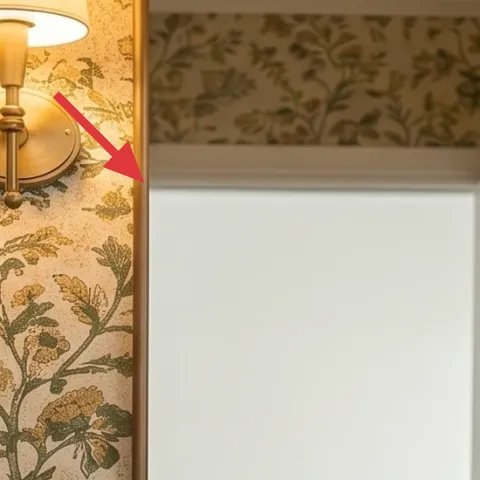
Brass wall sconces are doing two jobs at once: they provide a warm glow and they visually “hold” the mirror. In this photo, the gold finish picks up the warm highlights in the wallpaper, so the corner feels cohesive instead of pasted together. Swapping to a wall sconce setup (or adding a plug-in sconce if wiring isn’t possible) is more impactful than adding another lamp because it frames the mirror area. The trade-off is spacing: sconces need to be positioned so both the bulb and fixture sit at eye-friendly height, not too high or too low.
Don’t mismatch bulb color
If you go from cooler bulbs to warm ones, stick with warm 2700K-style lighting so the wallpaper reads golden instead of gray.
Layer 4 — botanical peel-and-stick wallpaper ($150) The one surface that sets the mood
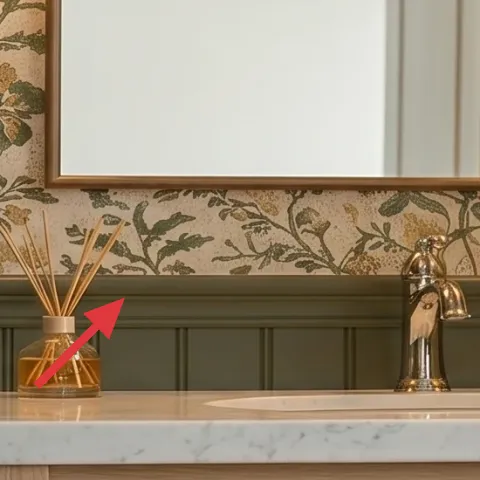
The botanical wallpaper is the whole personality of this vanity nook. Because it’s peel-and-stick (not traditional paste), you get the look of a high-end wallpaper accent without committing to days of removal. The key is choosing a scale that doesn’t swallow the room: the leaf pattern here feels detailed enough to be interesting while still repeating clearly. I also like that the wallpaper stays behind the mirror line, giving your eye a contained “window” of pattern. The only trade-off is prep—smooth walls matter for seams and for that crisp, finished edge near the mirror.
Make it instead of buying it
Install peel-and-stick botanical wallpaper panels so you get this pattern depth at a lower DIY material cost, with a cleaner seam outcome.
Materials
- Peel-and-stick botanical wallpaper roll — 1 roll (covers ~30 sq ft) — wallpaper store — $60
- Wallpaper smoothing tool (plastic) — 1 — home improvement store — $10
- Utility knife with extra blades — 1 set — hardware store — $15
- Primer (if needed) — 1 small container — home improvement store — $10
- Painter’s tape — 1 roll — hardware store — $0
Steps
- Clear the wall area and wipe it until it’s dust-free.
- Measure the wall height and mark a straight level guide line with painter’s tape.
- Dry-fit a panel on the table to confirm pattern alignment.
- Trim the first edge for a crisp start using a fresh utility blade.
- Peel back a small section of backing and smooth from the guide line outward.
- Work slowly, smoothing bubbles out as you go, and overlap/trim at seams.
- Cut openings carefully around outlets or trim edges before the adhesive fully sets.
- Press seams firmly with a smoothing tool and wipe away any excess adhesive film.
Total DIY cost: $95 — saves about $55 over buying.
Layer 5 — sink faucet ($120) Crisp metal detail that reads “new”
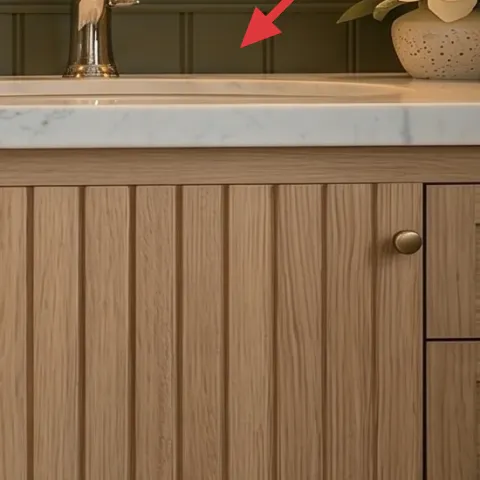
Even in a small bathroom, the faucet is a frequent visual target, and it’s one of the few “metal” items that interacts with every other finish. Swapping to a faucet with a warm metal tone keeps it in the same family as the brass wall sconces and the mirror hardware. This works better than trying to hide the faucet with decor because the countertop and wallpaper naturally draw attention to the sink area. The trade-off is that faucet installs require basic confidence with supply lines—still, it’s a weekend-friendly swap for many homeowners if the shutoffs are accessible and nothing in the plumbing needs rerouting.
Choose the same undertone as your lights
If the sconces are brass, go for a matching warm finish so reflections don’t look mismatched.
Layer 6 — rectangular wall mirror ($120) Mirror scale makes wallpaper look intentional
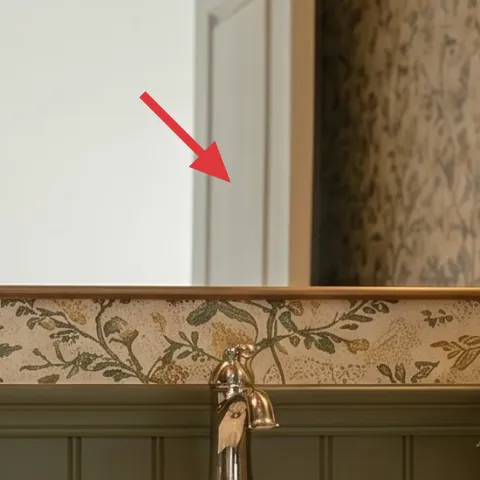
The mirror in this nook is the “frame” for everything else—wallpaper, sconces, and the marble countertop. Its rectangular shape is clean and practical, and the size helps the wallpaper pattern feel composed instead of busy. I’d rather spend here than on extra decor because a better mirror instantly improves brightness and makes the vanity look more built-in. The trade-off is that mirror mounting height needs to be consistent; you want the center roughly at eye level and aligned with the sconce placement so the whole wall reads symmetrical.
Center the mirror to the vanity, not the outlet
Using vanity width as the reference keeps the layout visually balanced.
Layer 7 — basket with green foliage ($35) Grounds the corner with texture
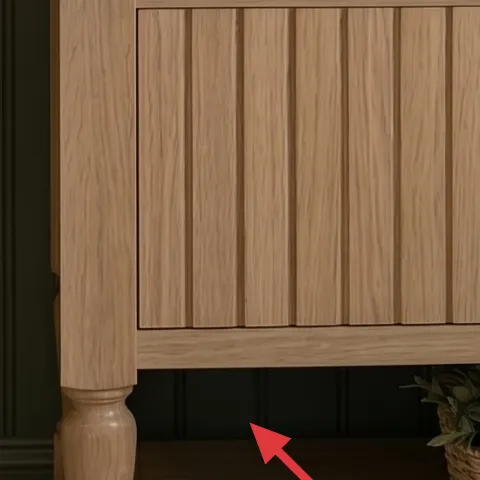
The basket with green foliage adds a final layer of texture at the bottom, which matters because your wallpaper and mirror are visually “busy” higher up. The greenery echoes the leaves in the print, and the woven fibers soften the straight lines of the vanity base and paneling. I like this over adding another small object because it creates one readable cluster with the vase and diffuser—still cohesive, not cluttered. The trade-off is keeping it tidy: choose a basket size that fits the space so the greenery doesn’t spill forward into the vanity zone.
Pick one greenery color family
If the wallpaper has warm olive tones, keep your greenery in the same warm range for harmony.
The cost, layer by layer
| Layer | Item | Cost |
|---|---|---|
| 1 | Framed botanical wall art | $80 |
| 2 | Ceramic vase with white flowers | $25 |
| 3 | Brass wall sconce | $90 |
| 4 | Botanical peel-and-stick wallpaper | $150 |
| 5 | Sink faucet | $120 |
| 6 | Rectangular wall mirror | $120 |
| 7 | Basket with green foliage | $35 |
| Total | $620 | |
If you want a cheaper variant, keep the wallpaper but simplify the metal side: choose one brass-toned sconce and use a smaller framed print instead of upgrading multiple fixtures. You’ll still get the high-impact pattern and warm light, but spend less on the “sparkly” items.
What worked, what didn't (across the whole room)
This nook feels finished because pattern, mirror scale, and warm metal finishes all line up. The wallpaper does the heavy lifting, while the sconces and mirror make it look intentional instead of busy.
What worked
- The botanical wallpaper behind the mirror creates a defined focal zone instead of making the whole wall compete.
- Warm brass sconces make the wallpaper read golden rather than muddy in indoor light.
- The framed botanical print gives the wallpaper an “anchor” so the left wall doesn’t feel empty.
- White flowers soften hard materials and add texture without changing the color palette.
- The mirror size improves perceived brightness and makes the vanity look more built-in.
- The basket of greenery adds bottom weight, balancing the detailed pattern higher up.
What didn't
- Trying to add too many small decor items made the corner feel visually crowded.
- Skipping alignment checks on wallpaper edges can create seams that show more than the pattern itself.
- Using a cooler bulb temperature can make brass look dull and wash out the warm tones.
- Placing the mirror without referencing the vanity width makes the whole wall feel off-balance.
What we'd skip if we did it again
Skip buying multiple countertop “centerpieces.” With botanical wallpaper doing the heavy lifting, you only need one vase moment (plus a simple vertical accent like a diffuser). Too many small items fight the pattern and pull focus away from the mirror and sconces.
Skip changing the wall panel color and wallpaper in the same weekend. Pick one big visual move first—here, the botanical wallpaper—and then refine with brass, mirror scale, and small styling. Doing both at once makes it hard to tell what actually improved the room.
Skip upgrading everything in the vanity area if the faucet and mirror already work. Start with one high-impact metal swap (the faucet or the sconces) and make sure your undertones match. Once the finishes agree, the rest of the refresh feels cohesive with less spending.
Frequently asked
How long does this bathroom vanity refresh take?
Plan on 1 weekend if the walls are already in decent shape. Wallpaper installation is usually the time driver: measuring, aligning seams, and trimming around edges/outlets. Swapping a mirror and adding/adjusting lighting can be quicker if mounting points are already present. If your faucet install is new to you, add extra time for shutoff checks and careful tightening so nothing leaks.
Is this doable if I rent or can’t make permanent changes?
The key renter-friendly move is the peel-and-stick wallpaper, since it removes with far less commitment than traditional wallpaper. For the mirror and sconces, look for options that can be taken down cleanly (or use hardware that matches your lease rules). If anything requires wiring or permanent plumbing changes, keep those to a minimum and focus on removable swaps like framed art and counter styling.
What if my bathroom is smaller or my wallpaper wall is shorter?
For smaller bathrooms, the trick is scale and placement. Use the wallpaper on the most visible wall behind or beside the mirror so the pattern still reads as a focal zone. If height is shorter, center the design so the eye lands on the mirror area, not on a seam line. For styling, choose one statement object (vase or diffuser) and one grounding element (basket) so you don’t crowd the vanity.
What’s the best place to shop for the wallpaper and brass finishes?
For wallpaper, look for rolls that clearly state coverage per roll and include repeat/pattern alignment info—those details make a difference in seams. For brass finishes, compare samples in daylight and warm indoor light; undertones can shift. Local home improvement stores often carry mirror styles and lighting fixtures, while boutique decor shops can be better for framed botanical prints.
What’s the biggest mistake people make in a bathroom vanity refresh like this?
The biggest mistake is treating decor like the main fix instead of treating it like the finishing layer. Wallpaper, mirror scale, and warm metal lighting create the structure of the look. If those elements aren’t aligned, the room can feel busy even with pretty accessories. Another common miss is choosing a different undertone for the faucet or lighting, which makes the corner feel less cohesive.
More in Bathroom
Under $700: botanical wallpaper bathroom vanity refresh
A warm, botanical bathroom vanity nook can look custom without a gut. This refresh uses 7 weekend-friendly upgrades—from one statement wall…
Under $400: move-friendly shower-and-vanity wall refresh
A renter-safe bathroom shower-and-vanity wall refresh under $400 using swap-in decor: framed art, a framed botanical look, layered towels, …
Under $350: spa-style tub nook refresh for renters
A sage-plaster tub nook that feels like a spa doesn’t need permission or drilling. This renter-friendly refresh uses a simple wooden tray, …