- Best for
- Weekend bedroom refresh
- Cost
- $640 from layers
- Difficulty
- Confident DIY (painting)
- Time
- 1–2 weekends
Why dark-green paneling is the bedroom nook of 2026
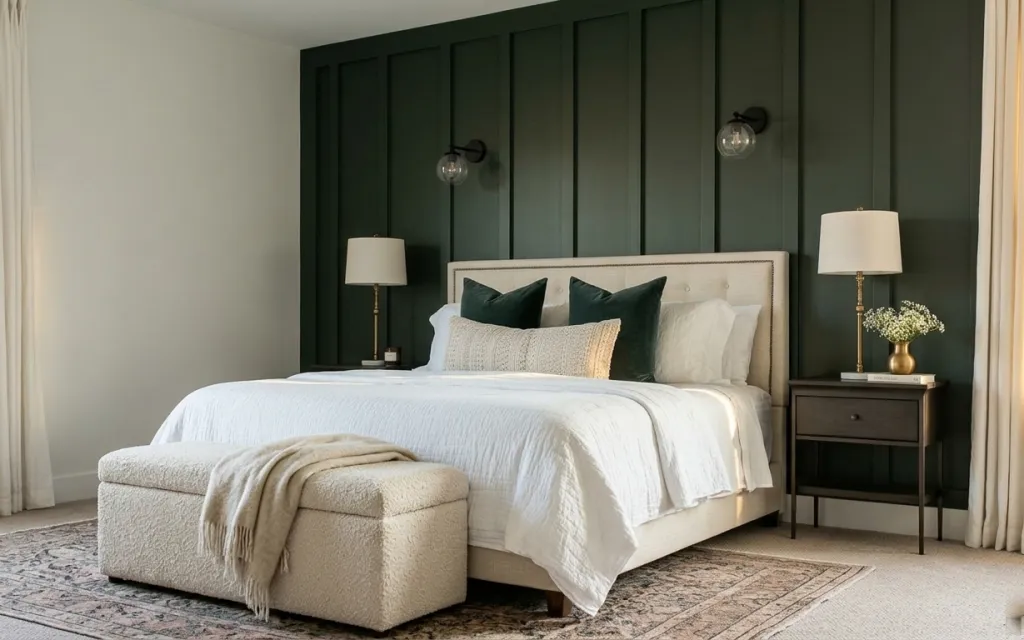
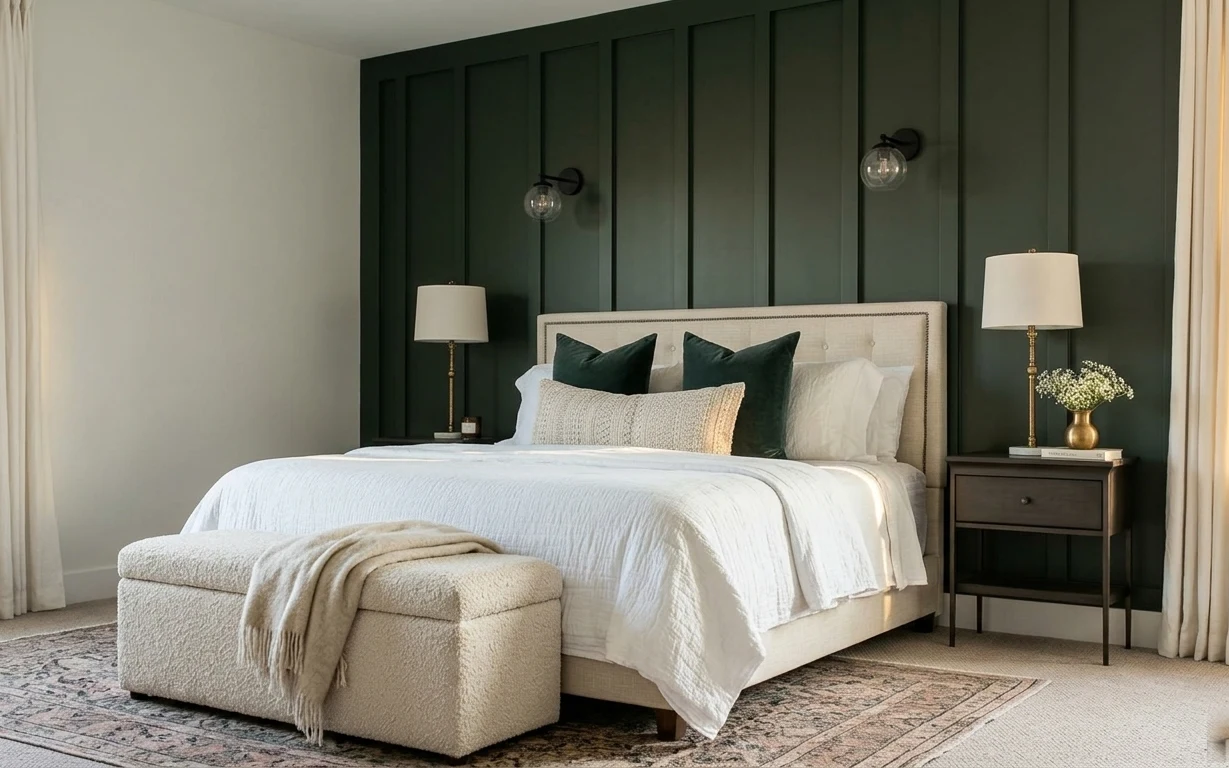
That dark-green paneled accent wall does most of the mood work here, especially paired with cream textiles and warm brass-toned lamp details. The look is layered: a patterned rug grounds everything underfoot, then soft curtains and a cushy headboard make the bed feel “finished,” not just functional. You’ll also notice the materials play well together—smooth painted wall panels, woven textures in the rug, and the crisp sheen of white curtain fabric. Best part for homeowners: because you own the space, you can commit to the one high-impact color change instead of chasing reversible decor.
I used to overthink lighting in bedrooms, like adding one more lamp would magically fix everything. Then I learned the hard way that the room’s color first sets the temperature, and lighting only follows. Seeing this combination—deep green behind the bed, warm lamp glow on top—finally clicked for me. The other lesson: I always wait to style the nightstand until after the wall is painted, because the vase and lamp start “reading” differently once the undertones change.
Layer 1 — small vase with white flowers ($30) on the right side table
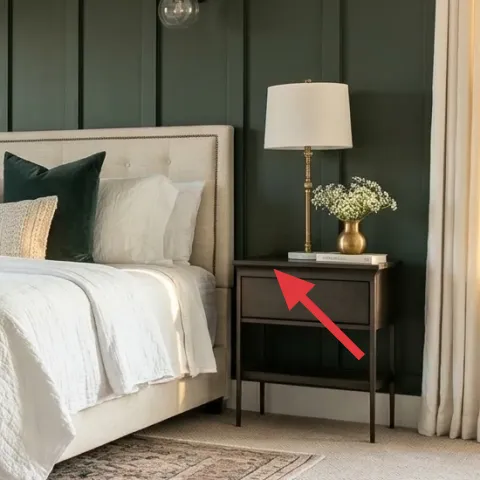
This small vase with white flowers sits on the right side table, and it’s such a simple lever for making a neutral bedroom feel alive. The trick is scale: the stems are tall enough to show height, but the bouquet stays compact so it doesn’t compete with the lamp shade or the headboard. Choosing white keeps the palette cohesive with the cream bedding and the airy curtains, while still adding a clean focal point you’ll see the moment you walk in. The alternative—using a dark vase—tends to turn the whole surface heavier against the paneled wall.
Note on keeping it looking styled
Trim stems so they fan slightly upward; crowded blooms can hide the side-table details that make this look feel tailored.
Layer 2 — table lamps ($60) warm glow for nighttime
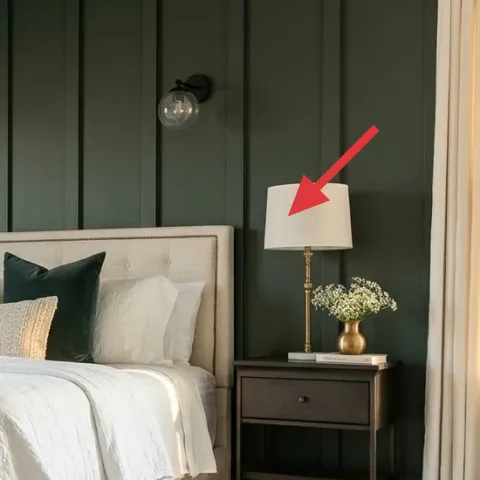
The table lamps are doing two jobs: they add warm light after dark and they add vertical texture next to the headboard. Because the shades are light and the lamp bases read warm (brass-toned), they soften the darkness of the paneled accent wall instead of amplifying it. I like this over a single ceiling fixture because bedside lighting should feel “close,” not distant. A common mistake is matching lamps too perfectly—here, the repetition creates a cohesive pair, but the shades still keep everything airy. If you’re swapping bulbs too, stick to warm white for that soft effect.
aim for warm-white bulbs
Use a warm 2700K bulb so the green wall reads rich instead of gray.
Layer 3 — two side tables ($80) thin profiles beside the bed
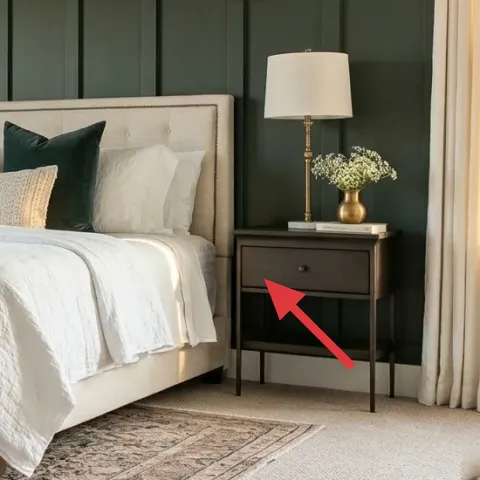
The side tables are narrow enough to keep the bed area from feeling cramped, while still giving you real surface space for a lamp, a vase, and whatever book you’re actually reading. Their darker finish also echoes the deeper tones in the paneled wall, which is how the whole palette stays grounded. I’d rather start with a side-table shape that feels right for everyday use than chase a taller, trendier cabinet that looks good in photos but becomes a catch-all. The trade-off is storage: these tables don’t replace a dresser, but they keep the styling surfaces intentional instead of cluttered.
Note on spacing
Leave a little breathing room between the lamp and vase so the surfaces don’t visually merge.
Layer 4 — white curtain panels ($80) frame the window in cream
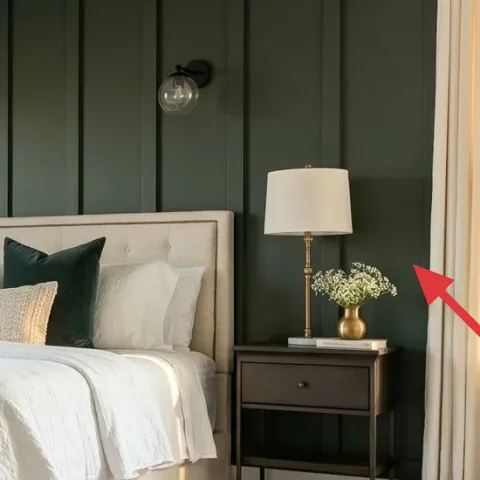
Those white curtain panels add softness around the edges of the bedroom and make the headboard and green wall feel more balanced. The sheer-to-opaque vibe matters: you get light diffusion while still having enough presence to visually “finish” the window. This beats a short blind-style window treatment because the curtains help the room read taller and calmer. I also like that they keep the palette consistent—white draws the eye back to the bed textiles without adding new colors. If your curtains are on the short side, length is the fastest upgrade; hemming is usually easier than you think.
don’t skip curtain length
If the panels end too high, the whole room can feel top-heavy against a strong wall color.
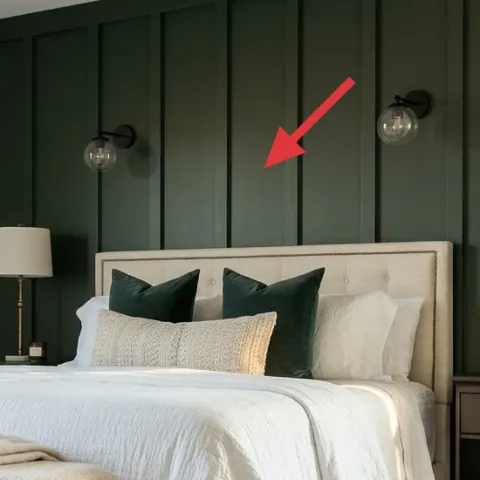
Layer 5 — paint dark-green paneled accent wall ($70) repaint for depth without demolition
Make it instead of buying it
DIY-paint the dark-green paneled accent wall so the bed backdrop matches the room’s calm, modern look.
Materials
- Interior paint, deep green (1 gallon) — 1 — store — $45
- Primer (if switching from a lighter color) — 1 quart — store — $8
- 4-inch angled brush — 1 — store — $6
- Roller cover (nap for panel texture) — 1 — store — $3
- Painter’s tape — 1 roll — store — $0
Steps
- Clean the paneled wall with a degreasing wipe so paint grips panel edges.
- Mask trim and baseboards with painter’s tape.
- Prime only the areas that need it (stains, glossy spots, or bare patches).
- Cut in around all panel edges with an angled brush.
- Roll the flat panel fields in thin, even coats.
- Let the first coat cure per the label, then apply a second coat for full coverage.
Total DIY cost: $62 — saves about $8 over buying.
Repainting the paneled accent wall in a deep dark green is the move that changes everything, because it sets the backdrop for every lighter textile around the bed. This is why painting beats swapping random decor items: the wall color alters how the cream bedding reads, how warm the lamps feel, and how “intentional” the whole nook looks. Choose a green that leans deep, not neon, so it stays sophisticated against the crisp white curtains. If your wall panels are already green, you can still level up by refreshing the sheen and coverage so the lines look sharp instead of patchy.
keep panel edges crisp
Cut in first, then roll; trying to do both at once usually leads to fuzzy lines.
Layer 6 — bed with upholstered headboard ($120) tall, cushy anchor for the wall
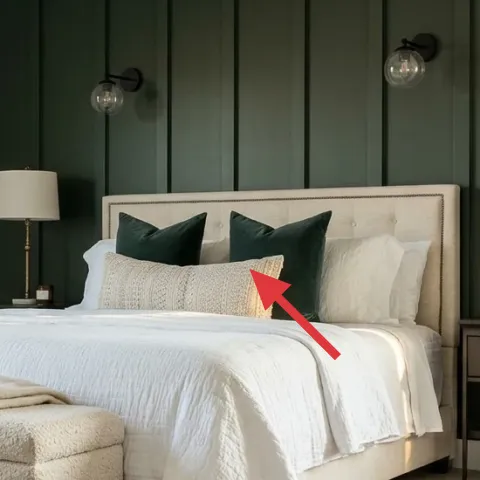
The bed with its upholstered headboard gives the room that cushy, hotel-like center mass—especially important because the wall behind it is so bold and structured. The light upholstery reads fresh against dark green, and the headboard’s height helps the curtains and sconces look more intentional above. I’m choosing the bed layer here over “bigger decor” because you can get the same style impact from a simple update to how the bed is framed: a structured headboard shape makes everything feel complete. The trade-off is cost: a great headboard is worth prioritizing, but you don’t need a brand-new setup—thrifted or resale options can keep it within budget.
Note on fabric tone
Look for cream or oatmeal upholstery; stark white can look too bright next to deep green.
Layer 7 — large patterned area rug ($200) grounds the bed zone
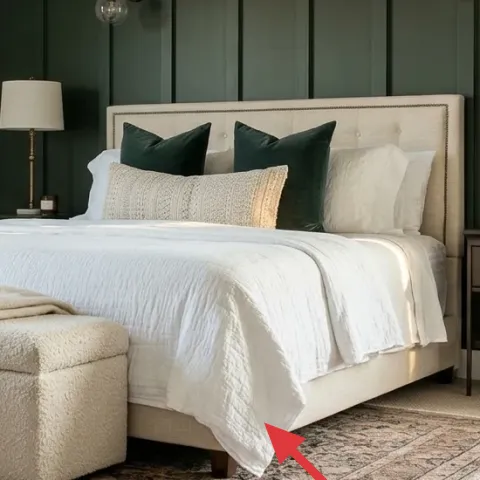
The large patterned area rug ties the whole bedroom together by defining the bed zone and softening the hard lines of the paneled wall. Its pattern is restrained enough to feel classic, but it adds depth so the cream bedding doesn’t look like it’s floating. This is the layer I reach for over plain carpeting or a small rug because it gives you visual scale—your furniture cluster needs a foundation, not a spot. The underfoot texture also helps the room feel warmer than it looks at first glance. If you’re shopping, prioritize a 5×7 or bigger size so at least the front legs of the bed sit on the rug.
go bigger than you think
A larger rug makes the whole bed arrangement look anchored instead of “stuck on” the floor.
The cost, layer by layer
| Layer | Item | Cost |
|---|---|---|
| 1 | Small vase with white flowers | $30 |
| 2 | Table lamps (pair-style for one nightstand) | $60 |
| 3 | Two side tables | $80 |
| 4 | White curtain panel pair | $80 |
| 5 | Paint for dark-green paneled accent wall | $70 |
| 6 | Bed with upholstered headboard (resale) | $120 |
| 7 | Large patterned area rug (5×7-ish) | $200 |
| Total | $640 | |
If you want a cheaper variant, start with the dark-green paint refresh and swap the patterned rug for a solid neutral rug in a similar size. Then keep the curtain panels but borrow length by adding a simple hem; the room still reads calm and finished without buying the biggest-ticket rug.
What worked, what didn't (across the whole room)
The biggest win was the layered contrast: deep green panels behind a light headboard, softened by white curtains and a patterned rug. Warm tabletop lighting also made the space feel inviting without changing the room’s layout. The styling touches—the vase and the two side-table surfaces—helped everything look “lived-in” instead of staged.
What worked
- The deep green paneled wall made cream textiles look richer and more intentional.
- White curtain panels framed the window and made the bedroom feel taller.
- The large patterned rug anchored the bed zone and softened the room’s strong geometry.
- Warm table lamps kept the lighting flattering against the dark wall color.
- A compact vase on the side table added a clear focal point without clutter.
- The upholstered headboard gave softness where the wall panels add structure.
What didn't
- Trying to style the side tables before painting made the undertones feel off.
- Skipping curtain length made the room feel top-heavy next to the tall headboard.
- Using too-small rugs left the bed floating instead of grounded.
- Cool-white bulbs on the lamps turned the green wall gray instead of deep.
What we'd skip if we did it again
Skip replacing the bed frame first. If the upholstery is the right cream tone and the headboard is tall, you’ll get a better return by updating the wall color, curtains, and rug foundation before spending on furniture.
Skip a small rug or a plain runner. This room needs scale to balance the paneled wall height; a larger patterned rug creates the visual anchor and makes the bed zone feel complete.
Skip cool-white bulbs. Warm bulbs are the easiest, cheapest upgrade that keeps dark green from reading muddy and keeps the lamp light flattering on the headboard and curtains.
Frequently asked
How long does a project like this usually take on a first weekend?
Most of this plan fits into two real weekends. Painting the paneled wall is the swing time: prep, cut-in, and two coats usually land in the same weekend if you don’t rush cure periods. Swapping curtains and placing a large rug are quick, but trimming curtain length and aligning the rug takes longer than expected. Styling—vase, lamp, and pillows—should be the final step so you can see the wall color with everything in place.
If I’m renting, can I still get this look?
You can mimic the vibe without committing to paint. Choose removable wallpaper for one accent wall (peel-and-stick), then keep the rest of the palette the same: cream textiles, white curtains, and a large patterned rug. Table lamps and side-table styling are also renter-friendly. The easiest renter-safe swap is curtain length and a rug upgrade, because they change the room’s feel without touching walls.
What if my bedroom is smaller or the ceiling is lower?
In a smaller bedroom, scale matters more than pattern. Go up one size on the rug only if it can still fit with comfortable walkways; otherwise choose the biggest rug that leaves clear paths. Keep curtain panels tall and full, but use lighter fabric weight so the window doesn’t feel heavy. For the headboard, prioritize cream or oatmeal tones over strong color, because it keeps the room bright even with a deep green accent wall.
Where should I shop for the biggest-impact pieces?
For the patterned rug, look for options that list actual dimensions and allow returns—size is everything here. Curtains are easier to buy online if you can hem or if you choose a tall panel option. For lamps and side tables, secondhand stores and marketplace listings are great because you’re matching shape and tone more than chasing brand. For the green wall, buy paint samples first so you can confirm the undertone under your lamp bulbs.
What’s the most common mistake people make in a bedroom like this?
The most common mistake is underestimating how much the wall color changes everything else. People buy bedding and rugs they love first, then paint later and feel disappointed when undertones clash. Another frequent issue is curtain length—short curtains make the room feel unfinished, especially with a tall headboard. Start with the wall palette (or confirm it) and then choose fabrics that look good against that exact green.
Can I keep the same accent wall color but refresh the look?
Yes. If the paneled wall is already dark green, focus on coverage perfection and lighting warmth. Refresh with a second paint coat for even sheen, then swap in a large patterned rug and longer white curtain panels to improve scale. Update the lamp bulbs to warm white and style the side tables last so everything reads cohesive. You’ll still get that hotel-like calm without repainting everything from scratch.
More in Bedroom
Under $700: modern dark-green bedroom nook refresh
Turn your bedroom nook into a darker, calmer, hotel-luxe corner with a few weekend swaps. This $700 plan covers a patterned rug, curtain pa…
Under $500: 7 move-ready upgrades for a bedroom vanity corner
A light, white-and-blue bedroom vanity corner makeover built from 7 renter-safe swaps. With a total retail spend of under $500, the bed, ru…