- Best for
- Shared roommates who want a calm, movable bathroom vibe
- Time
- 1 afternoon
- Total cost
- $390
- Renter-safe
- Textiles + freestanding decor + no fixed-item swaps
Why marble-and-olive vanity styling is the spa bathroom of 2026
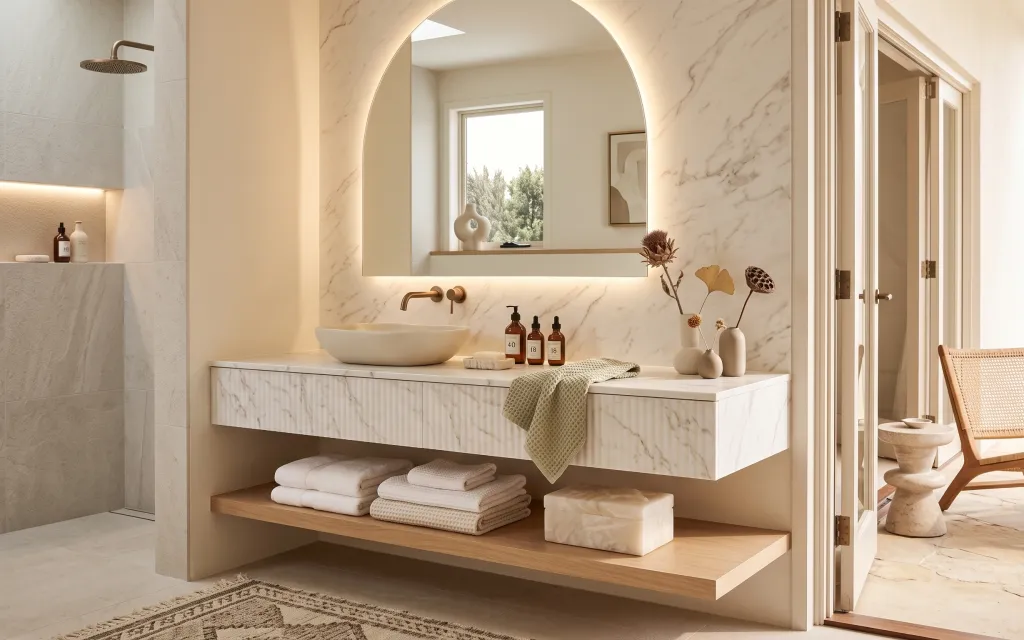
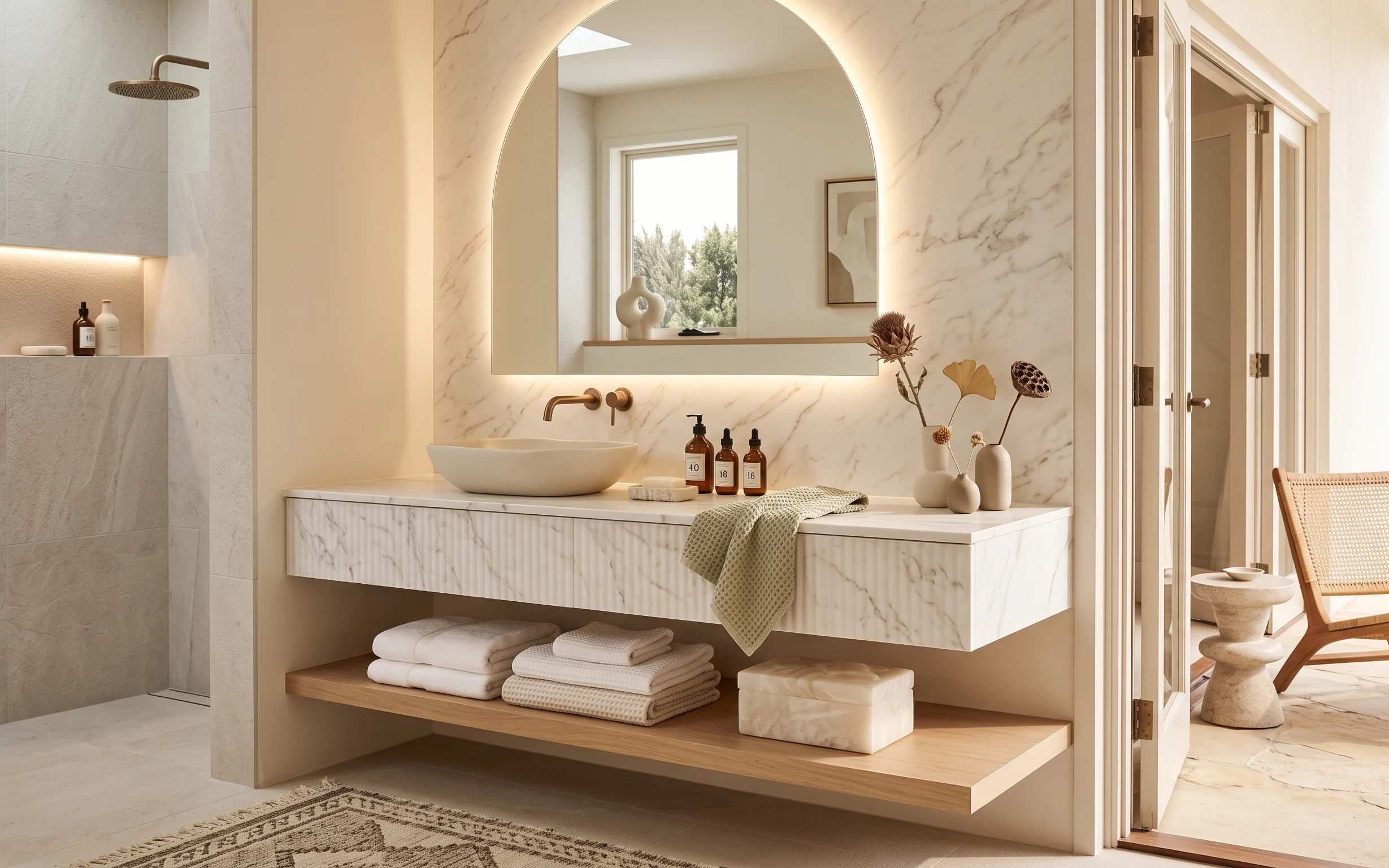
The fastest way to make a shared bathroom feel “done” is to focus on what you can actually take with you. Here, the cream-and-marble-look walls and the warm wood shelf already give you that spa baseline, so the refresh is all about adding softer textures: the beige woven rug on the floor, stacked white towels, and a green waffle throw draped where you’ll naturally reach. The white ceramic vases with dried flowers keep the styling elevated without adding anything permanent. This is achievable for renters because it leans on textiles and freestanding decor, not hardware or wall changes.
I used to overdo bathroom “organization” by hauling in heavy bins, and then I’d dread the move. This time I tried the opposite—pieces that can live on a shelf or counter, then travel flat. The moment that changed my mind was realizing the counter styling (ceramic, a few bottles, and a throw) reads like design from across the room. When it’s that simple, it’s easier to redo in a new place in under an afternoon.
Layer 1 — beige woven rug ($80) Texture underfoot that hides splash chaos
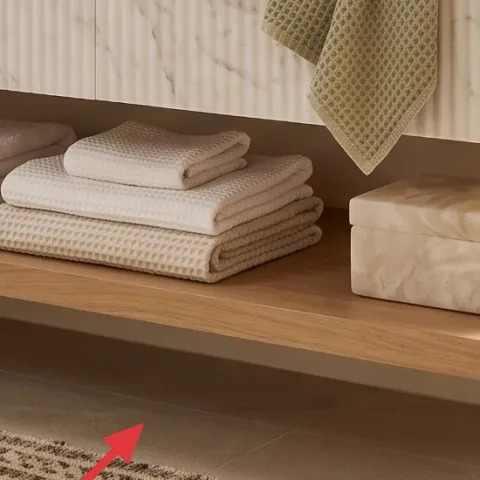
A beige woven rug in a bathroom is doing real work: it warms up the stone tiles and makes small water splashes less obvious. In this photo, the rug sits at the edge of the vanity zone, so it visually anchors the whole “sink + shelf + chair” area instead of letting it feel like a hallway. If going smaller than a 5×7, the bathroom can still look pulled together; if going larger, it should tuck under the main traffic path. The trade-off is that woven rugs need a little extra shake-out, but they’re still far easier to move than any hard flooring change.
Rug grip matters
Use a non-slip rug pad made for tile so you don’t chase the rug with every step.
Layer 2 — folded white towels ($40) Crisp stacks that read “clean”
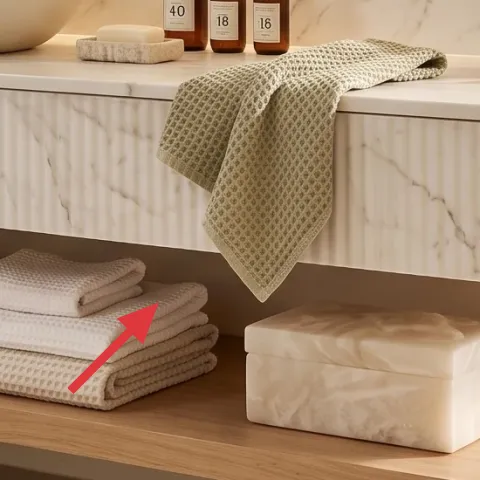
Folded white towels are the easiest “spa” cue because they look fresh even when they’re just folded again. In the hero, the towels are stacked on the wood shelf under the counter, which means they’re visible from the doorway and become part of the decor, not a separate chore. The best move is to keep the folds tight and consistent—one small stack looks intentional, while scattered towels read messy. I’d skip matching set perfection; texture (slight waffle or rib) will still feel high-end next to the smooth marble-look surfaces.
Keep them dry
Staging towels right after a shower is fine, but let the area air out so you don’t trap humidity behind the stack.
Layer 3 — green waffle throw ($25) One drape of texture on the counter
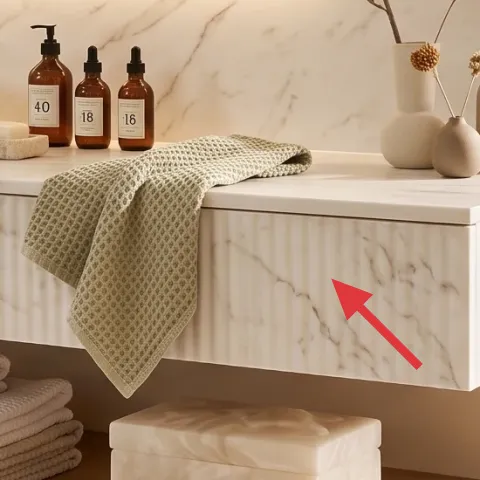
The green waffle throw is a smart, budget-friendly pop because it adds texture without fighting the marble-and-cream palette. Here it’s placed across the right side of the counter, where it catches light and makes the whole vanity styling look lived-in instead of “staged on a showroom set.” The trade-off with a throw is practicality: a woven fabric can collect moisture if it’s right next to wet areas, so pick a spot where it can stay mostly dry between cleanings. For shared housing, that balance is the point—you get the look, and it still behaves like a towel/throw you’ll actually use.
Choose a washable weave
A waffle towel/throw blend holds shape and looks good even after a quick wash cycle.
Layer 4 — white ceramic vases with dried flowers ($30) Organic shapes without fuss
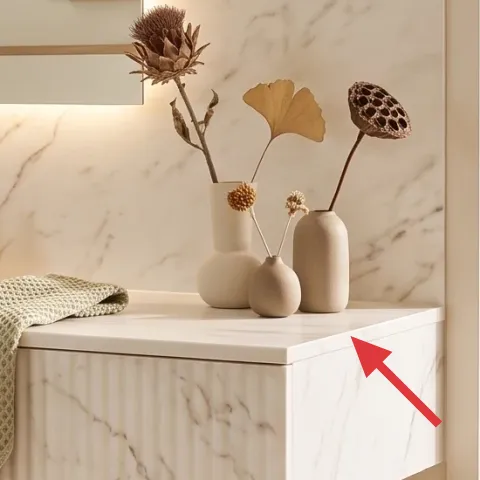
White ceramic vases with dried flowers are small-scale decor that still has a big visual impact. In the photo, the dried stems and petals sit on the counter near the mirror, so they soften the straight lines of the vanity and make the wall reflection look warmer. The reason this works better than fresh flowers is move-readiness: dried arrangements travel better and don’t require daily care. The only real trade-off is that ceramics can chip if they slide around in packing, so keep them wrapped in paper or a towel when you box up for your next lease.
Don’t place dried stems where they’ll get splashed
Keep decor slightly back from the faucet zone so water droplets don’t leave residue.
Layer 5 — bottles on bathroom counter ($20) Styling that looks intentional, not cluttered
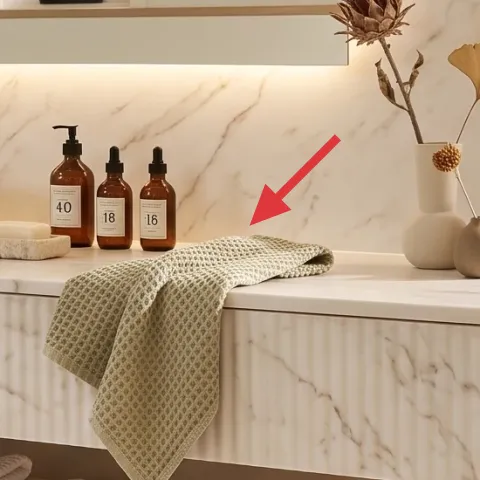
Those bottles on the counter are doing more than holding product—they’re acting like color blocks in a mostly neutral space. Grouping them (instead of spreading them across the shelf) makes the bathroom feel curated from a distance. This layer works because the photo already has a clean backdrop; the bottles add visual rhythm and a “used but tidy” feeling that reads well in shared homes. The trade-off is you have to commit to refills and wiping down labels now and then, but it’s still much easier than changing fixed fixtures. Pack the bottles in a box with a towel layer so they stay intact on move day.
Less counting, more spacing
Three to five items with consistent spacing usually looks more designed than a full clutter moment.
Layer 6 — wicker chair ($150) A human-sized spot to pause
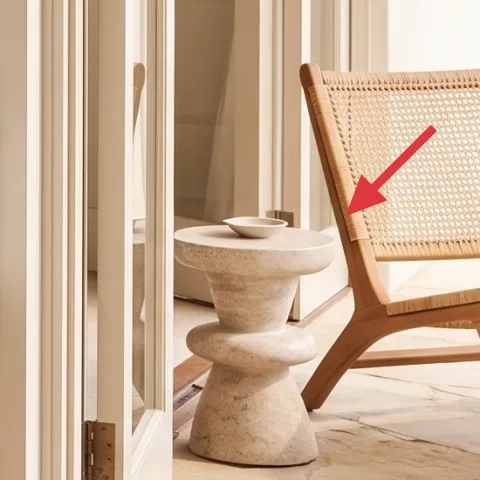
A wicker chair next to a bathroom vanity makes the whole space feel like a destination, not just a room with toiletries. In the hero, the chair anchors the right side so there’s a clear “sit and get ready” zone, which is especially helpful in shared housing where you want calm routines. The reason this swap is worth the cost is that it’s not just decoration—you’ll actually use it for hair, skincare, or laying out a towel. Trade-off: a chair is bulkier than textiles, but it still moves in pieces (seat and legs depending on design), and it packs into fewer boxes than large wall decor.
Protect the weave in transit
Wrap wicker with a moving blanket so straps don’t snag and deform the texture.
Layer 7 — framed abstract wall art ($45) One print that makes the mirror wall feel finished
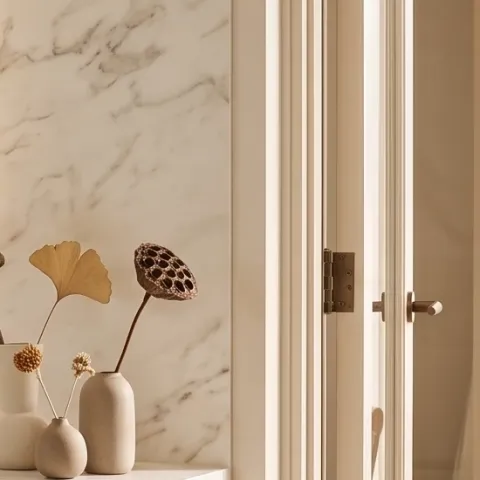
That framed abstract wall art in the mirror area gives the room a focal point beyond the counter, which is key when most of the bathroom is tile and stone. For move-friendly styling, a framed print is a win because it’s removable without changing anything fixed—no drilling, no permanent installs. The color palette in the hero is warm and creamy, so the best match is abstract art with similar light tones and gentle shapes. The trade-off is hanging technique: choose a renter-safe method like a removable hook system that doesn’t pull plaster paint when you take it down later.
Keep it centered at eye level
When the mirror reflects it, the whole wall feels intentional instead of random.
The cost, layer by layer
| Layer | Item | Cost |
|---|---|---|
| 1 | Beige woven rug | $80 |
| 2 | Folded white towel set (bath towels) | $40 |
| 3 | Green waffle throw | $25 |
| 4 | White ceramic vases with dried flowers | $30 |
| 5 | Bathroom counter bottle set (grouped) | $20 |
| 6 | Wicker chair | $150 |
| 7 | Framed abstract wall art | $45 |
| Total | $390 | |
If the chair feels like too much, skip Layer 6 and spend that money on a second textile layer (an extra towel stack + a matching runner-style throw) and one larger framed print instead.
What worked, what didn't (across the whole room)
Small swaps worked best here because the bathroom already has the right “spa” bones: creamy neutrals, marble-look surfaces, and warm wood. Textiles and counter styling made the space feel cared for without any permanent changes. The only downside was that the look depends on staying consistent—if towels and bottles get scattered, the calm disappears quickly.
What worked
- The beige woven rug softened the tile and made the vanity zone feel grounded.
- Folded white towels read clean from across the room, especially against the cream counter.
- The green waffle throw added texture and a color cue without changing any fixed surfaces.
- White ceramic vases brought organic shapes that match the mirror reflection.
- Grouped bottles added visual rhythm instead of scattered countertop clutter.
- The wicker chair created a real “ready” spot in a shared bathroom.
What didn't
- If towel stacks get too tall, they block the counter zone and look crowded.
- Decor placed right at the wet edge collects residue faster than expected.
- A frame that’s slightly off-center in the mirror reflection looks noticeably off.
- If the rug pad slips on tile, you spend more time adjusting than enjoying.
What we'd skip if we did it again
Skip buying a full “coordinated set” when the bathroom already has a marble-look and warm wood base. Matching every item (towels, throw, and decor) can look overly themed fast in shared housing. Instead, pick one texture (waffle weave) and one accent color, then let everything else stay in cream and off-white so it still packs and repeats well in the next place.
Skip a frame that’s too small for the mirror wall. In this layout, the art needs enough visual weight to show up in the mirror reflection; otherwise, the counter becomes the only focal point. Going slightly larger is usually easier than trying to “fix” size later, and it still removes cleanly for a move.
Skip placing loose decor in multiple spots across the counter. The spa look depends on grouping—vases plus bottles plus one textile drape. When items spread out, the bathroom reads busy even with a neutral palette. Keep a simple rule: one cluster on each side of the sink area, and the rest goes back into a bag or cabinet until needed.
Frequently asked
How long does this bathroom refresh take?
Most of the work is staging and spacing: rug placement, towel folding, counter grouping, and setting the framed art at the right height. For a shared bathroom, plan on about an hour to shop and prep, then another hour to style. If the frame requires a renter-safe hanging method, give it an extra 20–30 minutes the first time. After that, redoing it in a new lease is mostly repeatable.
Can this work in a rental where I can’t drill or paint?
Yes—this plan avoids any fixed-item replacements and leans on removable textiles and freestanding decor. The only “wall” element is the framed abstract wall art, and it should be hung with renter-safe hooks that lift off cleanly. The rest—rug, towels, throw, vases, and bottles—are all take-with-you items that pack into boxes without tools.
What if the bathroom is smaller than the one in the photo?
Use the same principles, just scale down. Choose a smaller rug that still sits under the main traffic path near the vanity, and keep the counter styling to one vase cluster plus one textile drape. If the wicker chair is too large, swap it for a towel step or a compact stool substitute that still gives you a “pause” spot. The key is grouping, not filling every surface.
Where should I shop for these move-ready pieces?
For textiles and rugs, look at big-box stores and home clearance sites for woven rugs and waffle throws. For ceramic vases and decorative bottles, check home decor sections and thrift for matching shapes in cream. For framed abstract art, focus on light neutrals that won’t fight the mirror reflection. If you’re moving soon, choose items that pack flat or come in protective boxes.
What’s the biggest mistake people make in this bathroom style?
Over-styling. This spa look depends on restraint: one rug anchor, one towel stack, one accent textile, and a single counter cluster. When every surface has decor, the room becomes visually noisy and the tiles and marble-look elements feel harsher. Aim for “designed grouping” rather than “decor everywhere,” especially in shared spaces.
More in Bathroom
Under $400: move-ready spa bathroom refresh with 7 swaps
A spa-bathroom refresh for shared housing: swap 7 movable items (rug, towels, textiles, decor, and wall art) for a calmer, more polished lo…
Under $350: vanity-and-tile bath refresh with 7 renter swaps
A renter-friendly vanity-and-tile bath refresh that leans on texture: a geometric area rug, two framed abstract prints, and warm vanity sty…
Under $400: move-ready bathroom vanity-wall refresh
A renter-friendly bathroom vanity wall refresh that looks warm and mid-century without changing any fixed fixtures. This $400 plan uses sev…