- Square footage
- stair landing & console top
- Cost
- about $300
- Difficulty
- Easy
- Renter-safe
- No drilling, freestanding swaps
Why sage-green-and-wood console styling is the stair landing console of 2026
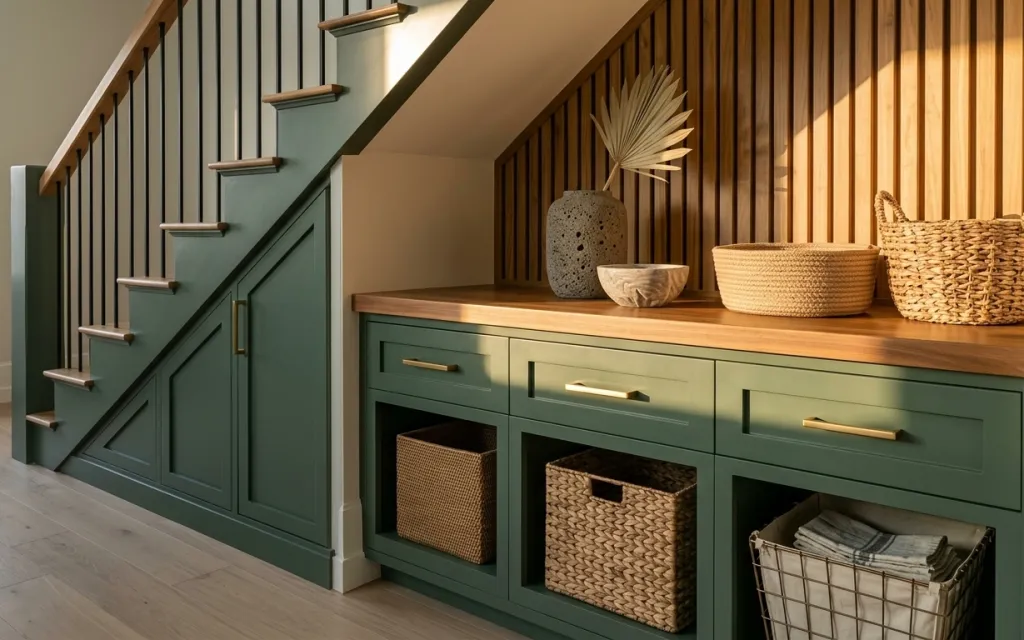
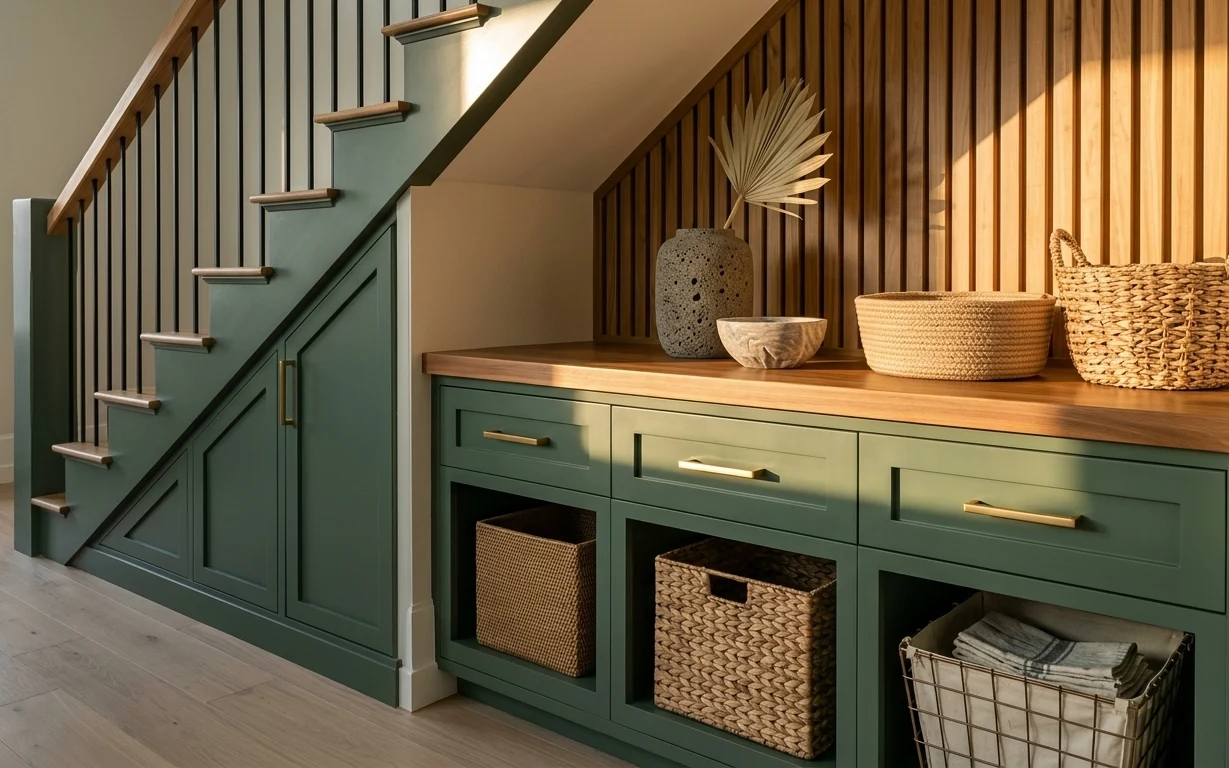
The stair-side console in the photo is doing a lot already: the sage-green doors give structure, and the warm wood top keeps the landing from feeling cold. The styling that makes it look finished is mostly removable texture—woven baskets with different weave tightness, a speckled stoneware vase, and folded striped towels tucked inside storage. Even with rental limits, that combo is achievable because it relies on freestanding pieces and soft organization, not any changes to fixtures. It’s also an easy look to repeat in tight entry areas because the “vertical” height comes from the vase, not bulky furniture.
I used to over-buy decor for small landings—one matching set at a time—until I noticed the real problem was storage visibility. The moment I swapped mismatched containers for baskets that match in color but not in size, everything looked calmer. I also learned to keep towels folded and contained, instead of letting they drift out onto open shelves. This setup mirrors that lesson: each texture gets a job, and nothing has to be permanent.
Layer 1 — Wire storage bin for towels ($40) Keeps folded towels contained
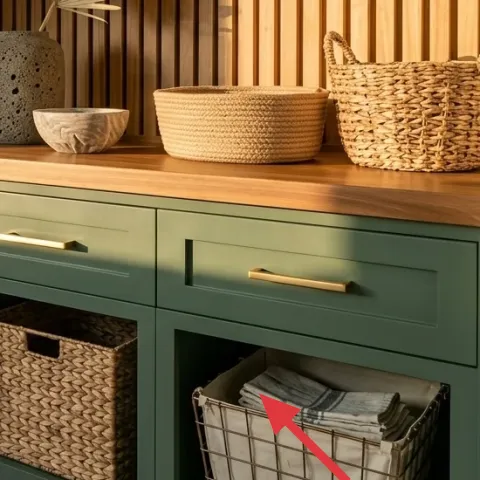
A wire storage bin inside the console (the spot where the folded stripes live) solves the “landing looks cluttered” problem fast. The open grid lets you see what’s inside, but it still reads organized behind the cabinet doors. Choosing a bin instead of a lidded box is a trade-off: you don’t get total concealment, but you do get easier access and better airflow for fabrics. This also packs flat when it’s time to move—no need to find a way to transport a rigid organizer.
Choose one bin size for the towel stack
Pick a bin that matches how towels are folded—rolling or stacking changes how quickly you’ll repack every week.
Layer 2 — Woven storage basket inside the console ($50) Adds natural texture behind doors
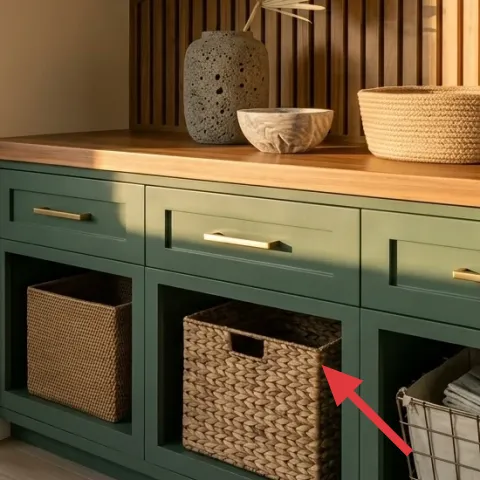
The woven basket inside the console is the texture anchor on the lower shelf level. Its color sits between warm wood and natural tan, so it harmonizes with the sage-green cabinet without fighting it. The weave pattern matters too—this one looks medium-tight, which keeps it from looking dusty or messy when you’re not constantly reorganizing. The obvious alternative is plastic or matching wood organizers, but those can feel too uniform. A woven option adds warmth, and it’s light enough to move with you as-is.
Let baskets vary in size, not shade
In small entries, two shades of tan reads intentional; three shades starts looking like a storage haul.
Layer 3 — Folded striped towels ($30) Brings color through textiles
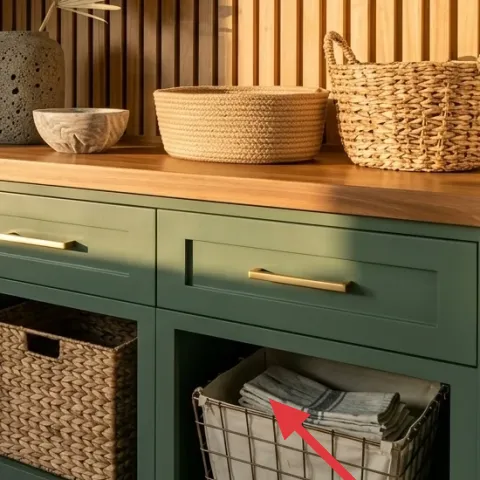
Those folded striped towels add a visual “pause” in the otherwise boxy cabinet space. The stripes keep it from feeling flat, while the neutral tones stay cohesive with the console top and baskets. This layer is intentionally small and removable—towels go straight into a laundry bag, and they don’t require any hardware or measuring. The trade-off is that textiles won’t stay perfectly crisp like decor objects; they’ll look best when they’re refreshed and re-folded regularly.
Skip bright stripes if the console is already colorful
With sage-green cabinets in the background, neon or high-contrast patterns can look busy fast.
Layer 4 — Speckled stoneware vase ($55) Creates height without bulk
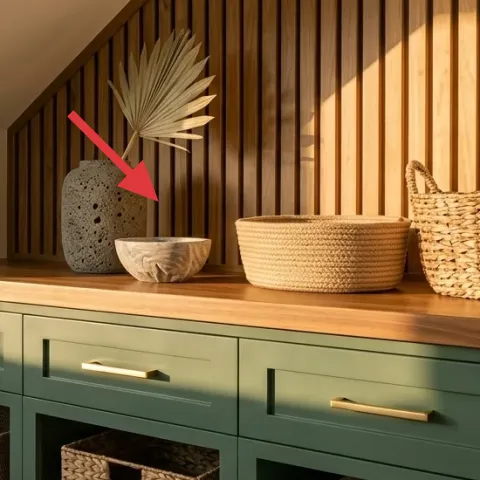
The speckled stoneware vase (with palm fronds) is what gives the landing its vertical “finished” feeling. The speckling reads handmade and ties into the natural fibers in the baskets, so it feels cohesive even when everything isn’t from the same set. The vase’s trade-off is weight: stoneware is heavier than resin, so it’s less forgiving for overstuffing shelves or grabbing it one-handed. Still, it’s a one-and-done piece you can pack into a moving box with padding.
Match the vase vibe to the basket warmth
If the baskets are tan, choose stoneware with warm undertones instead of cool gray.
Layer 5 — Wood-and-stone catchall bowl ($35) Makes the top feel styled, not staged
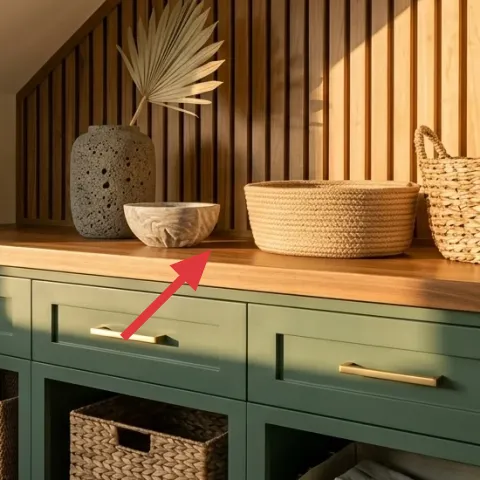
A small catchall bowl on the console top makes the vignette feel lived-in instead of purely decorative. In the photo it sits between the vase and the woven pieces, which is exactly the job it should have: it fills the negative space so the display doesn’t look like “three items stuck together.” The bowl also gives you a practical place for a small object—keys, a scent, or a folded cloth—without turning it into a clutter magnet. The alternative is adding more decor, but that increases visual noise on a tight landing.
Keep the catchall low-profile
In small spaces, a shorter bowl keeps sightlines open while still adding texture.
Layer 6 — Small woven basket on the console top ($45) Adds depth to the top vignette
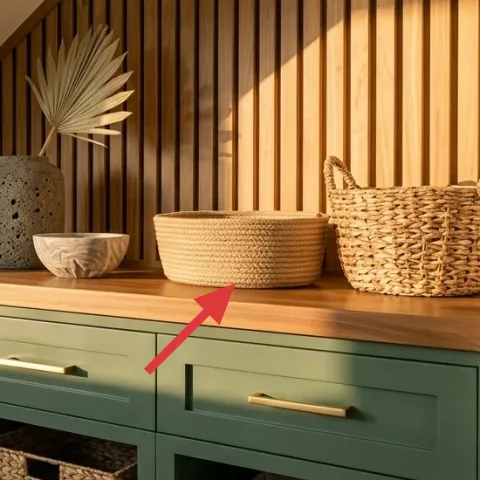
The small woven basket on the console top adds a “middle layer” between the tall vase and the larger basket on the far right. That depth is what makes the arrangement look intentionally styled rather than symmetrical. If a basket is too large for the space, the landing starts to feel heavy; too small, and it disappears. The visual win here is proportion: it reads as useful storage or a place to anchor decor, while still staying light and move-friendly.
Use baskets to create one diagonal rhythm
Place items so their handles or silhouettes don’t line up perfectly across the console.
Layer 7 — Large woven basket on the far right ($45) Balances the display with a bigger anchor
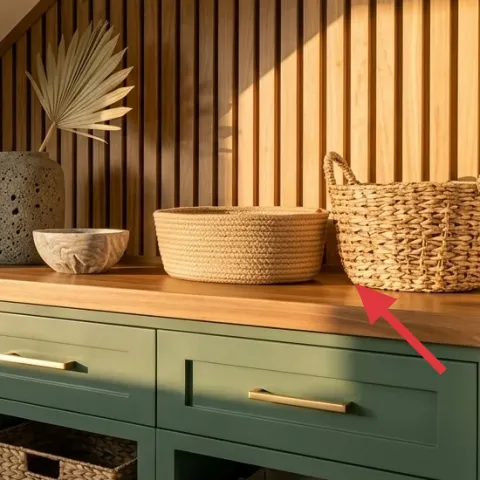
The large woven basket at the far right is the counterweight that keeps the whole top vignette from feeling top-heavy. It brings in more surface texture and gives the eye a place to rest after following the vase’s height. Woven hampers also hide “in-between” items—extra towels, spare linens, or seasonal wrap—so the landing looks tidy even on busy weeks. The trade-off is that larger baskets take more shelf space, but this console top already has the room for it, and it’s an item that transports without dismantling.
Prioritize a basket with sturdy handles
Handles make moving baskets at move-out a lot easier, especially when the floor gets crowded.
The cost, layer by layer
| Layer | Item | Cost |
|---|---|---|
| 1 | Wire storage bin for towels | $40 |
| 2 | Woven storage basket inside the console | $50 |
| 3 | Folded striped towels | $30 |
| 4 | Speckled stoneware vase | $55 |
| 5 | Wood-and-stone catchall bowl | $35 |
| 6 | Small woven basket on the console top | $45 |
| 7 | Large woven basket on the far right | $45 |
| Total | $300 | |
Cheaper variant: swap the stoneware vase for a lighter ceramic pitcher-style container ($25) and choose a simpler woven basket in a single tone ($25–$30 each). Keep the wire bin ($30) and towels ($20), and the overall look stays cohesive for about $210–$240.
What worked, what didn't (across the whole room)
This refresh works because most of the changes are removable storage and texture, not anything that fights the sage-green console. The woven baskets and stoneware create a consistent warmth, and the towels keep the landing from looking like decor-only storage. The biggest miss risk is going too matchy—when everything is the same size and weave tightness, the top vignette stops looking styled.
What worked
- Woven baskets add warmth while still looking organized behind cabinet doors.
- The speckled vase provides height so the small landing doesn’t feel flat.
- A catchall bowl reduces “where do I put this?” clutter on the console top.
- Folded striped towels bring pattern in a controlled way, without expanding the display area.
- Different basket sizes create depth even in a narrow, traffic-area landing.
- The wire bin keeps fabric access easy while staying visually structured.
What didn't
- Too many small decor pieces on the console top makes the landing feel busy.
- If the towels aren’t folded the same way, the striped pattern stops looking intentional.
- Baskets in overly bright tan or white can clash with the sage-green cabinet color.
- Overstuffing the baskets makes the vignette look cluttered instead of curated.
What we'd skip if we did it again
Skip adding a matching set of containers in one material. On a stair landing, that uniformity flattens the display and makes it look like storage boxes rather than a lived-in vignette.
Skip high-contrast towel patterns if the cabinet color is already doing the styling. With sage-green built-ins in view, loud stripes pull attention away from the baskets and stoneware.
Skip anything that can’t be packed into standard moving boxes. Stoneware, woven hampers, and textile stacks are move-friendly; bulky decor that needs special packing turns a quick refresh into an exhausting chore.
Frequently asked
How long does this stair landing console refresh take?
Plan for about 2–3 hours, mostly because baskets and towels need a final “fold and place” pass. The styling part is quick—vase, catchall, then baskets in a size order (tall, medium, large). If the woven baskets need filling (extra towels or linens), add another 20–30 minutes.
Is this renter-friendly if the console is built in?
Yes, because the changes focus on removable pieces: storage bins, woven baskets, towels, and tabletop decor. Nothing here requires painting, drilling, or swapping fixed fixtures. The only “maintenance” is dusting and re-folding textiles so the stripes keep looking crisp.
What if my stair landing console is smaller or narrower?
If the top surface is shorter, reduce the number of top baskets to one small basket plus the vase (still keep the catchall). For the lower shelf, choose one larger basket rather than two medium ones. The goal is to keep one tall element and one storage texture—avoid stacking three large items at once.
What if my console color is different than sage green?
The system still works. Use the same materials—woven tan, stoneware speckle, and neutral striped towels—then let the exact container colors shift to match the cabinet. If the cabinet is cooler (more gray), pick stoneware with less yellow warmth; if it’s warmer, keep the tan baskets.
Where should I shop for these exact materials?
Baskets are often easiest to find at home stores with woven sections and also at discount retailers during seasonal refreshes. Stoneware vases and catchall bowls tend to show up at ceramics-focused shops and online marketplaces with “stoneware” filters. For towels, look for neutral stripe packs so the folds stay consistent.
What’s the biggest mistake people make with stair landing styling?
Overfilling. Small landings need texture, but they also need negative space so the eye can move. If every surface has something, the whole area looks chaotic even if each piece is individually attractive. Another common issue is matching too perfectly—mixing sizes and weaves is what makes it look intentional.
More in Small Spaces
Under $300: 7 move-ready swaps for a stair landing console
A stair landing console gets the same airy, natural texture look using 7 move-ready swaps for under $300. Focus: woven baskets, a stoneware…
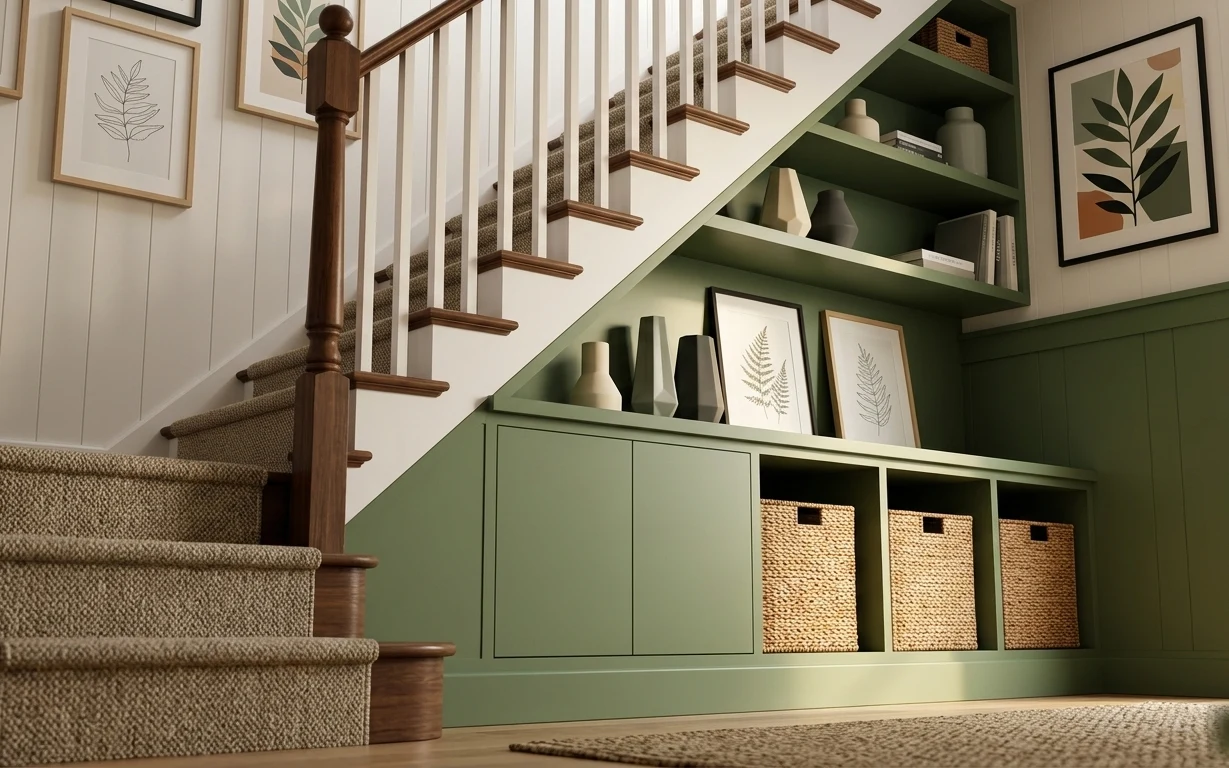
Under $600: stair landing shelf wall refresh with 7 weekend wins
A stair landing shelf wall can feel intentional instead of “builder beige” with an easy 7-layer refresh. This weekend project uses an updat…
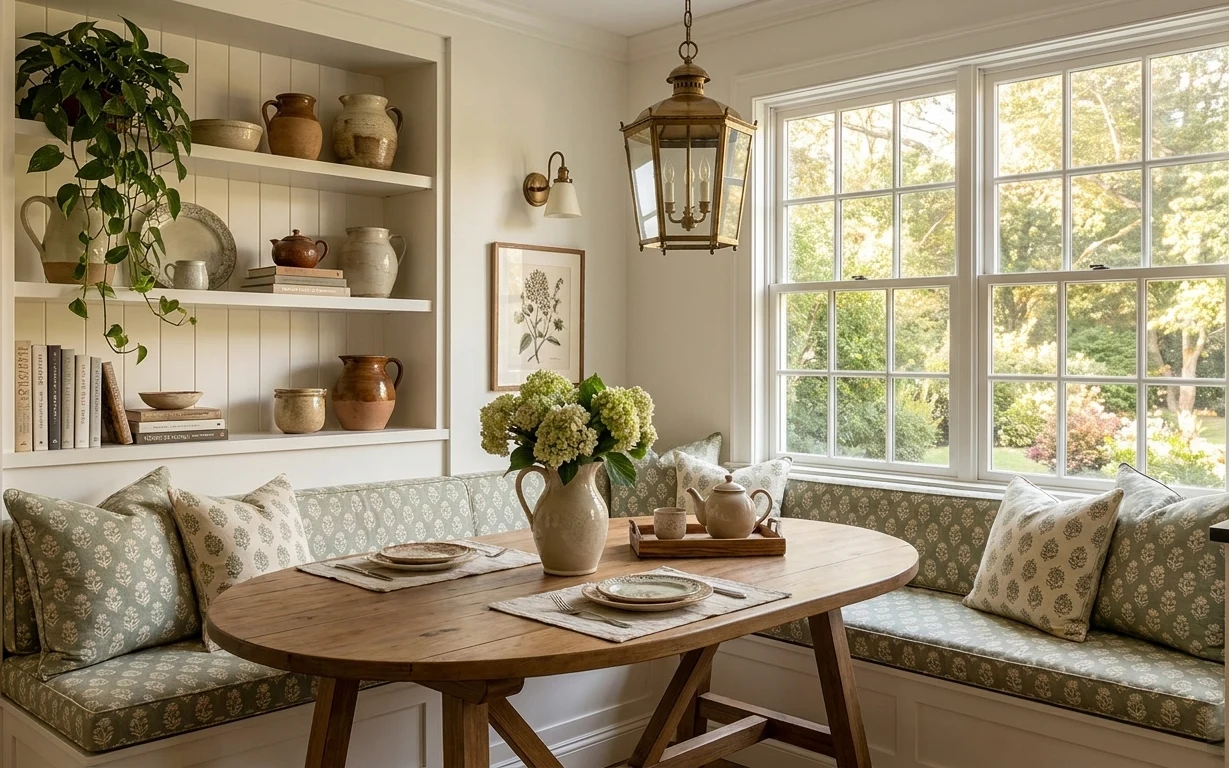
Under $700: banquette nook refresh with 7 budget wins
A banquette nook can feel pulled-together even on a $700 weekend budget. This refresh uses 7 specific swaps—bench cushions, patterned throw…