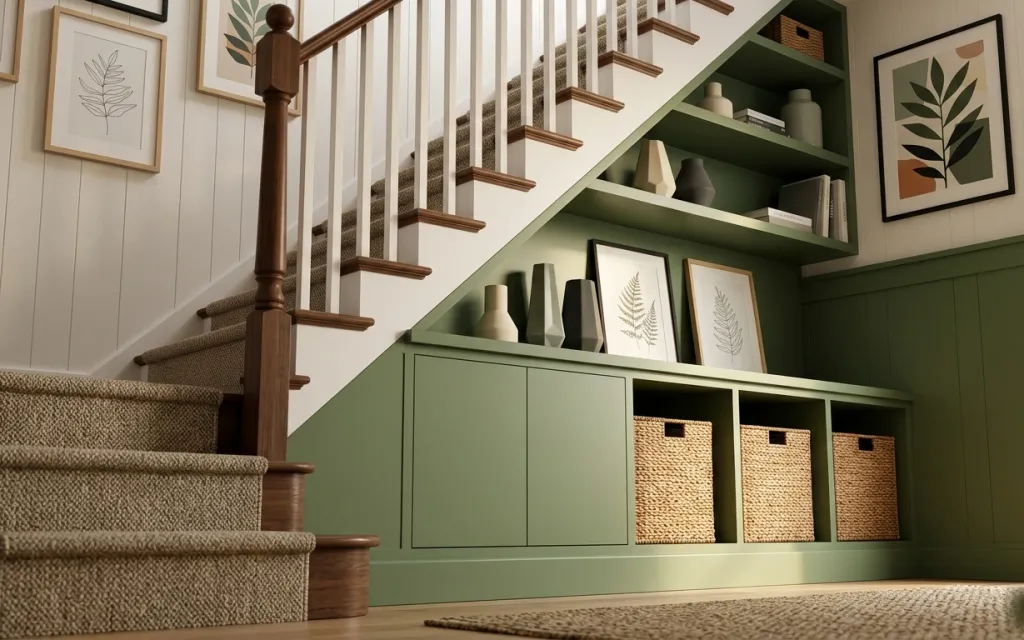
- Square footage
- Stair landing corner (about 50–80 sq. ft. of visible floor)
- Cost
- About $560 total for the layered refresh
- Difficulty
- Confident DIY (paint refresh + styling)
- Renter-safe
- Weekend-decor friendly for homeowners; paint is the only non-renter-friendly part
Why this olive-and-wood built-in refresh is the stair landing shelf wall of 2026
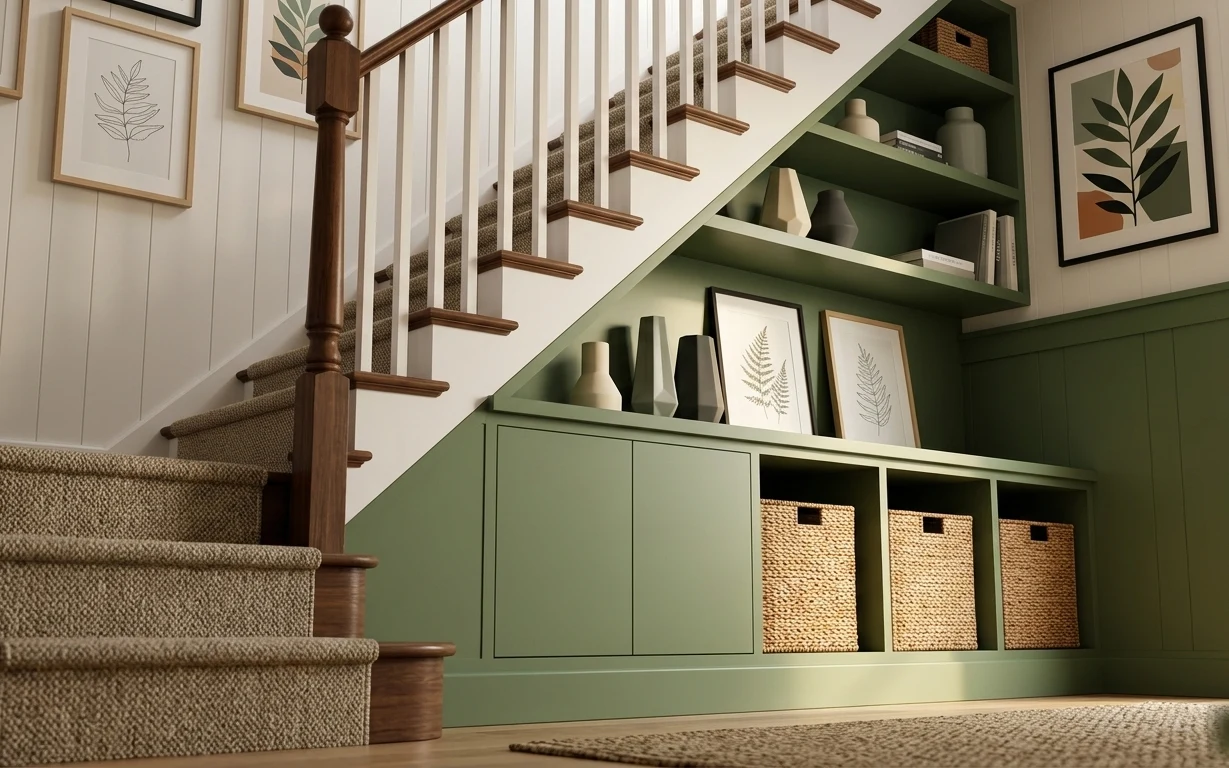
The first thing you notice here is the way the built-in shelves pull the eye upward—then the stair carpet and area rug soften the whole transition from hallway to stairs. I love the mix of textures already in the scene: woven basket fibers, matte ceramic shapes, and the chunky stair carpet. A trick I borrowed from paint-and-plaster homes in Architectural Digest: treat shelving like a backdrop, then style with “repeatable” heights. If you can paint and swap a rug, you can absolutely land this lived-in look on your own schedule.
My biggest mistake the first time I tried to style a built-in was making everything the same height. It looked tidy, but it also felt stiff—like a display, not a place you’d set down keys. This time I kept the baskets grounded, then added ceramic vases up top so your eye has somewhere to travel. The result feels calmer and more intentional, even with all the lines from the stairs and paneling.
Layer 1 — area rug ($150) defines the landing under the shelves
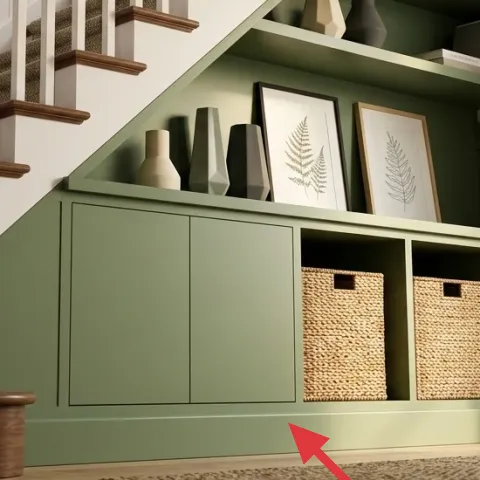
This area rug anchors the stair landing where the green built-ins and the stair carpet meet, so the whole corner reads as one zone instead of separate surfaces. The texture matters here—too-slick rugs make stair landings feel louder, not softer—so choosing a similar woven or low-pile feel helps the rug blend with the textured stair carpet already there. The alternative would be going flat and minimal, but that can make the space look unfinished because you lose the “grounding” layer beneath the furniture-less landing. Expect this swap to do more than it costs because it changes how the entire floor reflects daylight.
Lock the rug to the shelf wall lines
Center the rug so its pattern (or border) visually aligns with the built-in opening; it makes the stairs feel more measured.
Layer 2 — woven storage baskets on shelves ($60) bring function to the display
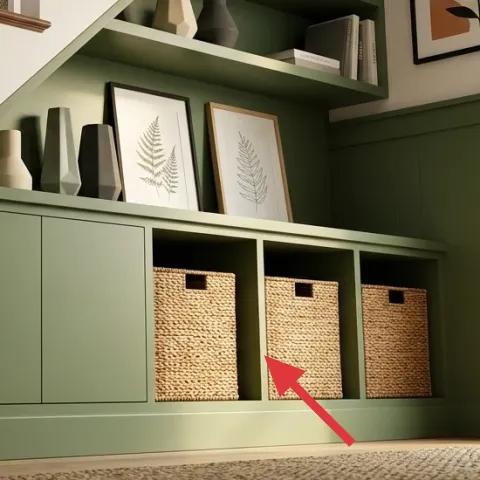
Those woven baskets on the lower shelf bays are what make the shelving feel practical, not just decorative. They add a warm tan tone that plays nicely against the olive green and keeps the space from feeling too monochrome. The trade-off I’d accept if swapping baskets: you may lose a little “perfect symmetry” if you choose different weaves, but the lived-in effect is worth it. An easier alternative—adding only small decor objects—tends to look cluttered in a narrow stair landing. Baskets solve that by grouping visual weight into something you can actually use for folded throws, extra chargers, or small seasonal items.
Use baskets as your visual “base layer”
Keeping baskets on the bottom shelves helps your eyes know where to rest when you’re walking past.
Layer 3 — ceramic vases on shelves ($35) adds shape without adding clutter
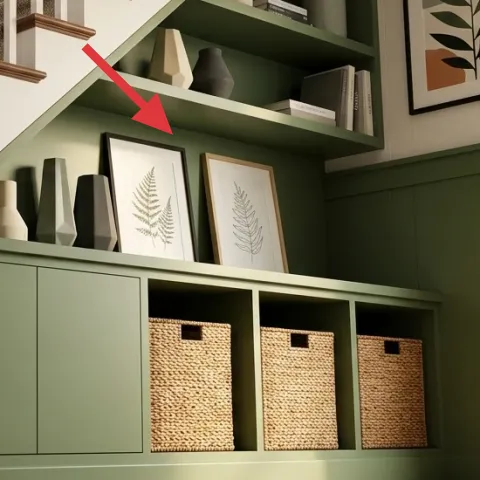
The ceramic vases sitting on the shelves add that smooth, matte contrast against the woven texture below and the paneling around the built-in. They work in a stair landing because they give you vertical punctuation—your eye catches them as you move up the stairs. If you instead lean on more prints or more baskets, the display can get busy fast in a tight footprint. This choice is the better trade-off for weekend decorating: you’re styling the shelves you already have, using small pieces that are easy to swap until the heights feel right. Aim for a mix of narrow and slightly wider silhouettes to echo the shelf grid.
Repeat one finish across the shelves
Even with different shapes, keep the vase color/flecking in the same family so it reads as a set.
Layer 4 — framed large botanical print on right wall ($45) balances the green shelf backdrop
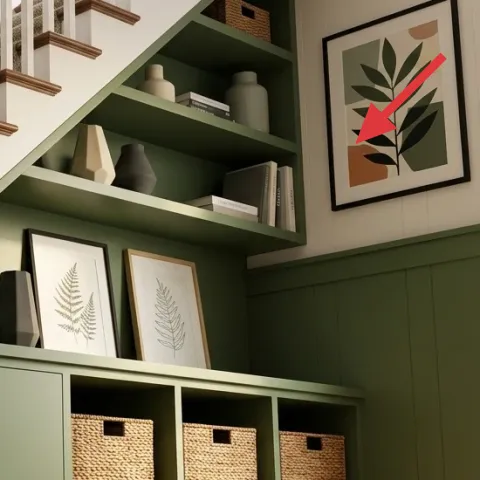
The framed botanical print on the right wall brings a crisp focal point to the eye line that naturally follows the shelves. Botanical art is doing real work here: it echoes the natural vibe of woven baskets, without introducing more heavy color blocks that would fight the olive green. The trade-off is that prints can look “too curated” if they don’t match the room’s palette, so choosing art with similar earth tones keeps it grounded. Swapping this for something generic would be the bigger risk—on a stair landing, wall art needs to handle both daylight and the shadows cast by the rail. A simple frame style, like a warm wood tone, keeps it tied to the stairs.
Don’t crowd the wall with too many competing frames
On a landing, more frames can start reading as clutter—keep the main print dominant and use smaller pieces as support.
Layer 5 — framed botanical print on left wall ($30) brings symmetry without mirror-copying
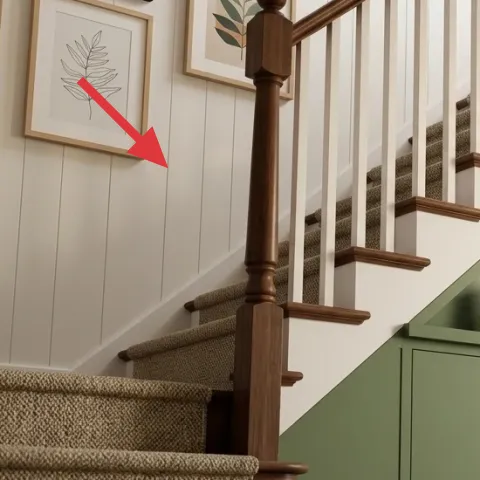
The smaller framed botanical print on the left wall helps the landing feel intentional from both sides of the staircase. Even though it’s not the same size as the right-side print, it shares the same botanical theme and a similar line style, which is what creates cohesion in a space full of wood and paneling. The alternative—leaving the left wall bare—would make the right wall art feel like an accent instead of part of a whole “stair landing story.” This is also the quickest fix if your space feels lopsided: a single frame in the right spot changes the balance instantly, and it’s easy to adjust height until it looks right when you’re standing at the base of the stairs.
Match the art height to how you see it walking past
Hang it so the center of the print hits eye level when you’re at the bottom step.
Layer 6 — green built-in shelves (paint refresh) ($120) makes the whole corner feel calmer
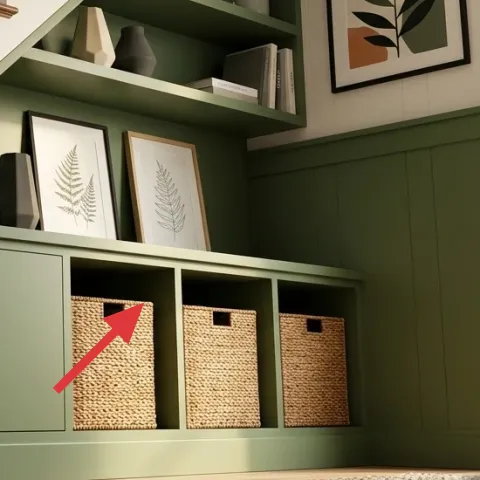
Make it instead of buying it
Repaint the built-in shelves a softer sage green so the green reads as intentional and blends with the woven baskets and ceramic shapes.
Materials
- Interior paint, 1 gallon (satin or semi-gloss) — 1 — store — $60
- Bonding primer — 1 quart — store — $20
- Painter’s tape — 1 roll — store — $8
- Mini foam roller + angled brush set — 1 set — store — $12
Steps
- Clean shelves with a degreaser so paint sticks to panel grooves and shelf edges.
- Dry fully, then apply painter’s tape around trim and nearby wall paneling.
- Roll bonding primer onto the shelf face and cabinet-door fronts.
- Let the primer cure according to the can (time in hours), then lightly sand high spots.
- Wipe away dust with a tack cloth.
- Apply two coats of interior paint, rolling with the grain and brushing panel edges.
- Allow the first paint coat to cure, then sand lightly for a smooth second coat.
- Let the final coat cure fully before restyling with baskets and vases.
Total DIY cost: $100 — saves about $20 over buying.
Layer 7 — textured stair carpet ($120) softens traffic and ties to the rug
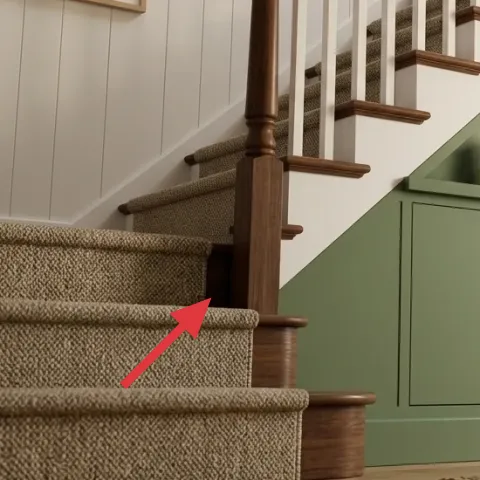
The textured stair carpet is one of those behind-the-scenes elements that makes a stair landing feel comfortable instead of echo-y. Keeping or updating to a similar low-pile, speckled, or looped texture helps it match the area rug’s tactile feel, which is what makes the landing look cohesive. If you go too smooth on the steps, you’ll notice more contrast with the woven baskets and matte ceramics, and the whole corner can start to feel “hard.” The trade-off with swapping stair texture is cost and effort, but the payoff is real: fewer scuffs show, and daylight reflections look warmer. Even if you’re only refreshing it, aim for the same family of neutral brown-taupe tones.
Choose a neutral that shares undertones with the rug
When both textiles pull from the same taupe/brown family, the landing looks styled even on busy mornings.
The cost, layer by layer
| Layer | Item | Cost |
|---|---|---|
| 1 | Area rug (5×7 vibe) | $150 |
| 2 | Woven storage baskets (set) | $60 |
| 3 | Ceramic vases (set) | $35 |
| 4 | Framed large botanical print | $45 |
| 5 | Framed botanical print (left wall) | $30 |
| 6 | Green built-in shelves paint refresh (DIY) | $120 |
| 7 | Textured stair carpet | $120 |
| Total | $560 | |
If you want a cheaper version, swap the framed prints for print-only versions in similar botanical line art (and keep existing frames if they’re solid). Choose a lower-cost rug with a similar woven look, then spend your money where it’s most visible: baskets and the shelves’ paint tone.
What worked, what didn't (across the whole room)
The strongest wins here are the “texture sandwich”: woven baskets, matte ceramics, and textured carpet all keep the stair landing from feeling flat. The botanical frames also help the olive shelves feel intentional instead of just painted. The only thing that needs restraint is styling quantity—too many small items around the shelving grid starts to fight the stairs’ busy lines.
What worked
- The area rug anchors the landing so the shelves and stairs feel like one connected zone.
- Woven baskets add warm texture that softens the bold olive built-in color.
- Ceramic vases create smooth vertical accents without adding clutter.
- Botanical prints echo the natural materials, making the palette feel coherent.
- A green paint refresh makes the built-ins look curated instead of leftover.
- Textured stair carpet reduces scuffs visually and keeps the whole corner feeling comfortable.
What didn't
- Over-styling the shelves with too many small objects makes the stair lines feel busier.
- Choosing frames with very different finish undertones can make the art look pasted on.
- A shiny rug or carpet finish clashes with matte ceramics and reads “off” in daylight.
- Going too high-contrast with wall art can fight the olive shelves and paneling.
- When the rug and stair texture don’t share undertones, the landing feels mismatched.
What we'd skip if we did it again
Skip adding extra decor objects to fill empty shelf spots. In a stair landing, the stairs already bring vertical motion—keeping baskets and vases in a simple height rhythm looks styled instead of crowded.
Skip rug styles with a high shine or slick weave. The ceramic and baskets here read matte and natural, so a reflective rug will look disconnected even if it’s the right color.
Skip repainting without primer prep. Panel grooves, shelf-door fronts, and prior finishes can create patchy coverage, so bonding primer is the difference between “fresh paint” and “still looks weird up close.”
Frequently asked
How long does a refresh like this take on a weekend?
Plan for a split timeline: one day for prep and paint on the built-in shelves (including cure time), and a second day for rug placement, basket spacing, and art hanging. Styling usually takes 1–2 hours once everything is placed. If you’re swapping the stair carpet too, that can stretch into a third block of time depending on availability and how the install is handled.
If I’m a renter, what should I skip or swap instead?
The paint refresh (built-in shelves) is the only part that typically needs permission. For a rental-safe version, keep the shelves’ existing color and focus on the rug, framed botanical prints, and styling baskets and ceramic vases. If you can add wall-mounted art with proper hanging hardware, you can get most of the visual balance without changing finishes.
What if my stair landing is smaller or larger than the photo?
For a smaller landing, go slightly lower in shelf styling height—use fewer vases and keep baskets in fewer bays to avoid crowding. For a larger landing, you can add one extra vase or extend the rug size so it reaches closer to the front edge of the shelves. The key is keeping basket placement consistent so the bottom tier still reads as a grounded base.
Where should I shop for the rug, baskets, and art?
Look for rugs with woven texture or low pile at big-box home stores and online marketplaces with easy returns. For baskets, home goods and natural décor retailers are your best bet because you’ll find matching fibers. For botanical prints, choose simple line-art versions with a wood-tone or neutral frame—then repeat the botanical theme across both walls for cohesion.
What’s the biggest mistake people make on stair landing shelf walls?
Over-styling is the #1 issue. Stair landings already have a lot of structural lines—rail spindles, stair edges, and wall panel seams. When you add too many small decor pieces, it looks chaotic instead of curated. Build the look from the floor up: rug first, baskets second, and art last.
Can I change the shelf color if I don’t like olive?
Yes—just keep the new shade in the same undertone family. A softer sage, warm greige, or muted earthy green will keep the woven baskets and ceramic vases looking natural together. Going too cool (gray-green) or too bright (high-saturation) can make the botanical art feel mismatched, so test paint on a small shelf door panel first.
More in Small Spaces
Under $600: stair landing shelf wall refresh with 7 weekend wins
A stair landing shelf wall can feel intentional instead of “builder beige” with an easy 7-layer refresh. This weekend project uses an updat…
Under $700: banquette nook refresh with 7 budget wins
A banquette nook can feel pulled-together even on a $700 weekend budget. This refresh uses 7 specific swaps—bench cushions, patterned throw…
Under $700: earthy staircase landing refresh with plants + shelves
A staircase landing refresh on a real budget: patterned stair runner, warm brass wall sconces, an oval mirror, floating wood shelves, and p…