- Square footage
- Small, linear nook
- Cost
- Under $300
- Difficulty
- Easy (textiles + shelf styling)
- Renter-safe
- Yes (no-drill swaps)
Why warm wood-and-copper textiles are the daybed nook of 2026
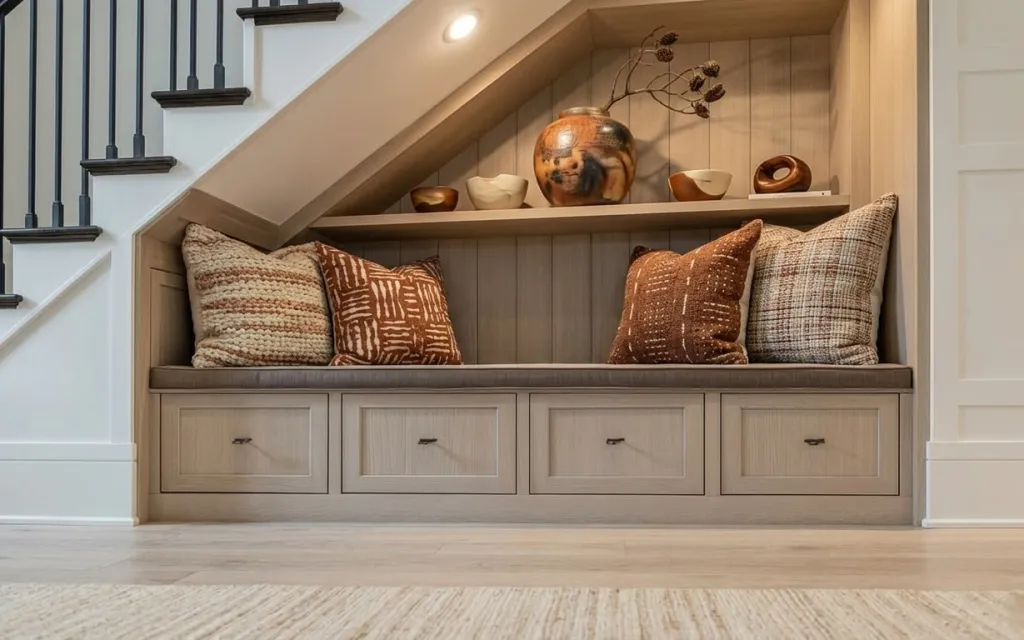
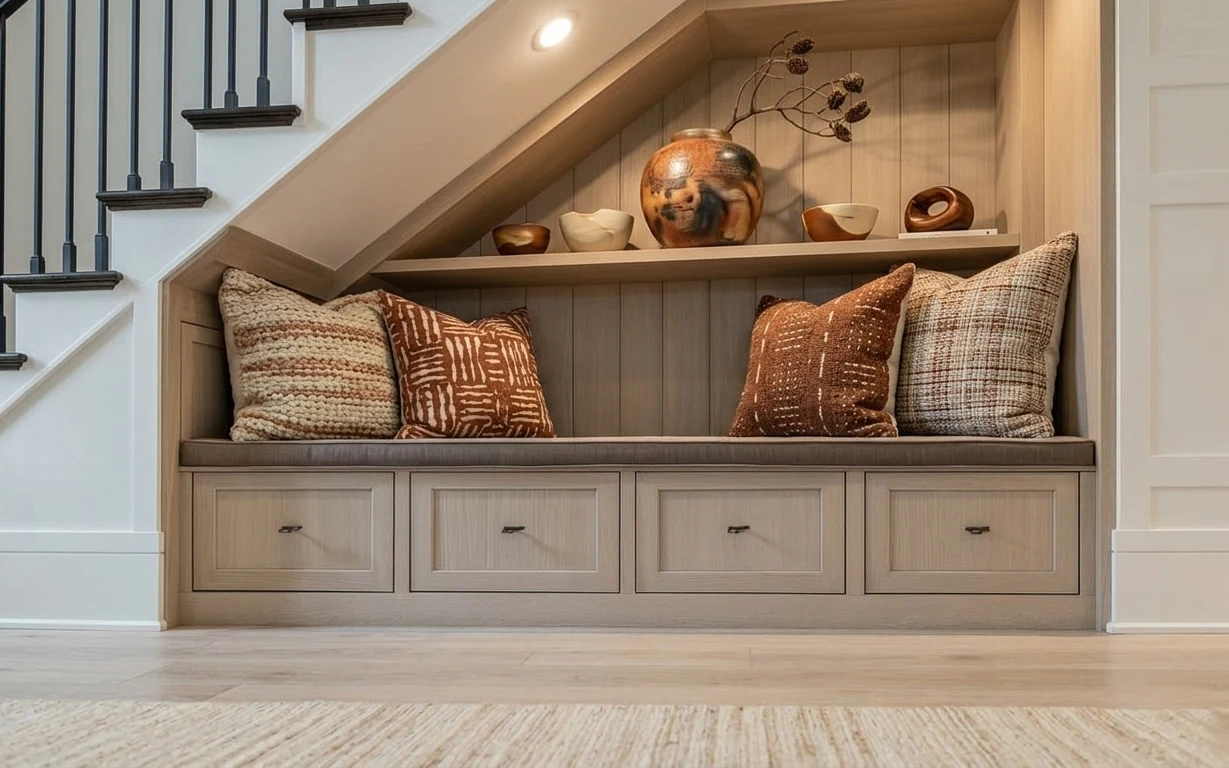
If you’re working with a fixed built-in bench (like this one), the quickest way to make it feel intentional is to layer soft textures on top: a warm area rug underfoot, plus patterned throw pillows in cream, plaid, and copper-brown. That’s the same layered approach you see in modern farmhouse spreads—lots of small pattern hits, but the palette stays tight. In this photo, you can feel the mix of knit texture, woven stripes, and the smooth glow of a copper vase on the shelf. For renters, that part matters: these are items you can swap without permission.
I used to overthink built-ins and keep everything “safe.” Then I realized the space needed contrast in scale—one big pillow pattern, one slim lumbar, and at least one chunky knit surface. I also caught myself trying to match everything to the wood tone. Once I pulled in copper-brown and kept the cream base, the nook started reading as a styled moment instead of just storage with cushions.
Layer 1 — area rug ($120) Warm base underfoot
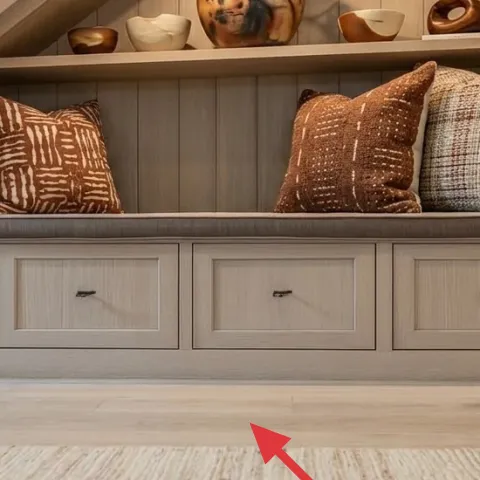
This area rug anchors the whole daybed nook, even though you’re mostly seeing the front edge in the photo. Look for a warm neutral rug with a lightly textured, woven feel so it doesn’t compete with the patterns on the bench. I’d choose something in cream/tan so the knit pillow and the woven lumbar still look crisp. The trade-off is that a thinner rug can show more of the floor texture, but that actually helps in a small nook because it keeps visual bulk down. A rug is also easy to roll up and move when the lease ends.
Pick one rug with visible texture
Texture adds depth even when the palette is neutral, so you don’t need a bold color to make the rug feel “designed.”
Layer 2 — throw pillow with knit texture ($30) Chunky cream for softness
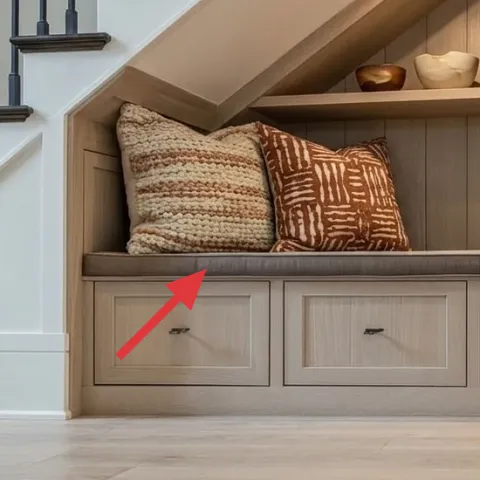
The knit-textured throw pillow is the cozy counterbalance to the smoother wood paneling behind it. Place it on the left side of the bench where it fills the void between the bench back and the front edge—like in the photo—so the nook reads layered rather than flat. I’d go for an off-white/cream knit cover because it matches the rug and makes the copper-brown tones pop. The trade-off is knit can pill if it’s handled a lot, so use it as a “display + casual nap” pillow rather than something you toss around daily. Styling is the main win here: texture reads instantly from across the room.
Why knit works in a wood-heavy nook
Wood paneling already has strong lines, so a knit surface softens edges and keeps the built-in from feeling too boxy.
Layer 3 — rectangular lumbar pillow with woven stripes ($30) Slim pattern, big visual interest
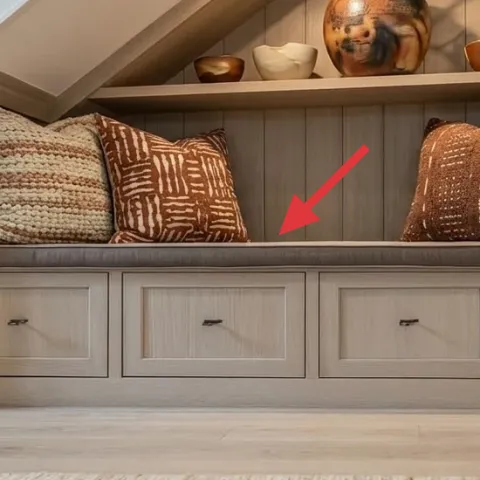
This rectangular lumbar pillow with woven stripes adds pattern without covering the whole bench back. In the hero, it sits centered-ish and creates a horizontal rhythm between the larger pillows on either side. I’d choose stripes that include cream along with warm brown so the look stays cohesive with the copper vase. The trade-off is that some striped pillows can look too “formal” in boho spaces, especially if the lines are perfectly uniform. Slight variation (like a handmade weave look) helps it feel lived-in. This is the easiest swap for renters because you’re only changing textiles, not the underlying structure.
Mix pattern scale on purpose
Use one slim pattern piece (lumbar) to bridge the gap between larger square pillows and keep the arrangement balanced.
Layer 4 — square pillow with copper-brown pattern ($35) Adds warmth without going loud
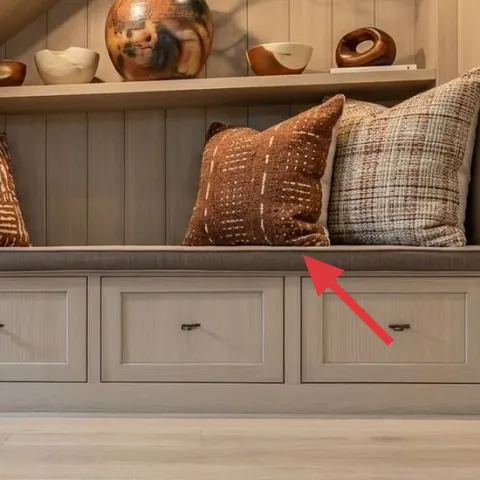
The copper-brown patterned square pillow is what makes the nook feel warm and intentional, especially next to the lighter knit pillow. Set it where it visually “points” toward the shelf decor—roughly the center-right seat—so the copper tones echo each other. I’d look for a cover with speckling or geometric marks in brown/rust so it ties into the wood paneling and the copper vase. The trade-off is that darker pillows can show lint or light fuzz more easily, but that’s a small cost for the added depth. If you keep the rest of the palette cream-forward, this one pattern piece does a lot of work.
Match undertones, not exact colors
Copper-brown is close to rust and warm bronze—aim for the same undertone family so everything feels connected.
Layer 5 — large square pillow with plaid pattern ($25) One bolder hit of pattern
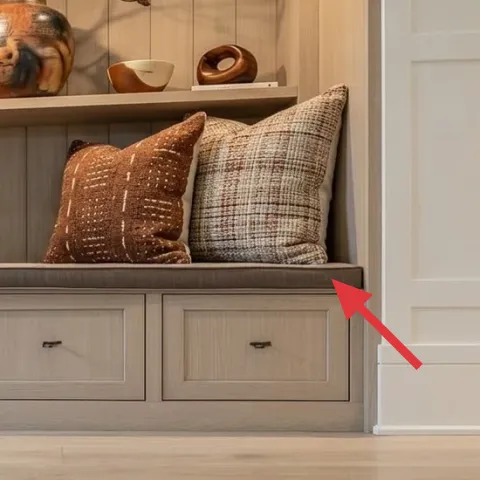
The large plaid pillow gives you a bigger, bolder pattern element on the right side of the bench, where it balances the knit texture on the left. For this nook, choose plaid with cream plus a warm brown so it doesn’t turn the whole space too gray. A square size works best because it fills the visual space between the bench cushion edge and the shelf line. The trade-off is plaid can lean “farmhouse” fast, so keep it one standout pillow and let the lumbar stripes do the supporting work. That way, the room reads layered instead of themed in a single direction.
Don’t add three bold patterns at once
If plaid and stripes both dominate, the nook can feel busy—stick to one large pattern, one slim pattern, and one textured neutral.
Layer 6 — copper urn vase ($20) Warm metallic focal point
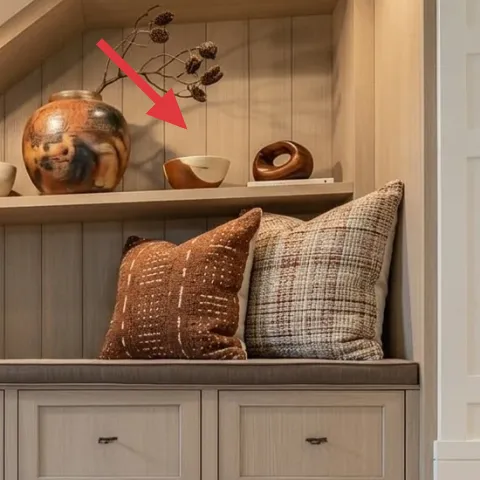
The copper urn vase acts like the nook’s “third texture”—smooth, reflective metal that keeps the shelf from looking flat against the wood. Place it toward the center of the floating shelf so it visually anchors the small bowls around it. I’d choose a metal look with a warm bronze/copper tone rather than bright gold, since the daybed cushions and rug already live in cream and warm browns. The trade-off is metallic finishes show smudges and fingerprints, but quick wipe-downs keep it looking styled. As a renter, a small shelf vase is also easy to pack: wrap, box, and go.
Use the shelf as your “gallery line”
Keep the tallest item (the vase) near the center so your eye lands there first, then travels to the smaller ceramics.
Layer 7 — decorative dried branch arrangement (in vase) ($40) Height plus movement up top
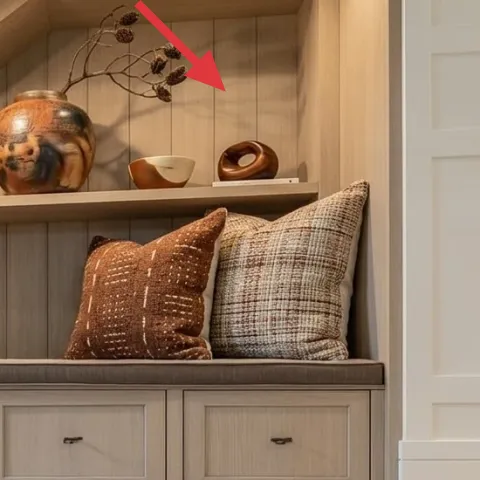
Make it instead of buying it
This DIY builds the dried branch arrangement inside the copper vase so you get the same airy height for much less.
Materials
- Foraged dried branches — small bundle — outdoors/yard — $0
- Brown twine — 1 spool — craft store — $6
- Floral wire — 1 small roll — craft store — $8
- Paper ribbon or small craft tape — 1 roll — craft store — $4
Steps
- Collect several dried branches in varied lengths (taller stems + a few shorter ones).
- Lay them out on a table and decide the “V” shape you want inside the vase.
- Wrap the base points together with floral wire so the bundle holds its form.
- Secure the bundle with twine, tightening so branches don’t splay.
- Trim any ends that look too uneven, aiming for natural asymmetry.
- Add paper ribbon or tape at the base to hide the wire wrap.
Total DIY cost: $18 — saves about $22 over buying.
That airy dried-branch arrangement is the finishing move that makes the shelf styling feel intentional instead of accidental. In the hero, the branches arc outward, which echoes the cozy throw shapes below while keeping the visual line light. Build yours with branches of different heights so you get the same “movement” above the bowls and vase. The trade-off is that foraged stems can vary—if the branches are too sparse, add one more shorter stem rather than trying to force symmetry. This is also renter-friendly: once you’re done, untie and pack everything without dealing with adhesives.
Let the branches do the styling
Choose one sculptural bundle shape (like a soft V) and keep the rest of the shelf decor minimal.
The cost, layer by layer
| Layer | Item | Cost |
|---|---|---|
| 1 | Area rug (warm neutral, textured, 5×7–8×10 range) | $120 |
| 2 | Throw pillow cover with knit texture | $30 |
| 3 | Rectangular lumbar pillow cover with woven stripes | $30 |
| 4 | Square pillow cover with copper-brown pattern | $35 |
| 5 | Large square pillow cover with plaid pattern | $25 |
| 6 | Copper urn vase | $20 |
| 7 | Decorative dried branch arrangement (DIY equivalent) | $40 |
| Total | $300 | |
If you want a cheaper version, swap the rug for a smaller size or a lower-pile textured option, and pick one patterned pillow instead of two. You can still keep the same copper vase + dried branches combo, which is what makes the shelf read styled.
What worked, what didn't (across the whole room)
This nook succeeds because every swap adds a different kind of texture: knit, woven, plaid, and metallic copper on the shelf. The palette stays cohesive (cream, warm wood, copper-brown), so the patterns feel curated rather than random. The only “miss” risk is overdoing pattern count.
What worked
- The warm area rug makes the front of the nook feel grounded, not like bare flooring in front of storage.
- The knit pillow adds a soft surface that balances the straight lines of the wood paneling.
- The woven lumbar keeps the look from feeling too blocky by adding a slim horizontal pattern.
- Placing the copper-brown pillow near the center visually ties the bench to the shelf styling.
- The copper urn vase gives the shelf a warm metallic focal point that matches the cushion tones.
- The dried branches add height and airy contrast above the smaller ceramics.
What didn't
- Trying to match every fabric tone to the wood can make the nook feel flat and overly “theme-y.”
- Adding plaid, stripes, and another large pattern at once makes the arrangement feel busy fast.
- Choosing a very thin, low-texture rug can make the bench look heavier because the front edge lacks contrast.
- Using too many dried-branch lengths (all the same height) flattens the shelf line instead of creating movement.
What we'd skip if we did it again
Skip swapping the entire daybed bench (or trying to “fix” the wood surround). When a structure is built-in, textiles and shelf styling give the biggest visual payoff with the least renter hassle—and you can pack everything up at move-out.
Skip buying three patterned pillows in the same scale. One larger pattern (plaid) plus one slim pattern (lumbar stripes) is enough; add only one more accent if it’s a different texture, like knit.
Skip a shelf centerpiece that’s too short. The copper vase already sits on a shelf line, so the dried branches need height to create that airy arc above the smaller bowls.
Frequently asked
How long does this renter-friendly refresh take?
Plan for about 60–90 minutes for the pillow swapping and rug positioning. Styling the shelf (vase + bowls + dried branches) adds another 20–30 minutes if you’re aiming for a specific height and spacing. If you’re making the dried branch arrangement, set aside 30 minutes for collecting, trimming, and bundling. The best part is that most steps are reversible.
Is this look doable if my daybed nook is smaller or narrower?
Yes—keep the palette and layering formula, but scale down one item. For a narrower nook, choose a smaller rug footprint or a rug with a less visually busy pattern, then keep the pillow trio (knit, lumbar stripes, and one large square pattern). On the shelf, use fewer bowls so the vase and dried branches stay the main vertical feature.
What if my rental doesn’t have a floating shelf above the bench?
You can still get the same vibe using a freestanding option. Place the copper urn vase and your dried branches on a small console, wall ledge that’s already installed, or even a tabletop surface nearby—anything that gives you a height difference behind the pillows. The key is keeping the tallest element at center so the eye has a clear landing spot.
Where should I shop for these pieces on a budget?
Start with pillow covers and rugs at big home retailers and off-price options, because you’ll get more choices for less money. The copper urn vase can come from home stores or thrift shops—look for a similar warm bronze/copper tone. For dried branches, consider foraging locally (or shopping craft stems) so the shelf arrangement costs less than a pre-made floral bundle.
What’s the biggest styling mistake in small daybed nooks like this?
Overdoing pattern count. If plaid, stripes, and another bold print all compete at the same level, the nook can feel busy instead of layered. Aim for one large pattern pillow, one slim pattern (lumbar), and one textured neutral (knit). Then repeat the warm copper tone once up top in the vase and branches.
Will the rug and pillows pack easily for move-out?
They should. Rugs roll up (it helps to roll with the pattern direction in mind) and pillow covers can be stored in bags to keep them from collecting lint. The shelf styling is the easiest part to remove: lift the vase, untie the dried branch bundle, and reset once you arrive at your next place. Keeping everything removable is the whole point of this refresh.
More in Small Spaces
Under $300: boho daybed nook swaps for a renter-friendly refresh
A boho daybed nook already gives you the built-in base—now layer it with a warm rug, patterned throw pillows, and a styled copper vase arra…
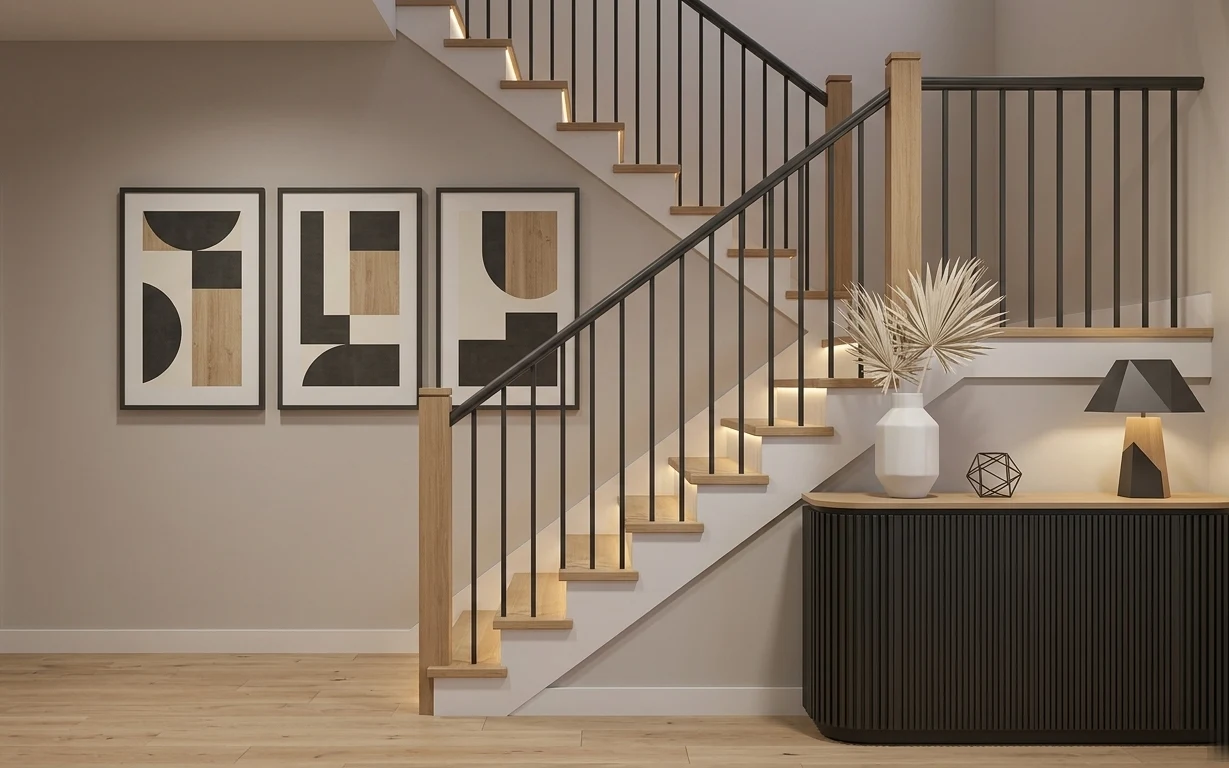
Under $600: modern entryway landing refresh with 7 move-ready swaps
A modern entryway landing refresh on a shared-housing budget: 7 move-ready swaps centered on a console cabinet, warm lamp glow, and framed …
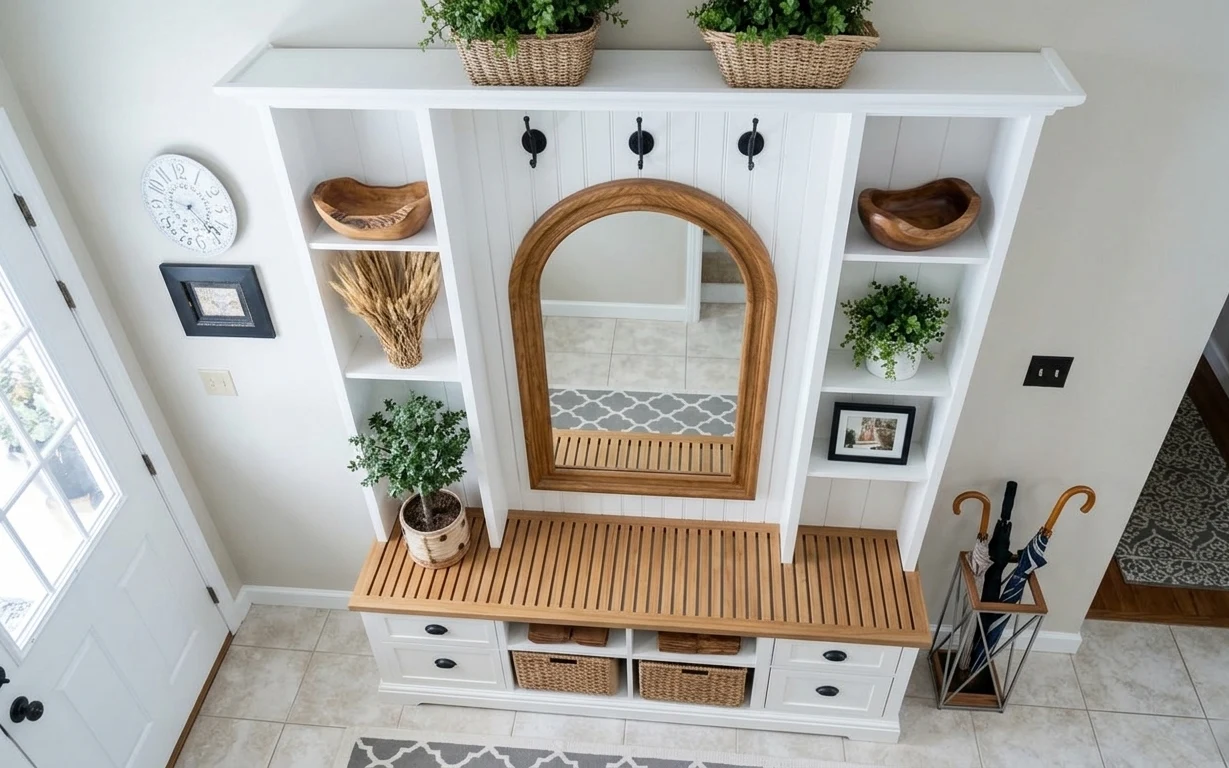
Under $400: entryway console nook refresh with 7 move-ready swaps
A renter-friendly entryway console nook refresh using warm wood, white surfaces, and gray patterns—no drilling and everything packs away. T…