- Best for
- wicker seating corners
- Cost
- $275 total
- Difficulty
- Easy
- Time
- 2–3 hours
Why this cream-and-black wicker seating corner is the move-friendly nook of 2026
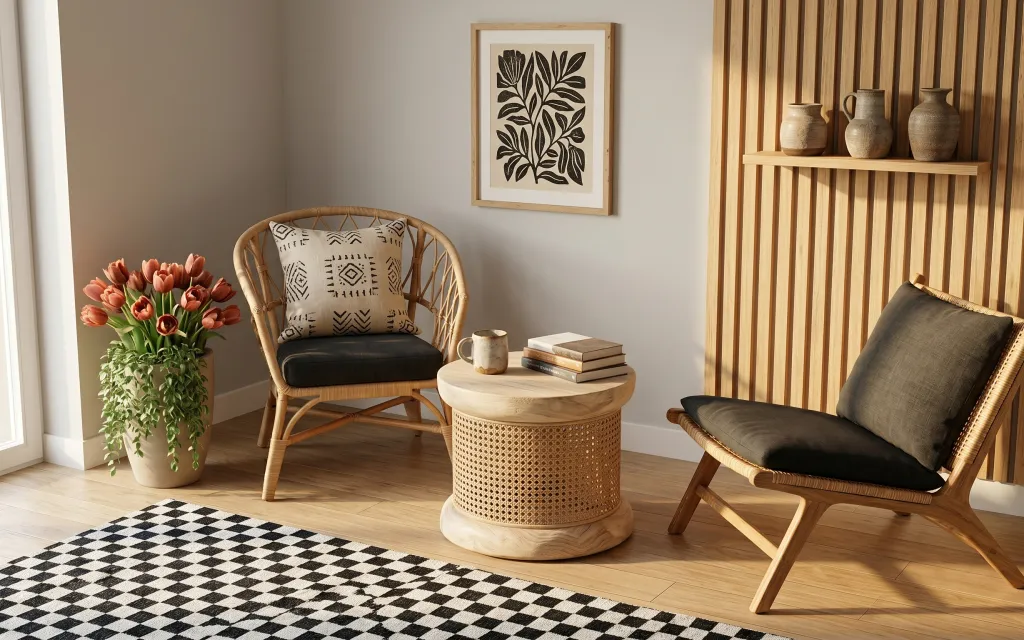
The first thing to notice here is how many textures are already doing the heavy lifting: woven wicker armchairs, a round woven-lid coffee table, and that sharp black-and-white checkered rug that keeps the palette from going too beige. The framed botanical print adds structure above the seating, so the room doesn’t feel like “just plants and furniture.” For shared housing, the best part is that this look is mostly soft-goods and plug-in-friendly decor, not landlord-level changes. That’s how this stays doable even when the next lease is on the horizon.
I almost overcorrected and tried to “match” everything—same color, same pattern, same vibe. Then I remembered what always fails in my own rentals: when there’s only one repeating element, the room feels flat. Keeping the botanical theme and letting the rug do the graphic work makes the chairs feel styled instead of accidental.
Layer 1 — black-and-white checkered area rug ($80) Defines the seating with one bold pattern
{{LAYER_1_FIGURE}}
Swap in a black-and-white checkered rug large enough for the front legs of both chairs to land on it. In this setup, the pattern is doing a specific job: it breaks up the light wood floor so the woven furniture looks intentional instead of floating. The trade-off is that bold pattern rugs show traffic lines faster than a solid, so the best move is choosing one that’s easy to spot-clean and living with it. If the rug already exists in the apartment, this layer is still about selecting the right size and keeping the pattern crisp in the room.
Do center it by chair, not by the wall
Use the chairs as your reference points; a centered rug makes the seating feel like one designed cluster.
Layer 2 — framed botanical print on wall ($25) Repeats the leaf motif without permanent installs
{{LAYER_2_FIGURE}}
A framed botanical print gives the eye a vertical “landing spot” above the seating, which matters in a room with strong horizontal lines like shelves and wood slats. Choose a print that’s mostly black on cream so it echoes the rug’s contrast. The reason this beats adding another random print is repetition: one motif keeps the room cohesive even when you move. Trade-off: a smaller print won’t read from across the room, so sizing and spacing are the whole point—aim for a clear focal area, not a tiny accessory.
Keep the frame light if you’re already using warm wood
A pale wood frame plays nicely with wicker and the shelf panel without darkening the corner.
Layer 3 — tulips in a cream ceramic planter ($20) Adds color that doesn’t fight the neutrals
{{LAYER_3_FIGURE}}
Fresh or realistic faux tulips in a cream ceramic planter is the “color pop” layer that still feels rental-friendly because it’s completely movable. Those coral-pink blooms are the only strong color in the photo, so they energize the whole seating corner without asking the walls to change. The trade-off is that flowers are seasonal and can be maintenance-heavy, so many people swap to high-quality faux stems after the first two weeks. Either way, keep the planter shape similar so it stays balanced with the round coffee table and woven textures.
Repeat the shape: round planter, round table
Soft circles visually calm down the rug’s angles and the chairs’ curved wicker.
Layer 4 — round woven-lid coffee table ($60) Grounds the room with a tactile centerpiece
{{LAYER_4_FIGURE}}
This round coffee table matters because it keeps the room from feeling too angular. Between the checkered rug and the vertical wood slat panel, you’ve already got plenty of line work—so a curved table top adds breathing room. Styling it with a small stack of books and a single lidded ceramic piece keeps the surface from looking empty, but avoids clutter. Trade-off: round tables don’t give as much flat “real estate” as square ones, so choose fewer objects and repeat materials like ceramic and light wood.
Use the lid as a style cue
When the tabletop has texture, fewer items look more intentional.
Layer 5 — left wicker armchair ($30) Makes the corner feel designed, not furnished
{{LAYER_5_FIGURE}}
The left wicker armchair brings the boho structure, but it only looks styled when the cushion reads cleanly against the rug. Pick a neutral seat cushion color (charcoal, warm gray, or black) and keep the woven pattern visible so the chair texture remains the star. The trade-off is that patterned chair cushions can quickly compete with the rug’s graphic checks, so a calmer base lets the pillow pattern show up without chaos. In a shared house, this kind of piece is also a good “anchor”—it doesn’t need wall changes to look intentional.
Don’t add more patterns than the rug can handle
If the rug is already bold, add one patterned textile maximum on the chairs.
Layer 6 — right wicker lounge chair ($30) Completes the seating set with a second texture
{{LAYER_6_FIGURE}}
The right wicker lounge chair works as the mirror image to the left chair, which is why the corner feels balanced. Even though the chairs are different angles, the shared wicker material and the dark pillow keep the composition cohesive. The trade-off with two-piece seating is that mismatched pillows can make it look like you grabbed whatever was available, so color-matching the cushion tones is key. For renters, this is a perfect example of a “no-permanent-install” refresh: you can change pillows and throws while leaving the core furniture in place.
Match tones, not prints
Keeping one color range consistent makes the chairs look like a set, even when pillows differ.
Layer 7 — patterned throw pillow on left chair ($40) Ties the botanical mood to the rug graphic
{{LAYER_7_FIGURE}}
That patterned throw pillow is the bridge between the botanical artwork and the checkered rug. Choose a pillow with black linework on a cream base so it visually “talks” to the framed print above and the rug below. This layer works better than adding a second small accent because it already lives at the right height for the seating area; it completes the look where you actually sit. The trade-off is that a busy pillow can dominate, so keep it to one statement textile and let everything else stay in solid neutrals or organic textures like wicker and ceramic.
Keep the pillow scale in proportion to the chair
A larger pattern reads more clearly at seating height and avoids looking lost next to the arm detail.
The cost, layer by layer
| Layer | Item | Cost |
|---|---|---|
| 1 | Area rug 5×7, black-and-white check | $80 |
| 2 | Framed art print 16×20, botanical | $25 |
| 3 | Medium planter/pot for tulips | $20 |
| 4 | Round coffee table with woven base | $60 |
| 5 | Wicker armchair | $30 |
| 6 | Wicker lounge chair | $30 |
| 7 | Throw pillow cover, patterned | $40 |
| Total | $275 | |
If a full coffee table swap is too much, a cheaper variant is choosing the smaller-size version of the round table (or keeping the table and only replacing the top styling pieces). The look still lands because the rug pattern and botanical print carry the visual structure.
What worked, what didn't (across the whole room)
This corner succeeds because it keeps texture and contrast in a tight loop: woven furniture, a high-contrast rug, and black-on-cream botanical art. The few risks are mostly about pattern control and pillow scale. When those are managed, the room reads styled instead of crowded.
What worked
- The black-and-white check rug anchors the chairs and keeps the light wood floor from feeling unfinished.
- The framed botanical print gives a clear focal point that matches the organic shapes everywhere else.
- Cream ceramics in the planter and coffee styling echo the frame color for an easy palette connection.
- Round table geometry balances the rug’s angles and softens the vertical wood slat panel.
- Using one statement patterned pillow keeps the seating area lively without cluttering the shelves.
- Two wicker chairs in the same material family make the corner feel coordinated even if they’re different angles.
What didn't
- Adding another patterned textile beyond the pillow makes the check rug feel visually noisy.
- A too-small rug makes the chairs look like they’re floating instead of forming a single zone.
- Framed art that’s not black-and-cream can clash with the warm wood and shift the whole mood.
- Overstuffing the round table top can overpower the woven textures and read messy from a distance.
What we'd skip if we did it again
Skip a second graphic pattern textile. With a check rug already in the room, adding another busy print (on curtains, pillows, or a second throw) makes the seating corner feel busier than it is, especially in bright daylight.
Skip going too dark in small doses. Too many charcoal textiles can flatten the cream wood tones; if you want drama, keep it to one pillow or one accessory while letting ceramics and wood stay warm.
Skip small, low-contrast wall art. A botanical print needs enough size to read above the chairs; otherwise, it competes with the shelves and the wood slat panel and the room loses its focal hierarchy.
Frequently asked
How long does a refresh like this usually take?
Most of the time goes to rug positioning and final styling of the coffee table and chairs. If the framed print and planter are already in place, plan on about 2 to 3 hours for measurements, swapping textiles, and living with the layout for a day. The biggest time saver is choosing one bold element (the rug pattern) and keeping the rest mostly neutral.
Is this renter-friendly if the place is shared and the next lease is soon?
Yes—the pieces here are meant to pack and move. Rugs roll, pillow covers swap in minutes, and framed prints and planters can travel without changing anything fixed. The only watch-out is sizing: buying the right rug and choosing art that’s readable from the seating angle prevents expensive reshoots later.
What if my room is narrower than the photo?
Go for a slightly smaller rug size only if it still lands under the front legs of both chairs. Keep the chairs close enough that the coffee table sits in the middle of the conversation zone. For wall art, prioritize height: the center of the frame should land around eye level when seated, so it doesn’t look too high in a narrow layout.
Where should I shop for these exact-style items?
For the rug and pillow covers, look for brands that repeat classic black-and-cream patterns. For the framed botanical print, search for 16×20 or similar standard print sizes to keep framing simple. Planters in cream and woven/ceramic textures often show up at home goods stores, and secondhand marketplaces are great for wicker chairs.
What’s the biggest mistake people make with wicker + boho neutrals?
Overpatterning. When wicker and checkered rugs are already busy, the best results come from repeating one motif and limiting other prints to a single pillow. Another common slip is choosing a rug too small; the room then looks like separate pieces rather than one cohesive seating corner.
More in Living Room
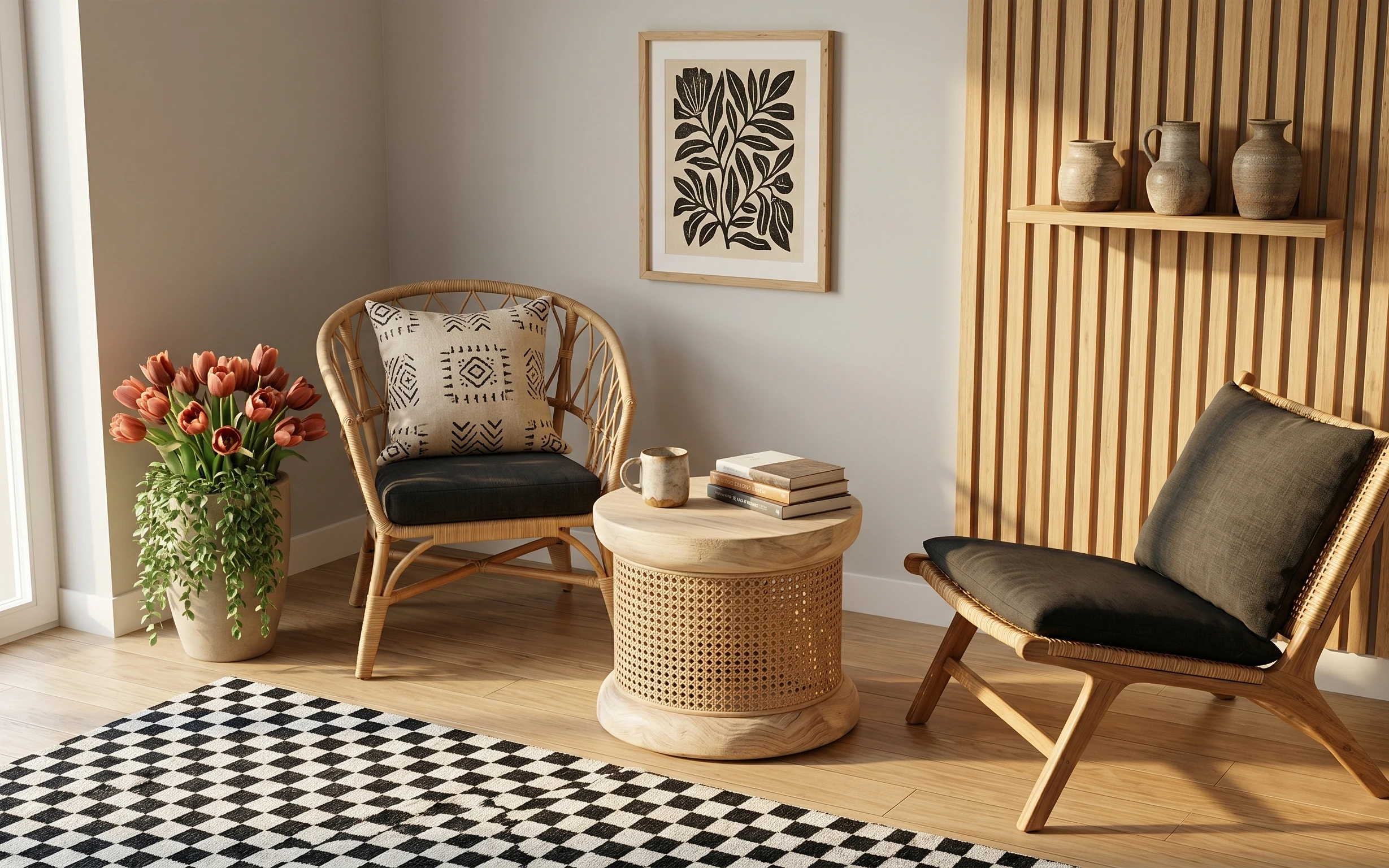
Under $300: wicker seating corner refresh with 7 renter-safe swaps
A bright wicker seating corner gets a cleaner, more intentional look for under $300 using seven renter-safe, move-ready swaps. The biggest …
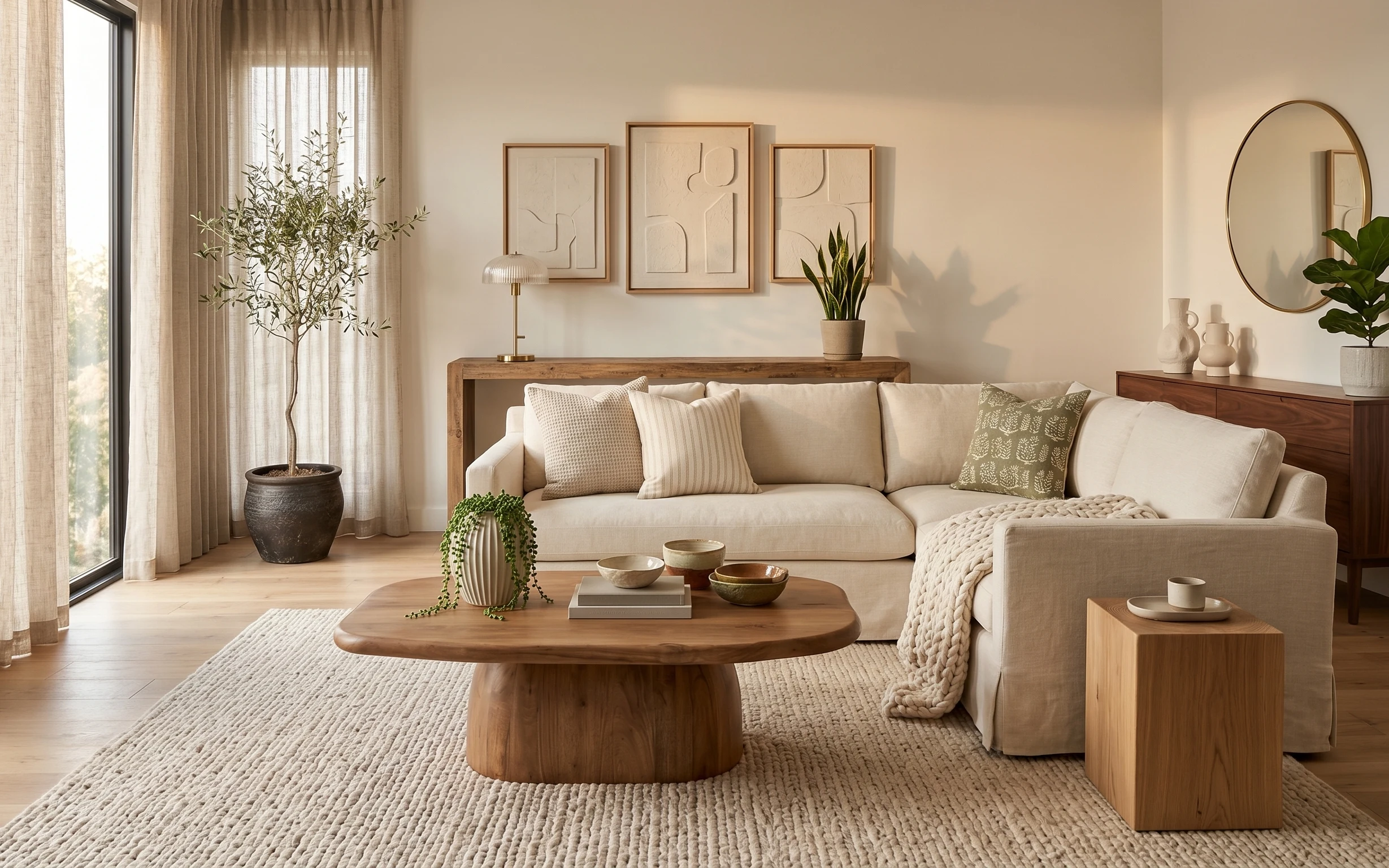
Under $1000: olive-and-oak sofa corner refresh
A Japandi sofa corner refresh that reads warm and pulled-together without demolition. You’ll swap in a cozy rug, height-boosting curtains, …
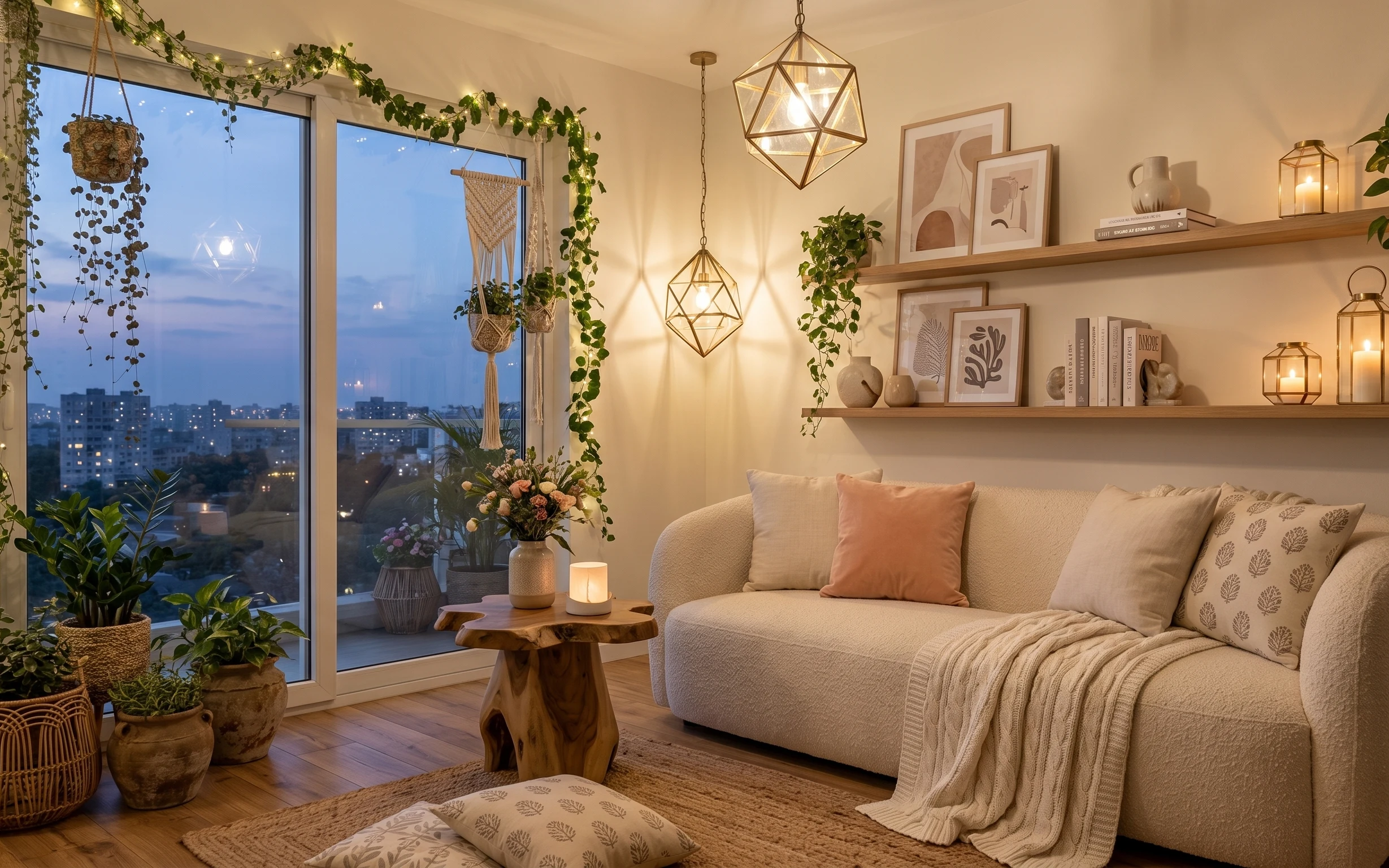
Under $400: living room corner swaps for a renter-friendly glow
A move-ready living room corner refresh built from 7 renter-friendly swaps: rug, knit throw, pillow covers, botanical art, string lights, c…