- Square footage
- Small corner / tight footprint
- Cost
- $400 total for 7 layers
- Difficulty
- Easy to moderate
- Renter-safe
- No drilling, everything packs
Why olive-and-wood cozy corner is the green reading corner of 2026
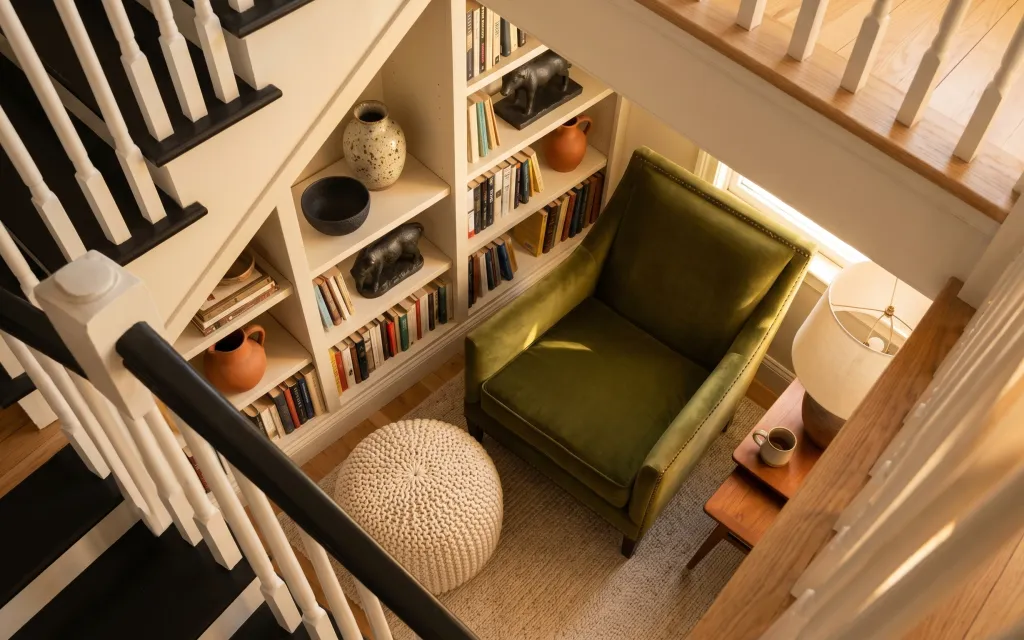
Sunlight hits the olive seating and makes the whole corner feel composed, even in a tight footprint. The texture mix is doing the heavy lifting: a chunky knit seat, a patterned area rug, and the soft sheen of the velvet upholstery. The styling is also built around “shelf height” interest—vases and a sculptural object break up all that white shelving. That’s why this refresh works for shared housing: every swap is removable, packs flat or breaks down easily, and doesn’t rely on landlord changes.
I used to overdo shelf decor in my first few roommate setups, then had to cram everything back into boxes at move-out. This time I leaned into fewer, taller objects—one speckled vase, one terracotta piece, and one dark ceramic bowl—so the look reads as intentional from the hallway. The biggest mistake I caught: adding too many small items at once. Now the shelves get breathing room, and the rug + knit texture do the cozy part.
Layer 1 — Textured area rug 5×7 ($120) anchors the corner
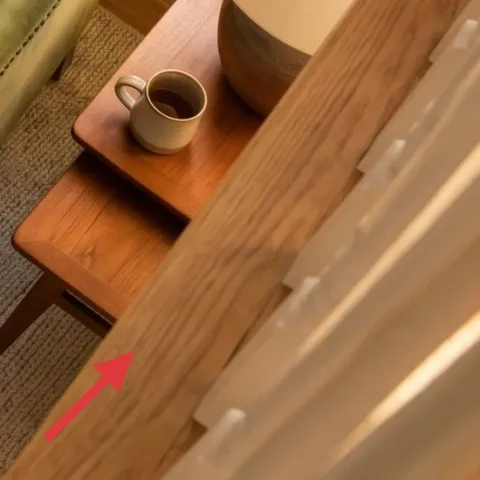
The textured area rug gives the floor a “finished” boundary under the green seating, and that matters most in small spaces where nothing feels like it has its own zone. In this corner, the rug’s neutral base also keeps the olive velvet from turning loud. The tight weave adds visual grip, which helps the knit seat feel intentional instead of accidental. The trade-off is that super-dense textured rugs can shed a bit at first—so pairing it with a rug pad (optional, but helpful) reduces sliding and keeps things quieter while you move.
Texture reads better than pattern at a distance
When your room is small and viewed from an angle, weave and pile depth show up more clearly than fine-print graphics.
Layer 2 — Round knit ottoman cover ($60) adds a soft landing
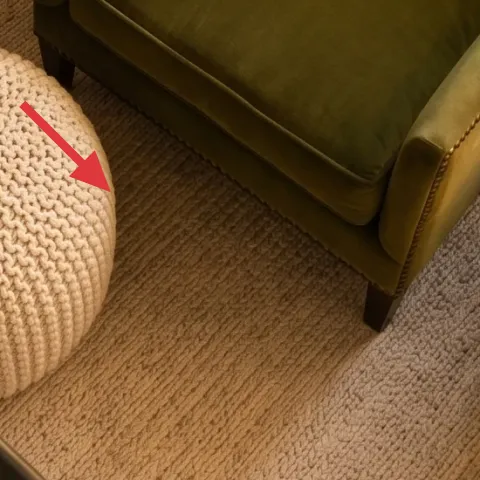
This round knit ottoman cover echoes the cozy, tactile theme already present in the corner and makes the seating feel less formal. The rounded shape also softens all the straight-line shelving and stair banister in the background, which is why the visual balance feels effortless. Choosing knit over a smooth fabric cover is a specific move: knit catches the warm light in a way that reads “cared for,” even when it’s just sitting there. The trade-off is maintenance—knits can grab lint—so a quick lint roller before guests helps it stay rental-clean.
Keep the color in the same family as the rug
Warm beige against a warm rug tone looks cohesive; high-contrast colors make the corner feel busier.
Layer 3 — Floor lamp with white drum shade ($80) makes the shelves glow
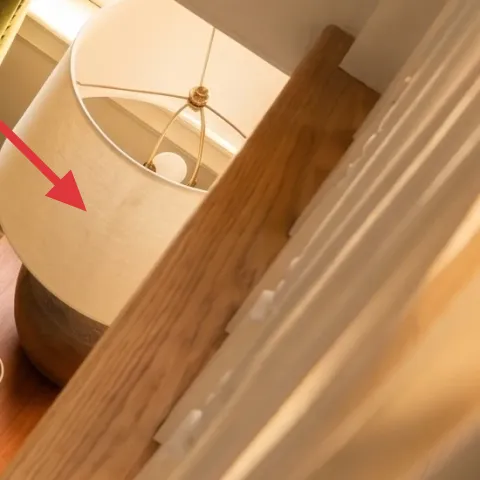
A plug-in floor lamp with a white drum shade adds warm, directional light without touching any fixed fixtures. That warm cast is what turns the ceramics and books into a curated vignette instead of “random shelf stuff.” The drum shade is key here: it spreads light softly so the small corner doesn’t look dim at the edges. The trade-off is that taller lamps can feel bulky when you’re packing—so pick one with a standard plug and a simple shade that disassembles quickly. This is also a great option for shared housing because it’s one piece you can take with you.
Skip heavy shades if you’re moving soon
If the shade is fragile or oddly shaped, it’s the first thing to crack in transit.
Layer 4 — Speckled ceramic vase ($35) brings contrast to white shelving
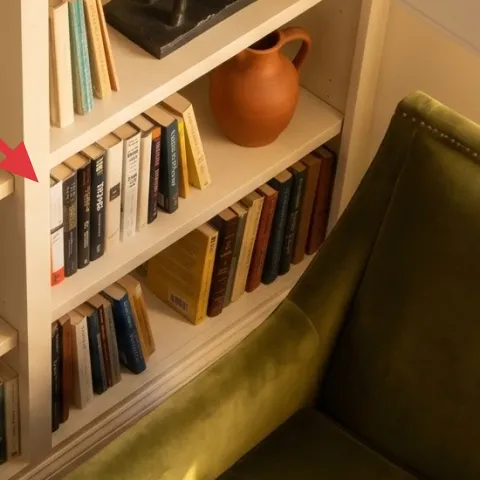
The speckled ceramic vase is an easy win because it adds pattern without adding clutter. On white shelving, the dark specks act like visual punctuation, and the matte finish keeps the shelf from looking glossy or flat. This piece also “holds” the shelf visually—so it can sit alone or with just one smaller companion object. The trade-off is scale: if the vase is too small, it disappears in photos and reads as empty space. If it’s too tall, it blocks book spines. This size lands in the middle where it’s noticeable but still balanced.
Use one patterned object, then repeat solids
Pattern plus solids prevents the shelf from competing with the rug texture.
Layer 5 — Terracotta vase ($40) adds the warmest earthy note
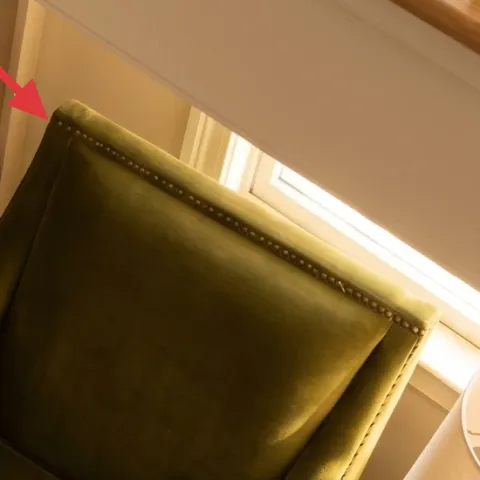
Terracotta warms up the whole palette and makes the olive velvet look richer instead of flat. In this corner, the terracotta also pulls color from the wood flooring, which is why it feels like it belongs. Choosing a painted version is a smart move for shared housing: it’s easier to swap the look later by repainting than by trying to replace fixed items. The trade-off is that terracotta is porous, so the paint needs a proper prep and even coats to avoid blotchiness—worth it because the result reads more “stylist-level” than store-bought decor.
Make it instead of buying it
Paint a plain terracotta planter/vase with an earthy, speckled-inspired finish so it matches the olive-and-wood corner without permanently altering anything.
Materials
- Terracotta planter or small vase — 1 piece — craft store — $15
- Acrylic craft paint (warm base color) — 1 small bottle — craft store — $10
- Foam brush or small sponge — 1 pack — craft store — $4
- Painter’s tape or masking film — 1 roll — hardware or craft store — $3
Steps
- Lightly wipe the terracotta to remove dust, then let it fully dry.
- Apply painter’s tape to mask any areas meant to stay unpainted.
- Brush on the warm base coat in thin layers, letting it dry between coats.
- Use the sponge (stipple motion) to add a simple speckle pattern for texture.
- Touch up spots with a small brush so coverage looks even.
- Let the paint cure overnight before styling on the shelf.
Total DIY cost: $32 — saves about $8 over buying.
Layer 6 — Black ceramic bowl ($40) adds depth near the floor
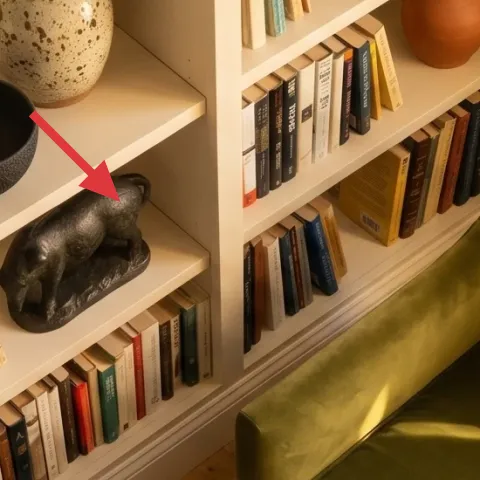
A black ceramic bowl gives the shelves real depth, especially when the rest of the built-ins are white. It also balances the warm wood tones, because the matte black doesn’t compete with the rug’s neutral texture. Placing it on a lower shelf spot is a subtle design choice: it visually anchors the corner near the seating so your eye doesn’t float only at eye level. The trade-off is that dark ceramics can show dust faster—so it’s worth wiping it with a dry cloth when you do your weekly reset. This kind of object is also easy to pack because it’s one moveable piece.
Keep one dark piece per shelf zone
More than that and the corner can feel heavier than intended.
Layer 7 — Decorative book stack on shelf ($25) creates “designed height”
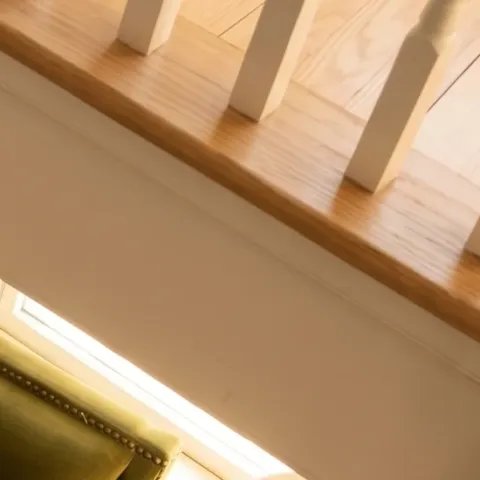
A decorative book stack turns plain shelving into a reading corner that looks styled from multiple angles. The key is to stack by height so the top spine line visually meets the vase height—this makes the shelf feel organized, even when the rest of the room is in “living” mode. Choosing books you can take with you matters for shared housing; they travel well and you can swap spines later. The trade-off is that true matching sets can look too perfect and cheap—so mixing sizes with a consistent spine color story makes it look intentional.
Angle the stack slightly toward the room opening
That tiny orientation change makes it read as decor, not storage.
The cost, layer by layer
| Layer | Item | Cost |
|---|---|---|
| 1 | Textured area rug 5×7 | $120 |
| 2 | Round knit ottoman cover | $60 |
| 3 | Floor lamp with white drum shade | $80 |
| 4 | Speckled ceramic vase | $35 |
| 5 | Terracotta vase (DIY painted finish) | $40 |
| 6 | Black ceramic bowl | $40 |
| 7 | Decorative book stack | $25 |
| Total | $400 | |
A cheaper variant keeps the same layout but swaps in a lower-cost rug (like a smaller 5×7 flatweave look) and a budget floor lamp. Use one larger vase instead of two smaller ceramics, since one strong anchor reads better in photos than lots of small objects.
What worked, what didn't (across the whole room)
The corner looks “pulled together” because the styling is balanced across three zones: floor texture (rug), mid-height softness (knit ottoman), and shelf-height interest (vases plus a book stack). The warm lamp light makes the earthy palette feel consistent after dark. The one miss was expecting the shelf to look finished with fewer objects—too minimal read as unfinished, too many read as clutter.
What worked
- The textured area rug defines the seating zone without needing any wall or floor changes.
- The round knit ottoman adds softness that visually balances straight shelving lines.
- The white drum shade spreads warm light so ceramics look intentionally styled.
- One speckled vase creates pattern control so the shelf doesn’t feel flat.
- Terracotta adds warmth that matches the wood flooring and makes olive feel richer.
- A dark black bowl anchors the lower shelf and grounds the eye.
What didn't
- Stacking too many small shelf items at once made the corner feel busy, not curated.
- Using only solid, same-toned ceramics removed the contrast that gives depth.
- Choosing a lamp shade that’s too tall can block the bookshelf lines in photos.
- Ignoring texture mix (smooth textiles with textured rug) made the corner feel mismatched.
- Over-taping the DIY paint masked areas too aggressively, which created a sharp edge.
What we'd skip if we did it again
Skip buying an oversized rug for the footprint. In small corners, a too-large rug spills past the furniture line and makes everything feel smaller instead of more grounded. A 5×7 with a clear boundary under the seating keeps the zone readable and easier to pack.
Skip matching “set” ceramics from the same retailer. The shelf here works because it mixes finishes—speckled matte, matte terracotta, and a darker bowl—so the eye has a few textures to travel across.
Skip fragile lamp shades with lots of hardware. Shared-housing moves happen fast, and shade damage is one of those costs that sneaks up. A simple white drum shade stays sturdy and still gives the warm glow that makes the corner feel alive.
Frequently asked
How long does this kind of refresh take in a shared rental?
Plan for about 2 to 3 hours for setup if the items are already in hand, plus a little extra time if the terracotta DIY is involved. The shelf styling is the only slow part—mainly deciding which pieces get the “tall” spots and which ones become supporting texture. Once the placements look balanced, it’s mostly just wiping, setting, and stepping back.
Will these swaps work if the move is in under a year?
Yes—this concept is built for impermanence. Every layer here is either freestanding, movable, or a textile. The rug rolls, the knit ottoman cover is transportable, the floor lamp can be disassembled, and ceramic pieces pack in boxes. Even the DIY-painted terracotta is a removable decor item, not a permanent change.
What if my corner is narrower or the shelves are deeper?
If the shelf is deeper, slightly reduce the number of visible objects and rely more on height variation (one tall vase and one shorter bowl) so it doesn’t look cluttered. If the corner is narrower, prioritize the rug size that still tucks fully under the seating area. Keep the lamp on the same side as your reading angle so the light still hits shelf-height decor.
Where should I shop differently than the “obvious” places?
For the fastest wins, use big-box or craft stores for terracotta planters and acrylic paint, since those are often cheaper than decor boutiques. For the rug and floor lamp, look for returns-friendly options so the texture is true in person. Thrift stores can be great for ceramic bowls—just clean and inspect for chips before buying.
What’s the biggest mistake people make in small reading corners like this?
Over-styling the shelves. In a small footprint, too many objects compete with the rug texture and the velvet seating, and the corner loses its calm. The better approach is one patterned piece (like a speckled vase), one warm piece (terracotta), one dark anchor (black bowl), and then a simple book stack. Everything else stays out.
Can the lamp be replaced if I already own one?
Absolutely—keep the goal, not the exact lamp. Any plug-in lamp with a light-colored shade that diffuses the bulb will recreate the warm shelf glow. If the shade is darker, the shelf ceramics may look flatter, so balance it with slightly brighter objects like the speckled vase or a lighter rug.
More in Small Spaces
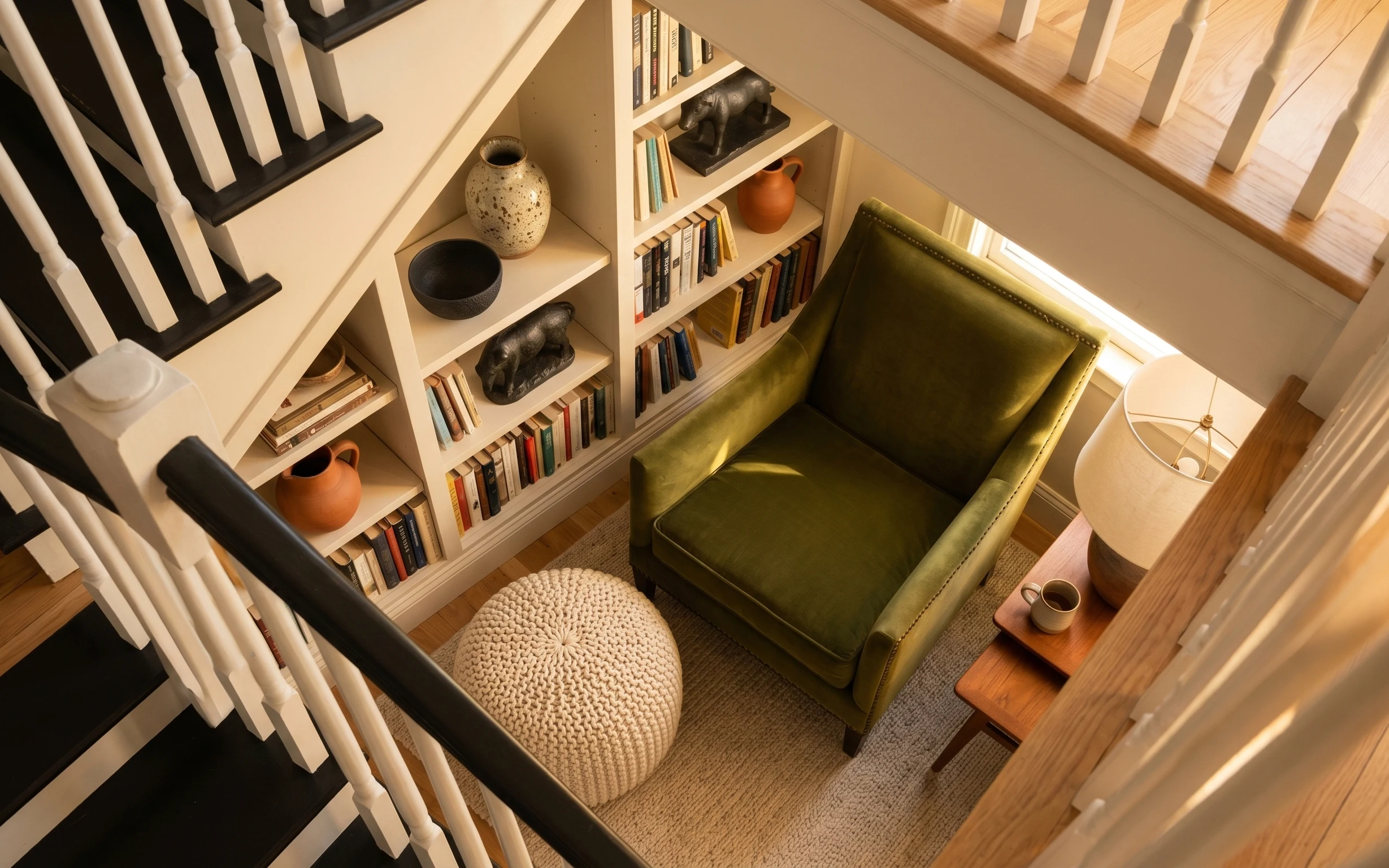
Under $400: 7 move-friendly swaps for a green reading corner
A small green reading corner with a warm lamp glow, knit seat, and earth-toned rug can look styled without any drilling. This $400 refresh …
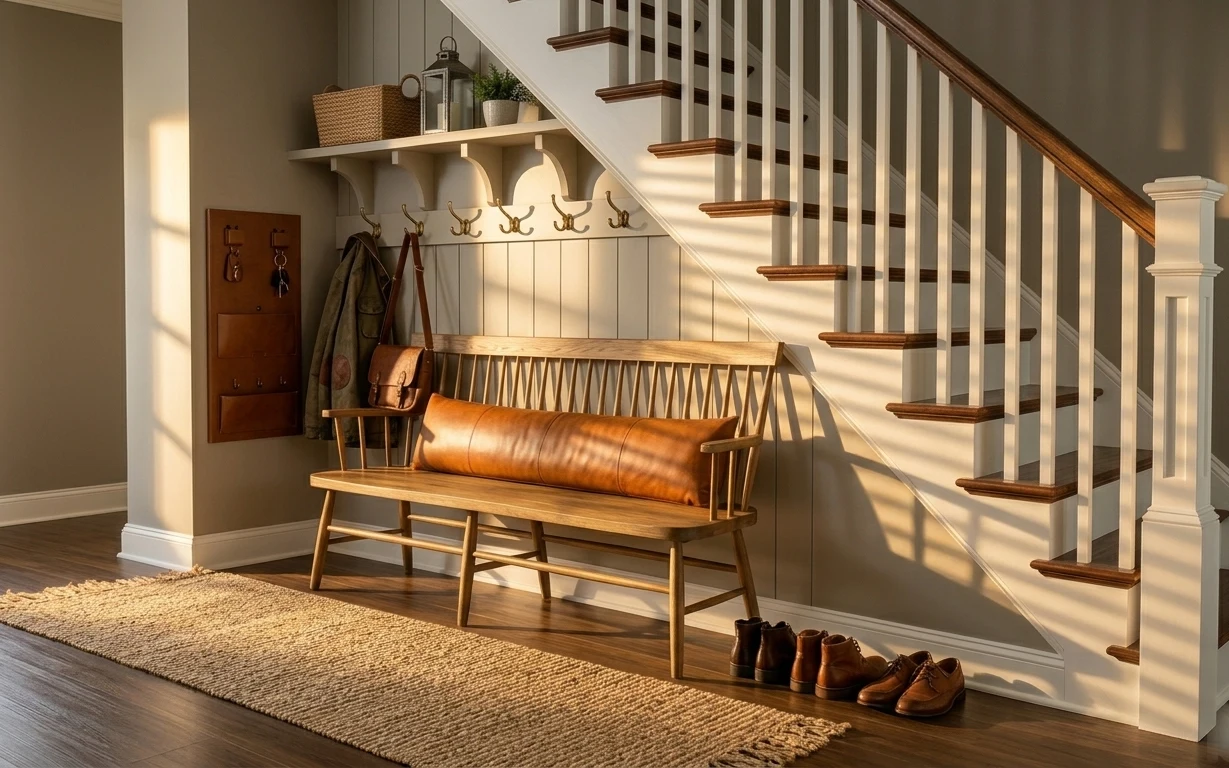
Under $500: a move-friendly under-stairs entryway makeover
A warm, rental-safe under-stairs entryway refresh that leans on texture: rug, bench cushion, and simple hardware swaps. This look comes in …
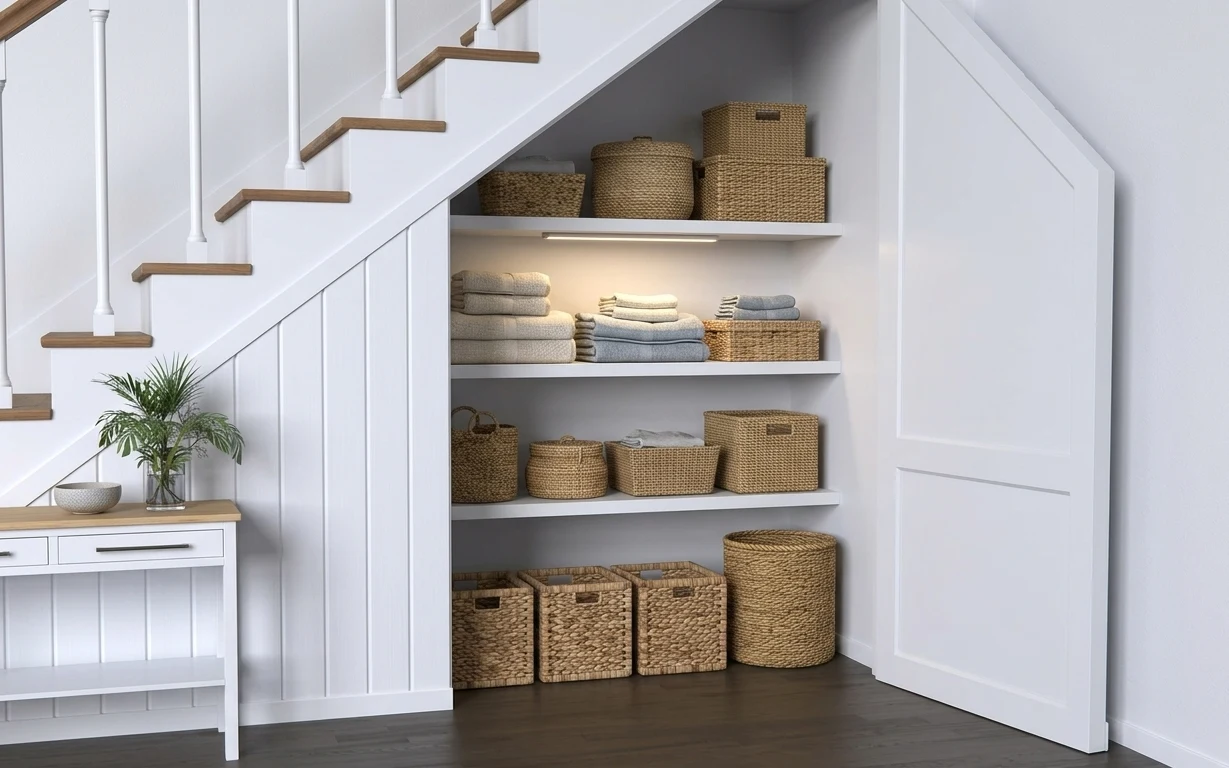
Under $300: warm-neutral built-in storage nook refresh
This built-in storage nook uses warm neutrals, woven baskets, and soft LED shelf lighting to make a compact corner feel intentional. With a…