- Square footage
- Entry nooks, 50–90 sq ft zones
- Cost
- Under $500 for 7 layers
- Difficulty
- Easy (no-drill swaps + styling)
- Renter-safe
- Yes—freestanding and removable pieces
Why warm rustic details are the under-stairs entryway bench nook of 2026
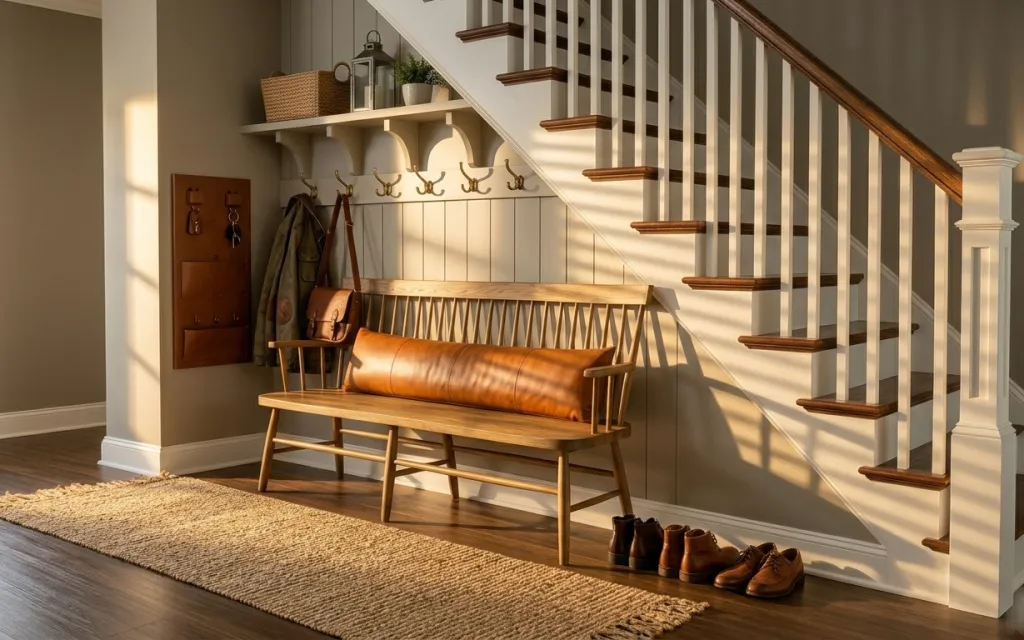
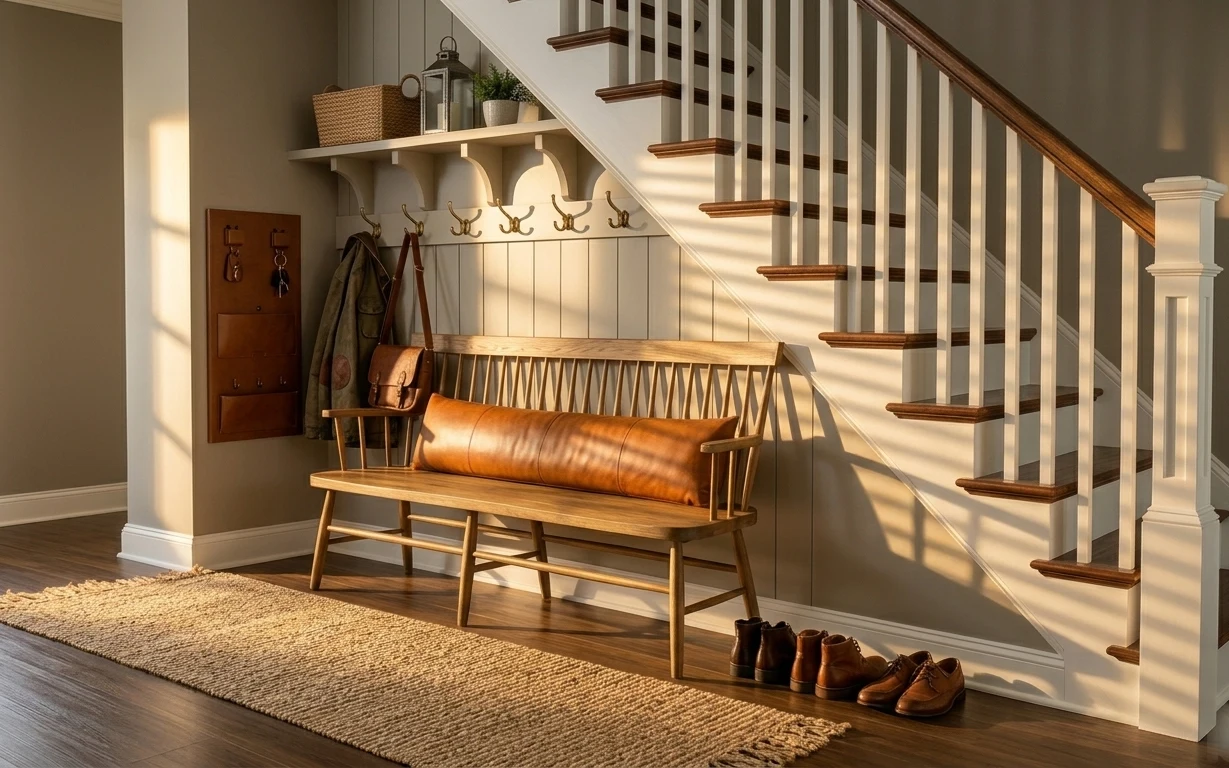
What I love about this spot is how the warm wood + cream paneling make a tiny landing feel intentional. The woven basket and hanging black lantern add texture at shelf height, while the jute area rug anchors the whole bench zone on the floor. The leather-look cushion brings in that deeper brown tone without needing wall changes or hardwired lighting. For renters, this is exactly the kind of layered, “real life” styling that looks pulled-together like an Architectural Digest hallway vignette—just without the permissions.
The first time I tried to style an entry, I overthought it and bought matchy items in the same shade of brown. It ended up flat, like everything was blending into the wood trim. Here, the trick is mixing finishes: straw texture (basket), matte metal (hooks/lantern), and a smoother leather-look cushion. Once that mix clicked, the bench nook started reading as a destination instead of storage.
Layer 1 — Brass-tone wall coat hooks ($15) Hardware for everyday grab-and-go
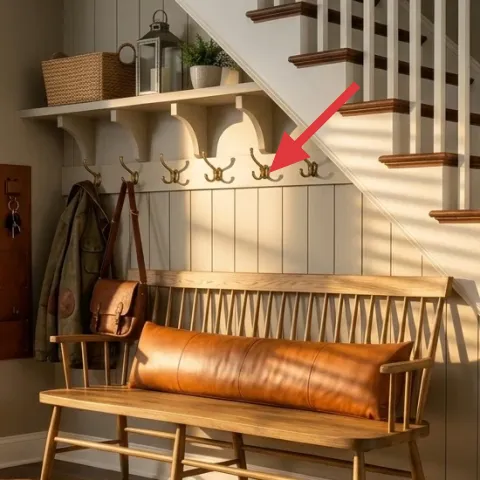
These brass-tone coat hooks are small, but they solve the biggest entryway problem: coats need a consistent “drop zone” that still looks tidy. In the photo, the hooks sit right under the staircase, so the visual rhythm stays high and organized instead of clumping coats on the floor. The renter-friendly move is to add a removable hook line using 3M removable hooks so you get the same function without drilling into trim or panels. The trade-off is you have to press firmly and let them set per the brand instructions before hanging heavier items.
Keep the hook spacing practical
Space coats so sleeves don’t tangle—one hook per coat plus room for a light bag between pieces.
Layer 2 — Woven basket on shelf ($18) Adds instant texture above the hooks
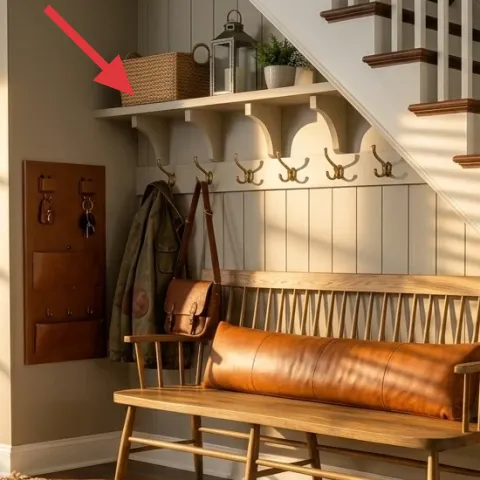
The woven basket on the upper shelf brings that straw-and-warmth texture that makes entries feel lived-in. Visually, it fills the negative space above the hook line, so the bench nook doesn’t look like “just storage.” Choose a basket with a slightly open weave like this one, because it softens the contrast between the dark hooks and the light paneling. If you buy a basket with a tighter, glossy weave, it can read too formal. The best part for rentals: it’s free-standing, so it’s easy to move when you change layouts.
Texture beats perfect matching
Even if your rug and cushion aren’t an exact brown, the basket texture keeps the palette coherent.
Layer 3 — Black hanging lantern ($25) Lights the entry without changing fixtures
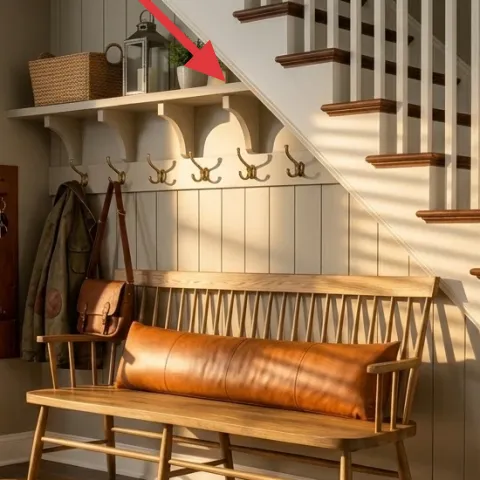
The black hanging lantern adds a vertical focal point right where your eye lands first—up near the shelf line under the stairs. Because it’s hanging (not fixed into the ceiling), it’s renter-safe and doesn’t depend on landlord-installed lighting. The matte black also gives the bench nook contrast against the cream tones, which helps the hooks and cushion look more intentional. The trade-off is that it works best when it’s scaled to the shelf zone—too big and it crowds the coats; too small and it disappears in daylight. Use it as a styling light for evenings, or keep it as a decorative piece when not in use.
Don’t choose a lantern with a fussy silhouette
In a small entry, complicated cutouts can look busy—go for clean bars or simple glass.
Layer 4 — Leather-look bench cushion ($45) Brings warmth and comfort to the bench
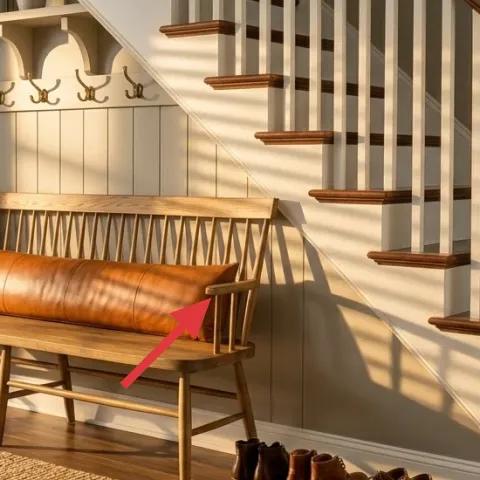
This leather-look cushion is doing the heavy lifting: it’s the cozy “surface” element that makes an entry bench feel usable instead of purely decorative. It’s also the color bridge between the warm wood bench and the darker hooks, so the whole nook reads cohesive. A smooth, wipeable cushion is a smart rental choice because entryway zones get scuffs and shoe transfers. The obvious alternative is fabric upholstery, but in practice it stains faster and needs more care. The trade-off with leather-look is you’ll want to keep it out of direct sun if your unit gets intense afternoon light.
Pick a cushion that fits your bench footprint
Measure the top surface, then choose a cushion width that reaches near the bench edges without overhang.
Layer 5 — Jute area rug 5x7 ($120) Makes the bench zone feel grounded
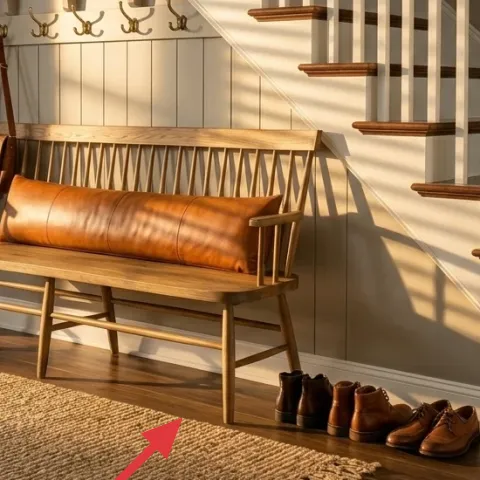
The jute rug is what turns “bench + hooks” into a real vignette. In the photo, it stretches across the floor in front of the bench and catches dirt and shoe marks more gracefully than a light-colored flat weave. Jute also adds that relaxed texture that pairs well with farmhouse woods and cream wall paneling, without looking overly themed. A cheaper alternative is a thin synthetic rug, but it can slip or look shiny in sunlight—jute reads warmer and more dimensional. The trade-off is maintenance: jute needs gentle vacuuming and quick spot care, not soaking.
Let the rug anchor the layout
If you can, align the rug edge with the bench legs so the geometry feels intentional.
Layer 6 — Wooden entryway bench ($160) Gives you a functional landing spot
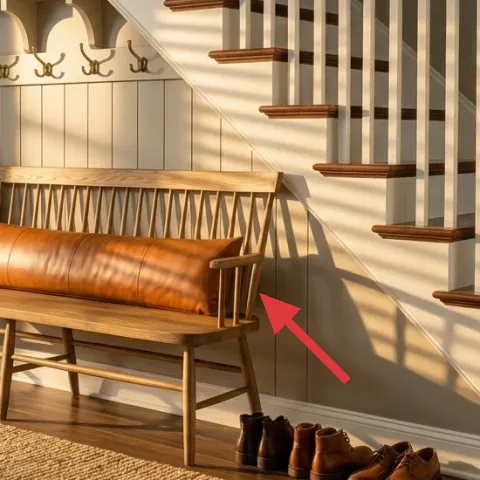
This wooden bench is the “hub” of the whole nook—sitting under the hook line, it’s where shoes get organized and where bags can land. The warm wood finish matches the staircase trim in the background, so it blends in without disappearing. I like this choice over a metal bench because metal can look cold in small, daylight-lit entries. The wood also pairs naturally with the jute rug and the leather-look cushion, giving you a layered mix of textures that still feels cohesive. The trade-off is that wood benches show wear marks over time, so choose one with a durable top finish if your entry gets heavy use.
Style the bench top like a drop zone
Keep a small “in transit” pile—shoes and a bag—so it stays functional, not decorative clutter.
Layer 7 — Painted terracotta planter set ($60) DIY texture for the shelf
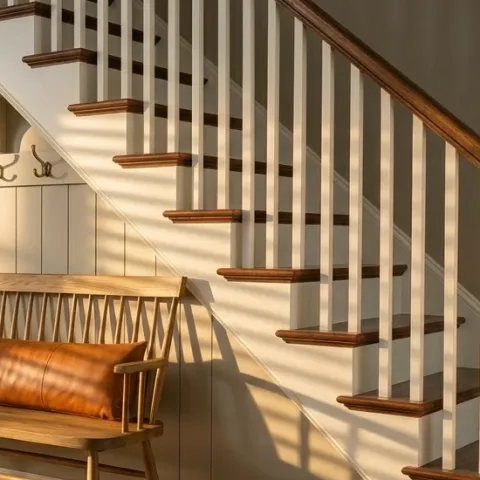
Make it instead of buying it
Swap in a painted terracotta planter set to mimic the warm potted-plant look on the shelf, using simple acrylic color on terra-cotta.
Materials
- Terracotta pots (2 small) — 2 pcs — craft store — $18
- Acrylic paint (earth tone colors) — small set — craft store — $7
- Paintbrushes (1 small detail, 1 flat) — 2 brushes — craft store — $5
- Clear matte sealer (spray or brush-on) — 1 can/bottle — craft store — $10
Steps
- Wash and fully dry terracotta pots so paint grips evenly.
- Plan a simple color layout (like one solid pot + one speckled pot).
- Apply your base color in thin coats; let each coat dry completely.
- Add details (dots, stripes, or a soft ombré) with a smaller brush.
- Let everything dry fully at room temperature.
- Finish with a matte clear sealer to protect the painted surface.
- Let the sealer dry per the label timing.
- Plant your greenery and place the pots on the shelf for instant cohesion.
Total DIY cost: $40 — saves about $20 over buying.
A painted terracotta planter set gives you the same warm, earthy pop as the potted plant in the photo, but with more style control. Terra-cotta reads cozy against the cream paneling and pairs naturally with jute texture and warm wood tones. Keeping it as a set also helps the shelf look intentional instead of “one lone pot,” which is a common small-entry styling mistake. The obvious alternative is buying a single matching pot, but it often looks too sparse or too uniform. The trade-off is you’ll spend a little time painting, but the pots are lightweight and easy to pack up when you move.
Match the plant scale to the shelf depth
Choose plants that don’t tip forward—shallow-rooted greens work best for shelf styling.
The cost, layer by layer
| Layer | Item | Cost |
|---|---|---|
| 1 | Brass-tone wall coat hooks | $15 |
| 2 | Woven basket on shelf | $18 |
| 3 | Black hanging lantern | $25 |
| 4 | Leather-look bench cushion | $45 |
| 5 | Jute area rug 5x7 | $120 |
| 6 | Wooden entryway bench | $160 |
| 7 | Painted terracotta planter set | $60 |
| Total | $443 | |
If the full bench feels like the priciest part, try a thrifted bench with a simple cushion swap instead. You’ll keep the same function, and you can still spend more on the jute rug and cushion so the nook reads warm and cohesive.
What worked, what didn't (across the whole room)
The biggest win was building the nook from the floor up: the jute rug makes the bench zone feel anchored, and the leather-look cushion adds comfort right where you drop bags. The second win was vertical layering—hooks, basket, and lantern give you structure in a tight entry so it never looks blank. What didn’t quite work was going too matchy with hardware; mixing finishes (brass, black, warm wood) looked far more natural.
What worked
- The jute rug grounds the bench and hides scuffs better than a lighter flat weave.
- The leather-look cushion gives a wipeable surface that’s practical for shoe season.
- Coat hooks create a real drop zone, which keeps the entry from turning into a pile.
- The black lantern adds vertical interest without relying on any hardwired fixtures.
- The woven basket softens the paneling and makes the shelf feel styled, not empty.
- Warm wood + cream paneling pairing makes the space feel intentional even with a small footprint.
What didn't
- Picking a single-brown palette made everything blend together and looked flat.
- Overcrowding the hook area turned into tangles—one extra hook can help, not one extra coat.
- A too-small rug would have left the bench legs floating; size matters in tight entries.
- Too much “matchy” decor on the shelf (same finish and texture) reduced the cozy contrast.
What we'd skip if we did it again
Skip a matching set of entryway organizers that all come from the same store line. In a small under-stairs nook, sameness reads flat, and you lose the cozy mix of textures that makes this look feel lived-in.
Skip a low-pile rug that looks good online but shows wear fast. The jute texture here is what softens warm wood and cream paneling, so prioritize rug texture and size over brand name.
Skip hanging items that are heavier than your removable hooks can handle. If coats feel too weighty, reduce load, use more hooks for distribution, or switch to a sturdier removable option so everything stays secure.
Frequently asked
How long does a refresh like this usually take?
For a space this size, plan on about 2–4 hours. The time sinks are choosing rug size, arranging the bench-cushion placement, and getting hooks positioned so coats hang without tangling. If you DIY the planter paint, add another day for drying and sealing—though the actual active time is usually under an hour.
Is this doable in a rental where I can’t drill?
Yes. The core changes here are either freestanding (bench, rug, basket, planters, cushion) or removable (coat hooks placed with renter-friendly mounting). The goal is to copy the visual “system” of the nook—drop zone, grounded rug, shelf styling—without altering the walls or landlord fixtures.
What if my under-stairs nook is wider or narrower?
Rug size is the easiest lever to adjust. If your floor run is shorter, you can go with a slightly smaller rug footprint and keep the bench centered. If it’s longer, extend the rug so it reaches under the front bench legs and keeps the anchoring effect.
Where should I shop for the rug, hooks, and accessories?
For the rug and bench cushion, look at home stores with rental-friendly return policies (or check local thrift for the bench and buy new for the cushion). Hooks and lanterns are easiest to find online in renter-safe finishes. The basket and planters work well at craft stores because you can choose texture and color quickly.
What’s the biggest styling mistake that makes entries look messy?
The biggest mistake is giving coats, shoes, and bags no dedicated “zones.” Even if the decor is cute, the pile forms fast when everything shares one surface. The hooks plus bench cushion combination works because it creates repeatable drop points, which keeps the nook looking styled day after day.
More in Small Spaces
Under $500: a move-friendly under-stairs entryway makeover
A warm, rental-safe under-stairs entryway refresh that leans on texture: rug, bench cushion, and simple hardware swaps. This look comes in …
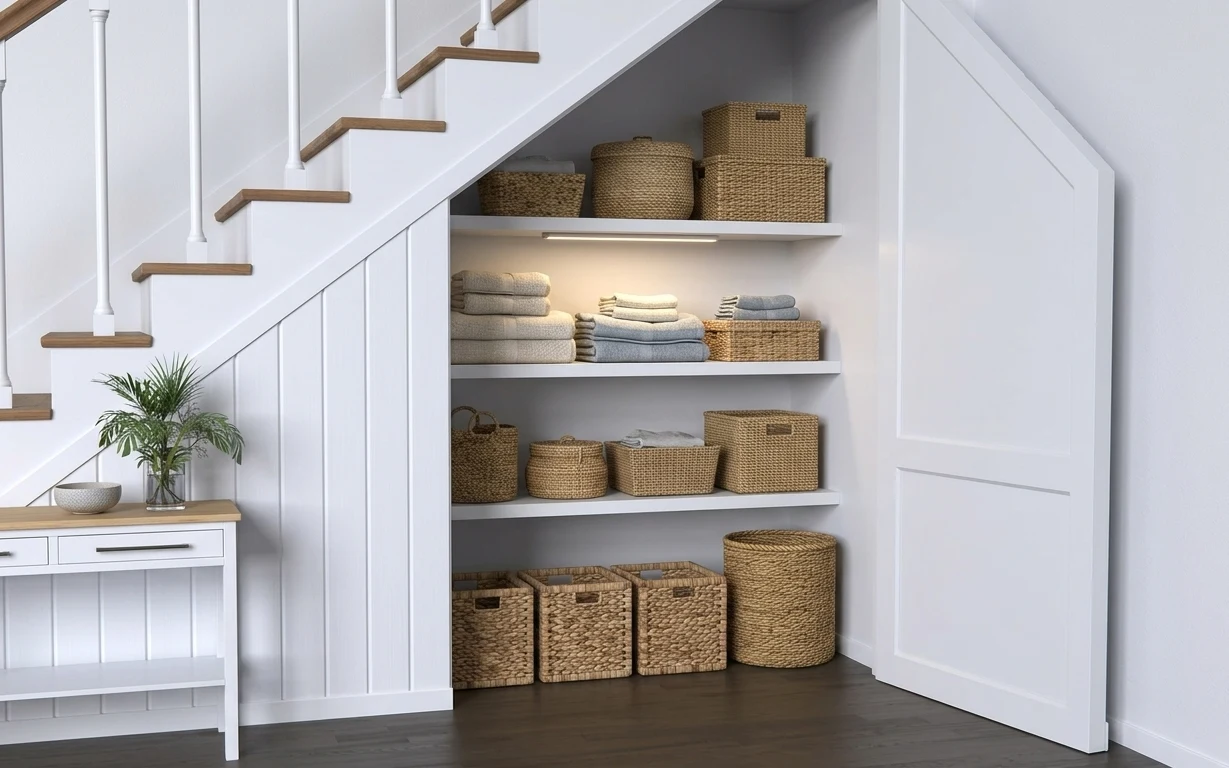
Under $300: warm-neutral built-in storage nook refresh
This built-in storage nook uses warm neutrals, woven baskets, and soft LED shelf lighting to make a compact corner feel intentional. With a…
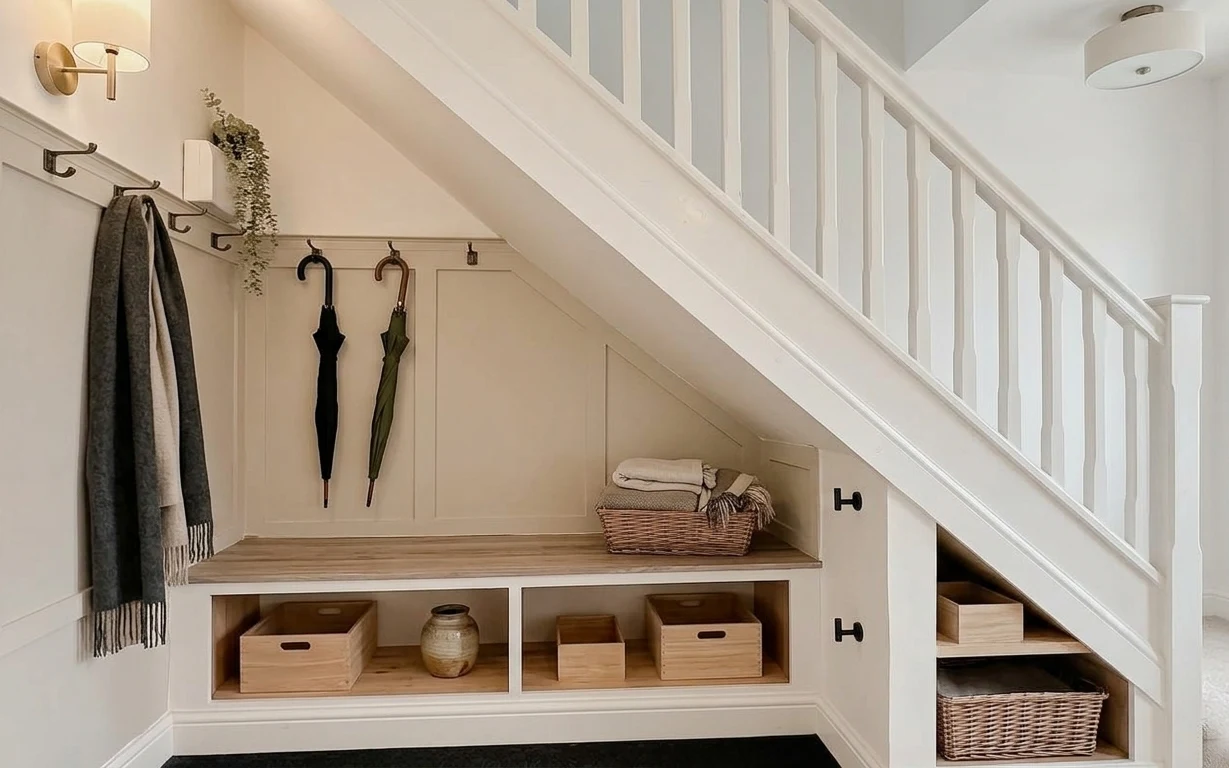
Under $300: under-stair entry nook refresh with renter swaps
A bright under-stair entry nook that feels organized, not cluttered. This renter-friendly refresh uses 7 move-friendly swaps—$260 total at …