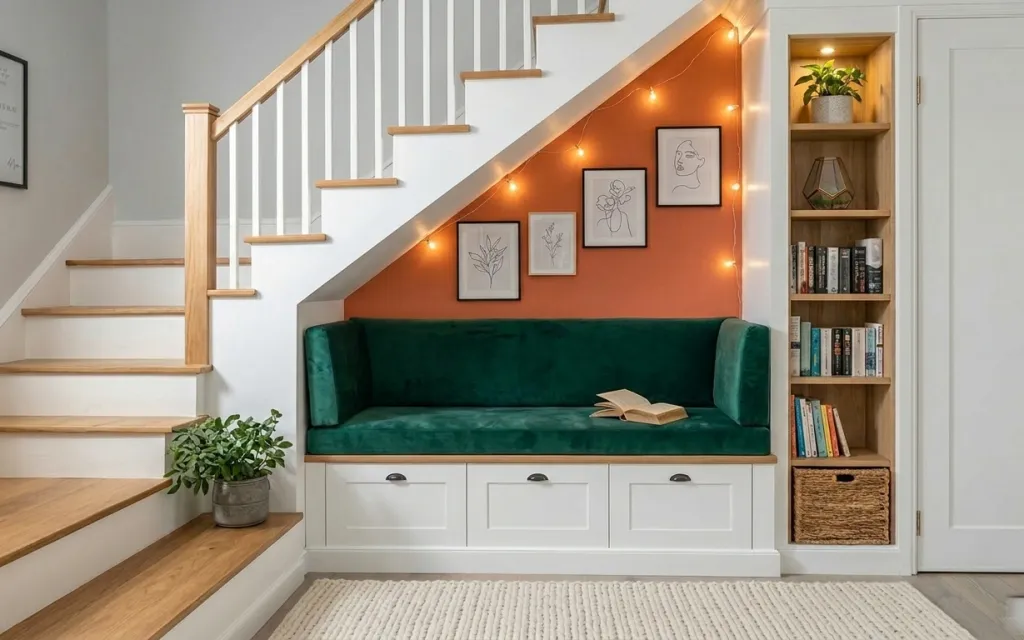
- Square footage
- About 80–120 sq ft of visible nook area
- Cost
- Total under $400
- Difficulty
- Easy
- Renter-safe
- Yes—packable textiles + removable decor
Why teal-and-orange accents are the built-in bench nook of 2026
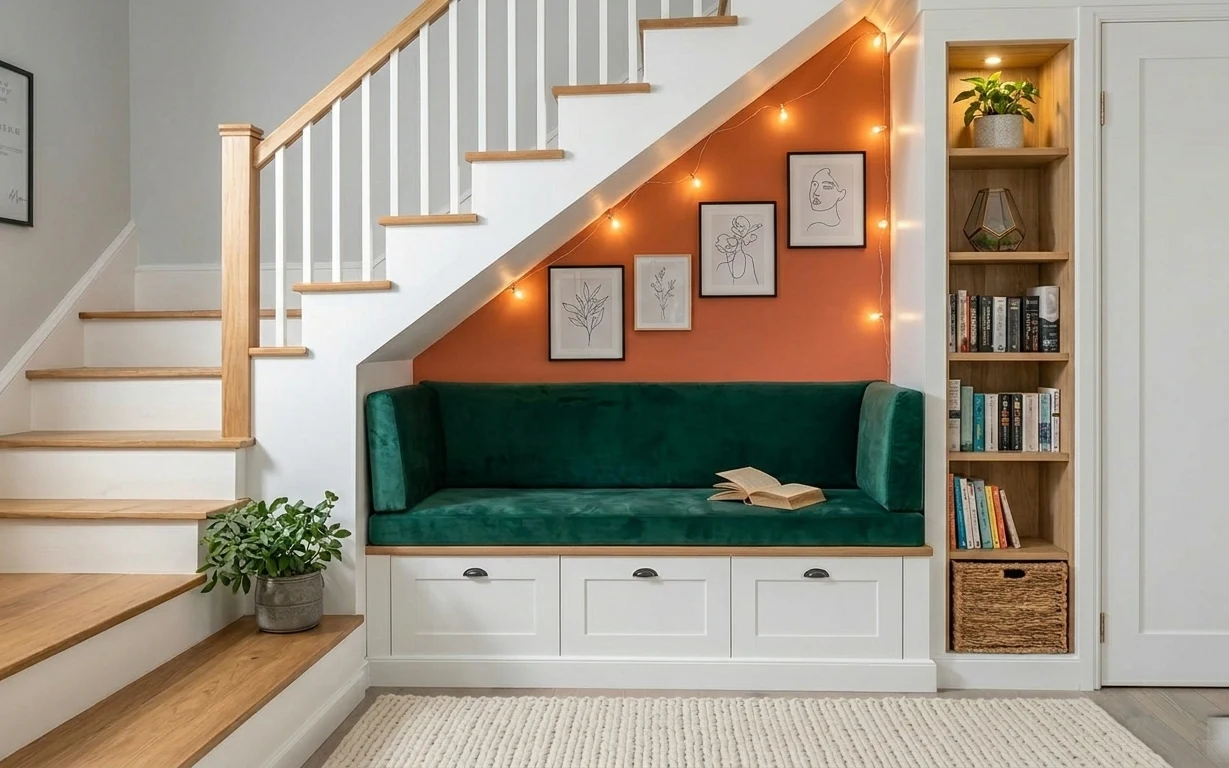
The first thing this nook nails is the contrast: an angled orange wall framed by teal upholstery, then softened by a light cream area rug. The warmth comes from string lights, while the rest stays clean with wood trim and white cabinetry. Texture matters here—think looped rug fibers, velvet-like bench upholstery, and matte framed line art. For shared housing, this is doable because the “big” look is built from swapable textiles, freestanding styling, and wall decor that can come down without leaving a trace.
I almost went too literal with color once—there’s always that temptation to match every teal and orange shade exactly. What changed my mind was noticing the room doesn’t rely on perfect paint matching; it relies on repeating shapes (frames), repeating warmth (string lights), and a soft base (the rug). That’s the move-friendly path: keep the palette, but let the materials do the heavy lifting.
Layer 1 — large textured area rug (light cream) ($120) Ground the nook with a soft, stain-sparing base
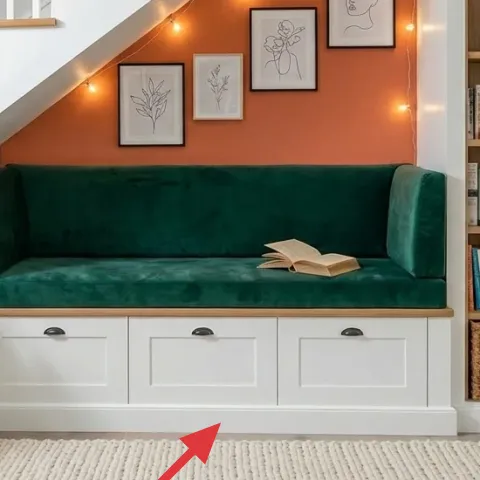
A light cream, textured area rug makes this nook feel finished even when the rest of the space is functional. In the photo, the rug sits under the front edge of the bench, which helps the whole zone read as one “place” instead of a bench plus random floor. The texture is key: loops and raised fibers visually hide light scuffs better than flat weaves. The trade-off is that shag or very high pile can trap grit—so a textured-but-not-tall option is the safer bet for stairs-adjacent traffic.
Pick a rug you can shake out fast
For shared homes, choose a low-to-medium pile texture so it’s easy to vacuum and quick to clean between roommates’ schedules.
Layer 2 — framed line-art botanical print ($45) Add art that stays consistent when you move
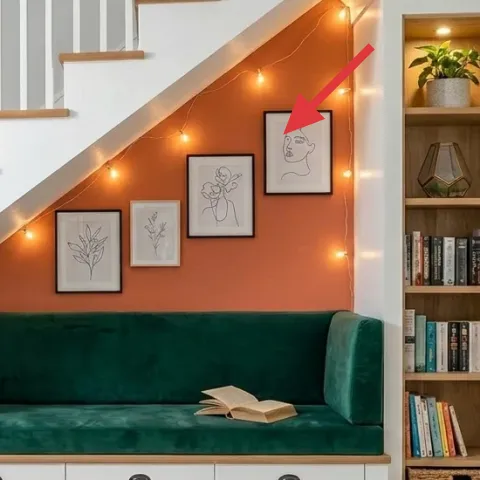
One framed botanical print is the visual “repeat” that makes the angled wall feel intentional. The hero shows several frames with clean line art, which keeps the look airy instead of cluttered against the warm orange panel. This layer is about choosing a similar line-and-wash style, but in a size that’s easy to pack. The trade-off is that super-saturated posters can fight the teal bench—line art lets the orange wall and teal upholstery stay the main colors.
Make it instead of buying it
DIY a line-art style botanical insert on cardstock, then slide it into a simple frame so it packs with everything else.
Materials
- Cardstock, 8.5×11 sheets — pack of 10 — craft store — $6
- Water-based acrylic paint set — small set — craft store — $12
- Fine paintbrush (round) — 1–2 sizes — craft store — $8
- Black permanent marker (for outline) — 1 — office/craft store — $7
- Painter’s tape — 1 roll — hardware store — $5
Steps
- Tape a cardstock border for a clean inner “art window” so edges stay crisp.
- Sketch a loose botanical layout (leaf shapes and a stem) with the black marker.
- Fill leaf areas with thinned acrylic paint for a line-art look (less pigment, more water).
- Let the ink and paint dry fully.
- Remove tape, then trim the insert if it needs a tighter fit for the frame.
- Insert into the frame and keep the glass covered with paper until the move.
Total DIY cost: $38 — saves about $7 over buying.
Match the “line art” vibe, not the exact subject
As long as the strokes stay fine and the palette stays muted, the frames will still read as a set.
Layer 3 — warm string lights (on the angled wall) ($15) Add soft amber glow without any wiring rewiring
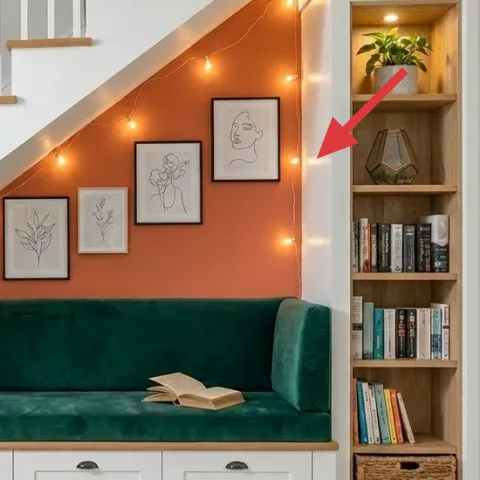
The string lights in the photo do two jobs: they make the angled wall feel layered, and they warm up the teal so it doesn’t look flat. Because the lights are draped along the diagonal surface, they create a “line” that visually carries the eye across the nook. For a move, the biggest win is that a string-light set dismantles instantly and fits in a small box—no bulky hardware. The trade-off is that command-based mounting can be hit-or-miss on some wall textures, so using only removable placements matters.
Don’t assume every wall is command-hook friendly
If the wall is textured plaster, test one small spot first; overly aggressive adhesion can pull finish during removal.
Layer 4 — potted plant on the staircase landing ($18) Bring in green where people actually look
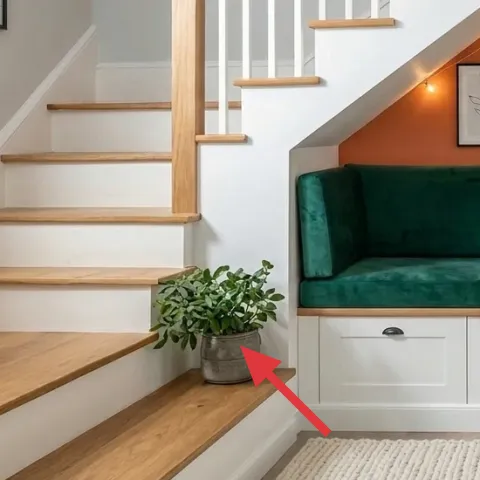
The plant on the staircase landing adds life at an eye-level moment, which is why it works even though it’s small. It also balances the geometry: wood steps on the left, the diagonal wall in the center, and a little organic shape to soften it. A compact potted plant is easy to move between leases as long as the pot isn’t fragile. The trade-off is that stair-adjacent light changes day to day, so choose a hardy plant (and keep expectations realistic about growth speed).
Choose a pot that can survive packing days
Go for sturdy nursery pots or simple planters that won’t crack if a box gets bumped.
Layer 5 — decorative book stack on built-in shelf ($10) Style the shelf without overstuffing
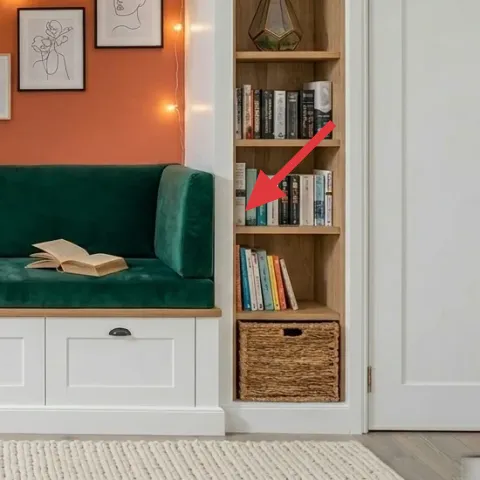
A decorative book stack gives height and color rhythm on the built-in shelves without adding new furniture. In the photo, the shelves hold books and they sit right next to the warm woven basket, which makes the nook feel “used,” not staged. This layer works best when the spines share a similar value (light-to-medium tones) so the shelf doesn’t become visual noise. The trade-off: if stacks lean too tall, they can tip during moves—keep stacks snug and pack them in a folder or shallow box.
Use books as color blocks
When spines are mixed, the overall effect still works if the stack stays in one height band.
Layer 6 — woven storage basket on built-in shelf ($25) Add a texture pocket that hides odds and ends
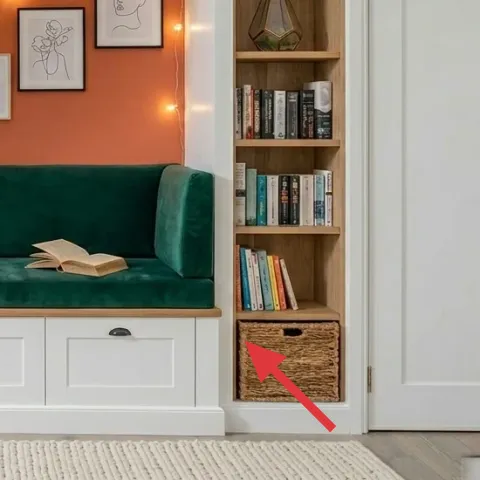
The woven basket on the lower shelf is where the nook gets practical. It adds natural texture next to white cabinet doors and smooth wood, and it’s the easiest way to make a built-in area look “lived-in” rather than showroom-clean. Because baskets are light and collapsible alternatives exist, this is one of the most move-friendly layers on the list. The trade-off is that woven storage can snag on sharp edges during packing, so wrap with paper or a thin towel before the move.
Fill it lightly to keep it from looking cluttered
Use it for cables, extra chargers, or a small stack of notebooks so the weave stays visually open.
Layer 7 — teal upholstered bench cushion and back ($70) Keep the teal statement, but make it packable
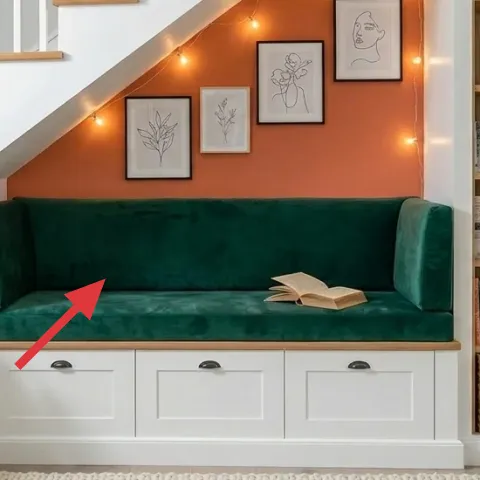
The teal upholstered bench and back are the anchor of the whole scene, and they’re what makes the nook feel dramatic. Since this look lives on soft surfaces, the move-friendly approach is to use removable cushions or a cushion set that matches the teal tone and covers the bench shape. That way, the “wow” comes with you—without having to change fixed trim, doors, or cabinetry. The trade-off is fit: custom-looking cushions are hard to nail on the first try, so measure the seat width and depth and aim for a slightly snug fit rather than a loose one.
Avoid overly thick cushions that prevent closure
If your bench has a storage lift or clearance constraints, choose a thickness that still lets everything function.
The cost, layer by layer
| Layer | Item | Cost |
|---|---|---|
| 1 | Textured area rug (light cream) | $120 |
| 2 | Framed line-art botanical print (DIY insert in frame) | $45 |
| 3 | Warm string lights set | $15 |
| 4 | Potted plant (small) | $18 |
| 5 | Decorative book stack | $10 |
| 6 | Woven storage basket | $25 |
| 7 | Removable teal bench cushion set | $70 |
| Total | $303 | |
If the teal cushion set feels like too much, keep everything else and swap only the rug for a slightly smaller 5×7 textured option ($80–$120), then choose one framed print you already love ($25–$45). That gives the same “finished nook” read for less money and less measuring.
What worked, what didn't (across the whole room)
This nook works because the big color story comes from repeatable elements: teal upholstery, framed line art, and warm string lights. The smallest items—the plant, the woven basket, and a simple book stack—also do real work by softening the geometry of stairs and shelves. The only thing to watch is how “lived-in” the textures get when multiple people share the space daily.
What worked
- The light cream rug adds a soft landing that makes the bench area feel intentional.
- Framed line art keeps the wall from feeling busy against the warm orange panel.
- Warm string lights add depth along the diagonal so the nook reads as one zone.
- The potted plant gives an organic counterpoint to wood steps and straight cabinet lines.
- Books plus a woven basket add lived-in texture without needing bulky furniture.
- Removable teal cushions let the statement piece move safely between leases.
What didn't
- Overly bright prints fight the teal bench and flatten the room’s warm tones.
- Very high-pile rugs can trap dust near stair traffic and require extra vacuum passes.
- String lights look best when spaced evenly; uneven drapes can look accidental.
- Woven baskets that hold too much end up looking like storage bags rather than styling.
- If cushion thickness is too large, it can interfere with any bench clearance needs.
What we'd skip if we did it again
Skip replacing any fixed trim or built-in storage. This nook already has strong architecture, and the most move-friendly wins come from textiles, frames, and accessories that pack up quickly.
Skip artwork that’s too saturated or too large for the diagonal wall. Line art and mid-scale frames keep the wall feeling light, while bold posters can overpower the teal upholstery and warm orange panel.
Skip a tall, floppy shelf setup. For shared housing, keep the book stack tight and the basket lightly filled so nothing shifts during moves or gets knocked loose in busy weeks.
Frequently asked
How long does this refresh take in a shared housing timeline?
Plan for about 2–4 hours on a weekend. Rugs and cushion inserts are the quickest wins, while framing (or swapping the art insert) plus draping string lights takes the most time. If removal is part of the process, add 30–45 minutes for gentle test-cleaning and re-packing so everything moves together.
What if the room is smaller or the bench area is tighter?
Keep the rug footprint proportional and prioritize texture over coverage. A 5×7 rug can still ground the nook if it tucks a bit farther forward under the bench. For the framed art, choose one hero print plus one matching frame (instead of several) to avoid crowding the diagonal wall.
What if I want to keep the wall art closer to the original look?
Stick to line-art botanicals in muted tones and keep the frames the same finish family (like black or natural wood). The key is repetition: similar line thickness and a consistent margin around each piece. That keeps the angled wall from looking random even if the subjects differ.
Where should string lights be placed for the same effect?
Follow the diagonal path across the angled wall so the lights act like a visual “sweep,” not a single straight line. Leave a little slack at each bend so the drape looks intentional. For shared housing, use only removable placement methods and keep the power cord where it won’t get yanked.
What’s the biggest mistake people make in small shared nooks like this?
Overpacking storage and accessories. In a tight space, too many small items—especially mixed in height—can make the nook feel messy fast. Use one texture anchor (rug or basket), one organic element (plant), and one styling height (books) so the room stays readable even when roommates are moving around.
Is the teal look only possible with expensive upholstery?
Not at all. The teal statement can come from removable cushion sets or cushion covers that match the tone. The key is picking a teal that sits mid-range (not neon) so it works with warm lighting. If the bench is fixed, focus on covering the soft surfaces and letting the rug and frames do the rest.
More in Small Spaces
Under $400: built-in bench nook refresh with 7 move-ready swaps
A built-in bench nook already has personality—so this refresh leans on move-ready swaps: a textured cream rug, warm string lights, framed b…
Under $500: renter-friendly hallway refresh with sage-and-cream charm
A sage-and-cream hallway refresh that feels intentional without drilling or painting. This move-friendly plan uses layered peel-and-stick t…
Under $400: 7 renter-friendly laundry nook upgrades
A modern laundry nook already has great bones. This $400-style plan adds seven move-friendly swaps—baskets, a plant vase, small ceramics, a…