- Square footage
- Narrow hallway refresh
- Cost
- Under $500
- Difficulty
- Easy (measure + stick)
- Renter-safe
- Yes (no drilling)
Why sage-and-cream hallway details are the hallway nook of 2026
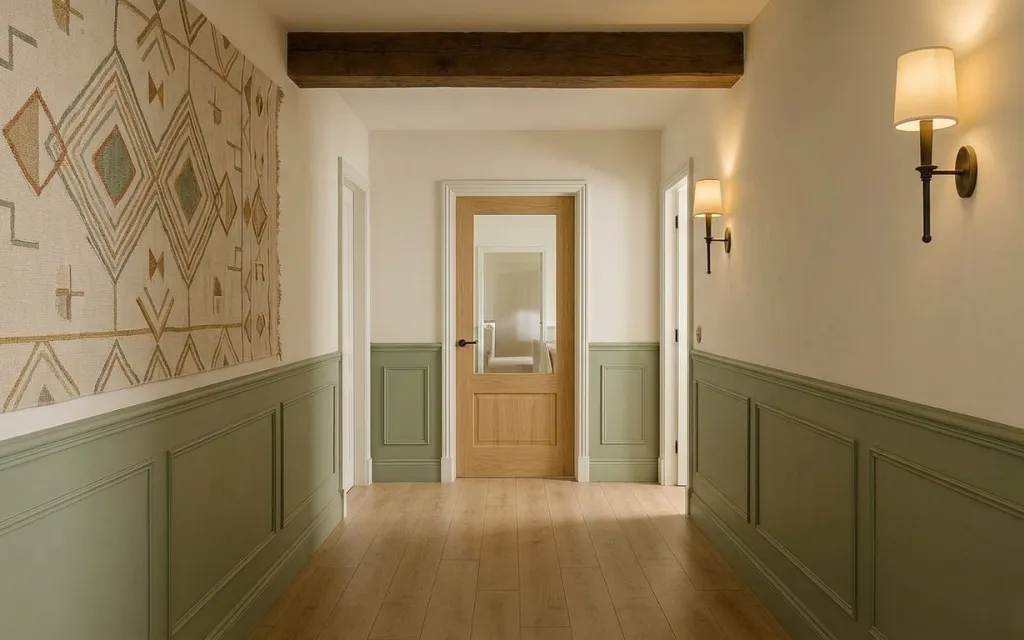
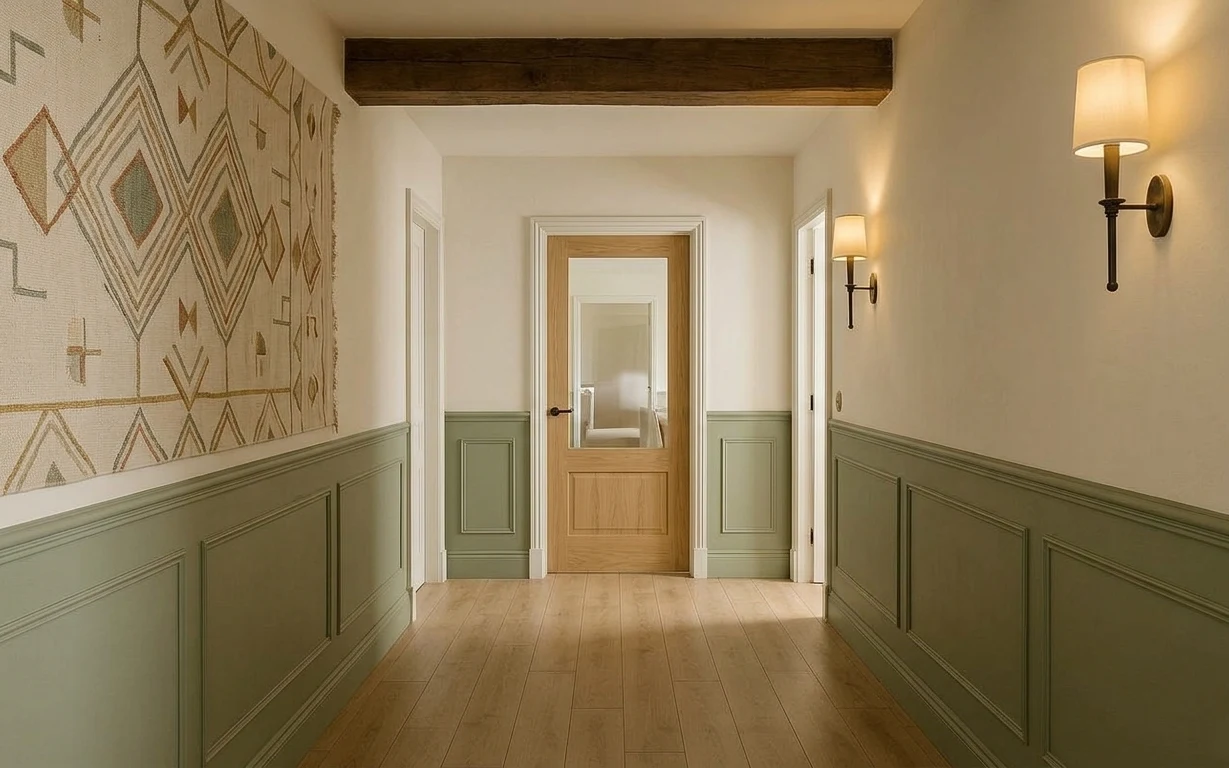
What I love here is how the hallway already reads “styled,” even though it’s narrow: the cream wall base is broken up by sage-green wainscoting trim, and the left wall has a geometric wallpaper panel with earthy diamonds. Two warm wall sconces soften the corridor, and the warm wood doorframe keeps it grounded. For renters, this is the same design logic you’d see in traditional interiors—layered finishes, not a single bold change—so it feels pulled together without major work.
I remember trying to “fix” a similar hallway by chasing one big moment—new paint and one statement print—and it looked busier than better. The moment I slowed down, I started repeating the same textures in smaller doses: a patterned wall section, a matching lower-wall treatment, then lighting that turns on like a cozy lamp glow. The biggest difference in this photo is that the warmth and the pattern both work together instead of competing.
Layer 1 — peel-and-stick geometric wallpaper (left panel) ($80) Map the hallway’s pattern in a renter-safe way
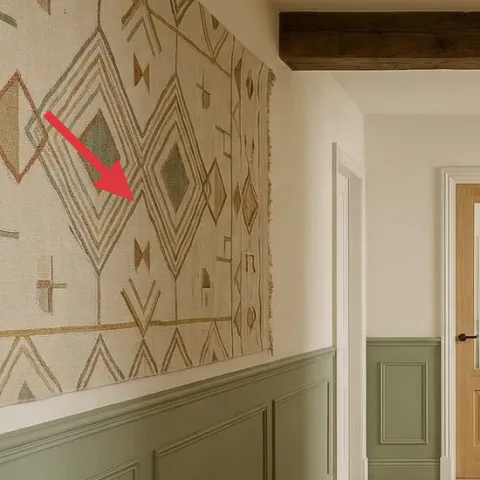
The geometric panel on the left wall is the loudest design move in the photo—cream background with sage and warm-toned shapes that guide your eye down the corridor. Using peel-and-stick wallpaper in the same graphic family is a direct way to recreate that effect without painting. The trade-off is scale: choose a pattern repeat that won’t look distorted when you apply it to a tall, narrow wall. This layer matters because the wallpaper sets the hallway’s color math for everything else, including the rug and lighting.
Keep the pattern lines straight
In hallways, even a small misalignment shows because your eyes travel the length of the space.
Layer 2 — peel-and-stick wall panels film (sage wainscoting look) ($90) Give the lower wall a tailored finish
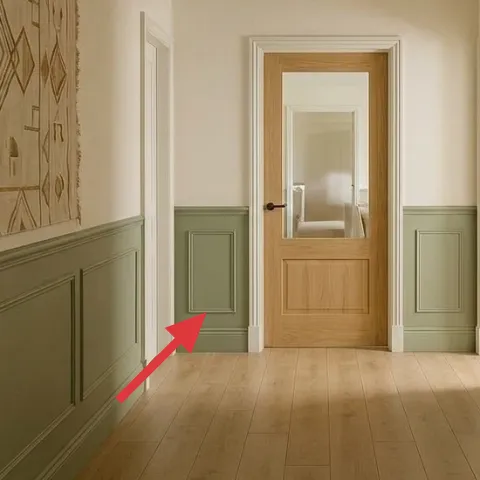
The wainscoting-style panels running along the lower half of the walls are what make this hallway feel “finished” instead of transitional. A peel-and-stick paneling film (the kind that mimics recessed rectangles) lets you echo that same structure in a renter-friendly way. The reason this works is visual rhythm: the geometric wallpaper gives pattern up top, and the paneling gives geometry down below, so the hallway feels balanced. The trade-off is that film paneling looks best when it’s applied cleanly and kept consistent in height across both sides of the corridor.
Measure the height once, apply across both walls
Sticking to one exact top line prevents the paneling from looking “off” when you walk through.
Layer 3 — plug-in wall sconce (right side) ($45) Add warm light without hardwiring
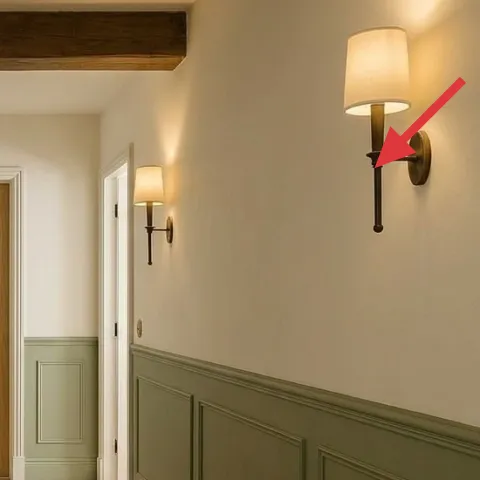
The right wall sconce adds that soft, honey-toned glow that makes cream walls feel richer. Choosing a plug-in wall sconce (instead of anything that requires wiring) keeps this refresh firmly in renter territory while still giving the same upward light bounce. This is also a practical call for a hallway: the warm pool reduces the “echo” feeling of bare floors and helps the space look more welcoming at night. The trade-off is cord management—use a neat cord cover if needed so the look stays intentional.
Match the shade color to the room’s creams
A warm off-white or linen shade blends better than bright white.
Layer 4 — plug-in wall sconce (left side) ($45) Mirror the light for a calmer corridor
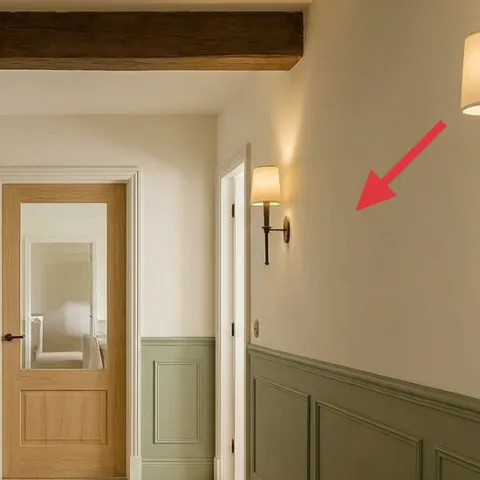
Because this hallway is symmetrical-ish, adding a matching sconce on the other side keeps the corridor from looking lopsided. In the photo, the second sconce reinforces that warm tone across the space, so the walls don’t read flat. This layer is about repetition: it’s the lighting equivalent of pairing your wallpaper with a consistent lower-wall treatment. The trade-off is cost versus impact, but two plug-in sconces usually feel more “architectural” than one single light in a long hallway.
Don’t aim for harsh brightness
Look for bulbs marketed as soft warm white to keep the hallway cozy.
Layer 5 — runner rug (warm neutral) ($90) Soften the wood floor underfoot
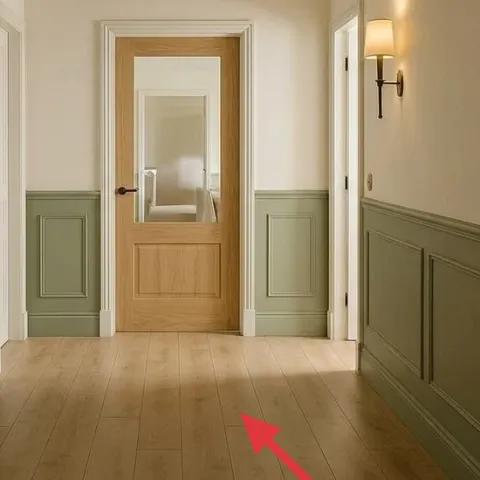
A long runner is how you make a narrow hallway feel less echo-y and more lived-in, and it’s especially effective over wood plank floors like the ones in the photo. A warm neutral rug—cream, oatmeal, or beige with subtle texture—lets the sage-and-cream wall story stay the star while giving your steps a gentler landing. The trade-off is sizing accuracy: a hallway runner should be long enough to read purposeful, but not so wide that it blocks the door swing. This layer is also where you can add a little texture without changing the wall finishes.
Skip shaggy pile in a high-traffic hall
Choose a low-to-medium pile so it stays practical and easy to vacuum.
Layer 6 — Command hook strips (above the wainscoting line) ($20) Make art and seasonal decor easy to swap
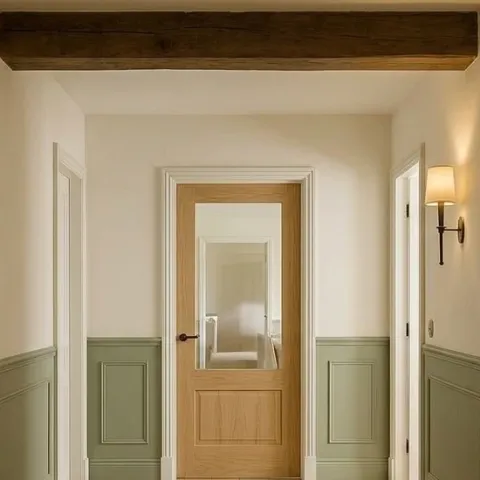
Even though the photo is mostly wall finishes and lighting, it’s the kind of space that looks better with one small decorative rhythm. Command hook strips placed above the wainscoting line give you a renter-safe place to hang framed art on a grid of removable hooks. This is the move-friendly choice because it adds personality without committing to wall anchors or drilling. The trade-off is staying minimal—one line of art or a pair at most keeps the hallway from feeling cluttered in motion.
Think “one line,” not a cluster
Hallways show every bump, so a tight, aligned arrangement looks cleaner.
Layer 7 — framed mirror (doorway wall reflection zone) ($40) Bounce light to make the hallway feel longer
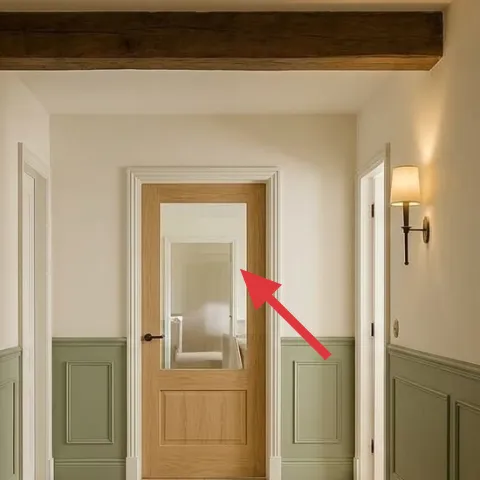
The doorway area in the photo already benefits from a reflective moment, and a renter-friendly framed mirror can recreate that effect more intentionally. A medium mirror with a warm wood or simple natural frame adds depth while amplifying the soft glow from the sconces. This helps a small hallway read less “tunnel” and more like a designed entry. The trade-off is placement: mount with Command-style hanging systems (no wall damage) and keep the mirror far enough from the door swing so it doesn’t interfere with daily traffic.
Use the mirror to reflect the sconce glow
When you can see the light’s reflection, the hallway feels instantly warmer.
The cost, layer by layer
| Layer | Item | Cost |
|---|---|---|
| 1 | Peel-and-stick geometric wallpaper | $80 |
| 2 | Peel-and-stick wall paneling film | $90 |
| 3 | Plug-in wall sconce (pair-bulb compatible) | $45 |
| 4 | Plug-in wall sconce (second unit) | $45 |
| 5 | Runner rug | $90 |
| 6 | Command hook strips | $20 |
| 7 | Framed mirror | $40 |
| Total | $410 | |
If the budget needs to dip lower, pick a smaller rug size you can still see clearly from the entry and choose peel-and-stick paneling film in a single neutral finish.
What worked, what didn't (across the whole room)
This look succeeds because it stacks pattern and structure in the same limited color family, then supports it with warm lighting. The result feels intentional in daytime, but also comforting at night.
What worked
- The sage paneling pattern gives the hallway a tailored, architectural feel without renovations.
- The geometric wallpaper panel adds visual interest at eye level so the space doesn’t feel blank.
- Warm sconces reduce harsh shadows on the long corridor.
- A runner-style softness (if added) helps wood floors feel less echo-y and more lived-in.
- Repeating lighting on both sides keeps the hallway balanced instead of lopsided.
- Mirrors in a corridor area help stretch the visual length.
What didn't
- Wallpaper misalignment in a tall hallway reads instantly, especially when you walk the corridor daily.
- Paneling film that doesn’t match height across both sides can make the room feel uneven.
- Too-bright bulbs can turn a warm hallway into a sterile walkway fast.
- An oversized rug width can make the corridor feel narrower than it is.
- Clustering too many small decor pieces can fight the clean lines of the wainscoting.
What we'd skip if we did it again
Skip painting the walls or ceiling. In a rental, that’s the kind of work that always comes with the “undo it later” headache, while peel-and-stick textures and rentersafe lighting can get the same structured look.
Skip adding multiple statement items at once—don’t pair bold wallpaper, a high-contrast rug, and a heavy mirror all together. Pick one hero pattern (like the geometric panel) and keep the rest in calm neutrals.
Skip hardwired upgrades like wired sconces. Plug-in sconces deliver the same warm pool of light without risking landlord issues or having to deal with electrical changes.
Frequently asked
How long does this hallway refresh take?
Most of the time goes to measuring and smoothing peel-and-stick wallpaper and paneling film so the lines look straight. For a typical small hallway, plan on a full afternoon for surface prep and application, plus a separate shorter session to place the rug and set up lighting and decor. If it’s your first time with peel-and-stick, add an extra hour for repositioning.
Is this really renter-safe if my lease forbids changes?
Yes, as long as the changes are removable: peel-and-stick wallpaper and paneling film, plug-in lighting, Command hook systems, and a rug (no permanent floor work). Avoid anything that requires drilling, wall anchors, or swapping landlord fixtures. When you move out, remove the removable layers carefully and patch only with the landlord’s approved methods—no heavy repair needed.
What if my hallway is wider or narrower than the photo?
Use the same design rules, not the same dimensions: keep the wallpaper pattern in one main section, maintain a consistent height for the paneling look, and choose a runner size that still leaves safe walking clearance. If your hallway is wider, you can use a slightly wider rug or add a second mirror element; if it’s narrower, go slimmer and lean on lighting for dimension.
Where should I shop for the peel-and-stick paneling and wallpaper?
Look for peel-and-stick wallpaper with a geometric diamond pattern and peel-and-stick wall paneling film designed for wainscoting-style rectangles. It’s easiest to match undertones by reading the sample colors in natural light. For lighting, search “plug-in wall sconce” with a warm white bulb option and a cord length that reaches your outlet comfortably.
What’s the biggest mistake people make in hallways?
The biggest mistake is going too loud everywhere. Hallways are long and you see them constantly, so multiple competing patterns and finishes feel chaotic quickly. Another common error is off-level application—one crooked wallpaper edge makes the whole hallway look “unplanned.” A single hero pattern plus calm neutrals and warm light is usually the win.
More in Small Spaces
Under $500: renter-friendly hallway refresh with sage-and-cream charm
A sage-and-cream hallway refresh that feels intentional without drilling or painting. This move-friendly plan uses layered peel-and-stick t…
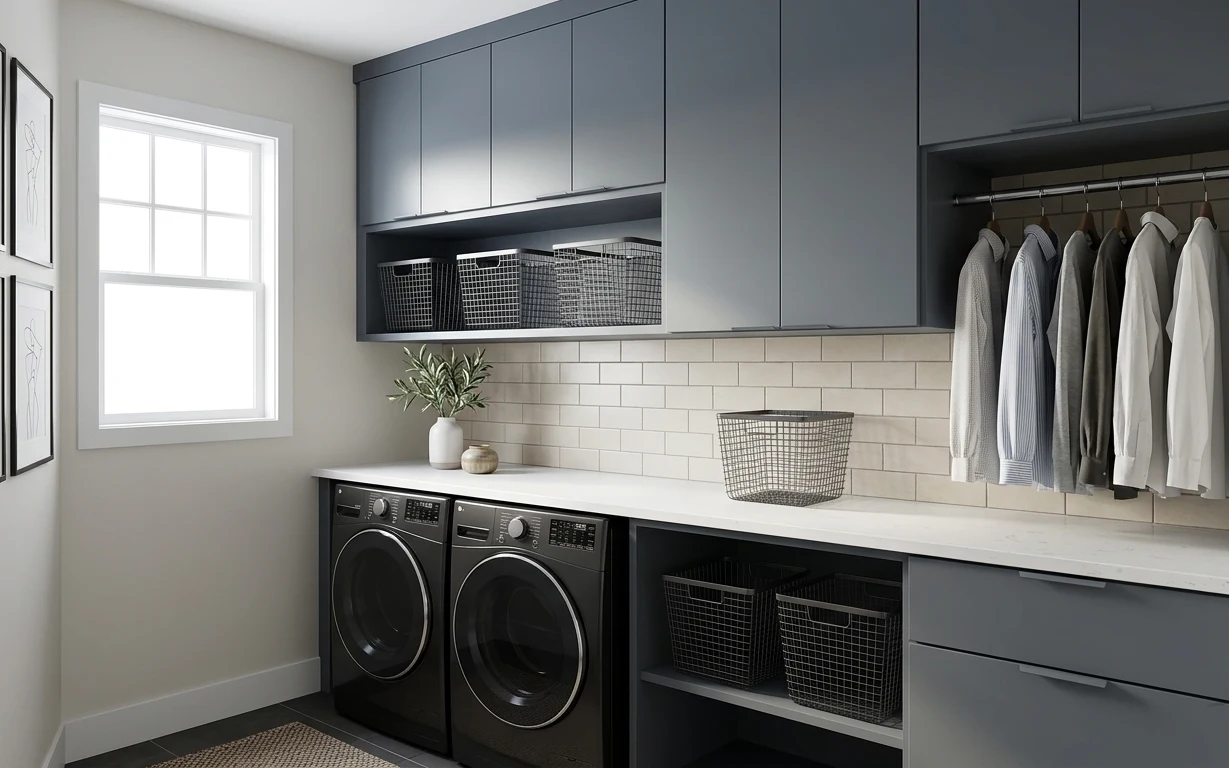
Under $400: 7 renter-friendly laundry nook upgrades
A modern laundry nook already has great bones. This $400-style plan adds seven move-friendly swaps—baskets, a plant vase, small ceramics, a…
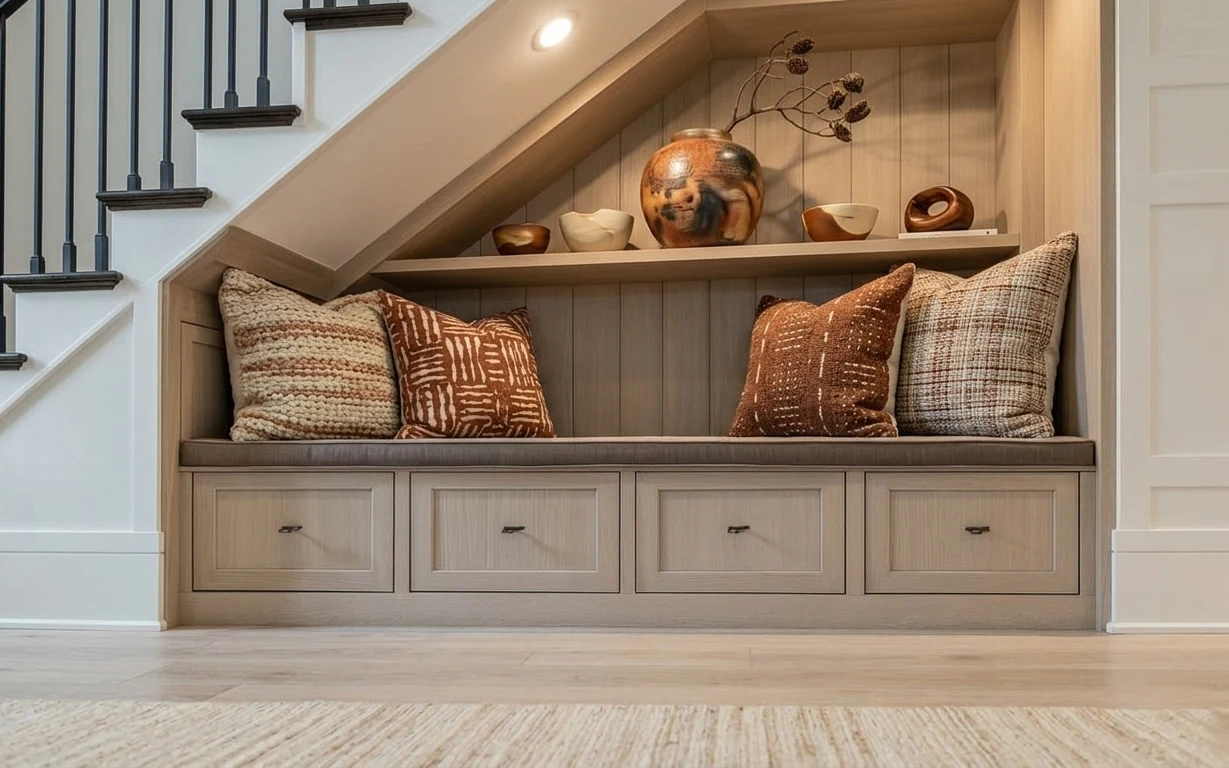
Under $300: boho daybed nook swaps for a renter-friendly refresh
A boho daybed nook already gives you the built-in base—now layer it with a warm rug, patterned throw pillows, and a styled copper vase arra…