- Best for
- Cozy, textured living rooms
- Cost
- Under $400
- Difficulty
- Easy swaps + textiles
- Time
- 1 weekend
Why warm earthy-neutrals is the move-friendly living room of 2026
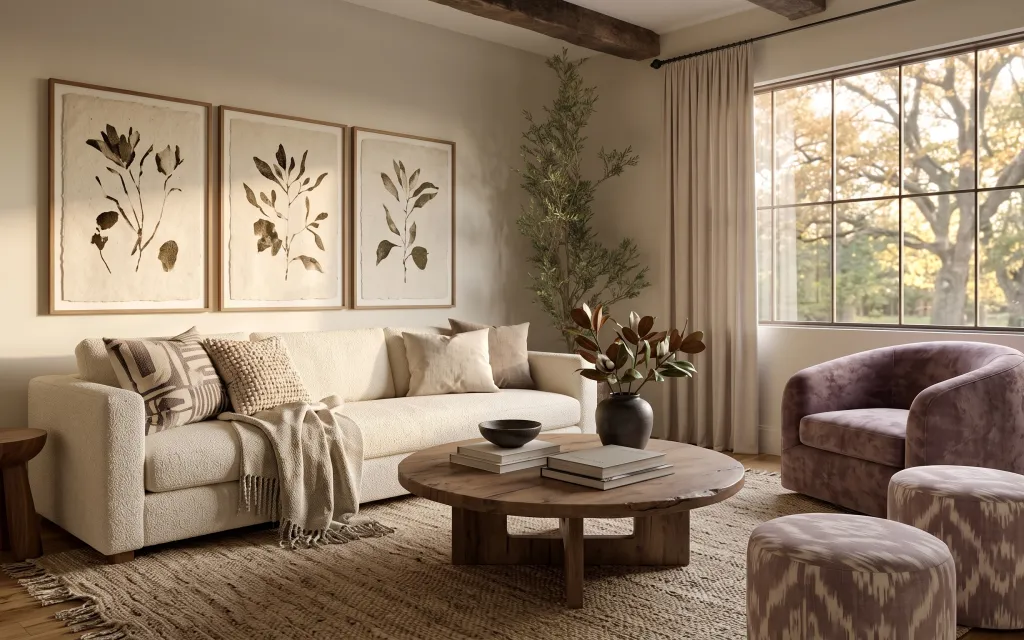
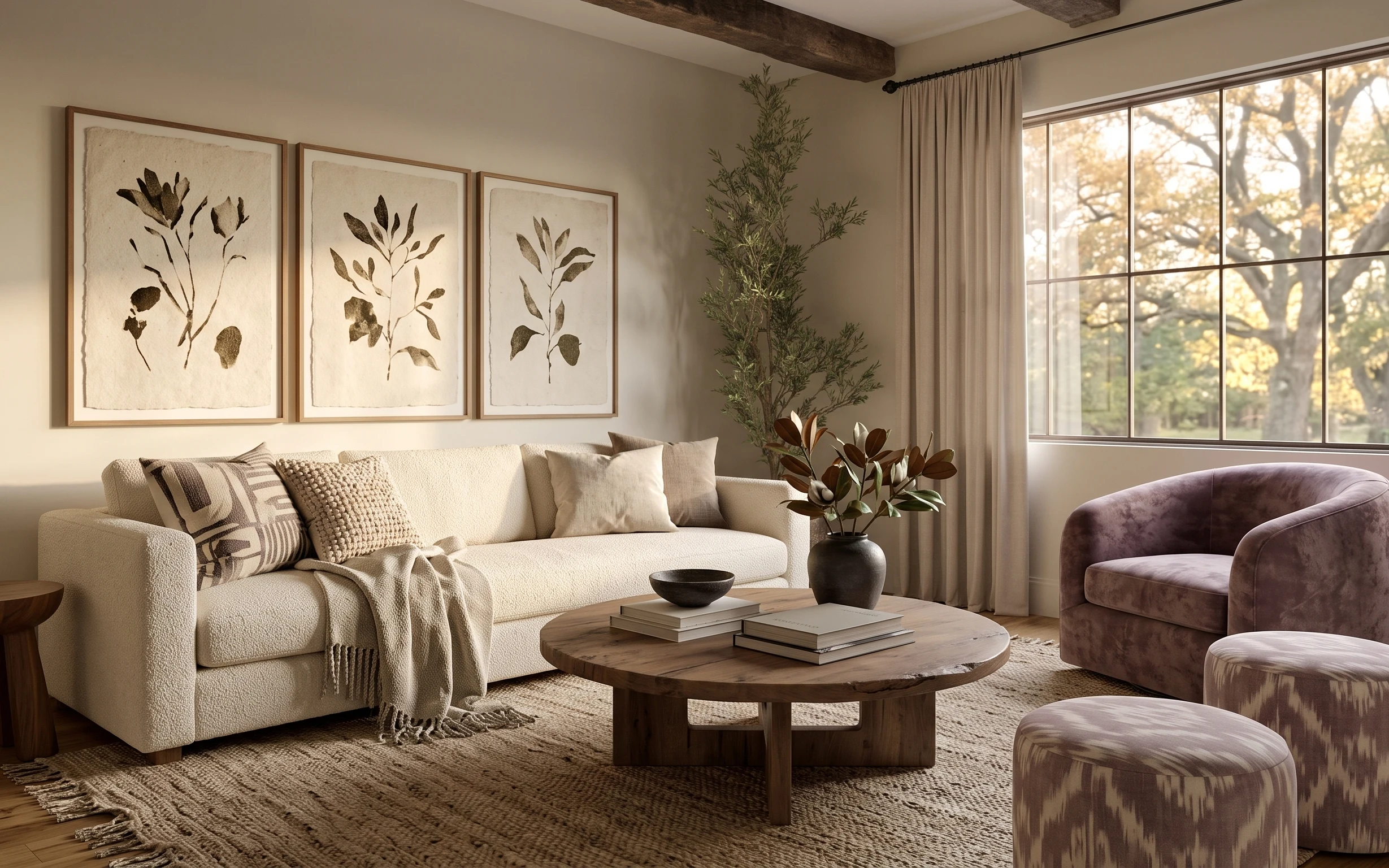
The hero space starts with three things that always travel well: a jute area rug, a soft cream sofa, and a cluster of warm-wood framed botanical prints. You can see the textures doing the heavy lifting—looped rug fibers, a nubby throw blanket, and the matte ceramic vase—so the room reads calm instead of busy. It’s also built around daylight from the big window and that “morning coffee” warm palette (cream, beige, walnut brown), which is easy to recreate with basic thrifted finds and new soft goods for shared housing.
One mistake I used to make in shared apartments was buying “statement” decor that was too precious to move. I’d end up leaving pieces behind because they were bulky or permanently mounted. This time, the goal is the opposite: swap in items that can go in flat boxes or roll up with the rug, then let the textures and framed prints carry the personality. When the room feels cohesive by materials instead of permanence, it’s way less stressful when leases change.
Layer 1 — jute area rug 5×7 ($100) textured underfoot
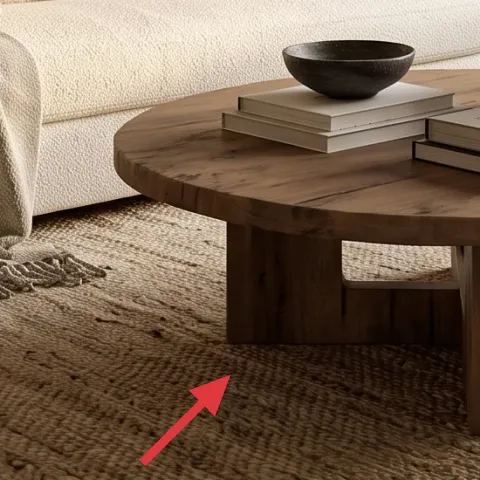
Choose a 5×7 jute area rug to anchor the room’s earthy-neutrals base. In the photo, the rug’s looping, natural texture gives the sofa and coffee table a grounded “foundation” so the light beige tones don’t float. The trade-off with jute is that it can be a little rougher underfoot than synthetic options, but that same texture makes it look real rather than plastic. A jute rug also rolls up for moving, which matters a lot in shared housing where you’re packing on a deadline.
Layer rug texture with softer throw fibers
Keep other fabrics slightly plush (like a nubby throw) so the rug’s texture feels intentional, not scratchy.
Layer 2 — cream throw blanket ($35) drapes over the sofa arm
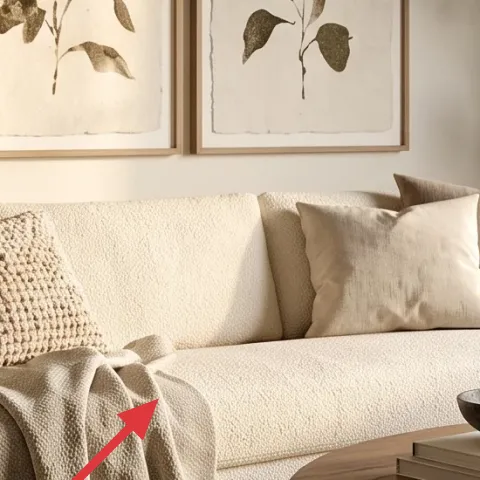
Add a cream throw blanket that actually looks like it’s meant to be touched. In the hero, the throw is draped over the sofa arm and folds naturally, which is why it reads styled instead of thrown on. This is an easy swap that works even if the sofa stays the same—because you’re changing texture at a visible height. The obvious alternative would be swapping pillows only, but blankets create that “depth” in the mid-layer and make the sofa feel lived-in without needing new furniture.
Keep the color warm, not gray-beige
Look for cream or oatmeal undertones so it stays cohesive with the walnut-brown framing and the golden-hour window light.
Layer 3 — small round wooden side table ($35) near the left sofa edge
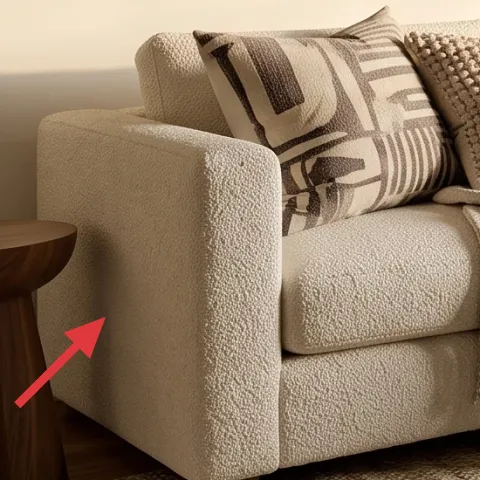
A small round wooden side table is the quickest way to add “surface logic” in a living room. In the photo, it sits at the left edge of the seating area, balancing the coffee table and giving you a place for a book stack, a small vase, or just a spot to set down a mug. It’s also renter-friendly because it’s freestanding and can tuck close to the sofa when you pack. The trade-off is fewer display shelves than a tall end table, but for shared spaces, that simplicity reduces clutter and keeps the room flexible.
Don’t overshoot with a tall, wobbly table
In a move, flimsy legs get annoying fast—choose a solid round top so it survives storage and reassembly.
Layer 4 — round wooden coffee table ($100) center focus with book stack
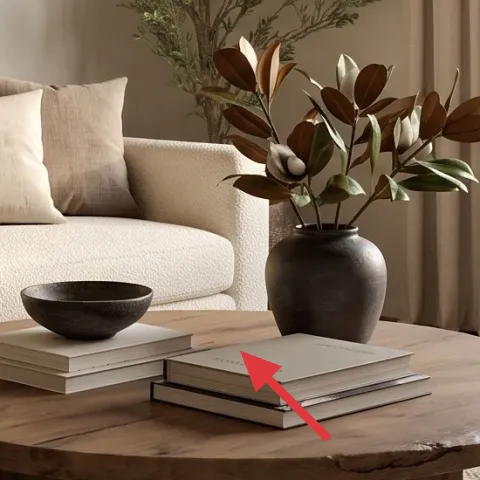
Go for a round wooden coffee table as the visual “meeting point” for the room. The hero’s table shape softens all the straight lines from the window and keeps the botanical wall prints feeling calm. The wood tone also ties directly into the warm-wood frames, so the palette feels intentional instead of random. The trade-off with round tables is less edge space than a rectangular one, but it’s worth it for movement-friendly staging—smaller items can be grouped neatly on top, and you can carry decor around without rethinking the layout every time you move furniture.
Use one low centerpiece, not three tall items
A small book stack plus a single vase keeps sightlines open and makes packing easier.
Layer 5 — three framed botanical prints ($80) cohesive warm-wood framing
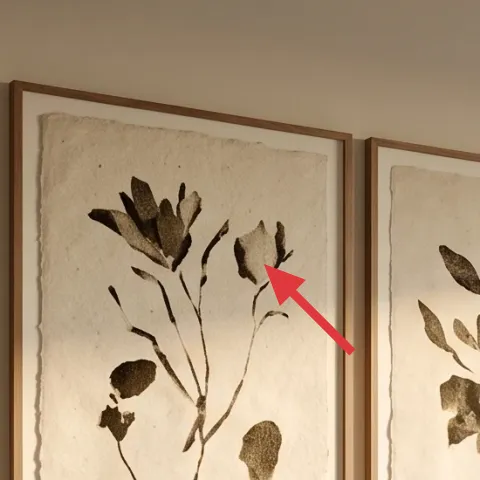
Lean into the triptych look with three framed botanical prints that share frame color and paper tone. The photo shows the set placed as a unified cluster on the wall, which instantly makes the room feel “designed” even though the rest is mostly soft neutrals. For shared housing, the biggest advantage is that framed prints are compact—each frame is easy to box with padding and keep protected. The obvious alternative would be mixing random sizes, but that usually creates a mismatch after the first move. A coordinated trio keeps everything consistent, lease after lease.
Match the frame warmth to the wood surfaces
If the frames are warm walnut-brown, repeat that warmth with the coffee table or side table so the palette stays cohesive.
Layer 6 — dark ceramic vase with tall potted plant ($30) beside the window
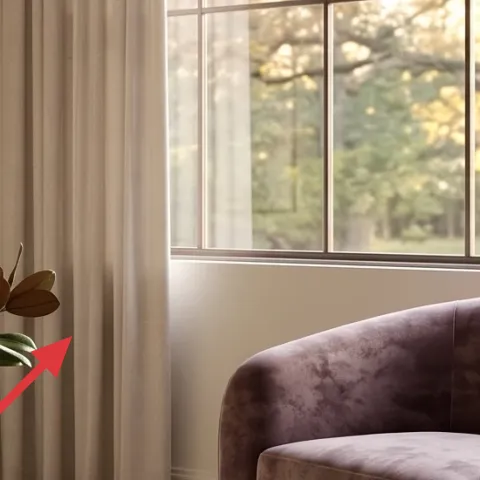
Add a dark ceramic vase with a tall potted plant to bring height and calm greenery into the corner by the window. In the hero, the plant’s vertical silhouette breaks up the horizontal seating lines and adds a natural “breathing space” between the curtains and the framed prints. This also helps avoid the common shared-housing problem of rooms looking flat once you remove a big piece of furniture. The trade-off is maintenance—plants need light and occasional watering—but the upside is that the vase and plant can be wrapped and moved without special tools.
Let the plant do the styling work
A taller plant near the window usually beats adding extra knickknacks around the coffee table.
Layer 7 — dyed pillow covers ($30) matching pattern scale on the sofa
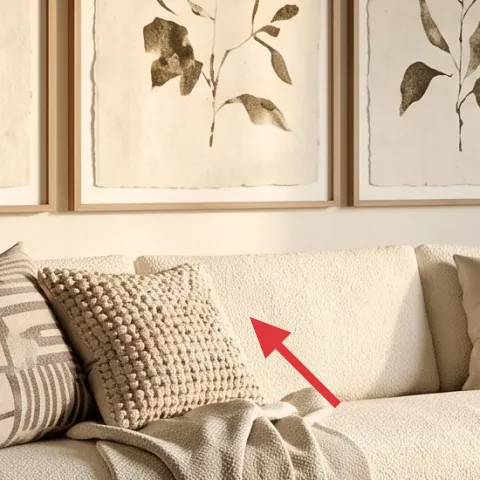
Skip the “buy new throw pillow” cycle and instead dye pillow covers to match the room’s palette. The hero already has a patterned pillow and textured pillows on the sofa, so the missing piece is a color bridge that makes the patterns feel like one set. Dyeing is a good shared-housing move because covers are lightweight and pack flat, and you can do it once to refresh the look without replacing the whole sofa. The trade-off is you have to be careful with fabrics and drying time, but the payoff is a coordinated sofa that looks styled even in daylight.
Make it instead of buying it
DIY-dye pillow covers so the patterns sit inside the same warm beige-and-walnut palette without buying new pillows each move.
Materials
- White cotton pillow covers — 2 covers — fabric store — $12
- Fabric dye (warm brown or cocoa) — 1 kit — craft store — $8
- Salt (for dye setting) — 1 box — grocery store — $5
- Drop cloth / plastic sheeting — 1 roll — hardware store — $5
Steps
- Wash and fully dry the pillow covers so the dye takes evenly.
- Mix dye solution with warm water and salt exactly per the kit instructions.
- Submerge one cover and stir occasionally for even color.
- Rinse under cool water until the water runs clearer.
- Dry thoroughly, then fluff and place the covers back on the sofa.
The cost, layer by layer
| Layer | Item | Cost |
|---|---|---|
| 1 | Jute area rug 5×7 | $100 |
| 2 | Cream throw blanket | $35 |
| 3 | Small round wooden side table | $35 |
| 4 | Round wooden coffee table | $100 |
| 5 | Three framed botanical prints set | $80 |
| 6 | Dark ceramic vase with tall potted plant | $30 |
| 7 | Dyed pillow covers | $30 |
| Total | $390 | |
If dyeing pillow covers feels like too much, a cheaper variant is buying two coordinated throw pillow covers in warm cream and cocoa tones instead. It usually lands in the same price neighborhood, but you avoid rinsing and drying time.
What worked, what didn't (across the whole room)
The biggest win is that the room’s look is built from materials—jute texture, cream fabric, warm wood frames, and a dark ceramic vase—so it reads cohesive without permanent upgrades. The second win is movement-friendly staging: rug, soft goods, and freestanding side pieces pack far better than fixed installs. The only weak spot is that plants and natural fibers both need practical upkeep, especially when you’re busy during midterms.
What worked
- The jute rug’s texture keeps the cream sofa from looking washed out next to warm wood frames.
- Draping a cream throw on the sofa creates depth without changing the main furniture footprint.
- A small round side table adds a useful landing spot near the seating without bulk.
- The round coffee table softens the window’s strong lines and supports an easy book-and-vase vignette.
- Matching frames across three botanical prints makes the wall feel intentional, even when it’s just frames.
- A dark vase with a tall plant adds vertical contrast and breaks up the visual “horizons.”
What didn't
- Natural fibers like jute can snag over time, so they need careful vacuuming and prompt spot cleaning.
- Textile layering can get too beige if the throw and pillows don’t share the same warm undertone.
- Plants look great but require consistent watering, which is easy to forget during packed schedules.
- Too many small decor objects around the coffee table makes the room feel cluttered after one move.
- Buying random frame sizes without a shared frame color tends to look off once lighting changes.
What we'd skip if we did it again
Skip buying a matching furniture set for the living room. In shared housing, those sets often lock you into bigger pieces you don’t want to move, and they rarely account for your window light or wall size.
Skip permanent wall solutions like hanging systems that require hardware you can’t remove cleanly. Framed botanical prints are already compact, so it’s easier to protect them and rehang them later.
Skip going all-in on one “statement” item without building in texture. A jute rug plus a cream throw and warm wood frames are what make the look feel finished, even when you’re only changing a few pieces.
Frequently asked
How long does this living room refresh take?
Most of the time is simple placement: getting the rug centered, draping the throw, and arranging the book stack and vase on the coffee table. Framed botanical prints take the longest part if you’re double-checking spacing for a triptych look. Realistically, plan for one weekend day plus a couple of hours the next day if you’re fine-tuning corners and lighting angles.
Is this doable in a rental where nothing can be permanent?
Yes—everything here is either a soft good, a freestanding piece, or a framed wall item you can pack and move. The coffee table, side table, rug, throw, and pillows all dismantle quickly. The framed prints are the only “wall” element, but they’re typically removable as whole units rather than permanent installs.
What if my living room is smaller than this photo?
In a smaller room, keep the same palette but scale back the number of decorative “vignette” items on the coffee table. One book stack plus one vase is enough. Consider a slightly smaller rug, and place the side table closer to the sofa so there’s still a clear walkway to the armchair and ottoman.
What if my living room has darker walls or less window light?
Lean brighter with the throw and pillow covers so they keep the room from going flat. If the wall feels heavy, a lighter cream rug pile and warm wood frames become even more important because they reflect the light you do have. The plant also helps—green reads lively even in lower light.
Where should I shop for the key pieces without going over budget?
Start with soft goods and frames at big-box retailers and home decor resellers, then look for the coffee table and side table at thrift stores or discount furniture sites. Jute rugs are often cheaper during seasonal sales. For plants and vases, local garden centers are usually the easiest route for a quick, healthy-looking plant.
What’s the biggest mistake people make with this style?
Overbuying small decor. This style works because textures and coordinated frames do the heavy lifting, not because there are lots of separate objects competing on the coffee table and side table. Another common miss is choosing cool-gray beiges, which fight the warm wood and make the whole room feel slightly off under daylight.
More in Living Room
Under $400: earthy-neutrals living room refresh with move-ready swaps
A warm, golden-hour living room look built from renter-safe swaps: rug, throw, framed prints, and a few small stand-out pieces. This refres…
Under $700: 7 weekend upgrades for a living room seating area
A bright, earthy living room seating area can look pulled-together with simple weekend swaps. This refresh uses 7 budget-friendly layers (r…
Under $400: renter-friendly cactus corner refresh
Turn a plain corner into a desert-modern cactus corner for under $400. This renter-friendly refresh uses warm string lights, an abstract pr…