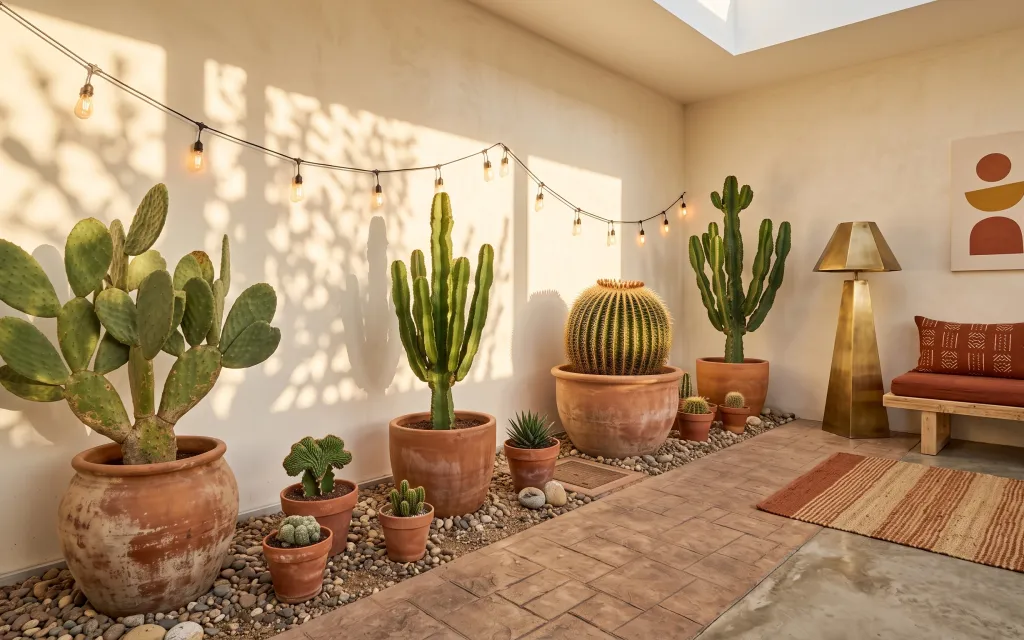
- Best for
- Plant displays + cozy lighting
- Cost
- About $400
- Difficulty
- Beginner-friendly
- Time
- 1 weekend
Why olive-and-terracotta indoor desert decor is the cactus corner of 2026
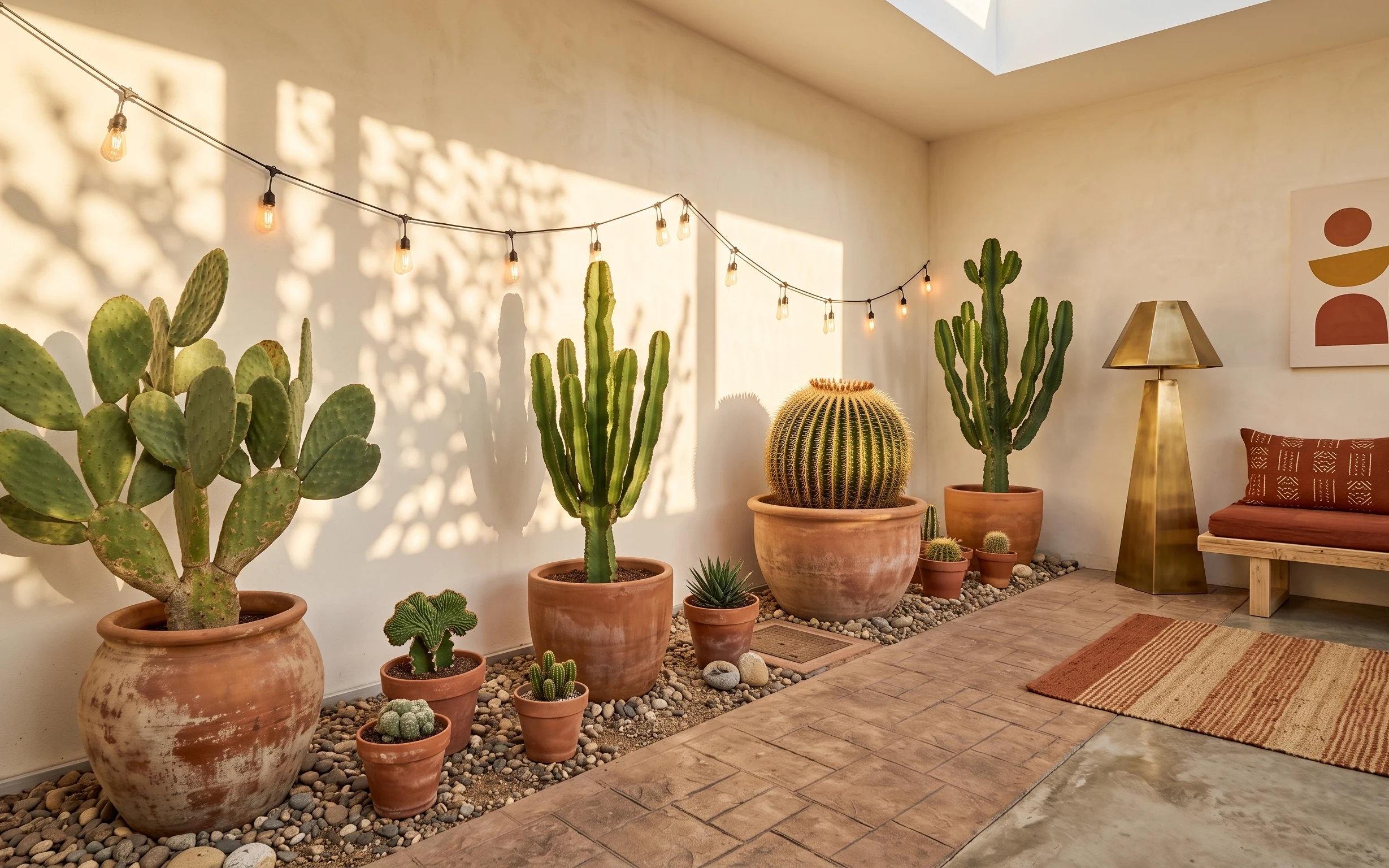
Start with the texture contrast: the woven area rug anchors all the clay-toned and olive-green plants, while the plaster wall and tiled floor keep the background calm. I’m also leaning on the warm brass feel from the floor lamp and the soft glow of string lights—this is the same “golden hour” lighting direction you see in house tours from Architectural Digest. On the wall, the framed abstract wall art adds shape without competing with cactus silhouettes. The best part for renters is that you can build this look with freestanding pieces and plug-in lighting.
I once tried to make this kind of corner work with only one big statement plant and it looked lopsided—like a photo prop, not a lived-in setup. What fixed it for me was adding a grounding rug, then bringing in lighting at ceiling-to-eye level with the string lights. After that, the bench with a patterned pillow made the corner feel like somewhere you’d actually sit, not just look at.
Layer 1 — woven area rug ($80) Tie down the desert palette underfoot
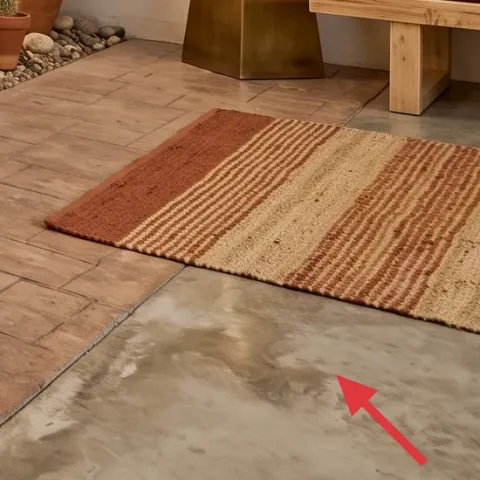
This woven area rug sits on the tiled floor and gives you an instant “fabric layer” that the eye can rest on. It’s the bridge between terracotta pots, olive cactus shapes, and the warm brass lamp—otherwise the corner can feel too brown-green and too graphic. I’d skip a flat, low-pile synthetic rug here because the subtle texture helps hide everyday scuffs and gravel bits when you’re rearranging planters. The trade-off is that woven rugs can shed a little at first, so you’ll want to vacuum gently and consider a rug pad if your floor is slippery.
Texture first, pattern second
The rug’s warm stripe reads “desert” without you having to find matching bedding-style prints.
Layer 2 — string lights ($20) Warm, overhead glow without wall work
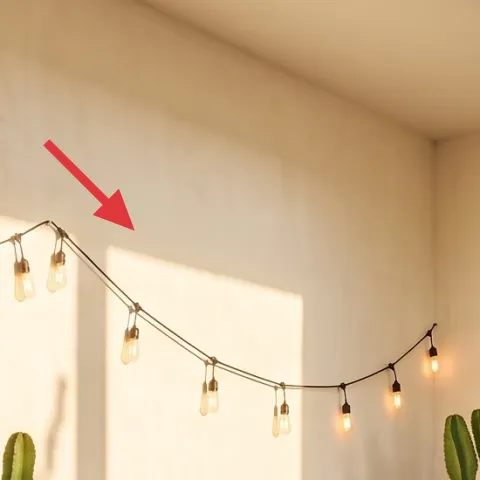
The string lights hang across the upper half of the corner, turning an otherwise blank wall space into a soft halo. Because the lights are visual “vertical lines,” they make the cacti look taller and the corner feel more intentional. I went this route instead of only floor-level lamps because it adds depth: one light source at the bottom plus a second at eye-height looks layered even in a small footprint. The trade-off is that you’ll need a place for the cord to route safely, so aim for locations where it can sit without stretching across pathways.
Use warm bulbs for the same color story
Warm light keeps terracotta orange and olive green from looking flat or gray.
Layer 3 — framed abstract wall art ($60) Shapes that echo plant silhouettes
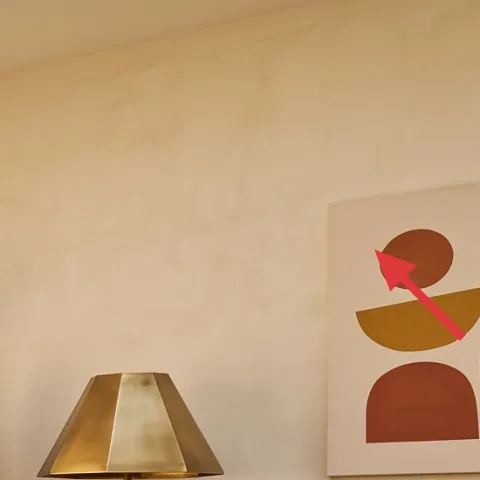
The framed abstract wall art on the right balances all the organic plant shapes with clean, graphic color blocks. It’s especially useful here because the wall is otherwise a smooth plaster field—so the art gives you a focal point when the lights are off. I’d choose an abstract print over a cactus-themed print because it still feels modern and doesn’t turn the corner into a costume. The trade-off is scale: if the frame is too small, it disappears behind the string lights, so keep it big enough to read at a glance from the rug.
Pick a frame that can move with you
A freestanding-friendly frame makes it easy to refresh the wall in your next rental.
Layer 4 — brass floor lamp ($90) A grounded light source at bench height
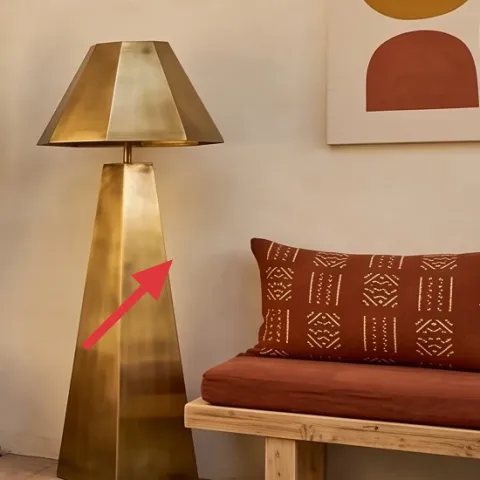
The brass floor lamp adds that warm-metal contrast that makes terracotta pots look richer and less dusty. It also gives you one controllable, plug-in light source that complements the string lights. I like placing it near the bench because the light lands around the seat height, which makes the whole corner feel more “for humans” and less like a plant display. The trade-off is footprint: a floor lamp takes up space, so keep it slightly tucked by the wall and make sure the base doesn’t block walk lines across the tiled floor.
Watch for cord clutter
Route the plug and cord so they don’t cross in front of the rug edge.
Layer 5 — wood bench ($80) Instant seating moment for the corner
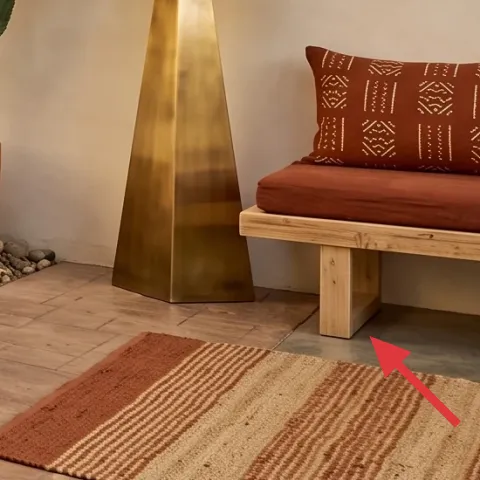
The wood bench turns the cactus corner from “decor shelf” into a place you can sit with a book. In this setup, it also adds horizontal structure that balances the vertical cactus silhouettes and the curving string light line. I’d rather use a simple wood bench than a bulky ottoman because you keep the palette airy and the corner stays open against the tiled floor. The trade-off is comfort: if you want extra cushioning, you’ll be relying on textiles like a pillow, so choose a cushion/pillow combo that’s actually pleasant to lean on.
Let the bench match the metal tone
Warm wood with warm brass keeps the whole desert vibe cohesive.
Layer 6 — patterned throw pillow ($30) Small print that softens the hardscape
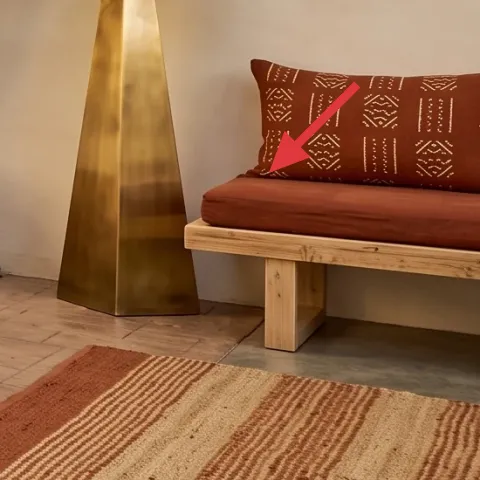
The patterned throw pillow on the bench adds a “soft landing” right where your eye naturally drops—bench height is prime pillow real estate. The terracotta-and-cream pattern pulls from the pot color while still reading like textile, not another plant silhouette. I’d skip a solid-color pillow because the pattern gives the corner visual rhythm alongside the framed wall art and the string light bulbs. The trade-off is that patterns can look busy next to strong plant shapes, so choose a print with a limited palette and repeat colors you already have on the floor.
Match one color, not five
Picking up terracotta is enough—avoid trying to match every cactus shade.
Layer 7 — terracotta plant pots ($40) DIY paint for a uniform, desert-modern look
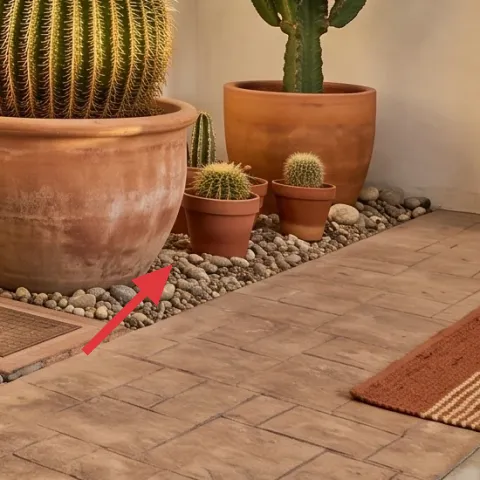
Terracotta plant pots pull the whole palette into one material family, which is what makes the corner feel styled instead of random. Even if you start with different pot shapes, a consistent finish—like the sun-warmed terracotta effect you see here—makes everything look curated. I like using paintable terracotta pots because you can keep the plants you already have while upgrading the “container look” to match the rug and lamp tones. The trade-off is patience: paint needs time to dry between coats, but it’s still a renter-friendly, no-wall-attachment project.
Make it instead of buying it
Paint a small set of terracotta pots so multiple cactus planters look like one cohesive collection, even when the pots don’t match.
Materials
- Acrylic craft paint in terracotta (1 small bottle) — 1 — craft store — $18
- Acrylic craft paint in warm clay/umber (1 small bottle) — 1 — craft store — $7
- Disposable foam brush or small brush — 2 — craft store — $3
- Painter’s tape — 1 roll — craft store — $0
- Drop cloth or paper towels — 1 set — household — $2
Steps
- Lay out a drop cloth and tape off any rim area you want to keep natural.
- Clean the pot surface with a dry cloth so paint won’t cling to dust.
- Brush on the base terracotta color in thin, even coats.
- Wait for the first coat to dry fully before adding a second coat.
- Lightly dab the warm clay/umber paint on high spots for depth (keep it subtle).
- Let the whole pot dry completely before moving it into the cactus corner.
Total DIY cost: $30 — saves about $10 over buying.
The cost, layer by layer
| Layer | Item | Cost |
|---|---|---|
| 1 | Woven area rug (about 5×7) | $80 |
| 2 | String lights set (warm bulbs) | $20 |
| 3 | Framed abstract wall art (about 16×20) | $60 |
| 4 | Plug-in brass floor lamp | $90 |
| 5 | Wood bench | $80 |
| 6 | Patterned throw pillow | $30 |
| 7 | Painted terracotta planter set | $40 |
| Total | $400 | |
If you want a cheaper version, scale back to one big rug plus one light source: choose a lower-cost framed print, swap the bench for a simpler side table, and paint only one or two pots instead of a whole set.
What worked, what didn't (across the whole room)
The corner reads intentional because lighting and texture stack vertically (string lights) and horizontally (rug + bench). The terracotta-and-olive palette stays cohesive thanks to repeated material tones across pots, pillow, and rug. The only thing that can sabotage the look is uneven pot finishes or cluttered cords.
What worked
- The woven area rug grounds the tiled floor and makes the plant arrangement feel less “floating.”
- String lights add overhead depth so the cactus silhouettes look taller and more curated.
- The framed abstract wall art gives a modern focal point when the lights are off.
- The brass floor lamp warms up terracotta tones and softens the overall contrast.
- The wood bench creates a usable seating moment right beside the planters.
- The patterned throw pillow adds textile softness that balances the spiky cactus shapes.
What didn't
- Mixing too many pot finishes made the corner look accidental instead of styled.
- Placing the lamp too far from the bench height reduced the cozy, seat-leaning effect.
- If the framed art is placed too low, it competes with the string light line.
- Letting cords drape across the rug edge makes the setup feel messy fast.
What we'd skip if we did it again
Skip buying random matching plants and pots without a finish plan. The fastest way to keep a cactus corner looking styled is repeating one material family—terracotta paint or terracotta pots—and limiting pot textures.
Skip using only one light source. A floor lamp alone can leave the wall and upper plant shapes flat, so overhead string lights make the whole arrangement read deeper and more intentional.
Skip overcomplicated “desert theme” decor. One abstract framed piece, one patterned pillow, and one woven rug are plenty—letting the cacti be the dominant shapes keeps the corner modern instead of costume-like.
Frequently asked
How long does this cactus corner refresh take?
For most renters, the full setup is a 1-weekend project. Plan on 30–45 minutes to arrange the plants and pots, 20–30 minutes to position the rug and bench, and another 15–25 minutes for the lamp and string light placement. If you DIY the terracotta paint, add drying time so you can stack coats without rushing.
Is it renter-safe if I need to pack everything up later?
Yes—this approach is built around freestanding items and plug-in lighting. You’re not relying on wall painting or permanent fixtures, so the rug, bench, lamp, string lights, framed art, and painted planters can all come with you. The only “careful” part is cord management: route cables so they don’t snag during move-out.
What if my space is smaller than the photo?
Go smaller by reducing the number of pot sizes rather than changing the whole formula. Keep the woven rug and one bench moment, then choose either the tallest cactus pot or a medium grouping, not all of them. For the lights, fewer bulbs still work as long as the string line runs across the upper wall area for that overhead depth.
What if my space is bigger and needs more coverage?
Add height and balance. Use the same elements, but scale up the visual weight: a larger framed abstract piece, a wider rug, or a second plant cluster on the opposite side of the bench. String lights can also extend farther across the wall if you keep the line visually centered over the rug and planters.
Where should I shop if I want this look on a budget?
Start with textiles and lighting, because they set the tone. For the rug and pillow, look at big-box home sections and discount home stores; for the lamp, check thrift stores for brass-toned bases and pair them with a compatible shade. Framed art is often cheaper at print shops or discount galleries—choose the colors first, then the size.
Biggest mistake to avoid on a cactus corner?
Pot mismatch without a unifying finish is the number one issue. If terracotta tones don’t repeat, the corner reads like separate items instead of one cohesive vignette. A second common miss is lighting placement—keeping everything at floor level makes the plants look flat, so include overhead string lights for depth.
More in Living Room
Under $400: renter-friendly cactus corner refresh
Turn a plain corner into a desert-modern cactus corner for under $400. This renter-friendly refresh uses warm string lights, an abstract pr…
Under $400: olive-and-cream living room refresh
A living room refresh built around olive-green upholstery, cream curtains, and a soft rug—kept move-friendly for shared housing. This 7-lay…
Under $400: move-ready living room refresh with rug, art, and textiles
A move-friendly living room refresh that leans into off-white + olive tones using a patterned rug, curtain panels, and framed botanical art…