- Best for
- moving-in living room polish
- Cost
- $390 total (under $400)
- Difficulty
- Easy to do
- Time
- 1 weekend afternoon
Why globe-lamp and rug refresh is the media wall corner of 2026
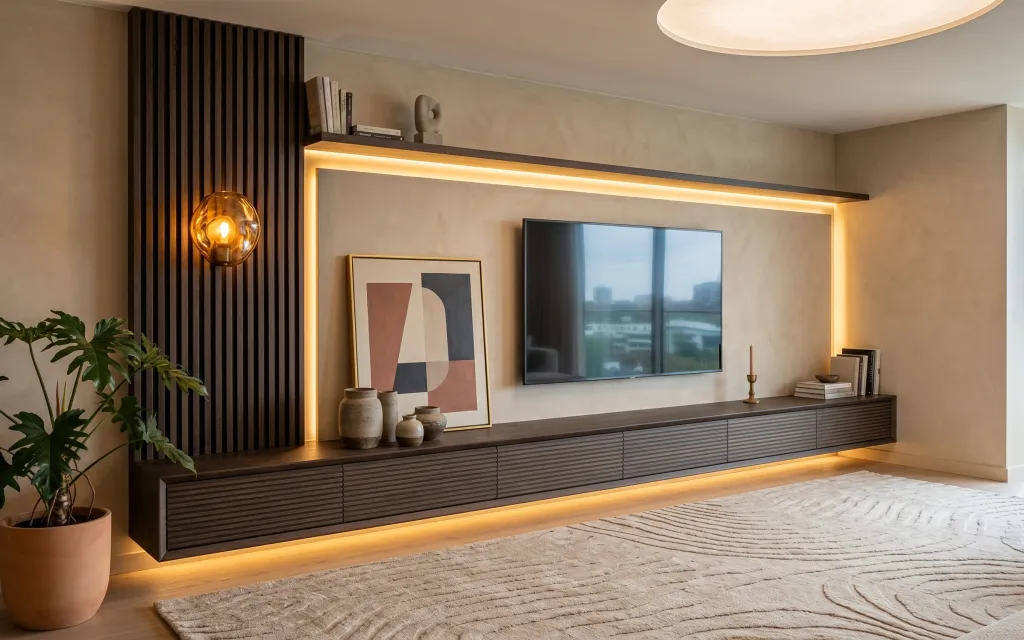
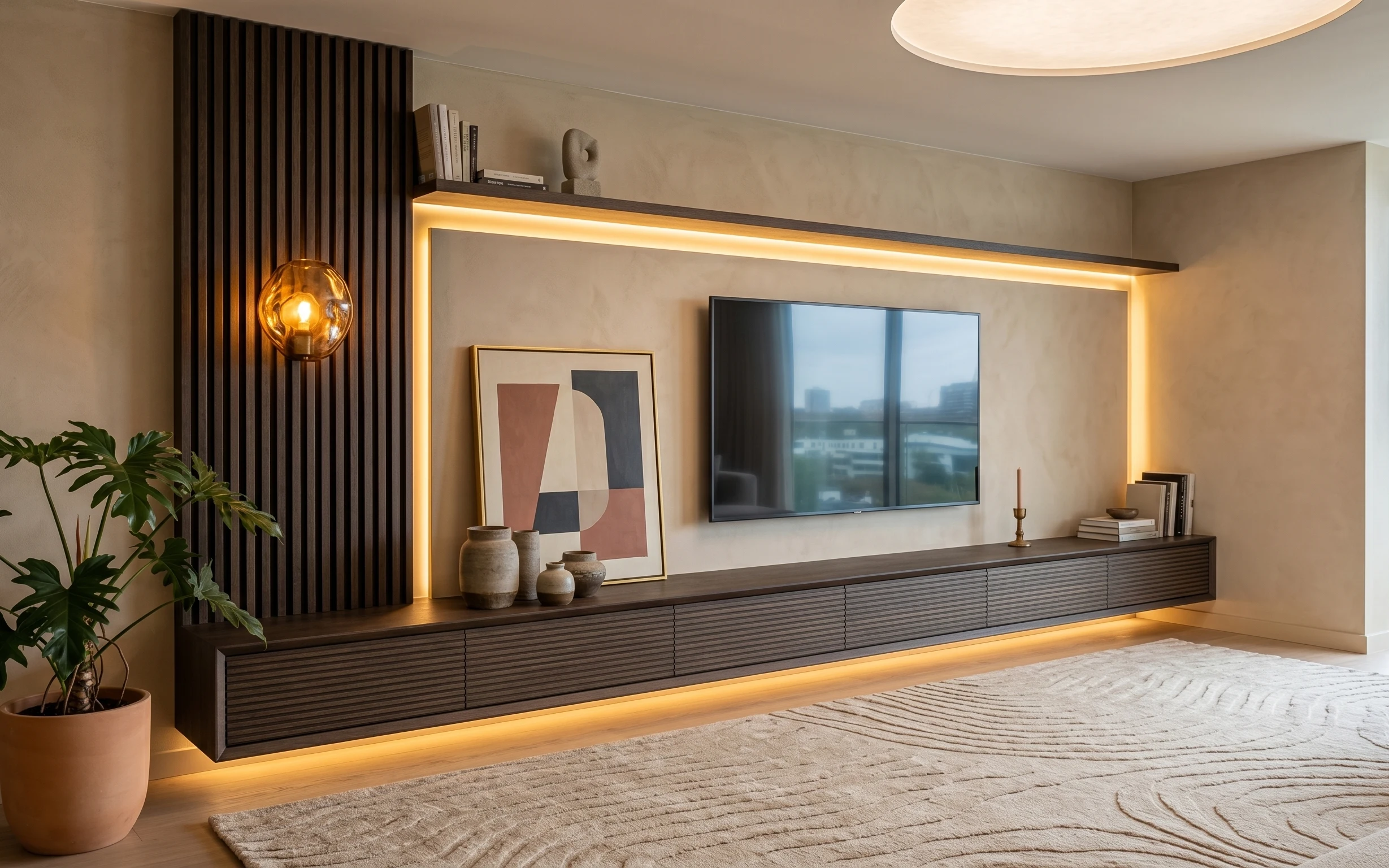
In this photo, the look is all about warm, layered texture: a large patterned area rug, a terracotta pot with a leafy indoor plant, and framed abstract prints that add color without feeling fussy. The glass globe lamp gives that amber, late-afternoon lighting you can’t fake with overheads. Even the styling on the console—books and ceramic vases—reads intentional, not crowded. For shared housing, the best part is that every change here is moveable: it packs into a few boxes and you can recreate it in a new layout fast.
I used to overdo “permanent-looking” decor in my roommates’ places—one time I bought a frame that ended up too heavy for my move plan, and it was annoying to carry. This time around, I focused on light, flat-pack swaps: a framed print you can pop out easily and textiles that roll or fold. What changed my mind was realizing the glow matters more than matching everything perfectly. Keep the warm palette, then swap only the items you’ll actually want to live with again next year.
Layer 1 — Large patterned area rug ($150) anchors the whole palette
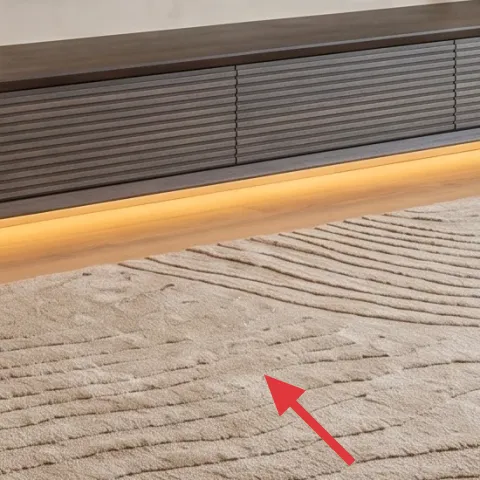
The large patterned area rug is the biggest visual “foundation” in the room, and that’s why it’s Layer 1. Look at how the rug’s light base and subtle pattern calm the darker wood and the warm lamp glow, so the console styling doesn’t feel visually noisy. For shared housing, I’d pick a washable or easy-to-tuck-in rug style in a neutral that still shows texture. The trade-off: a patterned rug won’t hide everything like a solid, but it does better with real-life splashes and makes the room feel finished immediately.
Pattern that hides daily wear
Choose a pattern with low-contrast lines or a mottled look—scuffs and tiny stains won’t jump out as fast as with crisp stripes.
Layer 2 — Large potted indoor plant ($30) adds scale on the left
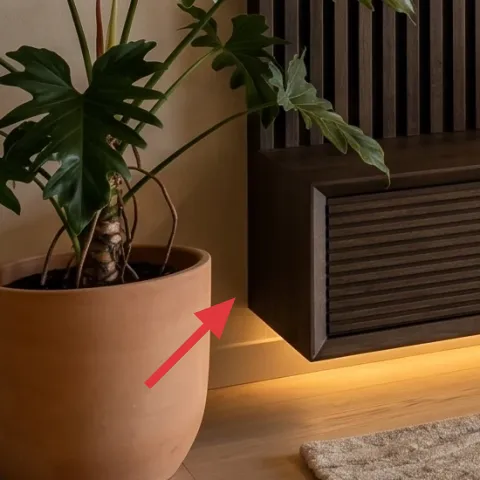
The large potted indoor plant in a terracotta-toned pot creates the vertical balance you need next to a low console. It also softens the straight lines of the built-in and adds that “someone actually lives here” energy without adding clutter. This is the easy swap in shared housing because plants come with you—soil, pot, and all. The obvious alternative is buying another decorative object, but the plant gives movement and height in a way a candle or vase can’t. Trade-off: you’ll need to keep up with watering so it stays lush, but the payoff is the room looking cared-for.
Match pot warmth, not just greenery
In warm modern rooms, a terracotta or clay-like pot blends better than cool gray planters.
Layer 3 — DIY framed abstract print ($80) brings color without the commitment
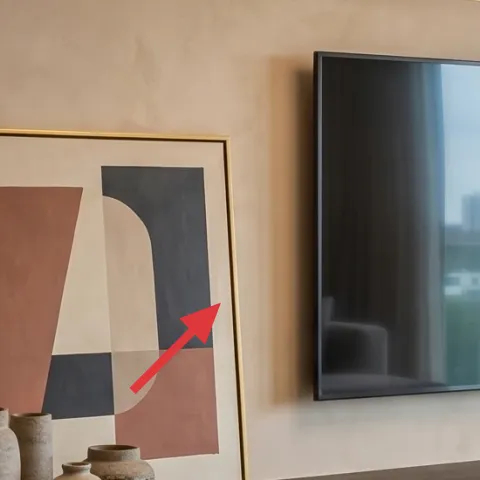
This framed abstract print is the color “anchor” in the middle—peachy warm tones and soft shapes that echo the lamp glow. Since you can’t rely on permanent wall changes in shared housing, a move-friendly framed print is the cleanest way to keep the vibe. The best part: you can DIY the artwork and swap it next year, using the same frame. The trade-off with DIY is that print-perfect edges are harder, but you can lean into the handmade look by choosing bold shapes and letting the texture do the work. Keep the frame size consistent so it reads polished in any layout.
Make it instead of buying it
DIY a hand-painted abstract on cardstock so you can keep the same frame while changing the artwork every move.
Materials
- Cardstock sheets (for 1 finished piece) — 1 pack — $10
- Small acrylic paint set or single-color paints — 1 set — $20
- Foam brush or wide craft brush — 1 pack — $8
- Low-tack craft tape — 1 roll — $6
Steps
- Lightly plan shapes: sketch a 3-block composition with tape-line boundaries.
- Tape off the first shape areas, then paint the largest color block.
- Let it dry 10–15 minutes, then peel tape and paint the next shapes.
- Fill in the last accents with smaller shapes so the final piece feels balanced.
- Let the cardstock dry until fully set (about 30–45 minutes depending on paint thickness).
- Slide into the frame’s backing once dry.
Total DIY cost: $44 — saves about $36 over buying.
Layer 4 — Framed abstract print ($25) repeats the palette for symmetry
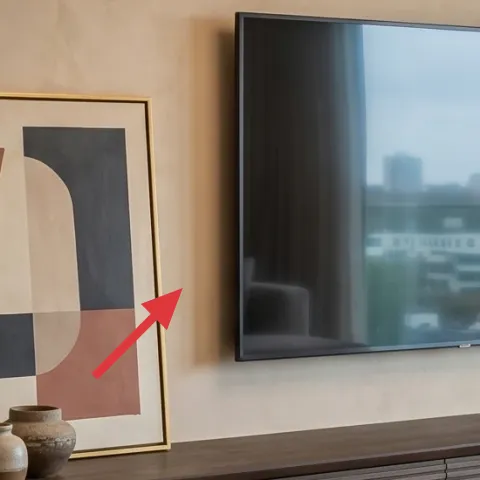
This second framed abstract print works like a visual “echo” to keep the room feeling intentional, not random. Placed near the main art, it picks up the warm, neutral tones so your eye stays in the same color family while you glance toward the console. In a move-friendly setup, having two similar works makes it easier to re-create the look even if the new living room layout shifts by a few inches. The trade-off: you’ll need to coordinate frame color and matte spacing so it doesn’t look mismatched. If you’re short on wall space in your next place, keep the second print and rotate it elsewhere.
Keep the frames the same finish
Matching frame finishes makes two different pieces look like a set without needing a full gallery wall.
Layer 5 — Books on console shelf ($15) makes the styling look lived-in
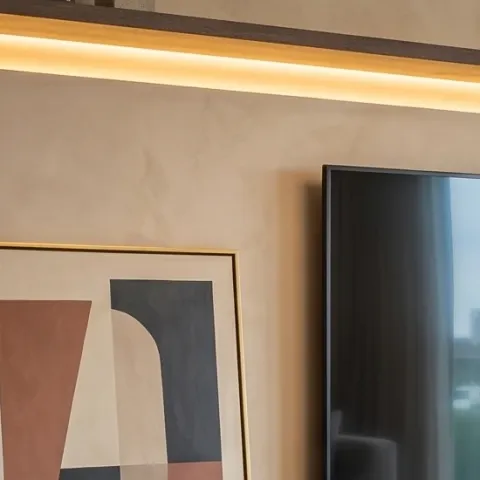
The book stack on the console top gives height variation and texture, especially next to the clean lines of the built-in shelf. In shared housing, books are also a dependable styling tool because they’re easy to pack, and you can refresh their look by swapping covers. The obvious alternative is adding another decorative object, but books add “layers of use” without feeling decorative-only. The trade-off is that you have to choose volumes that don’t clash—neutral spines or muted colors work best with warm beige walls and dark wood. Keep them readable by year if possible, but don’t stress; the styling is the point.
Scale over symmetry
If the console is long, use a short stack with one slightly taller book so it doesn’t look like clutter.
Layer 6 — Decorative ceramic vases ($30) adds tactile warmth at eye level
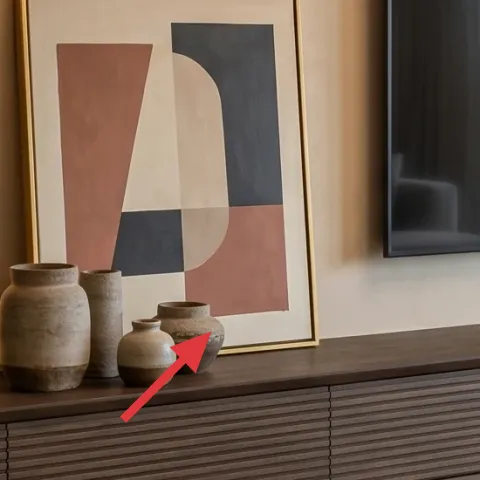
The decorative ceramic vases create that tactile middle-ground between the console surface and the framed art above. The muted, earthy ceramic tones play nicely with the terracotta pot and the amber lamp glow, so the whole palette feels cohesive. For shared housing, ceramics can be a hassle to transport, but if you pick pieces that are smaller (and not too tall), they pack into a box with paper wrap. The obvious alternative is using only one large object, but that can look lopsided on a long console. Trade-off: you’ll need a little wrapping time so they arrive intact, but it’s worth it for the grounded look.
Wrap ceramics like breakables
Don’t just toss vases into a moving bin—use paper cushioning so they can’t knock together.
Layer 7 — Glass globe lamp ($60) gives the amber “after hours” vibe
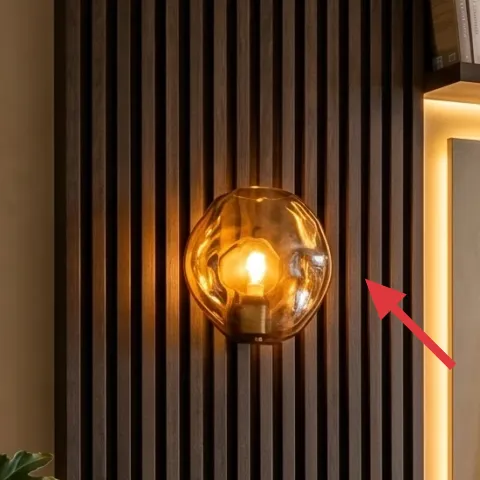
The glass globe lamp is doing heavy lifting here: that glowing, spherical light softens the entire room and makes the warm beige walls feel richer. In a rental, a movable plug-in lamp is the easiest way to get a similar effect without changing any hard fixtures. The trade-off is bulb temperature—too cool and the room turns gray fast. Aim for a warm bulb and position the lamp so it lights up the console surface rather than only the floor. If your next place has different outlets or angles, the lamp is also easy to relocate compared with anything ceiling-bound. This is the lighting “finisher” you’ll notice every day.
Match bulb warmth to the room
Warm, amber-feeling light looks best with beige walls and walnut-toned wood.
The cost, layer by layer
| Layer | Item | Cost |
|---|---|---|
| 1 | Large patterned area rug (8×10) | $150 |
| 2 | Indoor plant (4–6 ft) in terracotta-style pot | $30 |
| 3 | Framed abstract print (DIY artwork in purchased frame) | $80 |
| 4 | Second framed abstract print | $25 |
| 5 | Book stack for styling | $15 |
| 6 | Decorative ceramic vases (small set) | $30 |
| 7 | Plug-in glass globe lamp | $60 |
| Total | $390 | |
A cheaper variant keeps the same layout but swaps the rug for a smaller 5×7 neutral at $80 and uses a $40 plant instead of a larger one. You can also pick one framed print instead of two ($25 saved), then spend the difference on a warmer bulb for the globe lamp.
What worked, what didn't (across the whole room)
The warm-modern recipe here works because it repeats materials and shapes: beige and walnut tones, earthy ceramics, and a single amber light source. The main “system” is layering soft textiles with framed art and a few textured objects on the console.
What worked
- The patterned rug keeps the console styling from looking too sharp against the warm beige walls.
- Two framed abstract prints create visual rhythm without needing a large gallery wall.
- The plant adds real height and softness, balancing the console’s long horizontal line.
- Books add texture at the right height so the shelf doesn’t look empty or bare.
- Earthy ceramic vases make the space feel grounded and lived-in instead of purely decorative.
- The globe lamp turns warm tones richer, especially after dark.
What didn't
- If the globe lamp bulb runs cool, the whole palette shifts gray and feels less cohesive.
- Skipping the rug pattern can make the console styling look too contrasty and “staged.”
- Too many small objects on the console read cluttered in a long built-in opening.
- Frame finish mismatch between the two prints can make the repeat feel accidental.
- A plant that’s too small for the left side makes the room feel unbalanced.
What we'd skip if we did it again
Skip a matching set of console decor from one store. In this room type, mixing textures matters more than buying identical pieces that all look the same in photos.
Skip a cool-white bulb. Even with great decor, a bright bluish glow makes beige walls look flat and makes ceramics feel dull instead of warm.
Skip going heavy on wall anchors or large wall installs. For shared housing, two framed prints plus one “anchor” rug roll much better into boxes than anything permanent.
Frequently asked
How long does this media wall corner refresh take?
Most of the changes are plug-in and box-friendly, so the main pace-setter is the DIY print. Expect about 2–3 hours for rug placement, plant pot positioning, and console styling. Then set aside another 45–60 minutes for drying time while you paint the cardstock art. If you already own frames, the DIY can be the whole evening, and the rest can be done the next day.
Is this really renter-friendly for shared housing?
Yes—everything in the plan is moveable. The rug rolls, plants come with you, and framed prints can be lifted down without permanent work. Styling pieces (books and ceramic vases) are just box-and-reunpack decor. The only “care” item is the lamp bulb choice, because warmth affects how the beige tones read.
What if my living room is smaller or the console is shorter?
If the space is tighter, keep the rug but size down and preserve the neutral base plus pattern texture. For the console styling, use fewer objects: one vase cluster or a single vase plus books, not both. You can also keep just one framed abstract print and move the second frame to a different wall later—symmetry is nice, but scale is what prevents the console from looking cramped.
Where should I shop if I want this warm-modern look on a budget?
Rug deals are usually easiest through discount retailers, especially for neutral patterned options in 5×7 or 8×10. For frames and prints, look for consistent frame finishes at thrift or discount home stores, then buy art prints separately—or DIY the cardstock art and keep the frame. Plants and ceramic vases often show up well in local nurseries and home clearance sections.
What’s the biggest mistake people make with this exact room vibe?
They choose lighting that’s too cool. Warm beige walls and walnut-toned wood need warm illumination to keep the palette cohesive. The second most common mistake is over-styling the console—if there are too many small objects, the room looks busy instead of intentional. Stick to a simple trio: rug texture, two prints (or one), and a cluster of plant + ceramics.
Can I change the framed artwork later?
That’s the whole advantage of the DIY approach. If you keep the purchased frame, you can swap the cardstock artwork in minutes and keep the same layout. It’s a great strategy for shared housing because you won’t be stuck with art you outgrow after a semester or two.
More in Living Room
Under $400: media wall corner refresh with move-ready swaps
A warm, modern media wall corner refresh that’s easy to pack for shared housing: rug, framed art, plant styling, and a globe lamp glow. All…
Under $700: japandi beige sofa corner refresh with 7 layers
A beige sofa corner in warm oak and cream is surprisingly easy to recreate for under $700. This weekend refresh uses 7 targeted buys: rug, …
Under $1000: warm wood-and-terracotta sofa-and-shelf living room refresh
A weekend-friendly living room refresh built around warm wood, cream textiles, and earthy greens. With 7 visible swaps/add-ons, the look la…