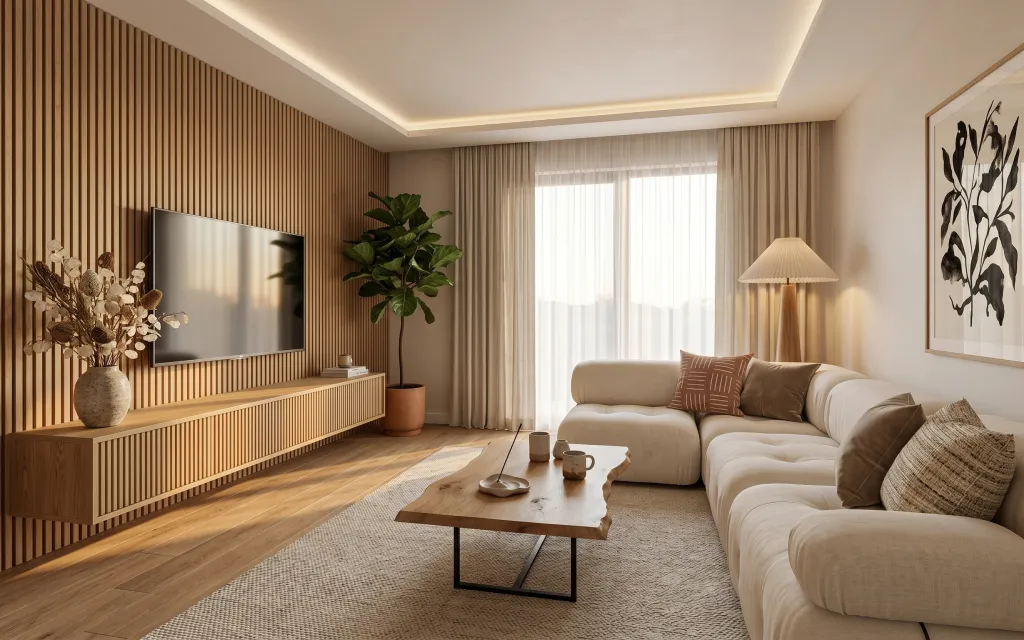
- Best for
- Textured beige living-room corners
- Cost
- Under $700
- Difficulty
- Weekend-friendly, mostly decor swaps
- Time
- 4–7 hours total
Why warm wood-and-cream Japandi look is the beige sofa corner of 2026
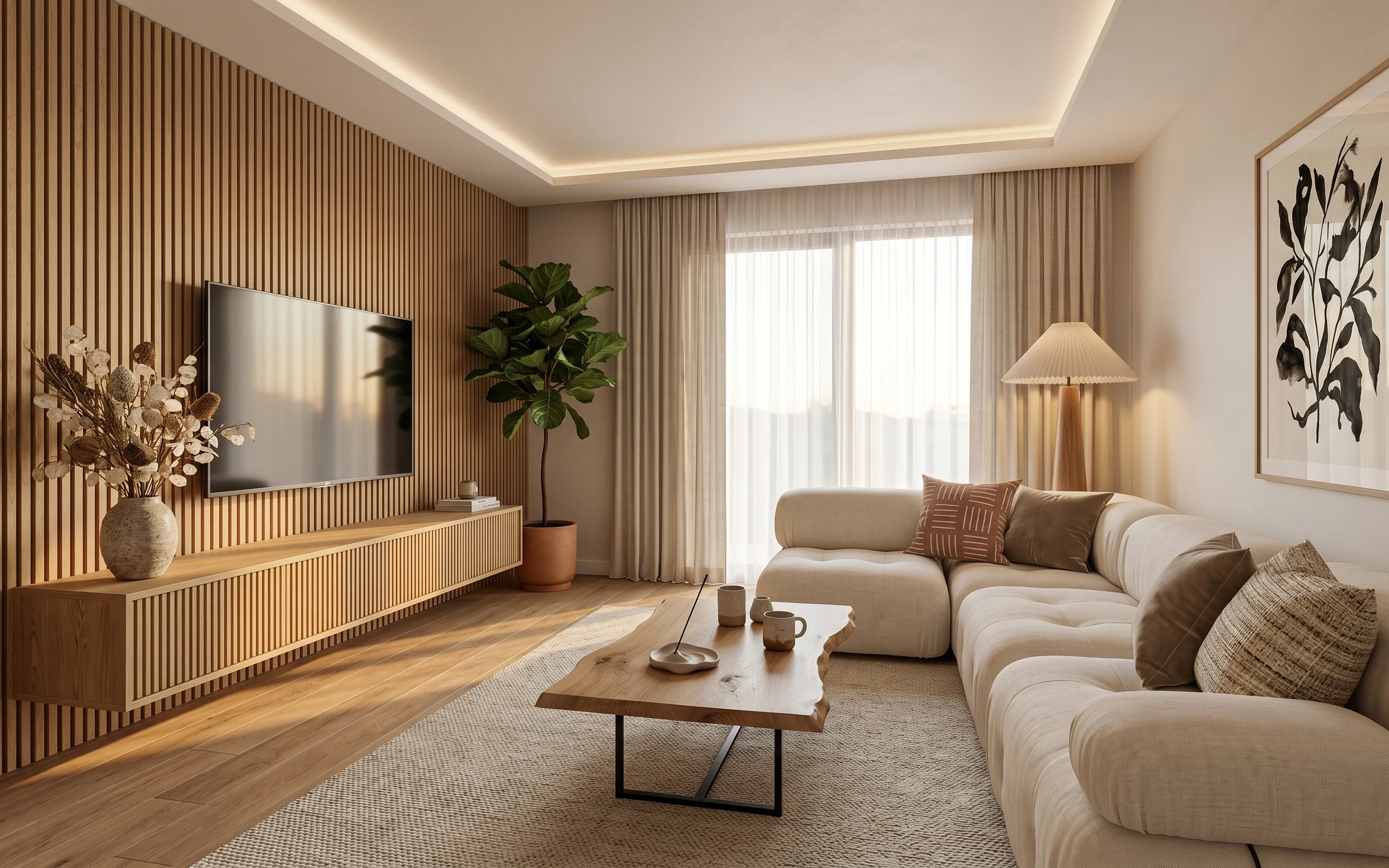
What makes this sofa corner feel done is the mix of linear textures: oak floorboards, a wood slat wall, and those long curtain panels that soften the sightline. Underfoot, the neutral area rug anchors everything, while the live-edge coffee table adds that “real wood” variation you can’t fake with a glossy tabletop. The lamp shade keeps the lighting warm instead of harsh, and the framed botanical print brings in a high-contrast accent without adding color chaos. None of it requires structural changes—this is a classic homeowner refresh route.
I almost grabbed a big, busy wall piece the first time I tried this style—then realized the whole room would start competing with the wood paneling. The moment I switched to a taller, cleaner abstract print and spaced it with intention, the wall stopped feeling loud. I also used to underestimate curtains; now I treat them like framing for the window and let them drape the mood, not just cover the glass.
Layer 1 — Area rug 5×7 ($200) soaks up coffee-table clutter
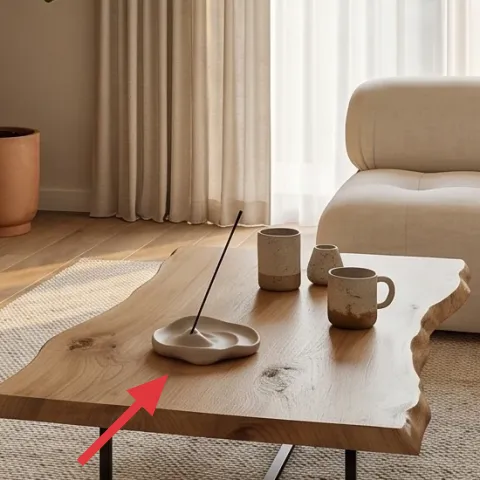
This 5×7 neutral rug sits under the coffee table and extends far enough toward the sofa to create a clear “landing zone.” The texture reads as natural and slightly irregular, which keeps the whole corner from feeling too tidy for real life. The obvious alternative—skipping a rug and relying on the wood floor—makes small messes (crumbs, stray coasters, muddy footprints) visually louder. A rug also helps your lamp and curtains feel intentional, because everything shares the same neutral base. When choosing one, prioritize low contrast and a tight weave over anything too patterned.
Anchor the front legs
Ideally, the sofa chaise side and the coffee table should both feel “tethered” to the rug so the corner reads as one unit.
Layer 2 — Beige curtain panels (pair) ($80) give the window a soft frame
The beige curtain panels in this corner are doing more than covering light—they create a tall, uninterrupted vertical line that balances the wood slat wall’s horizontal rhythm. Hanging them with enough fabric so they puddle slightly prevents that flat, “cheap blind” look. If you go with a matching curtain set that’s too short, the whole room loses height and the sofa corner starts looking cramped. The trade-off here is time spent measuring and getting the rod height right, but the payoff is instant: the room feels calmer the moment the drapes are in. For styling, keep the palette warm and let the curtains act like neutral architecture.
Match undertones, not exact colors
Warm beige curtains work best when they echo the floor’s golden undertone instead of going cool-gray.
Layer 3 — Table lamp with beige pleated shade ($60) keeps light soft at night
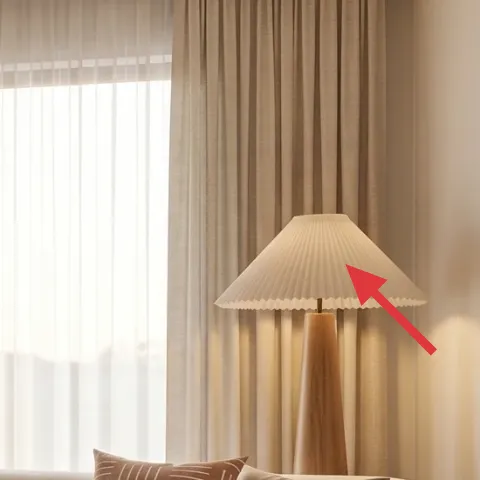
This table lamp’s beige pleated shade is the reason the corner reads warm and gentle instead of bright and clinical. The shade texture diffuses the bulb light, so you get a smooth glow that flatters the wood, the rug, and the neutral pillows. The obvious alternative—using a stark white shade—can make cream decor look a little washed out, especially near a warm wood wall. I’d rather spend on a shade that feels linen-like than chase a fancy base, because it changes how the whole corner photographs. Place it so it lights the sofa side and the coffee table surface, not just the floor.
Use a warm bulb
A warm white (2700K-ish) bulb keeps the cream and oak from turning pink or blue.
Layer 4 — Framed abstract botanical print ($80) adds contrast without extra color
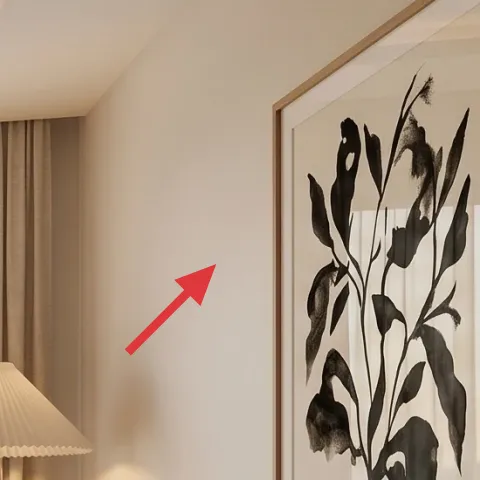
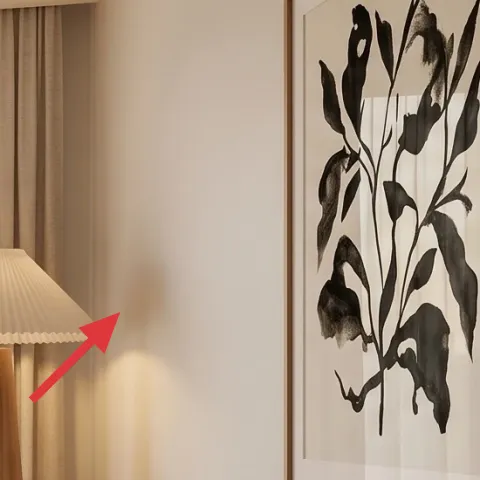
The framed abstract botanical print on the right wall gives you an intentional focal point with strong black-and-cream contrast. Because the print has a restrained palette, it doesn’t fight the wood slats or compete with the plant. A common mistake in this style is choosing a colorful botanical that “replaces” the wood with more visual noise. Here, the print stays graphic: dark shapes on a light background, framed in a warm wood tone. That framing choice matters because it echoes the floor. The trade-off is keeping the print simpler—if it’s too detailed, the room loses the calm, Japandi balance.
Think in visual weight
Place the print at eye level and make it wide enough to hold the wall space, especially beside a sofa arm.
Layer 5 — Wood-and-metal coffee table ($180) adds “real wood” texture
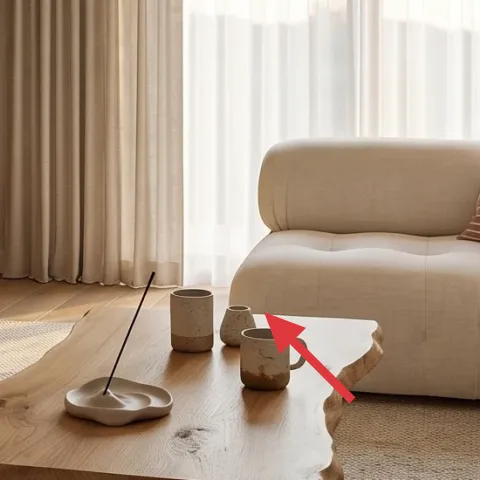
This wood-and-metal coffee table is the texture bridge between the warm oak floor, the wood slat wall, and the softer textiles. The black metal legs keep the look grounded and prevent the corner from going all wood-and-cream. The live-edge shape adds irregularity—tiny imperfections that make the room feel lived-in instead of staged. The obvious alternative would be a perfectly rectangular top, but that reads more modern-minimal and less organic once you add curtains and a plant. Here, the trade-off is practical: live-edge tables show scratches more easily, so use coasters and avoid dragging mugs across the surface. Visually, though, it’s worth it.
Don’t overload the top
If the table is constantly crowded, the coffee-table texture turns into clutter—use two to three objects max.
Layer 6 — Potted indoor plant ($40) brings depth where the wall is flat
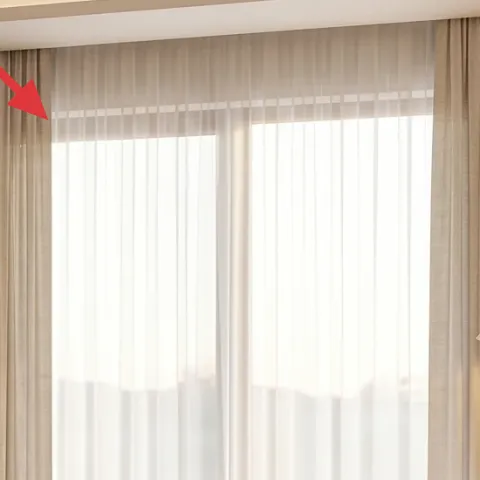
The potted indoor plant with broad green leaves adds the one color note that keeps the corner from being all beige and wood. Its shape matters: wide leaves catch the warm lamp light and make the space feel dimensional, especially near the vertical curtain panels. The obvious alternative—using a small, sparse plant—tends to look like an afterthought, not part of the composition. With a larger plant, you also get a stronger silhouette behind it, which makes the corner feel balanced against the larger wall elements. The trade-off is care and watering, but for the look you’re after, size beats number every time.
Rotate for even leaf growth
Turn the pot a quarter turn weekly so the leaves fill out instead of leaning toward the light.
Layer 7 — Ceramic vase with dried stems ($35) holds the natural texture story
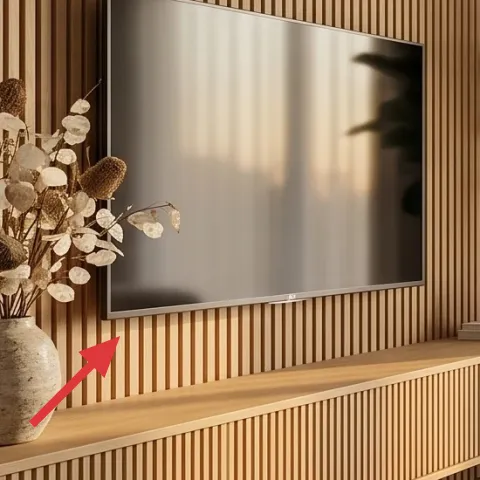
Make it instead of buying it
This painted ceramic vase keeps the same warm, earthy look as the photo without paying for a “styled” vase price.
Materials
- Ceramic primer spray — 1 can — hardware store — $10
- Ceramic paint (matte) — 1 small can — craft store — $10
- Small foam roller or brush — 1 — discount store — $4
- Painter’s tape — 1 roll — hardware store — $3
Steps
- Wash and dry the vase completely, then wipe with a tack cloth so paint sticks.
- Mask any rim area you want to keep unpainted using painter’s tape.
- Spray on ceramic primer in thin coats, letting it dry between passes.
- Apply ceramic paint with a light first coat, then add a second coat for full coverage.
- Let it cure fully per the paint label before styling dried stems inside.
Total DIY cost: $27 — saves about $8 over buying.
This vase-with-dried-stems moment is what gives the corner that “lived-in” organic texture. Painting it a warm, muted neutral helps it blend with the rug and curtains instead of turning into a bold accessory. The dried stems add height and airy movement, which works especially well next to the solid curtains and the structured wood slat wall. Buying a pre-styled vase can feel overpriced for what it is, so this is one of those low-risk DIY swaps where the materials do most of the work. The trade-off is patience for curing and paint coverage—rushing the first coat can leave streaks.
Skip glossy if you want Japandi
Matte or eggshell ceramics read more natural against warm oak and neutral textiles.
The cost, layer by layer
| Layer | Item | Cost |
|---|---|---|
| 1 | Area rug 5×7 | $200 |
| 2 | Curtain panel pair (84") | $80 |
| 3 | Plug-in table lamp with beige shade | $60 |
| 4 | Framed art print 16×20 | $80 |
| 5 | Coffee table | $180 |
| 6 | Indoor plant (4–6 ft) | $40 |
| 7 | Ceramic vase with dried stems (DIY-painted) | $35 |
| Total | $675 | |
If you want the cheaper route, swap the coffee table for a simpler wood-topped table and use shorter curtains (or reuse existing ones) as long as the rod height still matches the tall look. A mid-size plant and a less-expensive framed print can also keep the overall vibe intact.
What worked, what didn't (across the whole room)
This corner’s biggest win is how the neutrals layer with actual texture—rug weave, curtain drape, and wood shapes all show different surfaces. The lighting choice also matters: the warm lamp glow keeps the wood and cream from feeling flat. The only places it can fall apart are when objects are over-cluttered or when the curtains are hung too low.
What worked
- The 5×7 rug visually centers the coffee-table zone and hides small everyday messes.
- Long beige curtains add height and soften the strong wood slat wall lines.
- The pleated lamp shade diffuses light for a warm, flattering glow after dark.
- The framed botanical print adds contrast without adding competing colors.
- The live-edge coffee table brings organic variation that looks better than a perfect rectangle.
- The broad-leaf plant fills empty vertical space with a natural silhouette.
What didn't
- Too much styling on the coffee table makes the textures read as clutter.
- Short curtains flatten the window area and make the whole corner feel smaller.
- A shiny vase finish can fight the matte rug and curtains by reflecting light.
- If the lamp bulb runs cool, cream tones can look slightly off near warm wood.
- A tiny plant looks like decor instead of architecture and breaks the balance.
What we'd skip if we did it again
Skip a second accent color. In this corner, everything is already communicating through texture (rug weave, curtain drape, wood grain), so adding another color note usually makes the palette feel busy instead of calm.
Skip curtains that hit at the sill. Even if the fabric is the right beige, hanging them too low removes the “frame” effect and makes the window feel visually shorter than the sofa corner.
Skip a glossy accessory finish. If the vase or decor reflects too much light, it can look out of place next to the matte rug and the warm, diffused lamp glow.
Frequently asked
How long does this type of living-room refresh usually take?
For most homeowners, plan on 4–7 hours total. Curtain tweaks, rug and table placement, and styling the coffee-table + vase typically takes the bulk of the time. Painting the ceramic vase is usually quick, but curing time is what stretches the schedule. If you’re waiting on drying between coats, keep one day for shopping and setup, then finish details the next day.
Is this renter-friendly if I can’t change the walls?
Yes—this plan is built around items that don’t require demolition. The curtains, rug, lamp, framed print, and plant all work in a rental without changing the existing wall layout. The only “semi-fixed” piece is where your frame hangs, but picture rails, wall anchors, and fresh hanging hardware are usually doable. Keep the look by matching undertones: warm beige curtains, warm wood accessories, and a matte ceramic finish.
What if my room is smaller than this sofa corner?
In a smaller living room, keep the same hierarchy but scale down the coffee-table clutter and plant size. Choose a rug that still reaches under the table—if you can only fit a smaller size, center it and use the lamp + curtains to maintain vertical height. For wall art, go slightly taller rather than wider, so the print holds the wall space without compressing the room.
What if my room is larger and needs more visual weight?
Add weight by choosing a larger rug size (like 8×10), or use two curtain panels per side to get fuller drape. For the plant, size up to a thicker silhouette so it reads as part of the architecture. With wall art, consider a bigger framed botanical print or a second print nearby—just keep the palette neutral so the wood slat wall remains the star.
Where should I shop for these items on a budget?
Start with the biggest visuals: the rug and curtains. For those, look for sales at home goods retailers and check clearance for neutral, low-contrast options. For the lamp, search for plug-in table lamps with beige pleated shades rather than fancy bases. The framed botanical print is often cheaper at art marketplaces with frequent restocks. For the vase, thrift first, then paint it.
What’s the biggest styling mistake in this look?
Over-styling the coffee table and using too many different textures at once. This corner already has strong pattern sources—the rug weave, curtain drape, and wood grain—so the tabletop should stay simple: a tray or a couple objects max, plus one taller element only if there’s space. When the tabletop stays quiet, the plant and wall print do the work.
More in Living Room
Under $700: japandi beige sofa corner refresh with 7 layers
A beige sofa corner in warm oak and cream is surprisingly easy to recreate for under $700. This weekend refresh uses 7 targeted buys: rug, …
Under $1000: warm wood-and-terracotta sofa-and-shelf living room refresh
A weekend-friendly living room refresh built around warm wood, cream textiles, and earthy greens. With 7 visible swaps/add-ons, the look la…
Under $700: warm walnut shelf corner refresh with 7 layers
A warm walnut shelf reading corner refresh that leans japandi: soft light, grounded neutrals, and plant styling. This makeover uses 7 budge…