- Best for
- Fast, renter-safe console styling
- Cost
- Under $400 total
- Difficulty
- Easy (no drilling)
- Time
- 1 afternoon for the whole corner
Why olive-and-brass palette is the console table corner of 2026
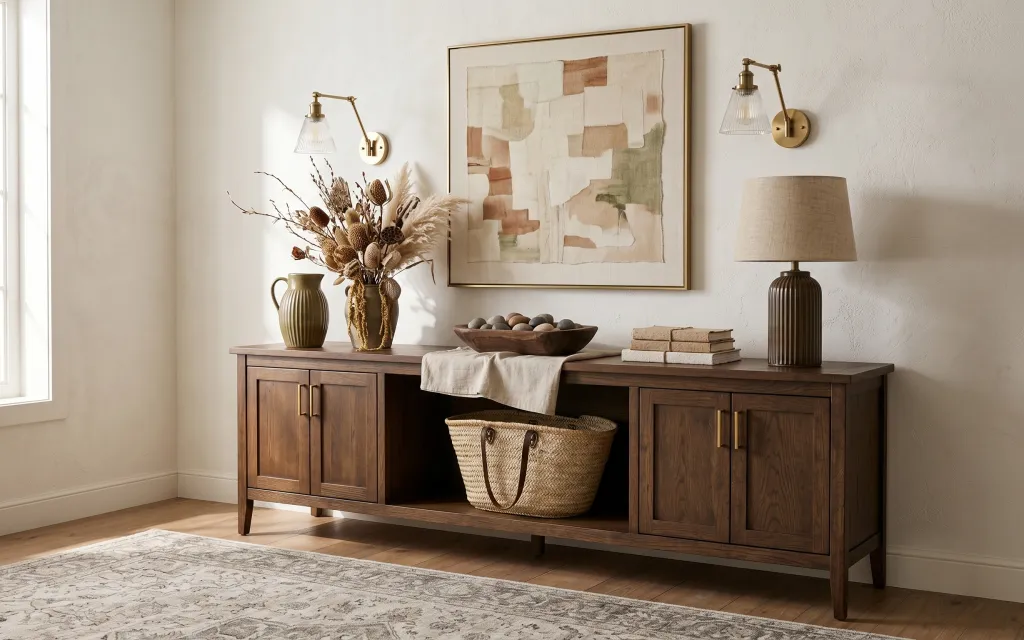
In the photo, the palette is doing most of the work: warm walnut wood, olive-green accents, and that slightly textured beige fabric. The console reads cohesive because everything sits at one height, with a brass lamp adding a vertical anchor. You can also see the mix of materials—woven basket, matte stoneware-style vase, and a lightly nubby rug—so it doesn’t feel like a showroom. For shared housing, that’s the cheat: choose flexible, lightweight pieces that pack flat and still look styled even when you’re living out of boxes.
I used to think “matching” meant buying a full set—until I got stuck hauling it all to a third-floor walk-up. This kind of console corner changed my mind because you only need a few repeating cues: one metal tone (brass), one earth tone (olive), and one texture (linen-like cloth or rug weave). Once those show up in two or three spots, the rest can be thrifted and swapped by season.
Layer 1 — Textured area rug ($120) Defines the footprint without feeling precious
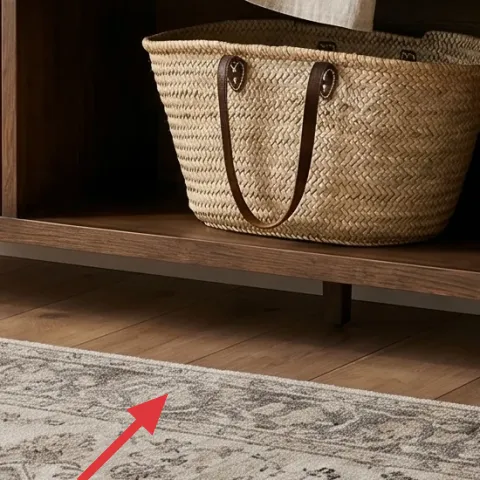
A textured area rug grounds the console corner and keeps the whole vignette from floating on hard floor. In this room, the rug has a subtle pattern and a light neutral tone, which makes the olive vase and dried florals stand out without adding more color. The trade-off is that a higher-pile rug can look thicker, but it’s also harder to roll tightly for moves—so prioritize a low-to-medium pile that still has visible texture. If the rug looks a little busy, that’s actually helpful in shared spaces where small spills happen.
Choose the rug by rollability
For moving, pick a rug around 5×7 with a low-to-medium pile so it can roll and fit in a pickup without damage.
Layer 2 — Green decorative vase ($20) Adds the olive cue you’ll repeat elsewhere
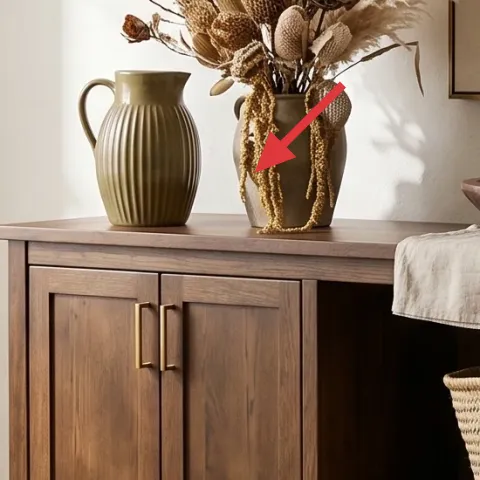
This green vase is the color link between the dried stems and the warm wood console. The ribbed shape gives it visual interest even when it’s empty, and that matters in rentals where arrangements change fast. Buying a simple medium-size vase is usually cheaper than trying to swap bigger furniture, and it’s easy to pack: wrap, box, and go. The obvious alternative is a clear glass vase, but it won’t echo the olive tone that already makes the look feel intentional.
Use it like a color swatch
If you can find one olive item that isn’t fabric, it’s easier to build a palette around it.
Layer 3 — Wood bowl on the console ($25) Creates a grounded “landing spot” for small decor
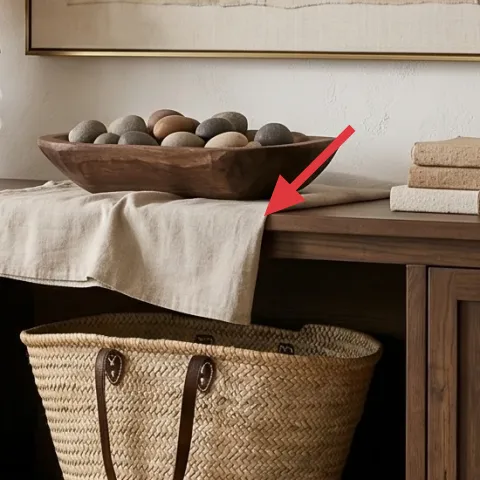
The wood bowl acts like a tray, but it reads warmer because of the material. In the photo it’s doing double duty: holding the small round objects and balancing the taller dried arrangement in the same zone. The trade-off with bowls is that they don’t look styled on their own—you need a filler (those little rounds, shells, or even wrapped stems) so the bowl looks full. This is a move-friendly choice because bowls are light, protect easily in packing paper, and can be reused when you change up the console lineup.
Match the bowl’s finish to the console
Even a slightly different wood tone still works when both are in the warm-brown family.
Layer 4 — Stack of books ($15) Adds height where you want it—no permanent changes
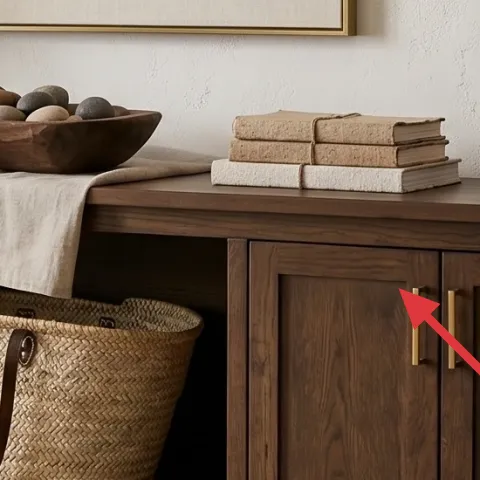
Those stacked books add a small “step” so the lamp and wall art don’t overpower the table visually. It’s a classic styling move because it gives you instant vertical structure, but it’s also one of the easiest items to live with in shared housing—if the covers don’t match, you can wrap them or swap the top one. The trade-off is that books take up a little space, but they’re still easier to pack than a framed piece. For a console corner refresh, a small stack is often more impactful than adding another figurine.
Don’t over-style small objects
If everything is “small and shiny,” the corner turns cluttered fast—limit to one sculptural piece plus one tray.
Layer 5 — Brass table lamp ($55) Brings warm light to the same height as your decor
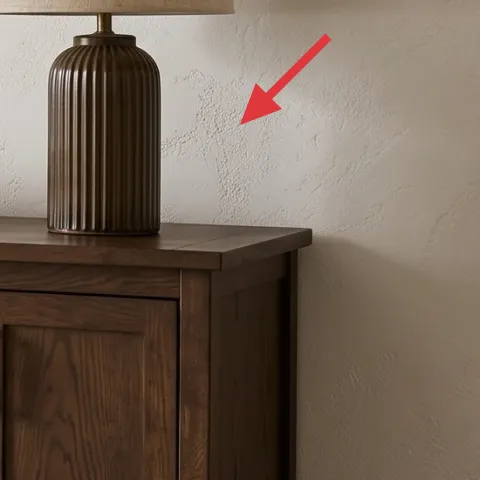
A plug-in brass lamp gives you the warm glow that makes neutrals look richer after dark. Here, the shade is a soft beige, so the light stays gentle rather than harsh, and the brass finish plays nicely with the wall hardware tone and wood undertones. The trade-off with table lamps is size—some models are awkward to carry—so choose one with a removable shade and a stable base that can be packed with bubble wrap. This also beats relying only on overhead lighting, which tends to flatten texture and make a console corner look flat.
Keep the shade color neutral
Beige or off-white shades preserve the earthy palette instead of fighting it.
Layer 6 — Large framed abstract wall art ($80) Builds the wall focal point without changing the walls
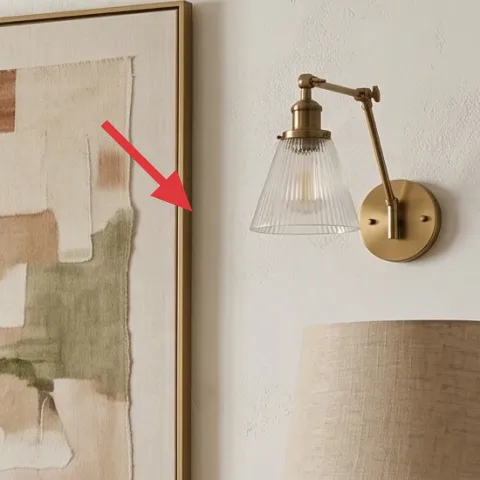
That large framed abstract print is the visual center of the room—the reason the console decor feels “finished.” For shared housing, framed art is practical when it’s un-matted and easy to pack, but it can still be bulky. This layer is the swap point: replacing the frame with a lighter, renter-safe alternative keeps the same job (a wall focal point) while reducing move friction. The trade-off is that wall height matters: choose a size that lands around the same vertical zone as the lamp and console, so the composition still feels balanced.
Make it instead of buying it
Use a macramé wall hanging to create the same “large focal point” feeling as the framed abstract art, while staying renter-safe with clip-on/adhesive-free hanging.
Materials
- Macramé cord — 200–250 ft — craft store — $25
- Wood dowel — 24 in — hardware store — $10
- Command hook (medium) — 2-pack — home store — $8
- Natural twine — 1 roll — craft store — $6
- Protective felt strips — optional — craft store — $0
Steps
- Measure the space above the console so the finished piece lands at the same height as the original focal art.
- Cut cord sections to your desired drop length, then sort into groups for even fringe.
- Wrap cord ends around the dowel and tie evenly so the top bar stays straight.
- Create repeating knots down the length, keeping tension consistent from left to right.
- Trim fringe ends so the bottom edge looks intentional, not wonky.
- Hang with Command hooks and level the dowel before final tightening of any ties.
Total DIY cost: $49 — saves about $31 over buying.
Layer 7 — Dried floral arrangement ($30) Adds movement without watering
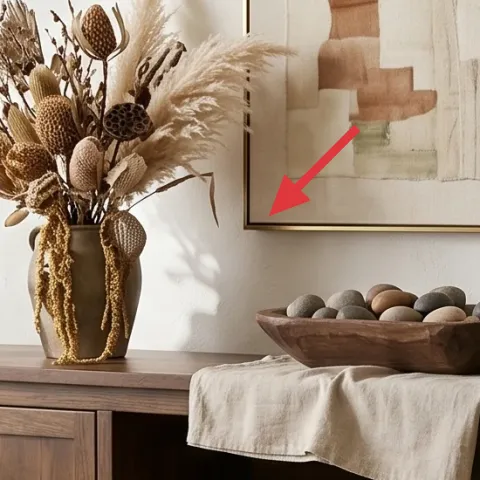
Dried florals bring that tall, airy texture that makes a console corner feel styled instead of flat. In the photo, the stems hit into the negative space between the vase and the wall art, which is exactly what keeps everything looking “composed.” The advantage for shared housing is longevity: no watering schedule, and you can swap dried fillers with the seasons. The trade-off is that dried stems can shed over time—so box them gently and keep a lint roller nearby for the first week after unpacking. If a full dried bundle is too fragile, look for a smaller bundle that still reaches the same height range.
Bundle by height, not by looks
Pick stems that roughly match the photo’s vertical scale so the composition stays balanced.
The cost, layer by layer
| Layer | Item | Cost |
|---|---|---|
| 1 | Textured area rug 5×7 | $120 |
| 2 | Green decorative vase | $20 |
| 3 | Wood bowl on the console | $25 |
| 4 | Stack of books | $15 |
| 5 | Brass plug-in table lamp | $55 |
| 6 | Large framed abstract wall art (retail equivalent) | $80 |
| 7 | Dried floral arrangement bundle | $30 |
| Total | $345 | |
If the rug price feels high, pick a smaller 5×7 in a similar neutral tone, or swap to a low-pile rug with a subtle pattern so the console still gets visual contrast.
What worked, what didn't (across the whole room)
This corner works because the styling follows one simple system: warm neutrals, one color pop (olive), and repeated textures at the same table height. It also photographs well because there’s a true focal point on the wall and a warm light source that matches it. The biggest downside is that tiny decor clutter shows quickly, especially on a light-colored console.
What worked
- The textured rug adds softness underfoot and hides everyday scuffs better than a smooth flat weave.
- The olive vase gives a repeatable color cue you can keep across different dried arrangements.
- The wood bowl makes small pieces look intentional instead of random.
- The brass lamp warms the whole vignette and makes the beige cloth look richer at night.
- The wall focal point keeps the console from looking like a standalone shelf of “stuff.”
- Dried stems create vertical movement without needing watering or rearranging every week.
What didn't
- If the console cloth is too wrinkly, the whole look turns casual in a messy way.
- A lamp base that’s too heavy makes moves harder, even if it looks great in photos.
- Overfilling the wood bowl turns it into clutter instead of a designed landing spot.
- If the wall focal piece is too small, the console decor looks top-heavy and unfinished.
What we'd skip if we did it again
Skip adding more small figurines than needed. On a console, two “anchor” items (a vase and a tall element) plus one tray-style piece keeps the arrangement readable after a busy week.
Skip buying a wall focal piece that’s heavier than it needs to be. For shared housing, a lighter alternative (like a macramé wall hanging) reduces risk during moves and makes the swap feel effortless.
Skip choosing a lamp shade in a strong color. Neutral beige keeps the olive-and-walnut palette cohesive and prevents the light from changing how your decor colors look at night.
Frequently asked
How long does this console corner refresh take?
For most shared-housing setups, plan for about 60–120 minutes. Rug placement is the slowest part, and then it’s mostly styling: stack the books, arrange the bowl filler, set the lamp, and build the height with the dried stems. The macramé version of the wall focal point can add another hour if you’re making it from scratch, but it still packs up easily.
Will this work in a smaller living room or dorm-style space?
Yes—scale down the rug size first so the console corner doesn’t visually swallow the room. Keep the same styling system: one olive accent (vase), one tray/bowl landing spot, and one vertical element (dried stems). If the console feels too wide, reduce the number of pieces on the top so the wall art (or macramé focal) can do its job.
What’s the safest way to hang the wall alternative in rentals?
Use renter-friendly hanging methods that don’t require drilling. The macramé option in this post is designed around clip-and-hang placement with Command hooks on appropriate wall surfaces. If the wall is textured or fragile, use the gentlest mounting method available and test one hook placement before committing.
Where should the lamp sit so the corner doesn’t look lopsided?
Aim for a balanced triangle: wall focal point centered above the console, lamp on one end to create a vertical anchor, and the tallest stems placed on the opposite side or closer to center depending on your wall spacing. The goal is to keep both sides of the console visually “heavy” at the same height.
Where to shop if you want a similar earthy olive-and-brass look?
Start with the lamp and rug at big-box home stores or lighting retailers, then source smaller decor—vase, bowl, and dried stems—from craft stores, home sections, and discount home shops. For wall focal alternatives, macramé cord and a dowel are easy to find at craft stores, and Command hooks are widely available. Mixing one higher-quality piece with budget decor usually looks best.
More in Living Room
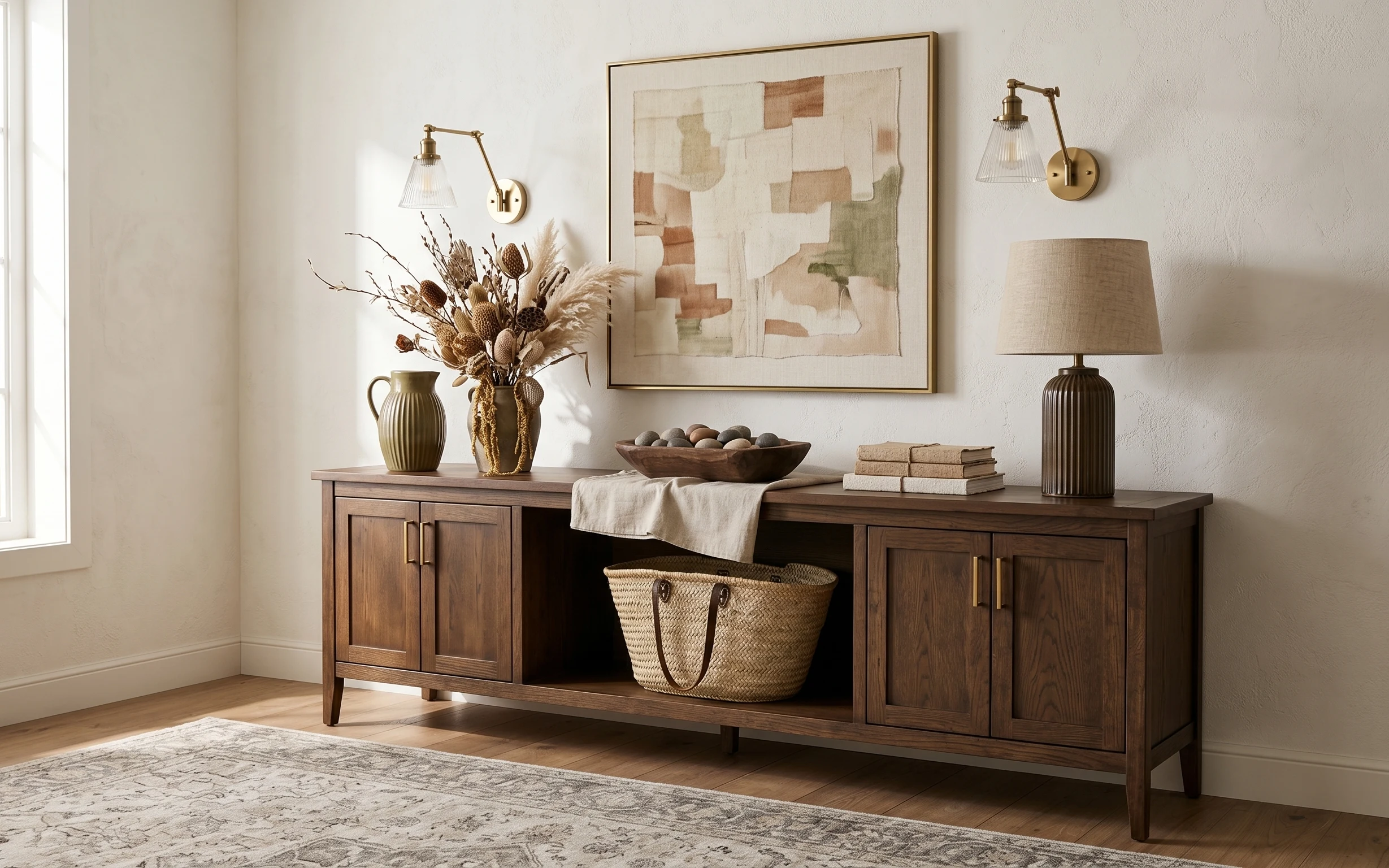
Under $400: move-friendly console table corner refresh
A move-friendly console table corner refresh under $400, built from 7 swappable, packable upgrades: rug, table decor, a brass lamp, and a r…
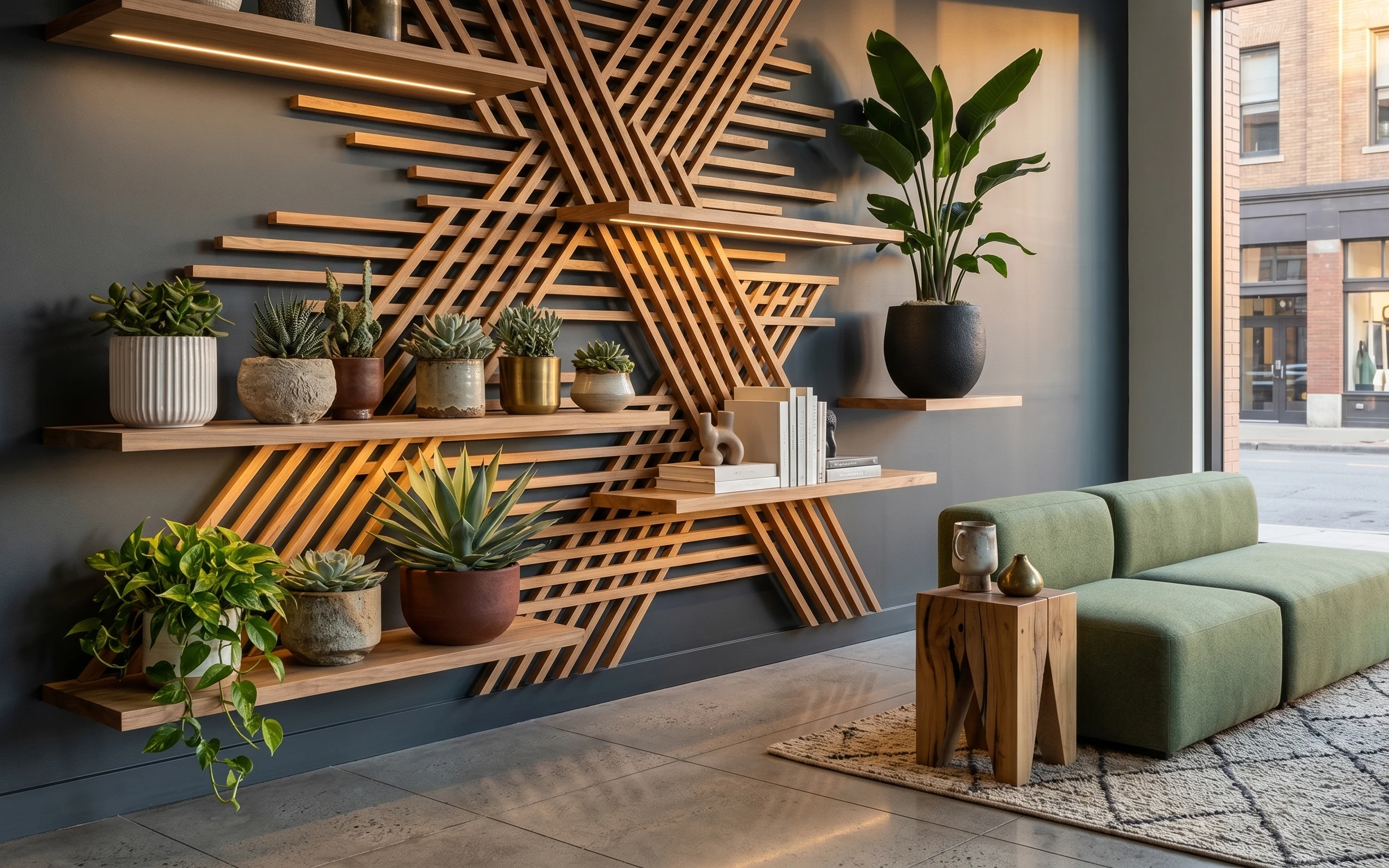
Under $400: renter-friendly sofa wall display refresh
A move-friendly living room refresh built around a renter-safe sofa wall display. With 7 swaps (rug, side table, plants, and styled decor) …
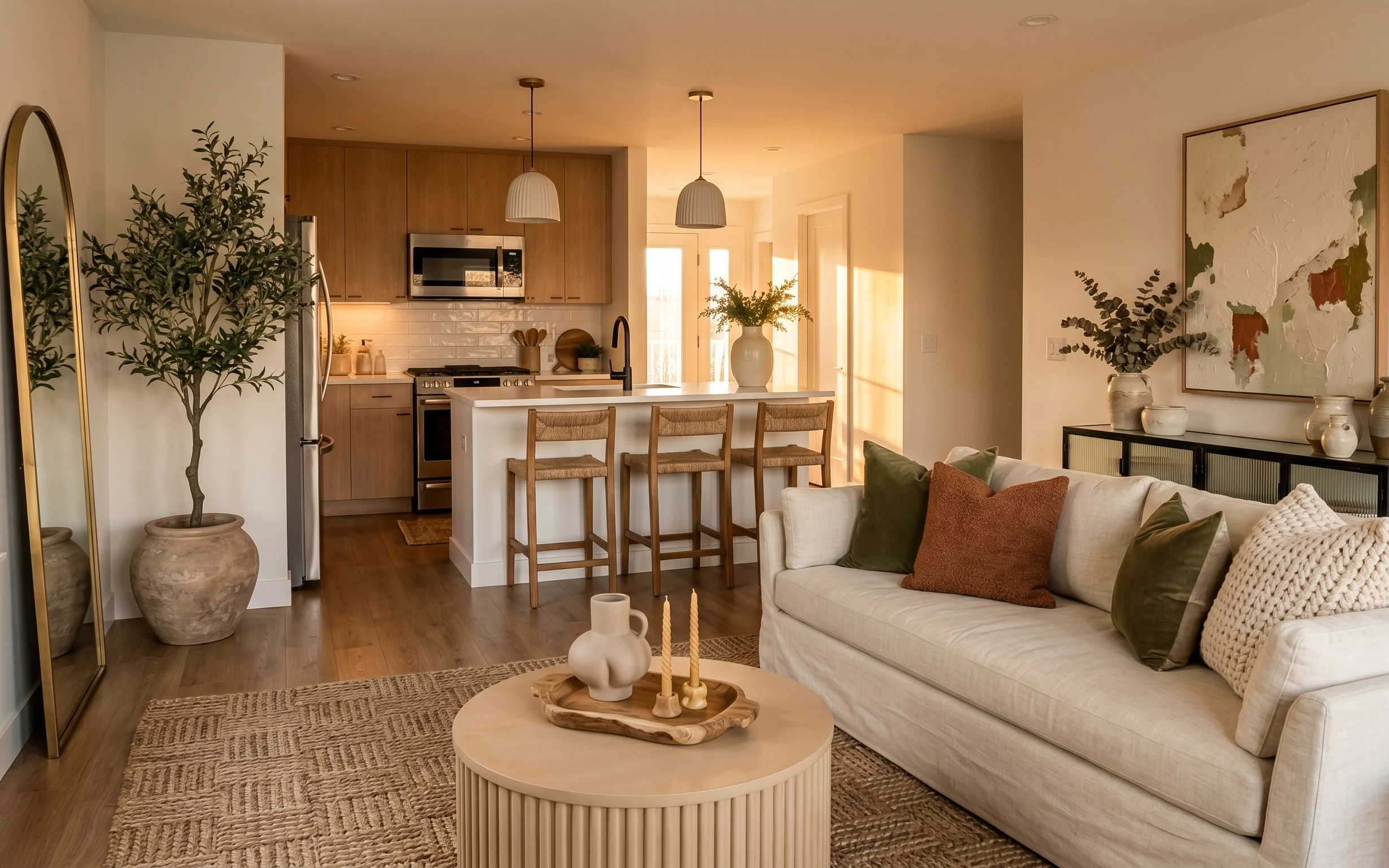
Under $400: olive-and-rust open-concept living area refresh
A renter-friendly, move-ready open-concept living area refresh under $400. Copy the warm beige, olive green, and terracotta look with a bra…