- Best for
- renter-friendly bathroom vanity styling
- Cost
- Under $400
- Difficulty
- Easy
- Time
- 1–2 afternoons
Why warm terracotta-and-olive refresh is the bathroom vanity wall of 2026
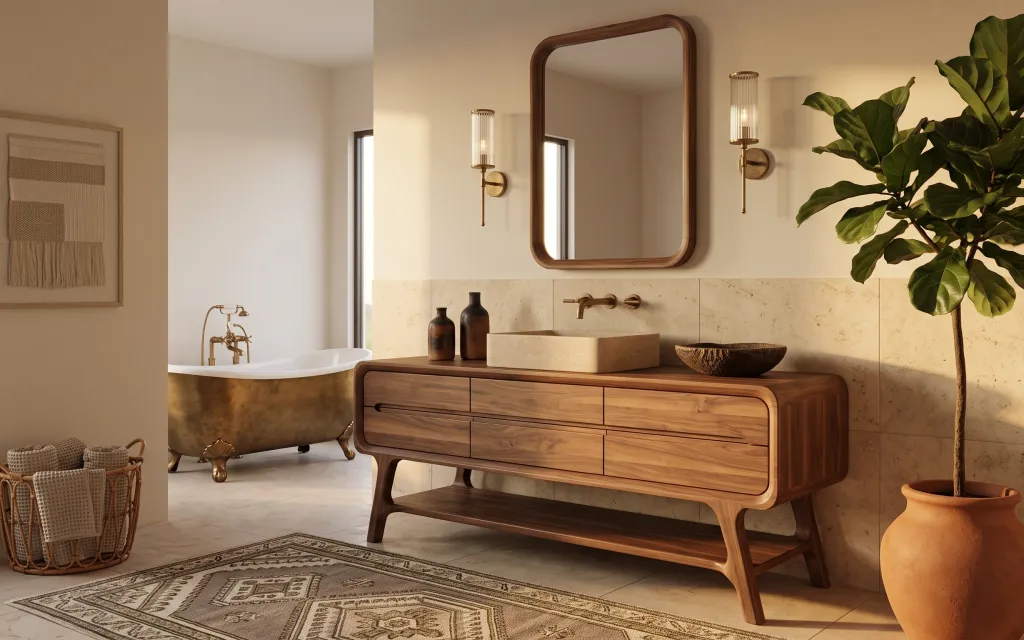
This bathroom already has the right starting notes: warm beige tile, walnut-brown wood, and that olive plant popping on the right. What’s missing is “finished” softness—especially underfoot and in the small styling moments around the vanity. A patterned area rug, a textile-like framed print, and a few grounded objects (tray, bottle pair, terracotta planter) give the whole wall a rhythm. And because everything in this plan is moveable, it’s realistic for shared housing leases.
I used to think “bathroom decor” had to mean buying bigger furniture. Then I caught myself trying to work around the fixed fixtures with the wrong scale—too-small pieces looked fussy and the room felt incomplete. This time, I built around what’s already there: warm woods, neutral walls, and the plant shape, then I repeated terracotta and deep brown in the details.
Layer 1 — Geometric patterned area rug ($120) Grounds the space without fighting the tile
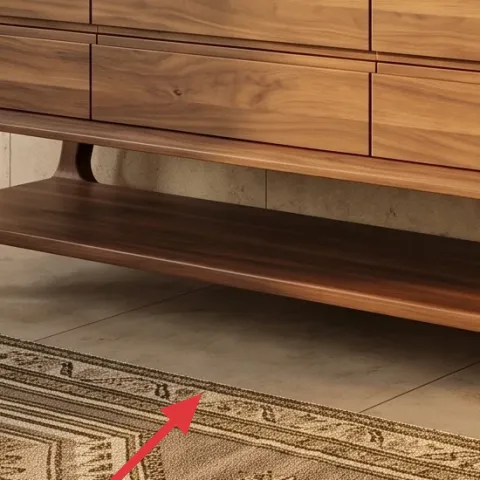
A geometric patterned area rug in warm beige and brown is the fastest way to soften the light tile floor and make the vanity wall feel intentional. In the photo, the rug’s pattern echoes the room’s clean lines, but the muted palette keeps it from looking loud against the beige walls. The trade-off is that a rug needs occasional shake-vacuuming, especially in shared bathrooms where dust gathers. The upside: you can roll it up and pack it in cardboard when the lease ends—no tools required.
Rug first, then everything else
Pick decor colors that already exist in the rug—here, warm beige and deep brown—so the room doesn’t look randomly assembled.
Layer 2 — Framed wall art print ($50) Adds texture where paint isn’t allowed
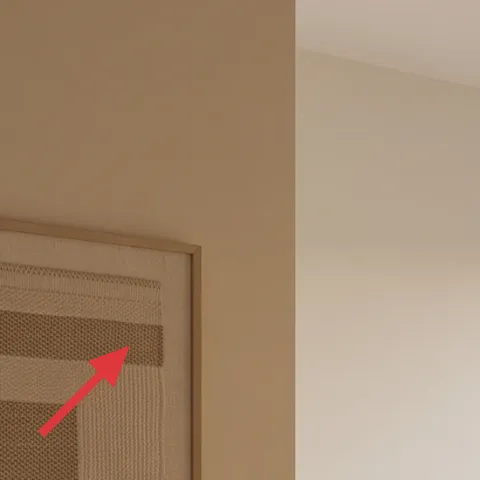
The framed wall art print on the left brings that woven/textile feel the room wants, and it does it without touching the tile or the “fixed” fixtures. Look for art with a neutral beige base and a darker, woven-like pattern so it sits comfortably beside the walnut mirror frame. Choosing a flat framed piece is the move-friendly version of wall decor: it packs into a shallow box and keeps its shape. The obvious alternative—more small shelf items—tends to clutter. Art gives you one clean focal moment that still feels lived-in.
Why this works with the mid-century vibe
When the room has warm wood and rounded shapes, textile-like wall art softens the edges.
Layer 3 — Woven storage basket with handles ($35) Hides toiletries without adding visual clutter
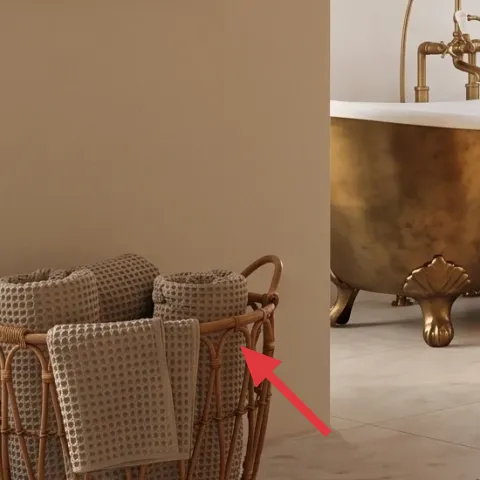
A woven storage basket with handles is an instant “shared-bathroom sanity” piece: it tucks away extra rolls, small bottles, or towels while staying visually warm. In the hero image it’s doing double duty—storage plus that natural wicker texture that matches the earthy palette. The trade-off is that wicker can snag on rough edges if you shove items in too forcefully. Still, it’s easy to lift, empty, and pack. And because it’s freestanding, it’s a safer swap in an impermanent space than any wall-mounted organizer.
Load it for the season you’re in
Keep one basket for “daily” items and one spot for occasional extras so it doesn’t overflow.
Layer 4 — Rectangular stone/plaster tray ($30) Makes the countertop look styled, not scattered
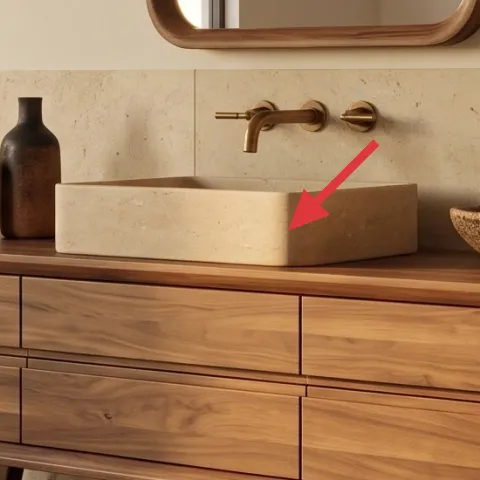
A rectangular stone/plaster tray is the organizing anchor for the vanity top—everything looks more deliberate when it has a boundary. The tray in the photo gives that creamy neutral tone that bridges the beige tile to the walnut wood. The move-friendly angle matters: you can wrap a tray in a towel or bubble wrap and pack it without worrying about hardware. The trade-off versus a “random” collection of bottles is that a tray forces a small editing rule: only keep a few objects on it. That editing is what makes the whole wall feel calm.
Use the tray to repeat materials
Repeat the tray’s creamy tone in small decor (like bottle colors) so the palette stays cohesive.
Layer 5 — Dark ceramic bottle pair ($25) Adds height and a grounded shadow color
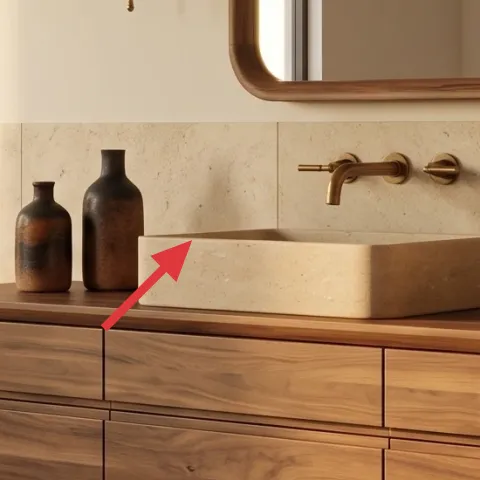
A dark ceramic bottle pair brings sculptural height right where the eye lands, balancing the light tray and the brighter mirror frame. In the photo, the bottles add deep brown/near-black accents that echo the walnut wood tone, so the styling doesn’t look “stuck on.” The biggest trade-off is that you’ll want to wipe dust off with a dry cloth occasionally—ceramic shows fingerprints less than glossy surfaces, but it still collects bathroom dust. It’s worth it because bottles pack flat-ish in boxes when wrapped, and they don’t require any new mounting.
Don’t overfill the tray
If every inch is covered, the tray stops looking intentional and starts looking cluttered.
Layer 6 — Painted terracotta planter set (for the large plant pot) ($45) Brings the earthy color story into focus
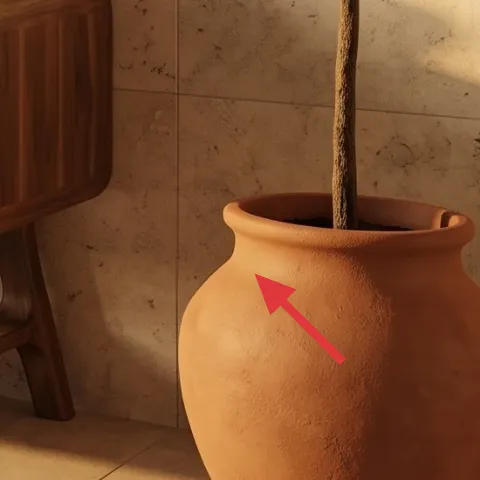
Make it instead of buying it
Turn your terracotta plant pots (or a thrifted mismatched pair) into a matching set by painting a warm neutral wash that echoes the bathroom’s beige and walnut tones.
Materials
- Terracotta pots (2 small or 1 extra pot to match) — 1 set — $15
- Acrylic paint in warm cream/beige — 1 small bottle — $10
- Foam brush or wide craft brush — 1 — $4
- Matte acrylic sealer — 1 small can — $6
Steps
- Scuff the terracotta lightly with sandpaper, then wipe dust off with a dry cloth.
- Paint a thin, warm-beige base coat using a foam brush for a soft, natural look.
- Let the base coat dry fully (about 1 hour) before touching up thin spots.
- Apply a second lighter wash for uneven “antique” variation; keep it translucent.
- Let the second coat dry fully (about 1 hour).
- Brush on matte acrylic sealer in thin layers.
- Let the sealer dry (about 2 hours) until it no longer feels tacky.
- Wait an additional 24 hours before heavy handling so the finish sets.
Total DIY cost: $35 — saves about $10 over buying.
Painting the terracotta planter set is how you pull the whole palette together—warm beige on the walls, walnut wood in the middle, and olive green in the leaves. A fresh painted finish makes the pot look “intentional” instead of just functional, and it gives you a subtle color repetition that matches the rug and tray. The trade-off is time: you’re waiting on paint and sealer to dry. But it’s still perfect for a shared-house timeline because the pots and set fit in boxes and travel easily between leases.
Match the room’s undertone, not the exact color
Go slightly warmer than the wall tile so the planter reads cozy under bathroom lighting.
Layer 7 — Leaning arched wood-framed mirror ($75) Uses the same shape without hard-mount pressure
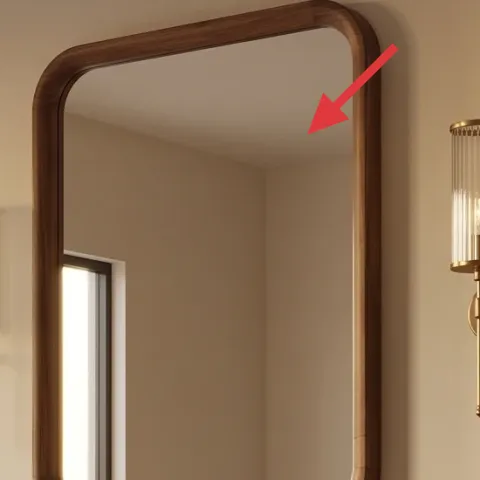
An arched wood-framed mirror is a big visual payoff in this space, and choosing a leaning style keeps it renter-safe. The hero image shows an arched mirror shape with warm wood tones that work with the mid-century-inspired vanity and the curved tub silhouette. The trade-off is that a leaning mirror needs a clear spot where it can sit stable and not block foot traffic. This is still move-friendly: you can wrap the mirror, transport it upright, and set it up again at the next place without drilling. It’s a swap that changes how the whole bathroom feels, fast.
Placement trick
Lean it so the bottom edge sits just above the rug line—then the reflection “connects” the rug and vanity.
The cost, layer by layer
| Layer | Item | Cost |
|---|---|---|
| 1 | Geometric patterned area rug | $120 |
| 2 | Framed wall art print | $50 |
| 3 | Woven storage basket with handles | $35 |
| 4 | Rectangular stone/plaster tray | $30 |
| 5 | Dark ceramic bottle pair | $25 |
| 6 | Painted terracotta planter set (DIY-equivalent retail price) | $45 |
| 7 | Leaning arched wood-framed mirror | $75 |
| Total | $370 | |
If a full arched mirror is too much, swap it for a smaller framed print in the same warm beige palette and spend that money on a higher-pile rug. The rug still does most of the “finished” work, and the wall print keeps the look cohesive.
What worked, what didn't (across the whole room)
The biggest wins were the rug and the countertop styling—those are the parts your body meets first, so they make the room feel complete right away. The earthy palette also held together well because the terracotta, tray tone, and rug neutrals repeat the same warmth. The only area that needs discipline is the number of objects: too many small items on the tray quickly turns “styled” into “busy.”
What worked
- The geometric rug adds pattern and hides everyday splash marks on light floors.
- The textile-like framed print balances the sleek beige tile with a softer visual texture.
- The woven storage basket keeps toiletries contained without turning the vanity area into clutter.
- The rectangular tray creates a clear boundary so styling looks intentional from across the room.
- The dark ceramic bottle pair adds height and a grounded contrast against warm beige surfaces.
- Painting the terracotta planter helps the plant match the palette instead of feeling random.
What didn't
- Overstuffing the tray with too many small items made the countertop look busy.
- Skipping the rug pattern makes the vanity wall feel detached from the floor.
- Using only one accent color (like just terracotta) left the styling looking one-note.
- Placing the leaning mirror too low reflected the rug pattern more than the vanity, flattening the vibe.
What we'd skip if we did it again
Skip adding another small “random” object on the vanity top. The tray needs a few intentional pieces—bottle pair, tray boundary, and one earthy accent—so the warm beige surfaces stay calm.
Skip wall-mounted changes that require hardware. In shared housing, a leaning arched mirror and freestanding baskets give the same impact without the stress of leaving the next place.
Skip buying decor that doesn’t repeat a color from the rug or planter. If the new pieces don’t echo warm beige or deep brown, the room starts to look like separate purchases instead of one cohesive bathroom vanity wall.
Frequently asked
How long does this bathroom vanity-wall refresh take?
Most of the look is quick swaps: rug unroll, basket placement, and arranging the tray and bottle pair. Plan for about 2–4 hours for decorating and styling. The only slowdown is the DIY painted terracotta planter set—this needs dry time between coats and an extra day for the finish to set.
Is this move-ready for shared housing if I move within a year or two?
Yes, because the plan relies on freestanding decor and textiles you can pack: the area rug rolls up, baskets come apart for stacking, and trays and bottles box well. The leaning arched mirror can travel in padded blankets. Since nothing requires drilling or replacing fixed fixtures, the refresh doesn’t depend on staying in one unit.
What if my bathroom is smaller (or the rug won’t fit)?
Use a smaller rug size that still lands in front of the vanity edge and keeps the geometric pattern visible. If the mirror feels too large, lean it higher or pick a slimmer arched frame. The styling rule stays the same: one boundary object (tray), a height accent (bottles), and one earthy plant element.
Where should I shop for these items without overspending?
Look for the rug and framed print at home goods retailers and discount furniture stores, then check thrift shops for terracotta pots and dark ceramic pieces. Woven baskets often show up at home decor chains and craft stores. For a mirror, target a leaning or tabletop-style arched version so you avoid hardware costs.
What’s the biggest mistake people make in bathrooms like this?
Overloading the countertop. When every surface is full, the vanity wall stops reading as a cohesive “scene.” Instead, keep a tray as the organizing boundary, repeat warm beige and deep brown from the rug, and leave a little negative space so the mirror and plant can do their job.
More in Bathroom
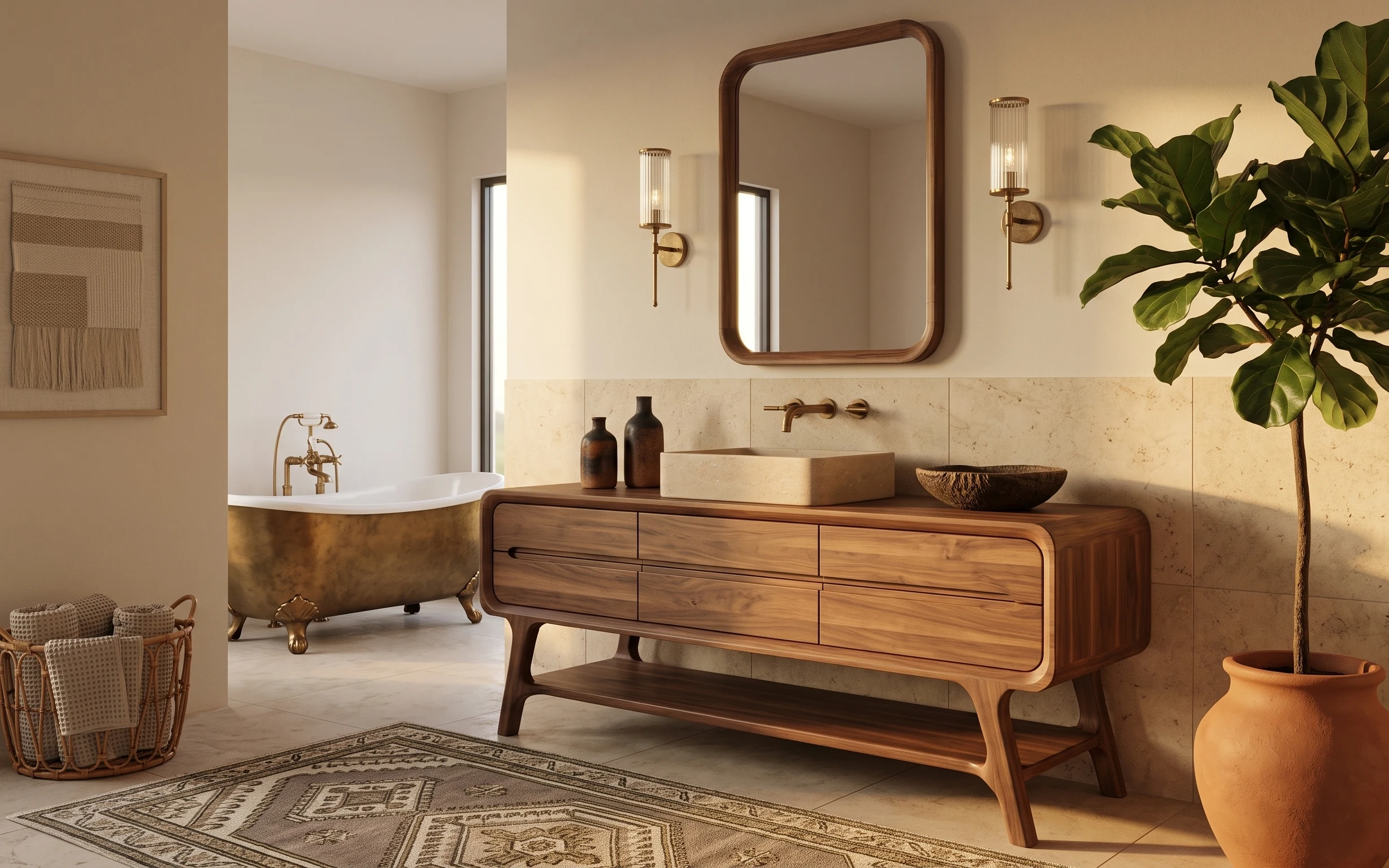
Under $400: move-ready bathroom vanity-wall refresh
A renter-friendly bathroom vanity wall refresh that looks warm and mid-century without changing any fixed fixtures. This $400 plan uses sev…
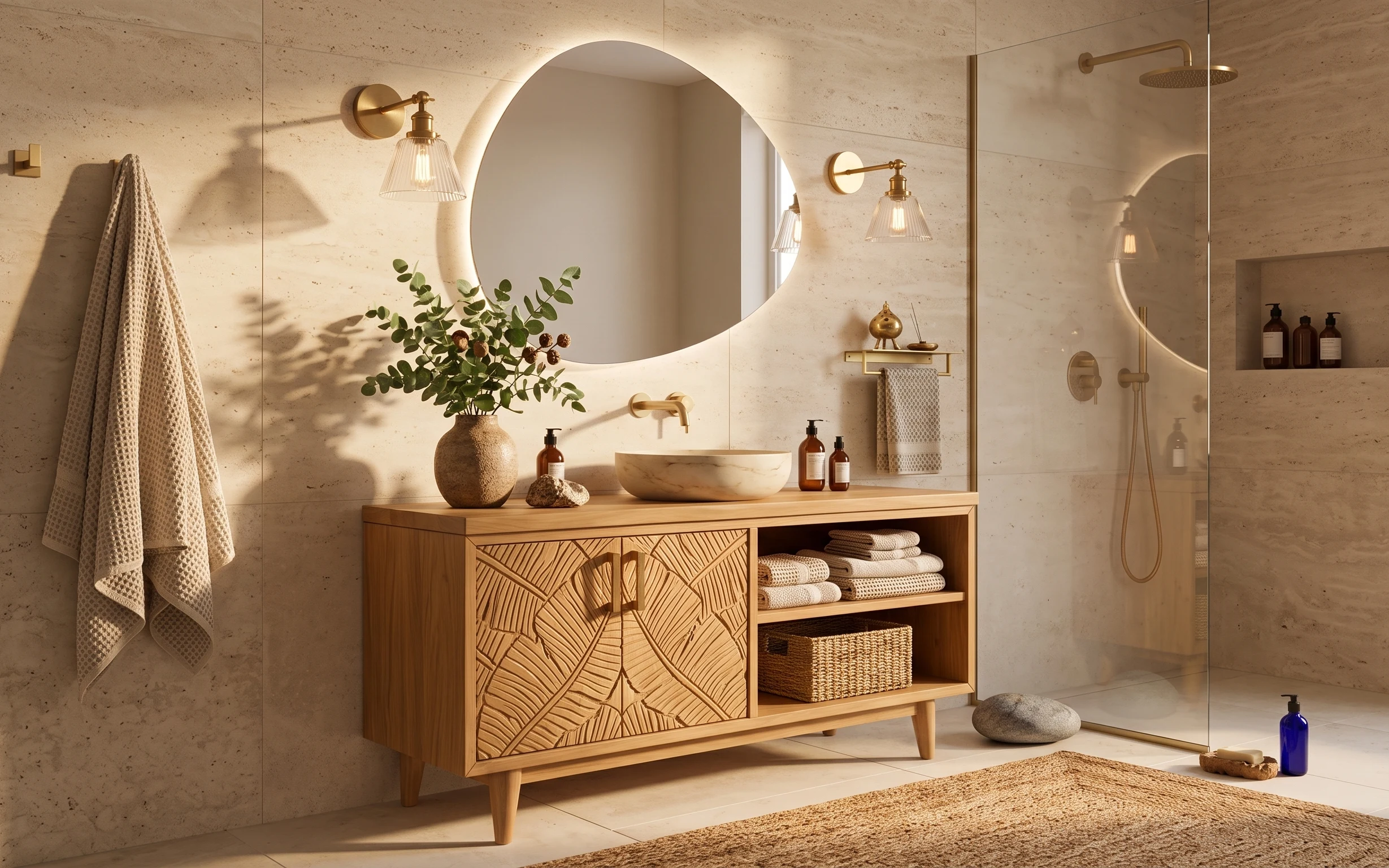
Under $300: renter-friendly bathroom vanity refresh
A warm, spa-like bathroom vanity setup is achievable on a $300 renter-friendly budget. This refresh focuses on a soft area rug, layered tex…
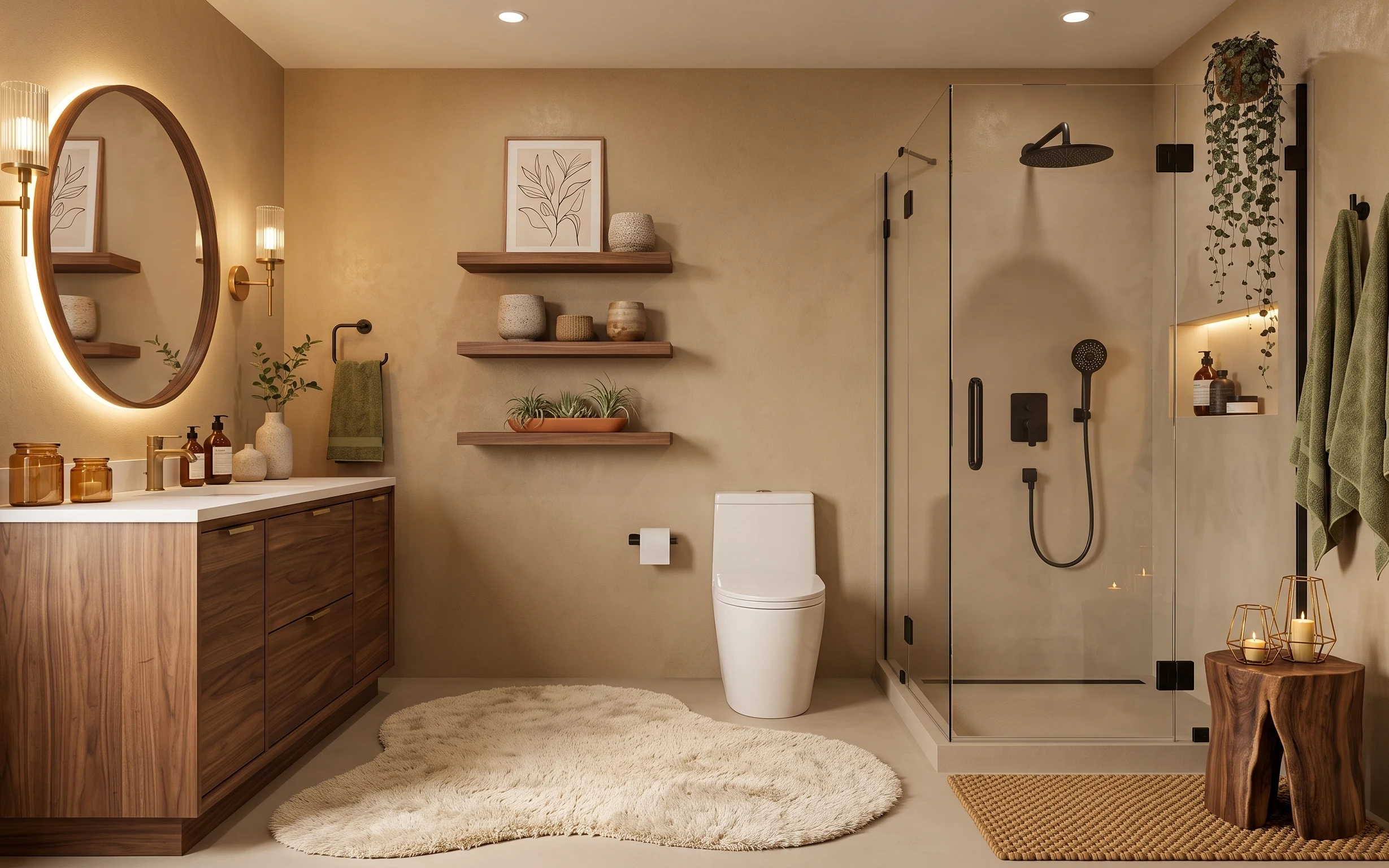
Under $600: renter-friendly spa bathroom refresh
A renter-friendly spa bathroom refresh built around texture (a large shag rug), warm wood tones, and sage-green details. This look uses sev…