- Best for
- styling a shared dining setup
- Cost
- $385 total
- Difficulty
- Easy
- Time
- 2–4 hours
Why the olive-and-terracotta vibe is the dining table nook of 2026
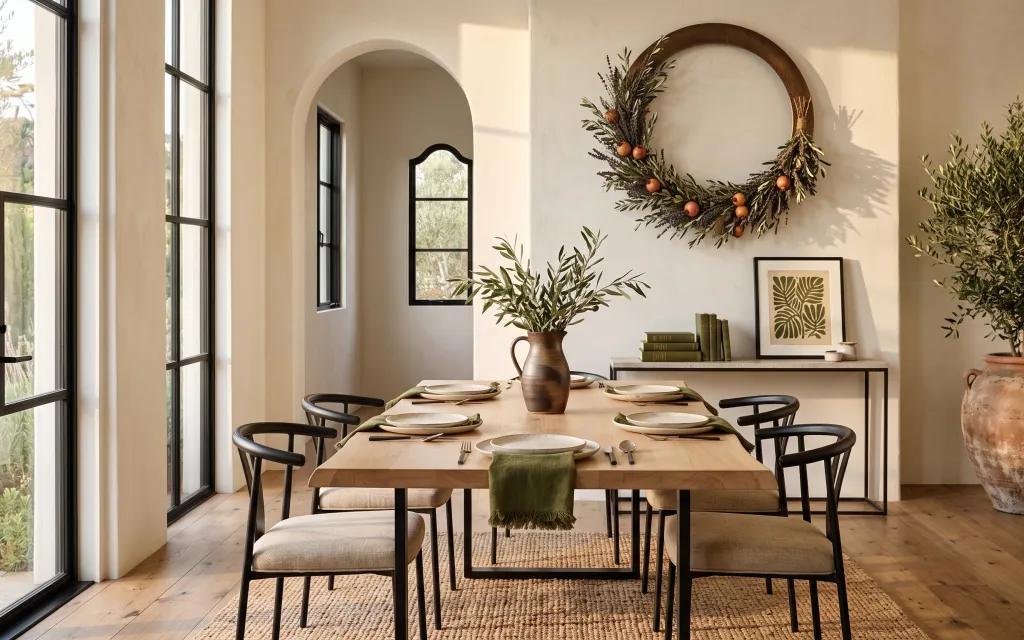
The quickest way to make this bright dining table nook feel intentional is to start with texture: a woven area rug, off-white chair cushions, and that green table runner. From there, the wall does a lot of heavy lifting—especially the framed botanical print tucked near the large round mirror in an arched frame. The best part is that this look doesn’t depend on one expensive, hard-to-move piece; it’s mostly layers you can box. For shared housing, that’s the difference between “cute for photos” and “still cute when it’s packing week.”
I almost overcommitted to matching colors when I first styled my own shared-house dining setup. I kept reaching for the “right” shade of green until it looked flat instead of collected. What fixed it was adding contrast in small hits: warm wood tones, the terracotta planter jug, and a couple of darker books on the console table. Now the palette feels like it belongs to the room, not to a Pinterest board.
Layer 1 — Woven area rug ($150) anchors the table-and-chairs zone
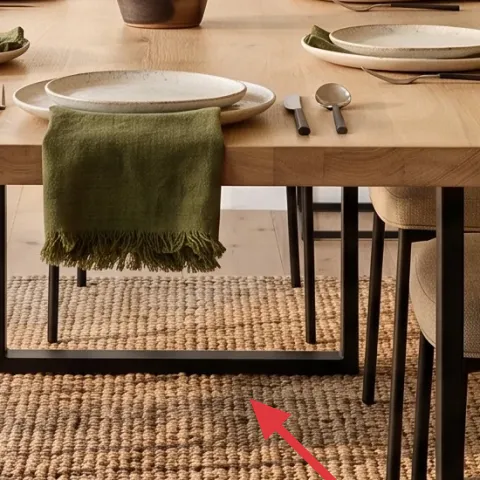
A woven area rug like the one under the dining chairs gives the whole nook a defined footprint, even when the floor is already pretty. The weave texture matters: it softens the straight lines of the wood dining table and makes chair legs and shadows look more intentional. The trade-off is that you have to pick a rug with a pattern that hides everyday marks—this is why a warm neutral weave beats a high-contrast design if the space is shared and unpredictable. Compared with swapping furniture, rug shopping is cheaper, easier to pack, and more forgiving if your next place has a different layout.
Choose a rug with texture, not just color
Texture-based weaves hide chair scuffs and the “oops” spills from real life.
Layer 2 — Framed botanical print ($80) adds the wall focal point
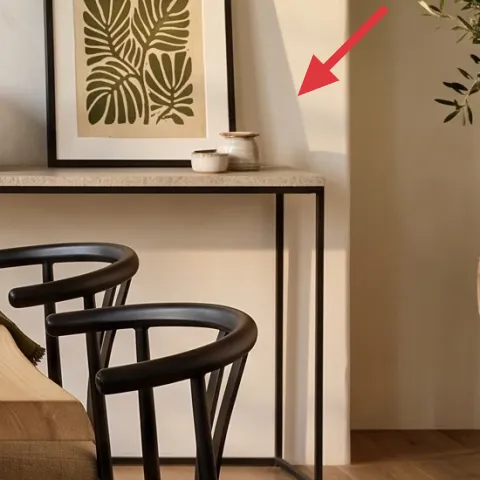
This framed botanical print sits at eye level near the large round mirror in an arched frame, so it reads like part of the room’s architecture—not decoration stuck on top. Keeping it framed (instead of swapping to a loose print) also helps it travel: it packs flat behind cardboard and arrives looking finished. The trade-off is that you’ll want to protect corners during moves, since paper edges can get bent. DIY is a win here because the “look” is the botanical-style graphic inside the frame, not the exact original artwork.
Make it instead of buying it
DIY a botanical-style abstract print on cardstock so it fits the existing framed botanical print look, without needing any permanent wall changes.
Materials
- Cardstock sheets — 2 pieces — craft store — $12
- Acrylic paint set — 1 set — craft store — $10
- Thin paintbrush (detail) — 1 brush — craft store — $6
- Black fine-tip marker — 1 marker — craft store — $8
- Painter’s tape — 1 roll — hardware store — $3
Steps
- Cut cardstock to the same insert size as the framed botanical print.
- Lightly tape off a few shapes so you get clean botanical-like sections.
- Paint loose leaf forms with acrylic, using sage and warm cream tones.
- Let it dry fully, then add thin vein lines with the black fine-tip marker.
- Optional: wipe highlights with a damp paper towel for texture.
- Dry again, then slide the finished cardstock into the frame behind the existing glass/liner.
Total DIY cost: $39 — saves about $41 over buying.
Layer 3 — Green table runner ($25) pulls the palette onto the table
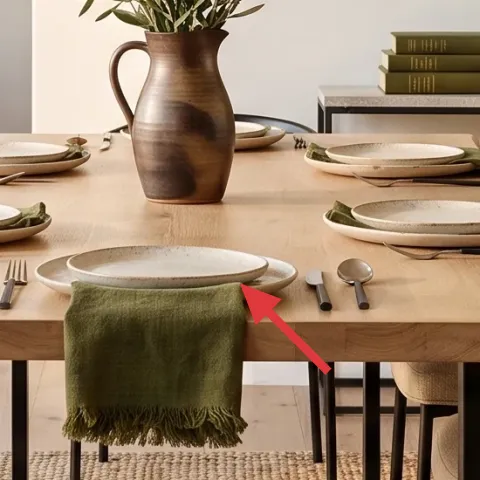
The green table runner is what turns the wood dining table from “plain” into “styled,” without requiring a full tablecloth. Its fringe edge and soft drape visually echo the earthy, organic direction of the dried botanical wall garland. A runner also has an advantage for shared housing: it’s one item you can re-use in different apartments and quickly swap out if your next room has a different wall color. The trade-off is that it won’t fully protect the table like a full cover would. For an easy compromise, pair it with cloth napkins so you get the same lived-in look across both center and place settings.
Keep the runner length flexible
If you can, choose one that can tuck or overlap slightly—table widths change room to room.
Layer 4 — Stack of books ($30) gives height on the console table
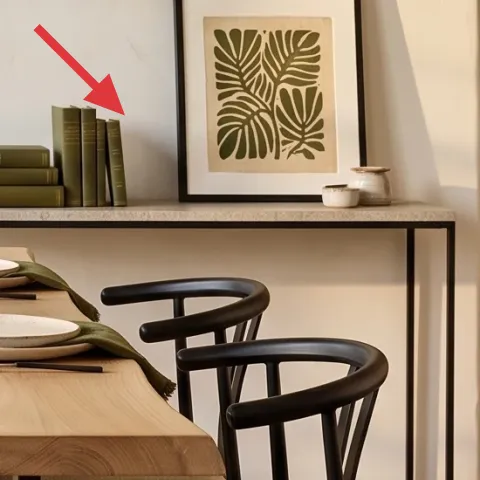
The stack of books on the console table brings controlled height next to the framed botanical print and helps the wall styling feel grounded. It also adds color variation without introducing a new “theme,” because the book spines already bring muted tones. The trade-off is that books can look cluttered if the stack is too tall or too random, especially in a shared space where everyone’s tastes show up. The fix is simple: use a short stack and place one small decorative object on top (even a plain candle or small dish) so the silhouette stays neat.
Vary spine heights, not your whole lineup
One tall book plus shorter neighbors creates rhythm without chaos.
Layer 5 — Ceramic vase with leafy stems ($35) keeps the centerpiece airy
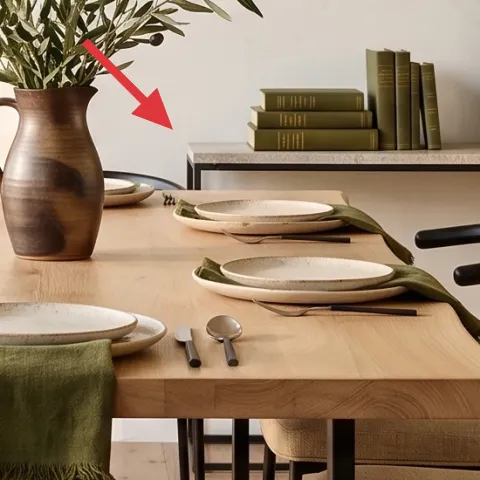
A ceramic vase with leafy stems in the center of the wood dining table adds movement and “fresh” texture, which matters when the rest of the nook is mostly neutral. The rounded vase shape also mirrors the large round mirror in an arched frame, so the whole room feels connected. The trade-off is scale: if the vase is too small, it disappears; too big, and it crowds chairs and napkin space. Here, the centerpiece sits high enough to be seen without blocking views across the table. Compared with buying a whole new dining centerpiece set, a vase-and-stems combo is easy to pack and reuse.
Don’t let stems flop onto the runner
Trim stems before moves so leaves don’t mash into textiles during transit.
Layer 6 — Large dried botanical wall garland ($40) adds drama without nail work
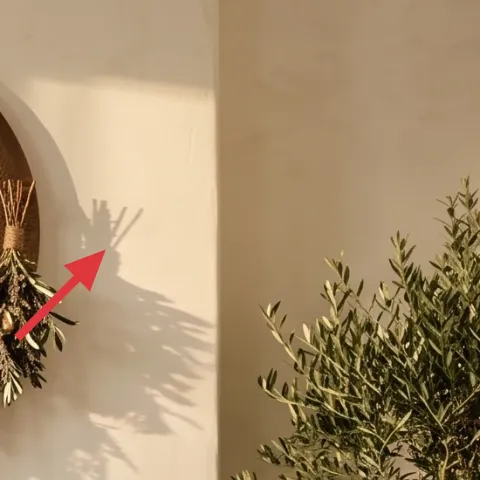
The large dried botanical wall garland pulls the eye upward and fills the negative space around the large round mirror in an arched frame, making the wall feel designed. Because it’s dried, it keeps its shape and reads well even in bright natural light. The key trade-off is weight and packing: wall decor can snag during moves if it’s not protected, so wrap it flat or in a garment-style box. Also, avoid temporary installs that damage plaster—if you need to hang it for a setup photo, use a hook method designed for easy removal. In this nook, the garland does the job of “statement art” without needing a full wall makeover.
Plan for easy packing
Wrap dried stems in tissue or paper so the leaves don’t crush.
Layer 7 — Cloth napkins ($25) finishes the place settings with soft color
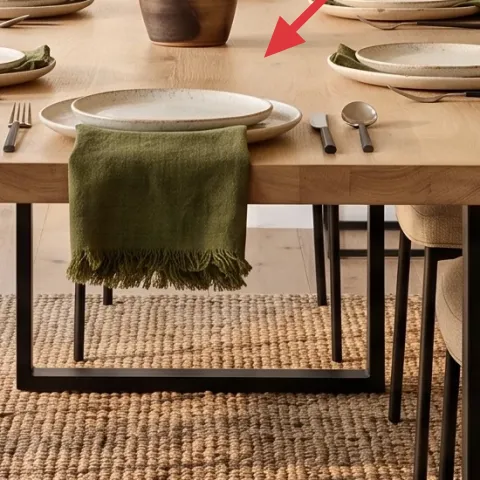
Cloth napkins in sage tones give the table a finished, intentionally styled look that matches the green table runner and the dried botanical wall garland palette. They also create texture that looks good in close-up photos, but they’re practical for shared meals and quick swaps between guests. The main trade-off is washing frequency: if you choose a delicate fabric, you’ll spend more time caring for them. For move-friendly living, pick napkins that can roll up tightly and pack into a flat box. If the next lease has a different table size, napkins still work as napkins, not “layout-specific decor.”
Use the same color, change the fold
Switch between a simple fold and a rolled look to keep the setting fresh.
The cost, layer by layer
| Layer | Item | Cost |
|---|---|---|
| 1 | Woven area rug | $150 |
| 2 | Framed botanical print (DIY ~$39 materials) | $80 |
| 3 | Green table runner | $25 |
| 4 | Stack of books styling | $30 |
| 5 | Ceramic vase with leafy stems | $35 |
| 6 | Large dried botanical wall garland | $40 |
| 7 | Cloth napkins (sage tone) | $25 |
| Total | $385 | |
A cheaper variant keeps the woven rug but swaps the framed botanical print for a smaller framed botanical print and uses store-brand cardstock art. You’ll still get the same “designed nook” feel by prioritizing one wall focal and one table-textile layer.
What worked, what didn't (across the whole room)
This setup works because it layers texture at three heights: floor (woven rug), table (runner and napkins), and wall (framed botanical print plus a large dried botanical wall garland). The palette stays earthy without looking matchy. The only downside is that dried greenery styling is more maintenance during moves than pure flat decor.
What worked
- The woven area rug made the dining zone feel intentional against the light wood floor.
- The green table runner and cloth napkins synced the color story across the table.
- The framed botanical print gave the wall a clear focal point near the large round mirror in an arched frame.
- The ceramic vase with leafy stems added movement without overpowering the neutral wall.
- The stack of books created height on the console table without adding bulk.
- The large dried botanical wall garland filled vertical space and made the wall feel styled.
What didn't
- The dried greenery can shed small bits during packing if it isn’t wrapped carefully.
- Too-tall stacks of books block sightlines across the table in conversation-heavy meals.
- A runner that’s too narrow looks lost on a wider wood dining table.
- If napkins are a different undertone of green, the palette starts to feel split.
What we'd skip if we did it again
Skip a full tablecloth if the room already has a lot of neutral texture. A table runner plus cloth napkins hits the styled look with fewer folds and easier packing between leases. In shared housing, it’s also less likely to get stained everywhere at once.
Skip buying matching decor sets from the same retailer. The room looks best when one “anchor” piece leads (woven area rug), then everything else brings small contrast—terracotta, sage green, and warm wood tones.
Skip wall installs that require messy removal. For wall decor like the large dried botanical wall garland, prioritize methods designed for easy take-down so you’re not risking surface damage when moving out.
Frequently asked
How long does this dining table nook refresh take?
Plan for about 2–4 hours. The woven area rug and runner/napkins are the fastest wins. The framed botanical print DIY takes the longest because of paint drying time, even though the steps are simple. If you’re adding the large dried botanical wall garland, budget extra time to test placement so it sits nicely near the large round mirror in an arched frame.
Is this renter-friendly for a shared apartment?
Yes—the big changes are textiles and freestanding styling objects: a woven area rug, a green table runner, cloth napkins, and tabletop decor like a ceramic vase with leafy stems and a stack of books. The wall pieces are optional accents, and the DIY focuses on the framed botanical print insert rather than changing the frame or the wall.
What if my dining area is smaller or the table is a different shape?
Keep the structure, not the measurements. Choose a woven area rug that still fits the chair footprint under the dining chairs, even if it’s not the exact same size. Use a table runner that can run lengthwise without hanging too far past the table edge, then fold cloth napkins to match the new place setting size. The wall focal (framed botanical print) can scale by swapping to a smaller print insert.
Where should I shop for these items on a real budget?
For the woven area rug and textiles, look at discount home stores, resale sites, and warehouse-style retailers. For the framed botanical print look, craft stores and print shops help because you can DIY the insert. For the ceramic vase with leafy stems and the large dried botanical wall garland, garden-focused shops and decor sections in big-box stores often have cheaper options than boutique sellers.
What’s the biggest mistake people make in dining-room styling like this?
Overthinking the wall first. It’s easy to chase a “perfect” framed botanical print and forget that the rug and table textiles create most of the cozy, finished effect. Start with the woven area rug, then layer table textiles, and only after that pick wall accents so the colors and scale actually match.
How do I pack all of this when my lease ends?
Roll or fold the woven area rug carefully and tape the roll so it doesn’t unwind. Pack the green table runner and cloth napkins flat in a dedicated box. Wrap the ceramic vase with leafy stems in paper and keep stems supported so they don’t crush. For the large dried botanical wall garland, wrap it so leaves stay intact, and protect framed botanical print corners with cardboard sleeves.
More in Living Room
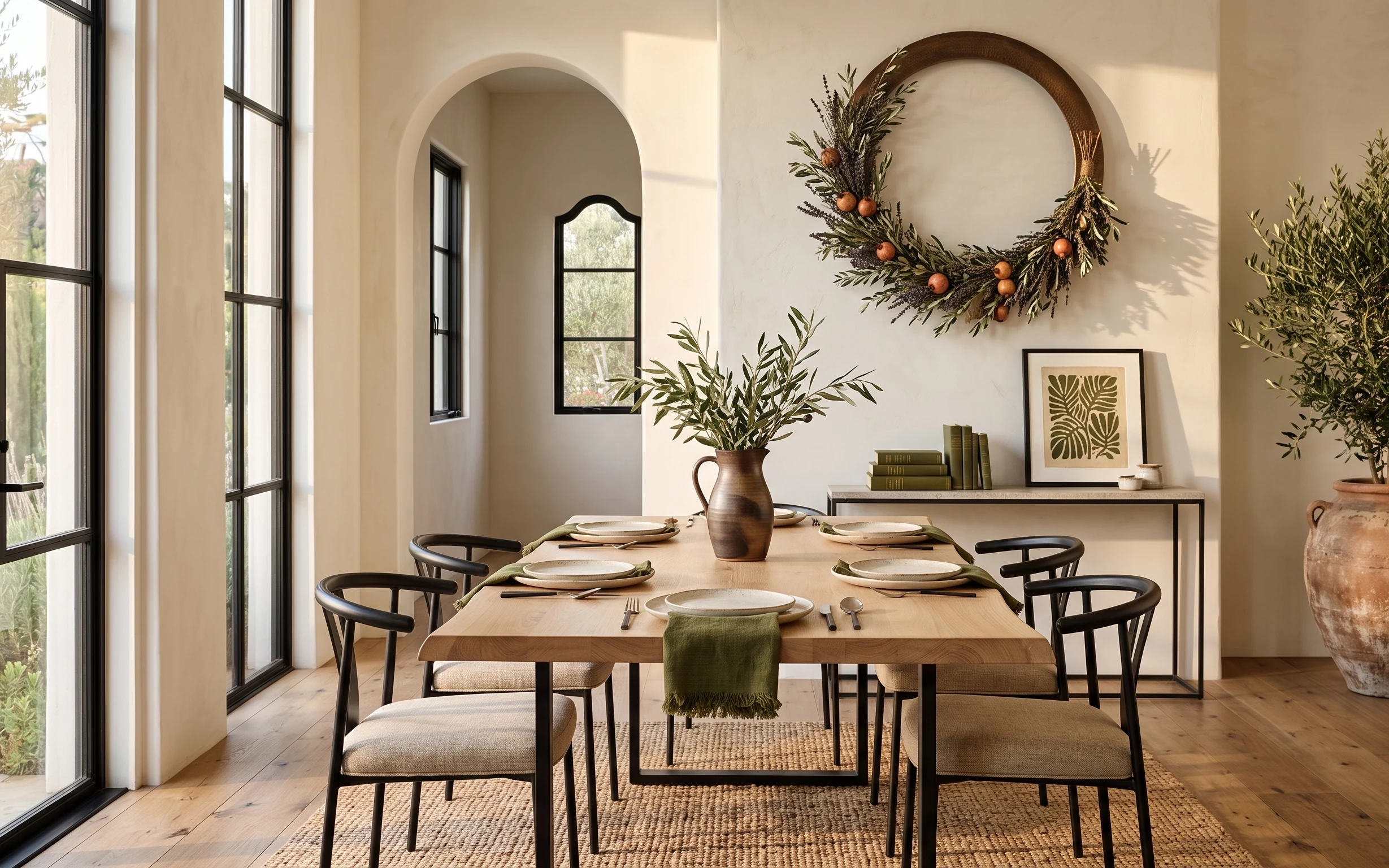
Under $400: move-ready dining table nook refresh
A bright dining table nook makeover built from 7 move-friendly swaps under $400. Focus areas: a woven area rug, a framed botanical print, a…
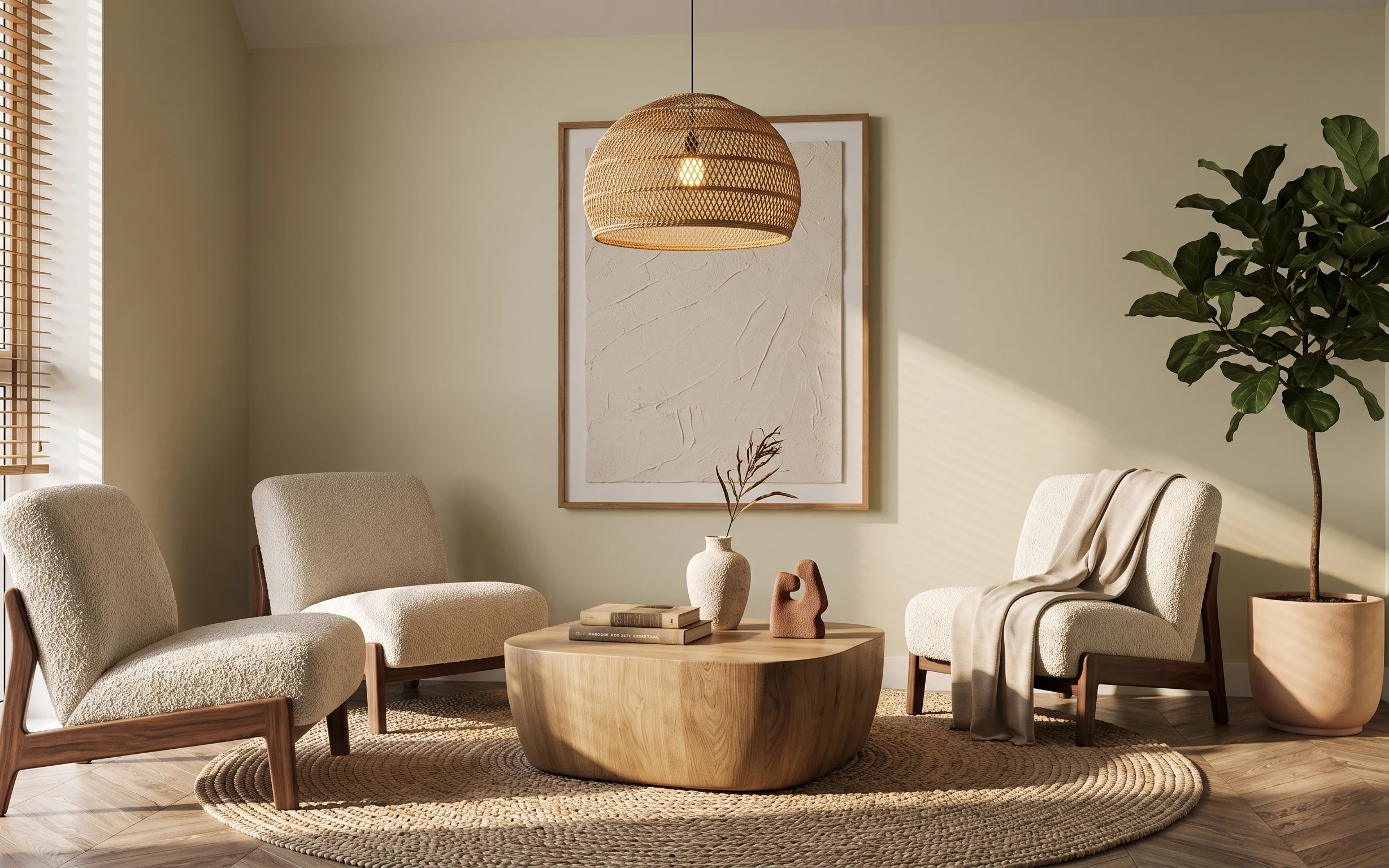
Under $600: renter-friendly cozy living room refresh
A renter-friendly cozy living room refresh with 7 move-ready swaps, all doable without drilling. The look leans creamy neutrals, light wood…
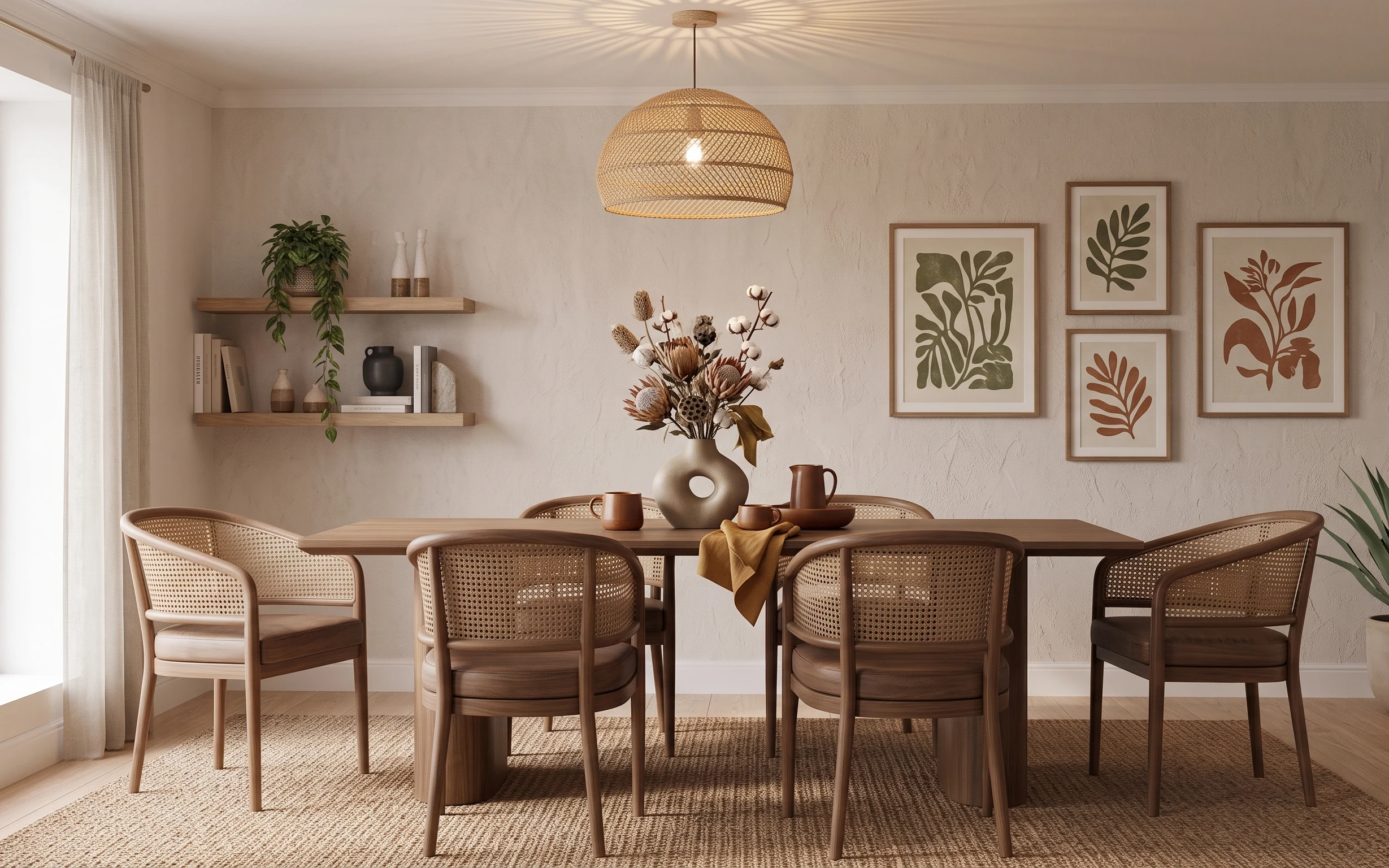
Under $1000: cream-and-rattan dining nook refresh
A cream-and-rattan dining nook makeover with seven weekend upgrades, priced to stay under $1000. The biggest wins are a woven rug, soft cur…