
- Best for
- Move-friendly bedroom glow
- Cost
- Under $400
- Difficulty
- Easy (mostly soft goods)
- Renter-safe
- Yes—no drilling required
Why warm beige-and-olive styling is the sunlit bedroom corner of 2026
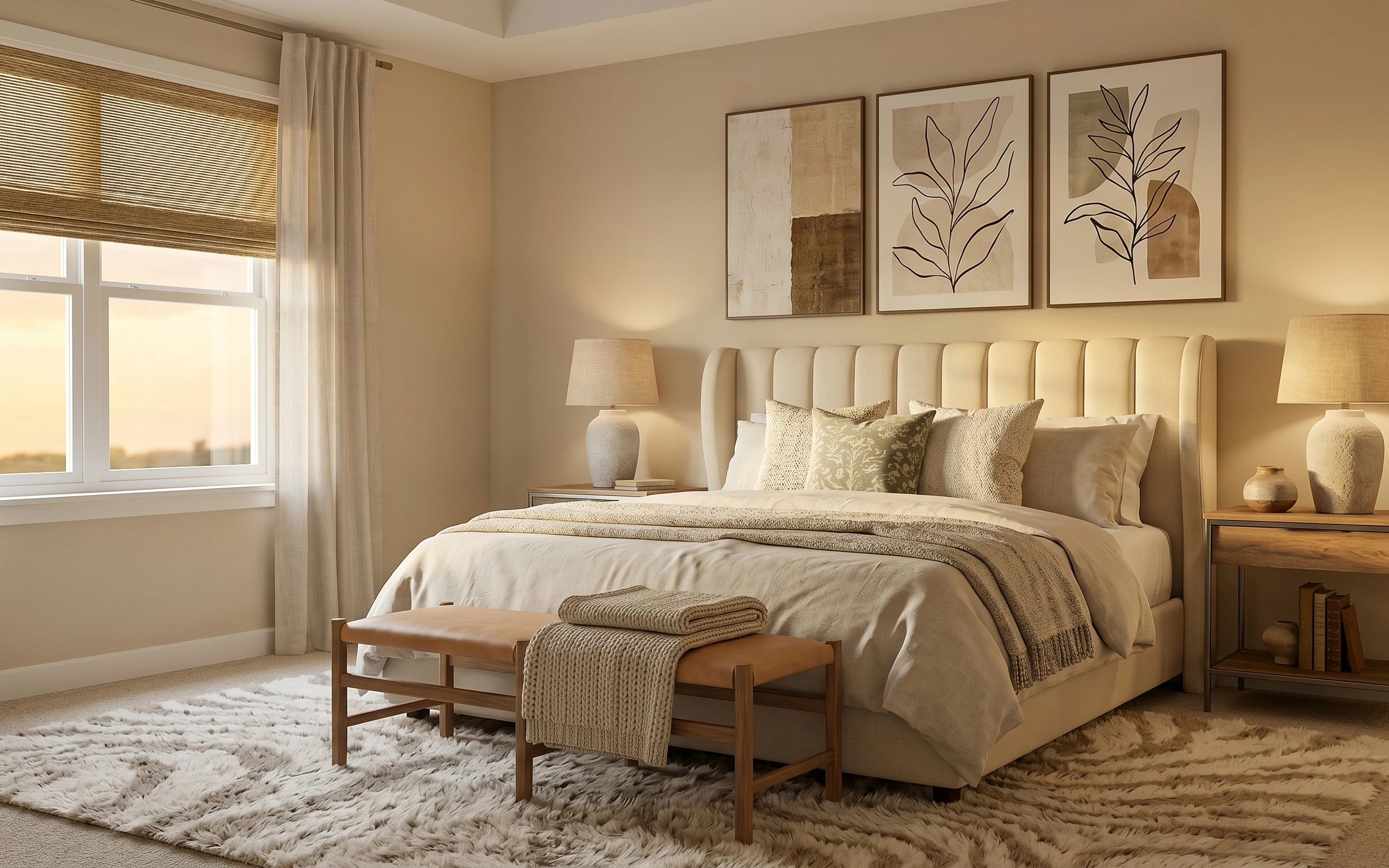
The photo leans on warm neutrals that read “soft” in daylight: creamy pillows, a patterned throw, and a woven-feel rug that grounds the bed. The large framed abstract adds texture without needing more furniture, and the plug-in lamp with a woven shade keeps the room from going flat after dark. Even the beige curtains do double duty—privacy and a gentle frame for the window area. For shared housing, this kind of layered textile + light approach is achievable because everything either clips, sets on surfaces, or packs flat.
I tried chasing this look once by swapping too many hard surfaces at once, and it just felt fussy in a rental. What changed my mind was watching how the sun hits texture: woven fibers on the rug and lamp shade matter more than perfectly matching colors. Keeping the palette to beige/cream and letting one pattern do the talking made the whole corner feel cohesive without “over-decorating.”
Layer 1 — decorative jar candle on bench ($15) Burn time without visual clutter
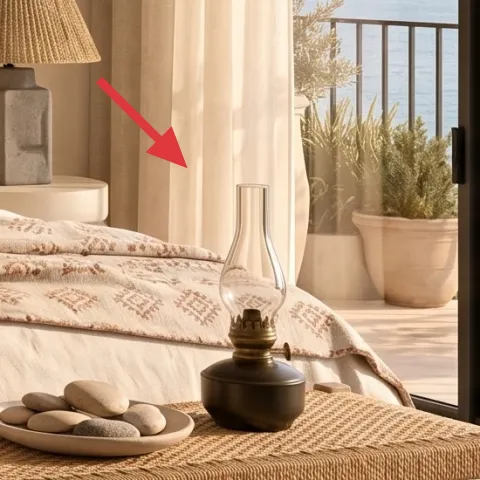
A decorative jar candle on the wooden bench is small enough to move room to room, but it adds that lived-in, low-effort warmth. In a sunlit bedroom corner, the candle’s job isn’t to be the main light—it’s to make the styling feel intentional when the day softens. The trade-off is simple: a jar candle looks best with a tidy bench surface, so keep only a couple of items near it. If the jar is visually busy, choose one with a neutral glass tone that matches the beige curtain and rug colors.
Pair it with one “stack” item
Keep the bench styling to two heights: one flatter element plus the candle, so the look stays calm in bright daylight.
Layer 2 — area rug ($80) Helps tile feel warmer
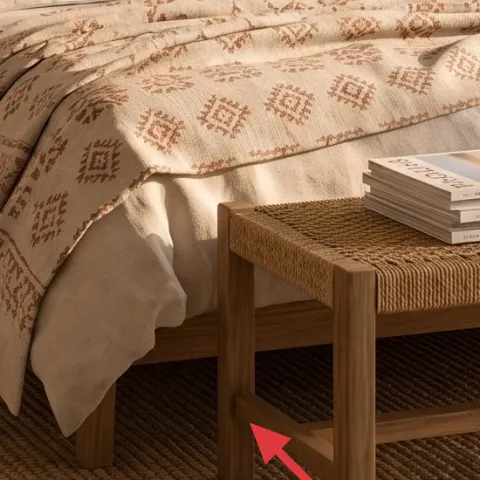
An area rug is doing the biggest visual work here: it turns light tile into something quieter and more grounded. The rug’s warm, woven texture visually connects the bed zone to the wooden bench at the foot, so the whole corner reads as one scene instead of scattered pieces. The trade-off is practicality—use a rug that can roll up tightly for moves, not one that requires professional handling. If the rug is patterned, keep bedding and curtains in lighter solids so the rug pattern doesn’t compete with the framed abstract.
Let the rug carry the “texture” job
When the rug has that woven feel, the rest of the styling can be mostly neutral and still look rich.
Layer 3 — beige curtains ($60) Softens the window edge
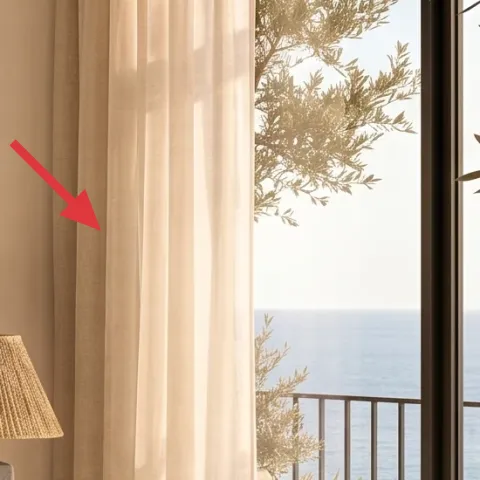
Beige curtains frame the window area and make daylight feel more even. In the photo, their sheer-ish warmth helps the corner feel brighter without looking stark, and the vertical folds add an easy layer of “movement” behind the bed. The trade-off with rentals is coverage and install limits, so choose curtains that can be tension-mounted or clipped to an existing rod rather than anything that requires drilling. Keep the hem near the floor for the most expensive-looking line, but don’t worry about perfect puddling—real rooms have slight variation.
Match undertones, not brand names
Look for curtains that read cream-beige, not yellow-beige, so they harmonize with the pillows and lamp shade.
Layer 4 — large framed abstract wall art ($80) Texture on the wall without hardware changes
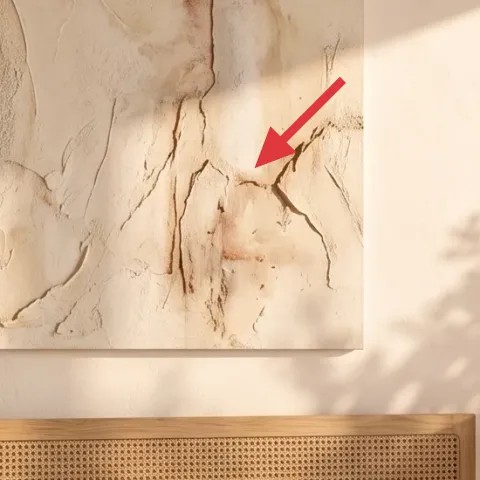
The large framed abstract wall art is the visual anchor above the bed, giving the corner a focal point that doesn’t require extra furniture. Its off-white and warm tan tones pick up the rug and bench palette, while the textured surface prevents the whole room from becoming too smooth. For shared housing, the trade-off is weight: choose hanging hardware that’s removable and renter-safe, and keep it to a single piece so it doesn’t get complicated during moves. If the frame is heavy, plan for help when lifting it onto the wall mount.
Skip anything that rips plaster when removed
If the wall is delicate, avoid high-tack strips; use renter-friendly mounting that removes cleanly and test it in a hidden spot first.
Layer 5 — patterned throw blanket on bed ($35) One texture that shows up daily
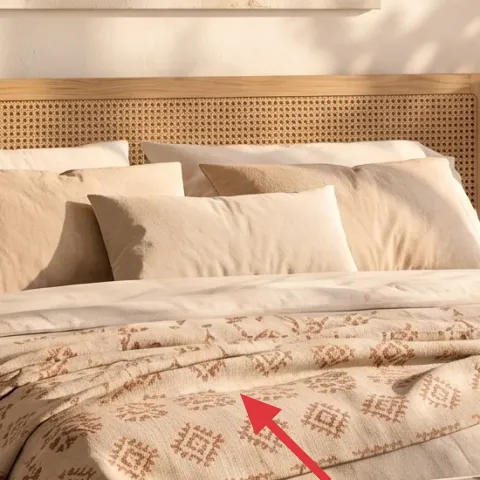
A patterned throw blanket on the bed makes the whole corner look styled even on weeks when the bedding isn’t “camera perfect.” The print adds warmth and detail over plain white pillows, and the blanket’s folded placement near the front edge creates a natural layering depth. The trade-off is that patterns can fight if they’re too loud—so keep the rest of the palette neutral and let this one textile do the talking. This choice also packs extremely well because you can fold it into a box without worrying about wrinkles that won’t go away.
Fold it, don’t drape it
A folded throw holds shape longer and looks intentional even when the bed is used every day.
Layer 6 — white pillows on bed ($30) Dye-ready covers for instant color depth
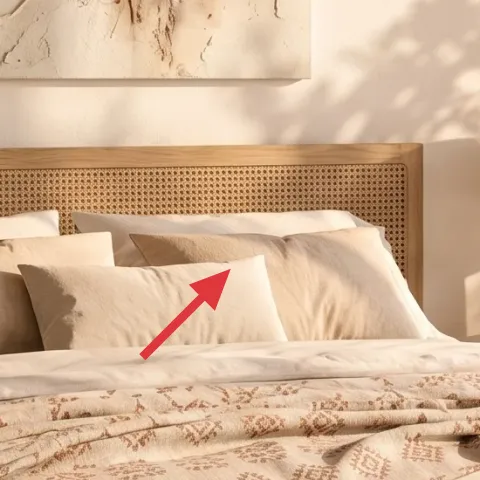
White pillows are a flexible base because they accept color and contrast without clashing with everything else in the corner. For this look, swapping to dyed pillow covers keeps the palette warm—think earthy beige tones that echo the curtains, rug, and woven lamp shade. The trade-off is that dyed covers look best when the dye job is even, so choose a dye that works for the fabric type you’re covering. This is also a move-friendly strategy: covers come with you, and the rest of the bedroom stays rental-compatible.
Keep pillow tones within the same “warm family”
If the dye pulls too orange or too gray, it will fight the lamp shade and rug instead of harmonizing with them.
Layer 7 — plug-in table lamp with woven shade ($60) Adds nighttime warmth without new ceiling fixes
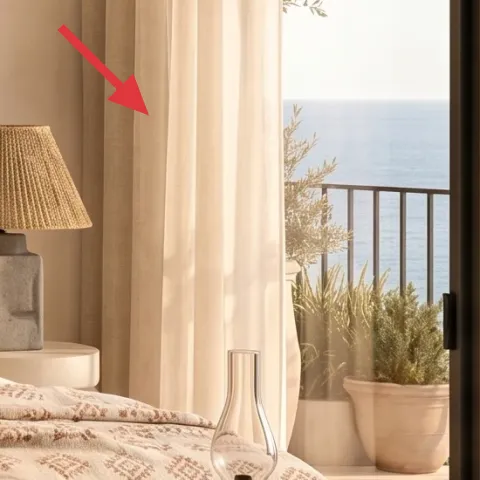
A plug-in table lamp with a woven shade gives the corner the kind of warm glow that framed art and layered textiles can’t produce on their own. In this photo, the lamp’s shape and material connect to the rug texture, so the bed area feels cohesive at night, not just in daylight. The trade-off is cord management in smaller spaces—use a simple cord path along the back of the side table and keep the base stable so it doesn’t wobble when touched. Because it’s portable and doesn’t require wall changes, it’s a great shared-housing upgrade.
Choose a shade that stays beige under warm bulbs
A woven neutral shade prevents the room from turning yellow or green when the bulb warms up.
The cost, layer by layer
| Layer | Item | Cost |
|---|---|---|
| 1 | Decorative jar candle | $15 |
| 2 | Area rug 5×7 | $80 |
| 3 | Curtain panel pair (84") | $60 |
| 4 | Framed art print 16×20 | $80 |
| 5 | Throw blanket | $35 |
| 6 | Throw pillow covers (dyed look) | $30 |
| 7 | Plug-in table lamp | $60 |
| Total | $360 | |
If the budget needs to go lower, prioritize the rug, the framed art, and one lamp. Swap the candle and extra textiles for fewer items you already own, and choose curtain panels secondhand to keep the color story consistent for less.
What worked, what didn't (across the whole room)
The best results came from stacking texture in flexible items: rug, curtains, and bedding details. The corner felt finished because the framed art gave a clear focal point, and the lamp added warmth after dark. The one area that needed restraint was “too many small objects” on the bench, which made the styling look cluttered instead of calm.
What worked
- The area rug softened the tile floor and made the bed zone feel anchored.
- Beige curtains added vertical softness and made the daylight look more even.
- The framed abstract print gave a single, strong focal point above the bed.
- The patterned throw brought warmth without needing extra furniture.
- The plug-in lamp with a woven shade kept the room cozy in evening light.
- A candle on the bench added “lived-in” tone without visual clutter.
What didn't
- When bench styling included too many small items, the warm neutrals looked busy.
- If pillow covers drifted too cool-gray, they fought the lamp shade and rug warmth.
- Using curtains that were too short broke the long, tidy lines in the window area.
- Overlapping too many patterns (rug plus throw) made the corner feel less cohesive.
What we'd skip if we did it again
Skip swapping multiple “big” pieces at once, like replacing lamps and wall art in the same weekend. In shared housing, small texture wins repeat across moves, while big replacements can feel like extra work when the next lease starts.
Skip high-tack mounting that’s hard to remove. The framed art should look clean now and come down later without wall damage, so renter-friendly removal matters as much as placement.
Skip adding more than one patterned textile. Keep the rug and throw doing the pattern work, and let pillows and curtains stay in warm solids so the room stays calm in bright light.
Frequently asked
How long does this kind of bedroom refresh usually take?
Most of the time is handling textiles—washing, folding, and placing the rug and throw—plus getting the lamp positioned and cords managed. Expect about 1–3 hours if the framed art is already ready to hang with renter-safe hardware. If wall mounting is new, plan an extra 30–60 minutes for careful placement and leveling.
What’s the safest approach for renters who can’t drill?
Choose pieces that either sit (rug, bench styling, candle) or use removable hanging methods designed for renters. Curtains should tension-fit or clip to existing hardware if possible. For framed art, use mounting that removes cleanly—test it in a hidden area first and avoid products known for pulling paint.
Will this work if my bedroom is smaller or the bed is against a different wall?
Yes—the logic stays the same: anchor with one rug, soften the window area, and keep bedding layers in a warm neutral palette. If the bed faces a wall directly, the framed art can still be centered above it or shifted slightly toward the headboard. The only change is scaling the rug footprint so it still tucks under the bed edge.
Where should I shop for the rug, curtains, and lamp without blowing the budget?
For budget-first shopping, split it up: rugs and lamp shades often show up well in home sale events and thrift-style marketplaces, while curtains are frequently found as off-the-shelf panels. Framed art prints can be ordered as 16×20 prints and swapped between frames over time, which is perfect for shared-housing moves.
What’s the biggest mistake people make with this kind of warm neutral look?
Adding too many small decorative items at once, especially on the bench or nightstand surface. The corner needs texture variety (rug, curtain, woven lamp shade), but not extra “stuff.” A simple rule: one candle plus one or two support pieces, and leave the framed art as the visual organizer.
If the lamp already exists, do I still need one?
A second lamp isn’t always required. If there’s already a portable lamp in the room, you can skip the lamp layer and use that budget toward a better rug or curtain panel length. The main goal is evening warmth, so any plug-in light source with a neutral shade will support the same look.
More in Bedroom

Under $400: sunlit bedroom corner refresh with 7 move-ready swaps
A sunlit bedroom corner starts with warm neutrals, then gets its “done” look using 7 move-ready swaps. This refresh keeps everything renter…
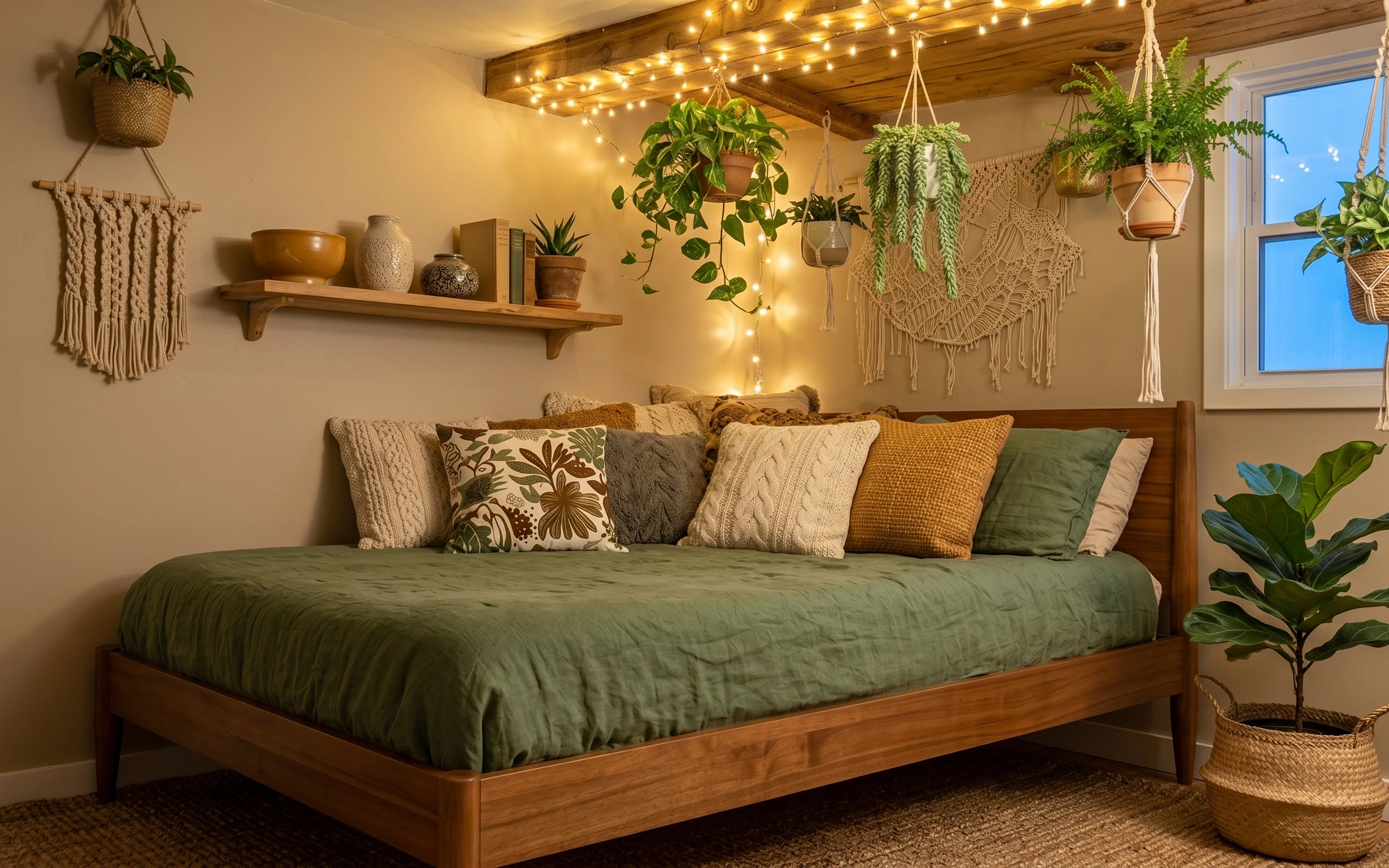
Under $500: boho bed nook refresh with 7 easy upgrades
A cozy boho bed nook with sage-green bedding and warm string lights looks like a whole weekend makeover—without turning it into a renovatio…
Under $500: warm neutral bedroom refresh with renter-friendly swaps
A warm-beige bedroom look is achievable for under $500 using renter-safe swaps like a shag area rug, layered window curtains, and framed ar…