- Best for
- Under-$500 neutral bedroom refresh
- Time
- One weekend (about 4–6 hours)
- Total cost
- About $465
- Renter-safe
- Yes — no-drill swaps + Command-friendly styling
Why warm neutrals and framed texture is the move-friendly bedroom of 2026
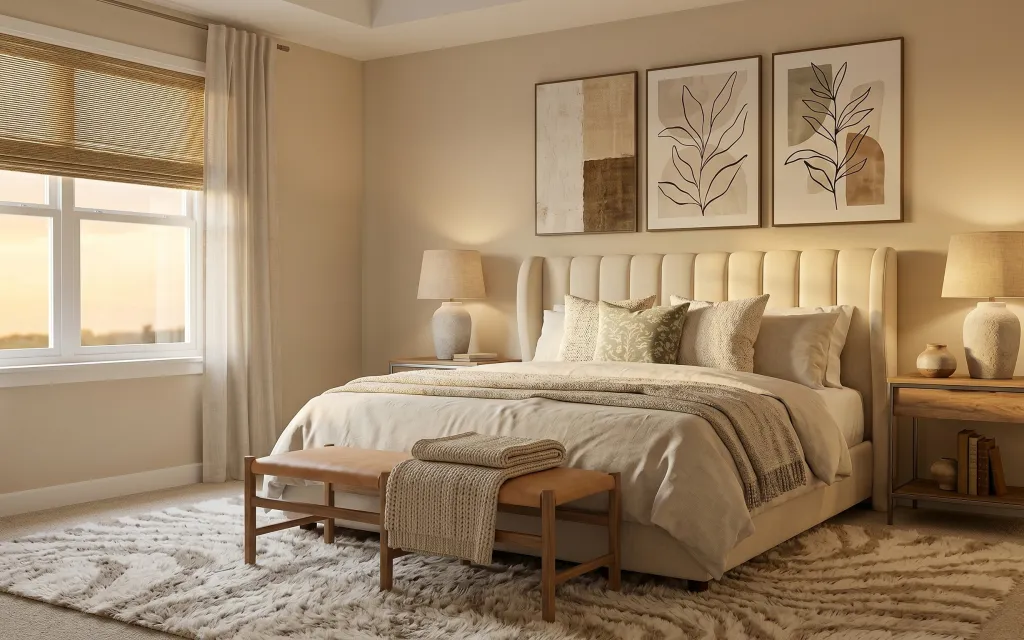
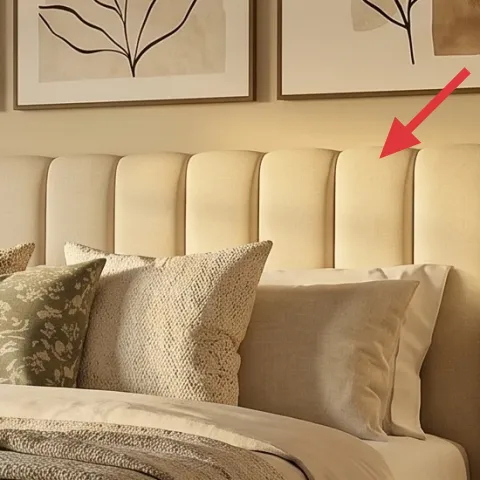
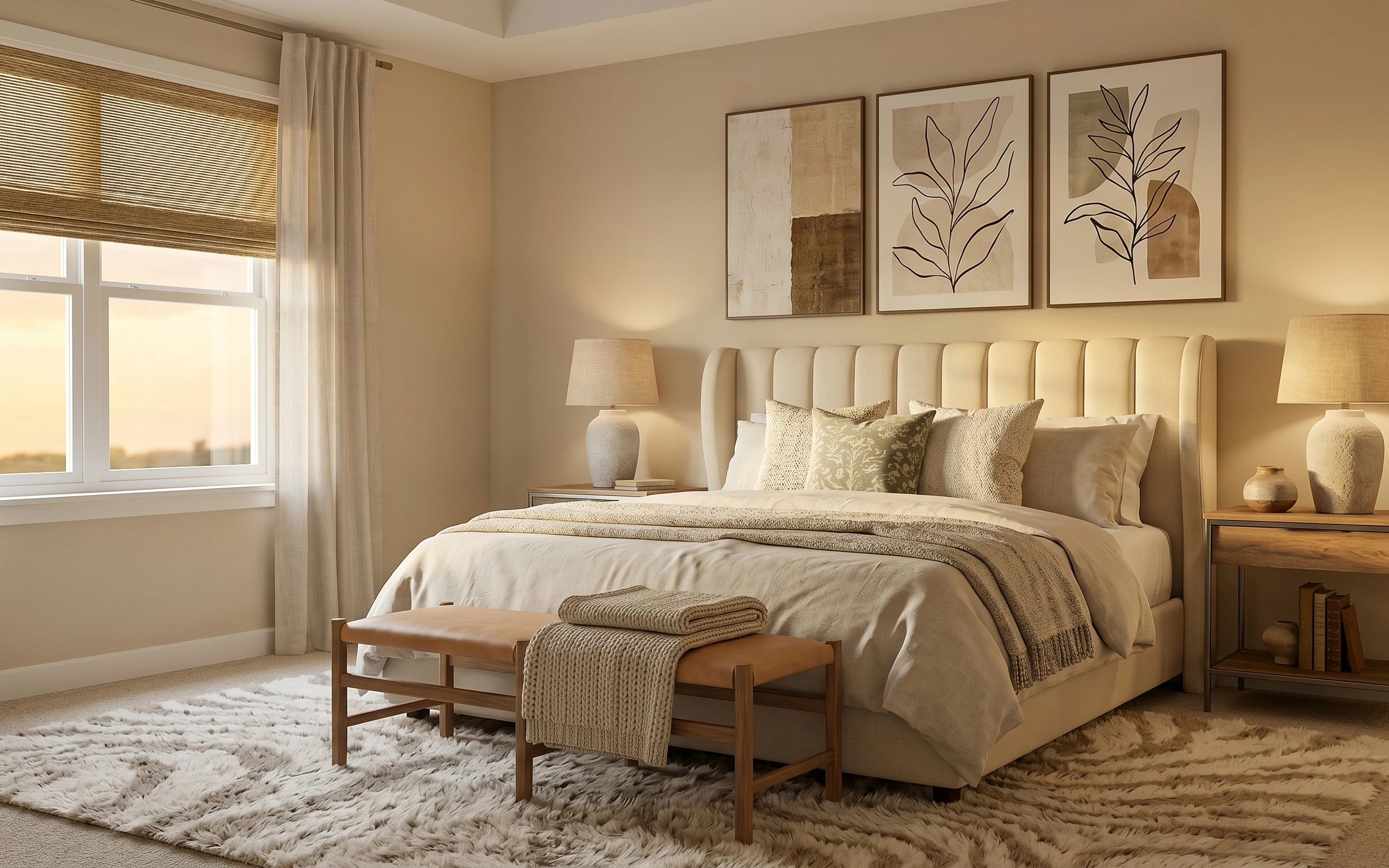
Start with the foundation you can feel: the large shag area rug, the knit throw on the bench, and the cream bedding layers that read soft even in daylight. This room also leans on “horizontal” styling—blanket lines, pillow heights, and the two plug-in table lamps that keep everything from looking flat. The three framed botanical/leaf-style prints add contrast, but they’re all the same calm palette of warm beige and cream. For renters, that’s the key: you can swap textiles and add plug-in lighting without touching what the landlord installed.
I used to overcomplicate this kind of room by buying matching sets. Then I realized the look wasn’t “perfect match”—it was balance: one bold texture (the rug), one strong shape (the tall headboard silhouette), and smaller accents that repeat the same tones. The moment I let the framed prints be similar but not identical was when it finally started looking like a real lived-in bedroom instead of a staged photo.
Layer 1 — large shag area rug ($200) plush underfoot for a softer palette
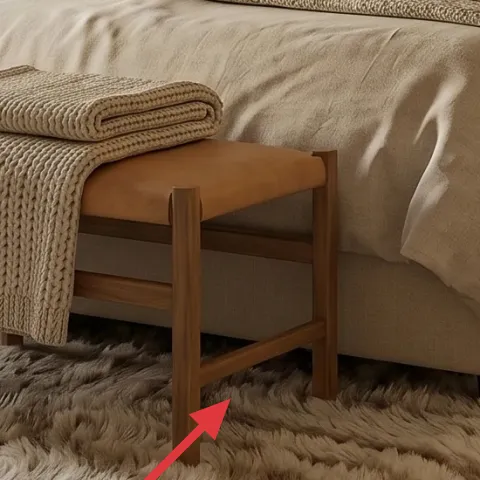
A large shag area rug anchors the whole bedroom because it visually grounds the bed and pulls the eye down to the floor. In this setup, the rug’s cream-to-taupe tone keeps the look airy, while the high pile adds that “you can sink into it” texture that textiles alone can’t replicate. The obvious alternative is a flatweave rug, but it tends to feel sleek and cold next to knit throws and patterned pillows. The trade-off here is shedding—so choose a rug that’s easy to vacuum in strokes, and keep a lint roller nearby for the first couple of weeks.
Pick a cream base, tan secondary
When your pillows and curtains are warm neutrals, a rug with both cream and tan tones hides small dust marks better than a pure white base.
Layer 2 — curtain panels ($80) keeps the window wall calm and tall
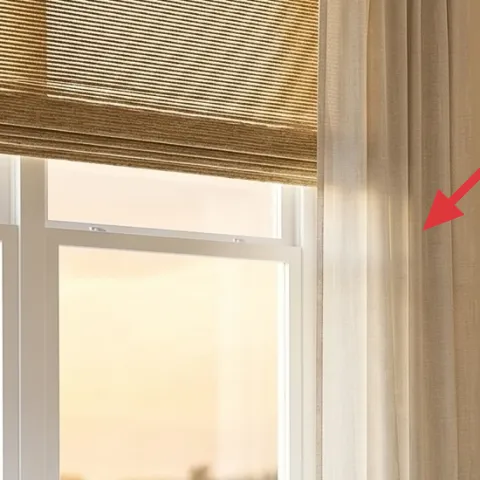
Curtain panels give the window area height and softness, which is why this bedroom feels generous even without dramatic wall color. The panels here sit in a light warm neutral, so they don’t compete with the framed botanical prints or the headboard silhouette. A common renter alternative is sheer-only or blackout-only panels, but that usually flattens the light or makes the room feel too serious. The trade-off with curtain panels is that you’ll want a steady hook-and-hang rhythm so the folds look even every morning—especially in photos.
Works even with existing blinds
You can keep landlord-installed blinds and still get the softness by focusing on the fabric panels at the edges.
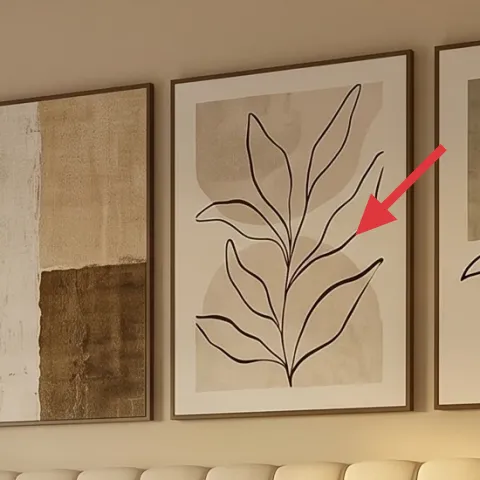
Layer 3 — hand-painted abstract on cardstock (framed print) ($50) one botanical-themed focal frame
Make it instead of buying it
This DIY framed print replaces one of the leaf-style frames with a budget-friendly abstract on cardstock in warm beige and cream.
Materials
- Cardstock sheets — 2 pieces — craft store — $6
- Acrylic paint set (warm beige/cream tones) — 1 small set — art store — $12
- Small tabletop/wall frame (matching your wall size) — 1 — home goods store — $18
- Craft brush (flat or small round) — 1 — craft store — $6
- Masking tape — 1 roll — hardware store — $3
Steps
- Tear or cut cardstock to fit your frame opening, then tape a clean border for crisp edges.
- Brush on a warm beige base layer and let it dry until it no longer feels tacky.
- Layer in abstract “leaf” shapes with a slightly darker tone, keeping the lines airy.
- Build up small textural strokes with the brush tip, then let the paint fully dry.
- Remove tape slowly, inspect for gaps, and touch up thin areas with a final pass.
- Place the cardstock into the frame and align the art straight on the mat.
Total DIY cost: $45 — saves about $5 over buying.
Layer 4 — plug-in table lamp ($60) warm pools of light beside the bed
Plug-in table lamps make this bedroom feel finished because they add warmth at night without relying on overhead fixtures. The cream fabric shade softens the beam, and the lamp’s shape mirrors the bed’s tall headboard—so the visual rhythm stays vertical. If you jump straight to a brighter bulb or a hard-edged metal shade, the room can look sharper than cozy against all the knitted textures. The trade-off is you’ll want to choose a warm bulb temperature so the lamp doesn’t turn the rug and curtains slightly gray under evening light.
Skip cool white bulbs
Cool bulbs can fight the warm beige palette and make the framed art look washed out.
Layer 5 — knit throw blanket on bench ($30) adds a second texture level
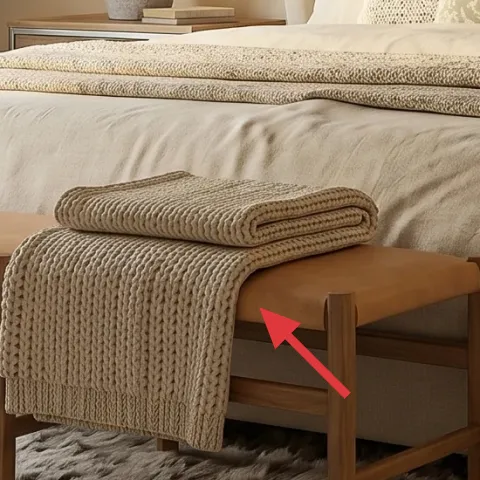
The knit throw blanket on the bench is a small detail that reads big because it adds texture “in front” of the bed. Placed in a fold on the bench, it also gives the eye a place to land during the day, not just at night under lamp light. The obvious alternative is another pillow, but pillows already dominate the bed surface—so adding knit texture on the bench balances the scene. The trade-off is that knit throws show lint, so stick to a removable cover-friendly material and quick brush it before guests arrive.
Fold, don’t drape
One clean fold keeps the shape intentional and prevents the texture from looking messy across the bench.
Layer 6 — decorative ceramic vase/jar ($30) brings earthy softness to the nightstand
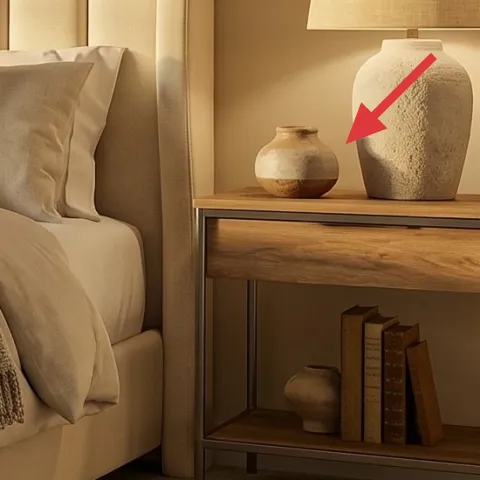
A decorative ceramic vase/jar on the right bedside table adds the kind of “quiet interest” that makes neutrals feel styled rather than empty. In this photo, the ceramic reads warm and matte, which plays well with the wood grain of the nightstand and the fabric lamp shades. If you choose a glossy ceramic or a metal vessel, the room starts to feel cooler and more reflective, especially near the window. The trade-off is size—go medium rather than tall so it doesn’t overwhelm the lamp line or block the base of the lamp in pictures.
Match the ceramic finish to your textiles
Matte ceramics look calmer next to shag and knit textures than shiny finishes.
Layer 7 — decorative book stack ($15) gives the styling height without clutter
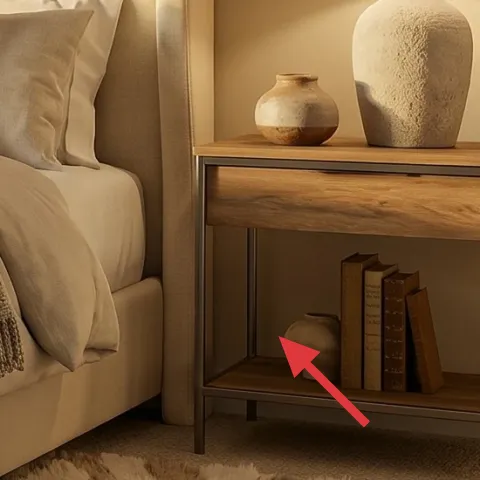
A decorative book stack on the bedside table adds vertical structure and makes the surface feel “owned,” not staged. Because the bedroom palette is warm and light, the stack also works like neutral “graphic” texture—spines become small stripes instead of visual noise. A common alternative is a tray, but the nightstand already has ceramic and a lamp, so books keep the arrangement from feeling too flat. The trade-off is that you need a consistent rule: stack to the same height you want every time, then avoid adding random extras that start to look like leftovers.
Use one color family
Keep the book stack within cream/tan/neutral spines so it stays in sync with the curtains and rug tones.
The cost, layer by layer
| Layer | Item | Cost |
|---|---|---|
| 1 | Large shag area rug | $200 |
| 2 | Curtain panel pair (84") | $80 |
| 3 | Hand-painted abstract framed print (DIY equivalent) | $50 |
| 4 | Plug-in table lamp | $60 |
| 5 | Knit throw blanket | $30 |
| 6 | Decorative ceramic vase/jar (medium) | $30 |
| 7 | Decorative book stack | $15 |
| Total | $465 | |
If you want a cheaper variant, swap the shag rug for a lower-pile cream rug and choose a smaller framed print size. Keep curtain panels and one plug-in table lamp, then put your remaining budget into the knit throw and ceramic for the most visible texture.
What worked, what didn't (across the whole room)
The biggest win is the “texture stack”: shag rug, knit throw, and fabric shades make the warm beige palette feel intentional. The second win is repetition—framed leaf shapes echo the organic feel of ceramics and textiles. The miss to watch for is overloading the nightstand with multiple tall items that compete with the lamp base.
What worked
- The large shag rug makes the bed area feel warmer and visually grounded.
- Curtain panels soften the window wall and help the room read taller.
- One DIY framed print is enough to create a focal point without spending on a full set.
- Plug-in table lamps add warm pools of light at eye level.
- The knit throw on the bench adds a second texture level in front of the bed.
- Matte ceramic on the nightstand looks calmer next to fabric shades.
What didn't
- Using too-bright bulbs can turn the warm beige palette slightly gray at night.
- Adding a second tall object beside the lamp makes the nightstand look cramped.
- Flatweave rugs can make the bed textures feel heavier and less cozy.
- Busy framed art styles (too many colors) fight the calm curtain and rug palette.
What we'd skip if we did it again
Skip buying matching furniture “sets” that lock you into one exact look. In a neutral bedroom, it’s better to pick one anchor texture (the shag rug) and then let the lamps, ceramic, and prints vary slightly while staying in the same beige-and-cream family.
Skip cool-white bulbs and any lamp shades that look too structured. The whole bedroom depends on soft, warm light to make the curtains and knits read cozy rather than flat in the evening.
Skip adding more than one nightstand focal object. A lamp plus one ceramic piece plus a small book stack is the sweet spot; beyond that, the surface becomes clutter and the framed wall art loses its impact.
Frequently asked
How long does this bedroom refresh take?
Most of the time goes to textiles and styling. Plan roughly 4–6 hours for rug and curtain placement plus lamp/beds*ide staging. The DIY framed print is usually an extra 1–2 hours spread across paint drying. If you’re only swapping one or two pieces, it can be done in under a day.
Is this look actually renter-safe when the lease ends?
Yes, because the changes are on movable items: a large shag area rug, curtain panels, plug-in table lamps, and framed wall art. The ceramic and book styling can pack into boxes without damage. Keep a simple inventory of what you added so move-out is just reversing the swap.
What if my bedroom is smaller than this one?
Go down one size on the rug and keep the curtain panels tall, not wide. Instead of three framed prints, choose one or two and keep the spacing generous so the wall doesn’t feel crowded. For the nightstand, use one lamp and one ceramic object plus a slim book stack.
What if my bedroom has stronger colors in the landlord’s finishes?
Lean on warmer neutrals: pick cream-and-tan rug and curtains, then use the framed print as the “color setter” so your palette stays cohesive. If the wall or trim reads cooler, aim for lamps with warm bulbs and ceramics with matte finishes so the room doesn’t look washed out.
Where can I shop for these pieces without overspending?
For the biggest budget lever (the rug), look for sales on large shag or plush low-shed styles. Curtain panels are often best value in multipacks or off-price stores. For the lamps and ceramic, focus on texture and shade shape, then buy framed art (or DIY it) to match your tones instead of chasing trends.
What’s the biggest mistake people make with neutral bedrooms?
Buying too many similar “safe” items that are all flat and smooth. The bedroom in this photo works because it stacks textures—shag, knit, fabric shades—while keeping the color family consistent. If anything feels wrong, add texture before adding more objects.
More in Bedroom
Under $500: warm neutral bedroom refresh with renter-friendly swaps
A warm-beige bedroom look is achievable for under $500 using renter-safe swaps like a shag area rug, layered window curtains, and framed ar…
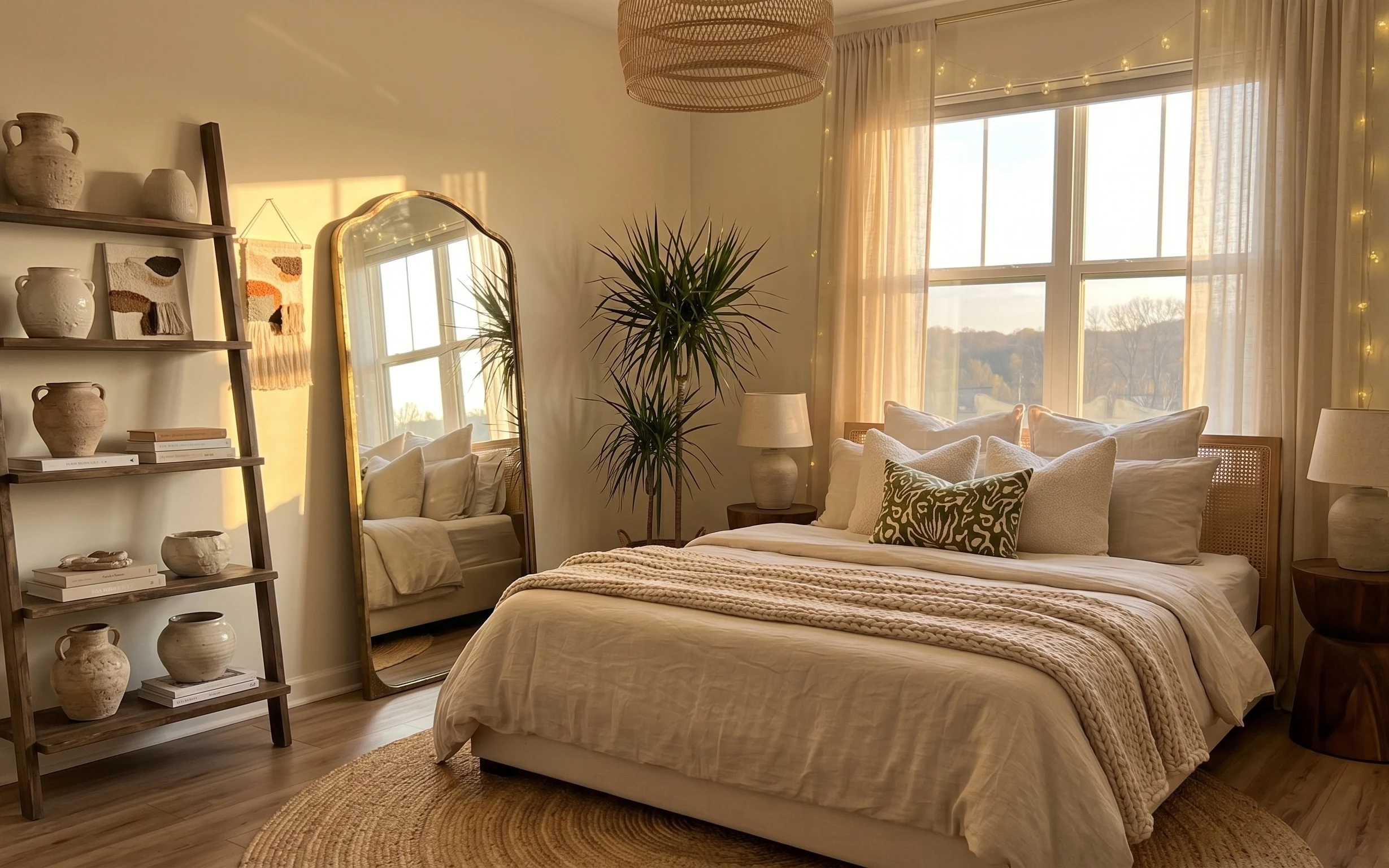
Under $300: boho bedroom refresh with move-ready swaps
A boho bedroom refresh built from renter-safe, move-ready swaps: rug warmth, sheer curtain softness, and string-light glow—plus a mirrored …
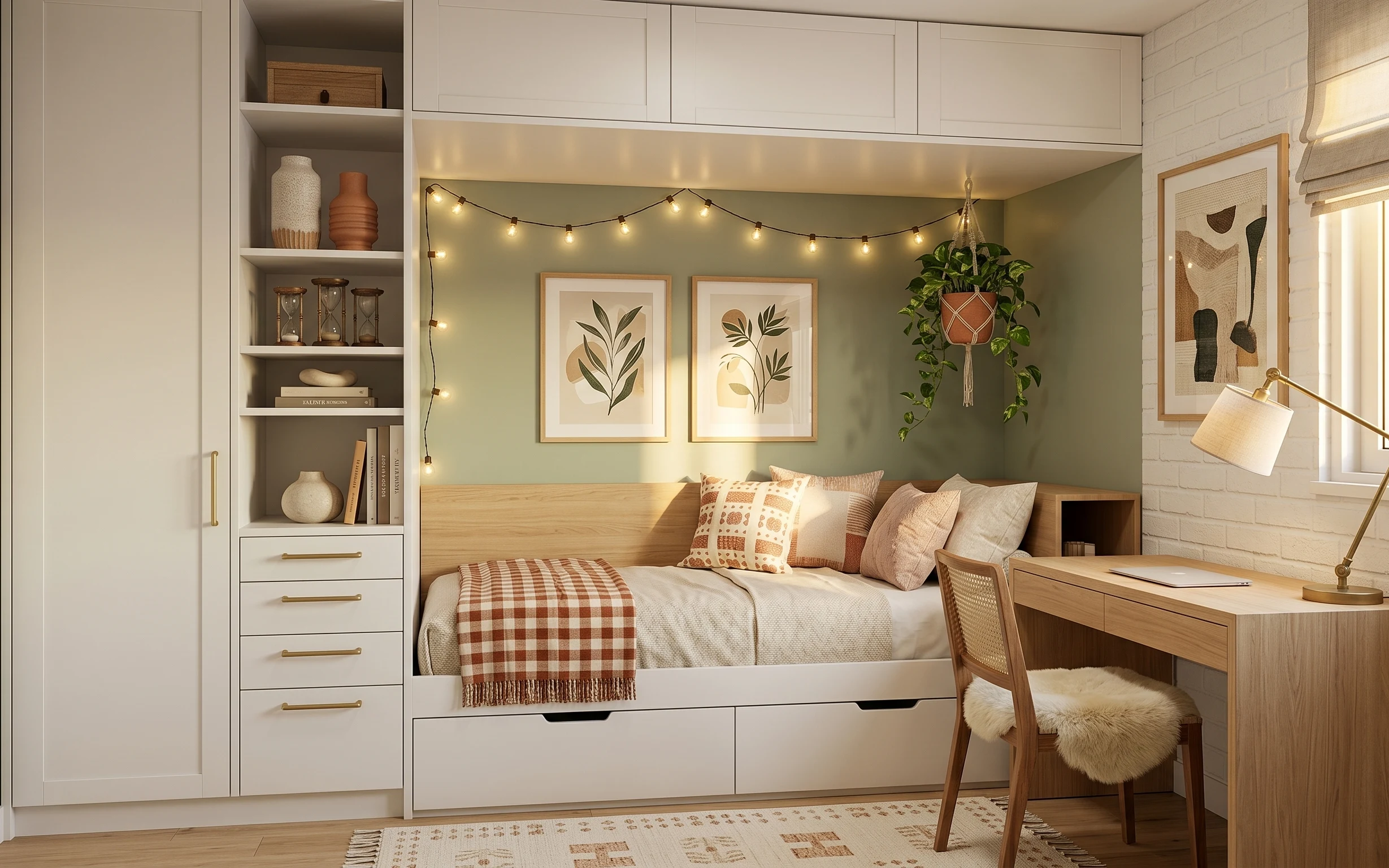
Under $350: olive-and-terracotta daybed nook refresh
A renter-friendly daybed nook refresh that leans olive, terracotta, and warm lights. This look comes together with 7 swap-in layers (includ…