- Best for
- Textile layering + warm lighting
- Cost
- $418 total upgrades
- Difficulty
- Easy
- Time
- One weekend (2–6 hours)
Why warm wood-and-green bed nook is the bed nook of 2026
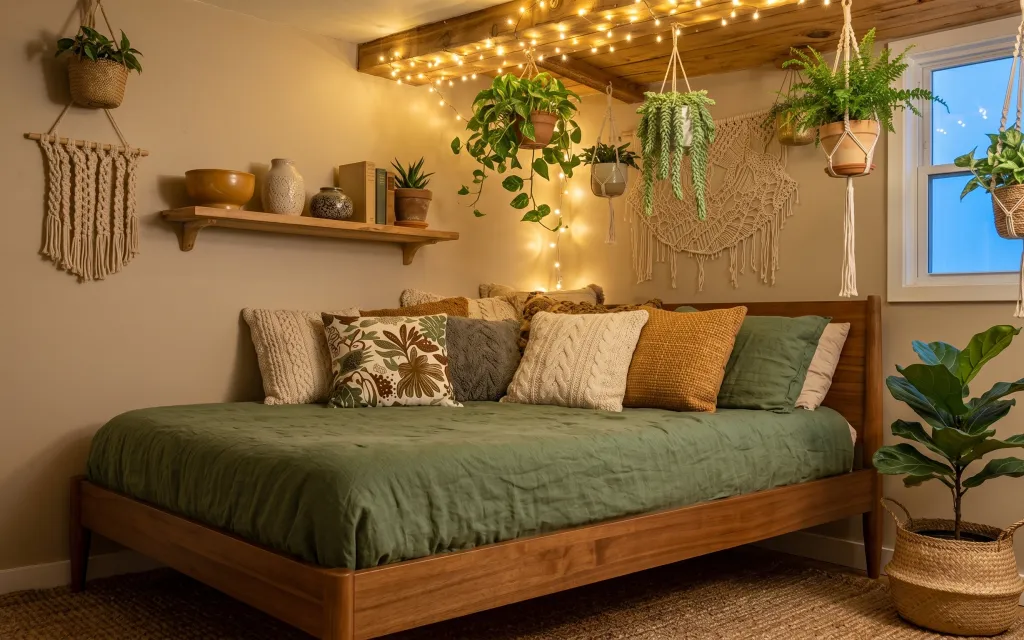
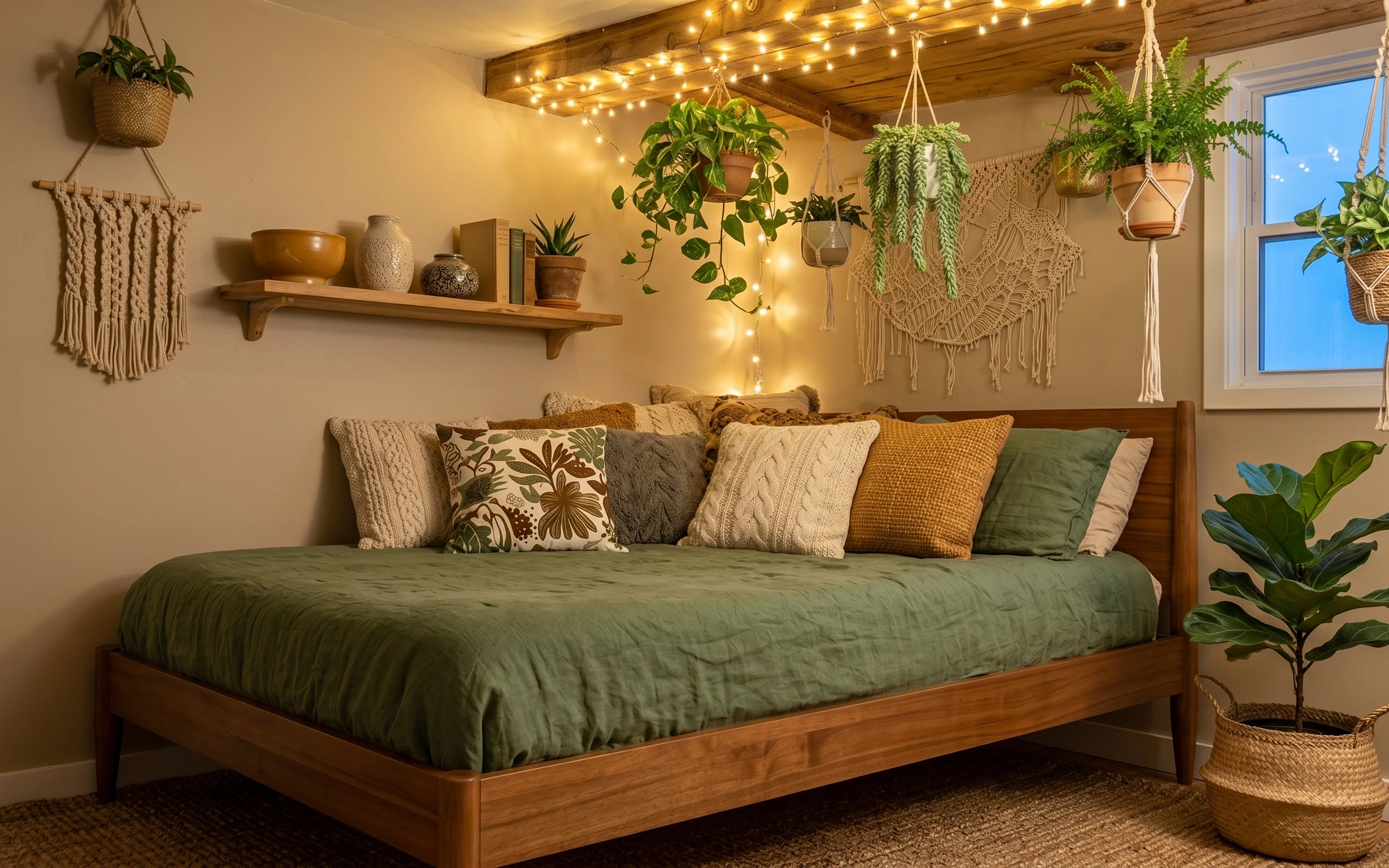
The photo reads like one of those calm, artsy spreads from Dwell, but it’s really the mix that sells it: warm string lights, a soft area rug, and layered pillows in sage green and cream. You also get that boho “plant energy” from multiple hanging planters, plus a macrame wall hanging that adds vertical movement. The floating shelf matters too—small decor objects look intentional when they’re stacked at the right height. This is all doable for homeowners on a weekend because it’s mostly styling, plus a couple of screw-and-anchor installs.
I almost overdid it the first time I tried a plant-forward wall—everything was either too matchy or too spaced out. What changed my mind was stepping back and copying the same logic as a mood board: one warm light source, one hero texture (the macrame), and then repeat the green in small doses through pillows and plants. That way, it looks curated, not cluttered.
Layer 1 — string lights across ceiling ($15) Softens a plain ceiling
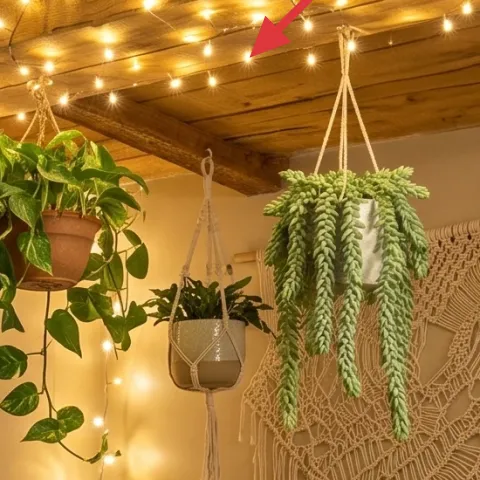
String lights are doing the heavy lifting here because they warm up the whole bed nook without changing the permanent surfaces. In the photo, the tiny bulbs trace the wood ceiling beams and make the white walls feel less blank. The obvious alternative is overhead-only lighting, but that tends to cast sharper shadows on the bed and pillows. With string lights, you trade a “real fixture” look for something gentler and more forgiving—especially if your ceiling is visible from bed height.
Hang them loose, then adjust
Let the strands drape slightly, plug them in, and fine-tune the spacing while you’re standing where you’ll sit in the room.
Layer 2 — patterned throw pillow ($18) Balances all the solid knit
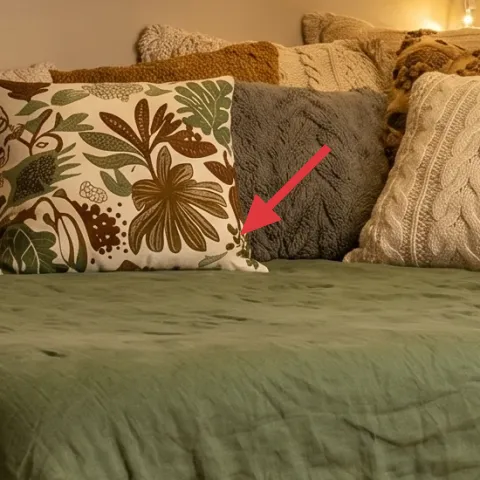
This patterned throw pillow adds contrast against the solid knit and cable-texture pieces, which is why the bed doesn’t look flat even with a simple green duvet cover. The print also pulls the colors together—greens and warm neutrals keep it from feeling random. The easy alternative is buying a second plain pillow, but that won’t give you the same focal point. The trade-off with pattern is that you have to keep the rest of the pillow mix calmer, so choose textures (knit, woven) instead of adding more prints.
Pattern reads best at eye level
On a bed, pillow tops sit where you notice them first, so the pattern can do the “art” job without adding another wall item.
Layer 3 — terracotta hanging plant pot ($25) DIY it for a custom shade
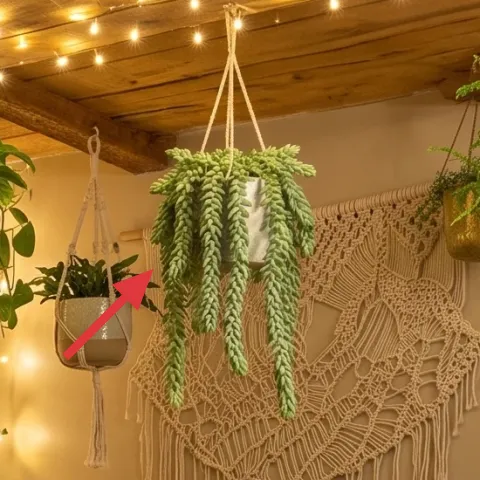
Terracotta is doing more than looking cute—it’s the warm counterbalance to all the green leaves and the cool white walls. If you swap in a differently colored pot, the whole plant cluster shifts from “generic houseplant” to “intentional styling.” The obvious alternative is leaving the pot alone, but then it’s harder to match the warm wood tones in the ceiling and the shelf. The trade-off: a painted pot has to be sealed so it can handle normal handling and occasional light moisture from the plant.
Start with clean, dry terracotta
Any dust or residue makes paint look patchy, so rinse, dry fully, and lightly prep before you paint.
Layer 4 — hanging green plant ($40) Adds volume above the bed
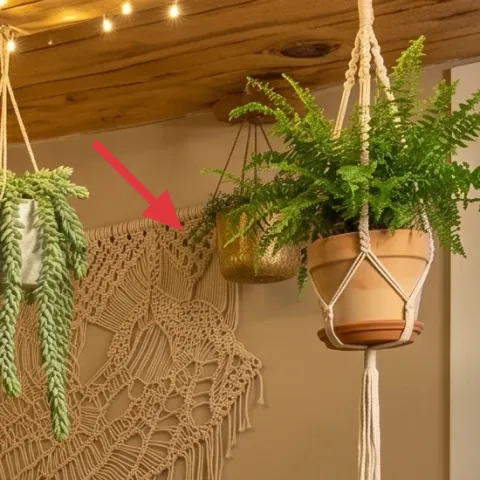
The hanging plant cluster is what turns the bed nook into a vertical vignette instead of a flat wall. In the photo, the leaves spread outward, and that spread fills the empty space around the macrame wall hanging. The alternative is using only tabletop plants, but that usually leaves the upper half of the wall feeling unfinished. The trade-off with hanging plants is maintenance: you’ll dust leaves more often and keep an eye on watering, but the visual payoff is huge from bed height.
Pick one leaf shape to repeat
If the plant has narrow leaves, keep it consistent across hanging pots so the cluster looks styled, not random.
Layer 5 — floating wall shelf ($60) Creates a “grown-up” styling zone
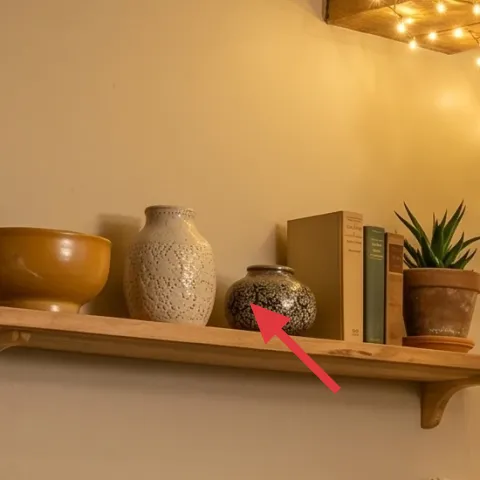
The floating shelf gives you a dedicated place to group earthy objects—like the small plant on top and the pottery-looking pieces—so the wall feels designed instead of decorated by accident. It also breaks up the wall space between the hanging macrame and the bed, which is why the composition feels balanced. The obvious alternative is skipping the shelf and going straight to wall art, but art alone can feel too flat when the room already has lots of texture. Here, you’re trading a little mounting effort for a full styling surface.
Don’t center it by height alone
Stand/sit where you’ll actually look at the bed; adjust the shelf height so the objects land near your sightline, not just the ceiling midpoint.
Layer 6 — macrame wall hanging ($60) Adds texture you can’t fake with paint
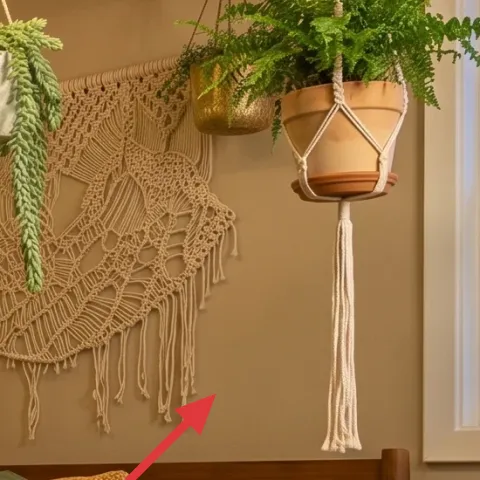
Macrame is the reason this bed nook reads boho without needing a ton of colorful furniture. The loops create depth, and the long fringe lines pull the eye upward and downward around the hanging plants. A cheaper alternative is a flat wall tapestry, but it won’t create the same shadow play against the warm string lights. The trade-off is that macrame is visually “busy,” so you’ll want the rest of the styling to be mostly solids and natural materials—rug, knits, wood shelf, and terracotta.
Let fringe overlap with plants
When the fringe visually intersects with leaf shapes, it looks intentional instead of pasted on.
Layer 7 — area rug 5×7 ($200) Anchors the whole bed nook
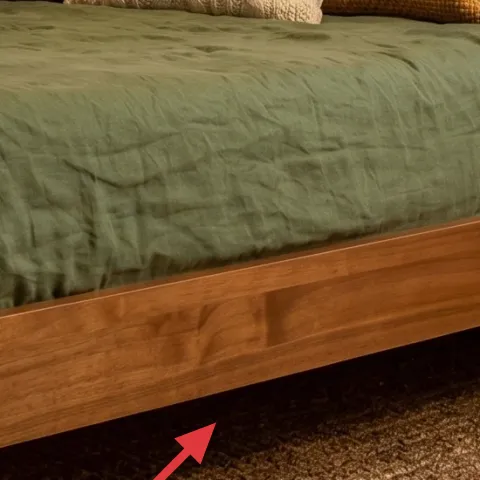
An area rug is what makes the bed nook feel finished, especially in a bedroom where the floor is visible from the sides of the bed. In the photo, the rug’s warm tone ties into the walnut-like bed frame and keeps the white walls from feeling too crisp. The alternative is leaving the carpet alone, but then your textiles (green duvet, knits, pillows) won’t have a grounding layer to sit on. The trade-off is sizing: going too small makes the bed look like it’s floating.
Choose rug warmth, not just softness
Pick a tone that repeats in wood or terracotta so the color story stays cohesive.
The cost, layer by layer
| Layer | Item | Cost |
|---|---|---|
| 1 | string lights across ceiling | $15 |
| 2 | patterned throw pillow | $18 |
| 3 | terracotta hanging plant pot | $25 |
| 4 | hanging green plant | $40 |
| 5 | floating wall shelf | $60 |
| 6 | macrame wall hanging | $60 |
| 7 | area rug 5×7 | $200 |
| Total | $418 | |
If you want a cheaper variant, start with the rug and string lights, then swap one pillow for a solid knit cover. Skip the macrame purchase if you can find a pre-owned piece in good condition—fringe tends to be durable if it’s not sun-faded.
What worked, what didn't (across the whole room)
The best part of this bed nook is how the lighting and vertical decor do the visual work. String lights plus a macrame wall hanging make the wall interesting even with simple bedding colors, and the plant cluster keeps the vibe grounded in natural textures. The only snag is that too many separate “centerpieces” can compete.
What worked
- String lights add warm depth to the wood ceiling beams without needing a ceiling fixture swap.
- The patterned throw pillow creates a clear focal point against knit and solid pillow textures.
- Terracotta pots repeat the same warm tone seen in the wood bed frame.
- Hanging plants fill vertical space, making the bed nook feel styled from both standing and sitting angles.
- A floating wall shelf turns small objects into a cohesive vignette instead of scattered decor.
- Macrame fringe moves visually with the lighting, adding texture you can’t get from paint alone.
What didn't
- Buying multiple patterned pillows at once makes the bed feel busy instead of calm.
- Placing plants too far apart can make the cluster look accidental rather than layered.
- A rug that’s too small causes the bed to look like it’s floating off the floor.
- Adding extra wall art on top of macrame tends to compete for attention.
- If the shelf items aren’t grouped by height, the wall reads lopsided.
What we'd skip if we did it again
Skip extra small wall decor that duplicates the job of macrame. When fringe already adds texture and shadow, extra wall bits can make the whole area feel loud instead of layered.
Skip a second “warm light” source that’s too bright. String lights are meant to create a gentle glow; adding a harsh bulb elsewhere can flatten the cozy effect on the bedding.
Skip mismatched plant pot colors unless you’re repeating the same warm tone elsewhere. Terracotta works here because it echoes the wood bed and shelf; a random pot shade breaks the palette.
Frequently asked
How long does this kind of bed nook refresh take?
Most people can do it in one weekend. String lights are fast, pillow swaps are quick, and decor grouping usually takes the most time because you’re editing until it looks balanced. If you’re mounting a floating shelf, that’s the main variable—plan extra time for measuring and leveling.
Can I do this if I’m in a rental?
Yes—many parts are rental-friendly. String lights plug in, pillow covers are swap-and-go, and you can use tension and no-drill hanging methods for some wall decor. For a floating shelf, use landlord-safe hanging options or stick to a freestanding shelf instead of anchor-mounted hardware.
What if my room is smaller than this one?
Go smaller on the rug or keep the rug’s color tone, but reduce how many separate “zones” you create. For example, pick one hero texture (macrame or a patterned pillow) and keep the rest mostly solid and knit. With plants, reduce the number of hanging pots so the wall doesn’t feel crowded.
What if my room is bigger and feels bare?
Add height and repetition instead of more random decor. Extend the string lights farther along the ceiling beams, hang plants with a little more spacing, and make sure the shelf decor is stacked in tiers (short, medium, tall). A slightly larger rug helps the bed anchor visually.
Where should I shop for these specific pieces?
String lights and pillow covers are easy to find online and at big-box retailers. For macrame wall hangings and plant accessories, look at home decor boutiques and thrift stores—fringe and fibers can be a great find secondhand. Floating shelves and rugs are usually easiest to compare in-store for size and finish.
Biggest mistake people make in a bed nook like this?
Overbuying pattern and adding too many competing focal points. If you already have macrame plus plants, keep the pillow mix mostly texture-driven and repeat the same color notes (warm neutrals, terracotta, greens). The goal is “layered,” not “decorated to the point of noise.”
More in Bedroom
Under $500: boho bed nook refresh with 7 easy upgrades
A cozy boho bed nook with sage-green bedding and warm string lights looks like a whole weekend makeover—without turning it into a renovatio…
Under $500: warm neutral bedroom refresh with renter-friendly swaps
A warm-beige bedroom look is achievable for under $500 using renter-safe swaps like a shag area rug, layered window curtains, and framed ar…
Under $300: boho bedroom refresh with move-ready swaps
A boho bedroom refresh built from renter-safe, move-ready swaps: rug warmth, sheer curtain softness, and string-light glow—plus a mirrored …