- Best for
- Softening a stone shower corner
- Time
- 1–2 hours for styling + setup
- Total cost
- $300
- Renter-safe
- Yes (freestanding textiles + decor)
Why warm beige styling is the shower nook of 2026
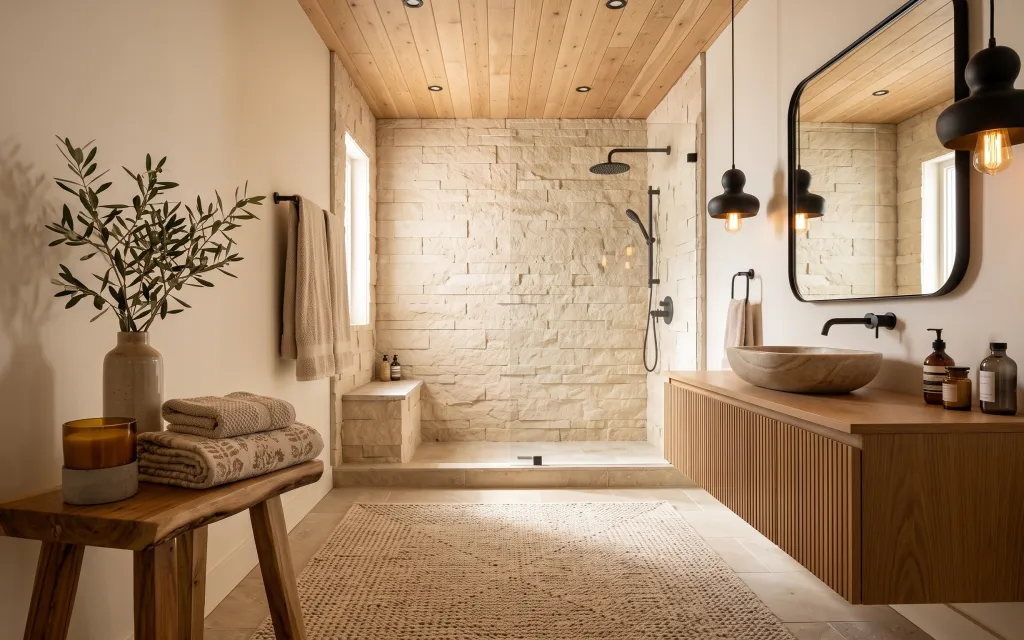
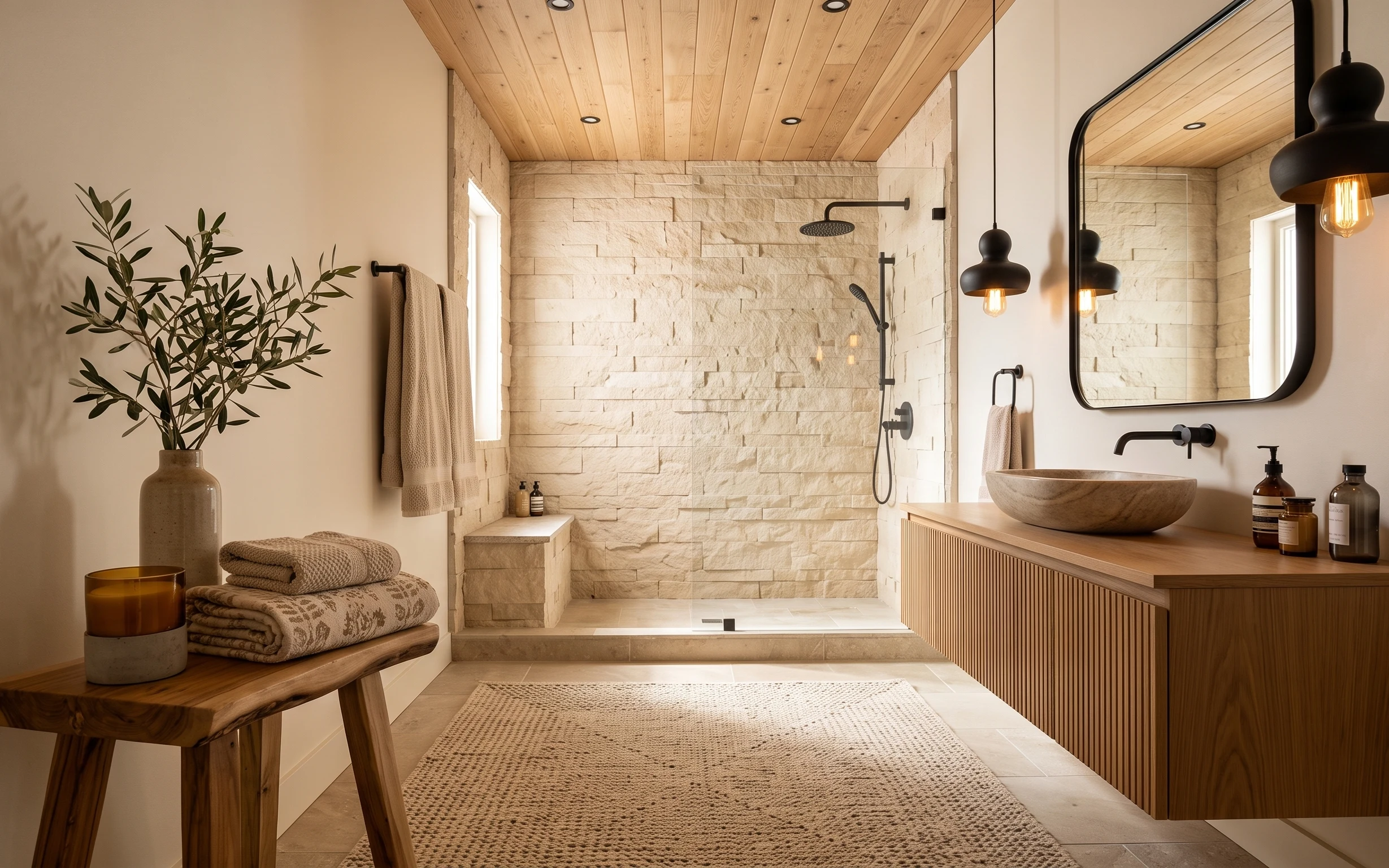
Even before any swaps, the space reads warm because of the light stone tile, the wood countertop, and the amber-toned bulbs reflected in the mirror. What makes it feel finished is the “surface stacking”: the woven bath rug anchors the floor, the wood bench creates a landing zone, and the rolled towels keep the shower corner from looking empty. For shared housing, that layering matters more than matching exact fixtures, because everything you add has to travel. The move-friendly plan below sticks to textiles, tabletop items, and clip-in or freestanding decor only.
I used to overthink bathrooms and buy one big decorative thing that didn’t actually get used. In my last shared place, I ended up with pretty clutter on the counter that never stayed put after shower chaos. This time I copied the order I can live with: rug first, then towels, then one small “mood” item (like a candle). The result looks styled, but it’s mostly stuff you already touch every day.
Layer 1 — woven bath rug ($80) Texture that hides splashes
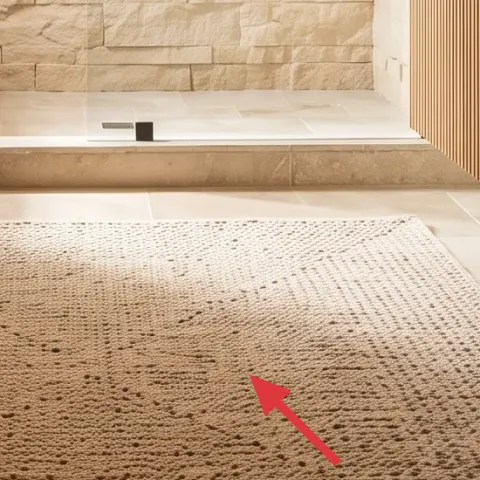
Pick a woven bath rug in a sandy or oatmeal tone to warm up the light stone tile. In the photo, the rug sits centered in the open floor zone and softens the hard edges without blocking the foot path to the shower. A rug is also one of the easiest items to pack because it rolls or folds and fits in a rental van footprint. The trade-off: a rug isn’t “set-and-forget,” so choose a style that can handle damp feet and quick drying after use. This keeps the shower nook looking intentional even when the rest of the bathroom is shared-rental utilitarian.
Texture does the decorating
Woven fibers add visual interest even if you keep the color palette simple.
Layer 2 — wood bench table ($80) A landing spot for daily items
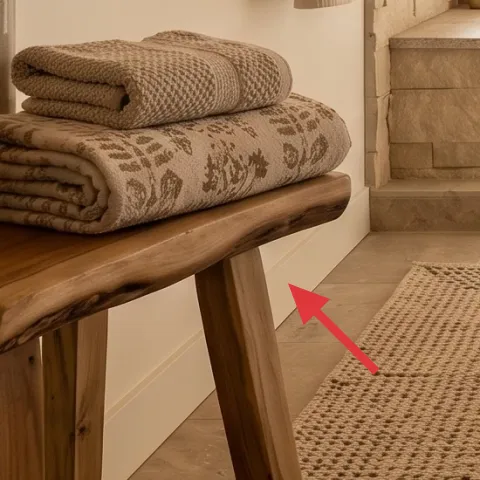
A small wood bench table is the most practical “decor” you can add to a bathroom shower nook. It gives you that landing zone look—like where the rolled towels and candle live in the hero—without trying to store things in a cabinet you don’t own. Wood also visually bridges the warm countertop tone to the stone tile, so the room reads cohesive without matching paint or fixtures. The trade-off is size: keep it narrow enough that it won’t crowd the walkway, and choose a finish that won’t show water spots too quickly. When you move, the whole bench breaks down if it’s knock-down or packs as a single piece.
Bench placement matters
Keep it close to the shower corner so you’re not hauling towels across the room.
Layer 3 — amber glass candle ($25) Warm glow at standing height
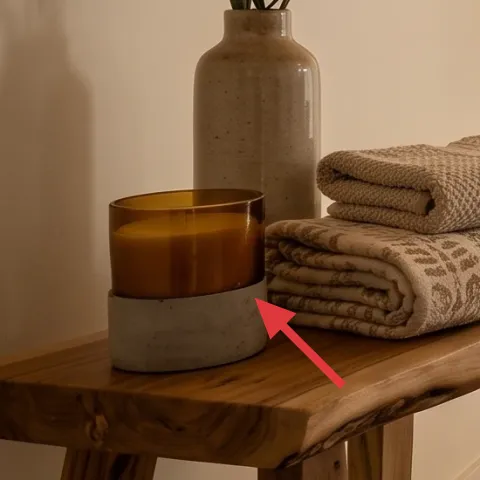
Use an amber glass candle as the smallest “mood” element, because the photo’s warm reflection does a lot of work. Set it on the bench where it visually reads against the stone and the wood countertop, so the light feels like it belongs to the whole corner. A candle is also renter-friendly: it doesn’t require hardware, and it packs safely in a box. The trade-off: you’re choosing atmosphere, not permanent design, so don’t rely on it as your only lighting. Use it when you’re relaxing or getting ready, then let the rug and towels carry the look the rest of the day.
Keep it away from wet towels
Don’t place the candle where damp fabric can touch it after the shower.
Layer 4 — ceramic planter vase ($40) DIY-painted terracotta face
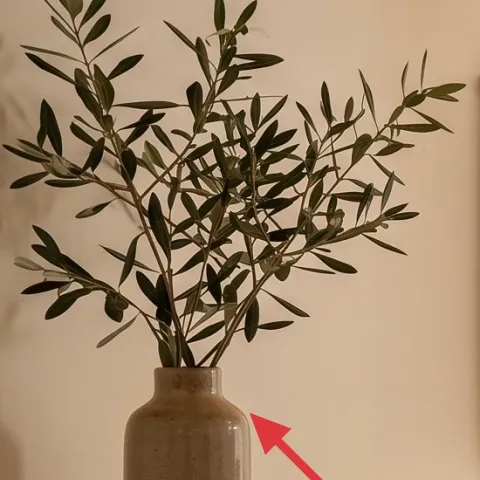
Swap in a ceramic planter vase in a warm neutral shape so the greenery reads intentional. In the hero, the vase sits on the left bench edge and visually balances the stone wall behind it. If your rental doesn’t allow permanent changes, this is the kind of “color hit” you can take with you. Choose a matte finish so it doesn’t glare under overhead light, and keep the silhouette similar (a slightly bulbous body with a narrow neck works well). The trade-off: painted ceramics take a little care, but that’s still easier than trying to match landlord fixtures.
Make it instead of buying it
DIY a painted terracotta planter set by updating a thrifted terracotta vase with simple craft paint—so you get the same warm neutral look without buying a matching ceramic.
Materials
- Terracotta vase (1) — thrift or craft store — $10
- Craft acrylic paint (warm beige) — 2 small bottles — $7
- Mini foam brush pack — 1 pack — $5
- Painter’s tape — 1 roll — $6
- Disposable gloves — 1 pair — $4
Steps
- Clean and dry the vase thoroughly so paint grips evenly.
- Tape off any bands or sections you want to keep unpainted.
- Apply the first thin coat of warm beige acrylic paint.
- Let the coat dry completely, then add a second thin coat for even coverage.
- Remove tape while paint is slightly firm so edges stay crisp.
- Allow the final coat to dry fully before placing it on the bench.
- Touch up any uneven spots with a quick, light brush pass.
- Place the vase in its final spot once it feels fully dry to the touch.
Total DIY cost: $32 — saves about $8 over buying.
Layer 5 — green plant stems ($30) Height that fills the corner
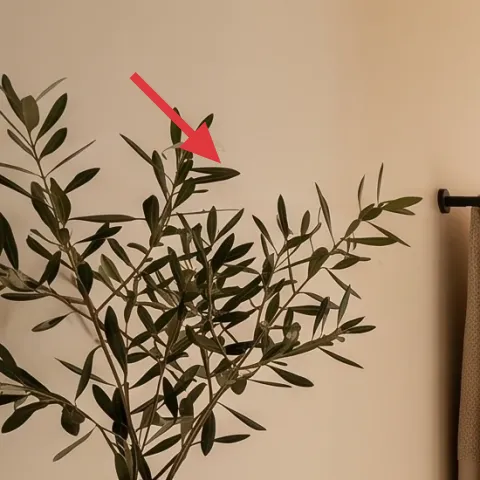
Choose green plant stems with enough height to show up clearly against the light stone wall. In the photo, the plant’s leaves fan outward and give the shower nook a “lived-in” feel without adding clutter on the counter. This is a great move-ready decor choice because you can move the whole vase and plant together, and it doesn’t depend on wall space. The trade-off is real care: pick a plant that can handle bathroom humidity swings, and avoid tiny, finicky varieties that drop leaves quickly. If your lighting is limited, lean toward hardy greens or swap to a high-quality faux option for a shared bathroom’s schedule reality.
Match leaf size to distance
Larger leaves look better when viewed from the doorway or across a narrow bathroom.
Layer 6 — rolled towels stack ($25) Adds warmth without extra objects
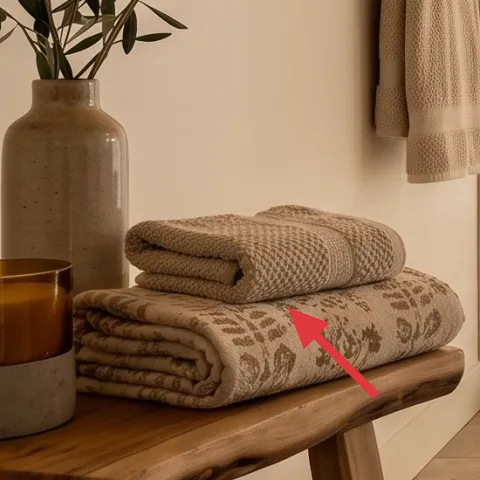
Use a set of light-to-medium neutral towels folded into rolls, like the stacked look on the bench. This styling decision matters because rolled towels read as intentional “texture” rather than random storage. In the hero, the towels sit flat and layered, so they visually bridge the stone wall with the wood bench and keep the corner from feeling empty. The trade-off is that you have to keep them looking tidy—rolling takes a minute—but it beats digging through a pile after every shower. Choose waffle or textured cotton so the folds catch light and stay visually interesting.
Stick to one towel color family
One warm neutral palette looks cohesive even when the bathroom is shared.
Layer 7 — hanging cream towel ($30) Quick vertical softness for the nook
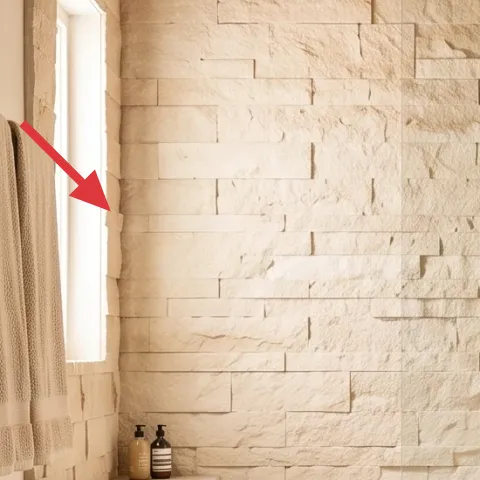
Add a hanging cream towel to bring softness to the vertical plane of the shower nook. The hero shows a cream towel draped along the left side of the alcove area, which makes the corner feel styled rather than purely functional. This kind of textile layer is also renter-friendly because you can drape and swap it without committing to hardware changes. The trade-off is that it will show water and steam, so plan for regular laundering and choose a fabric that dries reasonably fast. When you move, you pack towels like linens, not bulky decor.
Use a towel you actually want to rehang
If you hate laundering it, you’ll stop styling it—then the nook loses its polish.
The cost, layer by layer
| Layer | Item | Cost |
|---|---|---|
| 1 | Woven bath rug | $80 |
| 2 | Wood bench table | $80 |
| 3 | Amber glass candle | $25 |
| 4 | Ceramic planter vase (DIY painted) | $40 |
| 5 | Green plant stems | $30 |
| 6 | Rolled towel stack | $25 |
| 7 | Cream hanging towel | $30 |
| Total | $300 | |
Cheaper variant: choose a smaller bath rug (still woven) and a thinner towel set, plus one simple candle instead of pairing multiple warm accessories.
What worked, what didn't (across the whole room)
The overall look works because the updates are soft, moveable layers that complement the existing stone-and-wood palette. The biggest wins came from texture (rug + towels) and one warm mood item (amber candle), which made the shower nook feel lived-in.
What worked
- The woven bath rug reduced the “slippery” feel of the tile and made the floor zone look finished.
- The wood bench created an actual usable display spot instead of adding more counter clutter.
- Rolling towels kept the corner looking styled even when the shared bathroom was in daily use.
- The plant brought height and movement, balancing the hard lines of the shower alcove wall.
- The amber candle echoed the warm light tone already present in the mirror reflection.
- The painted planter approach let you match the palette without touching any fixed fixtures.
What didn't
- Too many small objects on the bench made it feel busy instead of calm.
- Flat, decorative towels looked neat but didn’t read as “soft” from the doorway like rolls did.
- If the plant gets too leggy, the corner loses that balanced, airy look against the stone.
- A candle placed too close to wet fabric started to smell like lingering moisture.
What we'd skip if we did it again
Skip decorative items that don’t have a daily job. In bathrooms people share, anything that doesn’t get touched often ends up moved aside, misplaced, or left out in a messy way.
Skip oversized rugs that don’t dry fast. If the rug feels hard to manage after steam and water, it will look worse over time, and it’s not worth the hassle at move-out.
Skip plants that need constant misting or frequent pruning. A shower nook can be humid, but shared schedules vary—choose something resilient so the look stays consistent.
Frequently asked
How long does this bathroom shower nook refresh take?
Plan on 60–120 minutes total. The rug and towel roll takes the longest to “get right,” mostly because you’re adjusting placement and folds for the look in the photo. Plants and candles are quick, but if you’re painting a planter vase as the DIY step, allow extra drying time. Once everything is set, it’s low-effort to maintain day to day.
Is this renter-safe for shared housing with no-drill rules?
Yes—this refresh is built around freestanding and textile swaps. You’re styling with a bath rug, a bench landing zone, rolled towels, and a draped hanging towel, plus tabletop items like a candle and a planter. Nothing requires drilling, painting walls, replacing fixtures, or mounting art. At move-out, you can pack everything into boxes without special tools or heavy lifting.
What if my bathroom is smaller or the shower alcove is tighter?
For smaller layouts, shrink one variable instead of everything. Keep a rug that fits the footpath and choose a narrower bench, or move the bench slightly closer to the shower so you don’t block the doorway. You can also reduce the plant height by using a slimmer stem bundle while keeping the same warm green color. The key is still texture and vertical softness—just scaled down.
What if I don’t want to use real plants in the bathroom?
A faux plant is a fine substitute in a shared rental, especially if the bathroom lighting is inconsistent. Choose stems with similar leaf shape and a warm green tone, and keep the pot/vase palette aligned with the towel color family. You’ll lose a tiny bit of “freshness,” but the overall composition still holds: tall greenery + warm neutral textiles + one candle glow.
Where should I shop for these items on a budget?
For the rug and towels, look at big-box discount home sections or online marketplaces with clear fabric descriptions. The candle and planter/vase are often easiest to find in home decor clearance aisles, craft stores, or thrift shops. If you’re DIY-painting the planter, a craft store or thrift shop is the fastest way to get a terracotta base without paying ceramic-new prices.
What’s the biggest mistake people make with bathroom styling?
Overbuying decorative clutter. Bathrooms get steam, water splashes, and shared traffic, so tiny objects pile up fast and start looking messy. Instead, focus on three “functional decor” categories: a rug for the floor, towels for softness, and one or two tabletop mood items. That keeps the shower nook looking intentional without becoming hard to maintain.
More in Bathroom
Under $400: warm shower nook refresh for shared bathrooms
A warm, modern shower nook can feel intentional even in a shared rental. This $400-style bathroom refresh uses 7 move-ready swaps (rugs, to…
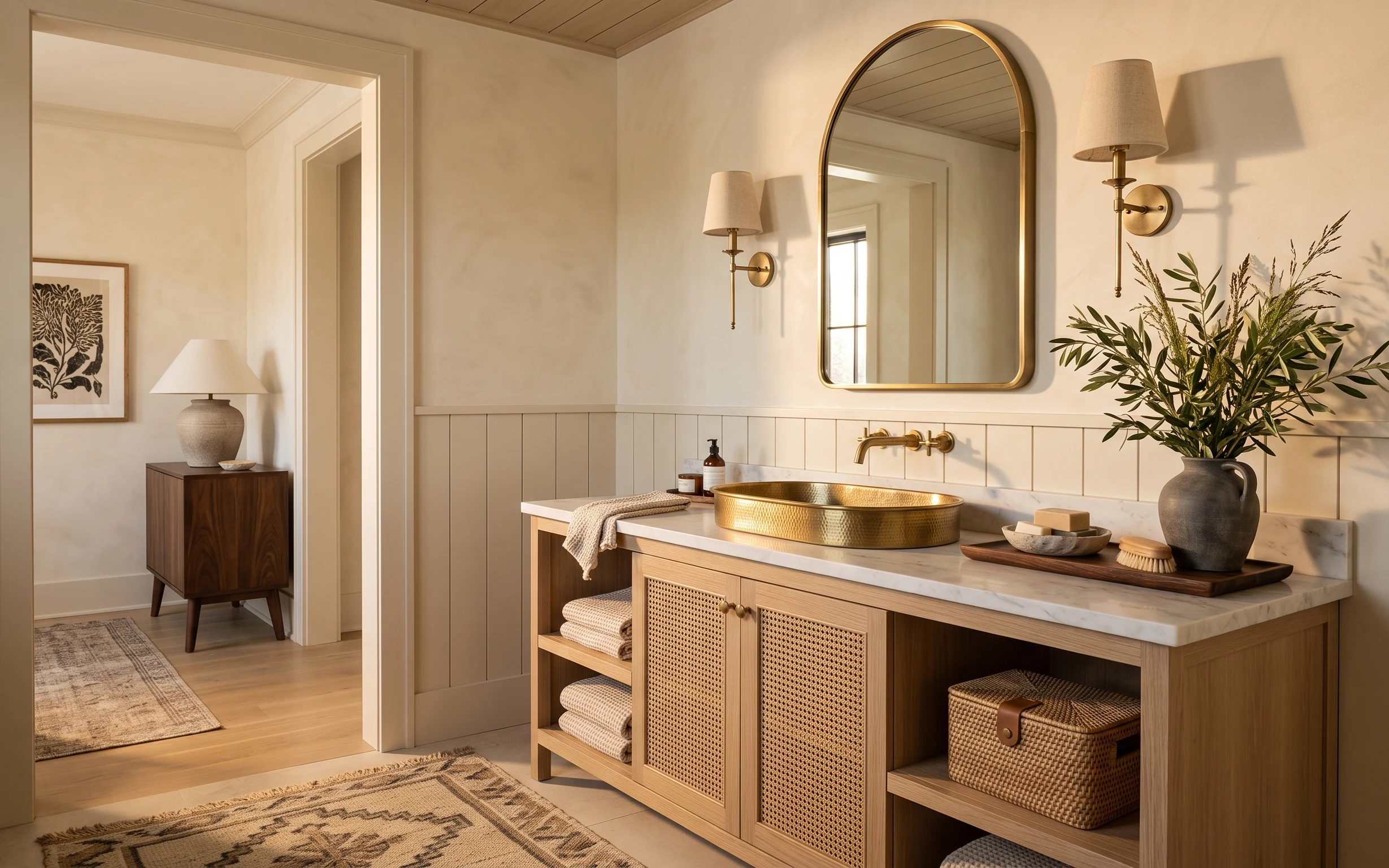
Under $600: brass-and-cream bathroom vanity refresh
A renter-friendly bathroom vanity nook refresh that leans brass-and-cream, from a patterned 5×7 rug to a tall leafy plant. This look comes …
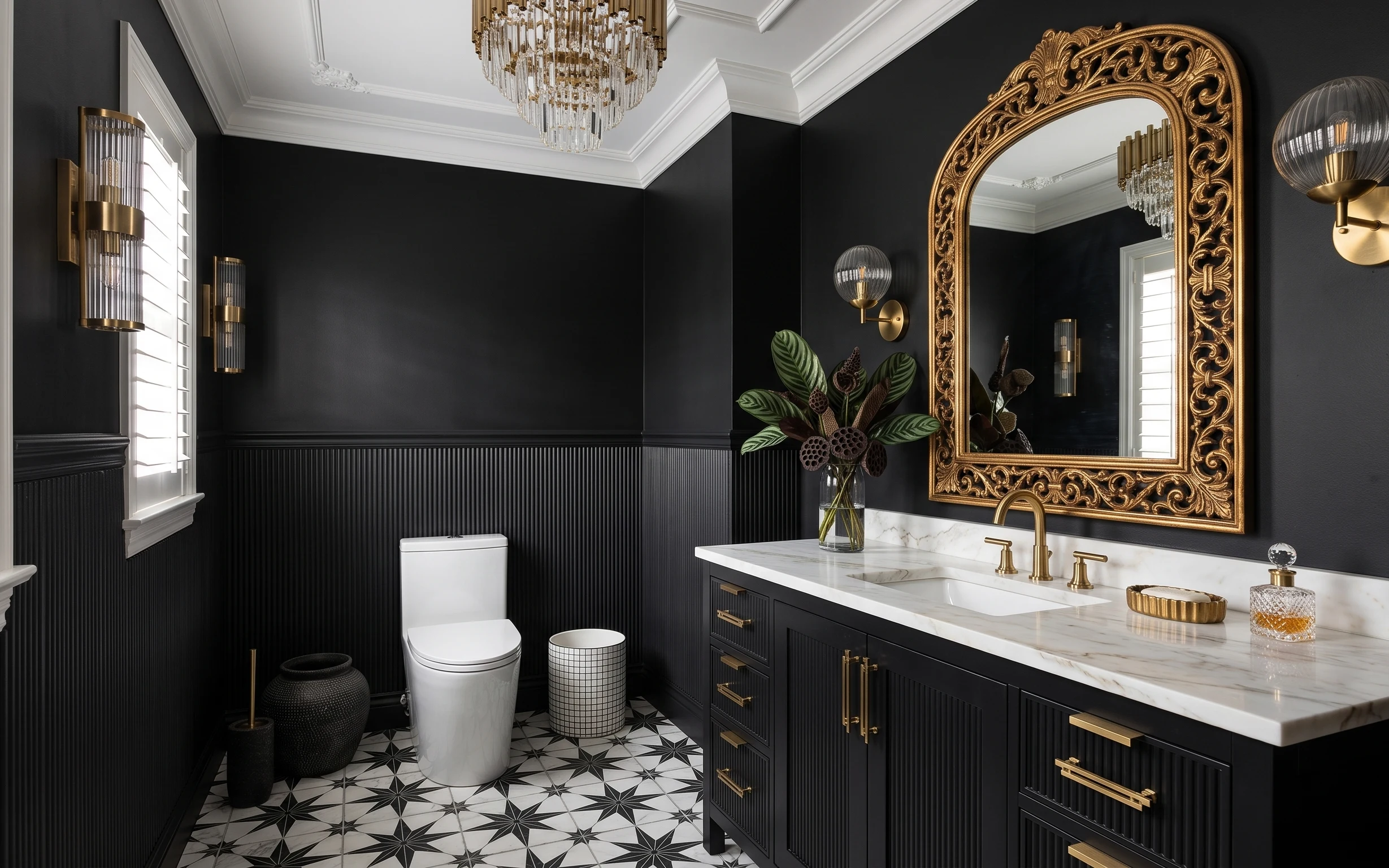
Under $700: black-and-gold bathroom vanity wall refresh
Refresh a black-and-gold bathroom vanity wall with paint-matching panels, a framed mirror, and warm brass details. This plan keeps the look…