- Best for
- move-ready styling
- Cost
- under $500
- Difficulty
- easy (mostly soft goods)
- Time
- one weekend
Why olive-and-sage accents are the living room corner of 2026
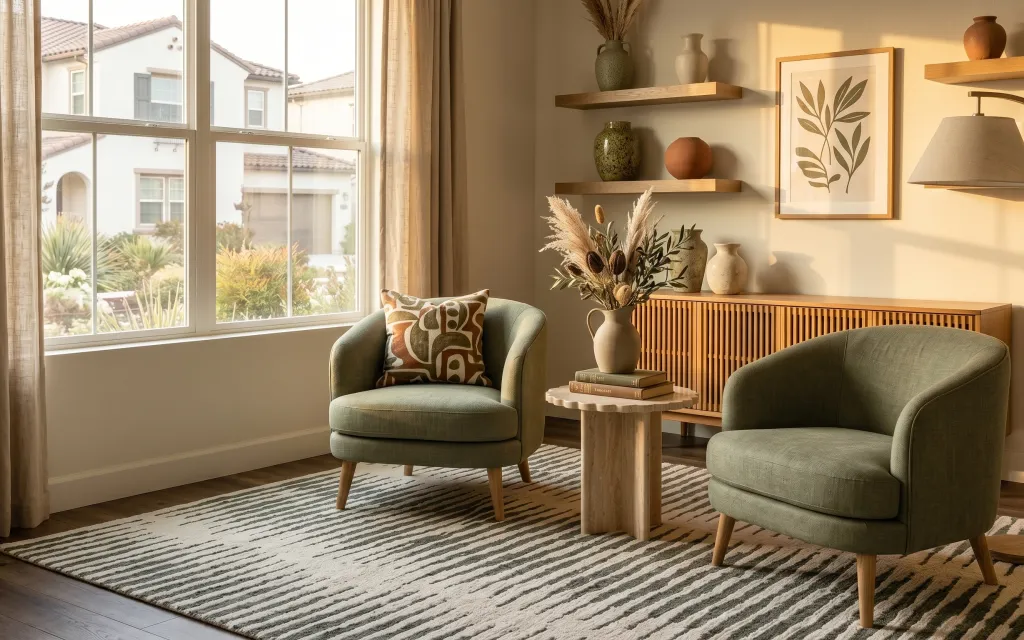
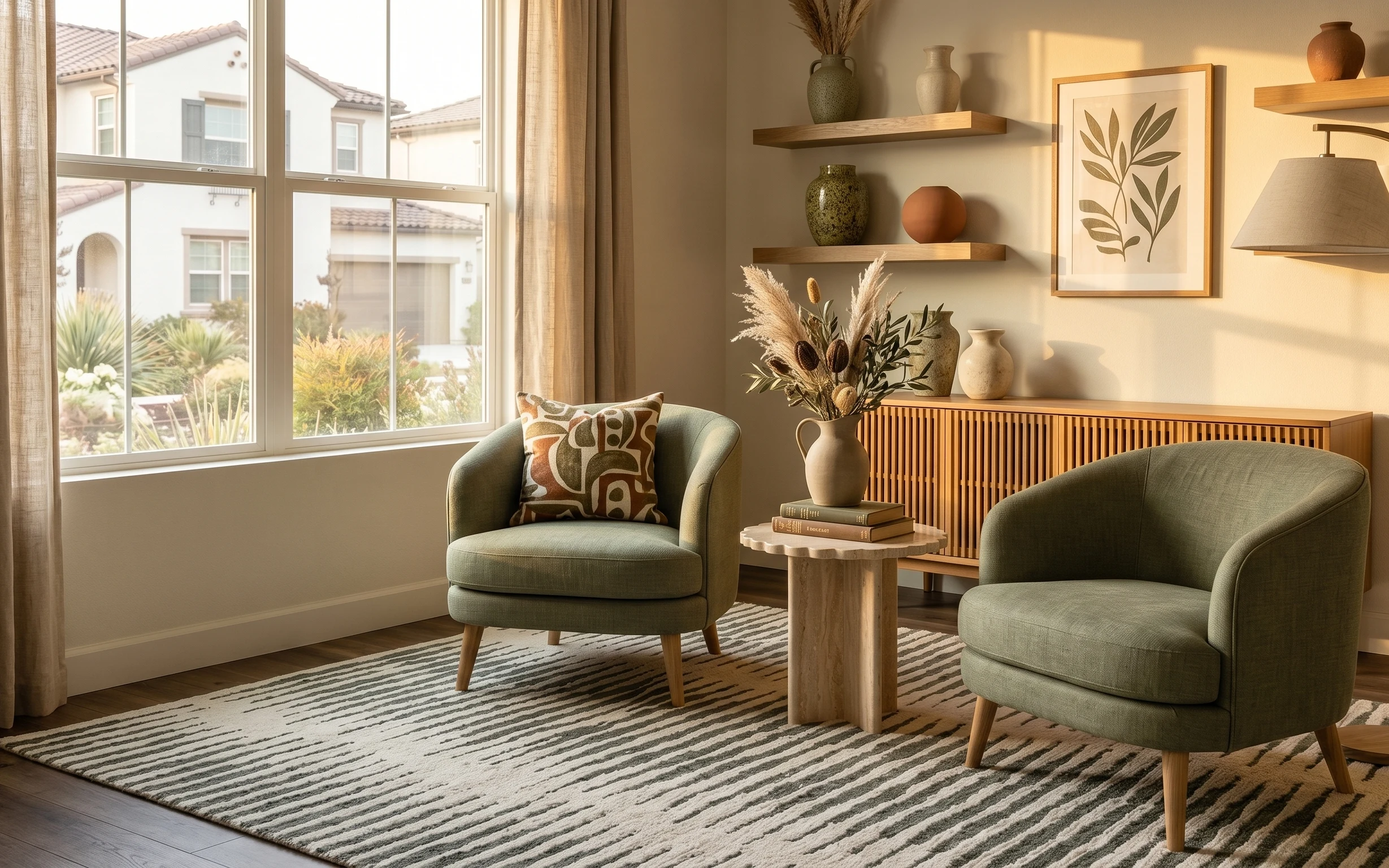
The look in this photo works because it mixes three textures—striped rug underfoot, linen-like curtains at the windows, and upholstery that reads matte and calm in daylight. The shelving styling adds height without feeling busy, and the framed botanical print gives you a clear focal point. For shared housing, the win is choosing decor that comes with you: soft goods roll and fold, and small wall art can be swapped in minutes. Even if the “real” shelves aren’t yours, you can still echo the palette with move-friendly pieces.
I used to overthink “matching sets” in my roommates’ apartments, like if I found one lamp, I needed everything else to come from the same collection. On one move, that plan collapsed because the floor pieces I’d bought didn’t fit my next layout. This time I picked the anchor items first—the rug and curtains—then let a pillow and art print do the personality work. Fewer purchases, easier packing, and the same olive-and-cream story.
Layer 1 — striped area rug ($80) Grounded stripes that hide everyday crumbs
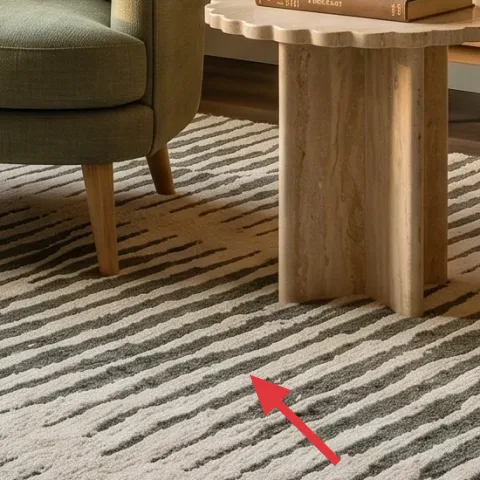
A striped area rug is doing double duty here: it gives you that linear, slightly graphic rhythm, and it also forgives small life messes because the pattern breaks up stains. Look at how the stripes run across the room floor while the cream base keeps the space feeling bright next to the olive chairs. When you buy this as a 5×7-style size, it’s a single, roll-able item instead of a bunch of scattered placemats. The trade-off is you may want a rug pad if your floor is a little slippery, but the payoff is instant cohesion.
Anchor with pattern, not more furniture
If the room already has seating, one bold rug is the fastest way to make everything feel intentional without dragging in heavy pieces.
Layer 2 — large window curtains ($60) Linen-like panels that soften the daylight
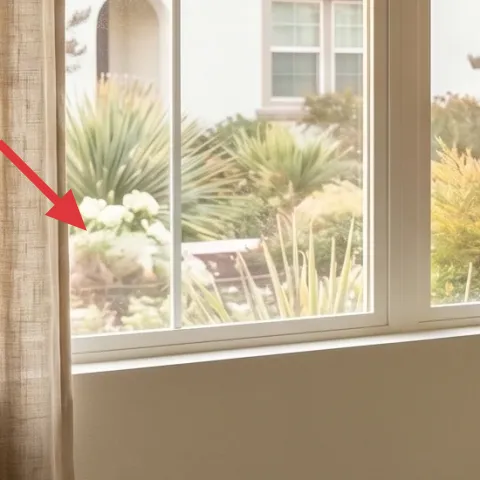
These large window curtains are doing the “finished” thing that paint can’t do in rentals: they soften the rectangle lines of windows and make the whole corner look calmer. The fabric reads light enough to keep brightness, while the warm neutral tone plays nicely with olive upholstery and the wood shelves. For shared housing, you can hem nothing here—just choose panels that hang well with an existing rod and tie-back option. The trade-off is you’ll need a bit of floor clearance for proper puddle or full height, but that’s also what makes the room feel taller.
Choose color over exact fabric weight
You’re matching the warm neutral mood, so a slightly different drape still works as long as the panel reads linen-like and not shiny.
Layer 3 — throw pillow ($18) One pattern pillow to echo the shelves
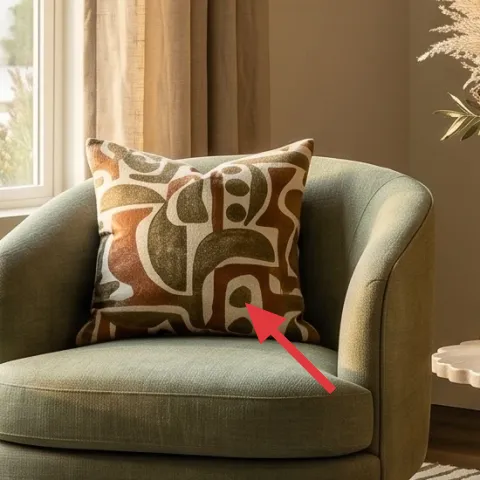
This throw pillow is patterned but not loud, and that’s why it works: the shapes give visual interest while the palette stays in the same cream/olive family. When you’re styling around wall shelves, a patterned pillow helps your eye “connect” the textiles to the decor objects without needing a full matching set. Buy the cover (or a cover in this size range) instead of buying a whole new armchair. The trade-off is that patterned pillows can feel a little dated if you choose something too trendy, so stick with earthy neutrals and let the rug carry the drama.
Pick one pattern, repeat one color
If the pillow has multiple tones, make sure at least one of them shows up again on the rug or wall art.
Layer 4 — round wooden coffee table ($120) A small round surface for moving-friendly styling
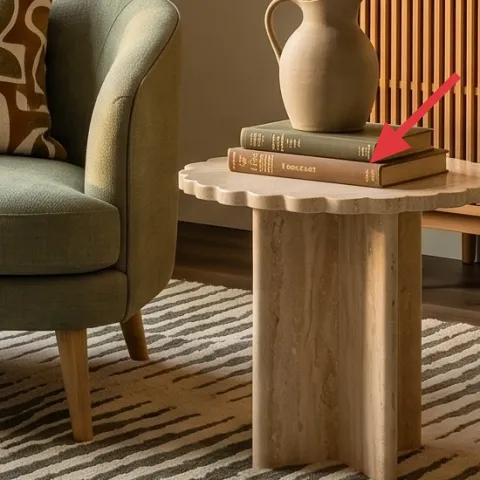
The round coffee table keeps the seating area from feeling blocky, and it gives you a natural spot for layered objects like stacked books and a vase. In the photo, that tabletop also becomes a styling “stage,” so you’re not relying on the wall alone for visual interest. For shared housing, a round table is often easier to pack and transport than a bulky coffee table with corners, and it can still work in different room layouts because it doesn’t demand a specific orientation. The trade-off is round tops can show scratches sooner, so use a coaster or tray for anything ceramic.
Skip heavy glass-top options
If you need to move fast, a fragile top isn’t worth it—ceramic and books are easier to replace than a broken tabletop.
Layer 5 — floor lamp ($80) A warm cone that makes the corner feel finished
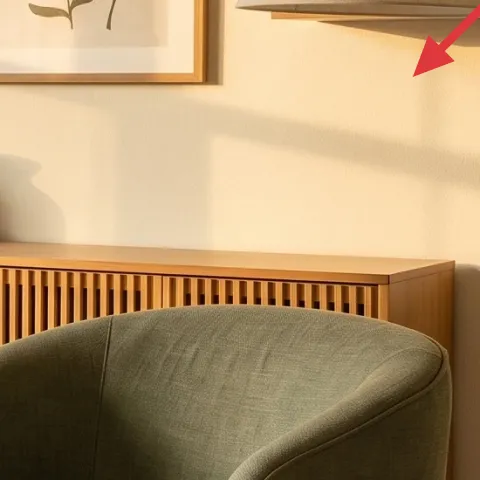
A floor lamp brings that “evening ready” glow that daylight can’t fake, and in this corner it sits near the chairs so the light lands where people actually sit. The simple shade shape keeps the silhouette mid-century, and the warm tone works with the wood and olive upholstery. If you’re recreating the vibe for shared housing, a plug-in lamp is the correct kind of upgrade: no wiring, no landlord approvals, and it packs into manageable parts. The trade-off is bulb choice matters—cool bulbs flatten the palette, while warm bulbs restore the soft look you see here.
Use warm bulbs with linen-toned rooms
Warm light is what keeps cream curtains from reading gray next to olive fabric.
Layer 6 — framed botanical wall art ($45) DIY an art insert in the same frame style
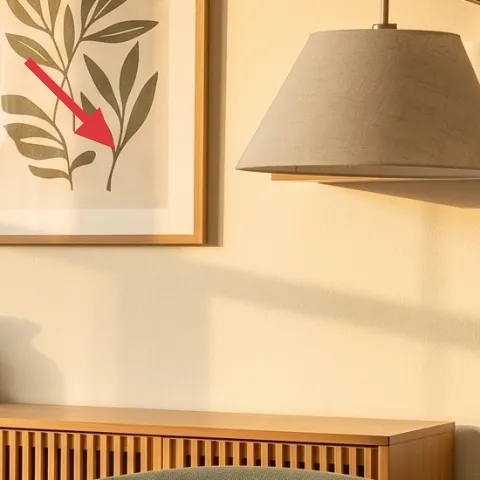
In a rental or shared place, wall art is your easiest “personality” swap, and a framed botanical print is an ideal starting point because it matches the natural shapes already happening in the vase stems. This layer keeps the wall focused without needing a permanent install like shelving built-ins or wallpaper. The trick is to buy the new look in a way you can take down later: either swap the existing insert (if the frame comes with it) or use a ready-to-hang frame that lifts off in minutes. The trade-off is you’ll want to keep it lightweight—frames that are too heavy turn every move into a two-person job.
Make it instead of buying it
Make a hand-painted abstract insert on cardstock so it slides into the same frame, keeping the wall focal point while staying move-friendly.
Materials
- Cardstock sheet(s) — cut-to-fit — craft store — $8
- Acrylic paint set (small) — 1 set — craft store — $10
- Paintbrushes (set) — 1 set — craft store — $6
- Paper towels + mixing palette — 1 pack/bundle — craft store — $4
- Painter’s tape — 1 roll — craft store — $5
Steps
- Cut cardstock to the exact insert size (measure the frame opening first).
- Mask simple shapes with painter’s tape (leave space for cream to show through).
- Block in your olive-and-cream base shapes using acrylic paint.
- Let the first layer dry completely, then add the darker botanical-style strokes.
- Peel tape slowly to reveal clean edges.
- Touch up any thin lines with a smaller brush.
- Let the whole insert dry again before handling.
- Slide the finished cardstock into the frame or place it behind the existing glass.
Total DIY cost: $33 — saves about $12 over buying.
Layer 7 — tall ceramic vase with dried stems ($20) Natural height that reads intentional
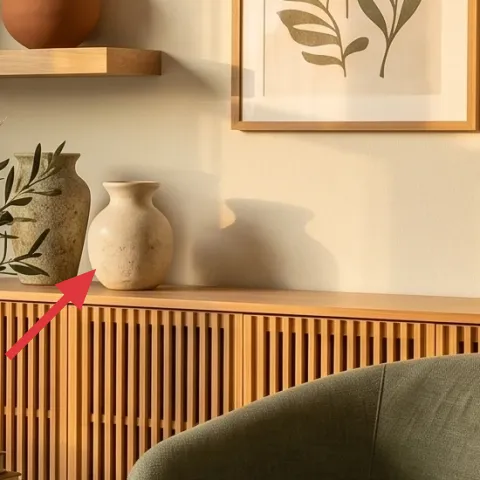
The tall ceramic vase with dried stems adds the “vertical moment” you see throughout the photo, and that height is what makes the corner feel styled rather than random. The neutral cream color keeps the palette cohesive, while the dried texture brings a softer, more organic shape than a plain store-bought bouquet. For shared housing, this is a great choice because you can pack it carefully and reuse it in your next living room without it looking like “one-time decor.” The trade-off is dried stems can shed a little, so handle them over a trash bag and keep a light cover during moves.
Trim for your next layout
Shorten stems by a few inches so the vase lands at the right visual height next to whatever seating you move to.
The cost, layer by layer
| Layer | Item | Cost |
|---|---|---|
| 1 | Striped area rug (5×7 style) | $80 |
| 2 | Curtain panel pair (84-inch) | $60 |
| 3 | Throw pillow cover | $18 |
| 4 | Round wooden coffee table | $120 |
| 5 | Plug-in floor lamp | $80 |
| 6 | Framed botanical wall art (retail equivalent for DIY insert) | $45 |
| 7 | Tall ceramic vase | $20 |
| Total | $423 | |
If this feels like too much, the cheapest swap is the curtains first: choose a ready-made panel pair in the same warm neutral and keep the rug and pillow as the pattern anchors.
What worked, what didn't (across the whole room)
This corner reads cohesive because the palette repeats in small doses: olive upholstery, warm cream textiles, and wood tones. The rug and curtains do the heavy lifting for “finished” texture, while the lamp and tall vase add depth after dark. The biggest weakness would be going too matchy-matchy—when everything is the same pattern scale, the room loses that casual, lived-in balance.
What worked
- The striped area rug keeps the floor visually organized while still hiding small marks.
- Warm-neutral curtains soften windows and make daylight feel less harsh.
- A single patterned throw pillow adds personality without changing the room’s palette story.
- The round coffee table gives a natural styling surface and works in multiple layouts.
- Two light sources at different heights (lamp plus daylight) make the corner usable after dark.
- A framed botanical focal point makes the wall feel intentional even with minimal installs.
What didn't
- Overbuying matching “sets” made the room feel staged instead of rental-friendly.
- If the lamp bulb runs cool, olive seating reads flatter and the cream curtains look gray.
- A too-small rug makes the coffee table look floating; sizing needs to match the seating zone.
- Very delicate vases can chip during moves, so prioritize sturdier ceramics for shared housing.
- Too many pattern sources at once (rug + pillow + art) makes the room busy.
What we'd skip if we did it again
Skip replacing large fixed things like built-ins or any wall-mounted components. In shared housing, you want maximum visual impact from items that pack flat or dismantle quickly—so the rug, curtains, and wall art matter more than anything permanent.
Skip buying a heavy coffee table with fragile materials. A simple round wooden top is easier to carry and style, and it handles everyday living (books, trays, a vase) without worrying about glass chips.
Skip chasing exact brand-matched décor. The fastest path to a cohesive corner is repeating the same color family (olive, cream, wood) and keeping the rest flexible for the next lease.
Frequently asked
How long does this living room corner refresh usually take?
Most of the time goes into positioning the rug and hanging the curtains so they fall evenly. If the framed art is a swap-in insert, that part is quick; otherwise it’s still a short wall-moment. Plan for about 4–6 hours across one weekend, plus extra time if you’re searching for a curtain panel pair that matches the warm cream tone.
Is this realistic for shared housing if I have to move in a year or two?
Yes, because the upgrades are all “move-with-you” items: roll-up textiles, plug-in lighting, and framed wall art. The styling objects (like the tall vase and shelf ceramics) can be packed with bubble wrap and reused. Avoid anything that requires leaving behind furniture you can’t transport or any wall changes that won’t come with you.
What if my room is smaller than this corner?
Go slightly smaller on the rug, but keep the stripe direction consistent. Choose curtain panels that still reach near the floor (or just skim it) so the window feels taller. For the wall art, keep it centered at eye level and don’t add extra prints—this style already looks complete with one focal piece plus the tall vase.
What if my room is wider or has less natural daylight?
In darker spaces, the lamp becomes even more important—use a warm bulb so the olive looks rich instead of flat. Consider slightly longer curtains for height, and keep the coffee table styling minimal so the visual weight doesn’t feel crowded. The rug pattern can be your brightness cue, since the cream base reflects light better than a darker rug.
Where should I shop for these pieces on a budget?
For textiles and accessories, look at discount home retailers and big-box stores for curtain panel pairs and pillow covers in warm neutral tones. For the rug and floor lamp, it’s worth checking marketplace listings too, since sizing and warm-toned shades show up often. For the framed art, thrift shops or online marketplaces are usually the fastest way to find the right frame size.
Biggest mistake people make with this kind of corner?
Adding too many competing patterns at once. If the rug already has stripes, keep the pillow pattern restrained and choose wall art that supports the natural-theme shapes. When the palette repeats (olive, cream, wood), the room looks cohesive even when the individual pieces don’t match perfectly.
More in Living Room
Under $500: 7 move-friendly living room corner swaps
A warm olive-and-cream living room corner refresh for shared housing, built from move-with-you swaps that pack fast. This $500 plan focuses…
Under $400: warm neutrals sofa-and-art living room refresh
A warm-neutral sofa-and-art living room refresh that renters can build without drilling, all under $400. The look hinges on a soft area rug…
Under $800: cozy living room refresh with rug, curtains, and plants
A warm, lived-in living room refresh for under $800—centered on a plush beige rug, tall cream curtains, and layered decor. You’ll also get …