- Best for
- cohesive shared-housing bedroom vibes
- Time
- 3–5 hours total
- Total cost
- about $450
- Renter-safe
- textiles + decor only
Why beige-and-rust lighting is the bedroom sanctuary of 2026
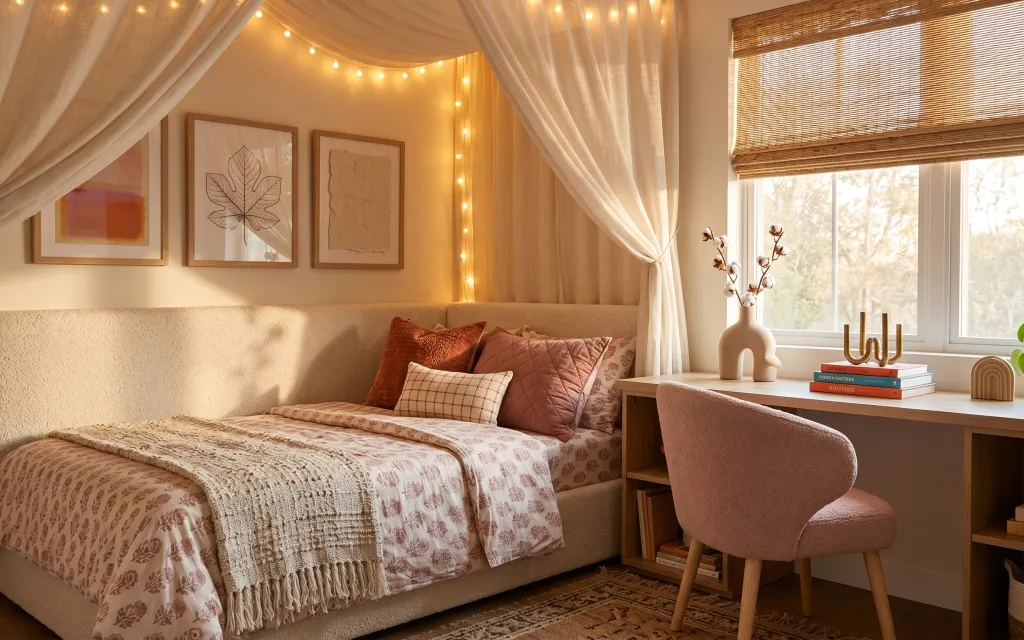
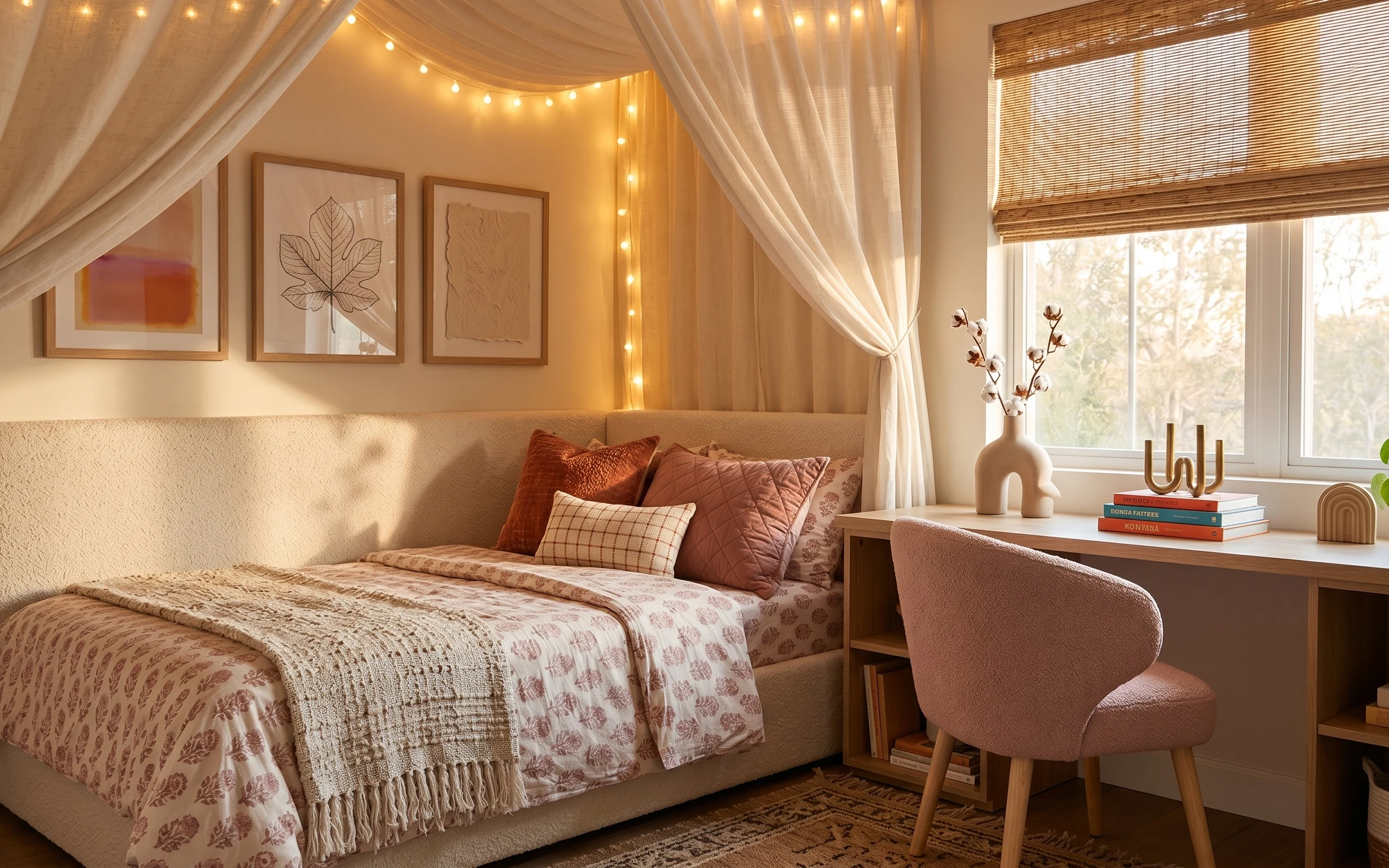
The fastest way to make a shared bedroom feel “finished” is to treat it like a room-with-its-own-rules, not a corner you decorate when you have time. In this photo, the warm string lights and the sheer curtains soften the edges around the bed, while the textured rug and knit throw add hand-feel. The framed botanical and abstract prints keep the wall calm instead of busy, and the rust pillows act like a single, repeatable accent color. For students and roommates, everything here stays lightweight enough to pack into a few boxes when the move happens.
I used to buy matching sets because it looked tidy in the store, then I’d end up hauling a weird “almost-right” lamp shade or pillow that never fit my new bed. What changed for me: I started copying the materials and tones instead of the exact shapes. In a place you won’t keep forever, matching textures beats matching brands.
Layer 1 — Patterned area rug ($180) Anchors the bed-and-desk zone
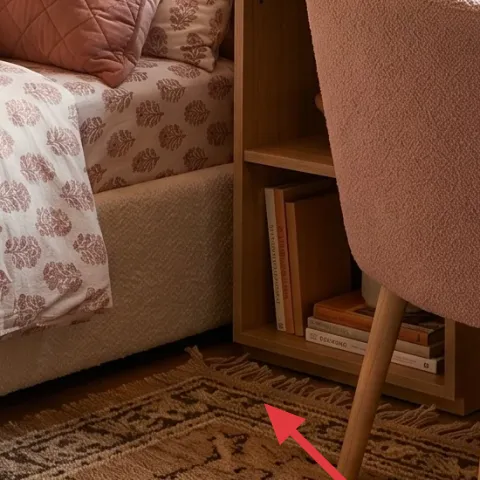
The patterned area rug does more than cover carpet—it creates a grounded “stage” for both the bed and the desk chair. Look at how the warm tan and darker motif tones echo the bed upholstery and the wood desk, so the whole corner reads intentional instead of scattered. The trade-off with rugs is storage: a 5×7 rolls smaller than a stack of framed decor, but it still needs a dedicated space in your move boxes. This is also one of those purchases that doesn’t require renter-friendly changes to fixed elements, so the look can come with you.
Make it work with a small chair
If the desk chair wheels don’t exist or the chair is just for sitting, choose a rug pattern that can handle occasional scuffs—busy enough to hide marks, not so loud it fights the pillows.
Layer 2 — Cream knit throw with fringe ($40) Adds texture in one drape
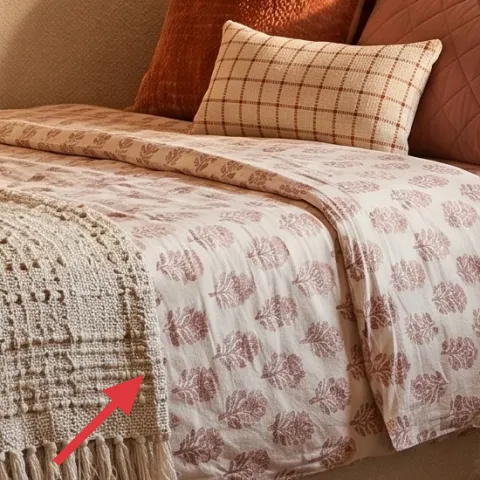
This cream knit throw with fringe is the easiest way to add texture without changing any fixed parts. It sits across the bed in the photo, catching the light and creating movement where the quilt is smooth. A throw like this also helps the bed look layered even when the rest of the accessories are mostly neutral. The only trade-off is keeping it fresh during shared-house laundry routines—knits can shed or collect lint if they sit exposed all the time. A simple rule: fold it neatly during the day, then drape it again at night so it stays cozy-looking and transportable.
Why fringe matters
Fringe adds a horizontal “finish line” that balances the vertical curtains and keeps the bed from looking too flat against the wall.
Layer 3 — Rust orange quilted pillow ($30) Makes the accent color repeat
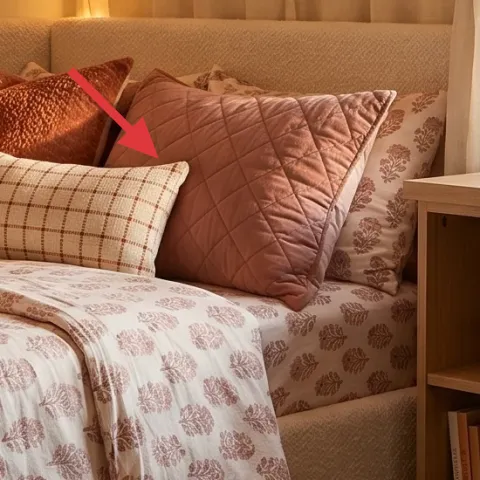
The rust orange quilted pillow is doing color work here: it pulls the warm undertone out of the string lights and ties into the overall beige palette. Because it’s quilted, the surface reads dimensional even in soft window light, so the room doesn’t need more patterns to look layered. The obvious alternative is a plain solid pillow, but that’s exactly what can make the look feel “one-note.” With a quilted texture, you get a richer look for the same amount of visual real estate. When packing, pillow inserts and covers are also easier than bulky decor—each one fits in a space you already have.
Duplicate the accent once more
If the pillow is the only rust item, the color feels accidental. Add one smaller rust thing elsewhere later—like a book cover or a candle holder—so the shade repeats.
Layer 4 — Warm white string lights ($15) Adds night-time softness without fixtures
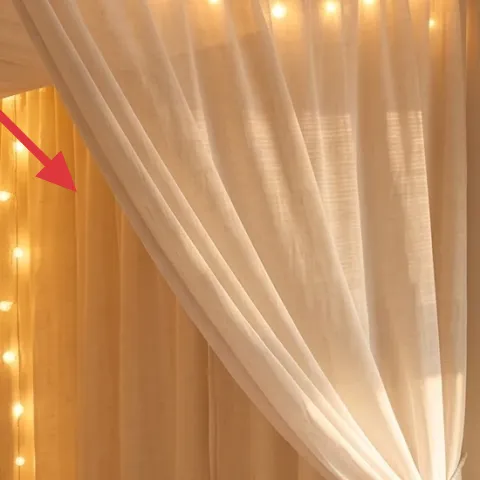
Warm white string lights replicate the glow in the photo without requiring any new ceiling wiring or hardwired fixtures. They’re easiest to place along a wall seam or behind sheer curtains, where the light diffuses instead of creating harsh points. The trade-off is cable management: if the cord is visible, the look can feel messy. A cleaner approach is to drape the lights where fabric already overlaps, then keep the plug end tucked near the desk or behind a curtain fold. For shared housing, string lights are also one of the best “move with you” purchases—take them down, coil, and rehang in under an hour.
Skip hooks that pull fabric
If using adhesive hooks on plaster or textured walls, avoid anything that’s too aggressive; the safer option is removable foam-core picture hooks or adhesive strips designed for easy removal.
Layer 5 — Framed textured abstract print ($80) DIY it as a card-stock art swap
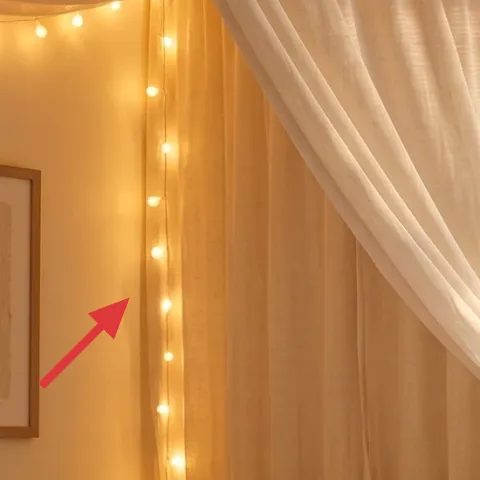
Keeping the art frames consistent is what makes the wall feel intentional. In this photo, the framed textured abstract print sits between two more botanical styles, acting like a calm “breather” in the lineup. Buying a ready-made print is straightforward, but the renter-friendly version is making a new insert that you can swap back out for your next place. DIY here lets you match the same warm neutrals while still packing the artwork safely in a flat stack. The frame itself stays the same; the printed piece travels as a lightweight insert.
Make it instead of buying it
DIY a hand-painted abstract insert on cardstock so it matches the warm beige tones in the framed textured abstract print.
Materials
- Cardstock, 1 sheet (to fit your frame opening) — craft store — $6
- Acrylic paint set, warm beige/rust shades — craft store — $10
- Small foam brush set (for texture) — craft store — $8
- Matte acrylic medium or clear gesso (to soften sheen) — craft store — $12
- Painter’s tape (for soft edges) — craft store — $10
Steps
- Cut cardstock to the exact insert size using the frame’s backing as a template.
- Lightly tape off 2–3 soft sections with painter’s tape so the edges stay imperfect.
- Block in warm beige shapes first, then add rust details in thin layers.
- Blend edges with a dry foam brush and press gently to create a textured surface.
- Let the piece dry fully, then apply a second thin layer in the areas that look flat.
- Finish with matte medium or a thin coat of clear gesso, then let it cure dry.
Total DIY cost: $46 — saves about $34 over buying.
Layer 6 — White ceramic vase with orchid stems ($25) Adds height near the window
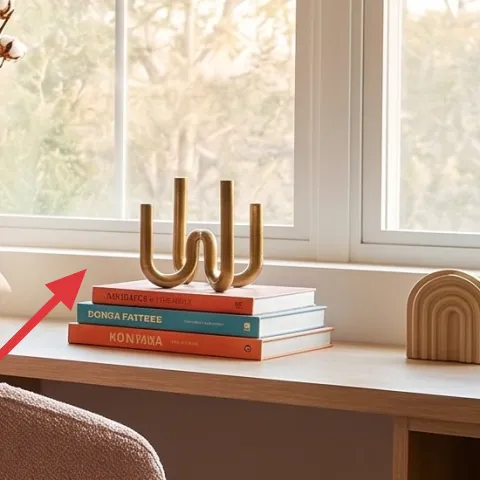
The white ceramic vase with orchid stems makes the window sill feel styled instead of bare, and it also echoes the light curtains. The shape matters: it’s tall enough to read from the bed, but small enough to pack without furniture-level effort. The vase color stays neutral, so the focus is on the stem texture and the airy silhouette against the bamboo-style blinds. A common alternative is a single low pot, but it can look “stuck” at the sill level—whereas a tall arrangement visually lifts the corner. For move-ready decorating, this kind of decor is also simple to wrap, label, and re-place exactly where it belongs.
Keep the base stable
When transport day comes, wrap the stems separately and keep the vase wrapped tightly so nothing shifts inside.
Layer 7 — Sheer white curtain panels ($80) Softens daylight and frames the bed
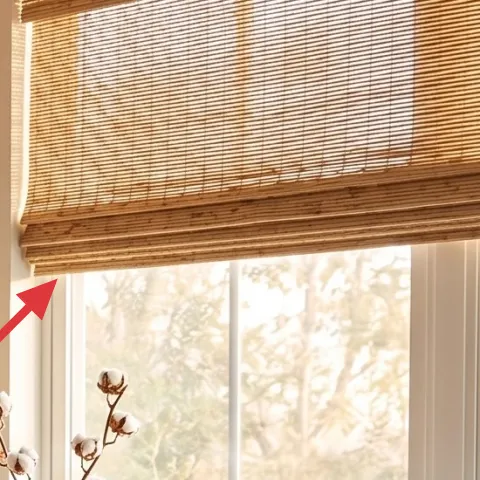
Sheer white curtain panels are what make the room feel calm and cohesive—especially in a bedroom with bright window light. In the photo, the sheer fabric drapes around the bed zone and blurs the edge between “window” and “wall,” which visually expands the space. The trade-off is that sheer fabric can snag, but you get a big payoff: it looks airy without needing to replace any fixed window treatments. For renters and shared housing, sheer panels are also one of the few textiles that can completely change the mood with zero wall work. Pack them folded with a garment bag so they don’t wrinkle into permanent creases.
Hang for movement, not symmetry
A slight asymmetry in where the curtain falls keeps it more natural than a perfectly centered setup.
The cost, layer by layer
| Layer | Item | Cost |
|---|---|---|
| 1 | Patterned area rug (5×7) | $180 |
| 2 | Cream knit throw with fringe | $40 |
| 3 | Rust orange quilted pillow | $30 |
| 4 | Warm white string lights (set) | $15 |
| 5 | Framed textured abstract print (DIY insert) | $80 |
| 6 | White ceramic vase with orchid stems | $25 |
| 7 | Sheer white curtain panels (pair) | $80 |
| Total | $450 | |
If a full rug feels like too much on move-in day, choose a cheaper textured runner for under $80 and keep the bed area cohesive with the throw, pillow, and curtain layers.
What worked, what didn't (across the whole room)
The wins here are mostly texture and placement: the rug grounds the bed-and-desk corner, the throw and quilted pillow add depth, and the sheer panels keep daylight soft. The framed prints keep a cohesive warm palette without needing wallpaper or any fixed changes.
What worked
- Warm string lights add a bedroom glow without touching ceiling wiring or hardwired fixtures.
- Sheer panels soften window light and make the bed zone feel more sheltered.
- Quilted rust pillow texture looks dimensional even when the room is bright.
- The patterned rug hides daily scuffs better than a solid tone would.
- Framed artwork spacing reads balanced, not cluttered, even with mixed leaf and abstract styles.
- The ceramic orchid arrangement adds height where a flat plant can feel too low.
What didn't
- Using too many matching pillow covers can make the bed look stiff instead of layered.
- String lights placed too close to the sheer can tangle the fabric during move-day.
- Choosing a rug with only one light tone can wash out the rust accent.
- A small low planter on the sill makes the window area feel unfinished compared to a tall vase.
What we'd skip if we did it again
Skip buying extra framed pieces right away. Start with one large anchored print (like the textured abstract) and build around it with textiles, because frames are harder to store flat and can get scratched in shared moves.
Skip replacing the fixed window treatments. The renter-safe route is sheers and lighting; it delivers the same glow effect without risking a painful removal or leaving behind adhesive residue.
Skip going overboard on matching sets. When the room is built from texture (knit throw, quilted pillow, sheer fabric), the colors can stay coordinated without buying duplicates that won’t survive the next lease.
Frequently asked
How long does this bedroom sanctuary refresh take?
Most of the work is styling time. Rug placement and pillow/throw styling are quick, usually under an hour. Putting up string lights and arranging framed art takes the next chunk, often 60–90 minutes. If DIY-ing the abstract insert, plan for drying/curing time; hands-on time is short, but the project is easiest when you don’t rush drying.
Is this renter- and shared-housing friendly if the bedroom isn’t mine forever?
That’s the whole point. Everything in the plan is either soft goods or lightweight decor—items that pack into boxes or roll for transport. The framed art idea works as a swap-in insert too, so the existing frame can stay. Even the lighting is removable, with no permanent wiring or wall changes needed.
What if my bedroom is smaller than the photo?
Use the same material strategy, but scale down the visual mass. A smaller rug or a narrower pattern can still ground the bed, and keeping curtains airy is key. For pillows, stick to one accent color (rust) plus neutrals. If the wall feels tight, choose two framed pieces instead of three, keeping the center print as the calm “breather.”
What if my bedroom has brighter or cooler light?
Bright light can make beige look flat. Lean into quilted texture, knit throw fibers, and warmer lamp-free light sources like warm string lights. For the abstract print, adjust your DIY palette toward slightly warmer beige and a softer rust instead of pinky undertones. Sheers are still the move—thin fabric will diffuse harsh light in either case.
Where should I shop to keep it budget-friendly?
For rugs and throws, look for sale bundles or end-of-season colors at discount home stores and online marketplaces with clear size charts. String lights are usually consistent across brands, so price shop. For framed art, focus on matching sizes and neutral frames; the DIY insert approach can cut costs without losing the polished look.
What’s the biggest mistake people make in bedrooms like this?
Buying only flat, matching items. When every surface is smooth—plain pillows, a solid throw, and a rug with minimal pattern—the room reads “furnished,” not lived-in. The fix is to anchor with a rug, then add at least two texture types: knit + quilted fabric, plus a sheer layer for softness.
More in Bedroom
Under $500: beige-and-rust bedroom sanctuary refresh
A move-friendly bedroom sanctuary refresh built around warm string lights, layered neutrals, and framed art that packs into boxes. This pla…
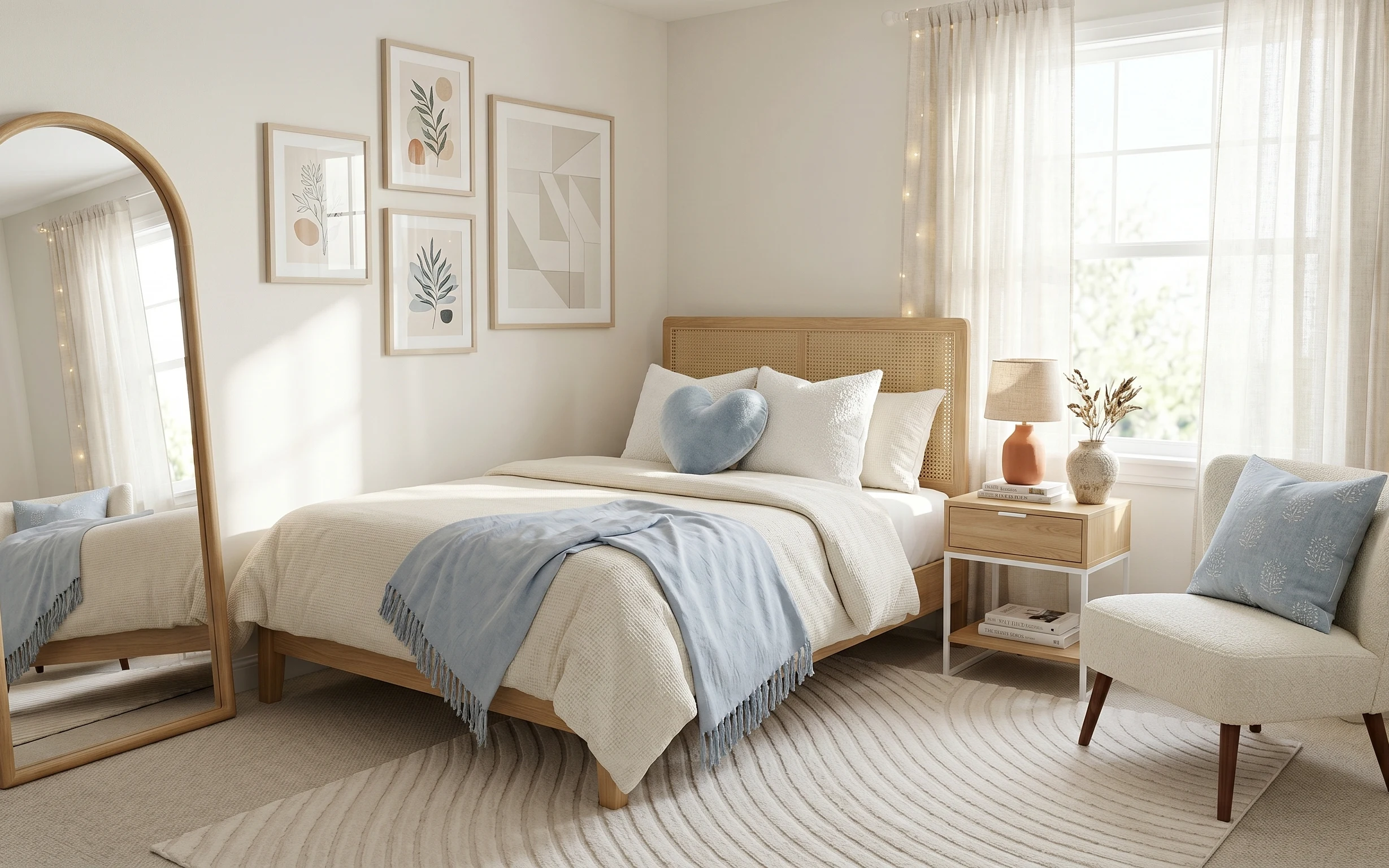
Under $700: sleeping corner refresh with 7 weekend upgrades
A bright, light-blue-and-cream sleeping corner gets a bigger-feeling look with 7 budget-friendly weekend upgrades. The biggest wins come fr…
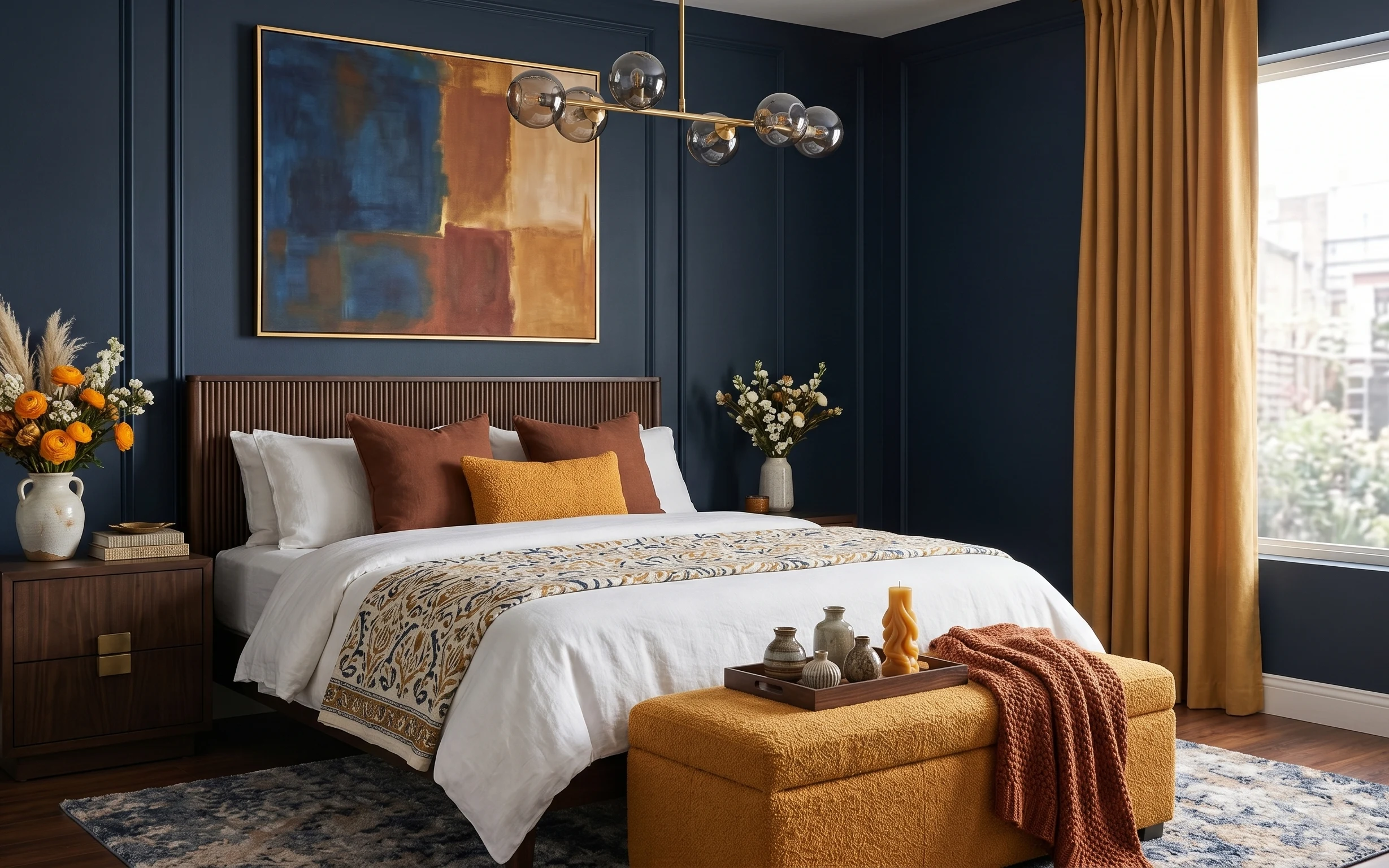
Under $800: navy-and-rust bedroom sleep space refresh with 7 layers
A navy-and-warm bedroom sleep space can feel finished fast. Here’s a 7-layer refresh for under $800, using curtains, an abstract gold-frame…