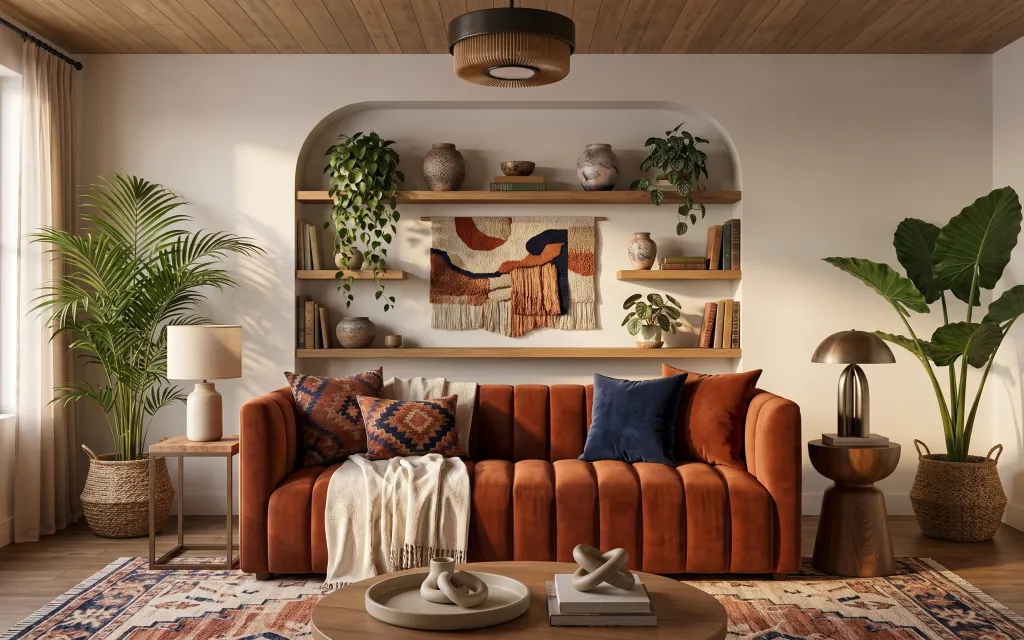
- Best for
- earthy boho living rooms
- Cost
- under $500
- Difficulty
- easy (main DIY is macramé)
- Time
- 1 weekend + a few evenings
Why rust-and-cream boho styling is the living room of 2026
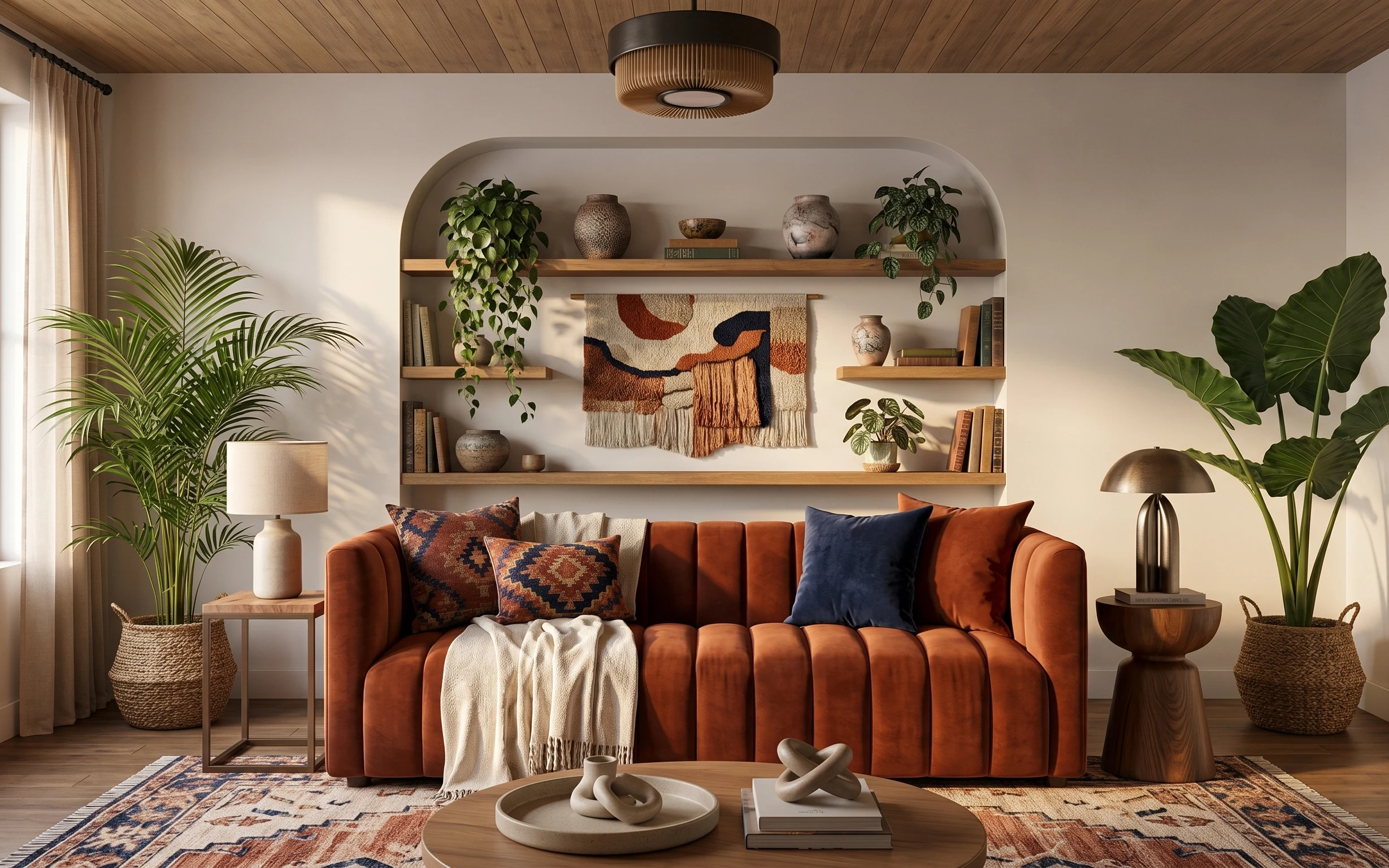
In this living room, the big win is the warm rust-orange sofa softened by cream textiles and a patterned area rug. The wall tapestry + floating shelves add texture at eye level, so the space feels styled even without painting or drilling. You can copy the same contrast using a statement rug, a chunky cream throw, and two complementary pillow covers. For renter-friendly budgets, this is also a layering approach—pattern on the floor, softness on the sofa, and plants to keep it from feeling flat.
My first attempt at this vibe was “too matchy” (same color everywhere, no breathing room). I ended up swapping in a deep blue pillow and loosening the palette so cream could actually show up between the rust and navy. Seeing how the tapestry texture sits right in the middle helped me realize I needed one strong wall focal point, not three small ones competing.
Layer 1 — area rug 8×10 ($150) Pattern that makes the sofa feel intentional
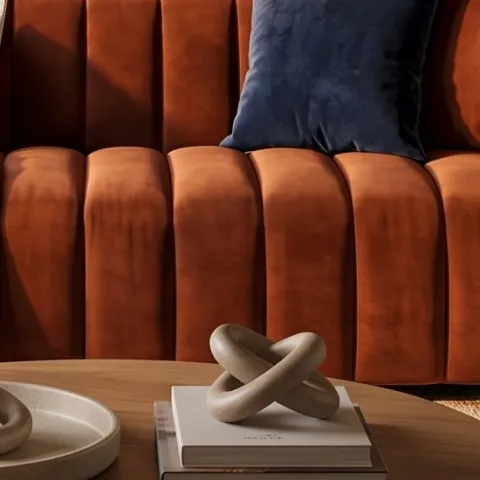
This 8×10 patterned area rug anchors the whole living room and gives your rust sofa a clear “landing spot” instead of looking like furniture floating on wood. The mix of cream, navy, and warm tones works because it repeats colors already in the pillows and blanket, so nothing fights the palette. I’m choosing the larger 8×10 size here (rather than a smaller runner) because the sofa sits centered in the frame and needs visual weight underneath. The trade-off is you may need padding to keep it from sliding—still move-ready and renter-safe.
Rug first, sofa second
Pick the rug based on your sofa’s strongest color, then shop pillows/blanket to echo the rug’s cream and dark blue.
Layer 2 — cream throw blanket ($30) Softens the sofa’s velvet sheen
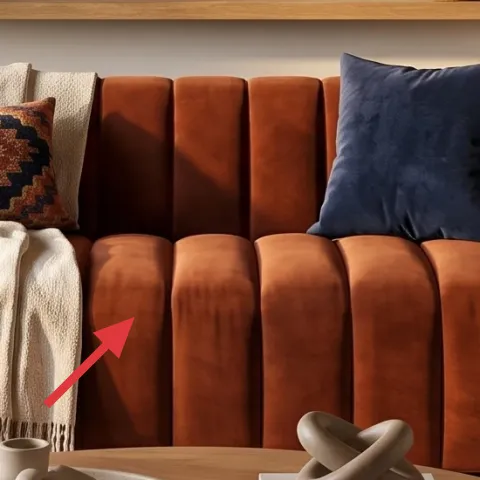
The cream throw blanket draped across the sofa adds that “lived-in” texture the eye expects in a boho room—especially next to a smooth, high-pile velvet. In the photo, the blanket’s off-white tone also creates breathing space so the rust fabric doesn’t take over the whole palette. I’d skip a second blanket in a bold color here and keep it cream so it acts like a buffer between pattern (pillows + rug) and solid color (sofa). The trade-off is you’ll be styling it a little more often—drapes look best when they’re slightly imperfect.
Keep the cream close to your pillow cream
If the blanket reads yellow next to the pillows, the palette will look “off” even when the colors are technically similar.
Layer 3 — blue-and-rust throw pillow covers (pair) ($24) Adds the navy echo without repainting
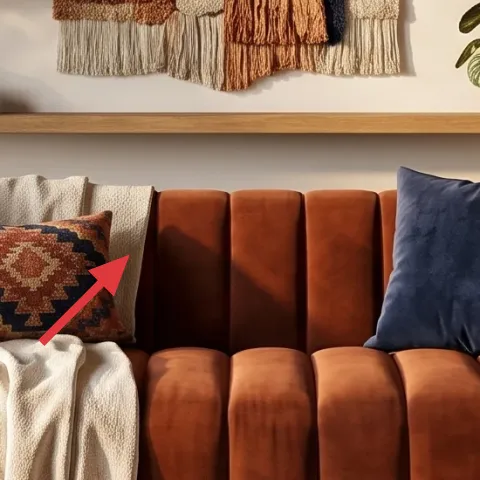
Those blue-and-rust patterned throw pillow covers are doing two jobs at once: they pull the navy from the rug up into the seating area, and they repeat the warm terracotta tones so the sofa looks cohesive. Choosing covers (instead of whole pillows that may mismatch later) is the renter-friendly move because you can swap covers by season. I’m treating these as the “pattern set” so you don’t need a full gallery wall to get visual interest. The trade-off is pattern scale—if the print is too tiny, it won’t read from across the room, so aim for bold, graphic shapes like the ones shown.
Balance pattern with one solid
In this look, solids (like a navy pillow) calm the composition so the patterned covers stay crisp.
Layer 4 — macramé wall hanging (DIY) ($60) Texture on the wall without landlord changes
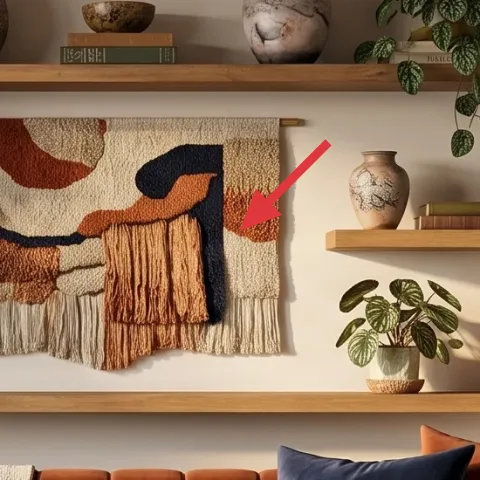
The woven wall tapestry in the hero gives the shelves an artistic centerpiece, and a macramé wall hanging can replace that role while staying fully move-ready. This is the one layer I’d DIY because it’s all about texture and rhythm—knots create the same cozy, artisan look as the tapestry, but you’re not stuck paying for a pre-made textile. I’m pricing this at the retail-equivalent cost for a quality finished macramé piece, then using cheaper cord and a simple dowel method. The trade-off: macramé takes a little practice, but once it’s hung, it reads “styled” instantly from the sofa.
Make it instead of buying it
This macramé wall hanging mimics the hero’s textured wall tapestry using cord and a simple dowel, and it packs away easily.
Materials
- Macramé cord — 1 spool (about 200–250 ft) — craft store — $12
- Dowel (wood or bamboo) — 1 piece, ~24–28 in — hardware/craft store — $6
- Rug-weight utility cord/twine — small bundle — craft store — $8
- Command hook (for hanging) — 1–2 hooks — hardware store — $8
- Optional tassel fringe yarn — small skein — craft store — $4
Steps
- Measure your dowel width and cut cord lengths to match (longer ends = fuller fringe).
- Fold cords over the dowel and secure with a simple lark’s head knot.
- Make the first row of knots to create your “top fringe bar” look.
- Work downward in repeat sections (square knots or alternating knot blocks) until you reach your desired height.
- Trim fringe ends evenly, then lightly fan tassels for shape.
- Attach hanging loop hardware so the piece sits flat behind the shelves line.
Total DIY cost: $38 — saves about $22 over buying.
Layer 5 — plug-in table lamp with brass base and black shade ($60) Warm light that makes everything feel curated
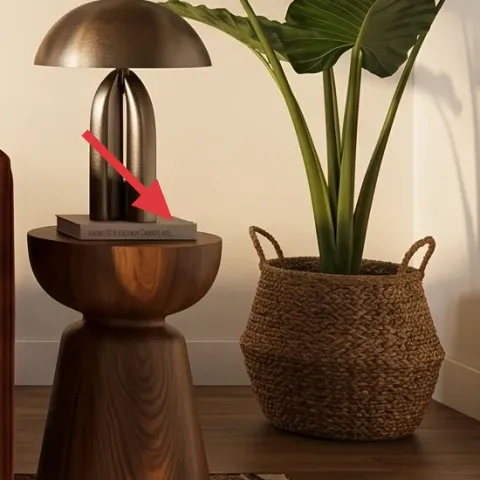
The plug-in table lamp on the right side adds warm light that makes the rust tones look rich instead of flat. The brass base echoes the warm neutrals in the room, while the black shade keeps the look grounded against all the greenery and woven textures. This is a renter-friendly swap because a plug-in lamp doesn’t require electrical work or landlord permission. I’m choosing this instead of adding another overhead light style because the hero’s ceiling fixture is already doing general lighting—what’s missing is a softer, angled pool near the plants. The trade-off is bulb temperature matters: choose a warm bulb so the room stays cozy.
Don’t pick a cool-white bulb
Cool bulbs can make rust look muddy and wash out the cream textiles.
Layer 6 — indoor plant (4–6 ft) in woven basket ($80) Brings the boho texture up from the floor
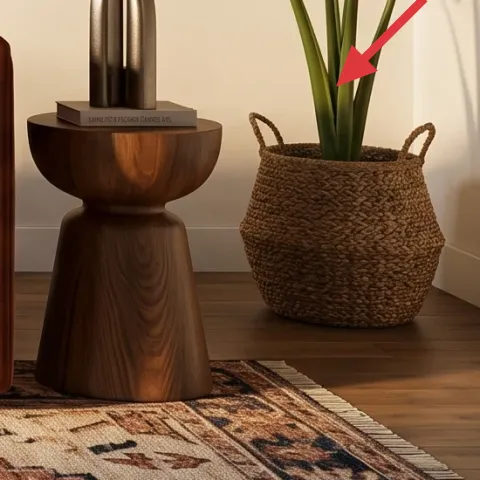
The large leafy plant in a woven basket adds movement and height, which is crucial in a room where most visual interest is horizontal (rug, shelves, sofa back). It also repeats the “woven” materials already in the rug and the curtain panels, so everything feels connected. I’m pricing this as a 4–6 ft indoor plant because that scale matches how the leaves reach into the upper-right of the frame. A smaller plant would look cute but would get lost next to the sofa and wall shelves. The trade-off is maintenance—choose a plant that fits your light (and don’t let it sit dry too long).
Use the basket as the styling container
Even if the plant pot is smaller, the woven basket gives you the look from day one.
Layer 7 — white ceramic vase on small side table ($25) A clean accent among patterns
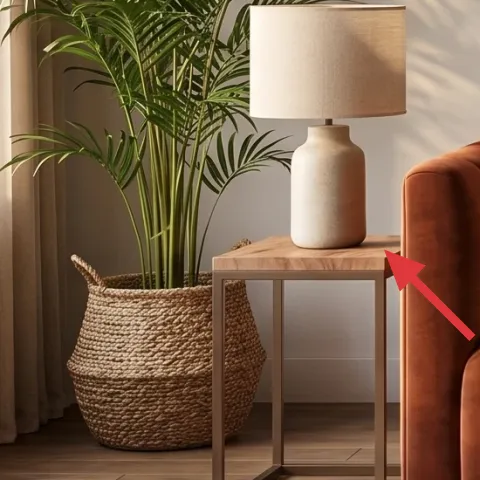
That white ceramic vase on the small side table gives the room a smooth, bright break between the patterned textiles and the greenery. It also repeats the cream tones in the rug and blanket, so the overall palette stays cohesive. I’m using a single vase rather than a full “collection” of objects here because it keeps the vignette crisp and prevents clutter around the sofa’s edges. The trade-off: a plain vase needs either a texture boost (ribbing, stoneware look) or a short stem arrangement to look finished. The photo shows a simple sculptural silhouette that reads clearly from the seating area.
Match the vase to the sofa’s undertone
Go warm-white or ivory so it doesn’t clash with terracotta/rust tones.
The cost, layer by layer
| Layer | Item | Cost |
|---|---|---|
| 1 | Area rug 8×10 | $150 |
| 2 | Cream throw blanket | $30 |
| 3 | Blue-and-rust throw pillow covers (pair) | $24 |
| 4 | Macramé wall hanging (DIY retail equivalent) | $60 |
| 5 | Plug-in table lamp with brass base and black shade | $60 |
| 6 | Indoor plant (4–6 ft) in woven basket | $80 |
| 7 | White ceramic vase | $25 |
| Total | $429 | |
If you need a cheaper variant, swap the 8×10 rug for a smaller 5×7 style that still includes navy and cream, and choose one patterned pillow instead of a pair. That keeps the same palette, but reduces the biggest cost drivers.
What worked, what didn't (across the whole room)
This look works because it layers texture at three heights: floor (rug), seating (blanket + pillows), and wall (tapestry/macramé). The added warm light and real greenery prevent the space from reading “just furniture.” The only parts that can miss are the ones where scale or undertone is off.
What worked
- The large 8×10 rug ties the sofa, plants, and wall shelves into one anchored zone.
- Cream textiles calm the rust and keep navy from feeling too heavy.
- The macramé-style wall texture creates a focal point that reads even from across the room.
- Warm plug-in lamp light makes terracotta tones look richer, not orange-flat.
- Woven baskets repeat materials already in the curtains and rug for a cohesive boho rhythm.
What didn't
- If the patterned pillow scale is too small, the couch looks under-styled from a distance.
- Cool-white bulbs turn cream textiles gray and can muddy rust tones.
- A wall feature with too little texture won’t compete with the busy shelf backdrop.
- Skipping the vase/negative space makes the side table look cluttered next to big plants.
What we'd skip if we did it again
Skip replacing fixtures or painting anything. The hero’s “finished” feeling comes from movable layers—rug scale, textile texture, and a wall focal point—not from changing the base. If your landlord forbids changes, focus your money on items that can pack out with you at move-out.
Skip buying matching items from one store for a full set. A fully uniform look can feel themed instead of lived-in. This room works because the rug, pillows, and wall texture share colors but differ in pattern type and material texture.
Skip tiny decor pieces on the wall unless you’re committing to a true grid. The photo’s wall has one clear texture anchor behind the shelves line. If you can’t make one focal piece, scale up the single statement textile (or go taller with the plant) so the eye always lands somewhere.
Frequently asked
How long does this refresh take, especially the macramé part?
For most renters, the non-DIY layers (rug, pillows, blanket, lamp, plants) take about 2–4 hours once the items arrive. The macramé wall hanging usually takes 2–5 hours depending on how many knot repeats you make. Plan one extra evening for styling: fluffing fringe, adjusting blanket drape, and centering the wall focal point behind the shelves line.
Is this renter-safe if I need to pack everything up at move-out?
Yes. Every layer here is either soft goods (rug, pillows, blanket, curtains) or plug-in/standalone items (table lamp, side table, vase, plants). The macramé can be hung with a Command hook and removed cleanly. The key is to avoid anything requiring anchors, drilling, or replacing landlord fixtures—keep your changes in removable layers only.
What if my living room is smaller than the one in the photo?
Use the same color strategy but reduce scale: consider a 5×7 rug and stick to either one patterned pillow or slightly smaller decorative accents. Keep a single wall focal textile (your macramé) so the wall doesn’t feel empty. For plants, prioritize one taller plant instead of multiple large ones, so the room doesn’t feel crowded.
What if my living room is larger—how do I avoid it looking sparse?
Go bigger with the rug and give the sofa more textile presence: either add an extra solid pillow or keep the patterned pair and add a second neutral throw. On the wall, your macramé should be wide enough to read from across the seating area. If your shelves are far apart, widen the macramé dowel and slightly extend fringe length for better visual balance.
Where should I shop for these pieces without overspending?
For the rug and soft goods, look for sales at home stores and online rug retailers with clear size charts. For the lamp and plant, aim for plug-in lamps with warm bulbs and buy plants locally if you can check leaf health. Thrift options work especially well for decorative ceramics (the vase) as long as the color reads creamy or ivory.
More in Living Room
Under $500: earthy boho living room refresh with 7 renter swaps
A renter-friendly, no-drill living room refresh inspired by an earthy rust-and-cream boho setup. This move-ready plan uses 7 swaps (rug, te…
Under $400: navy-and-olive sofa corner refresh with 7 move-ready swaps
A move-ready sofa corner refresh built around navy, white, and leafy greens—plus a framed-art swap that packs fast. This plan uses 7 budget…
Under $600: boho earthy living room swaps in a renter-friendly lounge corner
Warm beige, olive green, and a cream shag rug do most of the work in this sofa lounge corner look. With seven renter-friendly swaps (no-dri…