- Best for
- olive-and-neutral refresh
- Cost
- about $500
- Difficulty
- easy to moderate
- Time
- 2–4 hours total
Why the olive-and-walnut palette is the living room of 2026
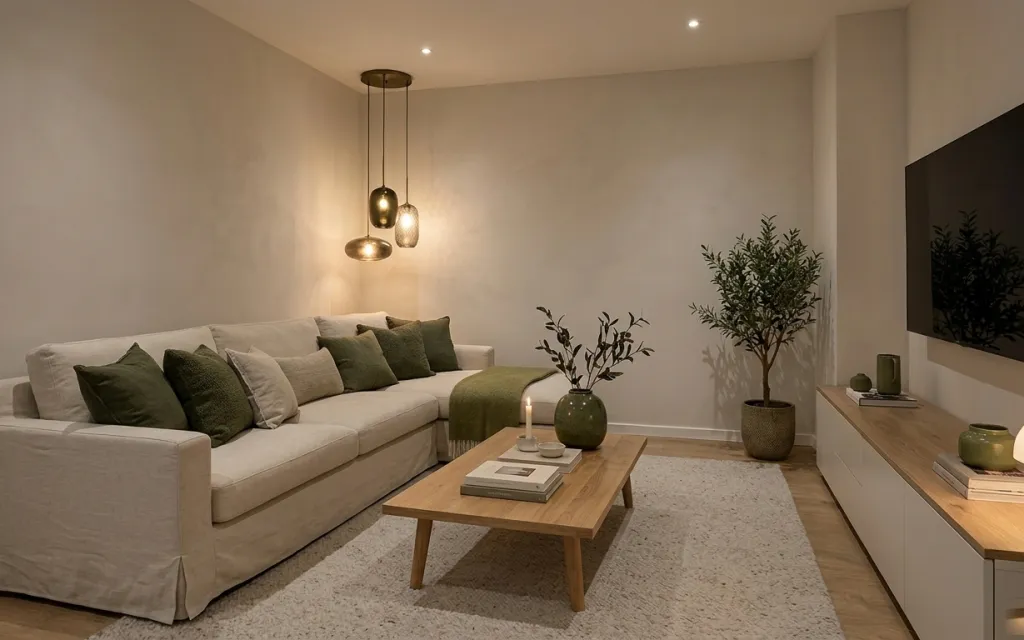
This living room works because it repeats a tight color story—off-white walls, light gray seating, and olive green accents—then balances it with natural wood. In the photo you can see three big textures in play: the matte area rug, the soft fabric of the sectional pillows, and the warm grain of the wood coffee table and console top. The black multi-bulb pendant adds a bit of contrast, but most of the coziness comes from the rug and the layered styling on the coffee table. For renters, this is achievable with plug-in lighting, swap-in textiles, and move-ready decor that doesn’t touch the walls.
I once overdid wall decor in my own rental and ended up with a space that felt “collected” instead of calm. The turning point was noticing how this room’s framed art sits like a visual anchor above the console, while the plants and glass vase bring motion without clutter. I also caught myself wanting brighter accent colors—then I remembered how well olive and warm neutrals photograph together when everything else stays simple. That’s the whole vibe here: warm, grounded, and intentionally restrained.
Layer 1 — light gray area rug 5×7 ($150) Grounds the whole color story
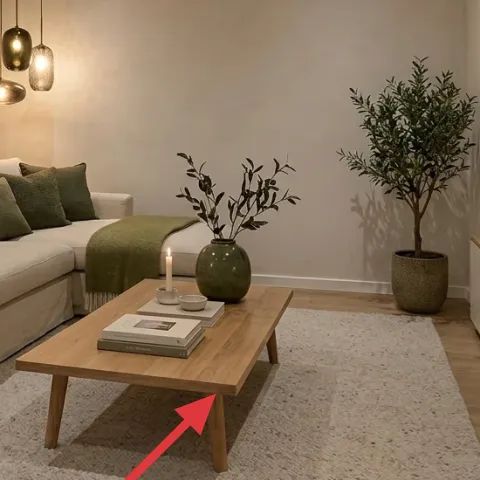
Start with a light gray area rug because it’s the biggest surface in the room, and in the hero it softens the wood floor without going too cool. A 5×7 size also helps the coffee table and sofa feel “pulled together” instead of floating. The trade-off with a lighter rug is that it shows footprints, so choose a rug with a subtle texture or low-contrast pattern if you get busy-traffic days. The payoff is that your olive pillows and dark-framed art read brighter right away against the neutral base.
Match your rug to your wall warmth
Look for a gray that leans warm (not icy) so it harmonizes with off-white walls and the wood console top.
Layer 2 — warm table lamp on the right console ($55) Adds cozy, plug-in light
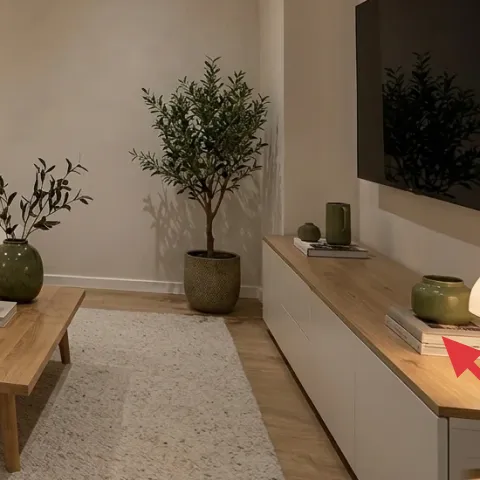
This plug-in table lamp is doing a lot of quiet work: it creates a warm pool of light on the right side of the console so the room feels soft even when the overhead light isn’t your main source. The lamp’s rounded shade shape keeps the look modern, and the warm tone complements the wood grain on the console. If you tried to recreate this with a colder bulb, the olive pillows would look a little flatter. The obvious alternative is another overhead fixture, but renters can’t change hardwired lighting—this keeps the vibe while staying lease-friendly.
Go for “warm” bulbs, not just warm lamps
A warm white bulb (around 2700K) is what makes olive read rich instead of gray-green.
Layer 3 — framed wall art print above the console ($80) Anchors the whole right wall
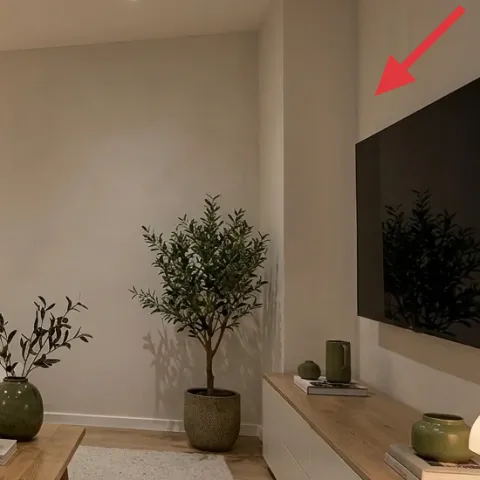
That framed wall art above the console acts like a visual landing pad: your eye lands there first, then travels down to the lamp, book stack, and plant. In the photo, the dark frame and the leafy print echo the olive tones in the pillows, so the whole palette feels intentional. You could choose a landscape or a bold abstract, but the trade-off is that high-contrast art can fight a calm rug-and-sofa base. Keeping to a similar leafy/organic direction (or muted colors) maintains the room’s “soft but crisp” balance.
Make it instead of buying it
DIY a simple hand-painted abstract on cardstock and frame it to mimic the muted botanical feel without replacing landlord fixtures.
Materials
- Cardstock (thick, ~8.5×11 or larger) — 2 sheets — craft store — $6
- Acrylic craft paint (assorted olives and warm neutrals) — 1 set — craft store — $12
- Small foam or craft brush set — 1 pack — craft store — $8
- 8×10 frame (or 11×14 frame if sizing up) — 1 — home goods — $5
Steps
- Sketch loose leaf-like shapes lightly in pencil so you can erase without mess.
- Mix two olive tones and one warm neutral, using watered acrylic for smoother gradients.
- Paint big, simple blocks first, then add a few “vein” lines with a smaller brush.
- Let it dry fully, then layer a darker accent for depth.
- Erase any pencil marks and check contrast from across the room.
- Slide the finished cardstock into the frame and align it straight on the console wall.
Total DIY cost: $31 — saves about $49 over buying.
Layer 4 — olive green throw pillows (2 covers) ($24) Brings the leafy color in
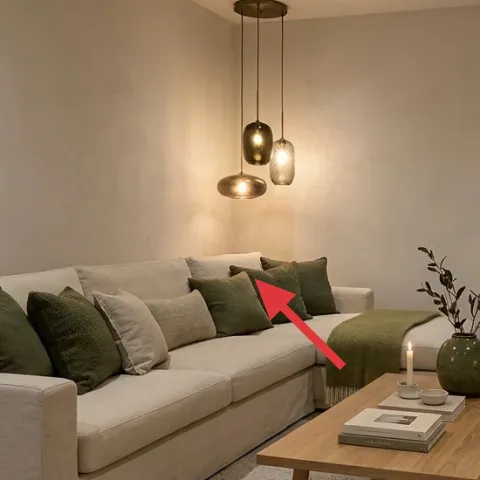
In the hero, the olive pillows are what make the whole space feel lived-in instead of neutral-only. They repeat the plant palette from the right side of the room, and because the couch fabric is light gray, the green reads rich rather than loud. Picking pillow covers (or swapping in similar-sized inserts) is the renter-friendly move: it’s fast, it packs up, and it doesn’t require any wall work. The trade-off is that you’ll want fewer, better-looking pillows—if you add too many patterns, the room stops looking curated and starts looking busy.
Use two greens, not five
One medium olive and one slightly muted green keeps the look cohesive against the light upholstery.
Layer 5 — wood coffee table ($120) Adds warmth and a natural anchor
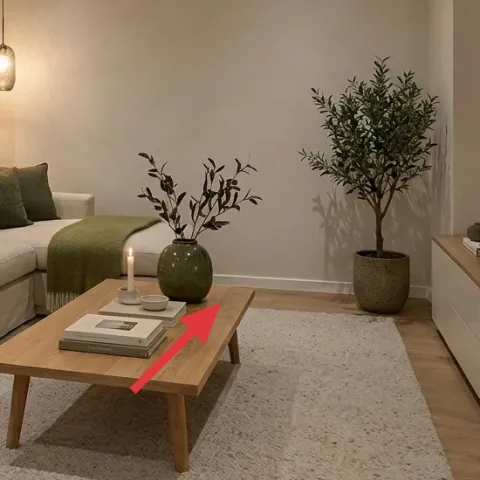
The wood coffee table is the bridge between everything soft and everything crisp in the room. Its warm, medium wood tone repeats the console top, so the palette stays grounded. A table with straight legs also keeps the style modern—rounded decor elsewhere won’t feel mismatched. If you swapped this for a glossy black table, the olive and off-white balance would skew heavier, especially once the lamp is on. The trade-off with going natural wood is maintenance: use coasters and wipe spills quickly so the surface stays looking fresh.
Choose a tabletop that’s easy to style
Flat, slightly textured wood hides small scuffs and makes it easier to keep books, candles, and glass pieces looking neat.
Layer 6 — book stack on the console ($15) Gives the lamp a grounded base
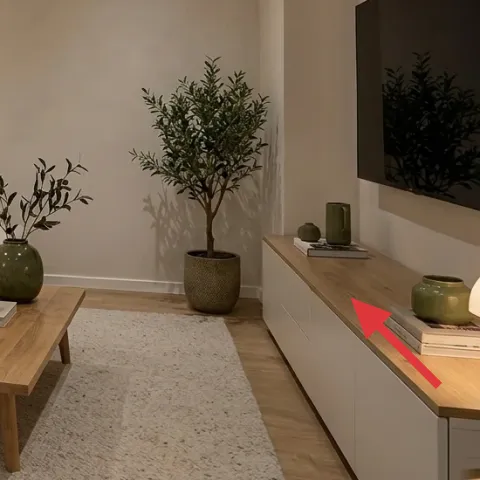
The book stack on the console is small, but it’s a major “signal” item: it tells the eye where to land between the framed art and the warm table lamp. In the hero, the stacked spines add color variation without competing with the leaf print, and the scale looks right against the console’s long, minimal lines. An obvious alternative is a single taller decor object, but that can look lopsided next to a wide art frame. Stacking two or three thin books creates height while staying minimalist—and it’s easy to swap for what you’re reading now.
Keep the stack’s width narrow
A tighter stack prevents the console from feeling cluttered next to the planter and lamp.
Layer 7 — potted tree in a gray planter ($50) Adds height without wall changes
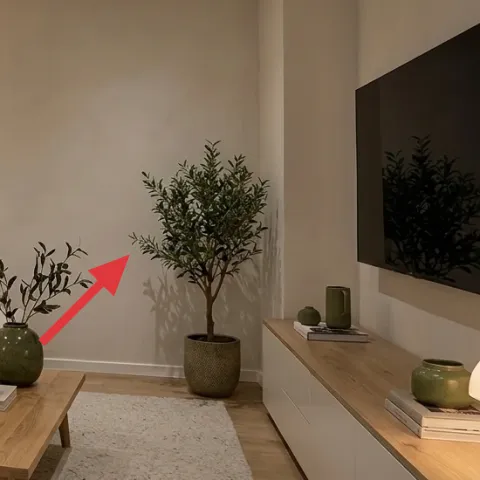
The potted tree on the right side adds the vertical movement this room needs, especially with the long console and the single large framed print. The gray planter ties into the cool neutrals (rug and couch) while the green foliage echoes the pillows, so it feels cohesive instead of “extra.” This is also the best renter-friendly way to get that in-the-corner drama: no mounting, no permanent fixtures, and it’s easy to move at lease end. The trade-off is watering—if the soil dries out too much, the leaves won’t look full—so set a reminder and keep it near the light source.
Don’t crowd the plant with small decor
If the foliage gets hemmed in by candles or vases, it starts to look like a clutter pile instead of a styled corner.
The cost, layer by layer
| Layer | Item | Cost |
|---|---|---|
| 1 | Light gray area rug 5×7 | $150 |
| 2 | Warm plug-in table lamp | $55 |
| 3 | Framed wall art print 16×20 | $80 |
| 4 | Olive green throw pillow covers (2) | $24 |
| 5 | Wood coffee table | $120 |
| 6 | Decorative book stack | $15 |
| 7 | Potted tree in a gray planter | $50 |
| Total | $494 | |
If you want a cheaper variant, use a 5×7 rug in a textured heather gray and choose one statement framed print instead of leaning on extra styling. Swap the coffee table to a simpler, lower-cost wood-look option and keep the console decor to just lamp + one small book stack.
What worked, what didn't (across the whole room)
This room’s formula works because the palette is tight (off-white, light gray, olive) and the natural wood pieces repeat across the coffee table and console. The layered warm light from the plug-in lamp also makes the space feel inviting without changing the overhead fixture. The one area that could easily go wrong is over-styling the console and coffee table—keeping those surfaces intentional is what preserves the calm look.
What worked
- The light gray rug anchors the sofa and makes the olive pillows feel richer.
- The warm plug-in table lamp creates a soft right-side glow that feels lived-in.
- The framed wall art gives the console wall a clear focal point.
- Wood surfaces repeat (coffee table + console top), so the palette stays grounded.
- The book stack adds height variety without visual clutter.
- The potted tree adds vertical balance near the larger art print.
What didn't
- If pillow covers are too bright (neon olive), the palette stops feeling calm.
- A too-small rug can make the coffee table feel disconnected from the sofa.
- Overfilling the console with multiple objects makes the wall art look “crowded.”
- Cool-white bulbs can turn olive into a grayish green instead of a warm accent.
- If the potted plant is sparse, it loses the height contrast that the room relies on.
What we'd skip if we did it again
Skip matching “set” decor that includes a bunch of the same tones in the same finish. In this photo, the magic is repetition with variation—gray rug + olive textiles + warm wood, not a full coordinated suite.
Skip a cold bulb swap (or a lamp that reads blue-white). The olive palette looks intentional only when the lighting stays warm, especially in evenings when the walls turn more creamy.
Skip clutter on the console. The framed print already brings pattern and shape, so keeping the book stack and lamp to a tight arrangement prevents the right wall from feeling busy.
Frequently asked
Is this renter-friendly if I can’t change the ceiling light?
Yes. This look keeps landlord-installed ceiling fixtures out of the plan and leans on plug-in lighting, swap-in textiles, and move-ready decor. The warm table lamp on the console is the key evening fix, and the rest of the styling—rug, pillows, framed art, and plants—can pack up at move-out without any wall damage.
How long does it usually take to get this exact vibe?
Plan on about 2–4 hours. Rug placement and straightening is quick but worth doing slowly, especially if the coffee table needs to feel centered under the front legs of the sofa. After that, it’s mostly styling time: setting the book stack, placing the lamp, and arranging pillows so the olive repeats feel intentional.
What if my living room is bigger or smaller than the photo?
If the room is bigger, consider stepping up the rug size (or using the same rug but adding an extra textile layer like a throw) so the sofa area still feels grounded. If it’s smaller, keep the rug but tighten the furniture spacing—aim for the coffee table to sit clearly inside the rug boundary so nothing looks accidentally “drifted.”
Where can I shop for similar pieces on a budget?
For the rug and pillows, look at big-box home retailers and online marketplaces that offer easy returns. Plug-in lamps are widely available at home goods and thrift-to-flip shops, and framed prints are easiest to get through art retailers or craft framing services. For the DIY wall piece, craft stores are ideal for cardstock and acrylic paints.
What’s the biggest styling mistake people make with this palette?
Overdoing the number of accents. Olive + warm neutrals works best when it’s repeat-based: use the olive in the pillows and once more through foliage or a similar art tone. If you add multiple competing greens, extra bold patterns, and too many small decor objects, the room loses the calm, intentional feel.
More in Living Room
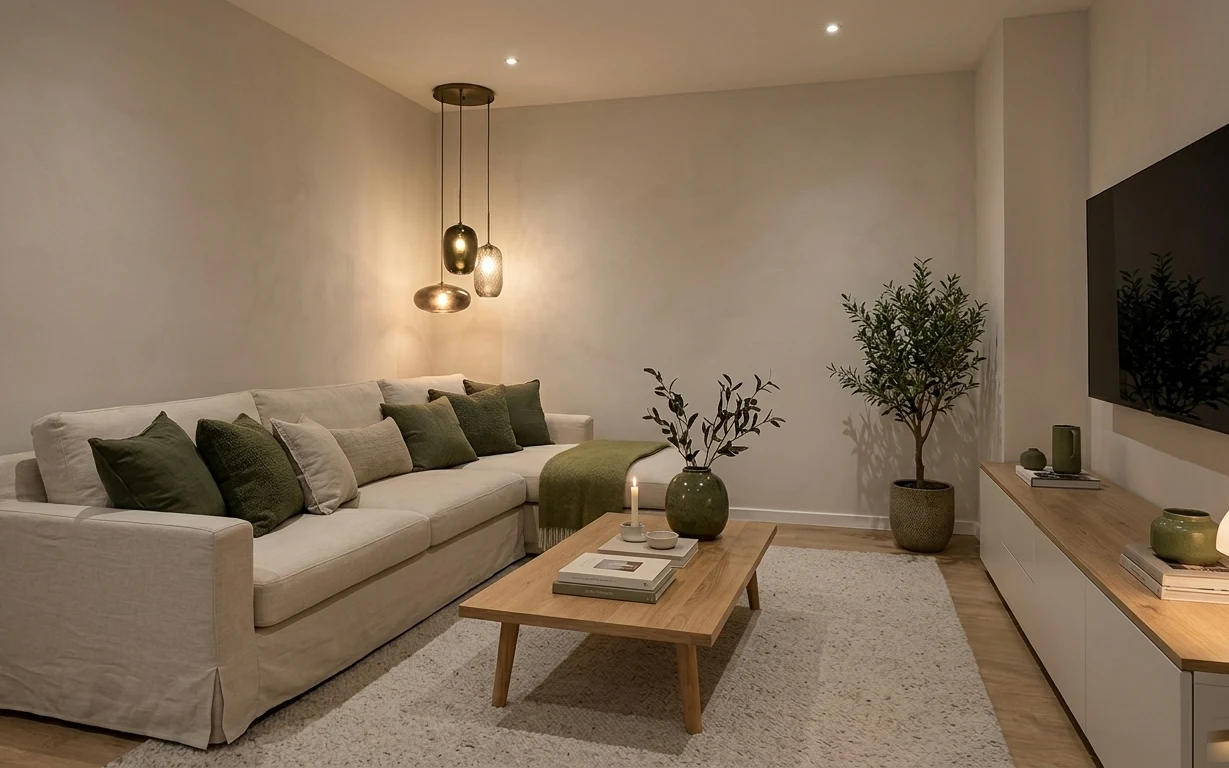
Under $500: olive-and-walnut living room refresh with 7 layers
A warm, renter-friendly living room palette—olive pillows, soft light, and natural wood—pulled together with 7 move-ready layers under $500…
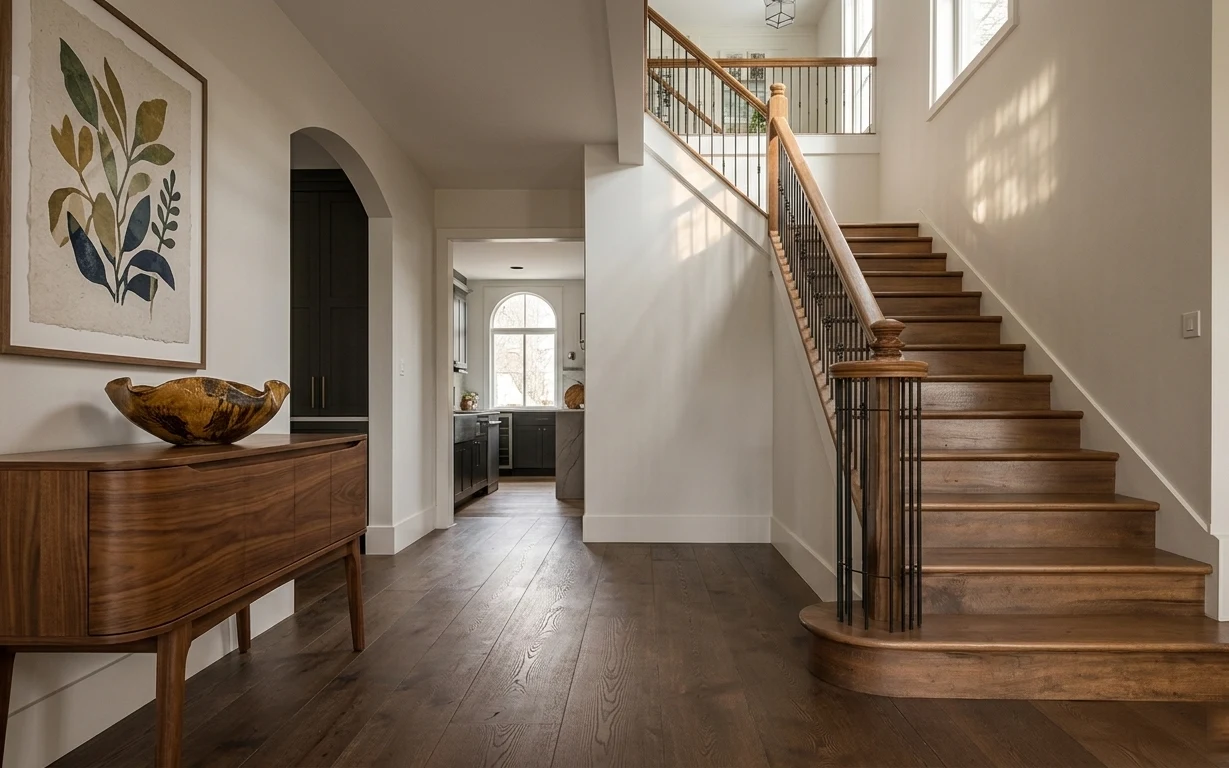
Under $700: walnut-and-cream entry hallway refresh
A bright, walnut-and-cream entry hallway can feel finished without a big remodel. This $700 weekend refresh uses a bold framed print, a ref…
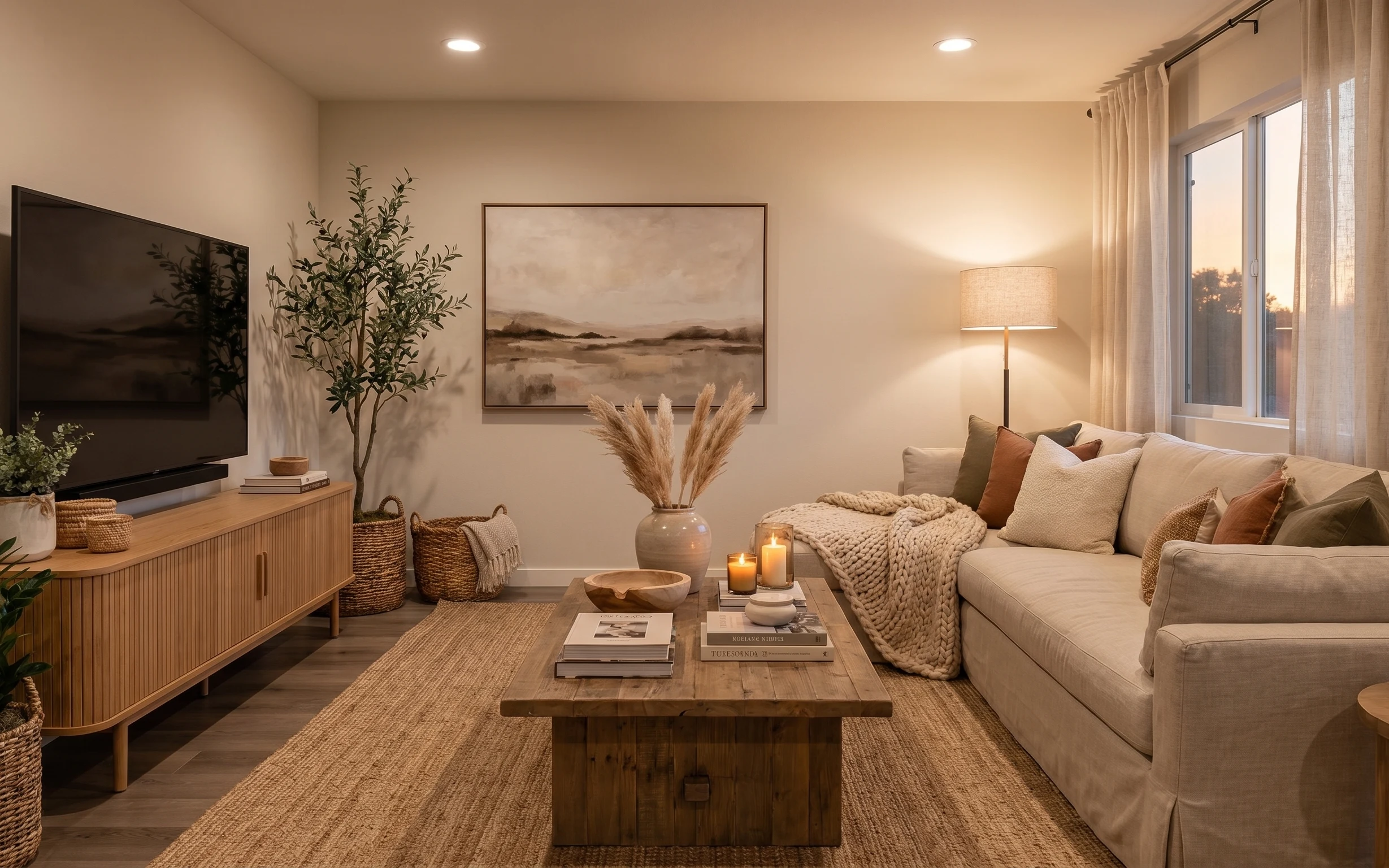
Under $500: earthy boho living room seating area refresh
A warm, earthy living room seating area refresh using move-ready swaps under $500. Focus: grounding rug, cozy textiles, and candle-and-tray…