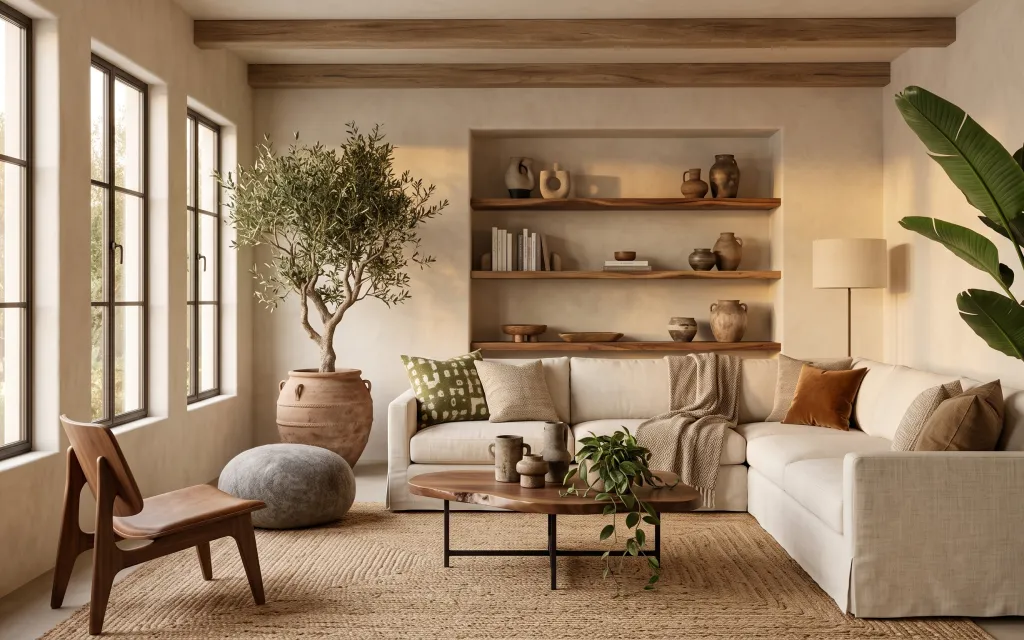
- Best for
- making a bright living room feel grounded
- Cost
- $467 total
- Difficulty
- Easy (rug + styling swaps, one paint DIY)
- Time
- 2–4 hours for the refresh
Why olive-and-terracotta decor is the sunlit living room of 2026
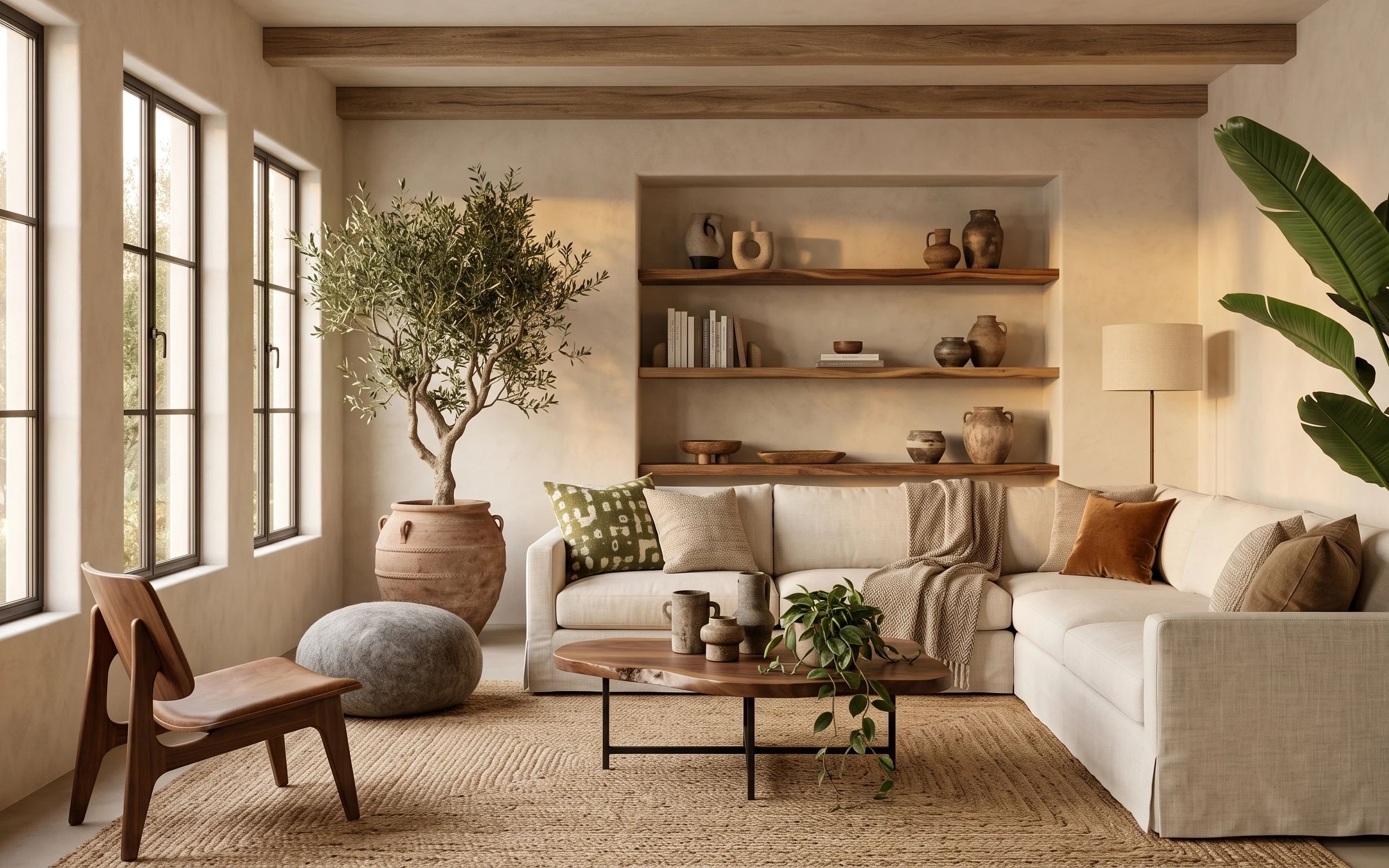
The starting point is a bright, airy layout with white walls and warm wood tones, plus a layered mix of cream textures and olive-green accents. A big area rug anchors the whole seating zone, while the throw blanket and patterned pillow give that “collected over time” look without needing any permanent changes. The plants do heavy lifting too: the olive tree and the broad-leaf pot make the room feel curated, not empty. The best part for shared housing is that every upgrade here is removable and can ride along to the next place.
I once tried to solve a living-room “needs something” problem with one giant statement piece, and it made my space feel more cluttered than styled. This time, I leaned into repeatable texture: soft textiles over the sofa and grounded greenery near the floor. The olive-and-terracotta palette also helps because warm neutrals can absorb a lot of renter-friendly changes without looking random.
Layer 1 — area rug ($200) Hides wear and defines the seating zone
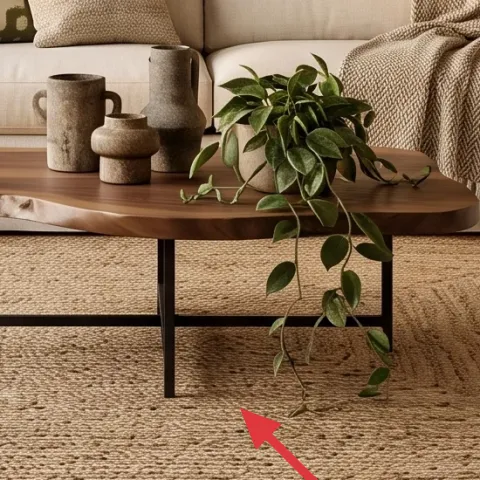
An area rug under the coffee table and sofa turns an open floor into a real “zone,” even when the rest of the apartment stays the same. In the photo, the rug’s textured, neutral weave makes the floor feel intentional while still forgiving—those subtle patterns help mask everyday scuffs and small spills. The trade-off: a thicker rug takes a little more storage space folded than a flat runner, but it stays move-friendly for shared housing. Compared to adding wall decor first, this does the most visual work per box. Choose a similar warm natural tone so it plays nicely with olive green.
Texture reads richer than pattern
If the room already has lots of smooth surfaces (wood table tops, clean trim), a woven rug gives the same “styled” effect without needing extra accessories.
Layer 2 — wood coffee table ($120) Adds warmth without permanent installs
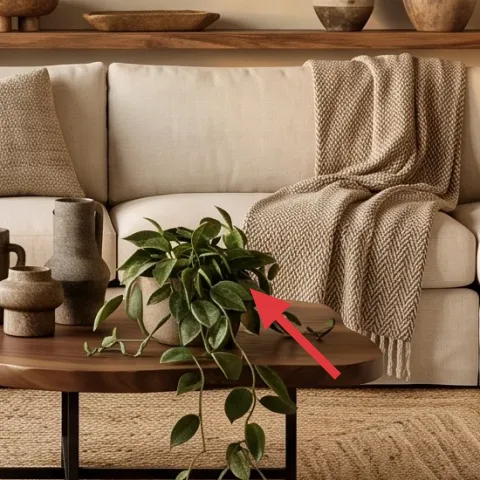
The wood coffee table keeps the look grounded and gives you a natural styling surface—perfect for move-ready decor that can be packed in bubble wrap. In the hero image, the tabletop sits low, so small objects like a cup or plant pot look deliberate instead of cluttered. A key decision here is to style it in a tight group (one plant or greenery + a couple small vessels), rather than scattering five different things. The trade-off is that you’ll dust more often, but the payoff is a calmer centerpiece. If the next place has a different layout, the same table styling still works because it’s object-based, not wall-based.
Match the wood tone, not every detail
When the rest of the room is warm wood, you can stay close with color (light oak, warm walnut) even if the table shape differs a bit.
Layer 3 — floor lamp with beige shade ($40) Gives lamp light after sunset
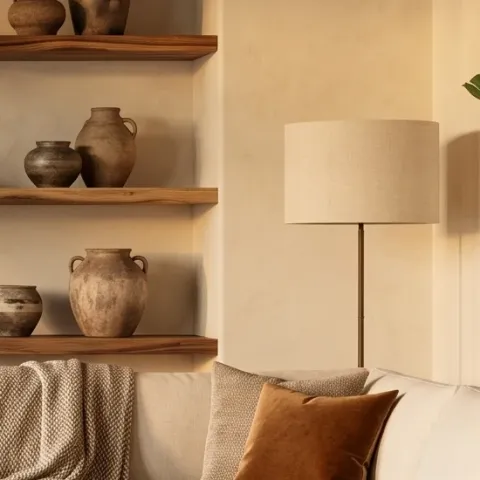
A plug-in floor lamp keeps the room usable after dark and makes the olive-and-cream palette look cohesive. The beige shade in the image softens contrast from the bright windows, so the seating area feels calm instead of harsh. This layer is about placement and scale: set it near the shelving zone or sofa side so it creates a second “light height” besides overhead or window light. The trade-off is simple—lamp bulbs need occasional swapping—but nothing is hardwired, and everything packs into the next move. Compared to replacing fixed lighting, a floor lamp is renter-proof and fast.
Pick a warm bulb for the shade
Use a warm color temperature so the cream textiles and terracotta tones read golden, not gray.
Layer 4 — throw blanket ($25) Makes the sofa look lived-in
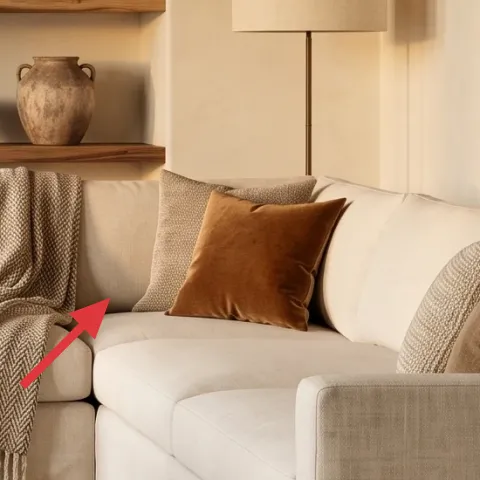
A throw blanket folded over the sofa arm adds instant softness and a place for your eyes to land, especially in a room with big windows and light walls. In the hero, the blanket’s neutral knit texture and warm undertone echo the rug and wood tones, which is why the whole palette feels pulled together. The choice to keep it in the same family (cream to warm beige) matters more than getting the exact same pattern. The trade-off is that throws attract pet hair and lint, but they’re easy to wash or swap when your roommates change tastes. It’s a better first move than buying new upholstery because it’s fully portable.
Fold, don’t drape
A clean fold looks styled and keeps the blanket from slipping off the cushion when the room gets busy.
Layer 5 — green patterned throw pillow ($12) Brings the olive color forward
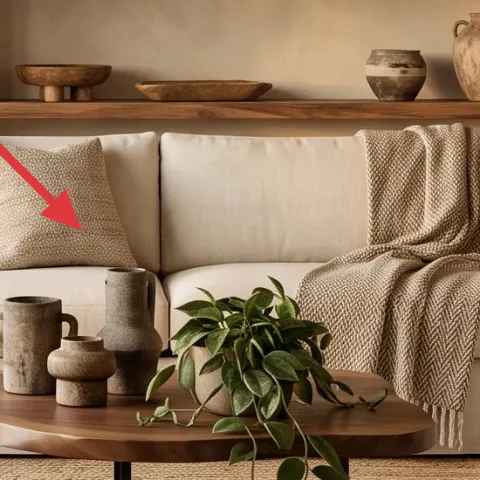
A single green patterned pillow is the fastest way to repeat the plant color without buying more plants you’ll have to transport every time. In the image, that pillow’s mottled pattern and muted olive shade echo the olive tree and broad-leaf plant, which visually links the floor greenery to the sofa. The trade-off is that a patterned pillow can date a little faster than plain solids, so stick to a tone you already like—olive stays wearable across seasons. Compared to a full second pillow set, this is cheaper and easier to store flat. If the next place has a darker sofa, the same green will still work.
Don’t go too bright on green
If the green looks neon in daylight, it will fight the warm neutrals; muted olive reads calmer.
Layer 6 — large potted plant with broad green leaves ($30) Fills corners without extra furniture
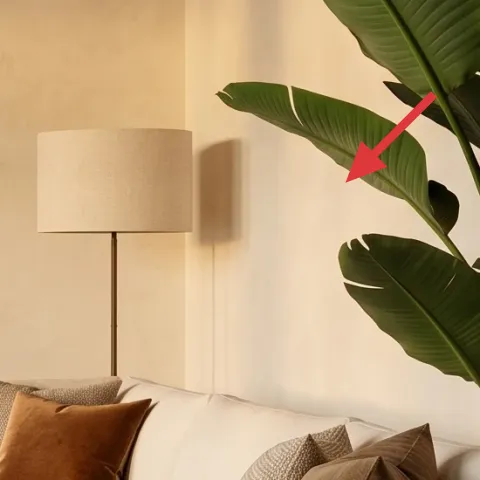
A larger potted plant makes the room feel complete while avoiding extra seating or bulky shelving, which is exactly what shared housing needs. In the hero image, the broad leaves extend upward and outward, creating height that balances the low coffee table and sofa. This is a cheaper alternative to adding another cabinet or bookcase because it uses vertical space and keeps the footprint light. The trade-off is that large plants need occasional watering and light checks, but the pot and plant are still easy to pack and move. If your next place gets less natural light, choose a hardy option with similar leaf shape.
Rotate for even growth
Turning the pot every couple of weeks keeps the leaves from leaning toward the window.
Layer 7 — olive tree in large terracotta planter ($40) Makes the plant look intentional
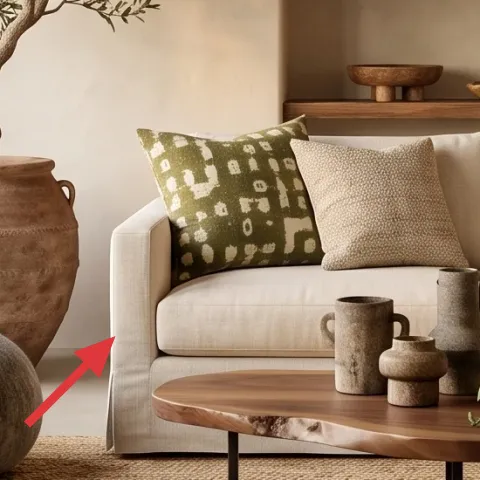
A terracotta-style planter gives warmth at floor level and makes the olive tree feel “designed,” even if the room is otherwise simple. In the hero, the planter’s earthy color ties into the rug and wood coffee table, so the whole palette stays cohesive. The smartest move for shared housing is using the planter as a portable art piece: you can swap the plant or relocate the pot, and the visual color still works. The trade-off is that terracotta finishes can scuff, but that’s also why they look good with time. This layer is chosen over adding more small decor because planters scale easily and read from across the room.
Make it instead of buying it
DIY a painted terracotta planter set so the olive-tree pot reads warm and matching, without needing any wall work.
Materials
- Terracotta pots (2 small, ~6–8 in) — assorted sizes — craft store — $14
- Acrylic paint (warm cream + muted terracotta) — 2 bottles — craft store — $9
- Small foam brush or sponge — 1 pack — craft store — $3
- Clear acrylic spray — matte or satin — craft store — $5
Steps
- Clean and dry the terracotta pots so paint sticks evenly.
- Base-coat the pots with the warm cream color using a sponge for soft texture.
- Layer muted terracotta in irregular patches or light stripes with the foam brush.
- Let the paint dry fully between coats to avoid muddy blending.
- Finish with a thin coat of clear acrylic spray for a more wipeable surface.
- Let cure until dry to the touch, then place a saucer under the pots.
Total DIY cost: $31 — saves about $9 over buying.
The cost, layer by layer
| Layer | Item | Cost |
|---|---|---|
| 1 | Area rug 5×7 | $200 |
| 2 | Wood coffee table | $120 |
| 3 | Plug-in floor lamp with beige shade | $40 |
| 4 | Neutral throw blanket | $25 |
| 5 | Green patterned throw pillow cover | $12 |
| 6 | Large indoor plant (4–6 ft) in pot | $30 |
| 7 | Painted terracotta planter set (buy) | $40 |
| Total | $467 | |
A cheaper variant is to hunt for a pre-owned rug, keep the lamp shade but swap the bulb, and choose a solid-color pillow cover instead of a patterned one—most of the “finished” feeling comes from the rug and plants.
What worked, what didn't (across the whole room)
Overall, the room looks cohesive because the palette repeats: warm neutrals in the rug and textiles, olive green in the plant and pillow, and wood in the coffee table. The upgrades stay move-ready because they’re all portable or plug-in. The only time it fell flat was when the plant look felt too separated from the seating zone.
What worked
- The textured area rug makes the seating zone feel grounded and hides minor scuffs from daily use.
- A warm-wood coffee table gives a styling surface that can be packed and moved without losing impact.
- The beige-shade floor lamp softens window brightness and improves evening comfort without hardwiring.
- One olive-toned patterned pillow ties plant color to the sofa so the room doesn’t look “one-sided.”
- Adding height with a broad-leaf plant fills the corner gap without buying extra bulky furniture.
- Terracotta planter warmth links the floor greenery to the cream-and-wood palette.
What didn't
- If the rug is too gray, the whole room reads colder against warm wood and cream textures.
- A patterned pillow with a bright green undertone can fight the olive leaves instead of echoing them.
- If the lamp is placed too far from the sofa, it won’t soften the seating area at night.
- Over-styling the coffee table (too many small items) makes the room feel busy fast.
- Terracotta planters that aren’t sealed can absorb moisture stains over time.
What we'd skip if we did it again
Skip replacing large fixed pieces first. In shared housing, swapping textiles, rugs, and plug-in lighting gets you 80% of the look with zero lease risk, while big furniture moves are expensive and hard to store.
Skip adding more wall decor than necessary. The hero’s shelves and vases already create visual interest; adding too much can compete with the plants and make the room feel crowded from across the floor.
Skip going heavy on “matching sets.” Instead of coordinating everything to the exact same shape or pattern, repeat color families (cream, warm wood, olive) so the room stays flexible when roommates and layouts change.
Frequently asked
How long does this living room refresh take?
Most of the work is quick swap-style: adding a rug, setting up a plug-in floor lamp, and adjusting sofa textiles and plant placement usually takes 1–2 hours. The terracotta planter DIY is the only time-sensitive part. Plan on another 30–60 minutes for painting and drying, plus a short curing window before putting everything back in use.
Is this doable in a rental where nothing can be mounted?
Yes. This approach relies on move-ready pieces: rugs, freestanding lamps, removable pillows, and plant containers. The styling changes live on surfaces (coffee table and sofa) and don’t require drilling or replacing fixed fixtures. The only DIY element is painting terracotta planters, which is clean and packable.
What if my living room is smaller than the photo?
Scale down the plant and keep the rug proportion right. A 5×7 area rug still anchors a smaller seating zone, and one tall plant in the corner can replace multiple small items. On the sofa side, stick to one patterned pillow plus one neutral pillow so the visual rhythm stays clear without crowding.
What if my living room gets less natural light?
Choose warmer lighting and lean more into cream textiles. A floor lamp with a beige shade and a warm bulb will help the room feel cozy without changing any fixed elements. In low light, pick muted olive tones for the pillow so they don’t look washed out. For plants, choose a hardy option that tolerates lower light and rotate it regularly.
Where should I shop for the biggest upgrades on a budget?
For budget wins, look for the rug and lamp first. Rug options are often cheaper at discount home stores or online marketplaces with customer-uploaded photos. For the lamp, thrift is great if the shade is intact. Then round out the look with inexpensive pillow covers and a plant pot update—these small pieces add color repetition fast.
What’s the most common mistake with plant-and-textile living rooms?
The most common miss is buying too many competing greens or patterns at once. If the olive tones don’t echo each other—plant to pillow, and pillow to rug—the room reads like separate decor choices. Another pitfall is overcrowding the coffee table; pick one greenery element and two or three small pieces so the surfaces stay breathable.
More in Living Room
Under $500: sunlit living room refresh with plant-and-textile swaps
A sunlit living room refresh for shared housing that focuses on move-ready swaps: rug, coffee table styling, one plug-in floor lamp, and pl…
Under $500: console entry corner refresh with warm neutrals
Warm up a console entry corner with renter-safe swaps: a soft rug, floor-length curtains, plug-in table lamps, and a round mirror—plus styl…
Under $500: dining nook refresh with 7 move-ready swaps
A warm-neutral dining nook refresh built from 7 move-ready swaps that pack into a few boxes. Total look costs under $500, with a DIY hand-p…