- Best for
- coffee stations and countertop styling
- Time
- a weekend (about 3–5 hours)
- Total cost
- about $575
- Renter-safe
- yes (no painting or drilling)
Why olive-and-copper counter styling is the coffee bar corner of 2026
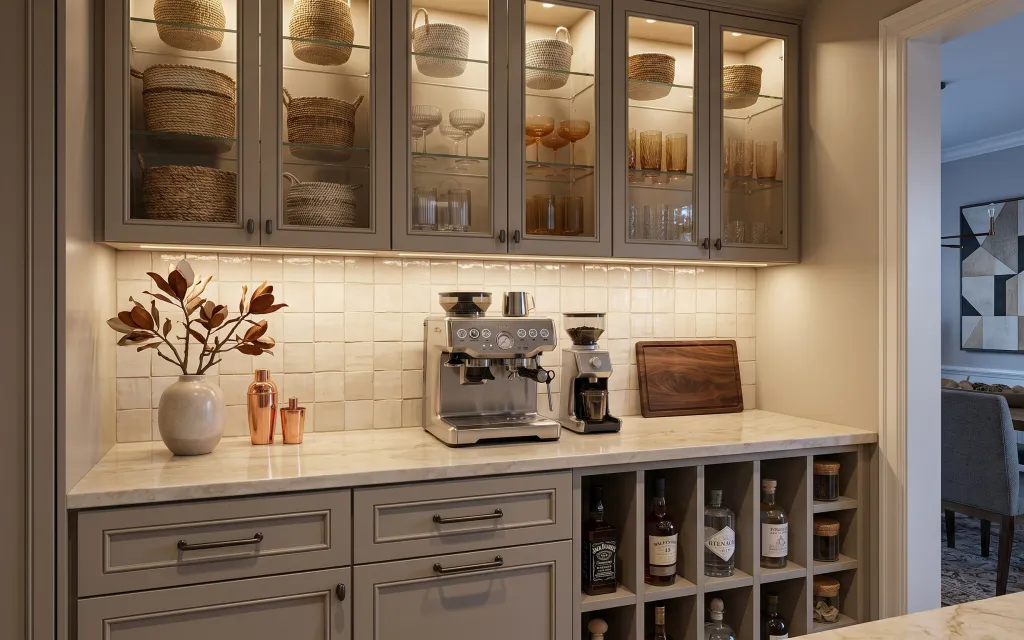
The hero shows a warm, neutral kitchen counter built around a coffee setup: a light tile backsplash, a bright countertop, and small metallic accents that read “intentional,” not clutter. To get the same look in shared housing, focus on movable styling: a patterned area rug, copper cups, and a beige vase with artificial leaves that soften the hard surfaces. The framed abstract wall art adds a sharp break from the light tile, like the way modern kitchens borrow a gallery vibe from magazines. And because everything here packs down, it’s achievable for roommates who’ll move again in a year or two.
I used to overthink kitchen decor and would try to “upgrade” the whole counter in one weekend. On one move, I left behind a bunch of bulky items and ended up rebuilding the look from scratch in the next place—wasted effort, plus fewer options. This time I kept it simple: one rug, one hero plant, one small metallic moment, and one framed print. That combination keeps the coffee bar corner looking styled without turning the kitchen into a storage headache.
Layer 1 — Patterned area rug ($150) grounds the coffee zone
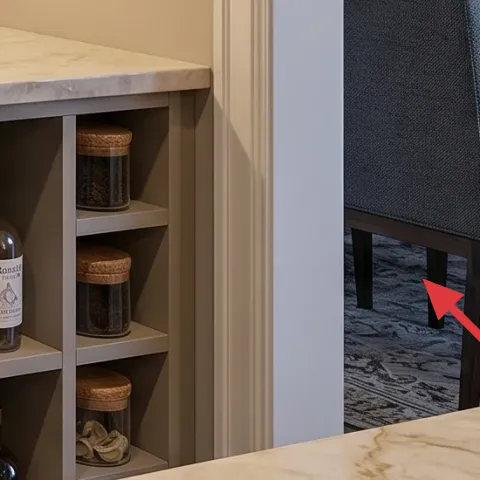
A patterned area rug makes the coffee bar corner feel like its own little landing pad, even when the rest of the kitchen is busy. In the hero, the rug’s dark pattern contrasts with the light countertop and tile backsplash, which visually “sets” where people stand while they make coffee. The trade-off is that rugs collect crumbs, but a washable or easy-to-vacuum option solves most of that. The move-friendly win: it rolls up and slides into a tall box without needing hardware or bulky transport. Choose a pattern with light fields so it still reads bright against cream surfaces.
Pattern scale matters
If the rug’s pattern is too tiny, it can look muddy on camera. Go for a mid-scale print so it stays readable in a small coffee corner.
Layer 2 — Set of copper cups ($25) repeats the metallic note
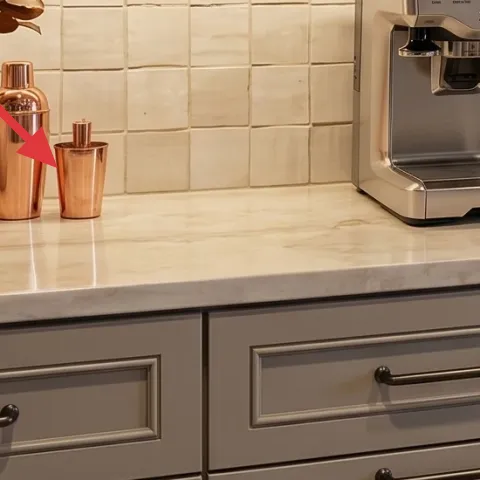
The copper cups are small, but they do a lot of visual work: they add warmth, a reflective edge, and a “collected” feeling on the countertop. In the hero, they sit near the coffee setup so every morning ritual—scoop, stir, pour—has a consistent look. The reason this beats the obvious alternative (random mugs) is repetition: same material, same finish, different shapes. The trade-off is that copper can look a little flashy if the rest of the palette is too cool, so keep the rest of your pieces in warm creams and light woods. This layer is also easy to pack: cups wrap flat and fit in a moving tote.
Match the finish, not the brand
You don’t need the exact same copper shade—just aim for warm bronze tones that look good next to beige and cream.
Layer 3 — Large beige vase with artificial leaves ($35) softens the hard lines
A large beige vase with artificial leaves gives you height and softness without taking over the counter. In the hero, the vase bridges the gap between light tile and darker accents, so the whole coffee bar corner reads balanced. This works better than a tiny bud vase because you get vertical movement: the countertop feels calmer, not like it’s only horizontal objects. The trade-off is that taller pieces can be easy to knock, so pick a vase with a wider base. For move-readiness, use a foam sheet or paper to protect the leaves, then pack the vase upright in a box with a towel buffer.
Pack for “moving day bump”
Wrap the stems and secure them so they don’t tangle—then pad the rim and base to prevent chips.
Layer 4 — Espresso machine on countertop ($200) creates the functional centerpiece
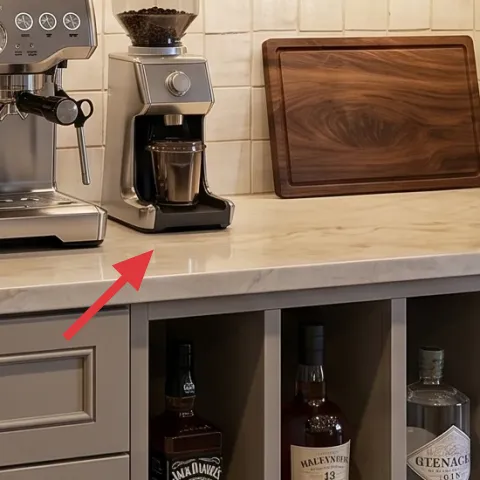
The espresso machine is the natural focal point, and treating it like a centerpiece keeps the counter from looking accidental. The hero’s setup feels cohesive because the machine is centered and paired with small props rather than competing gadgets everywhere. Choosing a single, recognizable coffee appliance over a scatter of “maybe coffee tools” matters because visual clutter reads fast in shared kitchens. The trade-off is counter space: this look prefers a clear perimeter around the machine. Keep the surrounding items intentional—one tray for extras and a simple cut-and-go surface. This appliance is moveable, so you can disconnect it like a normal kitchen device and pack it without touching the space permanently.
Don’t decorate around clutter
If your mugs, filters, and packets aren’t stored off-counter, a coffee centerpiece will still feel messy. Clear the top first, then style.
Layer 5 — Hand-painted abstract on cardstock ($60) gives the wall a tenant-friendly pop
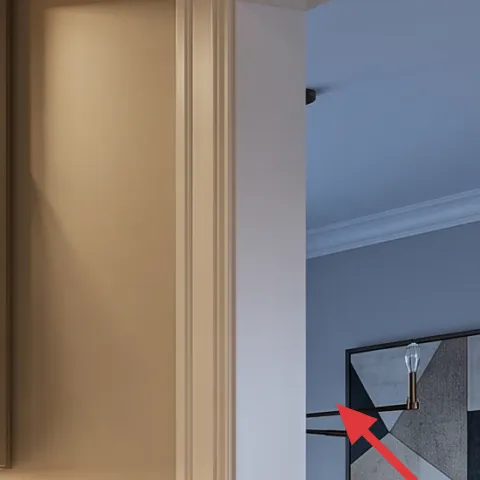
The framed abstract wall art adds contrast to the light tile area and gives the coffee bar corner a “designed” finish. In the hero, the artwork’s darker geometric shapes echo the deeper tones in the kitchen, which is why it doesn’t look random beside the brighter backsplash. For shared housing, this layer wins because the whole frame can come with you. The trade-off is that paper art needs protection: glare and humidity aren’t kind to thin cardstock. DIY keeps it budget-smart and personal, and it’s also easy to swap after a move—new art, same frame.
Make it instead of buying it
DIY a hand-painted abstract on cardstock so you can swap the print later without changing any permanent kitchen elements.
Materials
- Cardstock (2 sheets) — 8.5x11 or 9x12 — craft store — $10
- Acrylic craft paint set (starter colors) — assorted bottles — craft store — $12
- Thin paintbrush (or detail brush) — 1 pack — craft store — $7
- Painter’s tape — 1 roll — craft store — $6
- Matte clear spray (optional topcoat) — 1 can — craft store — $11
Steps
- Choose a simple layout: block in 3–5 geometric areas with painter’s tape.
- Paint the largest shapes first using acrylic craft paint, keeping edges sharp where tape creates borders.
- Add smaller details (lines or small blocks) with a thin brush.
- Remove tape while the paint is still slightly wet to keep lines crisp.
- Let the piece dry completely, undisturbed, until the surface feels fully set.
- If using a matte clear spray, apply a light coat from a distance and let it cure fully.
Total DIY cost: $46 — saves about $14 over buying.
Layer 6 — Coffee machine on countertop ($80) adds a second-use station
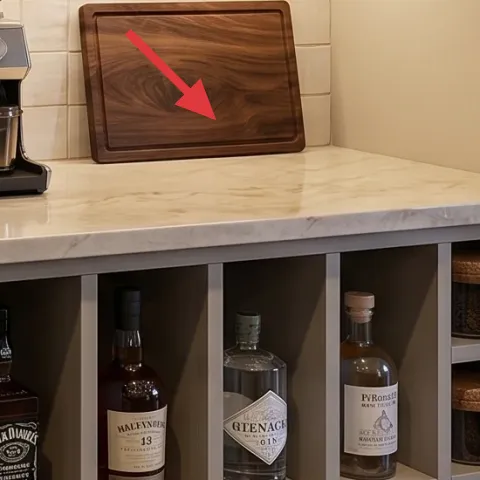
A second coffee machine or small coffee tool (kept visually compact) helps the counter feel like a real station instead of a display shelf. In the hero, the additional coffee appliance sits to the right of the espresso machine, which keeps workflow easy and makes the coffee bar corner feel intentionally staged. The choice here over the obvious alternative—stuffing the counter with extra canisters—keeps your look clean. The trade-off is that you have to commit to storing accessories nearby, not “in the drawer someday.” Pack it like any appliance and use a counter tray to prevent small items from drifting during moves.
Keep one side “busy”
Balance the scene by letting one side hold tools while the other stays mostly open for quick prep.
Layer 7 — Cutting board on countertop ($25) makes the surface feel ready
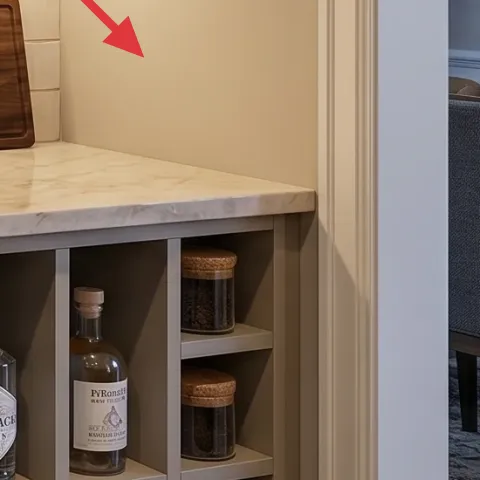
A cutting board brings warmth and a practical texture—wood tone—right into the coffee bar corner. In the hero, the board is positioned where it looks like it could hold pastries, a small prep task, or even just be the staging surface for drinks. This works because it introduces an organic material into a palette of tile, glass, and metal. The trade-off is that boards can get scratched, but those marks also age well and won’t look “wrong” after move day. Choose a board that’s flat and easy to wrap, then store it flat in a moving box to prevent warping.
Use the board as your “catch-all”
Keep a small corner of it as the staging area for cups or filters so the rest of the counter stays clear.
The cost, layer by layer
| Layer | Item | Cost |
|---|---|---|
| 1 | Patterned area rug (5×7) | $150 |
| 2 | Copper cups set (decorative cups) | $25 |
| 3 | Beige vase with artificial leaves | $35 |
| 4 | Espresso machine (countertop) | $200 |
| 5 | Hand-painted abstract cardstock print (framed equivalent) | $60 |
| 6 | Coffee machine (countertop) | $80 |
| 7 | Wood cutting board | $25 |
| Total | $575 | |
If a full rug feels like too much right now, swap in a smaller runner-style option first, then upgrade later. The rest of the look still works because the copper-and-beige styling and the framed wall art carry the “intentional” feel, even when the floor is simpler.
What worked, what didn't (across the whole room)
This coffee bar corner refresh stays cohesive because the upgrades are all movable pieces with repeated materials and strong placement. The biggest win is how the rug and framed art give the counter a visual boundary without permanent changes.
What worked
- The patterned area rug grounds the standing spot and keeps crumbs from visually “showing” on plain floors.
- Copper cups add warmth and shine in a way that matches the hero’s metallic accent moment.
- The beige vase with artificial leaves adds height so the counter doesn’t feel flat and crowded.
- Choosing one main coffee appliance prevents the “random gadget” look in shared kitchens.
- The framed abstract wall art balances the light tile backsplash with darker geometric contrast.
- A cutting board introduces wood warmth and gives a practical surface for quick staging.
What didn't
- When too many coffee tools sit at once, the station loses the calm, centered look.
- Too-small vase scale can make the counter feel like it’s missing vertical structure.
- Very high-gloss art finishes can catch glare near bright kitchen lighting.
- Copper accents look best in a small cluster; single random pieces can read “off.”
What we'd skip if we did it again
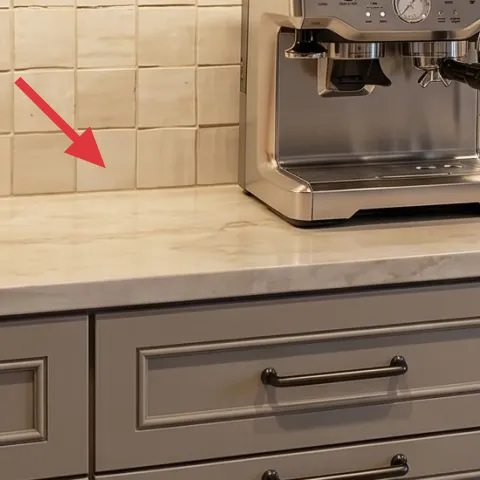
Skip swapping any permanent kitchen hardware or changing the backsplash. The hero’s tile and cabinet framework are fixed in place, and trying to redesign them is the fastest way to lose time (and money) when you’ll move again.
Skip buying a full matching coffee set in one style. It usually looks themed in photos but gets cluttered in real use, and you’ll end up storing extra pieces that don’t match your next counter.
Skip tiny wall-only decor if the counter is still busy. The framed abstract art works because it balances the coffee bar corner; if the counter stays cluttered, the wall detail won’t fix the overall read.
Frequently asked
How long does this coffee bar corner refresh take?
Most of the swaps are simple placement—rug rollout, countertop styling, and swapping in a framed print—so the “buy and set up” part usually lands around 2–3 hours. The DIY hand-painted cardstock adds time for painting and drying, plus an extra hour or so for clean lines and curing. Plan for a total of about 3–5 hours across one weekend.
Is this renter-friendly if I can’t drill into the wall?
Yes. The layers are designed around movable decor: a framed abstract print can be hung using renter-safe, non-damaging methods, and every counter item is simply set in place. The rug and cutting board don’t require any wall interaction at all. The key is to keep your wall attachment method temporary and avoid anything that pulls paint when removed.
What if my coffee bar corner is smaller than the hero?
Downsize the rug first (or switch to a runner) and keep only one vertical element—either the tall vase or a smaller plant grouping. Use copper cups sparingly so the countertop doesn’t get crowded. The framed abstract art still works because it adds contrast without taking up counter space, and a cutting board can double as a staging tray for filters or stir sticks.
What if I have more space than the hero?
Add one extra repetition instead of more random objects. For example, keep the copper cups but add matching glass jars in the same color family, or increase vase scale slightly while maintaining warm neutrals. If the counter is wider, leave more breathing room around the main coffee machine and keep the rest in one “tool zone” to preserve the centered look.
Where should I shop if I want this exact vibe?
For the rug, look for warm neutral patterns in home stores or marketplace listings with photos that show the pile under natural light. For the copper cups and vase, try kitchen boutiques or craft/home sections that sell small decorative sets. The framed abstract print can come from discount art retailers, but for the DIY option, craft stores have everything needed for cardstock painting and clean geometric shapes.
Biggest mistake to avoid with a coffee bar corner in shared housing?
The biggest miss is treating it like a catch-all. If the counter holds every coffee packet, mug, and utensil, the coffee bar corner looks busy no matter how pretty the objects are. Clear the top, pick one main appliance zone, and then style around it with two texture moments (wood and plant) plus one metallic accent cluster.
More in Kitchen & Dining
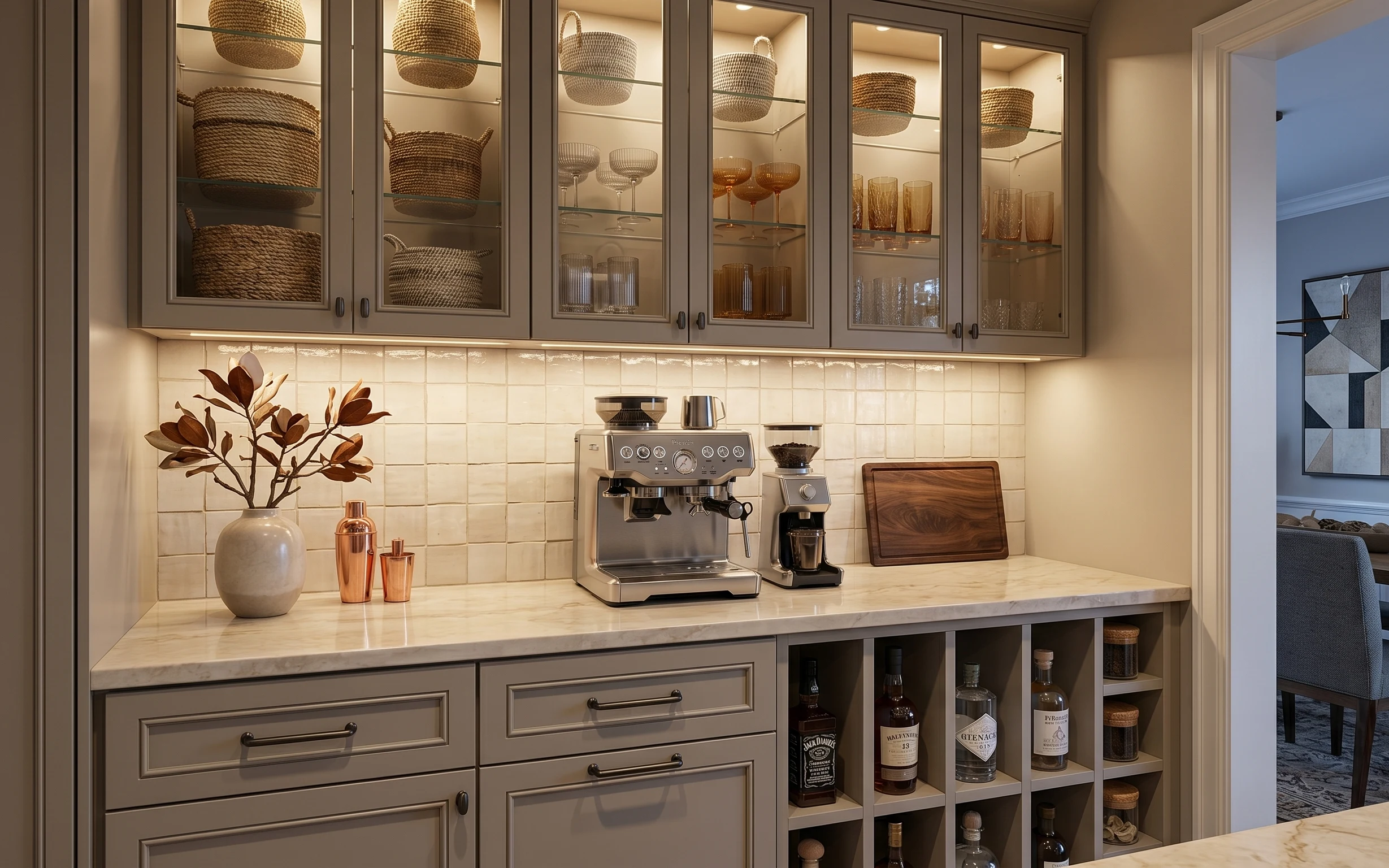
Under $600: 7 move-ready coffee bar corner refresh ideas
A coffee bar corner refresh for shared housing that packs into a few boxes. These 7 renter-friendly swaps use warm neutrals, copper accents…
Under $1500: kitchen island breakfast bar refresh with 7 layers
A kitchen island breakfast bar can feel brand-new with small, owned-apartment style swaps. This $1500 weekend refresh uses seven layers—rug…
Under $350: renter-friendly kitchen swaps for an island
A warm, wood-heavy kitchen with an island can still feel fresh on a renter budget. This $350 plan uses peel-and-stick backsplash, a removab…