- Best for
- Moving-friendly bedroom styling
- Time
- 2–4 hours for setup
- Total cost
- Under $600
- Renter-safe
- No-drill, soft goods + plug-ins
Why olive-and-terracotta accents are the bedroom of 2026
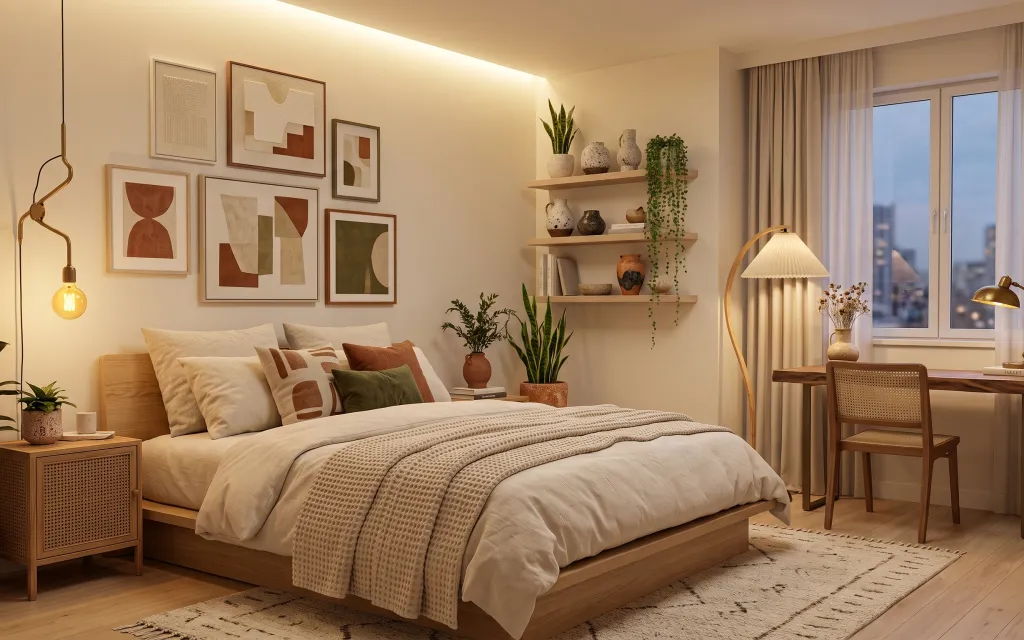
That creamy, sunlit palette in the hero is doing most of the work: the light wood floor, the linen-like curtains, and the layered textures on the bed all read calm instead of busy. The framed abstract art set adds structure at eye level, while the globe floor lamp and brass desk lamp bring warm lamp glow without needing any hardwired fixtures. This is achievable for shared housing because every piece here is either soft goods or freestanding—easy to dismantle, box, and bring along to the next place. The key is choosing warm neutrals plus one grounded accent color (olive), then repeating it in two or three places.
I used to buy whatever “looked right” on the day I walked into a store, and I’d end up with three shades of terracotta that fought each other. This time, I matched the vibe to the actual materials in the photo: cream textured throw blanket, cream duvet, and that terracotta patterned throw pillow. Once I did that, the rest fell into place—the rug pattern grounded the bed, and the framed art set made the wall feel intentional. The lesson: repeat the same color family, not the same product name.
Layer 1 — beige area rug with light pattern ($200) Anchors the bed with foot-friendly texture
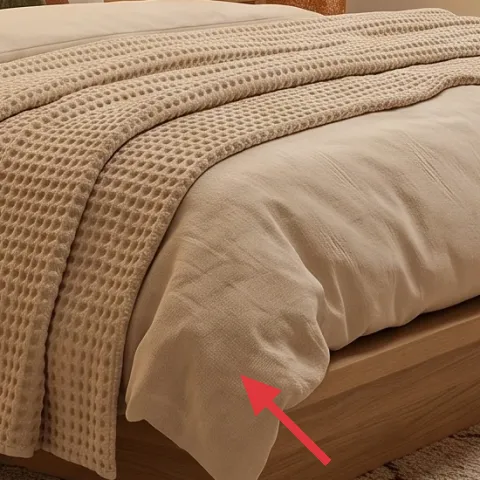
A light, subtly patterned area rug like the beige one in the hero keeps the bedroom feeling open while still defining a “zone” for your bed. It’s especially helpful in rentals where the floor might not be your choice—this rug visually smooths transitions and gives your feet something warm to land on at night. I’d go for a 5×7 scale so the rug extends under the front edge of the bed and just beyond the sides of the mattress. The trade-off: you’ll still need to vacuum regularly to prevent dust from showing, but it’s far easier than trying to live with a cold-looking floor.
Get the rug edges to “disappear”
Choose a rug pattern that’s lighter than your curtains and comforter so the edges blend instead of cutting the room into strips.
Layer 2 — cream textured throw blanket ($60) Adds a second tactile surface on the bed
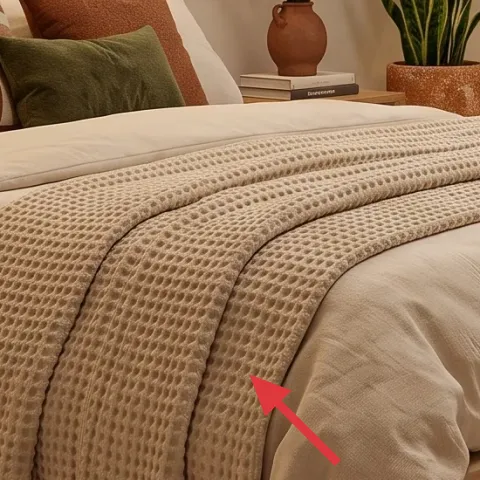
The cream textured throw blanket in the hero makes the bed feel layered without adding more visual weight. You can see how the waffle-like texture catches light differently than the smooth duvet, which is why it reads cozy even in a bright room. Drape it over the foot of the bed so it stays obvious from the doorway and doesn’t require extra pillows. If you went with a solid flat throw instead, the bed would look flatter and less styled. The only downside is lint—textured knits show it—so keep a quick lint roller in your “move kit.”
Layering works best when textures differ
Keep the throw in the same cream family as the duvet, but pick a noticeably different weave so you get depth without color chaos.
Layer 3 — terracotta patterned throw pillow ($30) Brings the grounded accent color you can pack
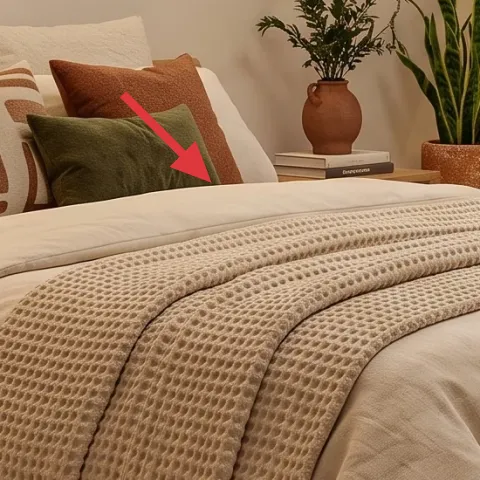
The terracotta patterned throw pillow is the small repeat that ties the whole palette together—warm without turning orange. In the hero, it sits among the cream pillows and keeps the bed from looking too “all neutral.” For shared housing, the big win is portability: one pillow cover is a few minutes to pack and it doesn’t care what the next landlord allows. The trade-off is that pattern can be polarizing, so choose a print style that won’t feel dated fast (simple geometric shapes work best). This is the layer I’d DIY if the store prices on covers are high.
Make it instead of buying it
Dyed pillow covers let you create a terracotta-leaning accent tone that matches the hero’s warm palette for less than a new printed cover.
Materials
- Fabric dye (terracotta / clay shade) — 1 packet — craft or fabric store — $12
- Plain white cotton pillow cover — 1 cover — discount store — $6
- Salt (for dye setting) — 1 small box — grocery store — $4
- Gloves — 1 pair — dollar store — $2
Steps
- Pre-wet the white cotton pillow cover so the dye spreads evenly.
- Stir and mix the terracotta dye with warm water and salt according to the packet directions.
- Submerge the cover fully and stir gently to prevent streaks.
- Let it soak for the recommended time, checking once halfway through.
- Rinse in cool water until the water runs clear.
- Air-dry, then fluff and insert into your pillow form.
Total DIY cost: $24 — saves about $6 over buying.
Layer 4 — framed abstract art print set ($80) Creates a gallery feel without permanent installs
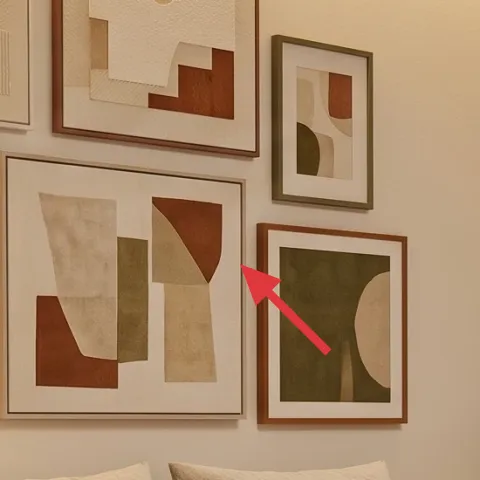
The framed abstract art print set in the hero is what makes the room feel “finished” instead of temporary. Multiple frames create rhythm across the wall, and the warm wood tones in the frames echo the light wood floor. For renters, the win is that frames are easy to pack: wrap each one individually and store in a sturdy box. The alternative would be a single poster, which can look cheaper and less intentional when you’re standing back in the room. The trade-off is wall planning—spacing matters—so keep the arrangement simple (a loose grid) and measure once before you hang anything.
Don’t rely on flimsy hanging hardware
Use picture-hanging methods that match your wall type, and avoid anything that can pull off paint when removed.
Layer 5 — floor lamp with globe bulb ($120) Adds warm light at standing height
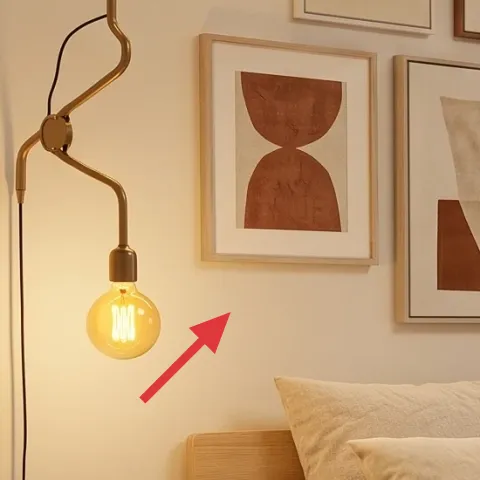
A floor lamp with a globe bulb is doing double duty in the hero: it adds warm lamp glow and it fills the vertical space near the bed without crowding tables. Choosing a plug-in option keeps it move-ready and avoids hardwired installs. The globe shape also diffuses light, which flatters wall art and makes the room feel softer at night. The trade-off is that floor lamps take up a little clearance, so position it so the lamp base doesn’t block your path. If you’re tight on space, choose a slim stand like the hero’s rather than a wide tripod style.
Place it where you actually sit
Center the light so it lands near the bed or desk area, not just in the corner.
Layer 6 — bedside cabinet with woven door ($80) Stores the “in-between” stuff you’d hide anyway
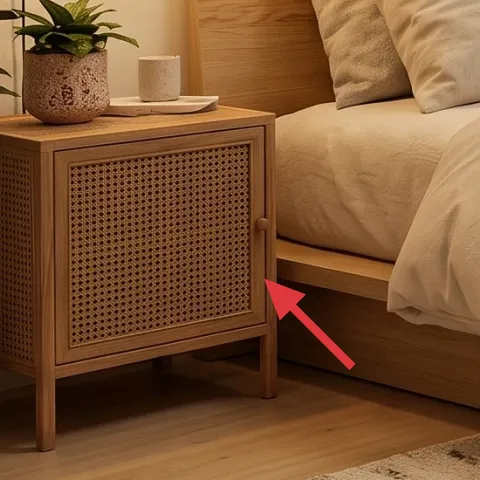
The bedside cabinet with a woven door adds both storage and texture, which is key in a bedroom that already has plants and framed art. It’s visually warm because of the light wood tone, and the woven front reads handmade even if you buy it new. This is the type of piece that makes shared spaces work: you can tuck chargers, books, and a small first-aid kit inside rather than letting them sprawl across the desk. The trade-off is it’s one more box to move, so keep the cabinet footprint practical and avoid anything that’s too heavy. In the hero, the cabinet keeps clutter low while still letting you style the top.
Style the top like a mini vignette
One plant and one small object is enough—more items compete with the wall art.
Layer 7 — large green trailing vine plant ($25) Turns shelves and corners into living decor
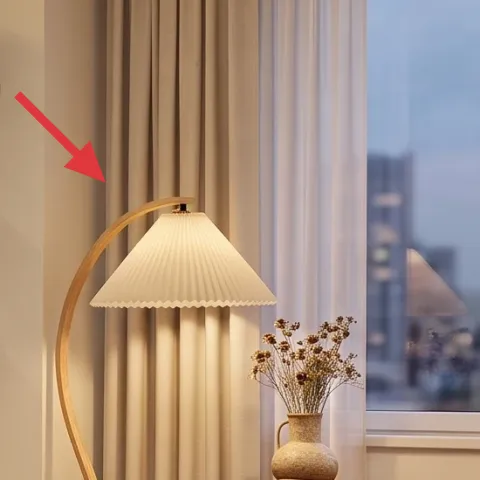
A large green trailing vine plant gives you that “alive” look without changing anything about the walls or fixed surfaces. In the hero, the trailing stems soften the lines from the shelf and window area, and that makes the whole room feel less staged. Choose a plant in a pot that’s easy to carry, then plan to keep it where it has bright light and a little air movement. The alternative—buying more decor objects—can make the room feel crowded and harder to pack. The trade-off is watering: trailing plants drink more than low leafy ones, so set a simple weekly reminder.
Let the trail be the decor
Trim lightly if needed so it falls the way you want, then keep the stems visible from the bed.
The cost, layer by layer
| Layer | Item | Cost |
|---|---|---|
| 1 | Beige area rug with light pattern | $200 |
| 2 | Cream textured throw blanket | $60 |
| 3 | Terracotta patterned throw pillow cover (DIY equivalent) | $30 |
| 4 | Framed abstract art print set | $80 |
| 5 | Floor lamp with globe bulb | $120 |
| 6 | Bedside cabinet with woven door | $80 |
| 7 | Large green trailing vine plant | $25 |
| Total | $595 | |
If you want a cheaper variant, keep the rug but swap the framed art set for a single framed abstract print and replace the floor lamp with a plug-in table lamp. You can also choose a smaller vine plant and reuse a rug pad you already have, keeping the overall look cohesive for less.
What worked, what didn't (across the whole room)
The overall vibe worked because the palette stays tight: cream textiles, warm wood, and a grounded olive/terracotta accent show up repeatedly. Layering textures on the bed and adding warm light at two heights made the room feel calm at both daytime brightness and night. The only area that can go off-track is wall styling—too many small objects or uneven spacing can make the room feel busy instead of composed.
What worked
- The beige patterned rug defined the bed zone and made the floor look intentional, not temporary.
- Cream textured throws added depth without introducing new colors beyond the existing palette.
- The terracotta patterned pillow was the easiest way to repeat an accent color across the room.
- Framed abstract art brought structure to the wall and helped the room feel “done” fast.
- Two plug-in light sources (globe floor lamp and brass desk lamp) kept nights comfortable and warm.
- The trailing vine plant softened the vertical lines and made shelves feel lived-in.
What didn't
- If the throw blanket is too thick or heavy, it can overpower the duvet and look cramped.
- Skipping a rug or choosing one with high-contrast pattern makes the bed area feel disconnected.
- Wall art spacing that’s off by even a little can make the whole gallery feel accidental.
- Placing the floor lamp too close to the bed can create shadows on pillows instead of warm pools of light.
- Trailing plants grow quickly, so neglecting trimming can turn “soft drape” into messy sprawl.
What we'd skip if we did it again
Skip oversized, high-contrast wall art that dominates the wall. In a rental bedroom, you want repeatable structure, and the framed abstract art print set in the hero creates that rhythm without needing big moves or risky hanging.
Skip a bulky floor lamp stand. It’s tempting to buy the brightest option, but a wide base can block your path in small shared layouts. A slim globe floor lamp keeps the warm glow while staying practical to move.
Skip buying multiple accent colors at once. This look works because the terracotta pillow, olive plant, and cream textiles stay in the same warm family. More colors usually means more decision fatigue—especially when packing for the next lease.
Frequently asked
How long does this kind of bedroom refresh take for shared housing?
Plan for about 2 to 4 hours. Rugs and textile swaps take the longest (because you’re arranging the bed and smoothing the throw), and wall art takes the next biggest chunk if you need to decide spacing. Plug-in lighting is quick: place, plug in, and test the warm glow at night. If you’re DIY-dyeing pillow covers, add 1 afternoon for dyeing and drying time.
What if I can’t change anything permanent in my rental?
This refresh is designed around renter-friendly upgrades: textiles, freestanding furniture, plug-in lighting, and framed art. You’re not relying on paint, drilling, or swapping fixed fixtures. The framed pieces are movable as long as your hanging method doesn’t damage the wall. If hanging isn’t possible at all, swap the framed set for a leaning framed print on a bookshelf or desk.
My bedroom is smaller than the photo—should I scale the rug and art down?
Yes. For smaller rooms, go down one rug size (still aim for the bed’s front edge to sit on the rug). Keep the framed art group smaller or tighter so it doesn’t feel crowded. The goal is to preserve the same relationships: rug grounds the bed, art sits at eye level, and the floor lamp adds warm light without blocking your path.
Where should I shop for these pieces without blowing the budget?
Start with discount home stores or big-box retailers for the rug, throw, and pillow covers—those are easiest to find in the right cream and terracotta families. For the floor lamp, look for plug-in globe styles at home lighting sections or resale apps. Framed art print sets are often available at budget frames shops and can also be thrifted if you’re careful about glass condition.
What’s the biggest mistake people make with bedrooms like this?
Overbuying mismatched accent colors. The hero look stays cohesive because cream textiles, warm wood tones, and one grounded accent color (terracotta/olive) repeat in different forms: pillow, plant, and art. When people introduce extra colors, the bed can start to look cluttered even if it’s tidy. Pick one warm accent family and repeat it.
Is DIY-dyeing pillow covers worth it compared to buying one?
If you’re trying to hit a specific terracotta tone, DIY can be worth it because store colors vary a lot between brands. The main benefit is matching the accent to your existing textiles and plants. The main risk is streaking if the fabric isn’t pre-wet or if dye mixing isn’t thorough—slow stirring and consistent soaking help a lot.
More in Bedroom
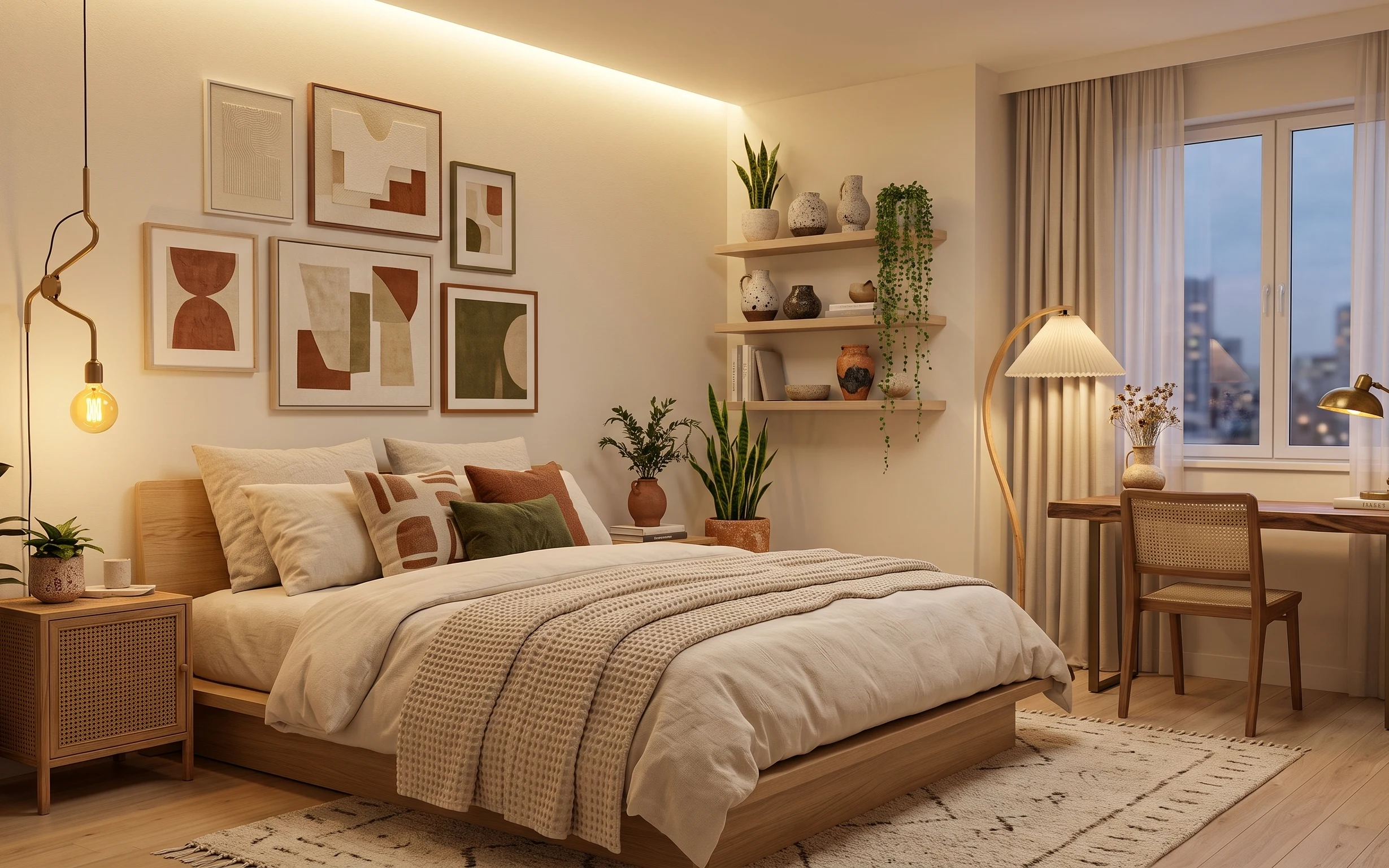
Under $600: olive-and-terracotta bedroom swaps with 7 layers
A warm, earthy bedroom look—olive accents, cream textiles, and framed art—built from 7 move-ready swaps. This refresh stays under $600 and …
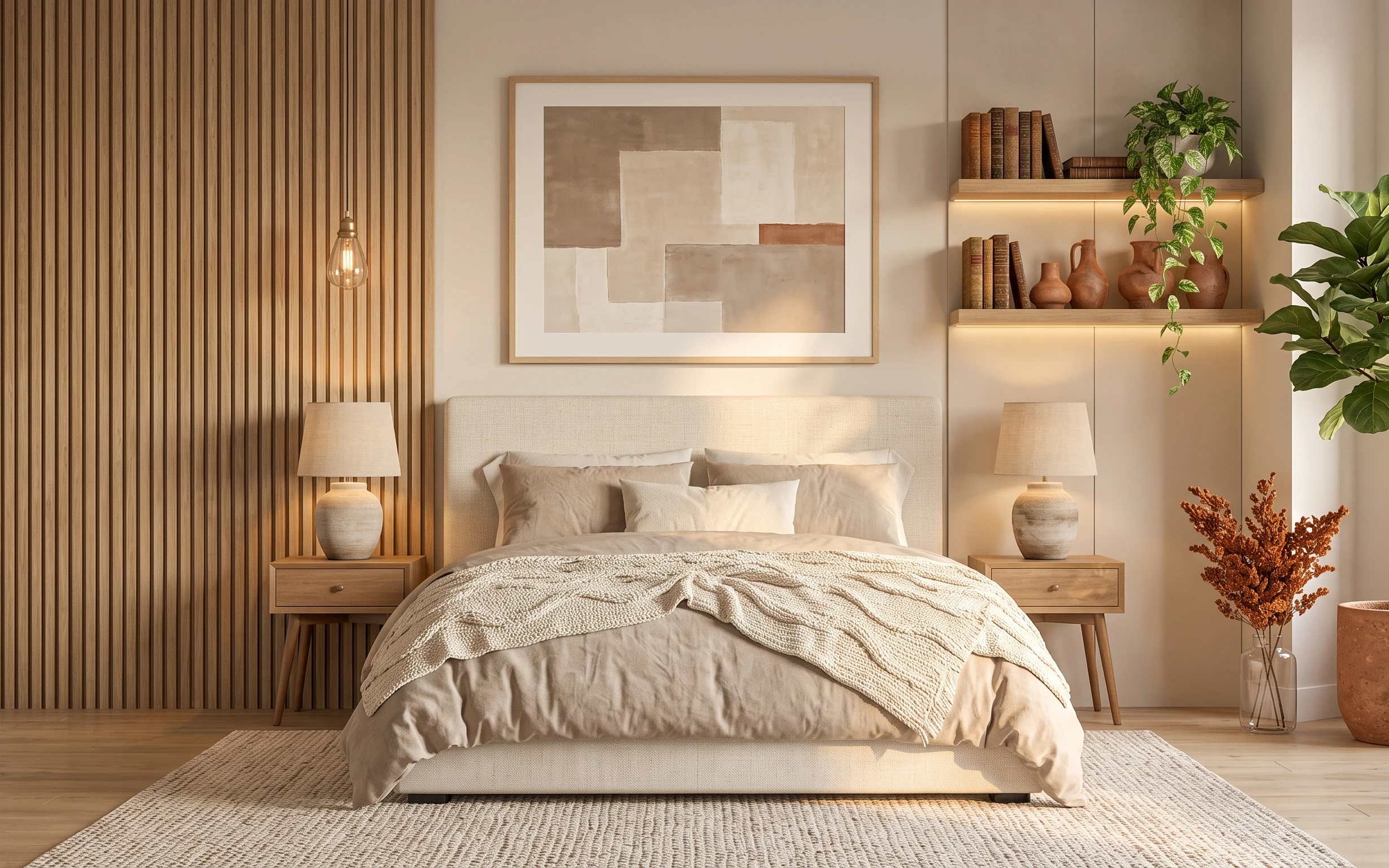
Under $700: warm wood-and-cream bedroom refresh with 7 swaps
A warm wood-and-cream bedroom refresh that looks designed without major renovation. This weekend plan uses 7 visible swaps for bedding styl…
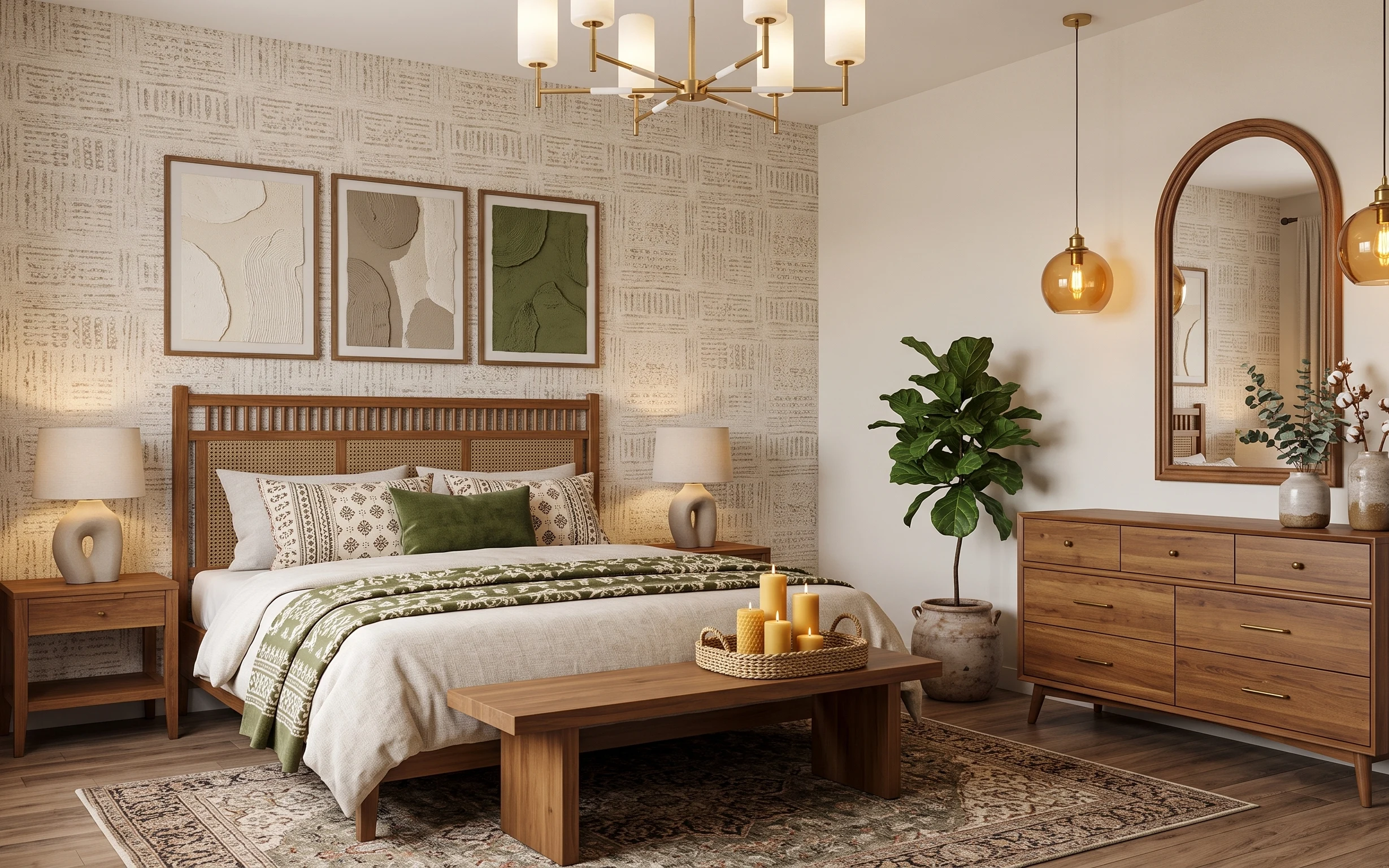
Under $600: warm olive-and-tan bedroom refresh with move-ready swaps
A warm, earthy bedroom look is achievable for under $600 with renter-safe swaps: a bold patterned rug, soft cream curtains, three framed ab…