- Best for
- Layering earthy neutrals in a living room
- Cost
- About $600 for the full refresh
- Difficulty
- Easy (mostly plug-in and styling)
- Time
- 2–4 hours on a weekend
Why warm stone-and-linen seating is the living room of 2026
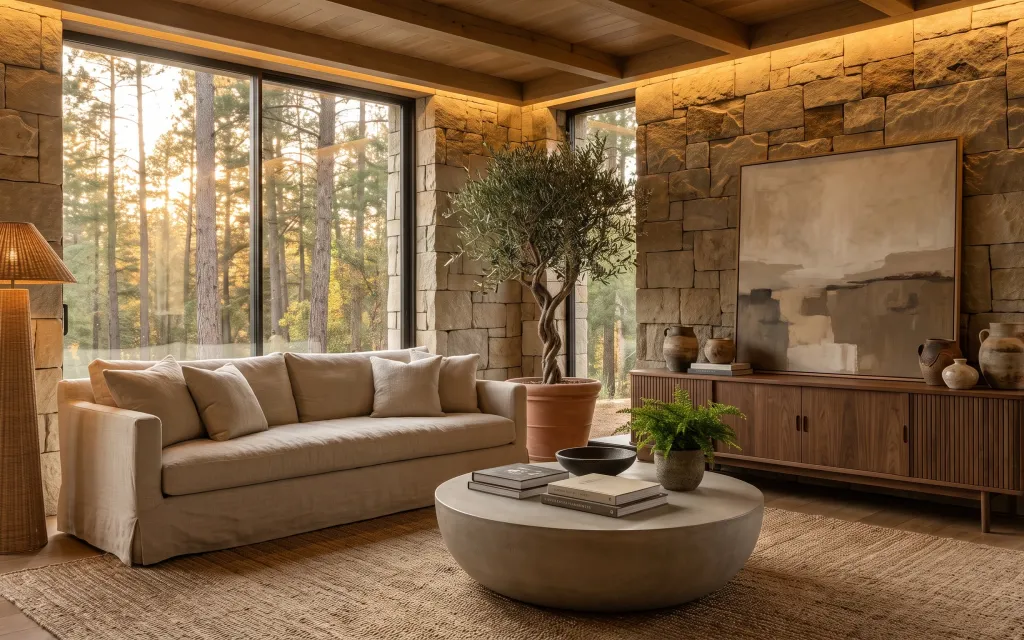
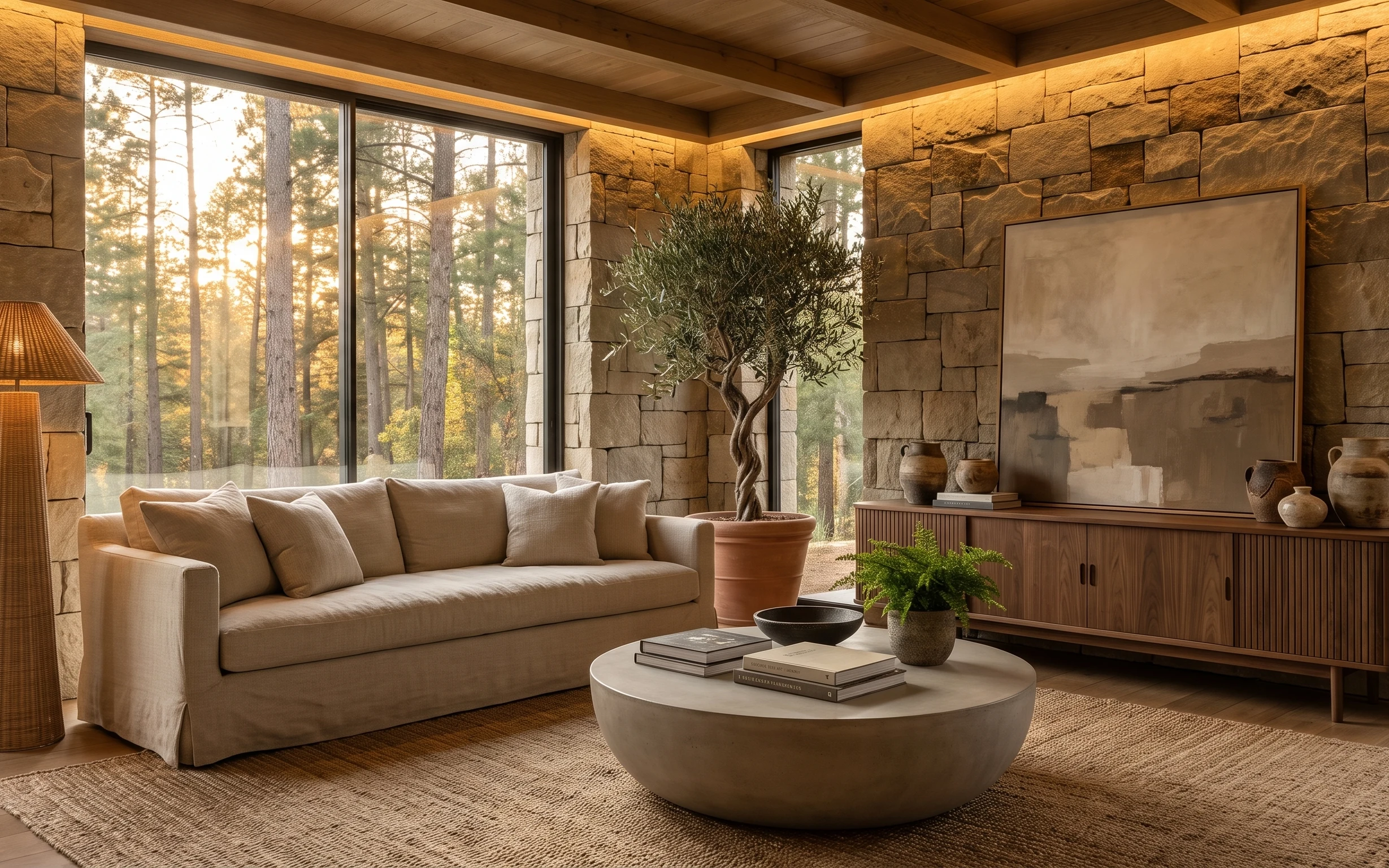
Start by copying the “soft underfoot, warm in the corners” feel: the cream rug reads like a neutral base, while the sofa’s light throw pillows keep the palette calm against that stone-textured wall. The woven-shade floor lamp adds the same texture rhythm as the linen-like throw, but it’s also the easiest way to make evenings feel flattering. On the wall, a large, quiet framed print pulls the eye upward so the plant + console styling feels intentional, not accidental. Best of all, none of it requires permission to install.
I used to over-style coffee tables in rentals—too many objects, too many heights. This time I kept it to a tight stack of books plus a single ceramic piece, and the whole center instantly looked cleaner. Another thing I learned the hard way: if you pick a rug that’s too small, even great lamp styling won’t save the room. Here, the rug covers enough floor that the seating area feels “anchored” from the start.
Layer 1 — area rug ($200) grounding neutral texture under the sofa
An area rug is what turns open flooring into a “designed” seating zone, and this one’s dense, boucle-like weave reads as warm and forgiving. Keep it in the same family as the sofa fabric—cream to light sand—so the stone wall doesn’t overwhelm the room. I’d rather spend on rug size than on extra decor because scale is what makes everything else look planned. The trade-off is that a larger rug is heavier and takes more time to vacuum around, but it’s worth it for the instant cohesion it creates. A well-sized rug also protects your feet and hides small spills.
Let the rug sit forward of the sofa edges
When the front legs of the seating land on the rug, the room reads larger and the stone wall feels less visually “blocky.”
Layer 2 — floor lamp with woven shade ($60) adds warm texture without hardwiring
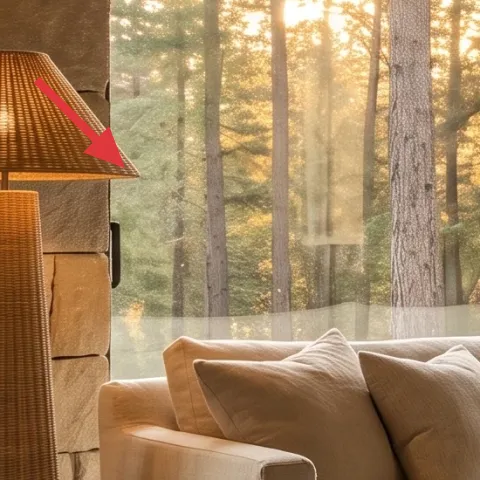
This woven-shade floor lamp is the warmth you notice first because it’s a texture object, not just lighting. The shade’s natural pattern echoes the rug’s weave and the linen-like throw on the sofa, so everything stays in the same visual language. Choose a plug-in lamp with a neutral shade (natural or cream) so the stone wall keeps its earthy tone instead of competing with the light source. The advantage for renters is that you can position it to balance sightlines—left corner, sofa side, or console front—without landlord work. The trade-off: you’ll want a stable base and a bulb with a warm color temperature so it stays cozy, not yellow.
Woven shades look best in warm bulbs
If the light is too cool, the natural fibers can look gray against cream textiles.
Layer 3 — throw pillows on sofa ($30) keeps the seating soft and consistent
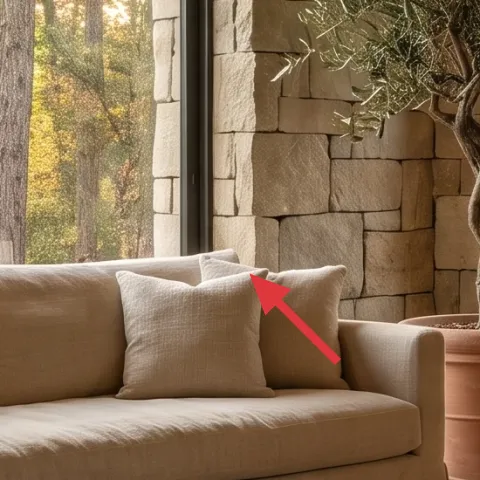
Those throw pillows do two jobs at once: they make the sofa look more inviting and they keep the palette from feeling too stark next to the stone wall. For this look, stick to light neutral covers (cream, oat, or oatmeal-beige) with a simple texture—linen, cotton, or a subtle weave—so you don’t introduce new colors. I chose a small set instead of a mix-and-match pillow parade, because the room already has strong texture from the wall and windows. The trade-off is fewer patterns, but the payoff is that the plant and framed print stay the “focus” instead of the pillows. Mix in slightly varied shapes (square + lumbar) if you want depth without changing colors.
Use pillow sizes like punctuation
A bigger square plus a smaller lumbar reads designed; too many throw sizes start to look cluttered fast.
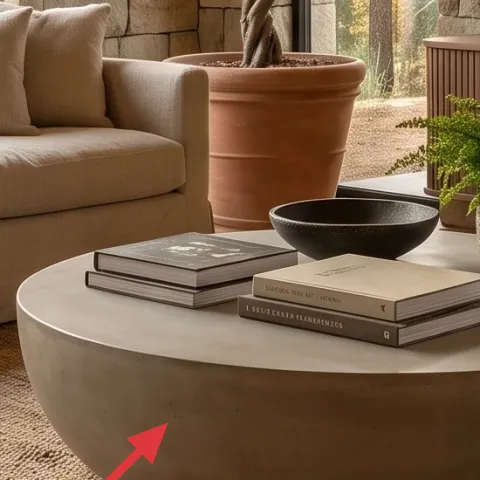
Layer 4 — round coffee table ($150) creates a calm center with fewer edges
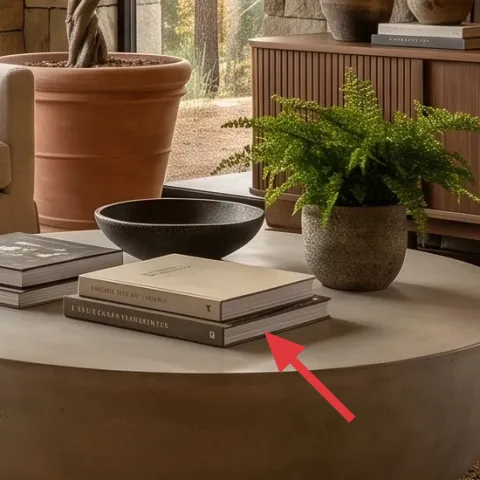
A round coffee table is a simple way to soften the whole room—especially when you’re working with angular architecture like window frames and a stone wall. Here, the tabletop gives you a “resting” surface for books and ceramics, but the shape prevents the center from feeling harsh. Choose a light neutral top (stone-look, travertine-look, or matte off-white) to mirror the cream rug and pillows. The trade-off is round tables can take a little more strategic styling so items don’t roll toward the edge—use heavier ceramics and a small tray if needed. Compared with a rectangular table, this shape also makes the space feel more open when people walk past the sofa.
Don’t place tall decor right next to seating
On a round table, anything very tall can block views and make the middle feel crowded.
Layer 5 — large framed wall art print ($50) balances the window and plant with a quiet focal point
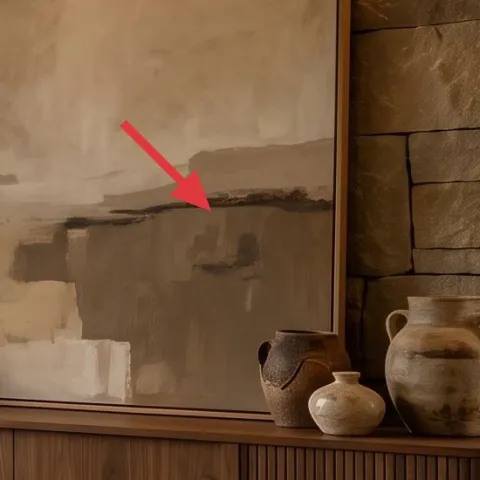
The large framed print is doing heavy lifting: it anchors the right side and keeps the wall from feeling like “only windows + only texture.” Pick an understated abstract or soft-toned print with plenty of negative space, so it complements the earthy palette instead of adding another competing pattern. For renters, swap in a similar scale using a removable hanging method (like Command hooks) rather than drilling. I’d rather go slightly larger than you think, because the stone wall is bold and small art tends to get lost. Trade-off: bigger frames weigh more, so make sure the hanging method matches the frame’s weight rating and use the full hook count.
Match the print’s brightness to your rug
If the art is too dark, it can pull the room into a mood you didn’t plan for.
Layer 6 — stack of books on coffee table ($15) adds the “styled” height without extra clutter
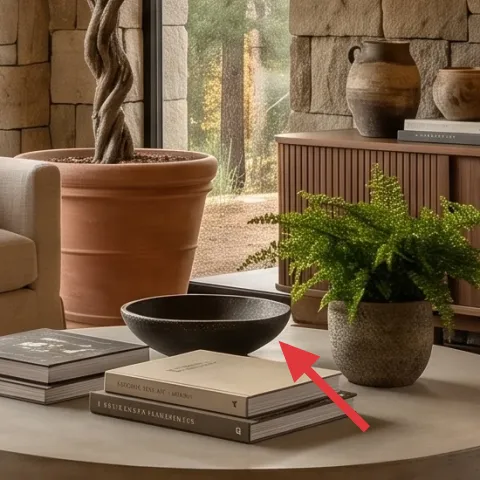
Those books read as everyday objects that happen to look good together, which is exactly why they work for a renter-friendly refresh. A tight stack gives you instant height variation for the center of the coffee table, so the ceramic and vase styling doesn’t feel floating. Choose covers in warm neutrals and muted grays—anything that matches cream, tan, and olive tones in the room. The trade-off is you’re committing to visible spines, so try to avoid glossy covers with bright lettering. This is also the easiest item to swap when the seasons change: swap one book and keep the stack height similar.
Use books to set the tallest line
Let the stack be the highest point, then keep everything else lower so the table stays airy.
Layer 7 — terracotta planter set (DIY painted look) ($35) ties the greenery into the warm palette
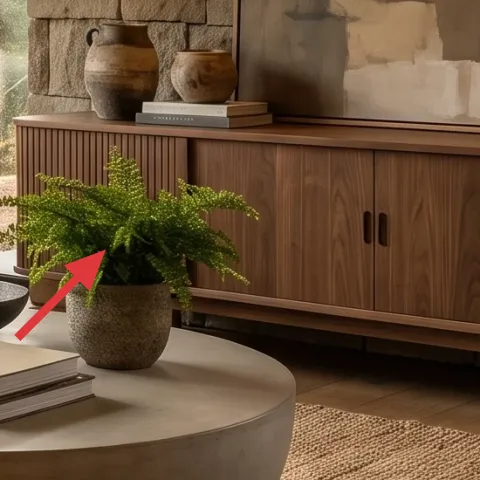
Terracotta planters are what make the olive-green plant feel grounded instead of separate. To get this look without paying for a bunch of matching pots, paint a small set of terracotta planters in a warm, clay-friendly tone that harmonizes with the rug and sofa. Keep the finish matte so it doesn’t look like glossy decor against the natural wall texture. The trade-off with DIY: you’ll need a little planning for drying time, and imperfect brush marks are part of the charm, not a problem. The upside is the planters become “your” signature detail—you can repaint later when your palette shifts.
Make it instead of buying it
DIY painted terracotta planters to match the warm clay tones you see around the sculptural greenery.
Materials
- Terracotta planters, small set of 3 — craft store — $12
- Acrylic paint, warm clay/umber shade (small bottle) — craft store — $10
- 1-in craft brush — craft store — $4
- Fine sandpaper (for light scuff) — hardware store — $2
Steps
- Lightly scuff the terracotta surfaces with fine sandpaper to help paint grip.
- Wipe dust off with a dry cloth so the first coat goes on evenly.
- Apply a thin first coat of acrylic paint and let it dry fully.
- Add a second coat only where you want deeper coverage.
- Paint the rims last so the top edge looks crisp and intentional.
- Let the planters dry completely before arranging them around your plant.
Total DIY cost: $28 — saves about $7 over buying.
The cost, layer by layer
| Layer | Item | Cost |
|---|---|---|
| 1 | Area rug 5×7 | $200 |
| 2 | Plug-in floor lamp with woven shade | $60 |
| 3 | Throw pillow covers (set of 3) | $30 |
| 4 | Round coffee table (stone-look top) | $150 |
| 5 | Framed art print (large, abstract) | $50 |
| 6 | Decorative book stack | $15 |
| 7 | Terracotta planter set (DIY retail-equivalent) | $35 |
| Total | $540 | |
If you want a cheaper version, drop the coffee table cost first—choose a simple round table with a laminate top—and reduce the art size slightly. Keep the rug large and warm-toned; that one choice does the most work for the least money.
What worked, what didn't (across the whole room)
This palette nails the earthy, calm balance: soft textiles ground the stone wall, and the woven lamp texture keeps everything from feeling flat. The styling choices are also easy to maintain because the table center uses only a few repeatable objects.
What worked
- The large rug anchors the seating so the sofa and coffee table read as one zone.
- Warm lamp light plus natural fibers makes evenings look intentional without adding more color.
- Neutral throw pillows prevent the stone texture from feeling too heavy or visually loud.
- The round coffee table keeps the center soft and reduces sharp visual edges.
- A big, quiet framed print stops the wall from feeling “unfinished” beside windows and plants.
- Using a tight book stack creates height without cluttering the coffee table.
What didn't
- Too-small rugs make the room feel like furniture is floating on bare floor.
- If the lamp bulb is cool-toned, the warm fibers start to look gray against cream.
- Adding more decor on the coffee table than books + one ceramic piece makes it feel busy fast.
- Dark, high-contrast art prints compete with the greenery and can overpower the stone wall.
- Matching too many planter colors at once turns the palette into a rainbow instead of earthy neutrals.
What we'd skip if we did it again
Skip buying a matching “set” of decor pieces at the same retailer. Mixing is the point here: one texture base (rug), one sculptural light (woven shade), and a couple of neutral accessories looks more lived-in.
Skip a super-small rug even if the price is tempting. In this kind of warm, stone-textured room, rug scale is what makes the sofa feel grounded and keeps the center from looking disconnected.
Skip tall decorative items lined up on the coffee table. Use height like punctuation—book stack as the tallest point—and leave breathing room so the round tabletop stays light and easy to reset.
Frequently asked
How long does this living room refresh take?
Plan for about 2–4 hours total. Most of the time goes to positioning the rug and setting the lamp so the light hits the right side of the sofa. Hanging the framed art with removable hooks can take 10–20 minutes once the level is set. The painted terracotta planters add a little drying time, but they’re mostly hands-off.
Is this renters-safe if I can’t drill or use wall anchors?
Yes. The refresh avoids drilling and wall anchors by focusing on moveable items: a plug-in floor lamp, a freestanding coffee table, and decor you can style on surfaces. For the framed art, use a removable hanging system that matches the frame weight. Everything else—rug, pillows, planter styling—packs up easily at move-out.
What if my living room is smaller than the photo?
Keep the same order of operations: rug first, then lighting, then art. In a smaller space, prioritize a rug that still fits the seating footprint (even if it’s not as large). Choose a smaller framed print or crop the art to keep it proportional to the wall. For styling, reduce the coffee table objects to books plus one ceramic piece.
What if my ceilings are higher or lower?
Higher ceilings can handle a larger framed print, but the key is keeping the piece centered where your eye naturally lands. For lower ceilings, avoid stacking too many tall items—lean on the lamp height and let the wall art carry the vertical balance. The woven floor lamp shade helps because its shape reads visually tall without adding bulky mass.
Where should I shop for these pieces on a budget?
For the rug and pillows, check discount home stores and online marketplaces that carry neutral textures. Plug-in lamps are easy to find in budget ranges—search for “woven floor lamp” and check the bulb compatibility. For the framed art look, buy a simple frame at a discount and pair it with an abstract print, or choose a ready-made print with soft neutrals.
What’s the biggest mistake people make in this type of room?
The biggest miss is treating it like it needs more decor instead of better scale. A too-small rug and a too-small wall piece are usually what make the room feel unfinished. The second most common issue is cool-toned lighting: natural fibers look best with warm bulbs, especially against cream textiles and stone-like surfaces.
More in Living Room
Under $600: warm stone-and-linen living room refresh
This warm stone-and-linen living room look is built with renter-friendly swaps for under $600—think a grounding rug, woven-shade floor lamp…
Under $600: boho daybed corner refresh for shared housing
A warm boho daybed corner look—made move-friendly for roommates—using 7 swap-and-style layers under $600. The biggest lift comes from an ea…
Under $500: sunlit living room refresh with plant-and-textile swaps
A sunlit living room refresh for shared housing that focuses on move-ready swaps: rug, coffee table styling, one plug-in floor lamp, and pl…