- Best for
- A porch entry that looks finished at dusk
- Cost
- $565 total (under $600)
- Difficulty
- Easy weekend refresh
- Time
- 4–7 hours
Why warm tan-and-brass outdoor lighting is the front porch entry of 2026
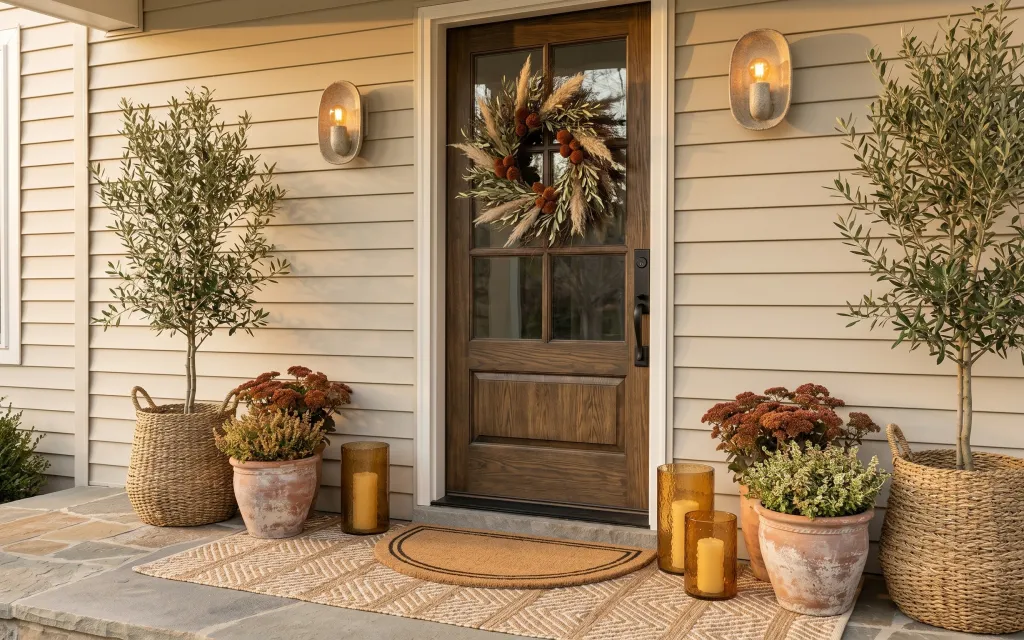
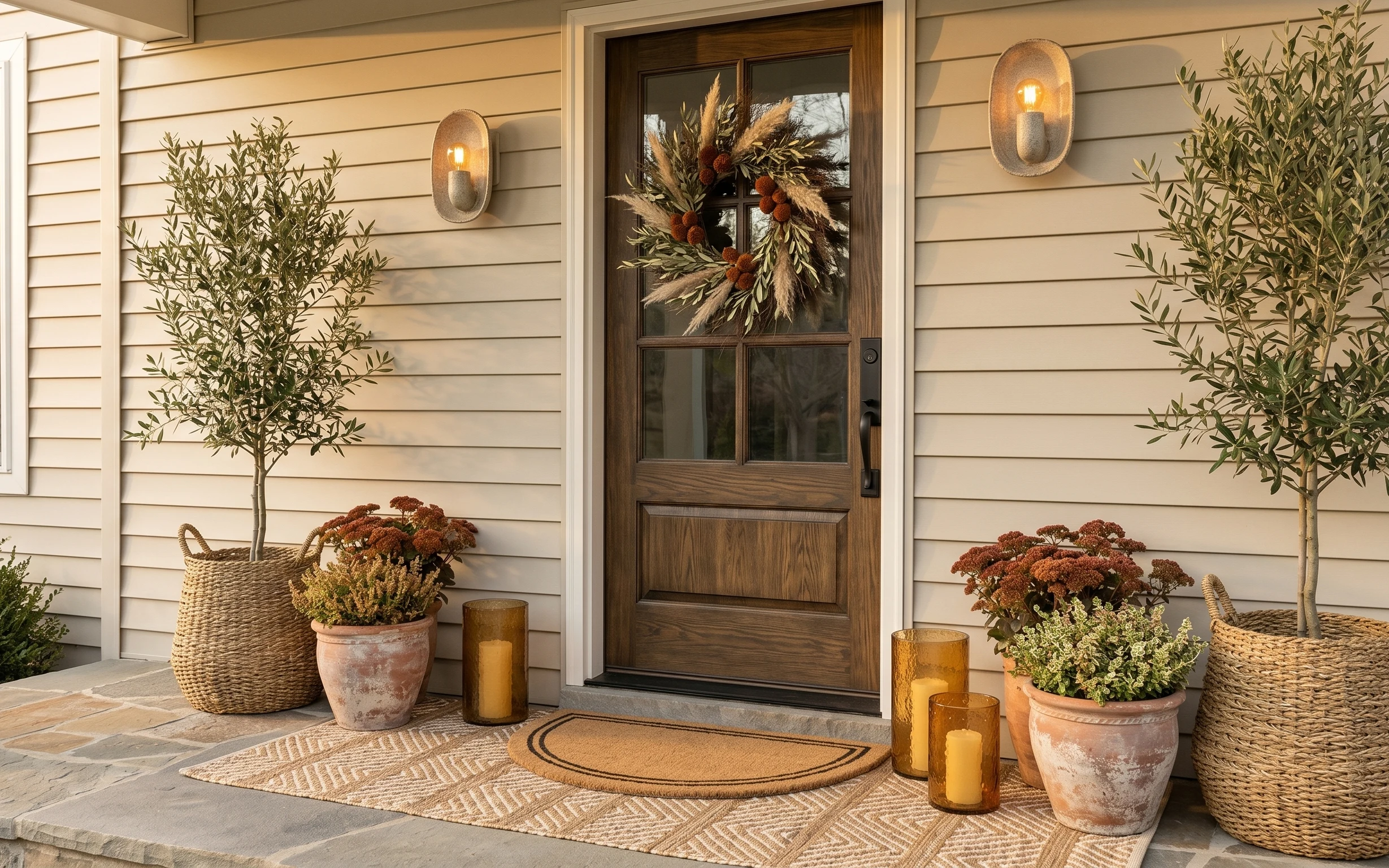
The first thing to notice here is how the warm amber glow bounces off the light tan siding while the dark wood door adds contrast. The mix of textures is doing a lot of work: a flatweave outdoor rug underfoot, glass candle holders clustered low, and terracotta pots with orange blooms that echo the wall color. I’m also paying attention to scale—those brass wall sconces are tall and centered, so the entry looks styled even when you’re walking up in daylight shadows. This is achievable for homeowners because you can choose higher-impact pieces (like the rug and wreath) rather than trying to fix everything at once.
My mistake the first time I tried this “cozy porch” look was overthinking the plants. I bought a bunch of small pots, but they scattered the eye instead of creating a real landing spot at the base of the door. What clicked was repeating materials: terracotta containers, woven texture, and the same warm metal tone from the sconces. Once the placement made sense, the decorations looked richer without being complicated.
Layer 1 — Glass candle holders with candles ($25) Low, warm light that reads at porch-step height
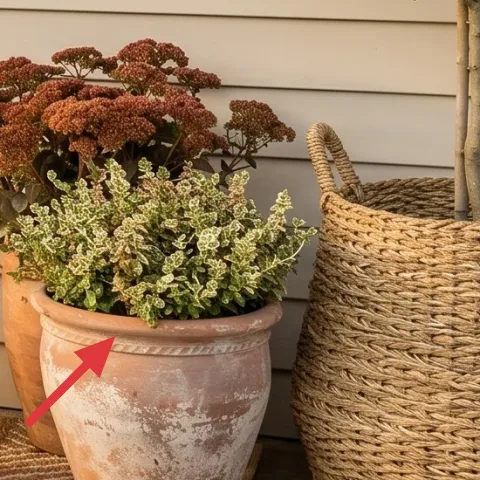
These glass candle holders bring that warm, amber “nighttime” feeling even before the sconces fully kick in. Placing them low—near the edge of the rug and on the stone porch floor—matters because your eye hits them while stepping up. I like the slightly amber glass tone because it doesn’t compete with the light tan siding; it blends into the warm palette. The trade-off is that candle holders work best as a deliberate cluster, not as single lonely pieces spread around. Keeping them together also makes the entry feel curated, not random.
Cluster at the rug edge
When candles sit close to the rug, the porch reads as one “styled zone,” not separate decor islands.
Layer 2 — Terracotta planter pot with small greenery ($30) A clay base that repeats the wreath palette
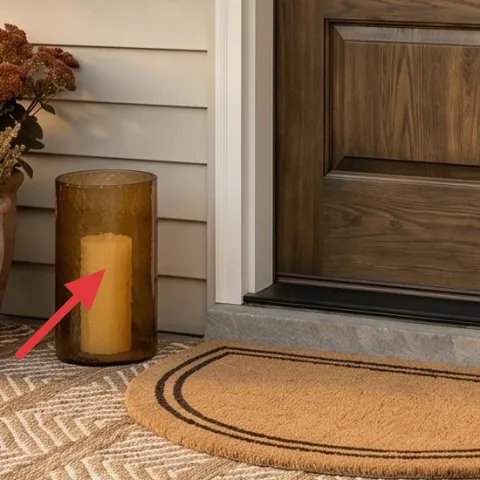
This terracotta planter pot is the color anchor that keeps everything from turning too cool or too matchy. The small greenery in the pot adds texture without stealing focus from the door wreath and warm sconces. Terracotta also plays nicely with the rug’s woven look—both feel tactile and lived-in. The obvious alternative would be buying a single matching pot for every side, but repetition like that can flatten the scene. One terracotta pot paired with other basket-and-pot textures keeps it layered while still pulling the entry into a cohesive warm theme.
Let foliage do the shading
If the flowers are seasonal, greenery keeps the pot looking intentional even when bloom timing shifts.
Layer 3 — Large woven basket planter ($50) Woven texture that looks good from the sidewalk
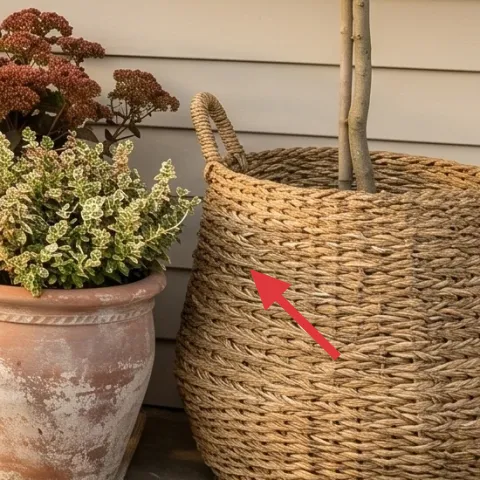
A woven basket planter is the quickest way to add “porch depth” because it introduces a second texture alongside the rug and terracotta. In the hero image, the basket sits near the right side of the entry area, visually balancing the left plant mass. I’d rather use one larger woven basket than several small ones because one bigger piece reads at walking speed. The trade-off is that woven planters look best when they’re not overfilled—leave some breathing room so the basket texture remains the star. It’s an easy way to get that styled look without buying anything complicated.
Keep it large and intentional
One bigger woven planter usually looks more designed than a cluster of tiny baskets.
Layer 4 — Brass wall sconce light with amber bulb ($80) Vertical warmth that centers the entry
Wall sconces are doing more than lighting—they’re shaping the entry’s composition. This brass wall sconce with an amber bulb creates a warm vertical “column” on the siding, which makes the door area feel framed. I like brass here because it ties to the amber candle glass and keeps the whole palette in the same temperature family. The trade-off with sconces is you’re committing to placement, so you’ll want to match height and symmetry if you add more than one. If you’re swapping existing fixtures, this still counts as a weekend-friendly change for many homeowners.
Watch bulb color temperature
Choose a warm bulb (not daylight white), or the porch will start looking gray instead of amber.
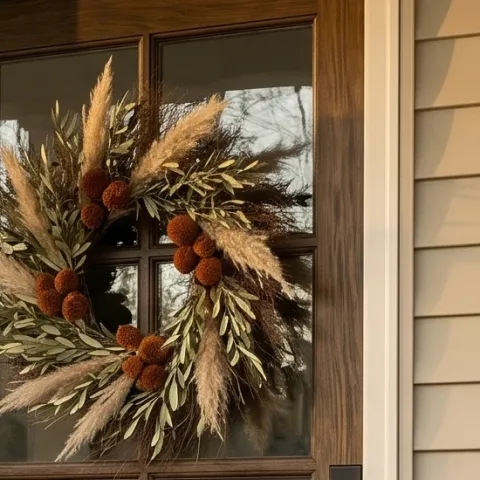
Layer 5 — Floral wreath decoration on the front door ($120) The focal point your eye finds first
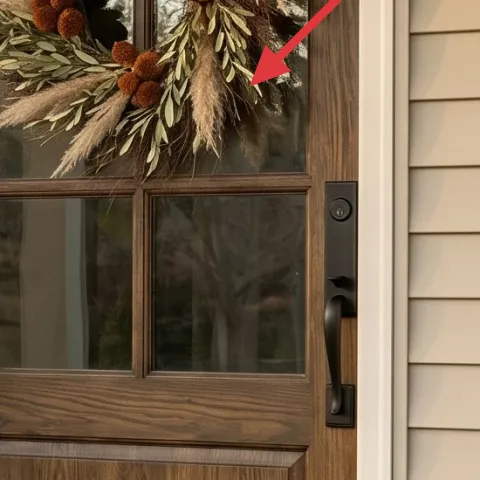
The wreath is the visual headline: it sits directly on the front door and gives you an instant seasonal story without touching the rest of the porch. In this look, the floral mix has warm orange-brown tones and silvery foliage accents, so it echoes both the terracotta planters and the warm lighting. I’d pick a wreath like this over a smaller ornament because the door is the tallest, most noticeable surface. The trade-off is storage—wreaths take more space than individual decor pieces—so treat the purchase as a “one-and-done focal” you can swap seasonally if you want variety.
Match metals across the entry
Wreath color is flexible, but warm metal tones on the sconces make the whole palette feel connected.
Make it instead of buying it
DIY the terracotta pot look with simple paint layering so the orange-flower planter matches the warm siding tones.
Materials
- Spray primer — 1 can — home improvement store — $12
- Terracotta/orange ceramic paint — 1 pint — paint store — $18
- Matte clear topcoat — 1 can — paint store — $15
- Painter’s tape + drop cloth — 1 kit — hardware store — $8
- Fine sandpaper (150–220 grit) — 1 pack — hardware store — $7
Steps
- Rough up the terracotta surface with fine sandpaper so paint grips evenly.
- Wipe away dust with a dry cloth and mask any plant-contact areas.
- Spray primer in thin coats, letting it dry completely between coats.
- Apply terracotta/orange paint in light layers until coverage matches the look.
- Let paint dry fully, then lightly scuff if you want a more aged, porous finish.
- Spray matte clear topcoat in even passes and let it cure per the can.
Layer 6 — Terracotta planter pot with orange flowers ($60) Painted clay that makes the flowers look intentional
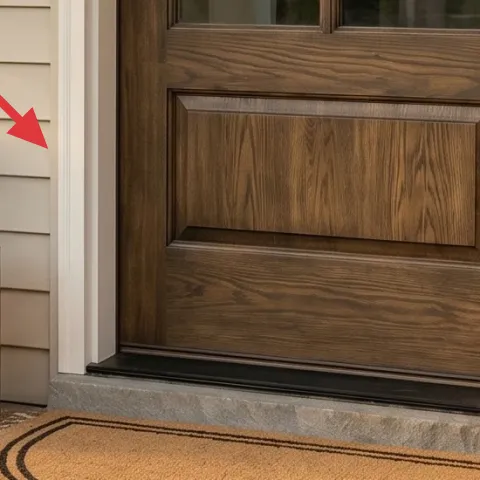
This layer is all about making the pot itself do some styling work. When the terracotta matches the warm tones in the wreath and rug, the orange flowers look richer instead of “randomly placed.” I chose a painted-clay approach because it’s a controlled way to unify the palette without needing the exact same planter shape in every size. The trade-off is prep time: you’ll want to sand and prime so the finish holds up outdoors. If you’d rather skip DIY, buying a pre-aged terracotta-look pot is the fast path—but you’ll usually spend more per piece.
Dry-fit before you commit
Arrange the pot and candles on the rug first, then paint only when the placement feels right.
Layer 7 — Outdoor area rug ($200) The anchor that connects stone, plants, and door
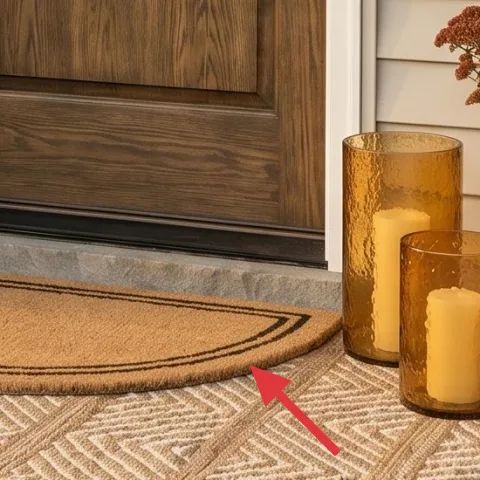
An outdoor rug is what turns an entry into a “scene.” In the photo, the flatweave pattern sits on the stone porch floor and visually softens the hard surfaces, while the warm beige tone keeps the entry from feeling too stark. This is the part I’d pick over swapping porch columns or adding extra decor, because it changes how everything else reads—especially at dusk when you’re focused on lighting. The trade-off is that rugs take the most measuring, so you want the rug to sit fully within the zone and not curl at the edges. Once it’s right, the whole porch looks styled from the sidewalk.
Give it a “landing zone”
Center the rug under the front-door landing area so the wreath and plants feel supported.
The cost, layer by layer
| Layer | Item | Cost |
|---|---|---|
| 1 | Glass candle holders with candles | $25 |
| 2 | Terracotta planter pot with small greenery | $30 |
| 3 | Large woven basket planter | $50 |
| 4 | Brass wall sconce light with amber bulb | $80 |
| 5 | Floral wreath decoration on the front door | $120 |
| 6 | Terracotta planter pot with orange flowers (DIY equivalent) | $60 |
| 7 | Outdoor area rug | $200 |
| Total | $565 | |
If the rug budget needs to breathe, go for a smaller size or a lower-profile indoor/outdoor weave—keeping the same warm beige family. You’ll lose a little of the “anchored zone” effect, but the candle cluster and door wreath still carry the entry.
What worked, what didn't (across the whole room)
The biggest win was creating one cohesive warm palette: brass amber lighting, terracotta planters, and a flatweave rug all reinforce the same temperature and texture. The only things that felt slightly fussy were plant quantities and spacing—too many small items can make the entry look crowded instead of intentional.
What worked
- The brass wall sconce with an amber bulb made the entry look styled even at dusk.
- The door floral wreath gave a clear focal point, so the rest of the porch could stay simple.
- The flatweave outdoor area rug softened the stone pavers without hiding the farmhouse vibe.
- Low glass candle holders added a second warm light source at step height.
- Terracotta planters repeated the wreath tones, making the orange blooms look more intentional.
- The woven basket planter brought a second texture that balanced the rug pattern.
What didn't
- Overloading every corner with small pots made the entry feel busy instead of layered.
- If the candles are spaced too far from the rug, the porch reads as separate decor spots.
- A wreath that’s too cool-toned would fight the brass lighting and look off at night.
- Using a rug with a stark contrast (too dark or too bright) can overpower the warm siding.
- Plant heights that don’t vary can flatten the doorway area visually.
What we'd skip if we did it again
Skip buying lots of tiny decor pieces to fill “empty space.” On a porch entry, spacing does more than accessories—keep to a candle cluster, a couple of planters, and one door focal point.
Skip mismatch lighting temperatures. If bulbs aren’t warm, brass and terracotta look dull and the porch loses the cozy dusk effect.
Skip a rug that’s too small for the landing zone. If the rug doesn’t sit fully under the entry staging area, the stone floor stays visually dominant and the whole look feels less intentional.
Frequently asked
How long does a front porch entry refresh like this take?
Plan for about 4–7 hours. Shopping and measuring can be the slow part, especially for the rug. Styling itself is usually quick: set the rug first, place the wreath and candle cluster next, then build outward with the planters and wall light. If you add paint to pots, add another 1–2 hours spread across drying time.
What if I rent and can’t swap wall sconces?
Keep the sconces if they’re staying put, and focus on the rug, candle cluster, and planters—those do most of the heavy lifting visually. For lighting without wiring, a battery candle or plug-in outdoor lantern placed near the door can mimic the warm amber effect. The main goal is one warm tone repeated in two places: candles and bulbs.
My porch is smaller—how do I scale this down?
Choose one large focal instead of multiple matching items: one wreath, one main planter grouping, and one rug sized to cover the landing zone. If you can’t fit two sides’ worth of plants, place the taller pot on one side and keep the other side to a single medium terracotta pot. Candles can stay, but keep them clustered so they look intentional.
Where should I shop for the rug and planters on a budget?
Look for outdoor rugs at home improvement stores and big-box retailers during seasonal clearance; flatweave patterns in warm beige are common. For planters, garden centers and craft stores often have terracotta-look pots and woven baskets at better prices than decor boutiques. For the wreath, seasonal sales can cut the price significantly—buy early and store it flat.
What’s the biggest mistake with porch entry styling?
The biggest mistake is placing items without a staging zone. If candles, planters, and the rug aren’t visually connected, everything looks scattered. Start with the rug position, then cluster low light (candles) near the rug edge, and finally balance the doorway with taller plant mass on both sides or one side if you must.
Can I use this same palette year-round?
Yes. Keep the warm tan base—rug tone, terracotta containers, and brass amber lighting—and swap only the door focal (the floral wreath) seasonally. That way the porch stays consistent while the decorations change. When the foliage is evergreen-looking, your entry also holds up longer between seasonal refreshes.
More in Outdoor & Patio
Under $600: warm tan-and-brass front porch entry refresh
Refresh a front porch entry with warm tan texture, brass-toned lighting, and layered planters. This $600 weekend makeover focuses on the ru…
Under $500: string-lit patio refresh with 7 move-ready swaps
A warm string-lit patio makeover that leans into terracotta planters, a round jute rug, and cozy throw pillows—without drilling or permanen…
Under $400: patio dining refresh with 7 move-ready swaps
A patio dining setup can feel styled without major changes—this $400 refresh leans on a blue-and-cream rug, soft bench textiles, and small …