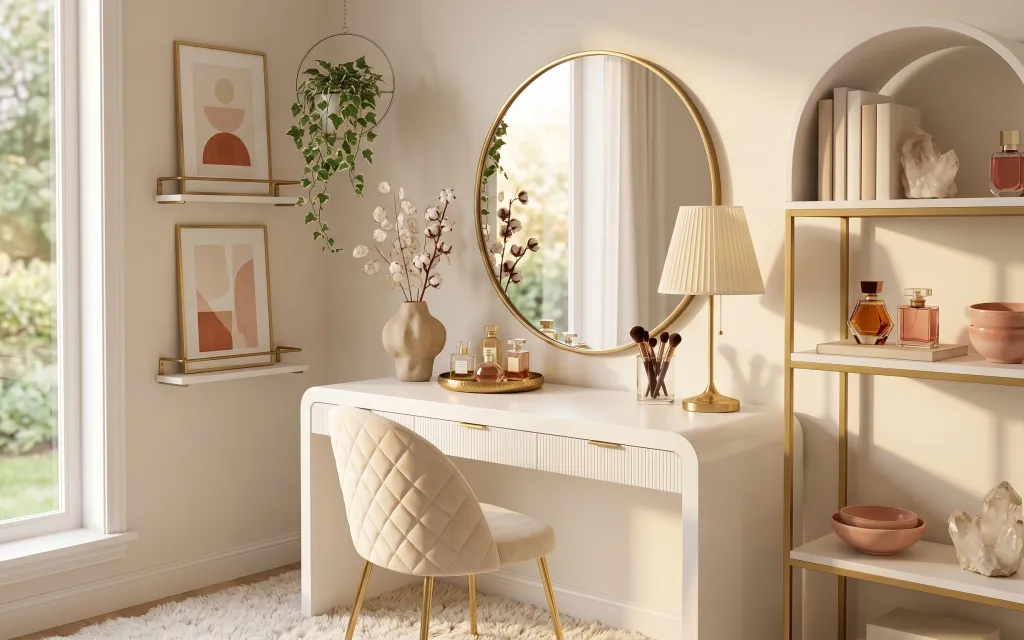
- Square footage
- Best in 50–150 sq ft corners
- Cost
- Total $520 (under $600)
- Difficulty
- Easy: mostly sourcing + styling
- Renter-safe
- Yes: no painting or drilling
Why warm terracotta-and-brass accents are the vanity shelf nook of 2026
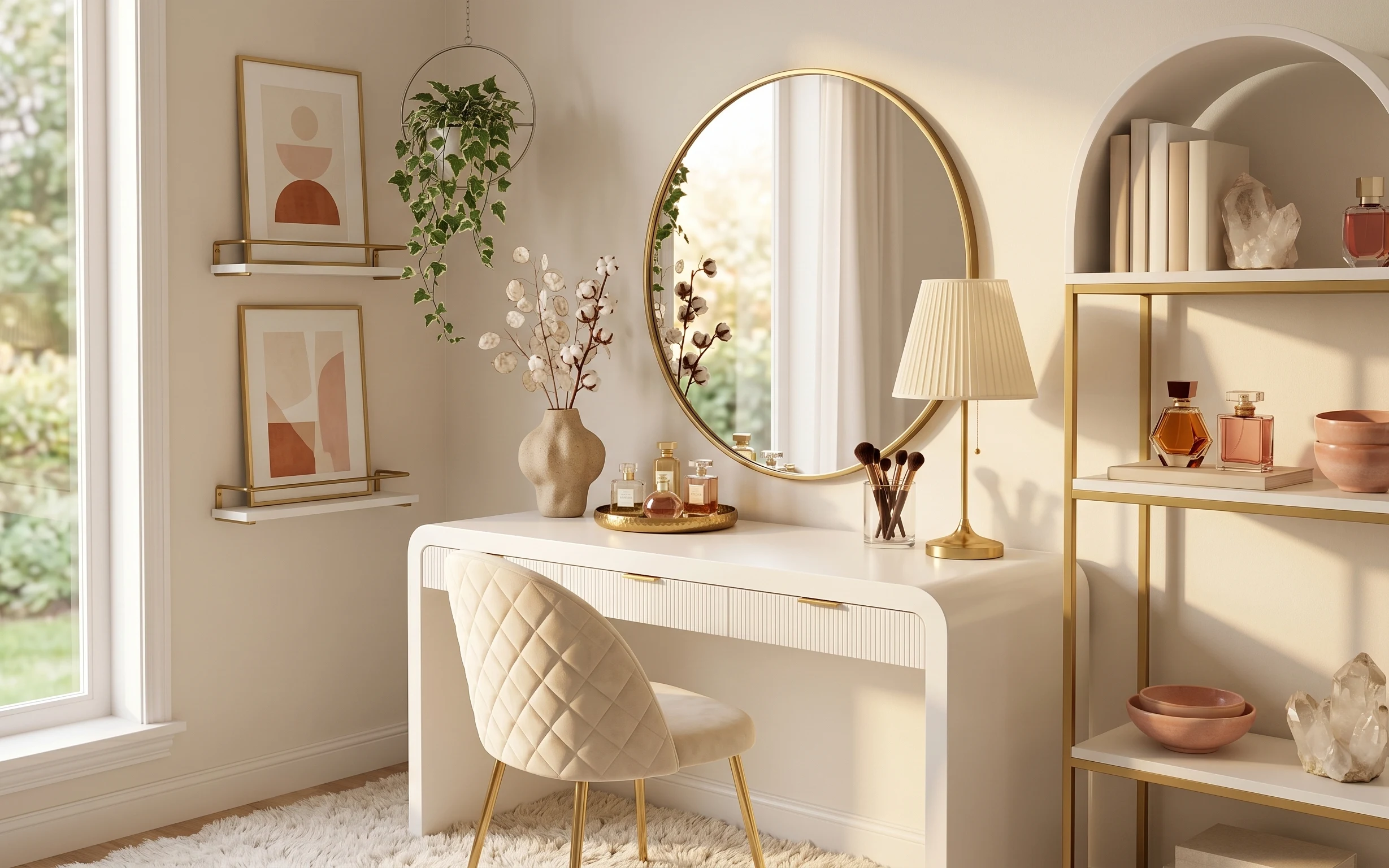
This photo nails a warm-minimal feel by pairing a round gold mirror with soft, creamy textiles and that terracotta-orange note on the console. You can see the texture mix in the white shag rug, the off-white chair cushioning with diamond stitching, and the lamp’s pleated shade that diffuses daylight. Even with landlord-fixed walls, the look stays cohesive because the styling items repeat the same materials: gold metal, warm beige, and muted terracotta. It’s achievable on a renter budget because everything here is either freestanding, plug-in, or easy wall-safe mounting.
I used to overthink “matching,” and I’d buy too many identical pieces. What changed my mind here was noticing how the scene stays intentional without being perfect: one statement mirror, one main plant, and everything else as supporting texture. The second mistake I caught myself making in my own place was skipping warm light—so the plug-in lamp is part of the design, not an afterthought.
Layer 1 — white shag area rug 5×7 ($120) Texture underfoot that reads instantly cozy
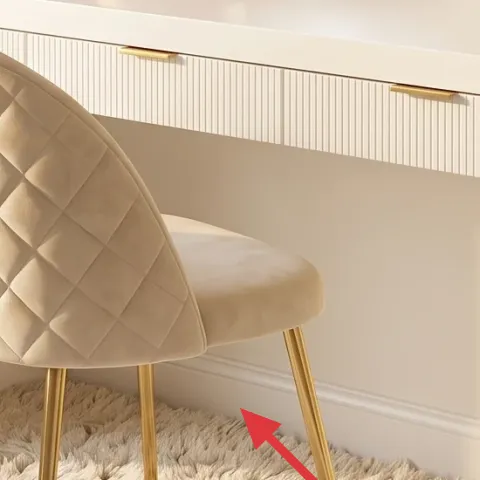
A white shag area rug does the heavy lifting for this niche—right away, it softens the hard lines of the console shelf and makes the chair feel more “designed” than temporary. In a small-space corner, rugs also help your eye stop at the vignette instead of bouncing around the room. I’d pick a 5×7 so the chair front and the rug’s plush pile feel connected, even when the console is the focal point. The trade-off is that light color shows lint faster, so a quick shake and a handheld vacuum pass matter.
Layer for contrast
Keep the rug bright while choosing warm metals (brass/gold) and beige walls—high contrast makes the whole nook feel edited, not cluttered.
Layer 2 — framed abstract art print on left wall ($80) One grounded print with warm geometry
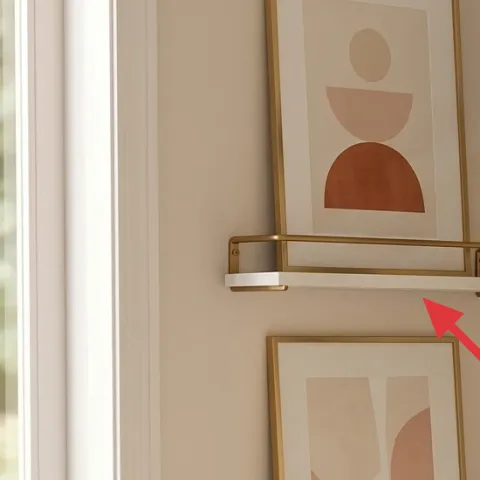
The framed abstract art print adds that modern, architectural “breathing space” on the left wall. It works because the shapes echo the color system already present—warm beige with terracotta-orange blocks—while the gold frame mirrors the console hardware vibe. For renters, the big win is flexibility: you can swap prints later without touching the wall. Choose a print with soft neutrals rather than high-contrast black so it doesn’t fight the mirror’s glow. The trade-off is size—if you go too tiny, the wall shelf area looks sparse.
Go for matte over glossy
Matte finishes reduce glare from daylight, which keeps the art reading calm next to the round mirror.
Layer 3 — round gold-framed mirror ($120) A reflective focal shape that enlarges the nook
A round gold-framed mirror makes the whole vanity shelf nook feel bigger because it pulls light across the wall and adds a second “curve” to balance the console’s straight lines. It also keeps the palette tight: the gold echoes the lamp base and console accents, so the room reads coordinated instead of random. I’d go with a mirror large enough that the reflection impacts the chair and rug zone, not just the wall behind the console. The trade-off is glare—if your light hits the frame at an angle, position your lamp so the shade softens the reflection.
Skip heavy, ornate frames
In a small nook, a very busy frame can visually crowd the plant and dried stems. Choose clean gold for breathing room.
Layer 4 — plug-in table lamp with white pleated shade ($60) Warm light that flatters the terracotta
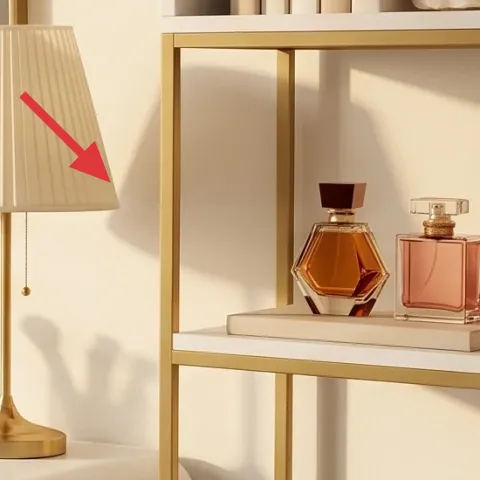
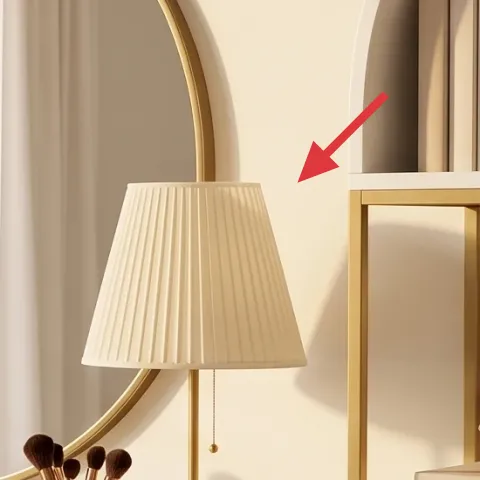
The plug-in table lamp with a white pleated shade gives you that soft, creamy glow that makes terracotta-orange accessories look richer instead of flat. It also adds “height” to the styling: the mirror pulls you in, then the lamp draws your gaze back down to the tray and perfume bottles. For this setup, I’d keep the lamp base in warm metal tones so it visually links to the mirror frame. The trade-off is choosing bulb temperature—cool bulbs make the beige feel gray, while warmer bulbs keep the scene cozy.
Choose warm bulb light
Use a warm white bulb (around 2700K) so the beige walls and terracotta accessories look consistent.
Layer 5 — green trailing plant in circular metal stand ($60) A vertical “living” layer above the console
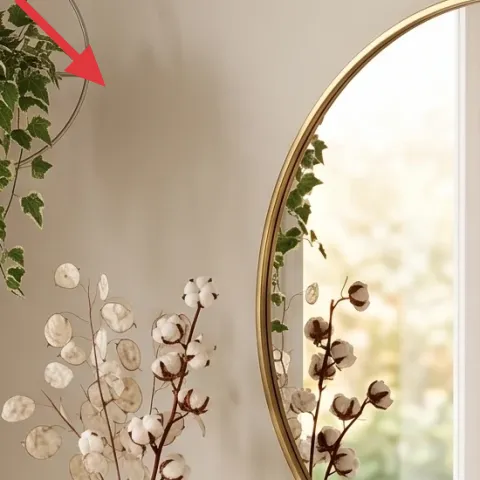
The green trailing plant in a circular metal stand adds movement and keeps the vignette from feeling purely decorative. It also balances the mirror’s big round shape with an organic, leafy silhouette—so the nook feels styled, not staged. I like putting the plant where it can overlap the visual space between the mirror and the console, because that’s where it reads most intentional. When choosing a renter-friendly version, look for a stand that’s stable without assembly into the wall. The trade-off is upkeep: you’ll want to trim and dust leaves so the plant stays crisp.
Dust the leaves lightly
Leaf dust makes greens look dull. A quick wipe keeps it looking fresh next to bright white textiles.
Layer 6 — foraged dried floral arrangement in ceramic vase ($45) Soft stems that look styled for months
Make it instead of buying it
This DIY recreates the airy dried-stems look in the ceramic vase using foraged stems and simple arranging—so it costs less than a boutique dried set.
Materials
- Foraged dried stems bundle — approx. 1 bundle — $5
- Ceramic vase (to match your style) — 1 — $15
- Floral tape — 1 roll — $6
- Twine or ribbon tie — 1 spool — $4
- Optional: paper-wrapped florals cleaner cloth — 1 — $5
Steps
- Gather stems with different heights and head sizes for depth.
- Trim ends so the bundle sits level in your chosen vase.
- Tape a loose “core” bundle together with floral tape.
- Wrap extra stems around the core to create an airy, not-stiff silhouette.
- Set the bundle in the vase and re-adjust heights until the top looks full.
- Tie the stems lightly at the base so nothing shifts while you style the nook.
Total DIY cost: $35 — saves about $10 over buying.
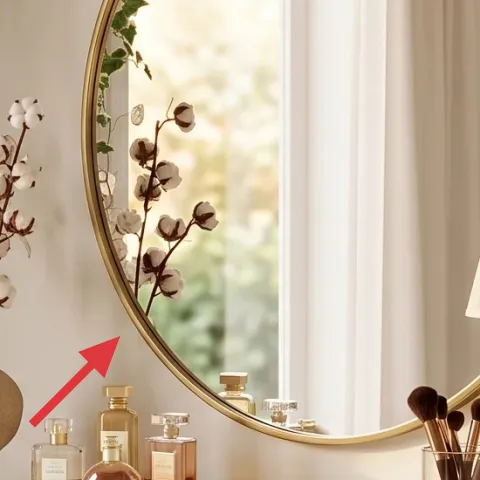
Dried florals in a creamy ceramic vase make the whole nook feel finished without needing weekly swaps. This arrangement works because it’s airy (lots of negative space), so it won’t fight the mirror’s brightness or the plant’s green mass. In the photo, the pale stems also echo the warm beige textiles, while the vase keeps the material language consistent with the console styling. If you bought a pre-made dried set, it would cost more and usually offer fewer height variations. The main trade-off with foraging is variety—each batch looks slightly different, which is exactly why it feels collected.
Build height in layers
Mix one tall stem, a few medium stems, and shorter “fill” stems so the top looks intentional, not flat.
Layer 7 — gold decorative tray on console shelf ($35) The organizing surface for small styling
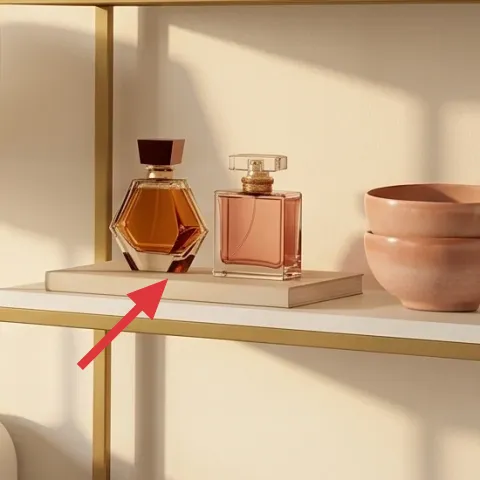
A gold decorative tray is the difference between “stuff on a shelf” and a cohesive vignette. It gives you a boundary for grouping bottles, a candle jar, and small accessories, which keeps the console from looking busy in a narrow nook. Because it’s reflective metal, it also ties into the mirror frame and lamp base without adding new colors. I’d use a tray with a warm gold tone so it doesn’t turn the terracotta accessories muted. The trade-off is that shiny surfaces show fingerprints—quick wipe with a microfiber cloth keeps it looking crisp.
Group by height
Put the tallest bottle or vessel in the back, then stack shorter items in front so the tray reads layered.
The cost, layer by layer
| Layer | Item | Cost |
|---|---|---|
| 1 | White shag area rug 5×7 | $120 |
| 2 | Framed abstract art print (8×10 or 16×20) | $80 |
| 3 | Round gold-framed mirror | $120 |
| 4 | Plug-in table lamp with white pleated shade | $60 |
| 5 | Green trailing plant in circular metal stand | $60 |
| 6 | Foraged dried floral arrangement in ceramic vase (DIY retail equivalent) | $45 |
| 7 | Gold decorative tray | $35 |
| Total | $520 | |
If your rug budget is tight, choose a textured cream runner instead of a shag 5×7. Keep the rest of the palette the same (gold mirror, warm lamp, terracotta accents) so the nook still reads coordinated without needing the plush base.
What worked, what didn't (across the whole room)
This look works because it repeats a small set of materials—gold, warm beige, and terracotta—while adding texture in three places: rug, lighting, and styling objects. The mirror and lamp also do double duty by shaping light and scale in a compact zone.
What worked
- The white shag rug creates a soft anchor that makes the chair feel intentional, not borrowed.
- The round gold mirror adds light bounce and visually smooth curves next to straight console lines.
- The plug-in lamp’s pleated shade prevents harsh glare and makes terracotta accessories look richer.
- The plant’s trailing shape fills vertical space without needing wall drilling.
- The tray organizes bottles and small decor so the console reads like a vignette, not a catch-all.
- The dried stems keep the styling “done” for weeks, even when life gets busy.
What didn't
- A mirror frame that’s too ornate makes the plant and art feel crowded in a small corner.
- If the lamp bulb runs cool, warm beige shifts gray and the terracotta looks flat.
- Skipping a tray turns the perfume and candle items into a visual pile.
- Going too small with the framed print leaves empty wall space around the mirror’s glow.
- Using a very high-pile rug that’s overly bright can reflect window light more than you want.
What we'd skip if we did it again
Skip buying multiple small wall pieces to “fill in” the left wall. One framed abstract print (with a warm gold frame) is enough to echo the mirror and keep the corner from feeling busy.
Skip a cool-white lamp bulb. Paying attention to bulb temperature keeps terracotta orange accessories looking warm instead of washed out under the pleated shade.
Skip adding too many separate styling containers. Instead, center everything on the gold tray and vary only heights—so the console reads curated even in a tight footprint.
Frequently asked
How long does a refresh like this usually take?
Most people can source the main pieces and style the nook in a single afternoon. Expect about 30–60 minutes for rug placement and lamp positioning, plus 20–40 minutes to arrange the tray, bottles, and dried stems. If you DIY the dried florals, plan another hour for trimming and layering stems in the vase.
Is this renter-friendly if my lease won’t allow permanent changes?
Yes—this approach avoids painting, drilling, and replacing fixtures. The core look comes from freestanding items (rug, mirror, lamp, plant) and swap-in decor (framed art and styled objects). When you move out, you can pack everything up without leaving holes or changed surfaces.
What if my nook is smaller than the photo?
Go smaller on the rug width first, then keep the mirror as the main focal point. Use the same layering strategy—plant vertical mass, mirror reflection, tray as the organizing boundary—so the visual rhythm stays intact. Consider one framed print rather than two to avoid overfilling the wall.
What if I have more space and want it to feel bigger?
Add one more light-height element: either a second framed print on the left wall or a taller plant variation, but keep it within the same gold/beige/terracotta palette. If you have the wall space, a slightly larger mirror can help the reflection scale up to the room.
Where should I shop for items like the mirror, plant stand, and tray?
For the mirror and lamp, check retailers that specialize in plug-in lighting and decorative mirrors, since you’re matching materials (gold frame + warm bulb). For the plant and tray, home decor and craft stores are usually the fastest route—look for warm metallic finishes and trailing greens that feel natural.
What’s the biggest mistake people make in a small vanity shelf nook?
Overstuffing without a system. If you place multiple items directly on the shelf without a tray boundary, the vignette turns into a pile. The fix is simple: use one organizing surface (the tray), keep a consistent color palette, and build height in layers so it reads intentional from across the room.
More in Small Spaces
Under $600: warm terracotta-and-brass small-space refresh
A warm, japandi-leaning vanity shelf nook makeover using 7 move-ready swaps, all renter-safe and no-drill. The look centers a round gold mi…
Under $500: stair-entry credenza refresh with soft blush accents
A staircase entry can feel finished without landlord permission. This under-$500 refresh uses a patterned rug, a long credenza styling layo…
Under $300: move-ready shelf nook styling for shared housing
A renter-friendly shelf nook refresh for shared housing: seven move-ready swaps that lean on earthy glass, woven storage, and a pressed-flo…