- Best for
- one big weekend bedroom change
- Cost
- about $700
- Difficulty
- Confident DIY
- Time
- about a long weekend
Why warm wood-and-cream bedroom styling is the bedroom reading nook of 2026
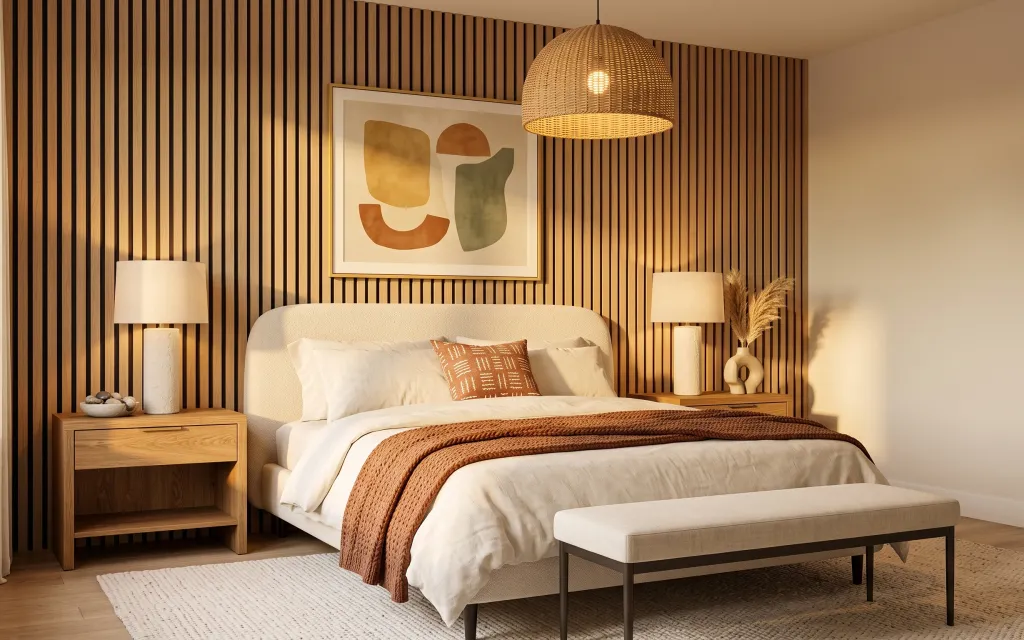
The first thing you notice here is the wood slat accent wall—vertical lines that already give structure. Then the room gets softer with cream upholstery, crisp white bedding, and that caramel-brown throw draped low like a casual invitation. The woven pendant adds a lighter, hand-made texture above the headboard, while the rug and curtains keep everything from feeling too “designed.” For homeowners refreshing fast, this is one of those makeovers where you don’t fight the architecture—you style around it.
I used to overthink “matching” in my own places (especially curtain color and art tones), and I kept ending up with rooms that looked too coordinated. This time I’d rather repeat materials—wood warmth, natural fibers, and creamy off-whites—than chase exact shades. That’s why the rug reads as grounding, the curtains fall in clean verticals, and the small vase keeps the nightstands from looking bare.
Layer 1 — area rug ($200) warms bare flooring and hides day-to-day mess
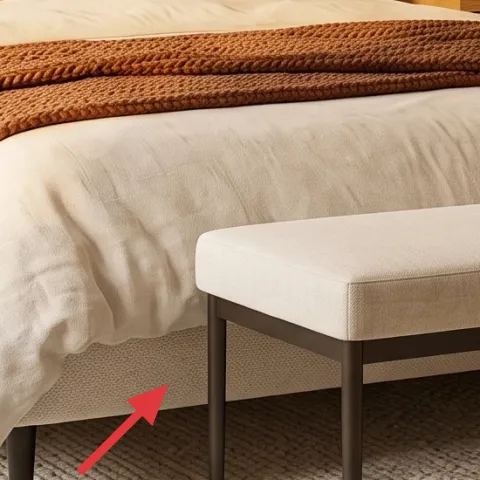
This area rug anchors the bed and makes the whole bedroom feel intentional, even with a bold wood slat wall behind it. In the photo, the rug’s light neutral tone works like visual glue between the cream bedding and the warm wood nightstand. The best alternative—skipping a rug or choosing a thinner one—would leave you with that “bare floor” feel, especially where foot traffic and dropped items happen. A rug like this also helps the bed look less floating and more grounded. Trade-off: you’ll want a rug pad so it doesn’t creep and curl at the edges.
Layer the rug first, then match the curtain height
Choose curtains that hit around where you visually want “floor-to-ceiling” to start; the rug sets that baseline.
Layer 2 — curtains ($80) add height and soften the vertical slat wall
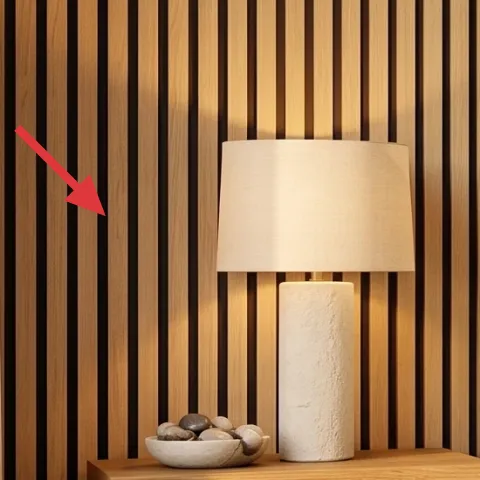
The curtains on the left side do more than add privacy—they counterbalance the strong vertical rhythm of the wood slats. With the cream fabric, they echo the bedding’s brightness while staying neutral enough to let the art and lighting do the talking. If the alternative is short or skimpy window treatments, the room starts to feel chopped up, and the wall texture looks even louder. Hanging long and airy gives you that “tailored” look without needing new walls or major changes. Trade-off: heavier curtain fabric holds shape better, but it’s also slightly more expensive than basic sheers.
Keep the fabric light, not shiny
A matte weave reads more expensive next to natural wood than anything glossy.
Layer 3 — nightstand ($80) gives you real storage and a styling surface
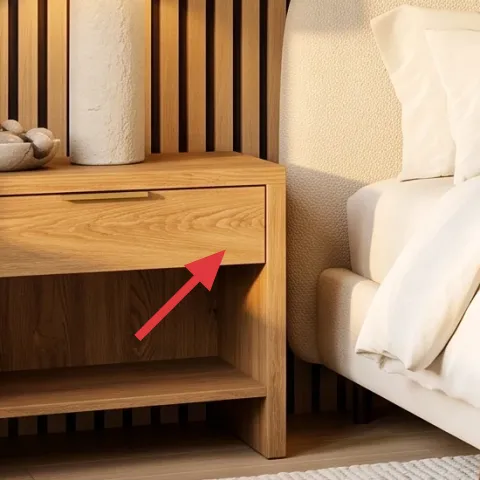
This nightstand is doing double duty: it provides a place for small decor and it visually ties into the warm wood tones of the slat wall. The clean, simple shape keeps the look modern, while the wood grain adds warmth you can’t replicate with plastic-look furniture. The alternative—using a tiny table or a spare shelf—can leave the bed area looking unbalanced, especially when the pendant lamp and framed art already pull your eye upward. A real nightstand also makes the room functional, not just pretty. Trade-off: matching the height to your bed matters more than matching the exact wood finish.
Style one surface, not both
Pick one nightstand to feel “curated” and let the other stay calmer so the bed stays the focus.
Layer 4 — table lamp ($60) creates warm pools of light next to the bed
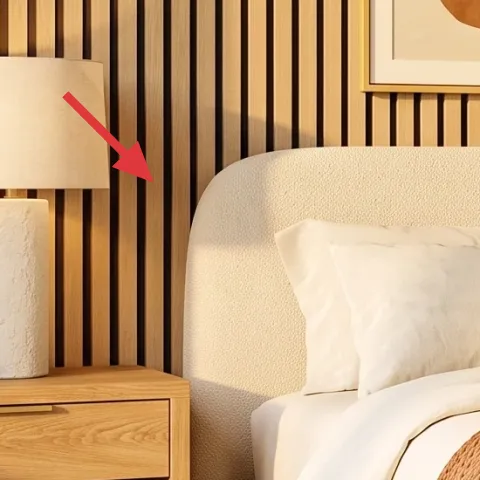
The table lamp’s soft shade and warm glow are key because bedroom lighting has to be layered, not just overhead. Here, the lamp repeats the natural-fiber vibe of the woven pendant, so the light feels cohesive instead of mismatched. If you chose a colder LED-style lamp, it would fight the wood and make the room feel flatter. The shade also matters: a fabric look diffuses better than glossy metal, especially when the background is busy with slats. Trade-off: fabric shades can collect dust faster, but a quick wipe keeps them looking fresh.
Don’t let the lamp sit too far forward
If the shade pushes toward the bed edge, it interrupts that clean bedside line and feels awkward at night.
Layer 5 — framed abstract wall art ($80) adds color without breaking the neutral palette
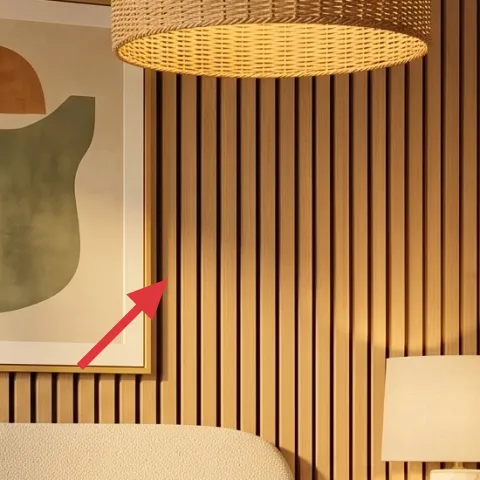
The framed abstract wall art is the “palette anchor” in this room—soft shapes with earthy tones that play nicely against cream bedding and warm wood slats. Because it’s centered over the bed, it makes the bed wall feel designed rather than incidental. The most tempting alternative is choosing art that’s either too bright or too small; both can look random next to a strong architectural feature. Instead, this art reads intentional because it has multiple earth tones, but it still keeps the overall feel light. Trade-off: abstract art is less forgiving than landscapes—if it’s the wrong color family, it will clash immediately.
Match art scale to headboard width
Centering matters, but a similar visual width to the bed keeps the wall from feeling underfilled.
Layer 6 — woven pendant lamp ($120) brings texture overhead without adding clutter
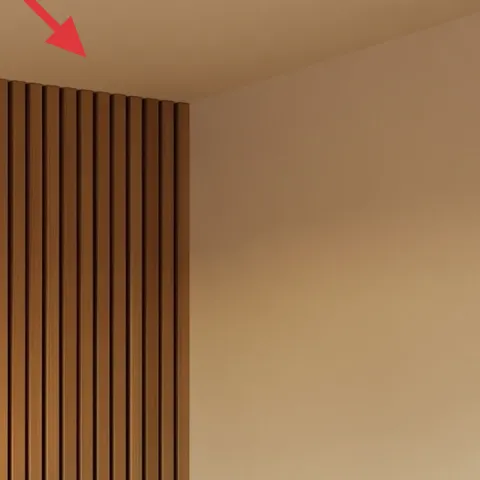
The woven pendant lamp adds texture at a height where your eye naturally rests, so it makes the room feel styled from top to bottom. Its warm basket weave echoes the natural materials elsewhere—wood, fabric curtains, and the tactile bedding layers—without competing with the wood slat wall. Swapping to a plain glass or a sharp metal shade would make the ceiling area feel more “product-like” and less organic. Trade-off: woven lamps cast a softer, less directional light, so they’re best paired with a bedside lamp for reading.
Pick a pendant diameter that doesn’t swallow the art
If it’s too large, it competes with the framed piece; too small, and it disappears above the bed.
Layer 7 — small vase ($30) adds a finishing touch on the nightstand
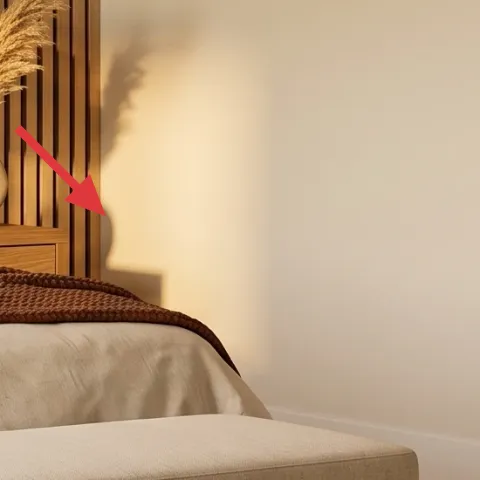
The small vase is tiny but it’s doing a lot: it breaks up the wood surface so the nightstand doesn’t look like a shelf with items dumped on it. Paired with the dried pampas look, it also reinforces the natural materials theme—wood + plant texture + warm neutrals. Buying a similar vase is the easiest move, but you can also personalize it so it matches your exact room palette. The alternative—leaving the nightstand empty—makes the whole bed wall feel more finished, but the bedside feels unfinished. Trade-off: keep it to one “hero” object and one filler so it stays airy.
Make it instead of buying it
This DIY paints a small vase to match the room’s warm cream-and-wood palette so it looks like it belongs from day one.
Materials
- Ceramic paint (or all-in-one craft paint for ceramic) — 1 bottle — craft store — $12
- Etching primer — 1 small can — hardware store — $8
- Foam brushes — 2-pack — craft store — $4
Steps
- Degrease the vase with a damp cloth, then let it dry fully.
- Apply etching primer in thin coats, covering the whole surface.
- Let the primer cure according to the can (usually overnight).
- Paint with the ceramic paint in 2–3 thin coats, letting each coat dry between applications.
- Let the final coat cure long enough to resist scuffs from handling.
- Place the vase with the dried pampas so the silhouette lines up with your lamp height.
Total DIY cost: $24 — saves about $6 over buying.
The cost, layer by layer
| Layer | Item | Cost |
|---|---|---|
| 1 | Area rug 5×7 (cream neutral) | $200 |
| 2 | Curtain panel pair (84") | $80 |
| 3 | Nightstand (wood, drawer) | $80 |
| 4 | Table lamp with fabric shade | $60 |
| 5 | Framed abstract art print (16×20) | $80 |
| 6 | Woven pendant lamp | $120 |
| 7 | Small vase (ceramic) | $30 |
| Total | $650 | |
If you want a cheaper version of this look, swap the pendant for a simpler woven shade and choose curtains that are just a bit shorter. You can also hunt for framed art during sale season—keeping the same earth-tone color family makes the whole bedroom still feel cohesive.
What worked, what didn't (across the whole room)
This bedroom refresh works because the choices repeat materials (wood, woven texture, cream fabric) instead of trying to match every single color exactly. The mix of centered wall art, grounded rug, and warm lamps keeps the room soft even with a bold slat wall. The only thing that can derail the look is lighting that runs too cool or curtains hung too short.
What worked
- The area rug anchors the bed and makes the wood slat wall feel intentional instead of overwhelming.
- Cream curtains add vertical softness and visually lengthen the window area against the slats.
- The nightstand’s simple drawer silhouette keeps the bedside modern and functional.
- The fabric-shaded table lamp creates a warm, diffused pool of light for evening reading.
- The framed abstract art adds earthy color without competing with the wood wall’s texture.
- The woven pendant repeats natural texture overhead so the room feels layered, not random.
What didn't
- If the curtains are hung too low, the slat wall reads “cut off” and the room feels smaller.
- Choosing a lamp with a cool white bulb temperature can make the whole palette look gray.
- Art that’s too small over the bed makes the center feel blank even with good lighting.
- An overstuffed nightstand layout makes the room feel busy next to a textured wall.
- Skipping a rug (or using a thin one) leaves the bed area feeling disconnected from the floor.
What we'd skip if we did it again
Skip tiny, narrow nightstands. They can look cute at first, but in a room with a strong wood feature wall, they make the bed feel oversized and the bedside feel underbuilt. A nightstand with some visual weight balances the scale and gives you a real styling surface for the lamp and vase.
Skip pendant shades that read glossy or overly reflective. Even when the shape is nice, glare and hard light bounce can clash with the warm wood and the soft bedding textures. A woven or fabric diffused look keeps the overall mood warm and cohesive without needing extra décor.
Skip curtains that hit below the visual “start line” of the window area. Short hems leave empty wall space that makes the slat pattern feel louder. Hanging curtains higher and longer makes the whole bedroom feel taller, and it’s one of the fastest changes with the biggest payoff.
Frequently asked
How long does this kind of bedroom refresh take?
Most of the time is in the “waiting and centering” parts: hanging curtains, getting the art height right, and placing the pendant so it feels balanced above the bed. If you’re only swapping décor and doing one small paint DIY, plan on 6–10 hours across two days. Ordering ahead and measuring before you buy keeps everything from stretching into a week of delays.
What if I rent and can’t repaint or drill?
This approach still works because the highest-impact items are mostly movable: curtains, a rug, framed art, and lighting choices. For wall-safe hanging, use picture-rail hooks (if present) or other approved methods. For the DIY vase, painting is renter-friendly. The only part that’s less renter-friendly is any hard-wiring situation—stick to plug-in or electrician-installed options.
My room is smaller—what should I change?
In a smaller bedroom, keep the same material story but scale down the “visual mass.” Choose a slightly smaller rug (still sized for at least the front legs of the bed if possible) and keep the art centered but not oversized. Curtains can still go long, but avoid pooling too much fabric on the floor unless it looks intentional. A slimmer nightstand can work if it matches the bed height.
What if my ceiling is low?
Low ceilings call for fewer “horizontal” distractions. Keep the pendant tight and not too low, and make sure the art is centered with enough breathing room above the headboard. Curtains that hang close to the ceiling line (or just under it) help the wall read taller. If the room feels cramped, prioritize one statement: the wood slat wall + centered art + rug—then keep nightstand décor minimal.
Where should I shop for these exact pieces without overspending?
For the easiest wins, look for curtains and rugs from mainstream home retailers because sizing is consistent. Framed art is easiest to find in earth-tone abstractions—check sale sections and maker sites for 16×20 options. For woven lighting, browse both home stores and lighting specialty shops so you can compare shade size. The vase can be thrifted, then DIY-painted to match your palette.
Biggest mistake to avoid in a bedroom like this?
The most common issue is picking pieces that don’t repeat materials. If you mix cool metal lighting, bright white curtains, and a rug with undertones that fight the wood slats, the room starts to look scattered. Instead, match by vibe: warm cream textiles, natural fiber textures, and earth-tone accents show up in multiple places and keep everything cohesive.
More in Bedroom
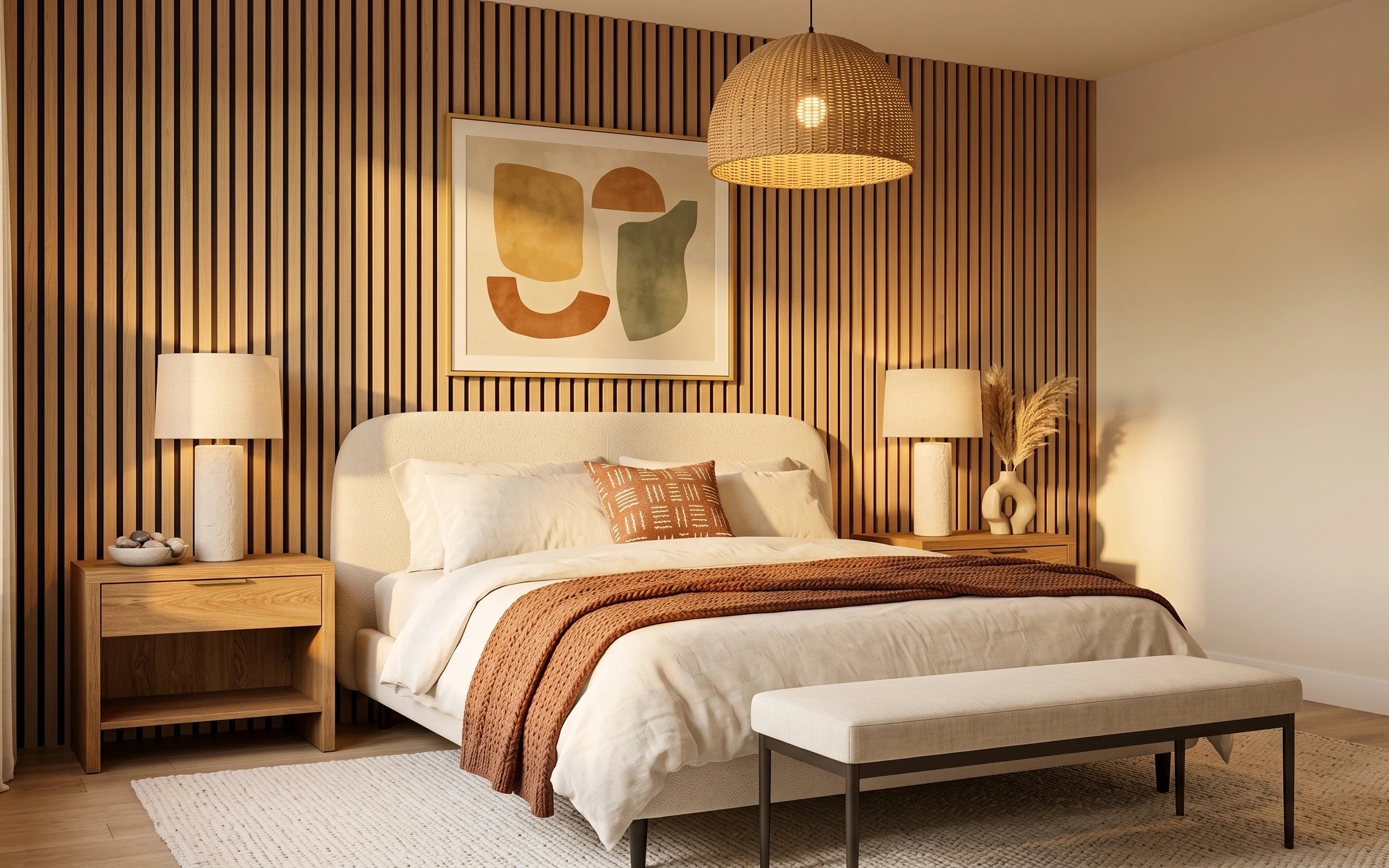
Under $700: modern organic bedroom refresh with 7 weekend wins
A modern organic bedroom refresh that leans warm and lived-in—without major construction. With a $700-ish budget, the big shift comes from …
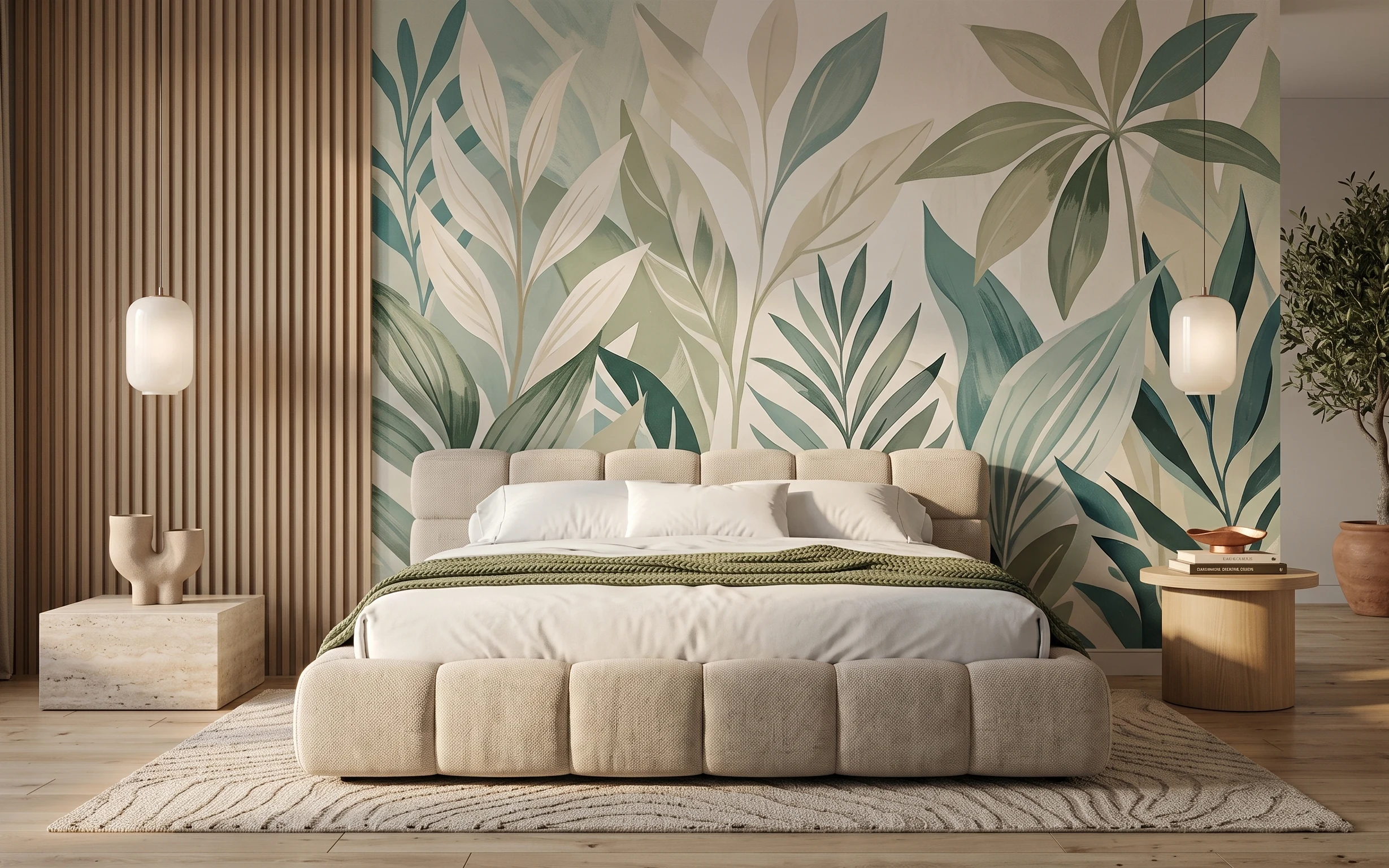
Under $500: sage-leaf bedroom refresh with 7 renter swaps
A sage-leaf wallpaper mural, two plug-in lamps, and a patterned rug create a high-impact bedroom look for under $500—no drilling, no paint,…
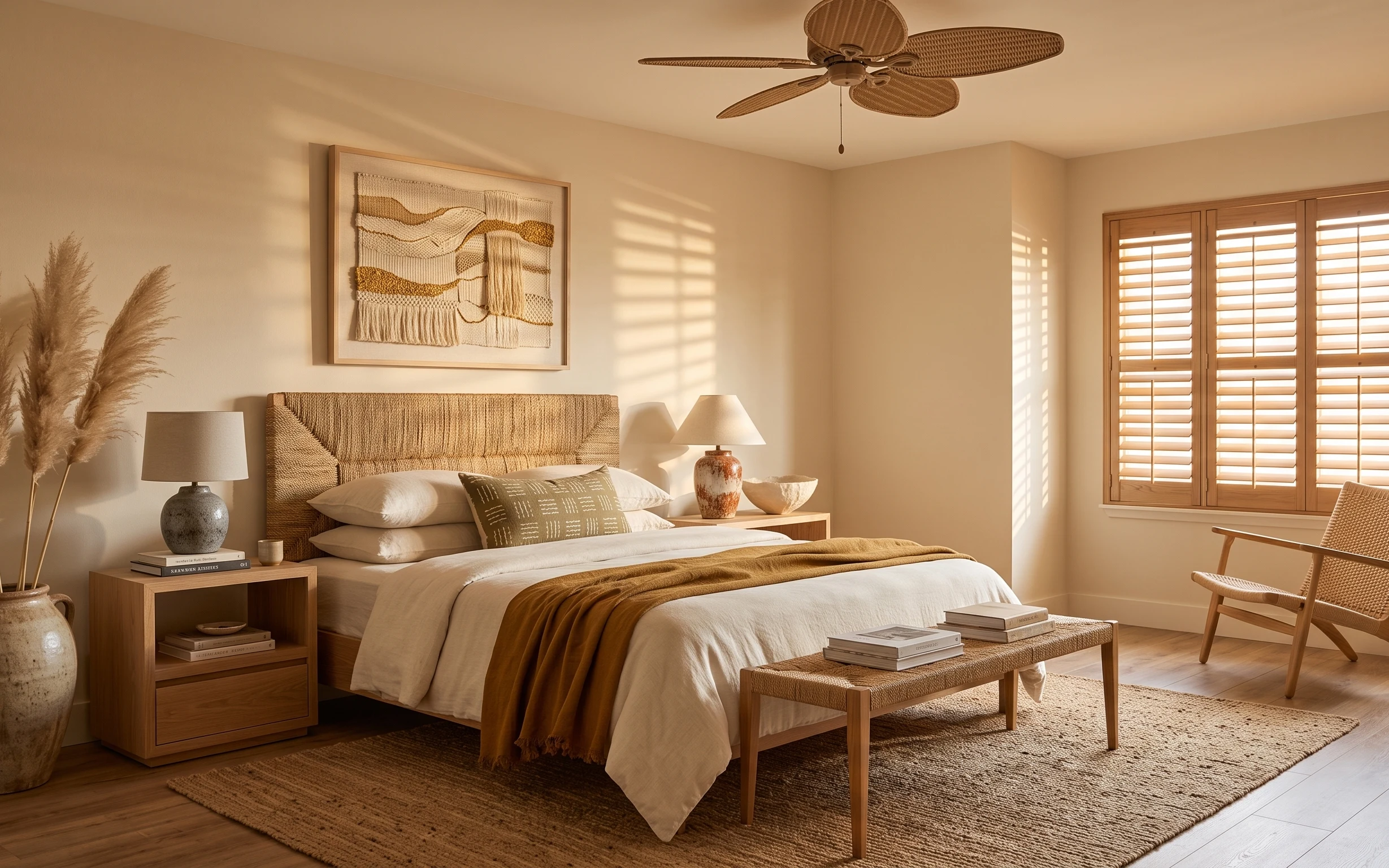
Under $700: warm neutral bedroom refresh with 7 upgrades
A warm, boho bedroom refresh you can finish over a weekend for under $700. Use a jute-look rug, one statement framed piece, and cozy bedsid…